










Spring Clean Challenge: Every Game is Miniatures Agnostic



Tribal!
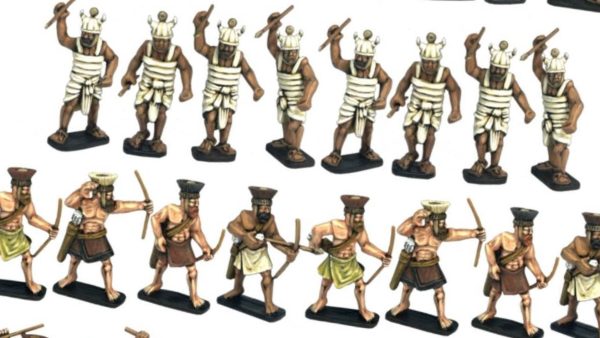
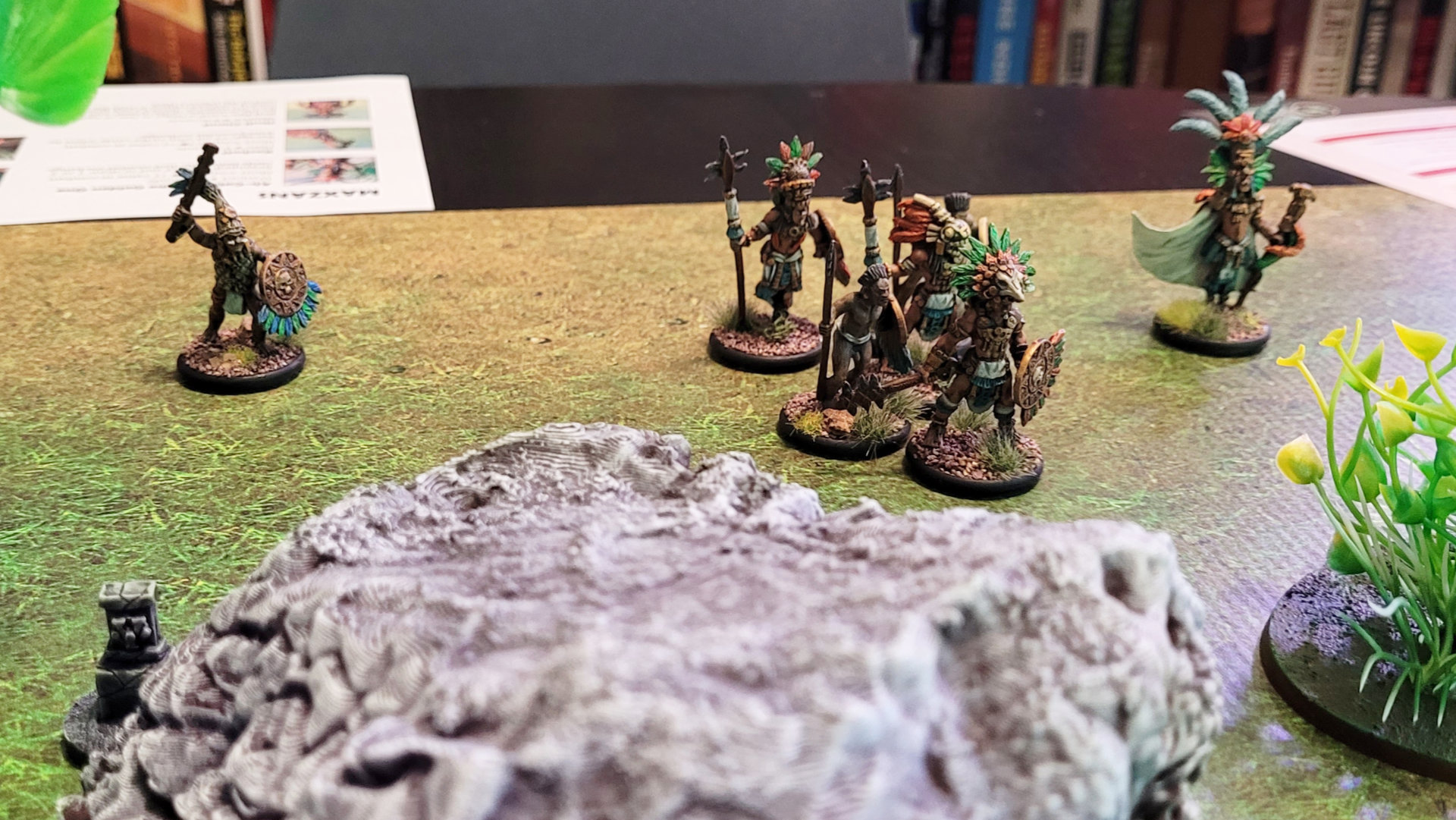 A tribe of Aztecs (Savage Core Maxzans), ready to defend their territory.
Tribal caught my eye for two reasons. The first was the ancient cultures theme — I was looking for an alternate game to play with my Savage Core models, having had a…mixed experience playing that game in the past. Don’t get me wrong, there is a lot that I love about Savage Core (the incredibly characterful models, for a start), but there are a few things about the rules that I don’t particularly care for, and in any case I’m always on the lookout to get more mileage out of my collection of miniatures.
The other reason Tribal looked interesting was that it is entirely playing card driven. No dice whatsoever, it even uses card edges to measure distances for movement. Using playing cards instead of dice appeals to me on a lot of levels — you still get a semblance of randomness, but using cards introduces a level of tactical decision making that you just don’t get from dice. At the most basic level, choosing from a hand of cards, even if they were drawn randomly from a deck, gives players a lot more agency than rolling a handful of dice. Additionally, you know how many of each number are in the deck, so as the game progresses, the cards that are going to come up become more predictable.
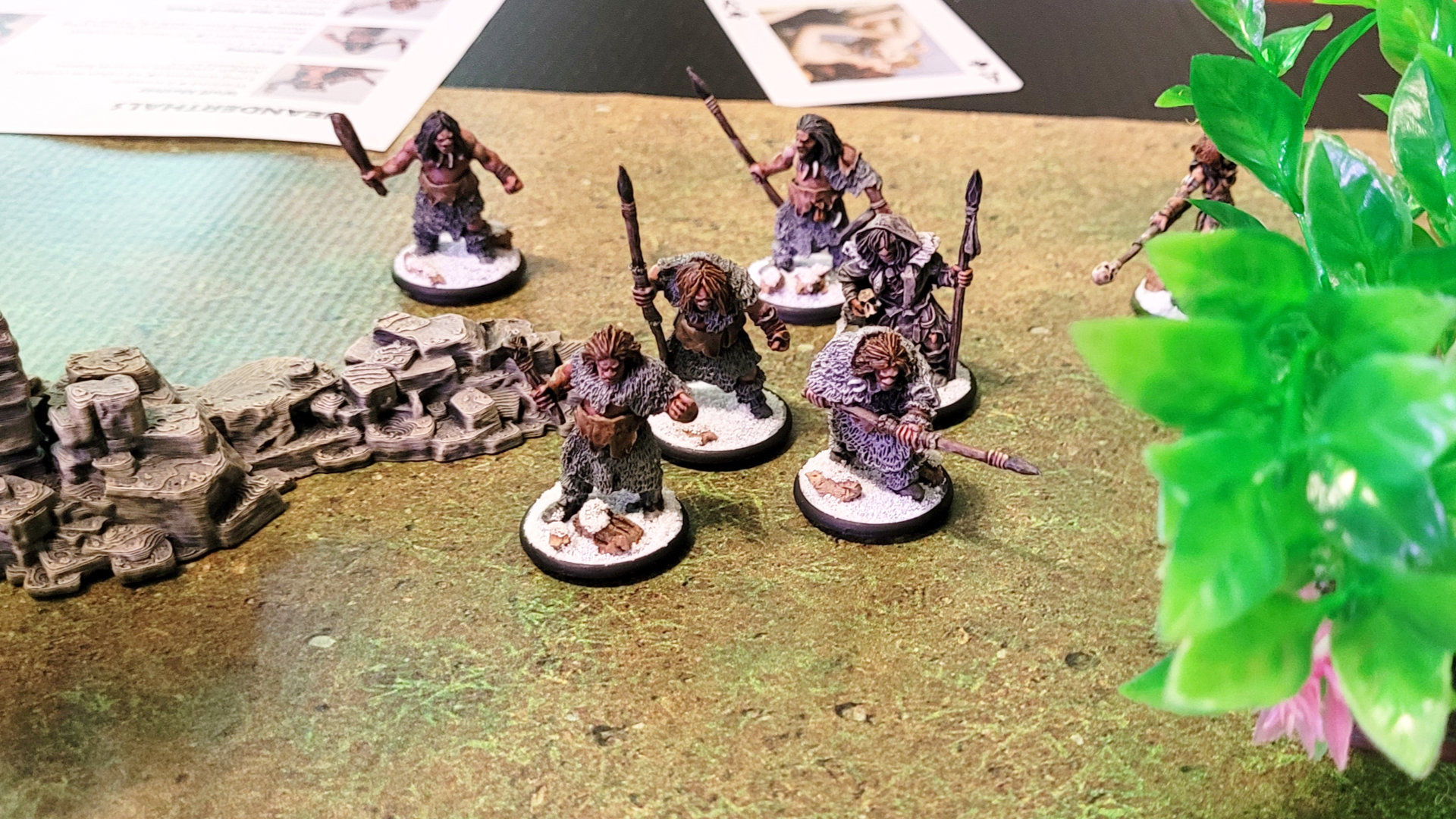 A unlikely group of neanderthals arrive to threaten the Aztecs -- maybe they were frozen in a cave and recently thawed...
In that respect, Tribal did not disappoint. The game uses the cards with great efficiency — the card you draw for initiative each round will then be assigned to one of your units, who will either be able to use it in melee combat, or as a defense against a ranged attack. Melee is resolved by each player drawing a hand of cards equal to the unit’s remaining hit points (starting with the card assigned to that unit at the start of the round, if they still have it), so a healthier model has an advantage over one that has taken damage. It’s a very elegant system.
The rules even make use of the different card suits, with black cards representing attacks and red cards, defenses, and spades or clubs giving a bonus to different types of melee weapons. Ranged combat in the game is more about harrying your opponent — you might inflict a little damage, but the main goal is to force the unit to use their activation for the turn to dodge your arrows.
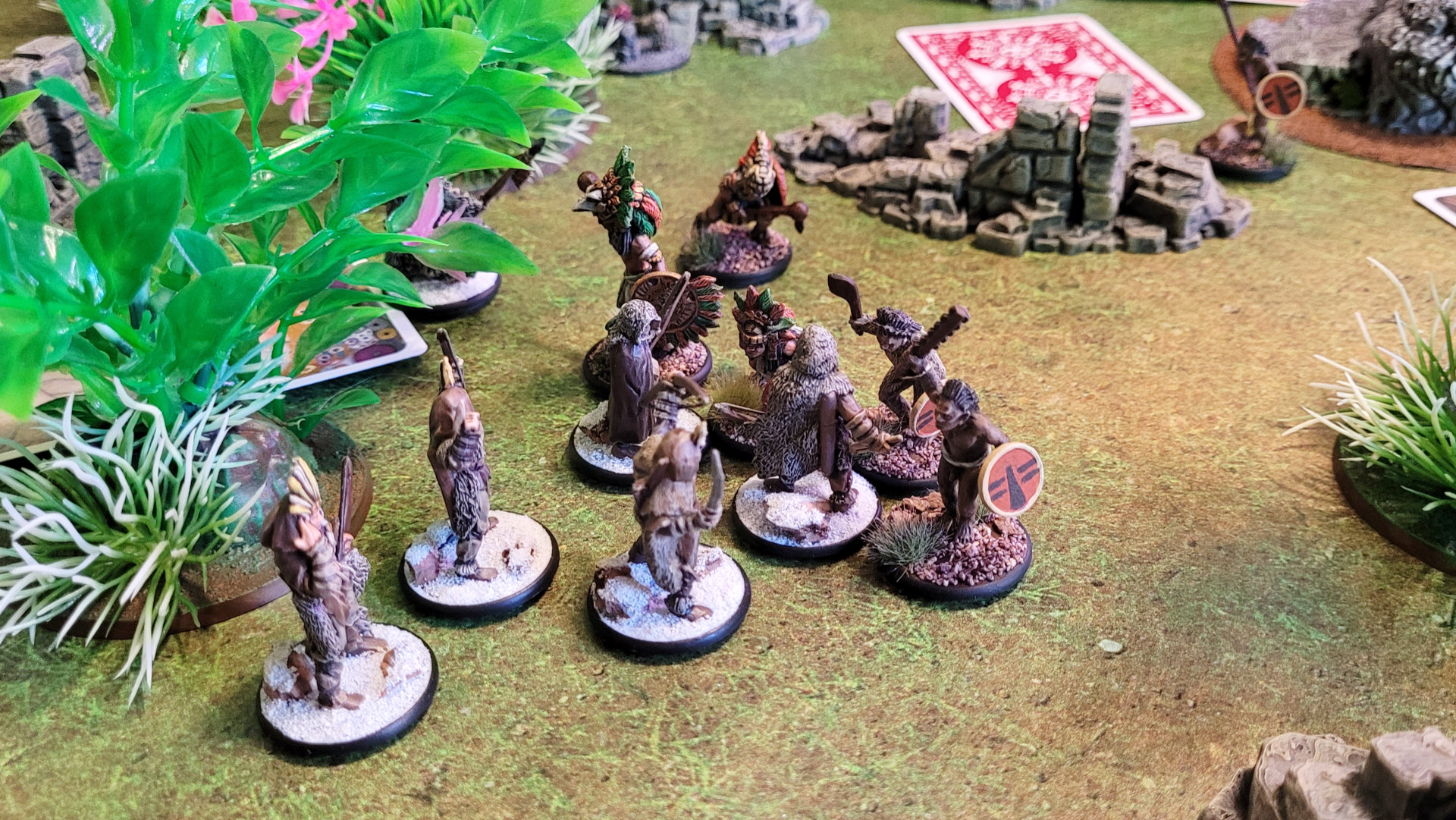 Our first major clash, as a group of Aztec warriors take down a whole unit of neanderthal archers before they manage a single shot.
One thing I didn’t care for in Tribal was the idea of having multi-figure groups that act as one unit. The game organizes low-level combatants into groups of 5, classified as either marksmen or warriors. They move and attack as a group, so what they really are is a unit with a larger footprint on the board that still only makes one move and one attack — essentially you’re using multiple miniatures to keep track of hit points, which seems like kind of a waste. But I’ve played other games that do this (Mythic Battles and Star Schlock immediately come to mind), so I might just be saying that because I was scrambling to get enough Savage Core models together to make up the needed groups of Tribal warriors.
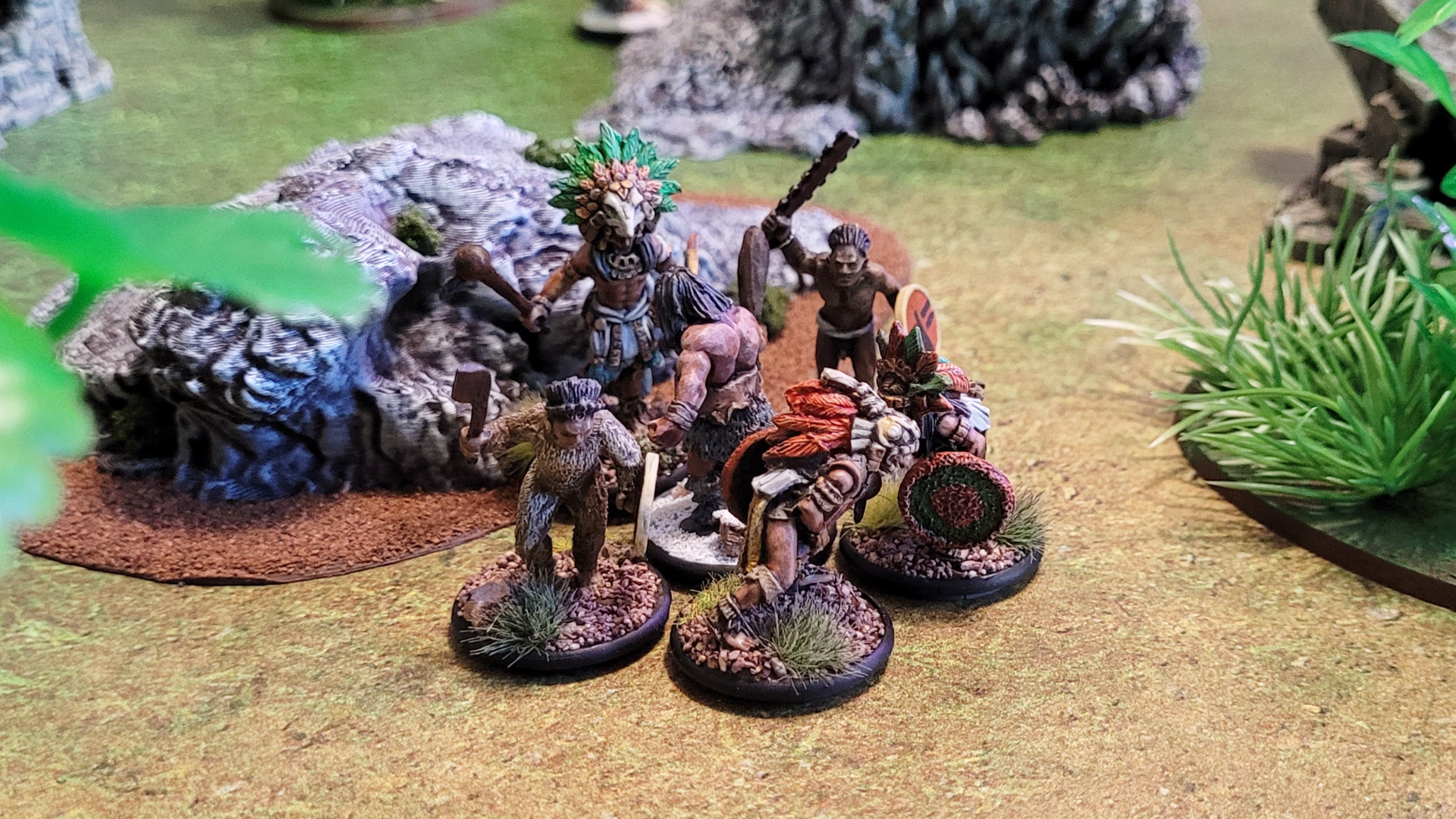 A neanderthal hero finds himself surrounded by enemy warriors.
The only other issue I had with the game was that it felt a little thematically bland. Each character only has one stat (hit points) and maybe one or two special abilities which tend to be pretty simple, so there wasn’t much going on in the game to give it theme or personality. That may not be entirely fair since I’m comparing it with Savage Core, a game with a massive excess of quirky theme that comes out in the game. Tribal might also be a victim of unfair comparison to Violent Dark, the last game I played for this project, which is tailor-made from the ground up to fit a very specific theme, which it does extremely well.
Apart from that, we enjoyed our first game of Tribal, and will definitely be playing it again. I’m also thinking about ways I might be able to bring some more of what I like about Savage Core into the Tribal rules set, or perhaps figure out away to replace Savage Core‘s egregious dice rolling with some of Tribal‘s card mechanisms.
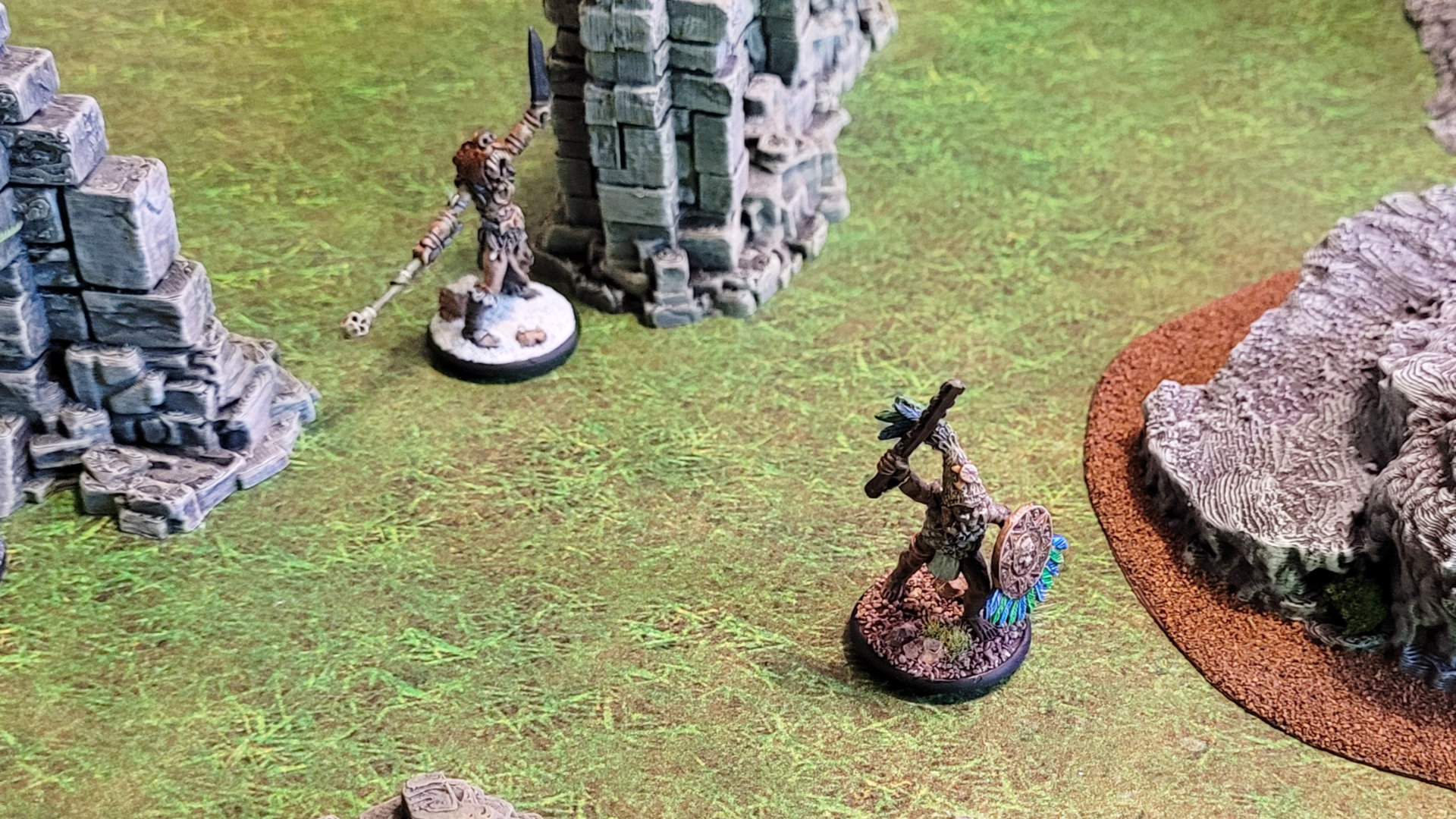 A neanderthal shaman uses a curse to send an Aztec hero scurrying in the other direction.