






How Does Incarnation Play? A Look at the New Aarklash Skirmish Game
November 10, 2026 by avernos


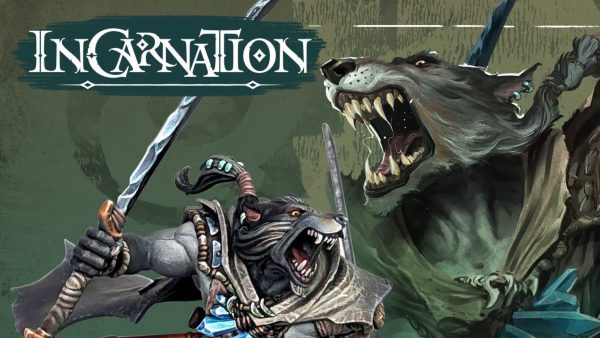
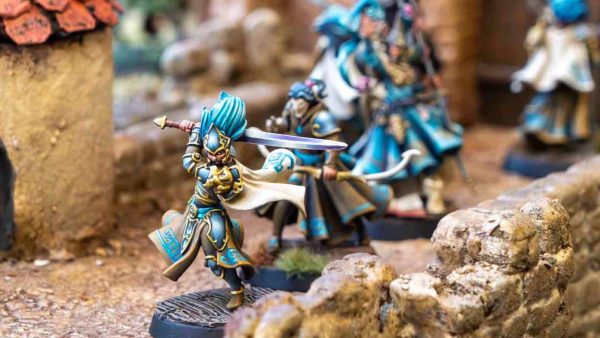
I've been following the return of Aarklash with plenty of interest, particularly now that Monolith has started sharing more about how Incarnation will actually work on the tabletop and demo'ing games, we've been able to get a better idea of how the game plays. This isn't a new edition of Confrontation, but a completely redesigned fantasy skirmish game built around small warbands, powerful Incarnates and a battlefield where movement, positioning and elevation are every bit as important as simply dealing damage.
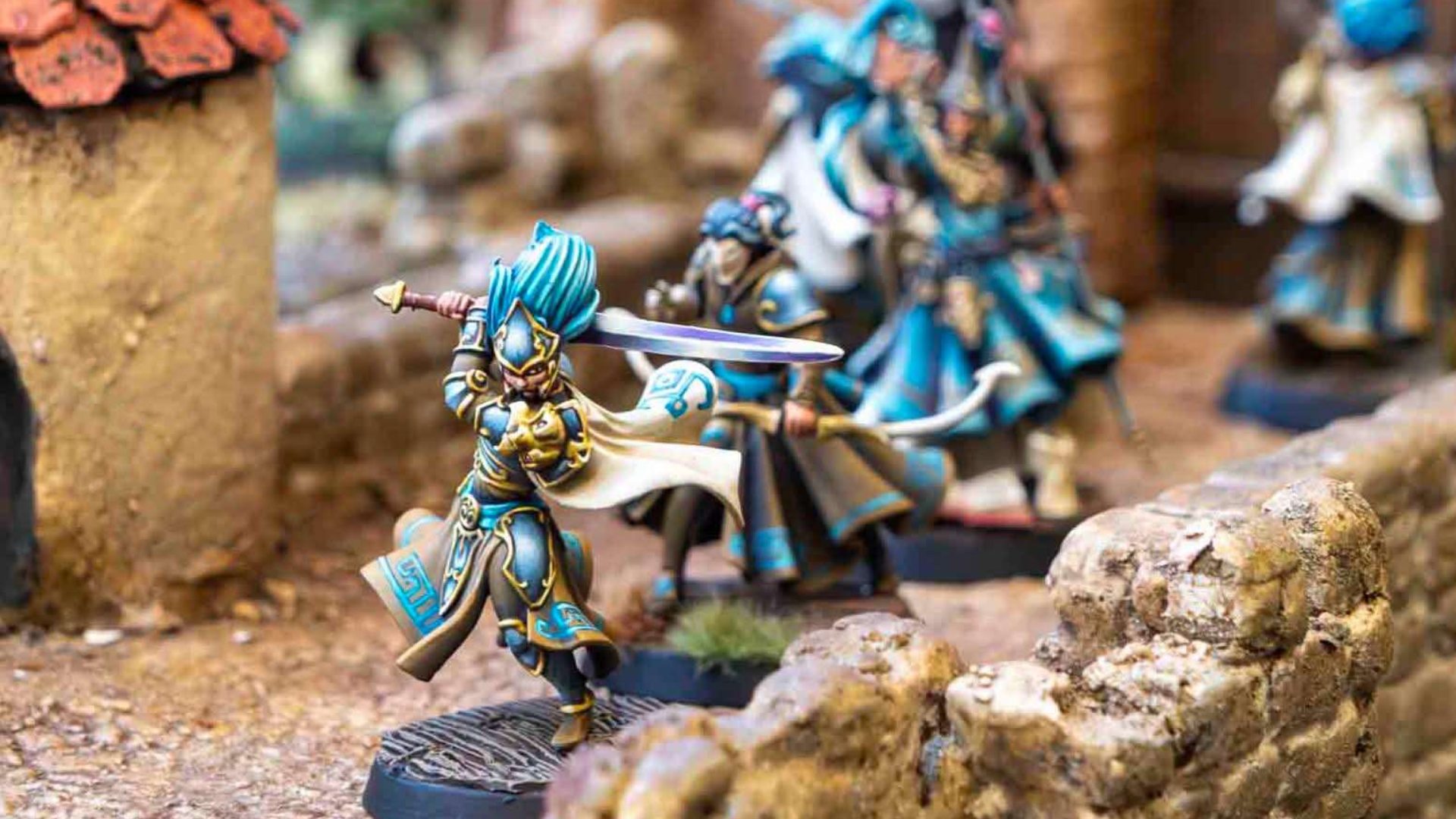
The game lasts around 90 minutes, with warbands containing between six and twelve miniatures. Earlier playtest information suggested a minimum of six models per side, with larger forces potentially reaching twelve to fifteen, so the final limits will be worth keeping an eye on as development continues. The game is designed for a 24 x 24-inch battlefield, giving players a compact area in which to manoeuvre, fight and contest objectives.
The scale is formally 32mm, with different base sizes used for different types of fighters. Human infantry use 32mm bases, Wolfen infantry are on 40mm bases, while cavalry and larger creatures occupy bigger bases. Those differences aren't just visual, either, as base size can provide certain advantages during play. Although some models within factions may change these, younger Wolfen on smaller bases are an example of this.
Planning Your Activations
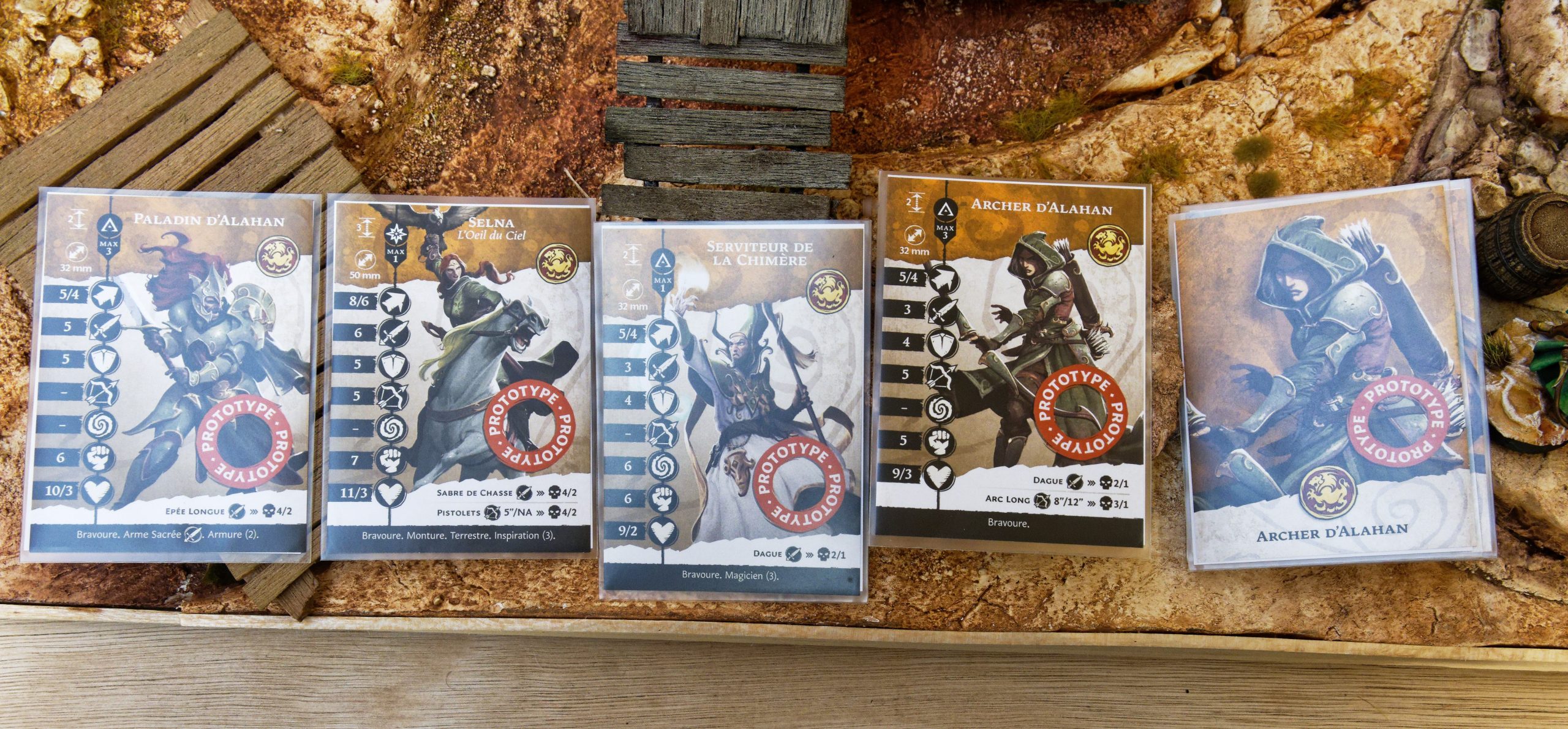
Incarnation uses alternating activations, with players taking turns to bring their units into action. At the start of a round, after the initiative roll, each player determines the order in which their units will activate by arranging their unit cards into an activation deck. This gives players an opportunity to plan ahead, but they still have to react to what their opponent is doing as the round unfolds.
When it is your turn, you reveal the top card of your deck and activate the associated unit. A unit may consist of one or multiple models, depending on its composition. The cards are designed to make the process straightforward, with the relevant unit information easy to find without having to search through a separate pile of tactical cards when reacting to an opponent.
There is also an element of flexibility built around the Incarnate. Certain cards can be held in reserve and used to alter the activation sequence at the right moment, allowing players to adapt their plans rather than being completely committed to the order they originally selected.
Most models have two actions during their activation, while the Incarnate has three, including an additional Order. Actions can include moving, charging, making a melee or ranged attack, casting a spell and other abilities. This gives players some useful choices when deciding how to use their models, whether that means moving into position, attacking twice or combining movement with an assault.
There is no traditional deployment phase. Instead, when a model or unit is activated, it enters the battlefield from its player's table edge and immediately gets to work. It is a slightly different approach to setting up a skirmish game, and one that should help keep the action moving from the start.
Movement, Charging and the Importance of Height
Movement is one of the areas where Incarnation looks to distinguish itself. The game uses a primary movement value alongside a secondary movement value. The main value determines the distance a model can normally move, while the secondary value is used for additional movement options, including jumps, and limits how far a wounded model can move.
You can use two actions to move in succession, effectively allowing a model to run, although the second move uses its secondary movement value. Charging is also a movement action, requiring a target that is in line of sight and ending with the charging model in contact with its opponent. A melee attack is then resolved immediately.
If a model is already in contact with an enemy, it can use an action to make a straightforward melee attack. This means that a fighter who is close enough can potentially move into contact and attack, then use its second action to strike again. If the target is further away, the secondary movement value can come into play when using the second action to charge.
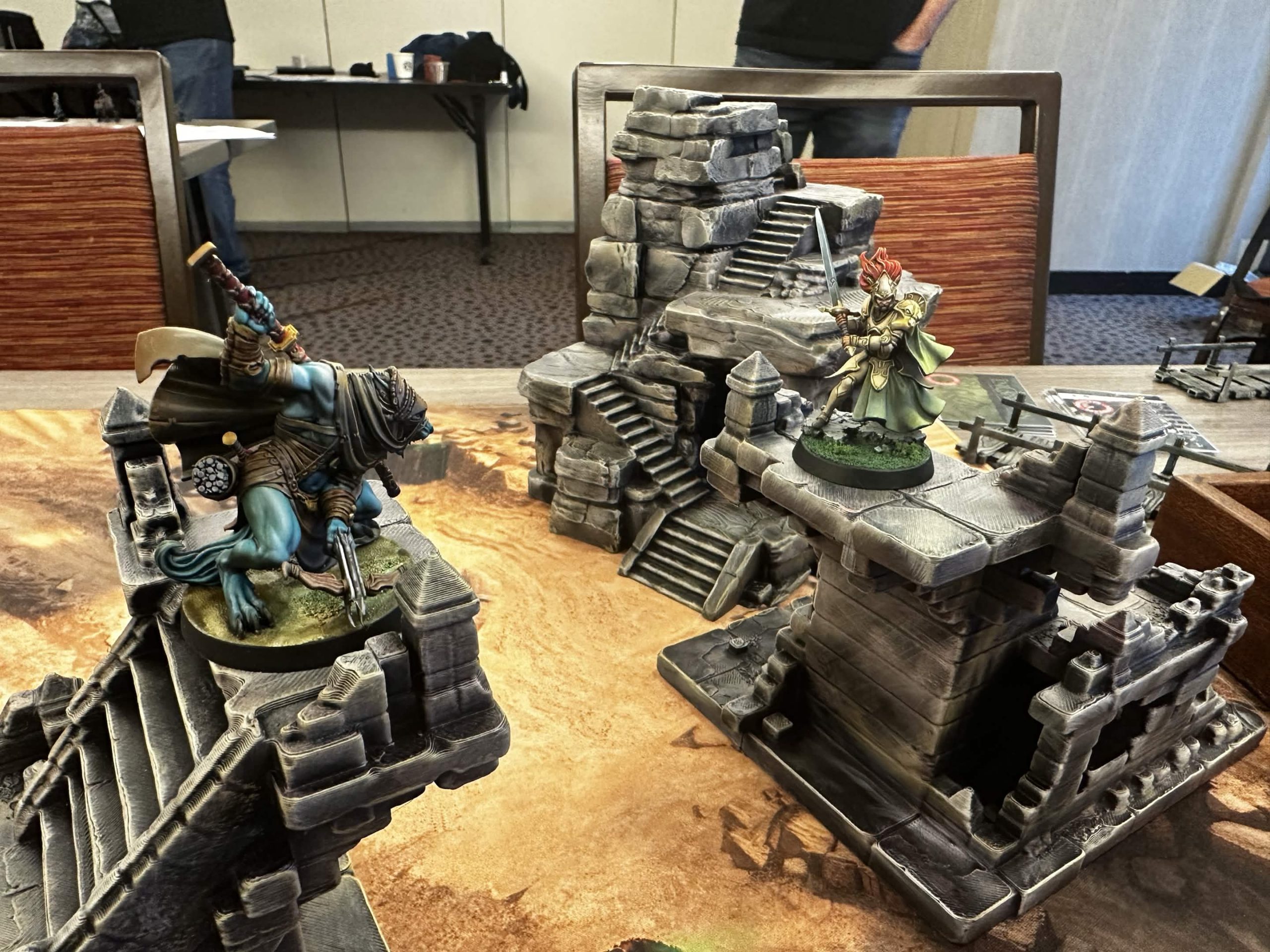
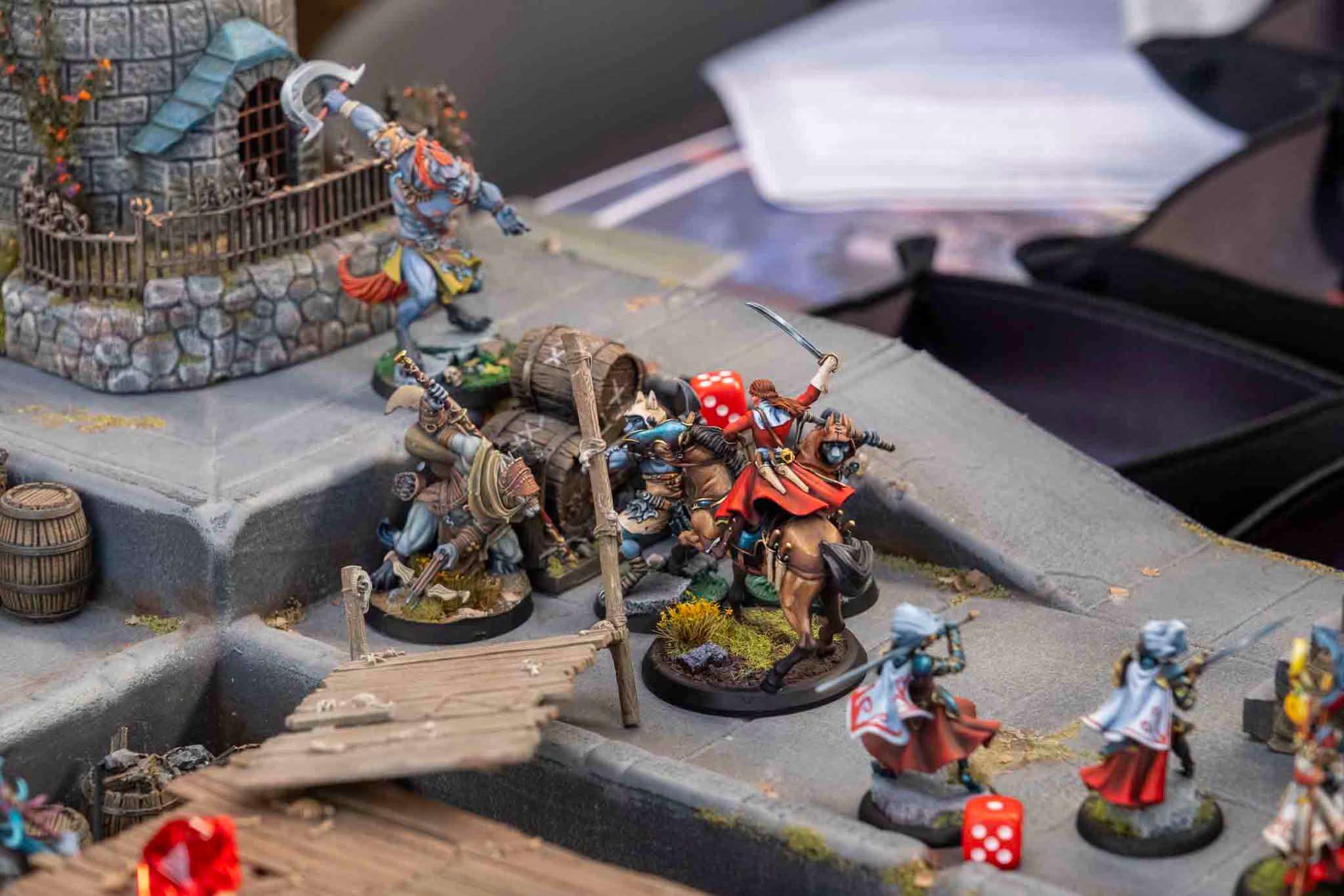
The real ambition, however, seems to be making verticality a major part of the game without turning movement into a complicated exercise. Height, line of sight, cover, jumps and falls all influence what a model can do. A fighter might leap down from a bridge to attack an enemy below, or use higher ground to gain an advantage when making an attack.
There is also a more direct way to influence the battlefield through tactical movement. Rather than using every success simply to inflict damage, players can use certain attack or defence successes to push an opponent away or disengage from combat. Push an enemy off a raised position, and the fall can cause additional damage, with the amount determined by the distance fallen.
It is an approach that encourages players to think about where their miniatures are standing, not just which enemy they can reach. A successful attack might be more valuable if it moves an opponent into a dangerous position than if it simply causes another point of damage.
How the Dice Work
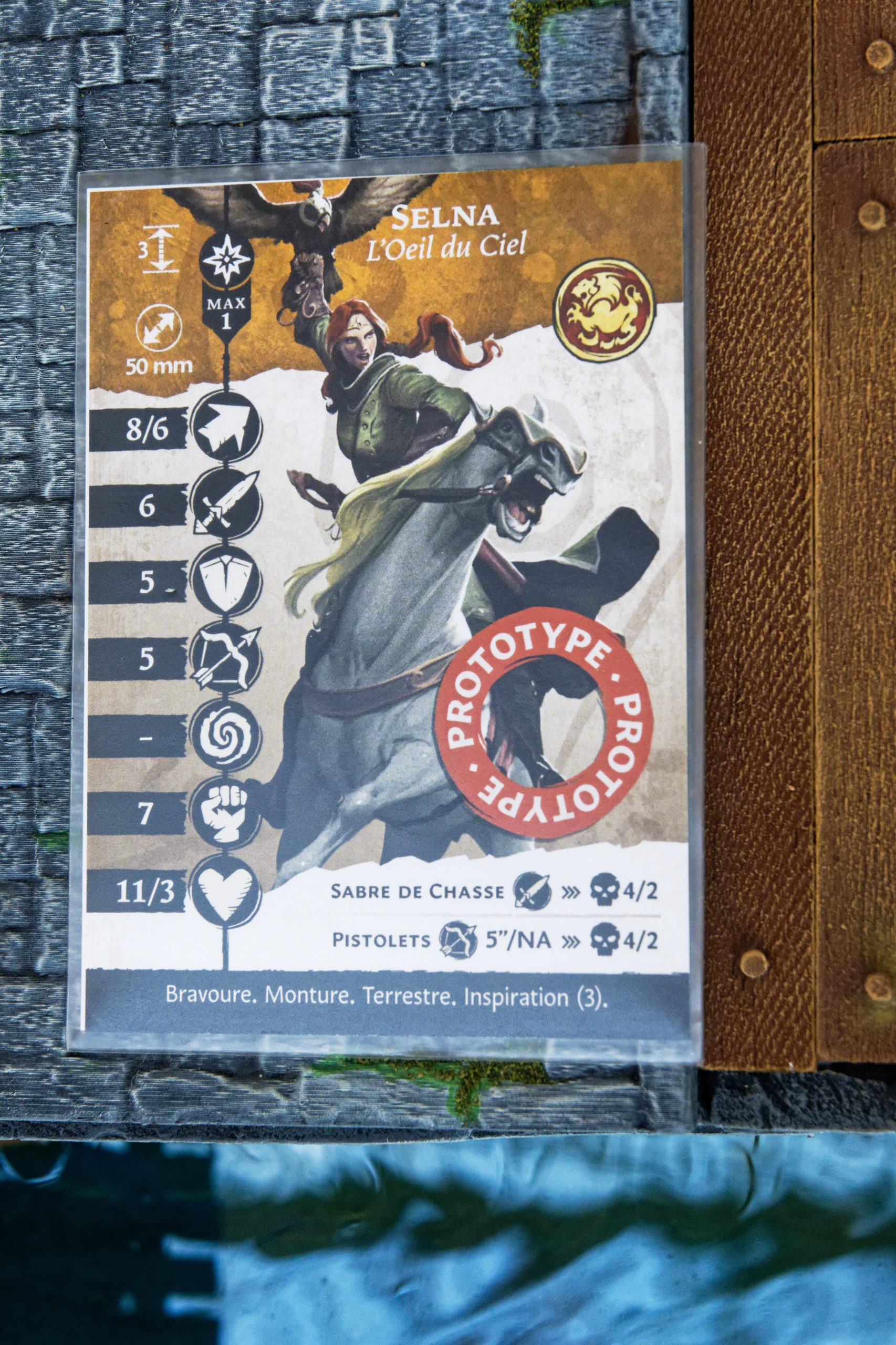
Incarnation uses ten-sided dice, with actions resolved by rolling a pool of three D10s against the relevant characteristic. Rather than changing the characteristic itself, bonuses and penalties generally add or remove dice from the pool. A charge, a height advantage, a larger base or a particular skill might all provide an additional die.
The basic rule is straightforward: each die that rolls equal to or below the relevant stat counts as a success. A roll of 1 is a critical success and counts as two successes, while a roll of 10 is a critical failure and cancels out one success.
This creates a system where the number of dice you roll is just as important as the characteristic you are rolling against. A skilled fighter may have a strong stat, but a model with several situational advantages can build a larger pool and potentially achieve a better result.
The system also uses a set of streamlined characteristics. Movement, Attack, Defence and Shooting remain part of the profile, alongside Mysticism, Morale and Hit Points. Mysticism is now a shared characteristic for mystics, rather than being divided into multiple separate values. Weapon profiles also provide range and damage information, with damage using a first-success value followed by a value for each additional success. For example, a weapon with a damage profile of 5/3 that scores three successes would inflict 11 damage before other effects are considered.
Melee Combat and Tactical Defence
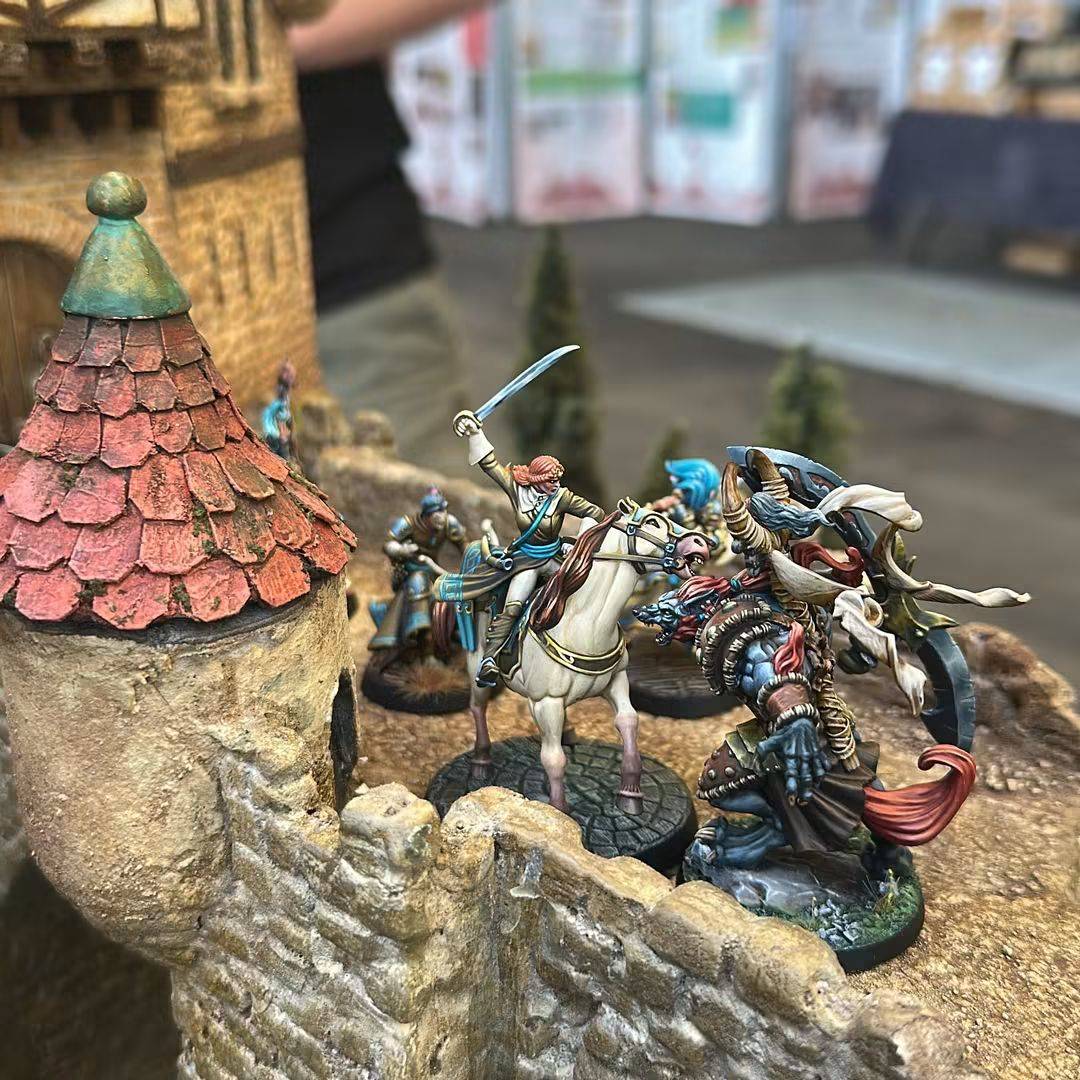
Melee attacks use the same core dice system, but the number of dice available can change significantly depending on the situation. An attacker starts with three dice and may gain additional dice for charging, jumping down from higher ground, having a higher Attack characteristic than the opponent's Defence, numerical superiority or possessing a relevant special ability.
The Wolfen ability Tueur Né is one example of a faction-specific rule that can add another die. A fighter that has become Exalted after killing an enemy without subsequently being wounded can also gain an additional die, making a successful combatant increasingly dangerous.
The defender rolls against their Defence characteristic, also starting with three dice. A higher Defence value than the attacker's Attack can provide an additional die, as can the Exalted status. The successes are then compared. If the attacker wins, the difference determines the damage inflicted. If the defender achieves more successes, they can choose to inflict damage of their own or use the result to push the attacker away.
That choice is an important part of the system. Defence is not simply about avoiding damage; it can also be an opportunity to control the position of the fight. A well-timed push might disengage a model, disrupt an opponent's plan or send an enemy over an edge.
Ranged attacks use a similar dice-pool approach, with weapons having short and long range values. At short range, the full dice pool is rolled, while attacks at long range lose one die. Some weapons are limited to short range altogether. The playtest information also describes a single-die Dodge reaction for defenders against ranged attacks.
Magic and Divine Favour
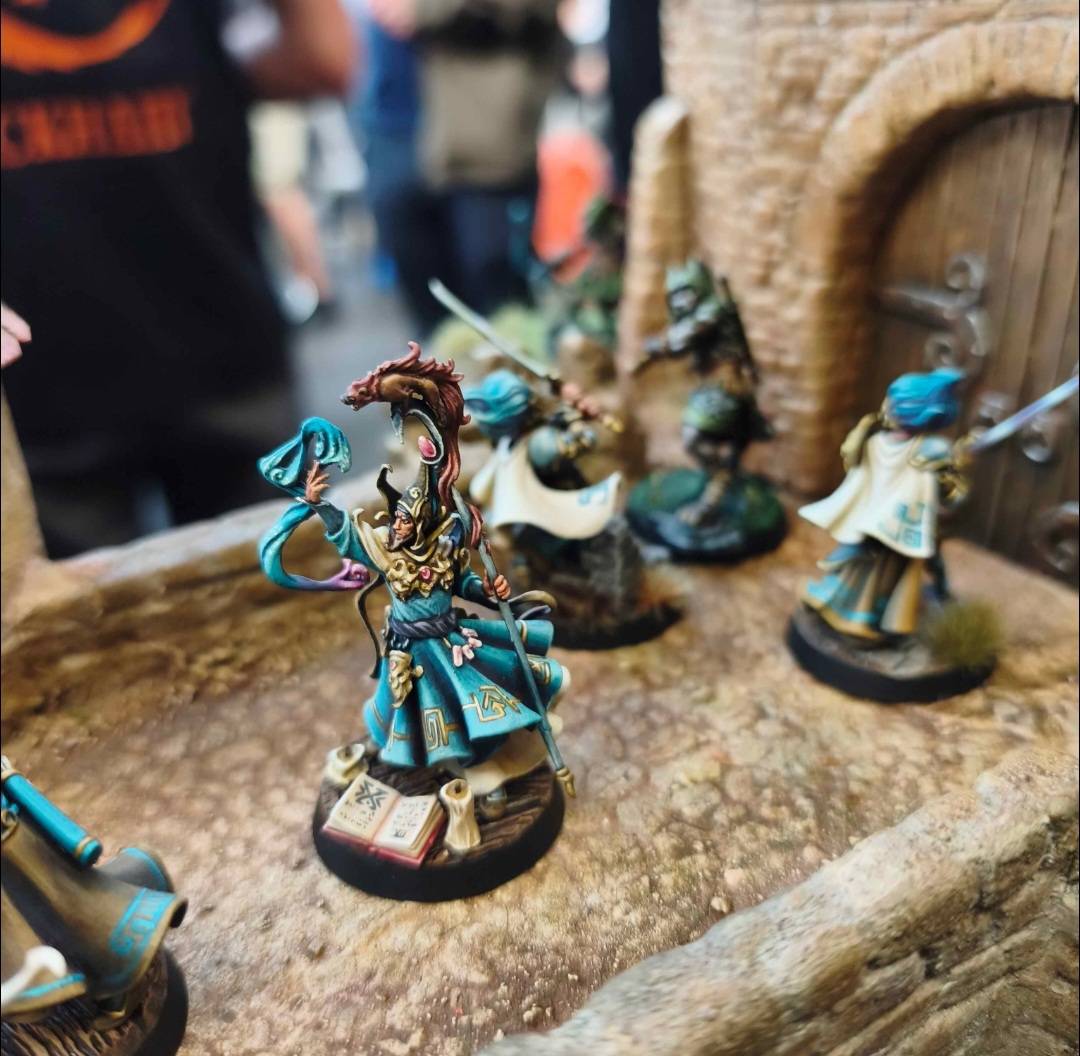
Spellcasting follows the same basic principle of rolling successes, but each spell has a difficulty rating of between one and three. The caster needs to achieve the required number of successes to make the spell work. The current rules information indicates that spellcasting is not normally available while a model is engaged in melee, although the distinction between true mages and warrior mages is still being considered.
The Incarnate brings another layer of supernatural abilities to the table. Every warband is led by one of these immortal spiritual beings, and their unique powers are intended to shape the player's strategy throughout the battle. Discipline, Orders, Divine Favours and Feats all contribute to what makes an Incarnate different from an ordinary fighter.
Divine Favour is a resource that can be accumulated during play, including through critical failures in the dice system. Rather than leaving a player with nothing after a bad roll, these setbacks can create an opportunity to gain a resource that can be spent later. The reviews from playtesters describe possible effects such as teleportation, swapping souls or gaining an additional action, giving players a way to turn a difficult situation into a tactical opportunity.
Incarnates also have a particularly unusual relationship with death. When an Incarnate is defeated, it disappears from the battlefield and returns to its player's table edge in the following round. However, this is not without consequence: defeating an opposing Incarnate is worth a substantial five Victory Points. The character may be immortal, but allowing it to be taken out of the fight can still be a very expensive mistake.
Objectives and Winning the Game
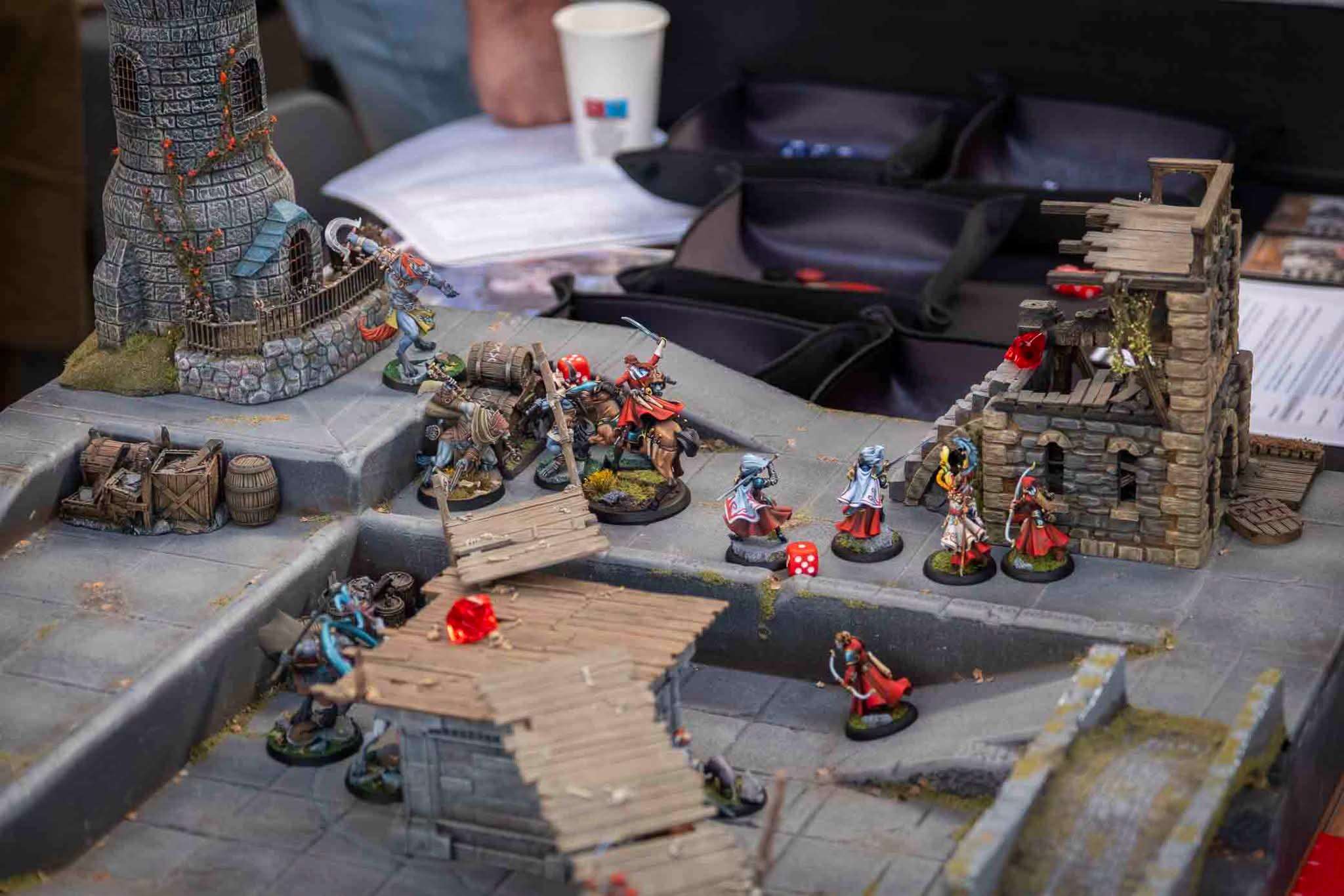
Incarnation is not simply a case of eliminating the opposing warband. Scenarios can combine several different objectives, including killing enemy Incarnates, controlling areas, retrieving tokens and reaching particular positions on the battlefield. One example used during playtesting involved collecting gems, with each gem held providing a Victory Point each turn.
The current playtest information describes games lasting up to five rounds, with the possibility of ending earlier if a player reaches 20 Victory Points. At this stage, the scenarios are based on shared objectives rather than secret or individual player-specific missions, although there is plenty of scope for different combinations of objectives and battlefield challenges.
The combination of killing, positioning and controlling the environment should give players reasons to keep moving throughout the game. It also means that a force which is winning the fight in terms of damage might still find itself losing the scenario if it neglects the objectives.
A Skirmish Game Built Around Movement and Decisions
What stands out to me about Incarnation is how much emphasis is being placed on movement and the use of the battlefield. The dice system looks fairly intuitive, with the addition of dice providing a clear way to represent advantages such as charging, height and numerical superiority. The use of critical results also gives the D10s a little more character than a straightforward pass-or-fail roll.
The real test will be how all these elements work together once the full rules are available. The ability to push enemies, exploit elevation and use the Incarnate's powers should create some interesting moments, particularly when players are fighting over objectives rather than simply trying to wipe out the opposing force.
Monolith has completed an initial closed beta phase and is preparing further testing, including an open beta at a later date. With the Incarnation Gamefound campaign currently planned for May 2027, there is still time for the rules to develop, but we are beginning to get a much clearer picture of the game.
For anyone coming to Incarnation from Confrontation, there will be familiar factions and a shared world, but the mechanics are very much their own. For new players, the promise is a compact fantasy skirmish game with small warbands, cinematic movement and plenty of tactical decisions packed into a game of around 90 minutes.
Supported by (Turn Off)

Supported by (Turn Off)
Supported by (Turn Off)