









PanzerKaput Goes To Barons’ War


Recommendations: 11332
About the Project
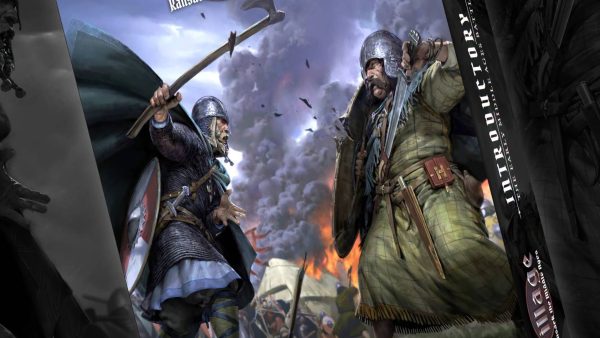
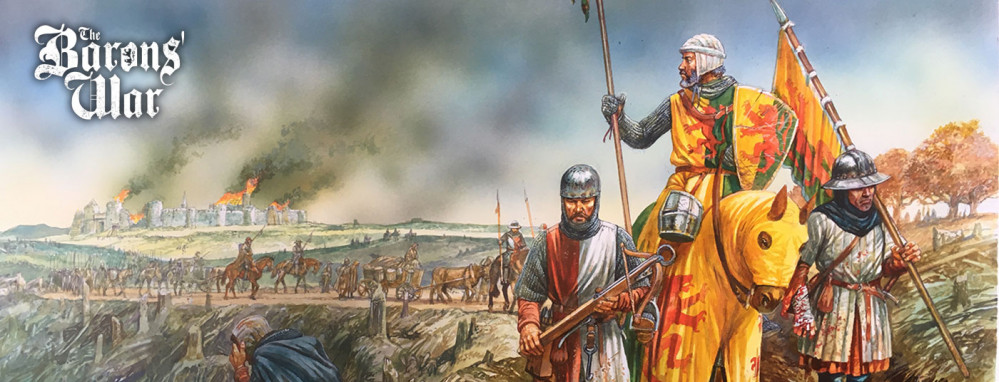
Set against a backdrop of a Civil War that lasted for two years, 1215-17, as a result of the issuing of Magna Carta. A civil war was the perfect opportunity for the leading nobles of the time to grab land and power while settling some old scores along the way. This vying for land and power hadn't stopped since the invasion of 1066 with only the strongest of kings being able to keep their nobles in check. Our narrative focuses on small groups of warriors brought together under a lord or baron to raid and steal or defend land and property. With the strong, wise, cunning and lucky aiming to rise out of this civil strife in a better position than when it started. The Barons' War skirmish game has been written to enable players to fight out tabletop battles against the backdrop of the First Barons’ War between rival Barons or rival factions who find themselves on either side of the conflict. The game is historically themed, the gameplay is fast-paced and tactical with plenty of narrative and where force building presents you with lots of options enabling two players to muster very different retinues. However, as intended, this is an alpha set of rules which does not include rules for siege warfare, although rules for fighting in buildings are included. Campaign rules are something that will be addressed at a later date and released online. Having grown out of the Barons’ War Kickstarter project, the intention is for this ruleset to develop into a system that could be used throughout the Medieval period. Starting with England from when the Western Roman Empire withdrew around 410 AD to 1485 AD when Richard III died at the Battle of Bosworth Field. This presents us with a huge span of history for gaming which can be broadly divided into Romano-British, Anglo-Saxon and Viking, Anglo-Norman, Angevin and Plantagenet. And that’s just when looking at it from Great Britain. With warriors of this period being pretty similar, it would be easy to use the profiles in this rulebook to play out tabletop battles in any setting. Over time we see these rules evolving with additional warriors, characters, abilities and scenarios being added starting with the Dark Ages, the Anarchy and the Crusades and shared to www.warhost.online, which has been set up to be the community website for the game.
Related Game: The Barons' War
Related Company: Footsore Miniatures and Games
Related Genre: Historical
This Project is Active
Geoffrey de Mandeville
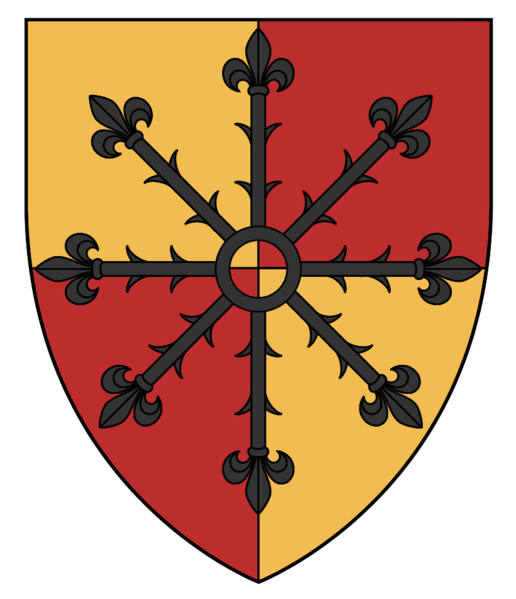 Geoffrey de Mandeville
Geoffrey de Mandeville, another of the east of England rebels, was the son and heir of Geoffrey FitzPeter, earl of Essex, long-serving justiciar to both Richard and John, by his first wife Beatrice, daughter of William de Say and eventual heiress of the Mandeville earls of Essex. By virtue of the family’s ancestral connection Beatrice’s children styled themselves Mandevilles.
Geoffrey’s first marriage was to Maud, daughter of Robert FitzWalter, another important Essex landowner and the man who was to be effective leader of the baronial rebellion against John. Robert once sprang to the defence of his son-in-law when the latter killed a serving man in a dispute over lodgings at court and John threatened to hang him, declaring ‘By God’s body, you will not hang my son-in-law, you’ll see two hundred lanced knights in your land before you hang him!’ When the king put the case up for trial, FitzWalter appeared in court with two hundred knights.
Maud (Mandeville) died without issue and was buried in Dunmow priory (Essex). In January 1214 Geoffrey took as his second wife Isabella, third daughter and coheiress of William, earl of Gloucester, and the divorced ex-wife of King John. The match appears to have been forced on Geoffrey unwillingly, and to add to the probable sense of annoyance he felt, he was made to pay for his wife, and to do so heavily. Ever desperate for money, John charged Geoffrey a ruinous fine of 20,000 marks (about £13,666), this to be paid in four instalments each of 5,000 marks, the last to be handed over in Michaelmas 1214, with the proviso that the king might resume Isabella’s lands if the payments were to fall into arrears. The first instalment of the sum was set to be paid before the king set sail to Poitou in February 1214, a date entirely unrealistic, and when Geoffrey failed to meet it, the king ordered the sheriffs to put in hand measures for resumption. By August, however, Geoffrey was evidently beginning to give satisfaction, and John ordered delivery to him of his wife’s honour of Gloucester.
In the light both of his grievances against John and of his family ties with Robert FitzWalter, it is not surprising to find Geoffrey on the rebel side in 1215. In June he was named to the Twenty Five and, when the barons parcelled out the government of the country in the autumn, he was assigned responsibility for Essex.
He met his death by accident in a tournament with a French knight in London in February 1216, and was buried in Holy Trinity priory, Aldgate.
William Malet
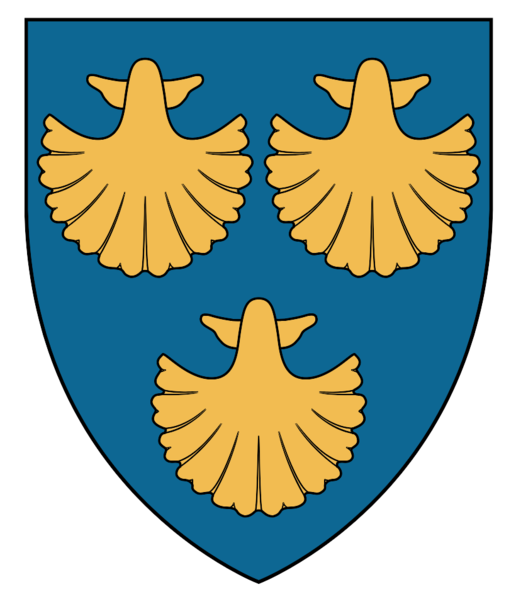 William Malet
William Malet (c. 1175-1215) was one of the sizeable group of rebel barons who were heavily indebted to King John, making the revolt of 1215 in some sense a debtors’ revolt. William, the lord of Curry Mallet in Somerset, was the descendant of Robert Malet (d. before 1156), first holder of the barony, and the son of Gilbert Malet, who died in 1194. In 1196 he paid Richard the Lionheart a fine and relief of £150 to enter into his inheritance.
William’s early career, characteristically for someone of his background and upbringing, had been in royal service. He had accompanied Richard the Lionheart on crusade from 1190 and he had taken part in the siege of Acre in 1191. He was appointed sheriff of Somerset and Dorset by King John in 1209 after the two counties had petitioned to have someone local as their sheriff instead of the courtier William Brewer, and he served in the office until 1212. By this latter year he was running into financial difficulties, although the cause of his problems is not clear, and by 1214 he was owing the king as much as 2000 marks (about £1333). In 1214 he entered into an agreement to serve with the king in Poitou with ten knights and twenty other soldiers in return for the cancellation of his debt. In 1215 he went over to the barons, joining the confederacy at their muster at Stamford in Easter week, and in June was appointed to the Twenty Five.
Malet appears to have died only months afterwards in December 1215, for by that time his estates were in the possession of his son-in-law, Hugh de Vivonia. He left three daughters between whom his estates were divided: Mabel, who married first Nicholas Avenel and then Hugh de Vivonia (d. 1249) of Chewton (Somerset); Helewise, who married first Hugh Pointz (d. 1220), an associate of Malet in the rebellion, and second Robert de Mucegros (d. 1254), a future servant of Henry III; and Bertha, who died unmarried before 1221.
William de Lanvalei
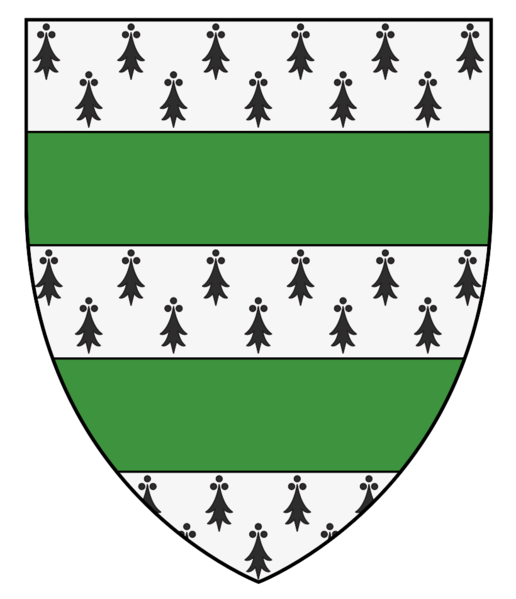 William de Lanvalei
William de Lanvalei III (d. c. 1217), lord of Walkern (Herts.) was a member of a family of curialist administrators that had risen to prominence under Henry II and who owed much of their wealth to their years of service to the Crown and the opportunities for enrichment which these offered. It is a mark of King John’s mismanagement of the nobility that he should have so alienated such a man that he ended up on the baronial side in 1215.
William was the grandson of the founder of the family fortune, William de Lanvalei I, a Breton whom Henry II appointed as his first seneschal, or administrator, of Rennes after his takeover of the duchy of Brittany in 1166. William served in the office for five years, crossing to England in 1171 or 1172 to become the king’s castellan of Winchester and serving thereafter in a variety of capacities in the king’s English administration. Probably as a result of his royal connections, William was awarded the hand in marriage of Gunnora, daughter and heiress of Hubert de Saint Clair, through whom he gained possession of the barony of Walkern, created for Hubert’s father, Hamo, in 1120 from the escheated lands of Eudo Dapifer (Eudo the Steward). William I died in 1181/2, leaving a son William II, who died in 1204, and was in turn succeeded by William III, the member of the Twenty Five, a minor on his father’s death.
Like most thirteenth-century aristocratic families, the Lanvaleis had various claims to lands and offices which they pursued as and when opportunity and circumstance afforded. William’s father had brought a suit in the king’s courts against Hugh de Beauchamp over the manors of Eaton Socon and Sandy (Beds.), to which he laid claim by descent from his mother as successor to Eudo Dapifer, who had held the manors in 1120. Hugh appears to have lost possession of the manors for a time, as Gunnora was briefly in possession, but the Lanvaleis failed to establish a lasting title. William III’s own interest was rather in securing control of the royal castle at Colchester, again by right of descent from Gunnora. In Henry II’s reign the castle had been held by the justiciar Richard de Lucy, but the Lionheart had apparently granted it to William’s father, and he and his widow held it until 1209. In that year it was apparently lost to the family.
William accompanied John on his expedition to Poitou in 1214 and was present at the truce concluded with the French king in September. It is impossible to trace the path by which he made his way into the baronial camp, but for him, as for others, the ties of kinship must have played a part. He was related to none other than Robert FitzWalter, the baronial leader, through his wife’s mother, who was FitzWalter’s niece. His own mother, moreover, was sister-in-law of Geoffrey FitzPeter, which made her the aunt of another future rebel, Geoffrey de Mandeville. William can thus be seen as belonging to the wide east of England network which was increasingly dominant in the baronial movement as it spread from its northern heartland.
In July 1216, probably at a meeting of the council at Oxford, William secured a grant of custody of Colchester castle, for which he had striven for so long. He died shortly afterwards, leaving as his heir a daughter Hawise, who became the ward of Hubert de Burgh, the future justiciar, and was married by Hubert to his John, to whose family the barony passed.
It is tempting to associate the fine Purbeck marble effigy of a knight in the south aisle of Walkern church (Herts.) with this William, as lord of the manor. It shows the commemorated in a mail hauberk, a surcoat and a pot-style tournament helm. The effigy is one of a group of elegantly designed figures which includes three of the famous Temple Church effigies. On stylistic grounds the effigy can be dated to c. 1240-50, close enough in time to make William a possible candidate. The equally fine effigy of King John in Worcester Cathedral was not commissioned until the mid 1230s, some twenty years after the king’s death. One reason for associating the effigy with William is that he was the last of his direct male line, and the commissioning of an effigy in such cases was a way of keeping the family name alive. Yet it is important to say that the identification cannot be considered certain. The Lanvaleis were patrons of St John’s Abbey, Colchester, by right of descent from the founder Eudo Dapifer, and in an age when monastic burial was popular with the nobility it may well be that he was interred there. William’s grandfather, William I, had made a grant to the abbey ‘cum corpore meo’ (‘with my body’) implying that he desired to seek burial there. Unfortunately little remains of the abbey, and there is no documentary evidence which sheds light on burials within its walls. If the effigy at Walkern is not William de Lanvalei’s, it is probably that of his son-in-law, Sir John de Burgh.
Some Actually Barons
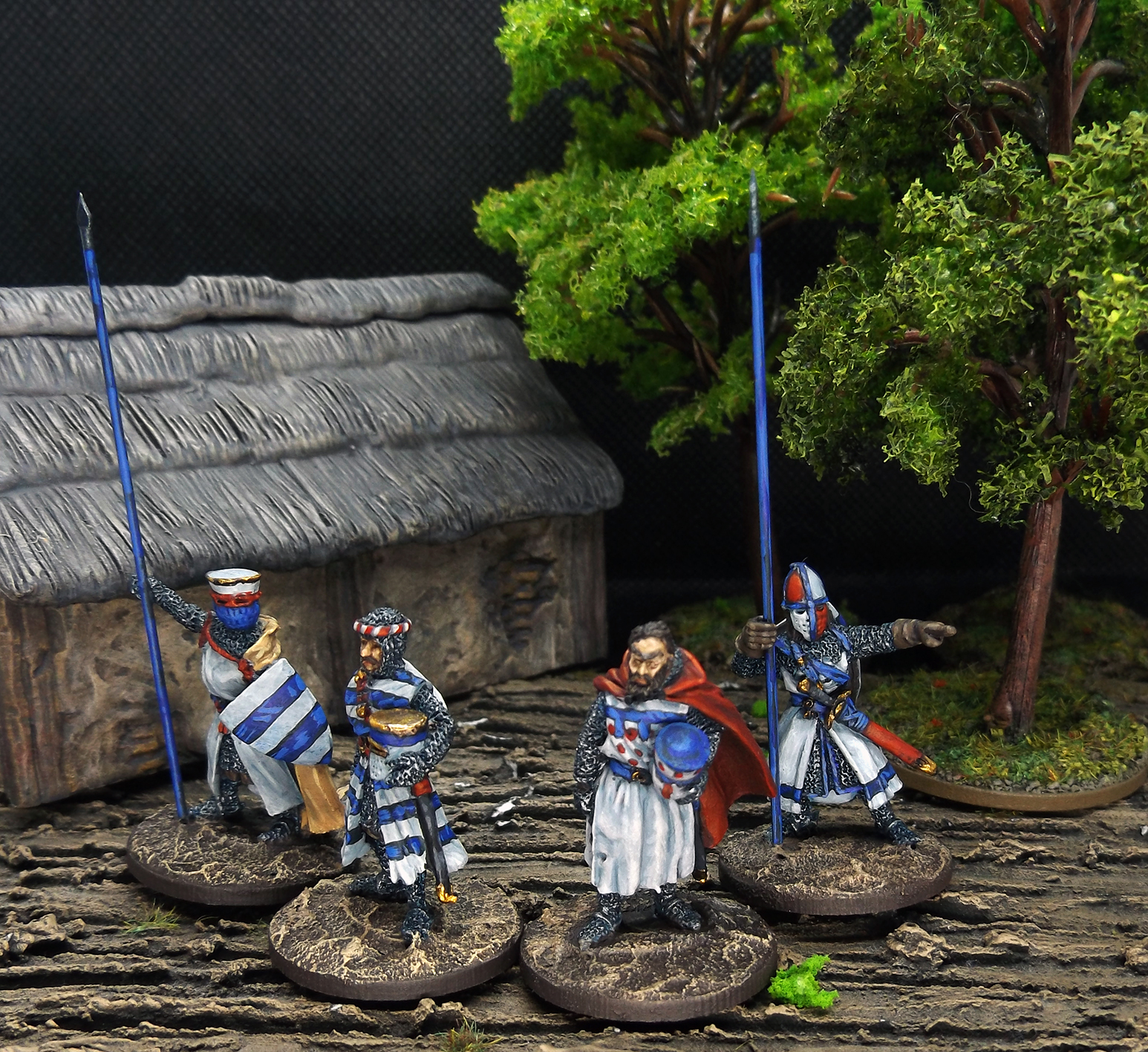
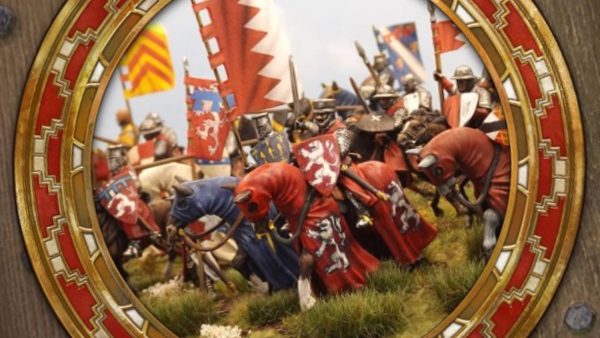
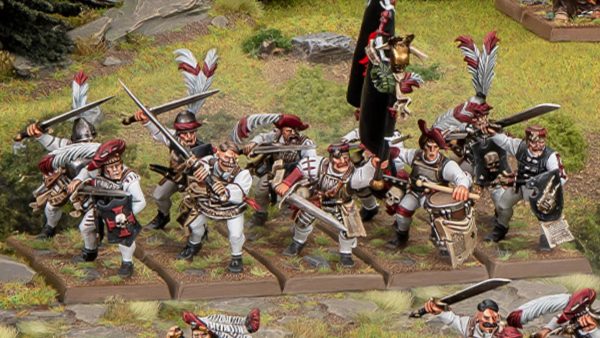
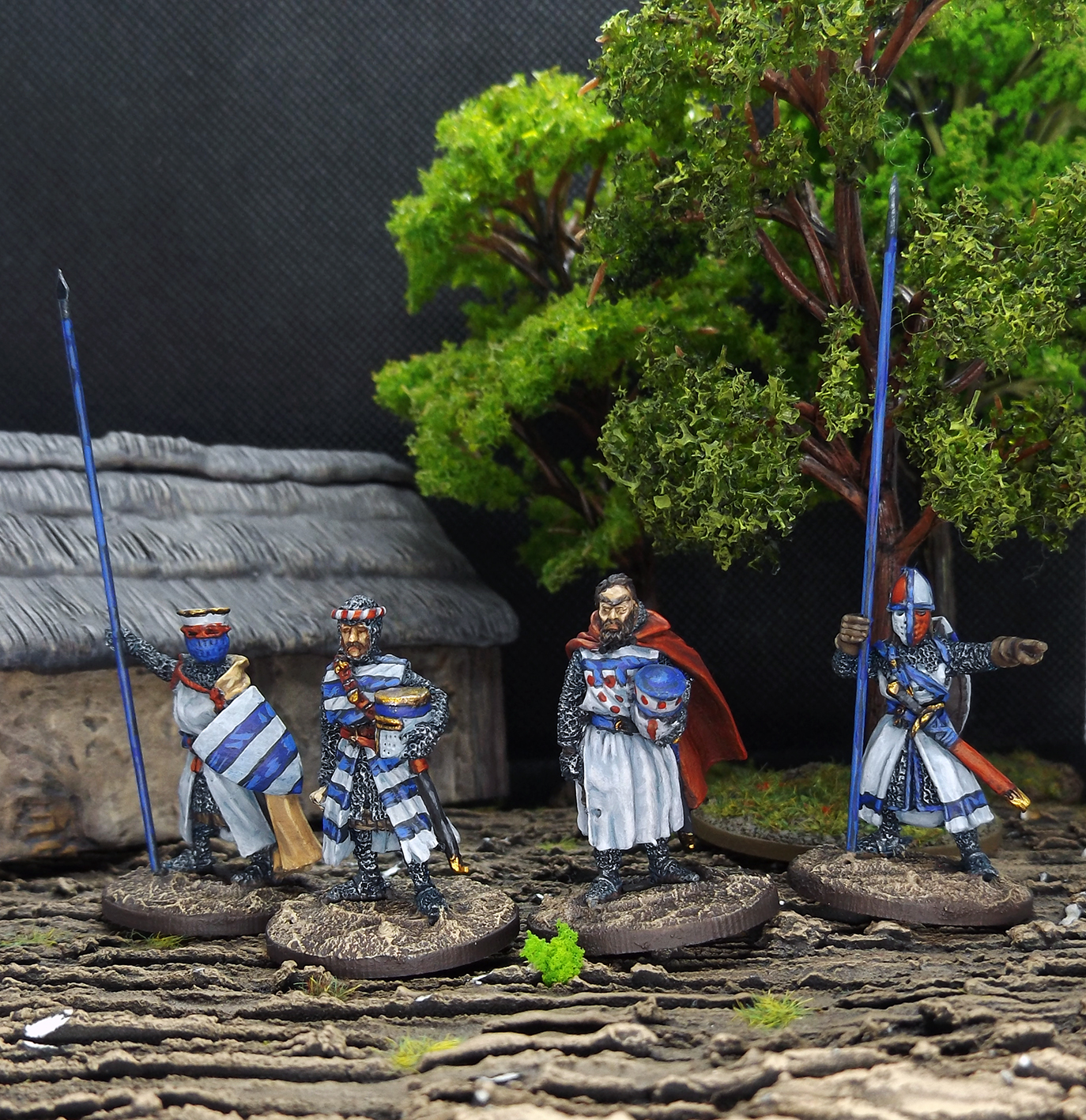
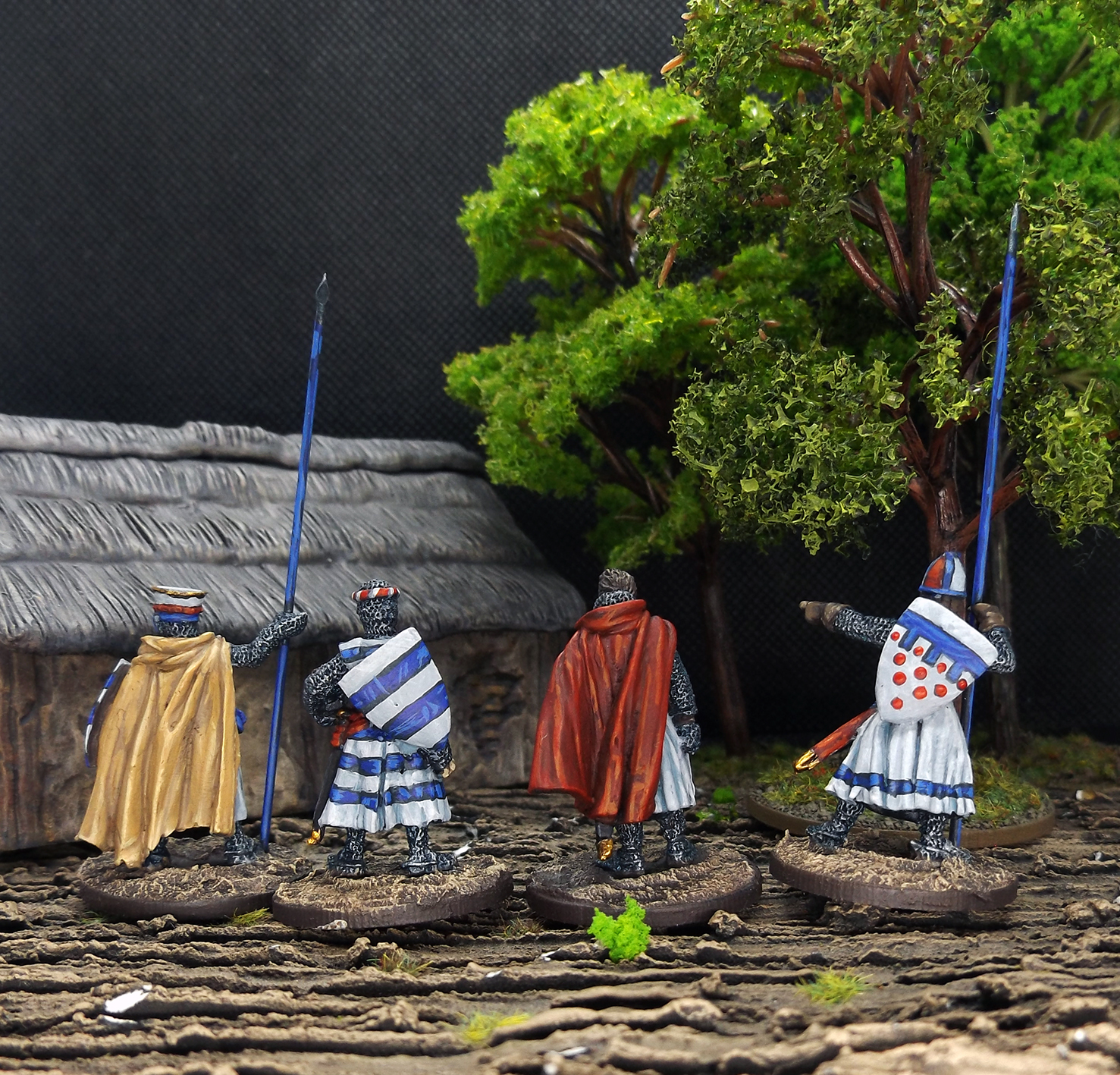
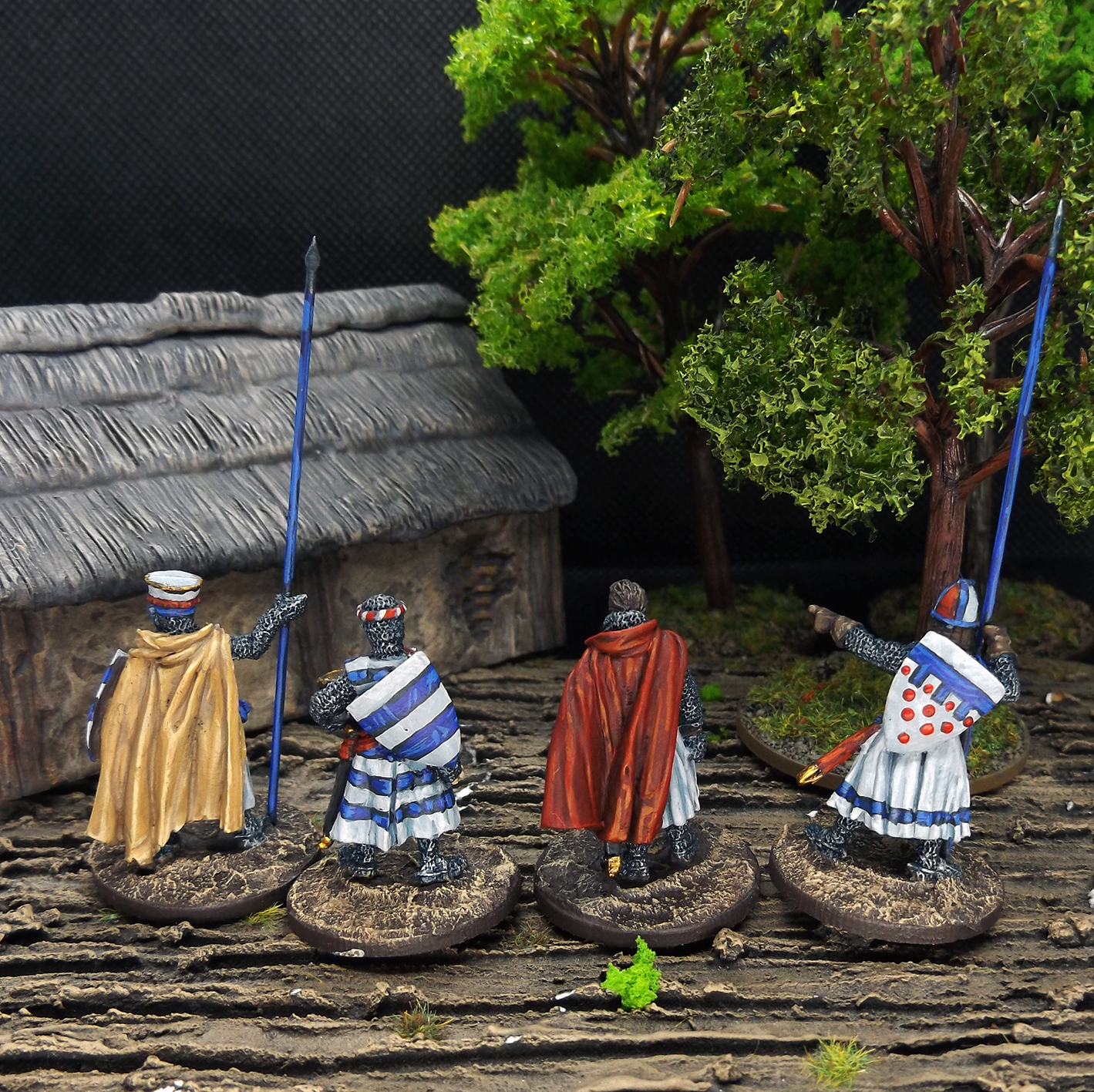
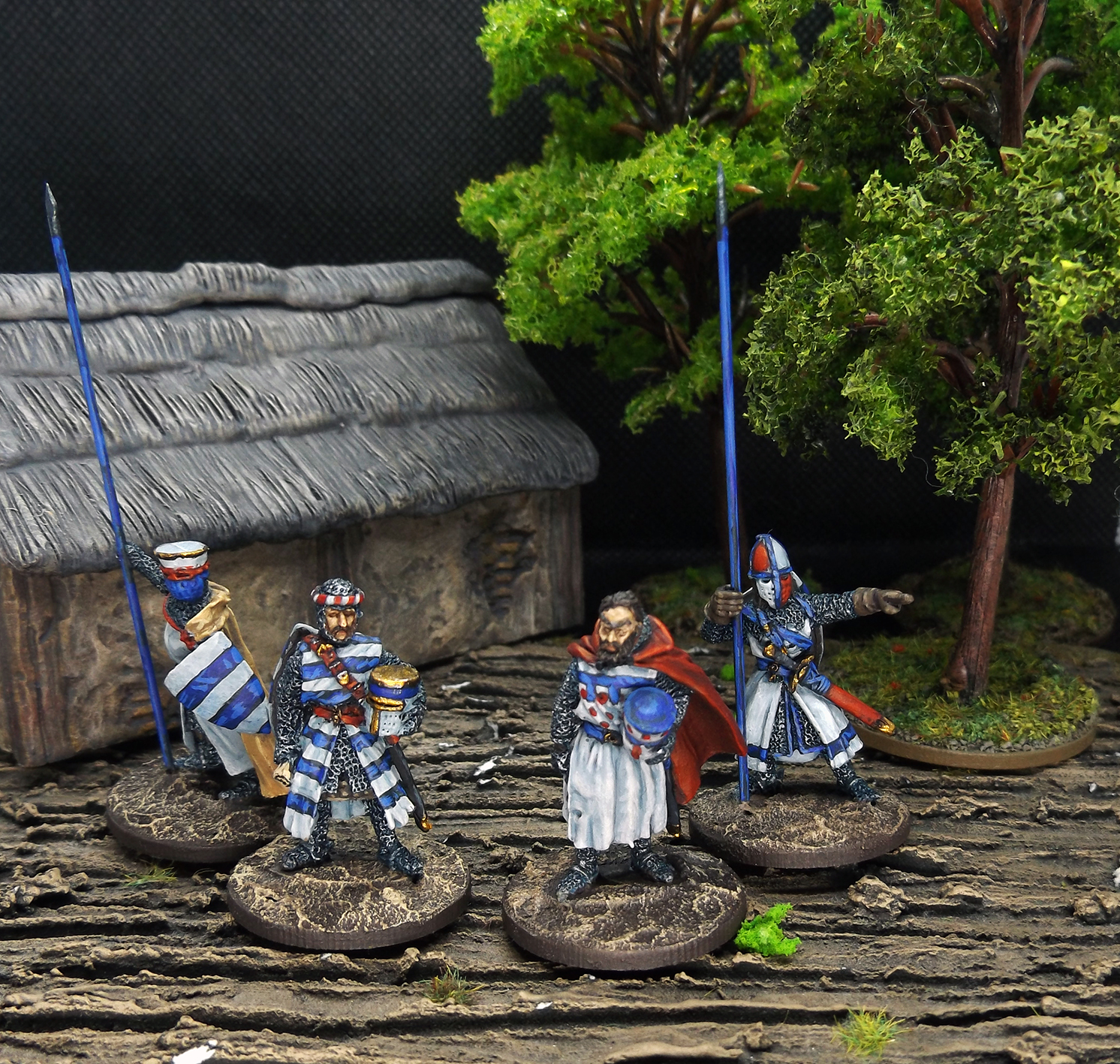
I have finished a couple of local barons in John Babington, with the red dots on the shield and Henri de Grey, with the blue stripes on his and their bannermen. That means I have nearly painted the whole of the first wave of The Barons’ War and I have just two mounted knights to do and all done. I think I now have enough to start playing with, lol, until Robin Hood comes that is, lol.
Rollcall of my Painted Stuff So Far
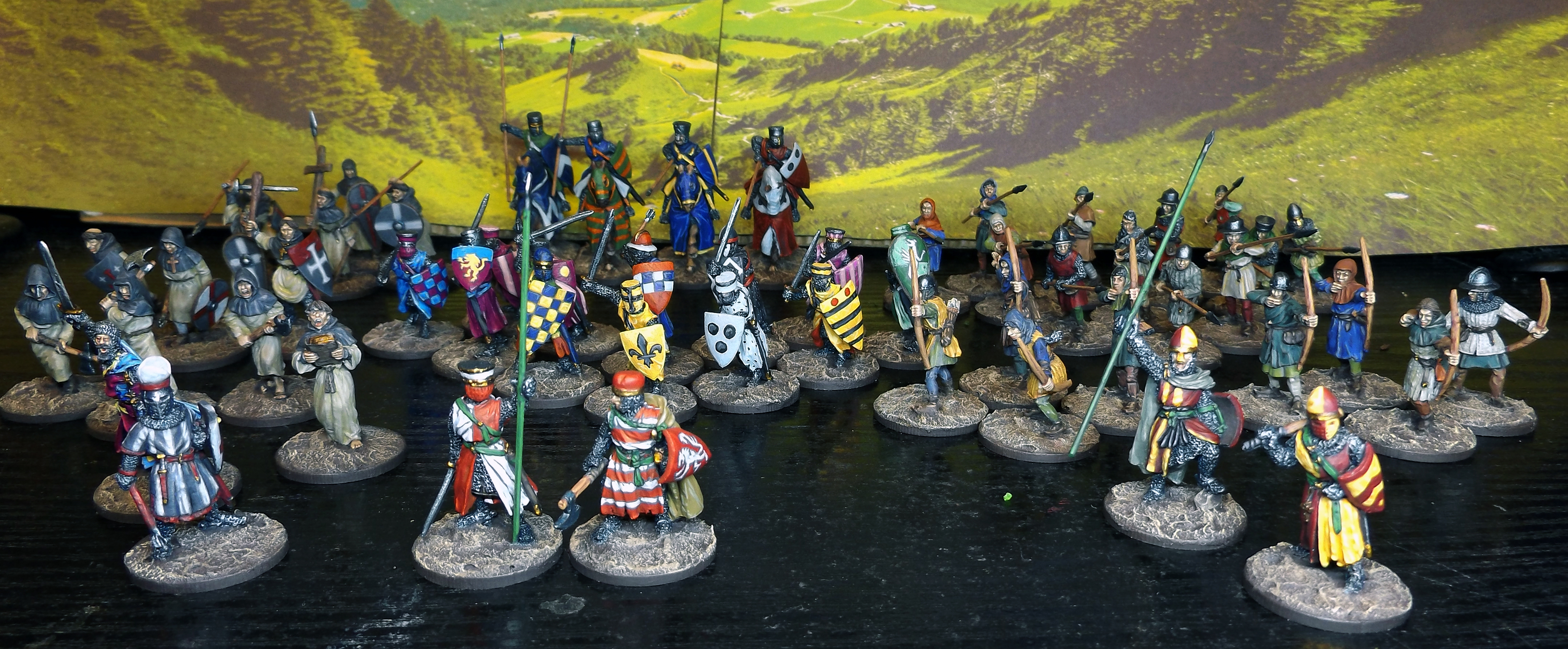 My whole painted force so far
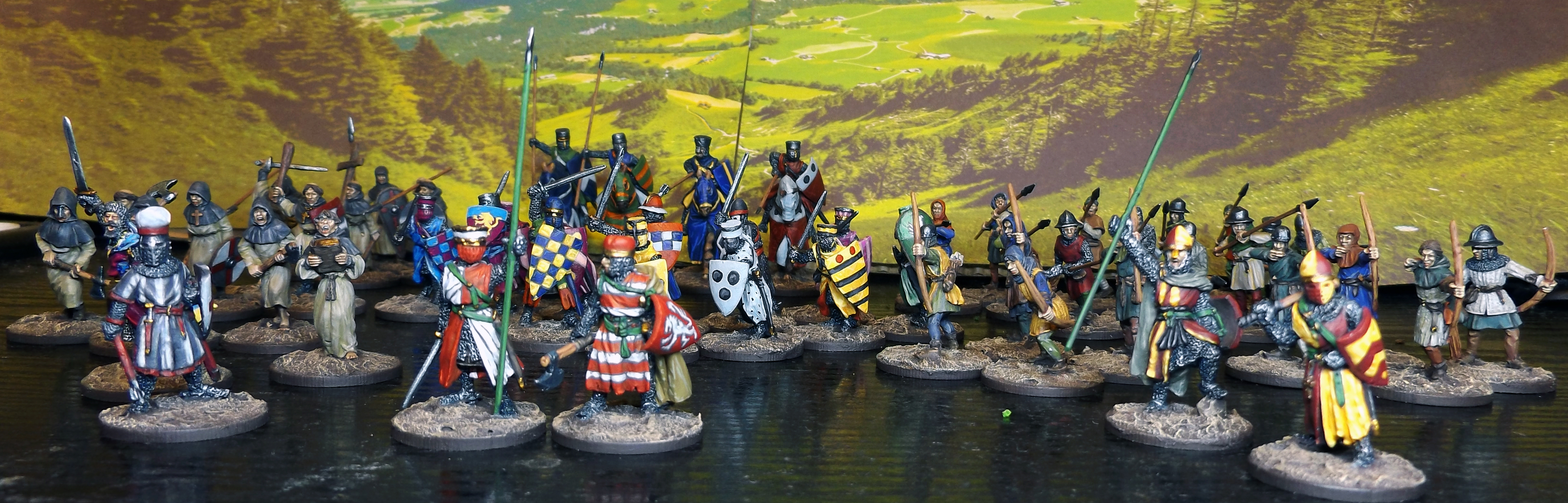
This is all my completed and painted miniatures for my Barons War, which is basically the complete first wave minus a couple of mounted knights. I am quite shocked with the number painted and I am normally a slow painter and these have grabbed my imagination and I am loving it.
Next up is Robin Hood and crew and levys.
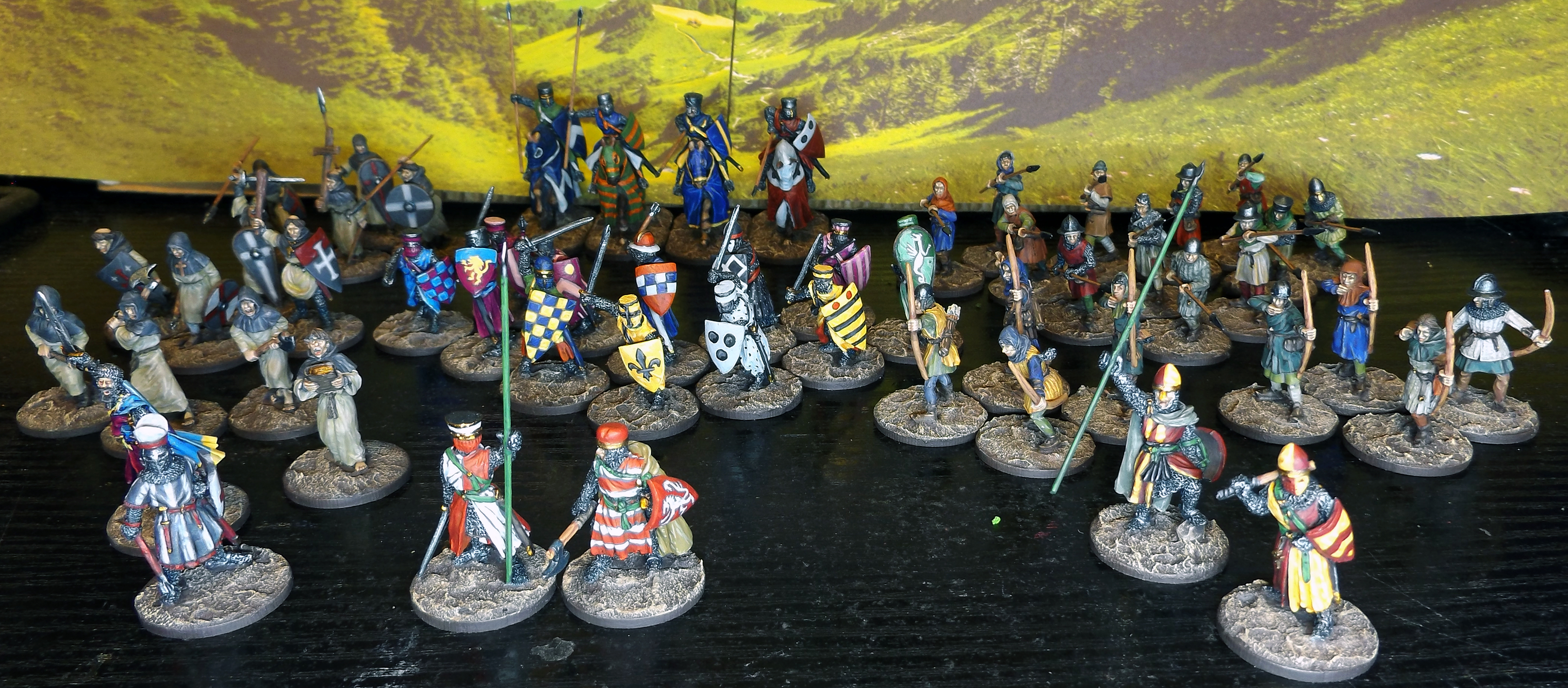
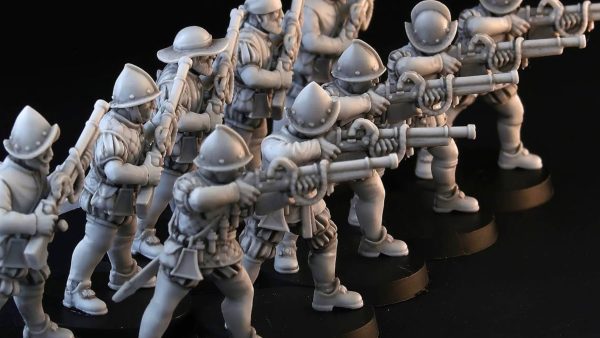
More Spearmen and Bowmen
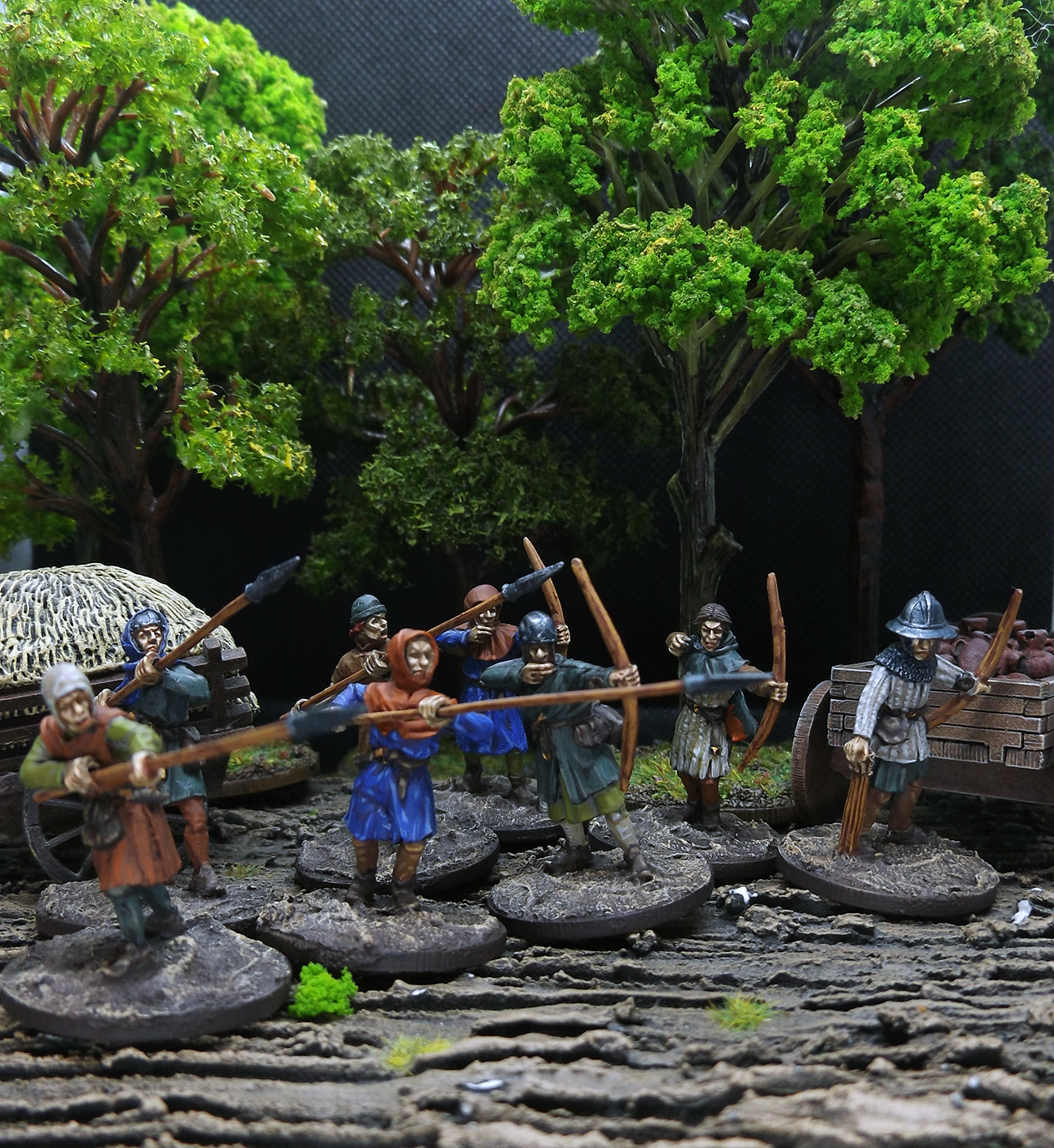 Spearmen and Bowmen
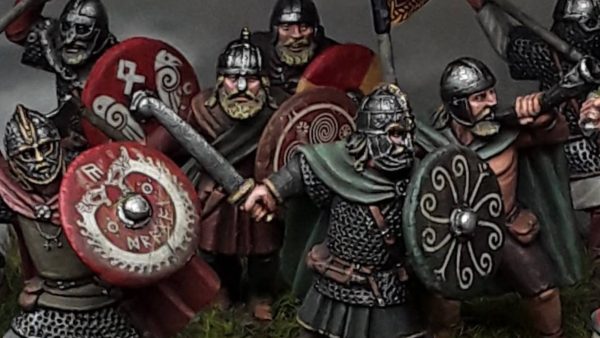
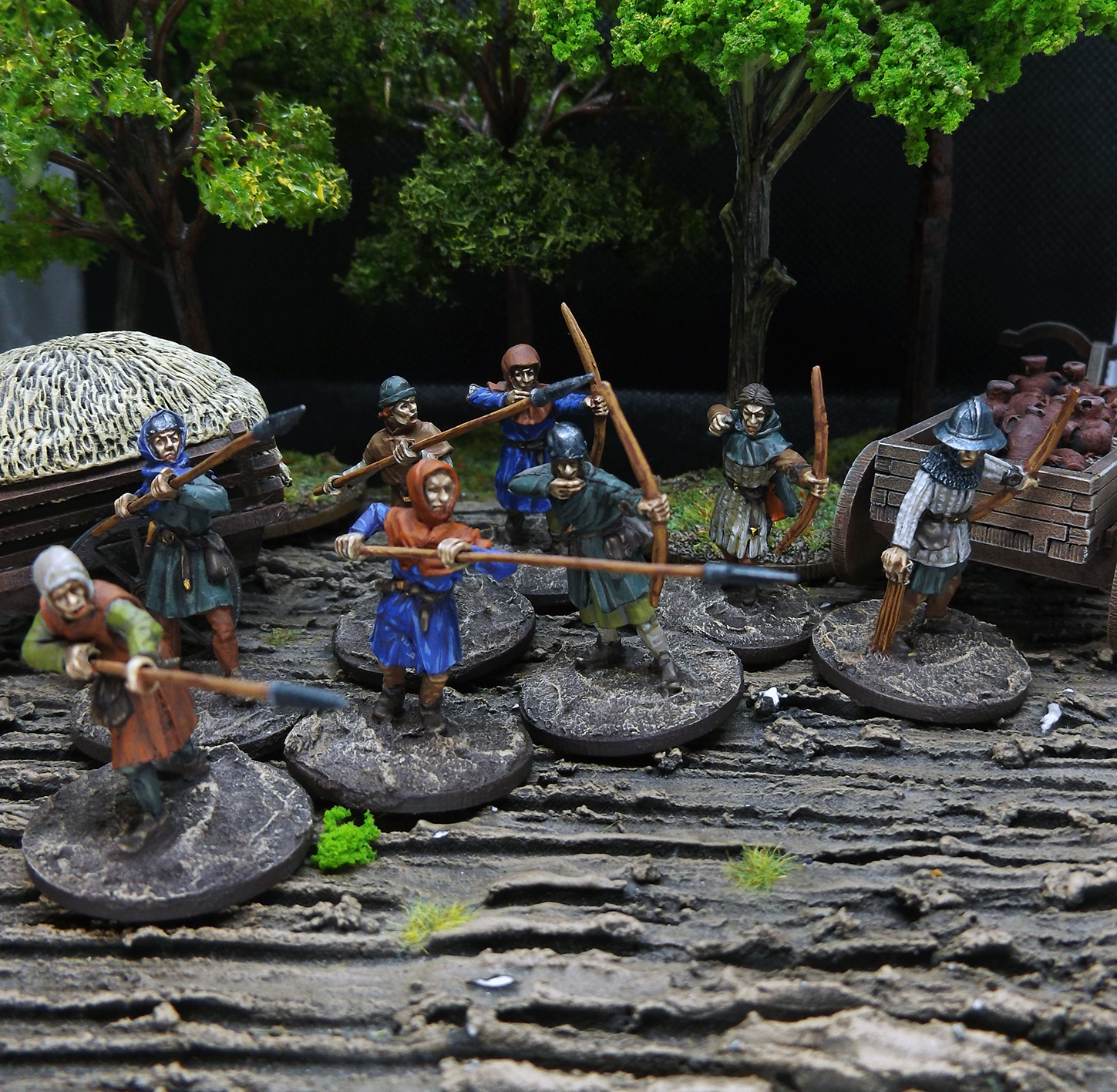
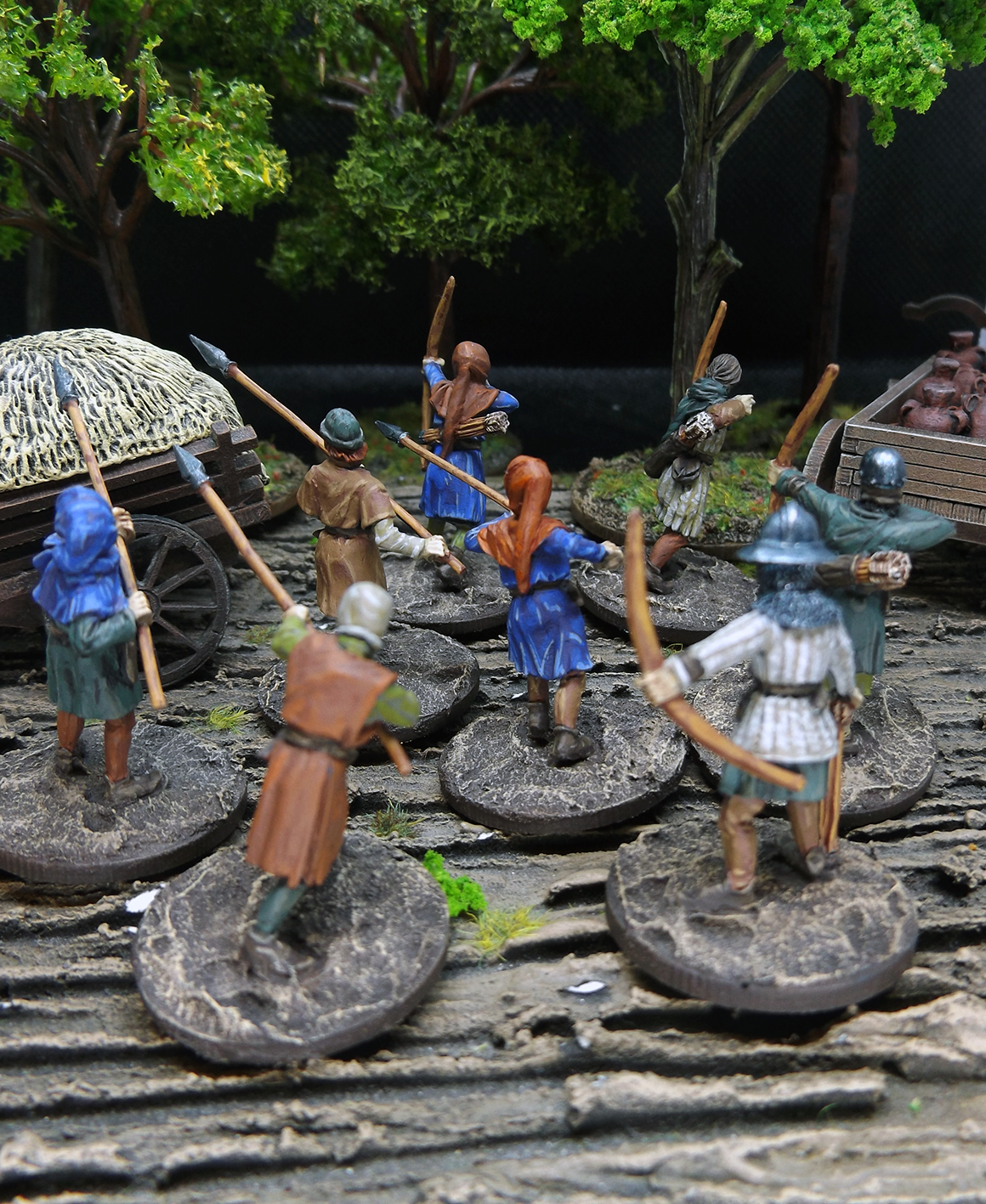
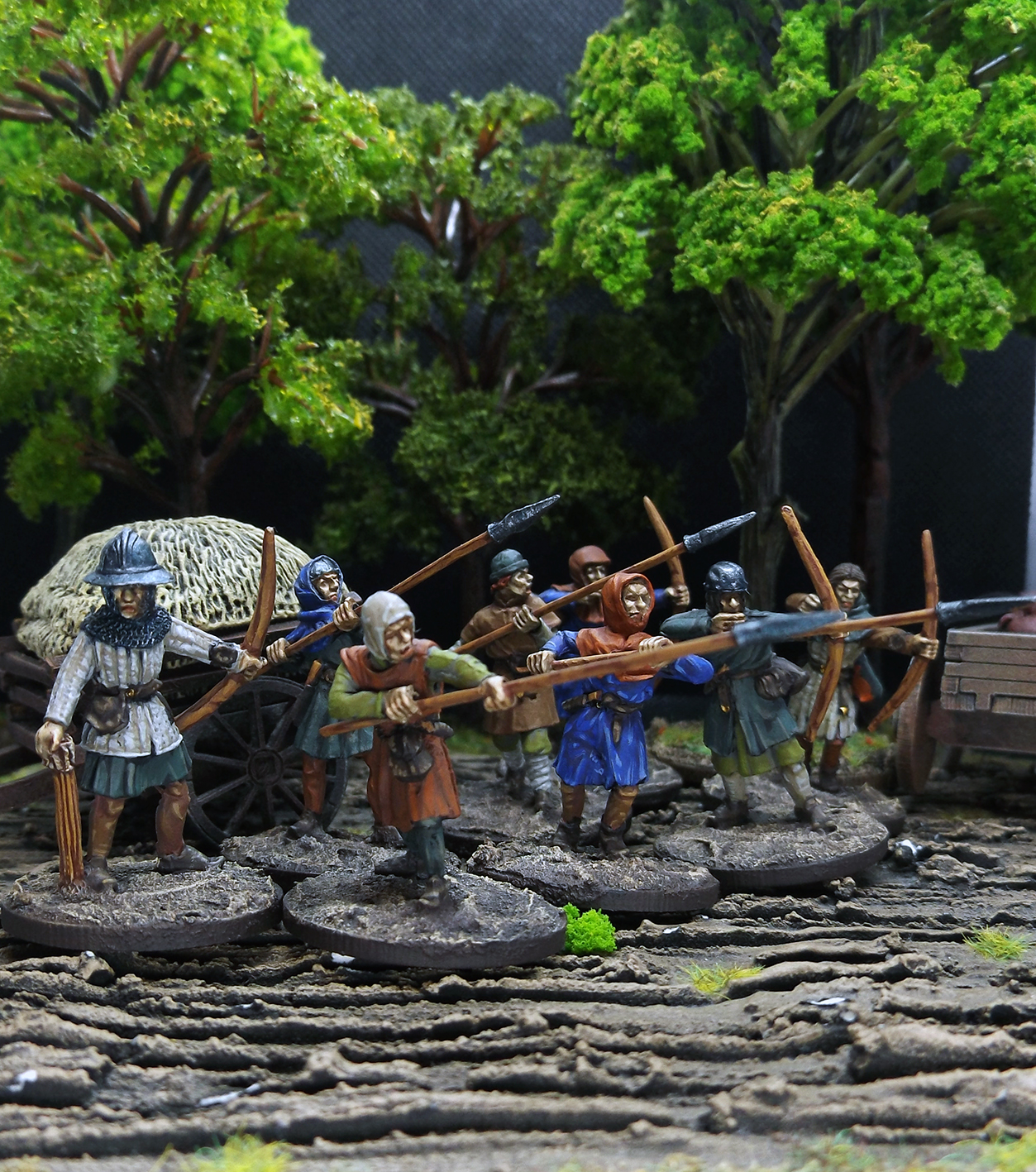
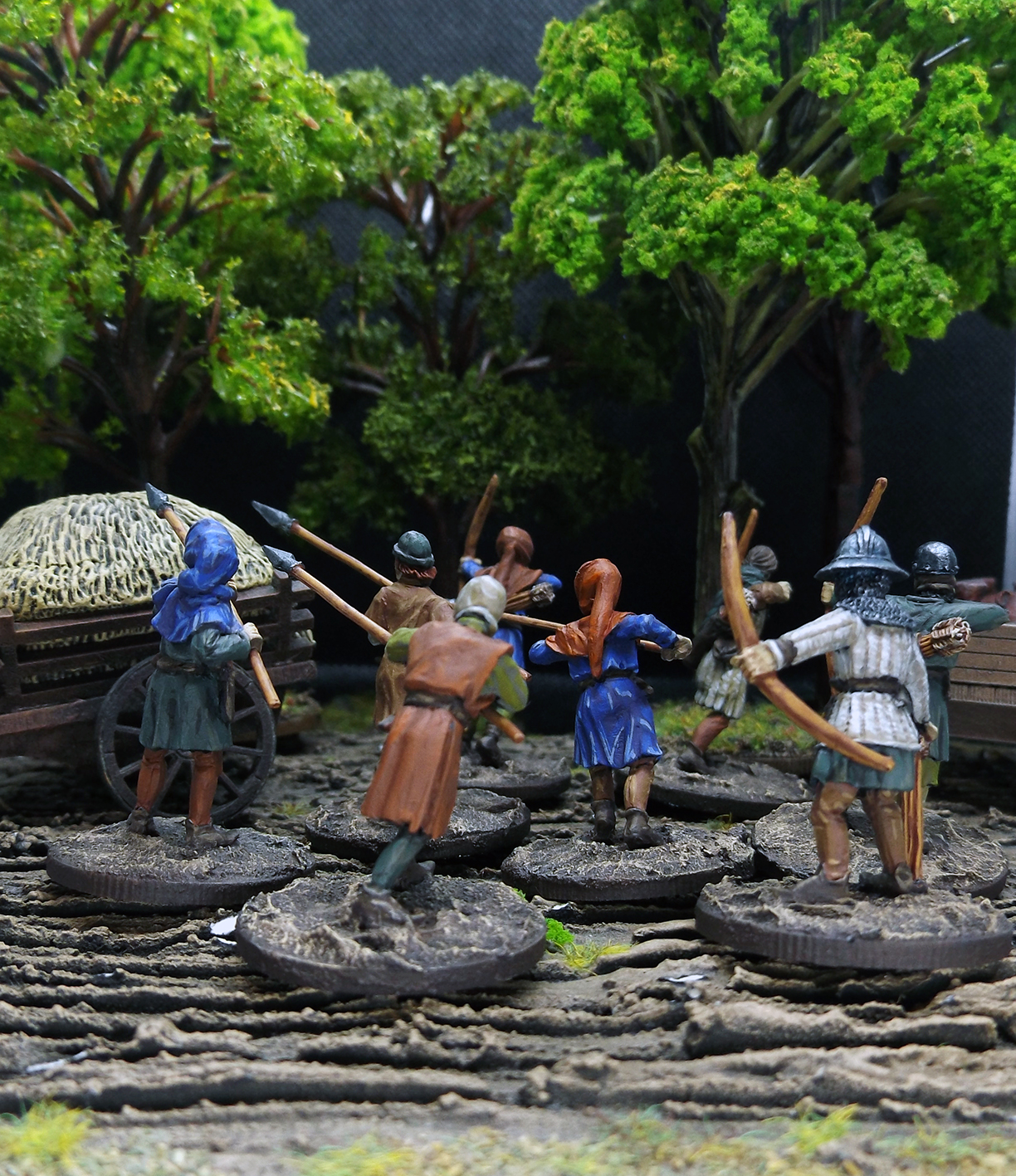
I have finished more of the backbone of my Barons War force the Spearmen and Bowmen. I love these sculpts from Paul Hicks as though these are rank and file really they are so full of character and are a dream to paint. I have again gone for the more muted tones for the palette to contrast against the more brighter palette of the knights.
John de Lacy
 John de Lacy
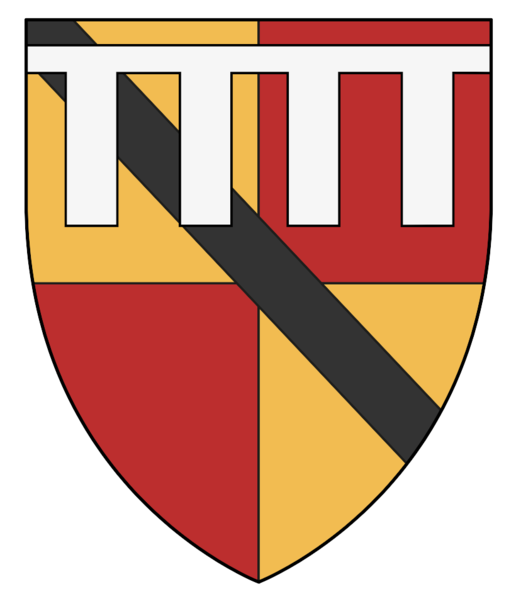
John de Lacy, the constable of Chester, was a member of one of the oldest, wealthiest and most important baronial families of twelfth- and thirteenth-century England, with territorial interests distributed widely across the counties of the north Midlands and north.
John (c. 1192-1240) was the eldest son and heir of Roger de Lacy, constable of Chester (d. 1211) and his wife, Maud de Clere. He was a minor at the time of his father’s death and did not enter into possession of his lands until September 1213. Like a number of the rebels, he was a young man at the time that he became involved in the revolt. Although a natural royalism is suggested by his decision to join John on his expedition to Poitou in 1214, he nurtured a sense of grievance against the king owing to the terms on which he was granted possession of his father’s estates. The de Lacy inheritance was a highly valuable one, comprising more than a hundred knights’ fees, together with the baronies of Pontefract (Yorks.), and Clitheroe, Penwortham, Widnes and Halton (Lancs.). John, when he permitted the young heir to enter, therefore exacted his price. He insisted that the latter offer a massive fine of 7000 marks repayable over three years, in the meantime handing over to a royal keeper his chief castles of Pontefract (Yorks.) and Castle Donington (Leics.), to be garrisoned by the king at Lacy’s expense on pain of confiscation should the latter rebel.
As late as the end of May 1215 Lacy was still assumed to be on the king’s side. However, with the fall of London he threw in his lot with the rebels and was present at Runnymede and named to the Twenty Five. Thereafter he veered opportunistically between the rebel and royalist camps. On New Year’s Day 1216 he submitted to the king, agreeing to terms which shed remarkable light on the latter’s own attitude to the Charter imposed on him at Runnymede. Lacy was obliged not only to submit to the king personally but also to renounce the cause for which he had been fighting. In the words of the submission ‘If I have sworn an oath to the king’s enemies, then I will not hold to it, nor will I adhere in any way to the charter of liberties which the lord king has granted in common to the barons of England and which the lord pope has annulled’. Through the imposition of such terms, John was hoping to kill off the charter at birth. Although ostensibly entering into the terms of his own free will, Lacy was probably agreeing to a formula devised by the king’s clerks. Precisely the same wording is found in the charter of submission of Gilbert FitzReinfrey, who likewise made his peace in January 1216.
In May 1216 Lacy was still at the king’s side, but by the time of the latter’s death at Newark in October he was in rebellion again. He was probably active on the rebels’ behalf for much of 1217, but appears not to have been present at the baronial defeat at Lincoln. He submitted and was readmitted to fealty in August, a time when a good many rebels submitted to the new king. In the following month he was ordered to oversee the restoration of Carlisle Castle by the king of Scots. By now, however, his thoughts were now turning to the crusade, and in May 1218 he embarked for Damietta in Egypt with his overlord, Ranulph, earl of Chester. He did not return to England until August 1220. In 1225 he was witness to the definitive reissue of Magna Carta and in the following year he served as a king’s justice in Lincolnshire and Lancashire. Following Ranulph’s death in 1232 he was allowed to inherit one of the earl’s titles, that of the earldom of Lincoln, as the son-in-law of the earl’s sister, Hawise.
Lacy died on 22 July 1240 and was buried near his father in the choir of the Cistercian abbey of Stanlaw (Lancs.), his bones being moved to Whalley, when the monks transferred there in the 1290s. He left a widow, Margaret, daughter of Roger de Quincy (d. 1217), eldest son of Saer de Quincy, earl of Winchester (d. 1219), another of the Twenty Five. Margaret died in 1266 and was buried in the Hospitallers’ church at Clerkenwell, London.
William de Huntingfield
 William de Huntingfield
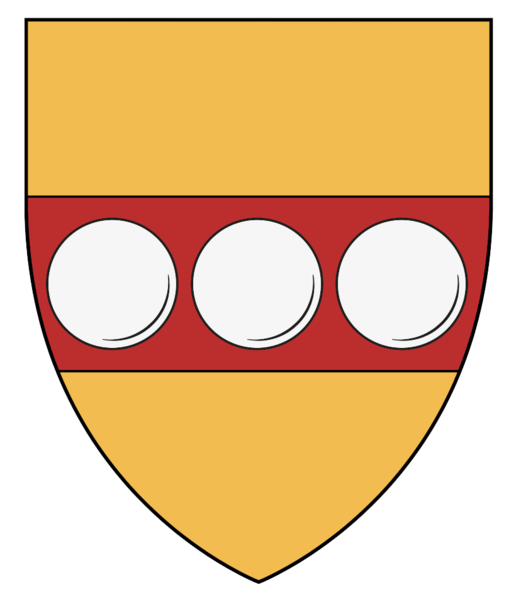
William de Huntingfield was another of the group of East Anglian landowners who were active in the opposition to King John. He had connections with Robert FitzWalter, the main rebel leader and one of the Twenty Five, and with another rebel, the Lincolnshire knight, Oliver de Vaux. He held seven knights’ fees of the honor of Eye in Suffolk, including the manor of Huntingfield, from which he took his name, and several knights’ fees of other baronies, including that of Lancaster.
William entered King John’s service in 1203 as temporary custodian of Dover Castle, and acted as an itinerant justice on the eastern circuit in 1208-9 and as sheriff of Norfolk and Suffolk in 1209-10. He sent knights on John’s expedition to Ireland in 1210 and served in person with the king in 1214 on his failed venture to Poitou. The signs are that by instinct and upbringing he was a natural royalist.
It is not surprising, then, that he was a latecomer to the opposition, turning against John only in 1215 and joining the rebels at their muster at Stamford in Easter that year. Like others, he may well have been moved by a sense of financial grievance, as he had offered speculative fines for favours, which had left him indebted, although John had offered some respite. After being appointed to the Twenty Five, he joined Robert FitzWalter and William de Mandeville in asserting rebel control over East Anglia and in offering assistance to Louis of France after his arrival in England. Like Richard de Montfichet, he was captured at the battle of Lincoln in May 1217, and in September two his knights came before royal agents to negotiate his ransom.
William died before October 1225, leaving as his heir his son, Roger (d. 1257), and a daughter Alice, widow of the Lincolnshire knight, Sir Richard de Solars.