







PanzerKaput Goes To Barons’ War


Recommendations: 11332
About the Project
Set against a backdrop of a Civil War that lasted for two years, 1215-17, as a result of the issuing of Magna Carta. A civil war was the perfect opportunity for the leading nobles of the time to grab land and power while settling some old scores along the way. This vying for land and power hadn't stopped since the invasion of 1066 with only the strongest of kings being able to keep their nobles in check. Our narrative focuses on small groups of warriors brought together under a lord or baron to raid and steal or defend land and property. With the strong, wise, cunning and lucky aiming to rise out of this civil strife in a better position than when it started. The Barons' War skirmish game has been written to enable players to fight out tabletop battles against the backdrop of the First Barons’ War between rival Barons or rival factions who find themselves on either side of the conflict. The game is historically themed, the gameplay is fast-paced and tactical with plenty of narrative and where force building presents you with lots of options enabling two players to muster very different retinues. However, as intended, this is an alpha set of rules which does not include rules for siege warfare, although rules for fighting in buildings are included. Campaign rules are something that will be addressed at a later date and released online. Having grown out of the Barons’ War Kickstarter project, the intention is for this ruleset to develop into a system that could be used throughout the Medieval period. Starting with England from when the Western Roman Empire withdrew around 410 AD to 1485 AD when Richard III died at the Battle of Bosworth Field. This presents us with a huge span of history for gaming which can be broadly divided into Romano-British, Anglo-Saxon and Viking, Anglo-Norman, Angevin and Plantagenet. And that’s just when looking at it from Great Britain. With warriors of this period being pretty similar, it would be easy to use the profiles in this rulebook to play out tabletop battles in any setting. Over time we see these rules evolving with additional warriors, characters, abilities and scenarios being added starting with the Dark Ages, the Anarchy and the Crusades and shared to www.warhost.online, which has been set up to be the community website for the game.
Related Game: The Barons' War
Related Company: Footsore Miniatures and Games
Related Genre: Historical
This Project is Active
William de Mowbray
 William de Mowbray and Bannerman
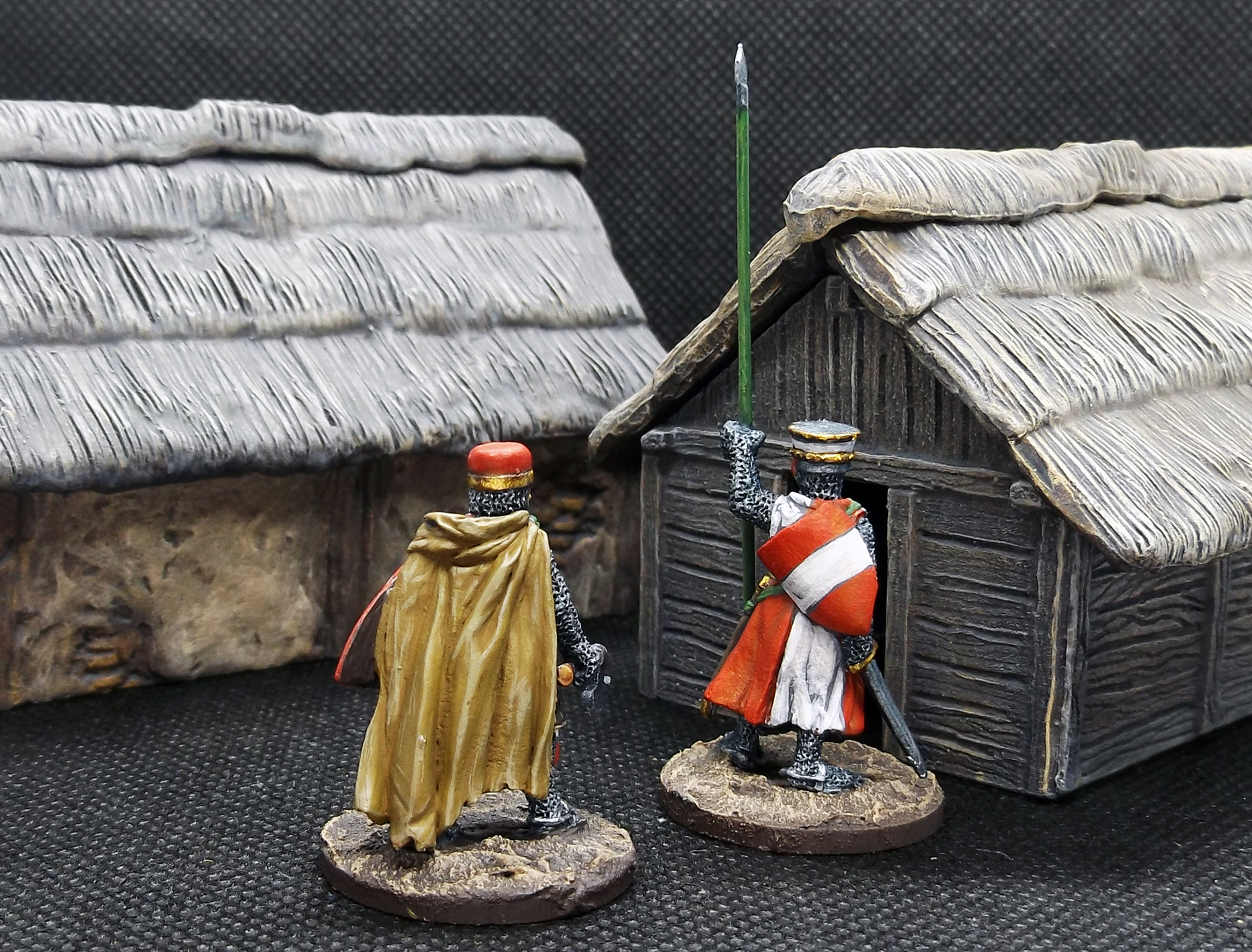
I have finished the commander for my second force, William de Mowbray, 6th Baron of Thirsk, 4th Baron Mowbray (c. 1173–c. 1224) was a Norman Lord and English noble who was one of the twenty-five executors of Magna Carta. He was described as being as small as a dwarf but very generous and valiant.


William de Mowbray's Spearmen
 William's Spearmen
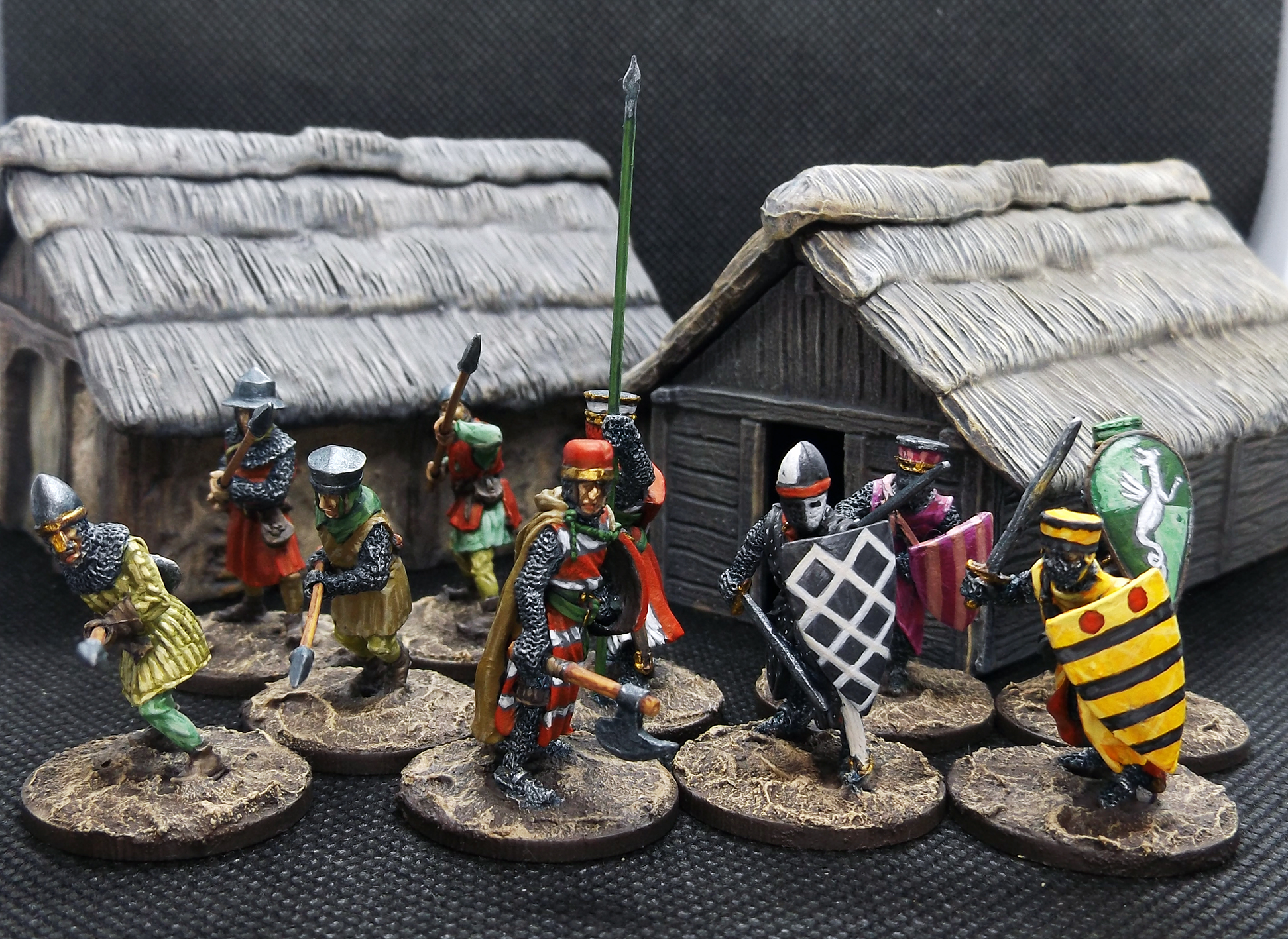
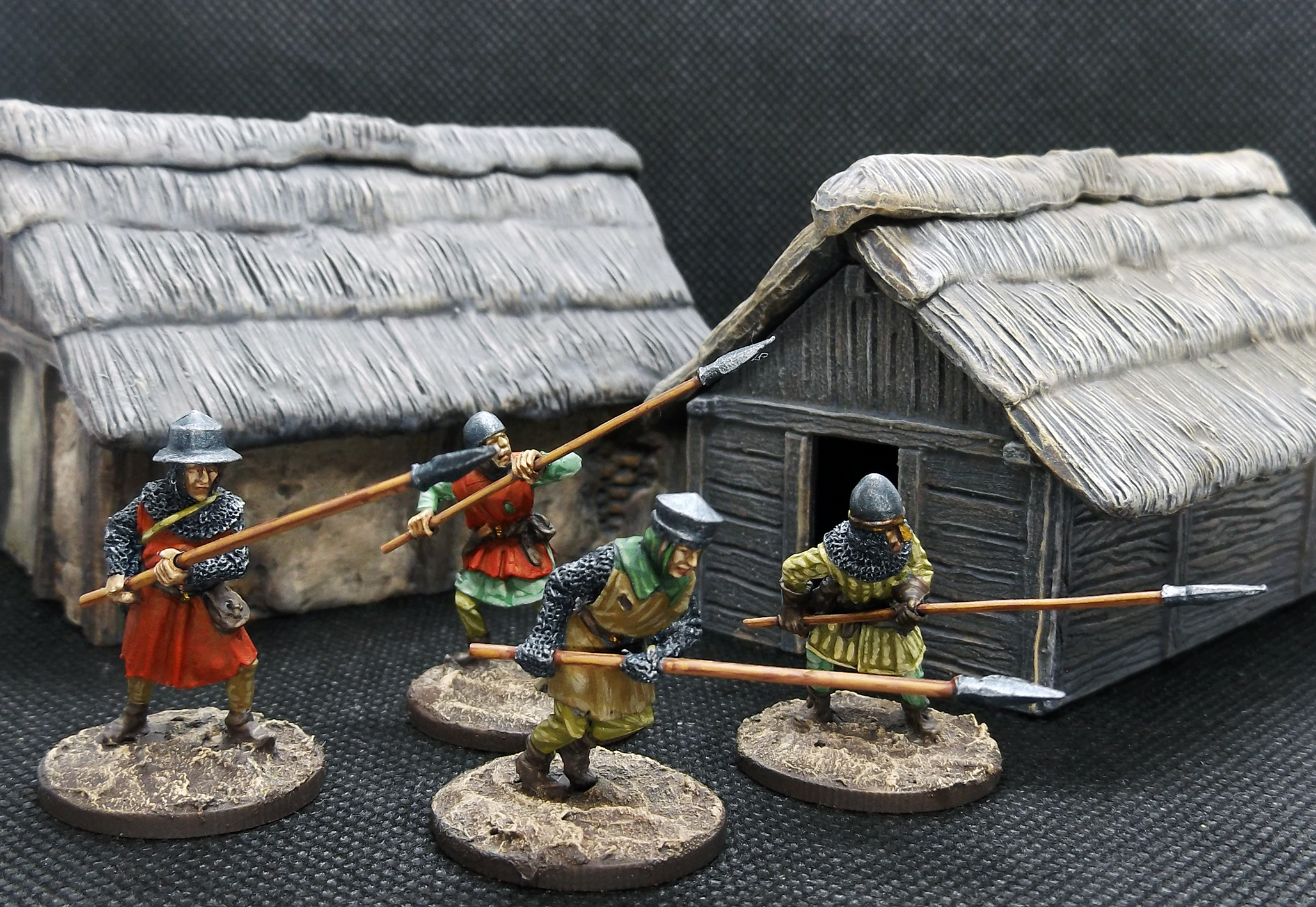
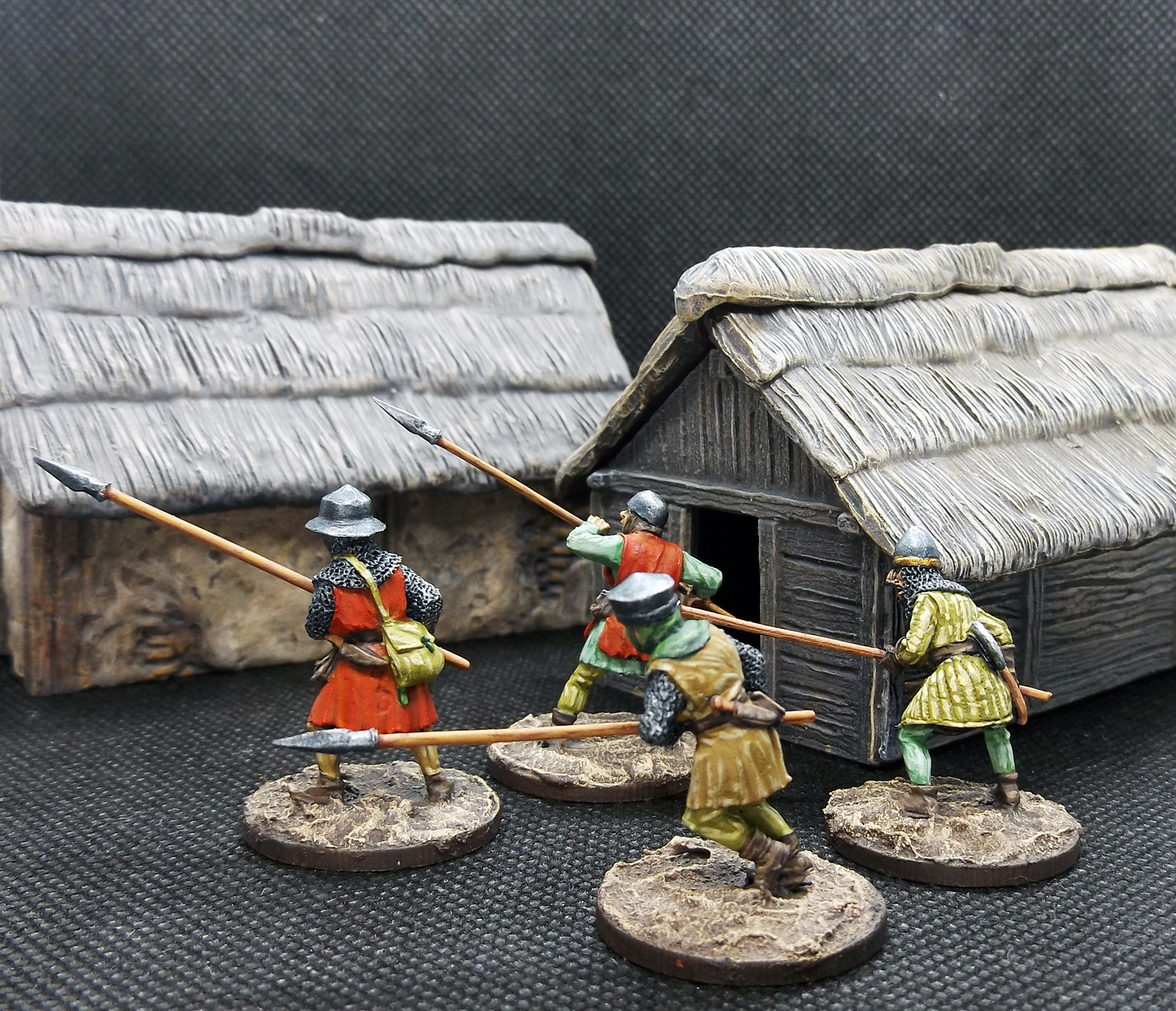
I have finished my first unit of spearmen for William de Mowbray’s force, my second force and additional force to be added to the Abbot William Pepyn’s force. I have gone for a simple, everyday wear for the clothing but have added a red tunic, tabard on a couple of this to make them feel like a unified, single force.
I love the sculpts and the character that Paul Hick’s has got into these is amazing.
Roger and Hugh Bigod
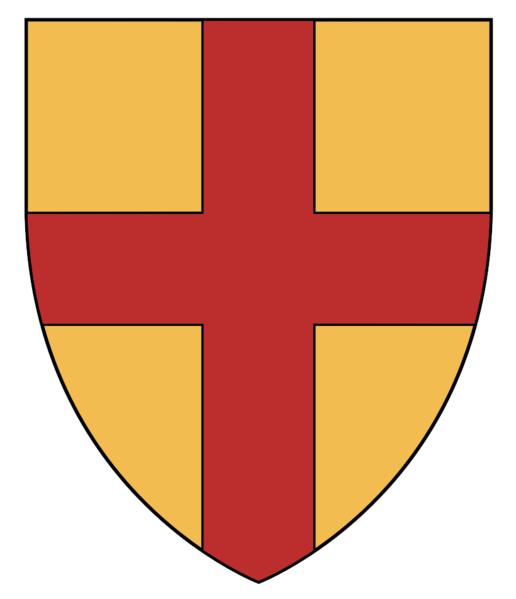 Roger Bigod
The Bigods were a major East Anglian landowning family, based at Framlingham (Suffolk), who had held the earldom of Norfolk since its grant to Hugh Bigod in 1140 or 1141. Roger (c. 1143-1221) was the only son of this Hugh by his first wife, Juliana, sister of Aubrey de Vere, earl of Oxford.
Roger’s father had left him a tangled inheritance. He had repudiated his son’s mother and had subsequently married Gundreda, daughter of Roger, earl of Warwick, by whom he had two more sons, Hugh and William, for whom their mother, after their father’s death in 1176 or 1177, sought to make provision out of the family inheritance at their elder half-brother’s expense. Henry II, savouring the opportunity to gain his revenge on Hugh for his involvement in the rebellion against him in 1173-4, deliberately left the case unresolved, refused to allow the son to succeed to the father’s earldom, and confiscated the lands in dispute between the heir and the half-blood. Roger was only able to vindicate his rights on Richard I’s accession in 1189, when the earldom was granted to him on payment of the relatively low relief of one thousand marks (£666).
Thereafter Roger enjoyed a long and honourable career in royal service. He served Richard as a justice in eyre (i.e. itinerant judge) and as a baron of the exchequer. In John’s reign he took part in the defence of Normandy, and after 1206 served on campaigns in Poitou and within the British Isles. In 1215, however, he went over to the opposition, joining the rebel barons in their muster at Stamford. In part, his involvement on the rebel arose in response to the financial pressures exerted on him by the king. The scutage – money due in lieu of personal military service – that the earl owed from his many estates was so substantial that in 1211 he was driven to striking a deal with the exchequer to pay 2000 marks (£1333) for respite during his lifetime from demands for arrears and for liability to a reduced sum in future. Roger had various other grievances against the king. One at least related to litigation. In 1207, when a legal action had been brought against him in the royal courts, he objected to the chosen jurors on grounds of their likely bias, but his arguments had been ignored by the king, who ordered the case to proceed.
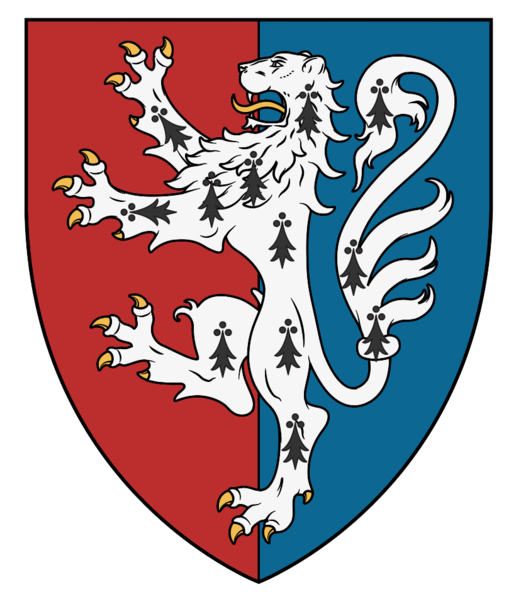 Hugh Bigod
Roger was joined in his rebellion by his son and heir Hugh, who was already of full age, and the two stood in the forefront of the opposition in East Anglia. In March 1216 the king succeeded in taking the family’s main castle at Framlingham and put pressure on the earl by pardoning those of his followers whom he captured, while condemning those who refused to submit to forfeiture of their lands. Roger and Hugh did not return to their allegiance until after the general peace settlement agreed with Henry III’s Minority government at Kingston-on-Thames in September 1217. By April of the following year the earl had received back all his lands and titles, but, by now over 70, he was in semi-retirement and he died three years later in 1221. He was succeeded as earl by his son, another of the Twenty Five, who in 1206 or 1207 had married Matilda, daughter of the future Regent, William Marshal, earl of Pembroke. The son died in February 1225.
Framlingham castle, as we see it today, is largely the product of a rebuilding carried out by Earl Roger in Richard the Lionheart’s reign, following the partial demolition of the fabric by Henry II in 1174. It consists of a cluster of baileys set on a low eminence above a flooded mere. The inner bailey, which constituted its central space, was innovative in taking the form of an irregular-shaped curtain wall punctuated at intervals by open-backed towers, dispensing great tower or keep customary in Norman castles.
William d’Albini, Baron of Belvoir
 William d’Albini, Baron of Belvoir
William d’Albini (d’Aubigny) was a relative latecomer to the baronial opposition cause, but one of the movement’s ablest military commanders and the leader of the defence of Rochester against King John in 1215. After John’s son, Henry III, succeeded to the throne in 1216, he showed himself a loyal supporter of the new regime.
William (after 1146–1236) was the son of William d’Albini II by his wife Maud FitzRobert, the grandson of another William, known as ‘Brito’, and the eventual heir of the first post-Conquest lord of Belvoir, Robert de Todeni. William’s lordship was an extensive one stretching across the east and north Midlands, comprising some 33 knights’ fees, in part overlooked from Belvoir (Leics.) itself, dramatically sited on a high ridge west of Grantham.
William, like a number of the Twenty Five, embarked on the path to rebellion with reluctance being by both upbringing and instinct a natural royalist. He had had long experience of serving in royal administration. In 1195 and 1197, under Richard, he had held office as sheriff of Warwickshire and Leicestershire and in John’s first year he was appointed to the same office in Bedfordshire and Buckinghamshire. In 1200 he had served as a custodian or justice exercising supervision of the Jews, and in 1210 he was appointed with other lords to supervise collection of tolls in the ports. In February 1213, as John’s suspicions of the northern lords were deepening, he served as a commissioner to look into money allegedly collected by sheriffs and other officials that never found its way into the royal coffers.
William eventually joined the opposition shortly after the fall of London in May 1215, doing so probably for a number of reasons. Almost certainly he was growing disenchanted with the oppressive nature of John’s kingship. Five years before, he had been a witness to John’s official account of the reasons for his destruction of the Braose family, thereby associating himself with the king’s actions, while yet becoming aware of their arbitrariness. At the same time, like other lords, he was feeling the acute financial burden of John’s misrule. As late as 1230, more than a decade into Henry III’s reign, he still owed no less than £3,308 to the Crown of old debts dating from John’s reign. In company with others of the Twenty Five, he could be counted among the debtors of 1215. Finally, he is almost certain to have been influenced by the ties of kinship. He was the first cousin of Robert FitzWalter, lord of Dunmow, to all intents and purposes the leader of the revolt, and was the uncle of another rebel, Robert de Ros, the lord of Helmsley. It may also be significant that among his knightly tenants was Nicholas de Stuteville of Knaresborough, the greatest baronial debtor of all.
In June 1215 his experience and social standing ensured his appointment to the Twenty Five and from the autumn, after the renewal of war, he fought actively on the baronial side. In July, after the barons had gone their separate ways, Robert FitzWalter was writing to him to advise of a change of meeting-place for a tournament from Stamford to Hounslow Heath. John’s strategy in the civil war was to counter the baronial challenge by bringing in a force of mainly Flemish mercenaries to help re-take London. The barons, to prevent these men’s passage inland from Dover, made for Rochester, at the bridging point over the Medway, and quickly took the castle, installing William as constable. John retaliated by immediately embarking on siege operations. The castle, though ill-provisioned, was well manned, with some 95 knights and 45 men-at-arms under William’s command, and strong resistance was offered. Both sides fought fiercely. ‘Living memory does not recall a siege so closely pressed or so bravely resisted’, wrote the Barnwell chronicler. To eke out the meagre food rations in the castle, d’Albini ordered the sick and the wounded to be ejected, a common tactic in sieges at the time; according to the Barnwell writer, the king had their hands and feet cut off. The turning-point in the siege came in November, when the king’s men successfully undermined one of the keep’s corner towers, bringing it down, and opening a way in. William had no alternative but to surrender, and he and his garrison were sent off to captivity at Corfe.
Following this success, the king made his way to the Midlands, where he directed the siege of William’s castle at Belvoir. After he had issued a threat to starve William himself if the garrison held out, the latter’s son Nicholas, who was heading the defence, hastily offered his surrender. William regained his freedom in November 1217, when he agreed to a fine of 6,000 marks and to the surrender of his wife as a hostage for his good behaviour. His career from now on was that of a committed supporter of the new Minority regime. He fought on the Regent’s side at Lincoln, and his loyalty earned its reward in his appointment as constable of Sleaford Castle. In 1223 he joined the young Henry III on his campaign against Prince Llewellyn and the Welsh at Builth Wells and Montgomery. Two years after that, he was one of the group of counsellors who witnessed the final and definitive reissue of Magna Carta and the Charter of the Forest.
William died on 1 May 1236 at his manor of Uffington, near Stamford (Lincs.). His remains were interred in the priory which he had founded at Newstead, just outside the village; his heart, however, was removed for separate burial at Belvoir Priory. Between 1221 and the early 1230s the future chronicler, Roger Wendover, was prior of Belvoir, a dependent house of St Albans. It seems very likely that he was indebted to d’Albini for his account of the siege of Rochester, which is full of circumstantial detail.
William was twice married. His first wife was Margery, daughter of Odinel de Umfreville of Prudhoe (Northumberland), whose date of death is unknown, and his second, Agatha, sister and coheir of Robert Trussebut of Hunsingore (Yorks.). William’s heir was yet another William, who died in 1247 leaving only daughters, one of whom, Isabel, married Robert de Ros (d. 1285) of Helmsley, descendant of the lord of that name who was of the Twenty Five, so carrying the d’Albini inheritance to the Ros family.
The family of d’Albini of Belvoir is not to be confused with that of the same name based at Old Buckenham (Norfolk) and Arundel (Sussex), which held the title of earl of Arundel.
Baron William de Mowbray
 Shield of William de Mowbray
William de Mowbray (c. 1173-c. 1224), a landowner with Yorkshire estates centring on Thirsk and Lincolnshire lands in the Isle of Axholme, was son of Nigel de Mowbray and his wife Mabel, probably the daughter of William de Patri. In the Histoire des Ducs de Normandie he is described as being as small as a dwarf, but very generous and valiant. There was much in William’s background and personal circumstances that can be seen, with hindsight, as pointing the way to his involvement in the rebellion against King John.
His forebear, Roger de Mowbray, had taken part in the great uprising against Henry II in 1173-4, which had convulsed the whole Angevin world. He himself had become entangled in financial dealings with King John which were to cost him dearly. His problems lay in his family’s early rise to power, specifically in their acquisition from Henry I a century before of the lands of Robert de Stuteville, a supporter of Henry’s brother Robert Curthose in his failed bid for the English crown, and who had forfeited his property to Henry.
In 1200 Robert’s descendant, William, reactivated his family’s claim against the Mowbrays, and in that year William offered the sum of 2000 marks (over £1300) to John to secure a judgement in the matter. When the case was brought before the king’s justices, however, it ended in a compromise, and one highly favourable to Stuteville. William was nonetheless still under obligation to pay and, like others before him, had little alternative but to borrow from the Jews. William had gambled everything on the favourable outcome of a risky legal action and had failed. It is clear that, when he embarked on rebellion against John, he had nothing to lose.
Mowbray was taken prisoner at the battle of Lincoln in May 1217, and had to surrender the manor of Banstead in Surrey, which had formed his mother’s marriage portion, to Hubert de Burgh as the price of redemption. His family never succeeded in recovering the estate. Mowbray founded the chapel of St Nicholas at Thirsk, and was a benefactor of his father’s foundation, Newburgh priory, where, on his death at Axholme around 1224, he was buried.
Mowbray was typical those lords, particularly in northern England, who had suffered at the hands of John, felt a burning sense of grievance, and were longing for the opportunity to get their own back.
Pimping up a Medieval Cottage
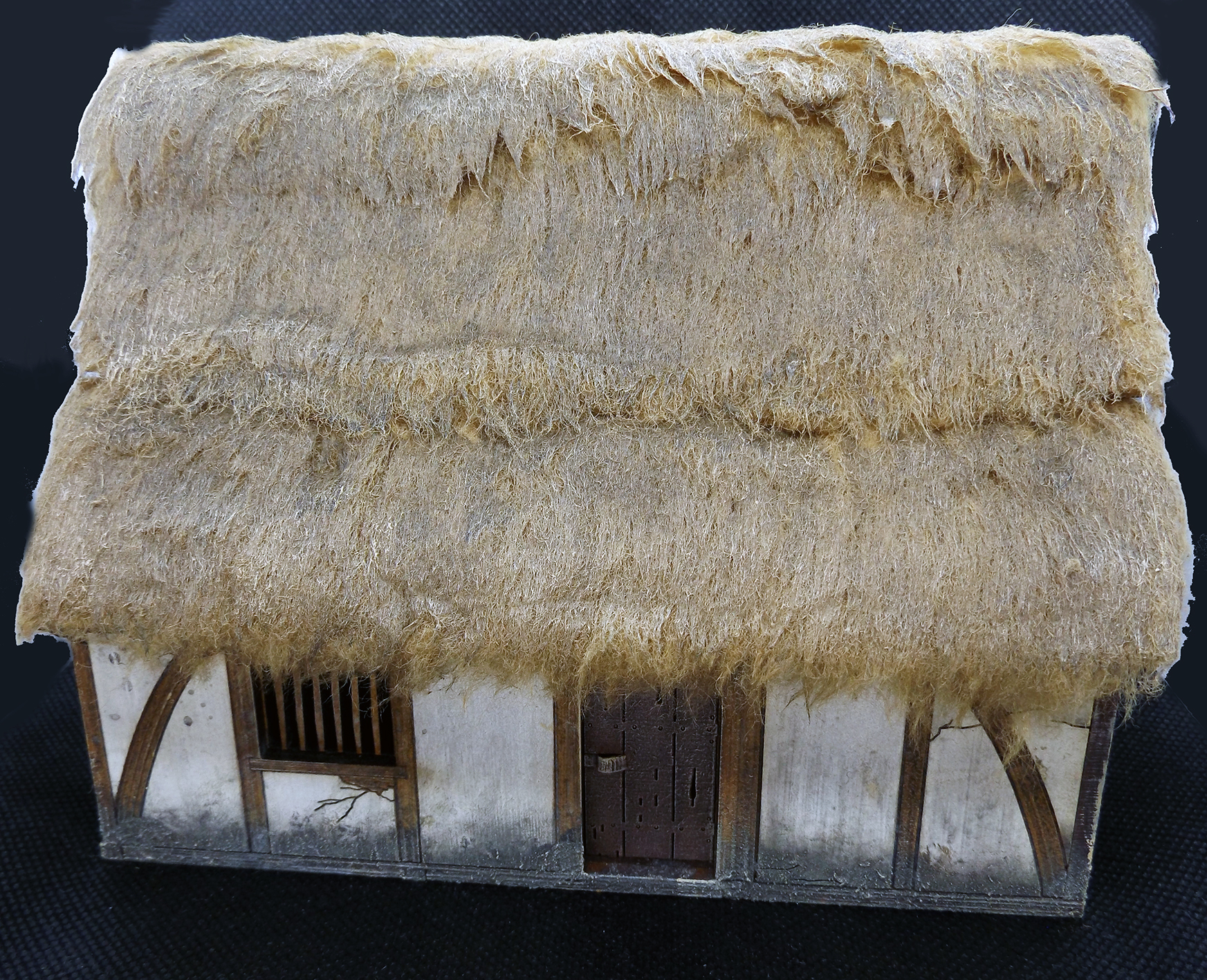 Medieval Cottage
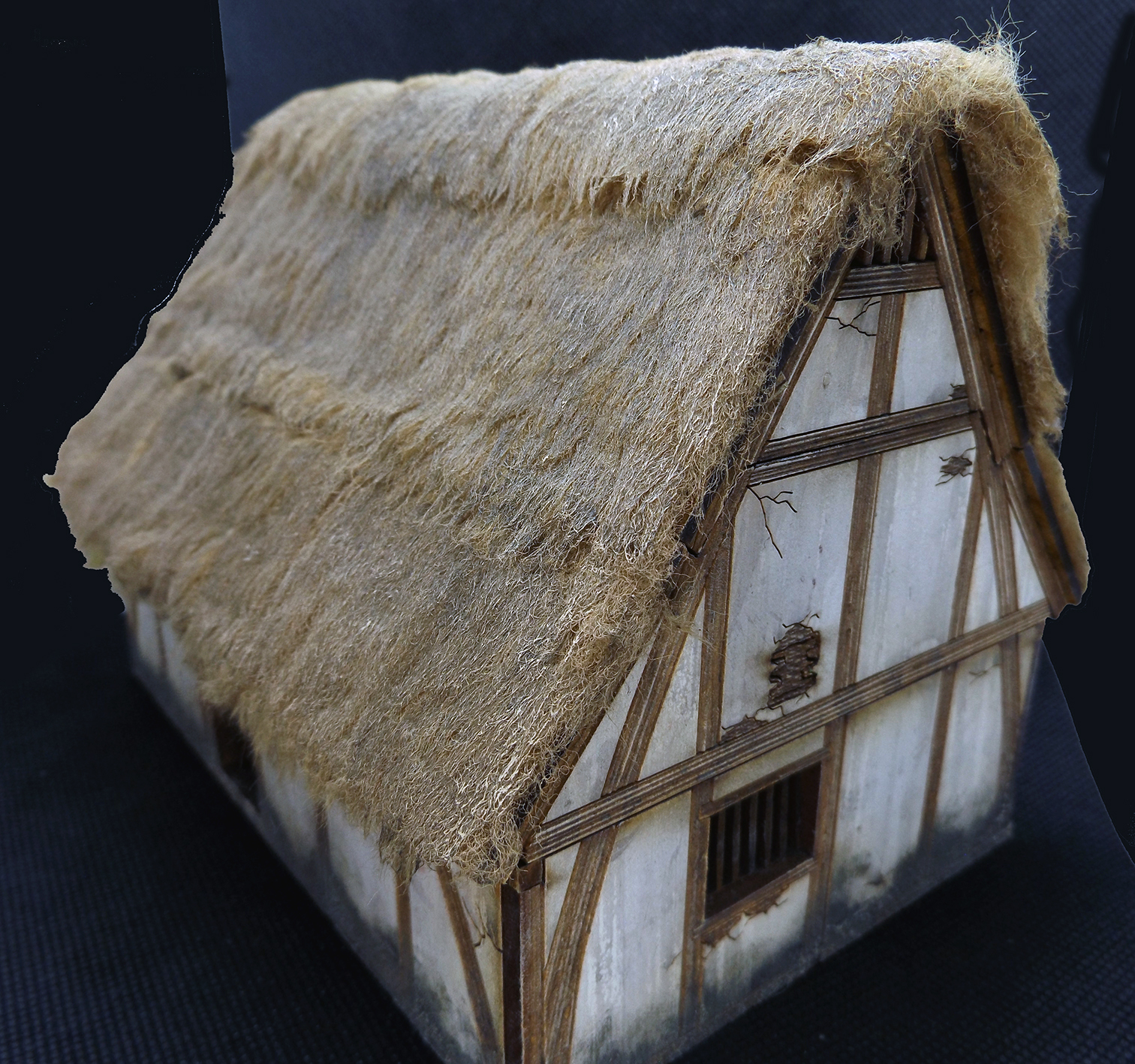
I like the some for $ground and actually that do some very nice stuff but they do look a little toy like. I have have added a little bit of paint, textured mud paint and a wash with Vallejo Black Wash and a drybrush with Iraqui Sand and it looks much better, less toy like and sit nicely in the battlefield. But what do you think?

The Start of my Second Force
 Knights
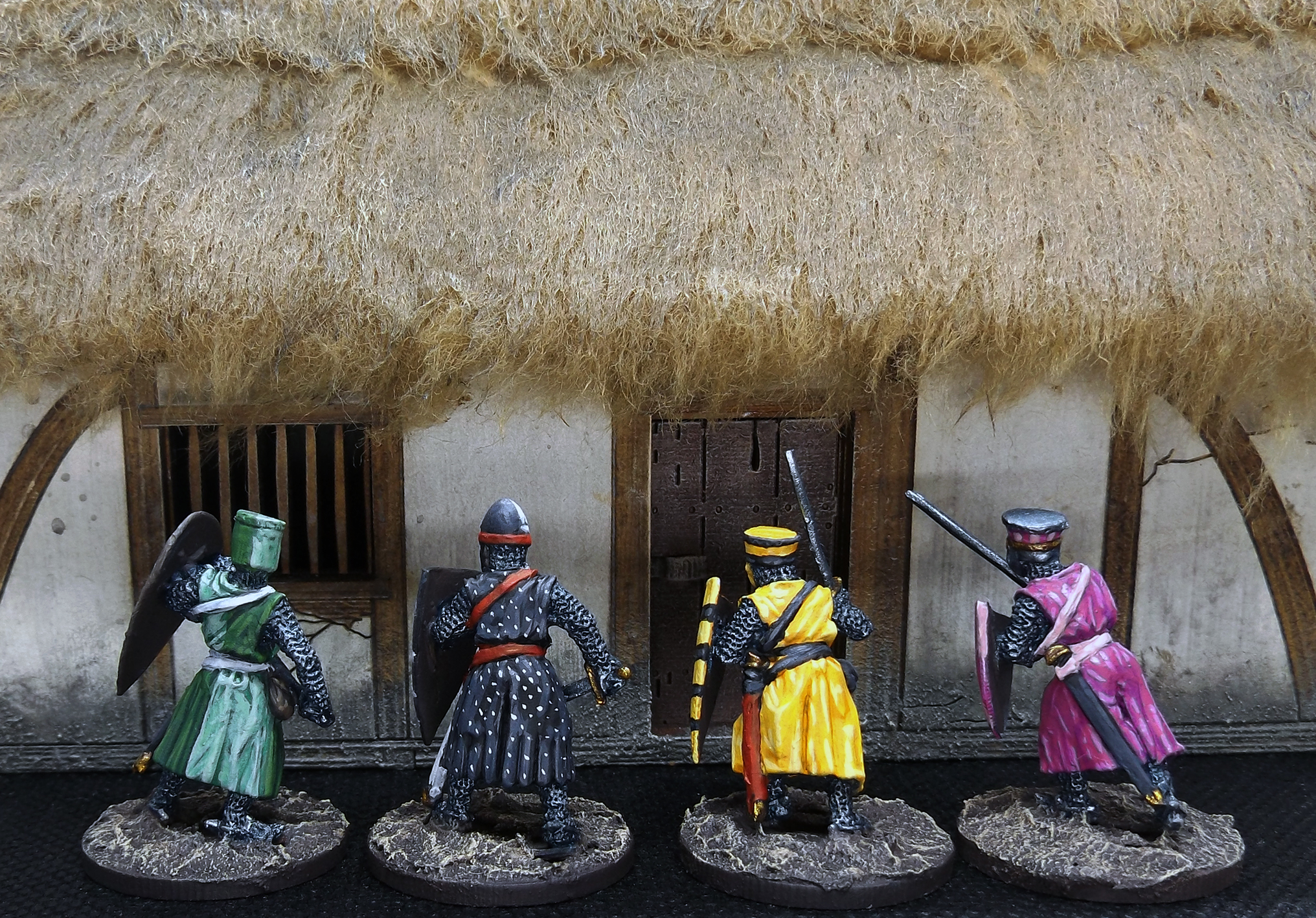
This is the start of my second force for Barons’ War and this can be and will be added to the first force to give a larger force for bigger games. This force is based around a Baronial force of William de Mowbray. I wanted to give these knights a more individual feel to them as is fitting knights, though not Barons as still important enough to have their on livery.
I have hand painted the shield and in fact I am really enjoying painting them and I personally think it give a more authentic feel to them. I will get around to namely them in the future as I want to give them a personally. But what you you think?

Henry de Bohun
 Henry de Bohun
Henry de Bohun was a member of the Essex-based family grouping brought to the rebel cause by kinship with Geoffrey de Mandeville and Robert FitzWalter. His family also held important blocks of lands in the west of England.
Henry (c. 1175–1220) was the son of Humphrey de Bohun (d. 1181) and Margaret (d. 1201), daughter of Henry, earl of Northumberland, and widow of Conan IV, duke of Brittany. His grandmother was Margaret de Bohun, the daughter of Miles of Gloucester, earl of Hereford, one of the earliest and most consistent supporters of the Empress Matilda in the civil war of King Stephen’s reign. Margaret brought to the de Bohuns her family’s claims to the royal constableship and to the earldom of Hereford. The constable’s office had been granted to her son – Henry’s father – by 1174 and was therefore inherited by Henry himself, who used the style ‘Henry the Constable’ in a number of his early charters. Despite his youth he occasionally attested charters of Richard I and was one of the king’s sureties in negotiations with the count of Flanders in 1197.
John bestowed the title earl of Hereford on Henry in 1200, albeit prohibiting him from staking any claim to the generous grants which Henry II had made in a charter to his ancestor Earl Roger of Hereford. His grandmother’s keen advocacy had been a factor in this success, but equally significant was the fact that his mother was a granddaughter of David I, king of Scotland, and his uncle William the Lion, a later king of the same. Between 1204 and 1211 he was engaged in a lengthy dispute to establish his claim to a part of his mother’s dower lands, the valuable lordship of Ryhall in Rutland. No sooner had this dispute been settled than he found himself dragged into further litigation, countering a claim by the king’s half-brother, William Longespée, earl of Salisbury, to his lordship of Trowbridge (Wilts.) on the pretext of descent from an earlier owner, Edward of Salisbury. This long drawn-out dispute was to lead to a sharp deterioration in his relations with King John. Longespée initiated the action in1212 and Earl Henry responded by resort to the time-wasting tactics characteristic of the time, pleading illness as an excuse for absence from hearings. As such an excuse was inadmissible in this sort of case, the king took the lordship into his own hands, while allowing Longespée to levy scutage (money in lieu of military service) from its tenants. The sense of hurt which the earl felt was a major factor in his support for the rebels in 1215, as John’s seizure of the lordship constituted a disseisin made ‘unjustly and without judgement’, in the wording of clause 39 of the Charter. A further claim on his allegiance was made by the ties of kinship: his wife was Maud, daughter of Geoffrey FitzPeter and therefore aunt of Geoffrey de Mandeville. By virtue of his involvement on the rebel side in 1215 he secured the restoration of the lordship, although not of the castle, of Trowbridge. Letters ordering the estate’s restitution to him were among the first to be issued in execution of the Charter. The dispute dragged on, however, and a final settlement was not reached until 1229, when Edward of Salisbury’s honour was divided equally between the claimants, Trowbridge itself going to the Countess Ela, Longespée’s widow.
On the death of King John he remained loyal to the rebel cause and he was taken prisoner with the other rebel leaders at the battle of Lincoln in May 1217. As part of the general settlement in September he made his peace with the Minority government, subsequently attending the young Henry III’s court, receiving the earl’s third penny of Herefordshire and accounting for scutage. He died on pilgrimage to the Holy Land on 1 June 1220, leaving a son and heir, Humphrey. His widow took as her second husband, sometime between 1221 and 1226, one Sir Roger de Dauntsey and succeeded in her own right to the earldom of Essex, which on her death was inherited by her son.
Earl Henry was buried in the chapter house of Llanthony priory, near Gloucester, the traditional burial place of the Bohuns. He was succeeded in the title by his son and heir, Humphrey, who was to live until 1275.
Earl Henry was a notable figure in the development of modern Trowbridge, as it was he who secured the grant of a market and annual fair from the Crown in 1200. From this privilege flowed the laying out of the market place along the curved line of the castle ditch, the removal of the church from the castle’s inner bailey and the construction of the present church of St James in the heart of the town. It is likely that the earl’s considerable investment in Trowbridge helps to explain his keenness to retain possession of the town in the face of William Longespée’s persistent claims.





![New Carolingians & A Pillage Starter Set From Victrix? [Updated]](https://images.beastsofwar.com/2026/07/pillage-introductory-cover-600-338.jpg)