








PanzerKaput Goes To Barons’ War


Recommendations: 11332
About the Project
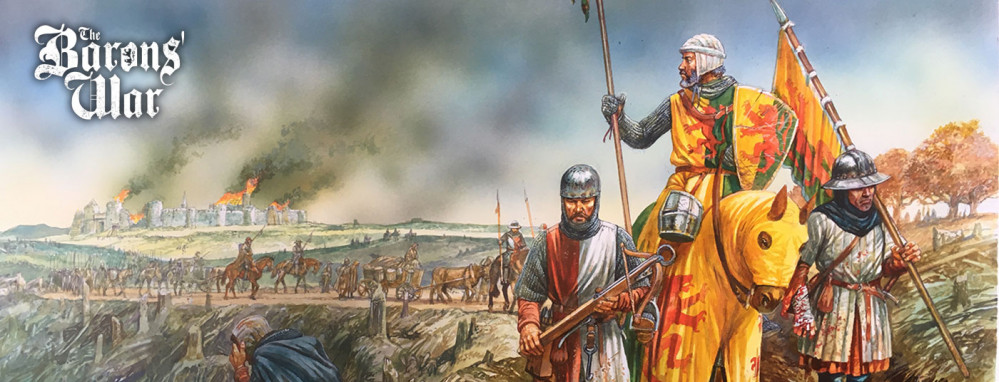
Set against a backdrop of a Civil War that lasted for two years, 1215-17, as a result of the issuing of Magna Carta. A civil war was the perfect opportunity for the leading nobles of the time to grab land and power while settling some old scores along the way. This vying for land and power hadn't stopped since the invasion of 1066 with only the strongest of kings being able to keep their nobles in check. Our narrative focuses on small groups of warriors brought together under a lord or baron to raid and steal or defend land and property. With the strong, wise, cunning and lucky aiming to rise out of this civil strife in a better position than when it started. The Barons' War skirmish game has been written to enable players to fight out tabletop battles against the backdrop of the First Barons’ War between rival Barons or rival factions who find themselves on either side of the conflict. The game is historically themed, the gameplay is fast-paced and tactical with plenty of narrative and where force building presents you with lots of options enabling two players to muster very different retinues. However, as intended, this is an alpha set of rules which does not include rules for siege warfare, although rules for fighting in buildings are included. Campaign rules are something that will be addressed at a later date and released online. Having grown out of the Barons’ War Kickstarter project, the intention is for this ruleset to develop into a system that could be used throughout the Medieval period. Starting with England from when the Western Roman Empire withdrew around 410 AD to 1485 AD when Richard III died at the Battle of Bosworth Field. This presents us with a huge span of history for gaming which can be broadly divided into Romano-British, Anglo-Saxon and Viking, Anglo-Norman, Angevin and Plantagenet. And that’s just when looking at it from Great Britain. With warriors of this period being pretty similar, it would be easy to use the profiles in this rulebook to play out tabletop battles in any setting. Over time we see these rules evolving with additional warriors, characters, abilities and scenarios being added starting with the Dark Ages, the Anarchy and the Crusades and shared to www.warhost.online, which has been set up to be the community website for the game.
Related Game: The Barons' War
Related Company: Footsore Miniatures and Games
Related Genre: Historical
This Project is Active
Battles of Magna Carta, Part Two
1215: THE SIEGE OF EXETER CASTLE
The dissent of the Barons now takes centre stage in what is now Exeter, far to the South-West of Rochester. Rougemont Castle is also known as Exeter Castle, and is a Norman structure, with some Roman origins. It was a Crown stronghold, but rebel barons captured it for a time.
1215: THE SIEGE OF TONBRIDGE CASTLE
Tonbridge Castle was enlarged before 1100, with a squat tower. In 1215 Richard FitzGilbert’s grandson, Richard de Clare, attended the sealing of Magna Carta. King John then attacked and seized the castle, but it was returned two years later. A larger stone castle was rebuilt, including the massive gatehouse which still survives.
1215: THE SACKING OF ELY CASTLE
In the relentless drive northwards by King John, many fortified sites were attacked. Ely castle was said to be ‘a strong fort of lime and stone’, within the precincts of Ely, but ‘that fort being often destroyed’ was rebuilt. The castle was said to have been finally taken and destroyed by Falk de Breauté, in 1216.
1216: THE SIEGE OF ODIHAM
Odiham had been a royal residence in the 12th century, but the present castle, built by King John from 1207 onwards, was built on a site to the North-West of the town. It was built for the King to enjoy hunting in Odiham’s Royal Deer Park. John visited on 4th June and then again on 9th June, meeting the Bishop of Winchester and proceeding to Windsor and Runnymede the following day. Following the sealing of Magna Carta King John stopped the night of 26th June at Odiham on his way to Winchester. Odiham Castle put up stout resistance to a French siege the following year, which inflicted so much damage as to need rebuilding, with the octagonal keep. These efforts supported the defence of Windsor Castle and help to ensure the French siege was repulsed there as well.
Battles of Magna Carta, Part One
1214: THE BATTLE OF BOUVINES.
The Battle of Bouvines, near Lille, took place on 27 July. King Philip II defeated the Holy Roman Emperor, Otto IV, conquering Flanders and the Angevin territories in France, and recovering lands once ruled by King John. No English forces were involved. John was Otto’s uncle, and the decisive defeat led to the English Barons gaining the confidence to confront the king and make him grant the Great Charter.
1215: THE SIEGE OF NORTHAMPTON CASTLE.
Northampton marked the beginning of the Barons’ Wars, but the rebels failed to capture the castle. It was the first of three sieges. King John was fond of the castle, and visited it over 30 times, but later gave it up along with three others in granting Magna Carta. In 1164, it was the site of the trial of Thomas à Becket. Early Parliaments were held there until 1331.
1215: THE SIEGE OF NORHAM CASTLE
Norham Castle was a mighty English stronghold on a rocky outcrop on the south bank of the River Tweed. Now a ruin, it was built by Bishop Flambard of Durham in 1121, and being just half the river’s width away from the English and Scottish border, earned it the title of ‘the most dangerous place in England’. King John strengthened the castle from 1208 to 1212, and this helped it withstand a 40-day siege by Alexander II of Scotland, who had invaded northern England in support of the rebels in 1215.
1215: THE SIEGE OF ROCHESTER CASTLE
In 1215, Rochester Castle was garrisoned by rebel barons, and endured an epic siege by King John. Having undermined the outer wall, John used the fat of 40 pigs to fire a mine under the keep, bringing its southern corner crashing down. The defenders held on, until they were eventually starved out after resisting for two months. The soldiers were put to the sword. The high elegant towers of Rochester Castle stand as a testimony to its history of destruction and rebuild.
Episode Events
1214
Oct 15
John returns from France
Upset by demands for higher taxes and less control over affairs in England, the Barons met John on his return with a charter from the time of Henry I which they wanted John to agree to and abide by.
Nov 20
Charter of Liberties
A group of barons, after finding a copy of King Henry I’s Charter of Liberties, swore an oath at the altar of t. Edmunds at Bury St. Edmunds to force King John to acknowledge thier rights.
1215
Jan
John meets the Barons in London
Promising the Barons safe passage, John met them in London to discuss their demands. John postponed any answer until Easter.
May 17
London falls to the Rebels
The gates to London were opened by a supporter of the rebellious Barons and the houses of Jews were targeted for ransacking and burning. The rebels called for those Barons still on the side of John to join them. The Tower of London held by John’s supporters was too well defended to fall into the hands of the rebels.
May 27
A truce is sought
Stephen Langton and William Marshall attempted to get the Barons and John to meet and find a settlement to the civil war.
Jun 15
John’s Great Charter (the Magna Carta)
A large number of barons, led by Stephen Langton the archbishop of Canterbury, meet King John on an island in the Thames at Runnymede. They forced the king to sign the ‘Great Charter’ or Magna Carta that would limit the power of the monarchy. The barons insisted that the old feudal contract should be reinstated and that the king should abide by the laws that the rest of the population did. The feudal contract allowed the barons to run their own lands, renting it from the king but paying rent by supplying knights rather than money. This feudal system had been set up by William the Conqueror.
Aug 24
The Magna Carta is annulled
Pope Innocent III annulled the Magna Carta freeing King John from its limitations. The Pope annulled the charter on the grounds that the King only signed it because he was forced to and that the document was illegal. The Pope was prepared to support John against the rebel barons because he wanted him to take a key role in a new crusade.
Sep 13
King John appeals to the Pope
In a letter dated 13th September 1215, King John sought help from Pope Innocent III in his fight against the barons. In the letter, written while the King stayed at Dover Castle, John stated that he believed the defence of England was ultimately the responsibility of God and the Pope. Pope Innocent III agreed and declared that the Magna Carta should be annulled.
Oct (to 1217)
Baron’s war
After the Magna Carta was annulled and it was clear that King John was not going to agree to the terms of the charter the civil war between King John and the rebel barons began. The barons offered the English crown to Prince Louis, the son of King Philippe II of France and invited him to invade England. John confiscated the rebel barons’ lands and gave them to his own supporters. King John besieged Rochester Castle where a garrison of men had been left by the barons. The garrison was starved out and the castle fell to the King.
1216
Jan
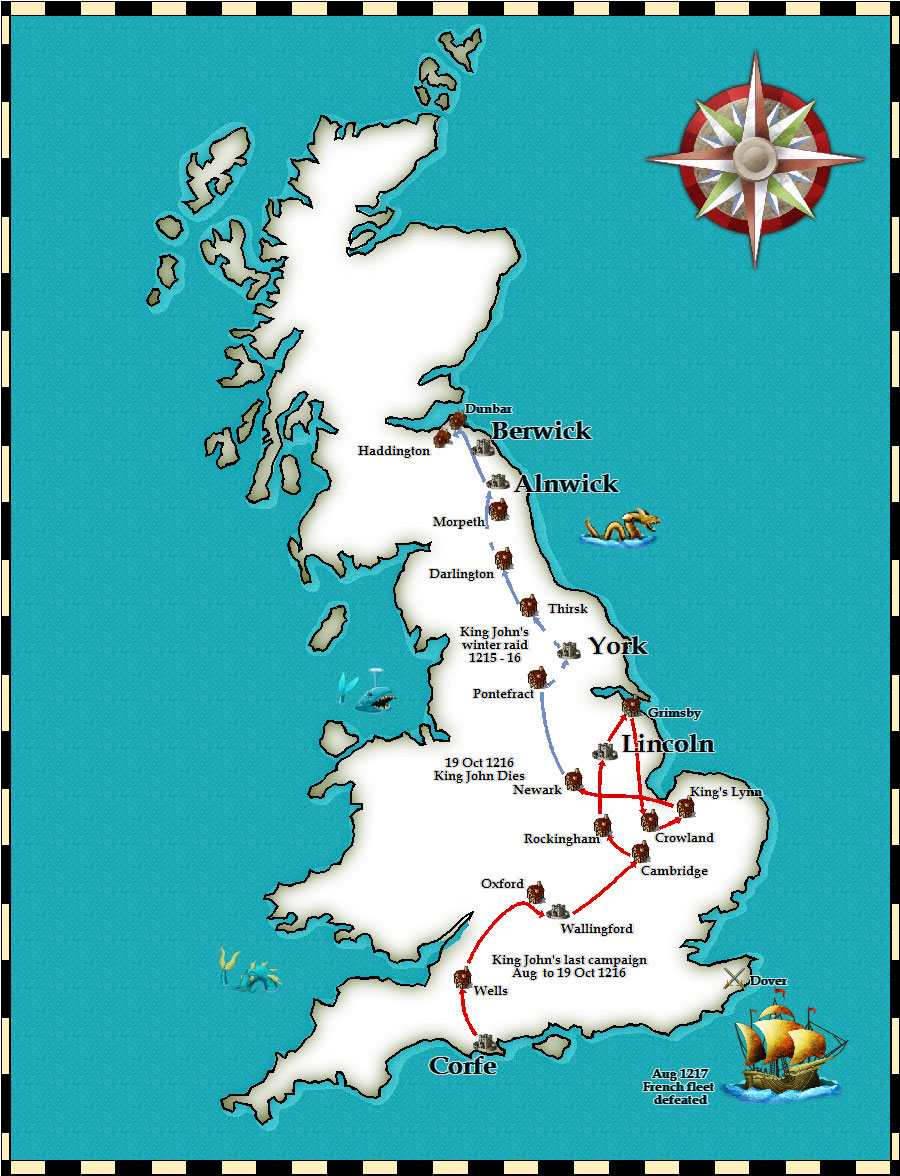
King John attacks Berwick
King John attacked Berwick and forced the Scots to leave. He also raided the lowlands.
Feb
King John puts down revolt
King John put down a revolt in East Anglia. The Barons and the French kept hold of London.
Feb
Small French fleet land in London
A small French army landed in London. Their commander informed the rebel barons that Prince Louis would soon arrive from France.
May 18
A storm hits John’s fleet
John’s fleet of ships was badly damaged by storms as they prepare to defend against an invasion from France. This left the way open for Prince Louis to sail to England a few days later.
May 21
Prince Louis of France claims English Throne
Invited by the barons opposed to king John, Prince Louis of France landed in England to claim the English Throne. Louis captured Rochester Castle after a short siege.
Jun (to Oct)
Prince Louis advances across England
Prince Louis advanced on Winchester and captured the city and its castle. Elsewhere, Windsor Castle and Dover Castle were besieged by the rebel barons. Both castles were defended and held out against the sieges. King John used Corfe Castle in the south-west as his base of operations while he planned his campaign against the rebel barons and Prince Louis.
Oct 19
King John dies
King John died at Newark. This was shortly after he lost his baggage train in the Wash estuary as the tide returned. There was supposed to be a large amount of treasure in the baggage train at the time and it has never been found.
Oct 28
King Henry III Crowned
King John’s eldest son Henry was crowned King Henry III at the abbey church of Gloucester by Peter des Roches the Bishop of Winchester. The Earl of Pembroke, Earl Marshal of England (William Marshal), was declared Regent.
1217
Spring
Portchester castle captured
Prince Louis captured and almost destroyed the castle at Portchester.
Apr
Siege of Mountsorrel Castle
Royalists besieged the French controlled Mountsorrel Castle in Lincolnshire. When Louis sent reinforcements to assist those in the castle the royalists moved away to Nottingham. The French army then made the mistake of moving on to Lincoln where the royalists had held out against previous attacks.
May 20
Battle of Lincoln
Henry III’s supporters defeated the forces belonging to Prince Louis and the rebel barons that were besieging the castle at Lincoln.
Aug 24
Battle off Sandwich
A fleet of French ships were defeated off the coast near Sandwich by Hubert de Burgh. The French fleet was commanded by Eustace the Monk, a pirate and mercenary who fought for both the French and English when it suited his needs. The French fleet were bringing more men and supplies to assist Prince Louis in his quest to take the English throne. The ship Eustace was on was captured and the monk was executed.
Sep 12
Treaty of Kingston
The defeat of the French fleet left Prince Louis without much hope of taking the English throne. William Marshall blockaded London from the sea and land and at Lambeth Louis accepted peace terms. Louis waived his claim to the throne of England and should have restored Normandy to Henry but did not. Louis was paid 10,000 marks to ensure he left the country as soon as possible. William Marshall pardoned all those who had supported Louis. low profile.
The Barons' Wars 1215-1217 Simple Version

The First Barons’ War was fought 1215 until 1217.
Cause of the war was King John’s refusal to act according to what he had agreed upon by signing the Magna Carta.
Controversy
Some may say Magna Carta was not voluntarily agreed upon by John and some clauses were outright unrealistic; that John had the barons up to the ears, and simply signed to get them off his back.
The First Barons' War Ensues
In any event, John refused to co-operate and the French sent over some knights to support the barons and their demands. The French found the timing perfect for Louis VIII, son of King Philip II of France, to rule England instead of John.
In 1216, Louis landed in Kent. John fled and Louis was proclaimed king.
Turning Point of the First Barons' War
In October 1216, King John died. Public opinion preferred John’s son Henry III as king rather than French Louis VIII. Many barons felt the same way. Thus, John’s son Henry III became king in 1216 when he was nine years old. Louis VIII was not welcome to rule anymore.
New king Henry III later re-issued a revised Magna Carta, first in 1225 and again in 1264.
One of the decisive battles of the First Barons’ War was the Battle at Lincoln on May 20, 1217. The barons were defeated and Louis had to agree to the Treaty of Kingston-upon-Thames of September 12, 1217. The treaty granted amnesty for the rebels and Louis had to promise to keep a low profile.
All the Milites Christi and Command
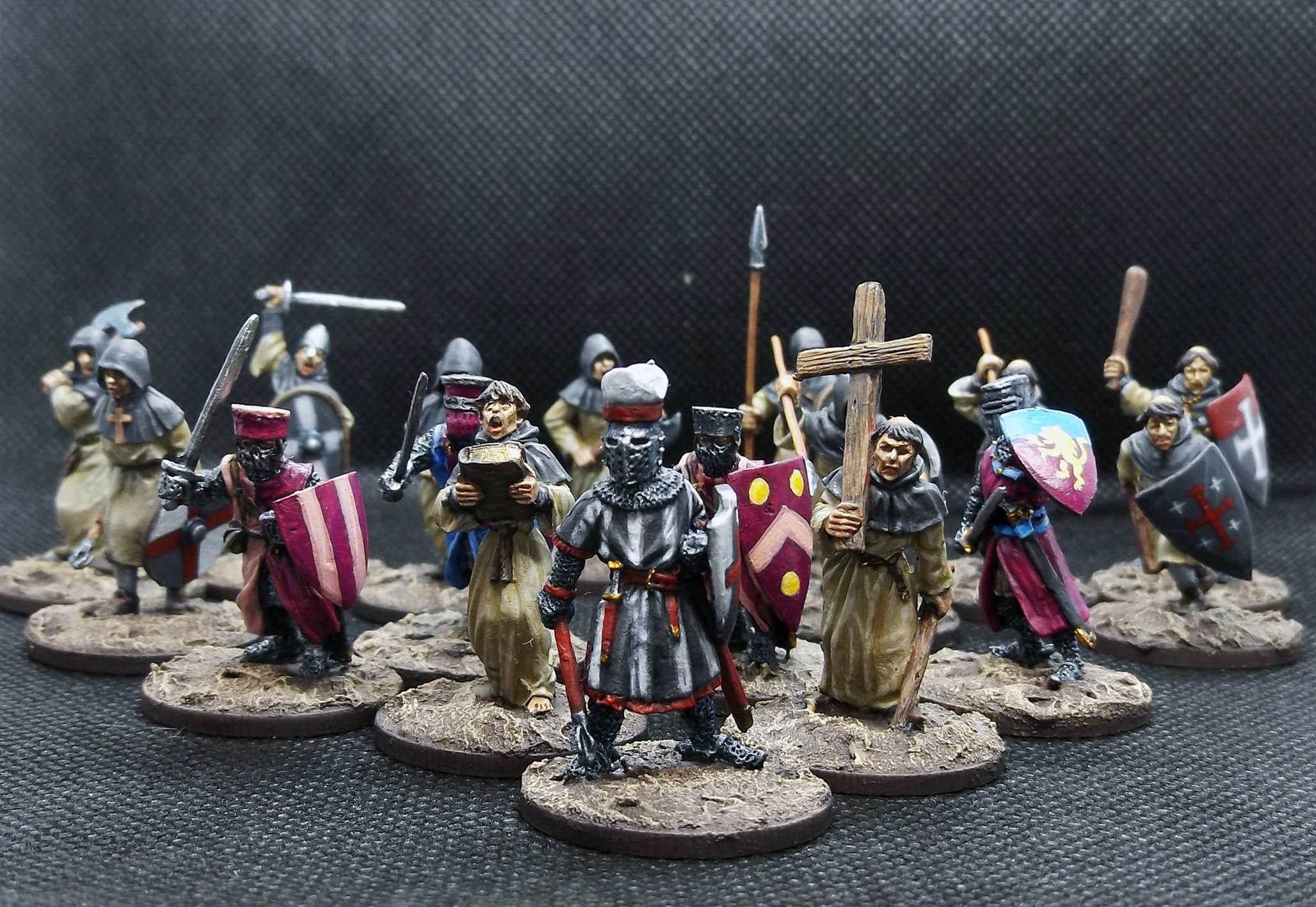
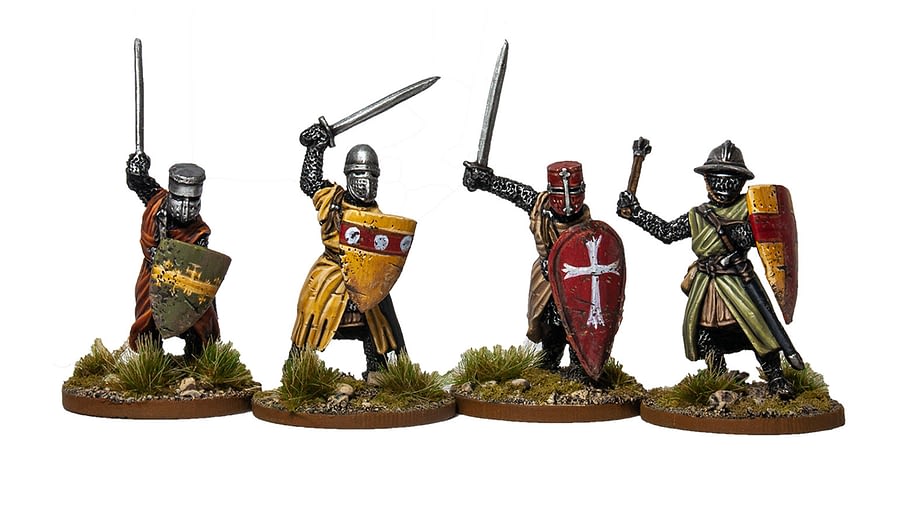
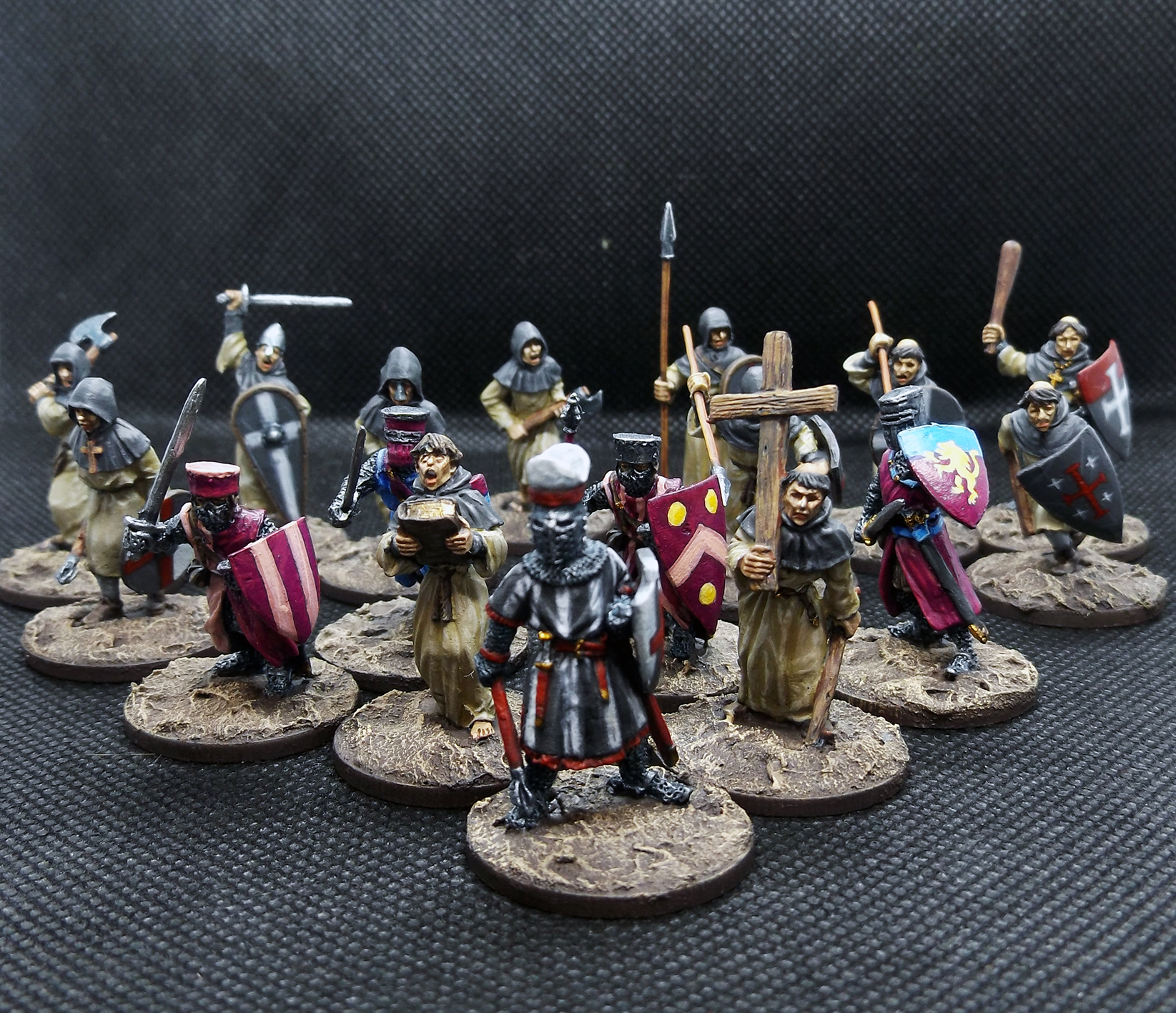
This is the sum total of the painted force for the St Mary de Pratis so far. There is a couple more units to add and then this will be the first force completed.
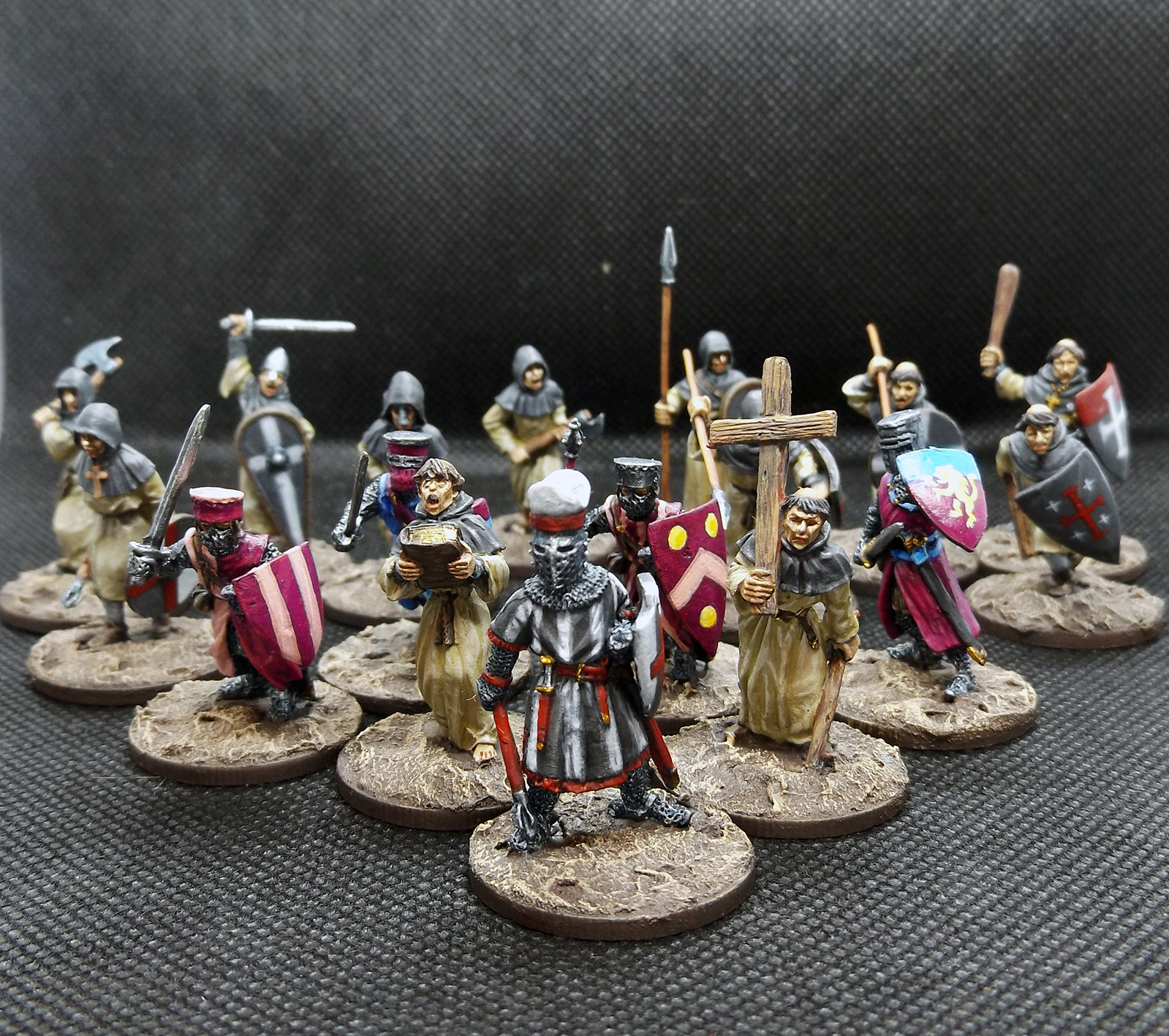
Abbot William Pepyn
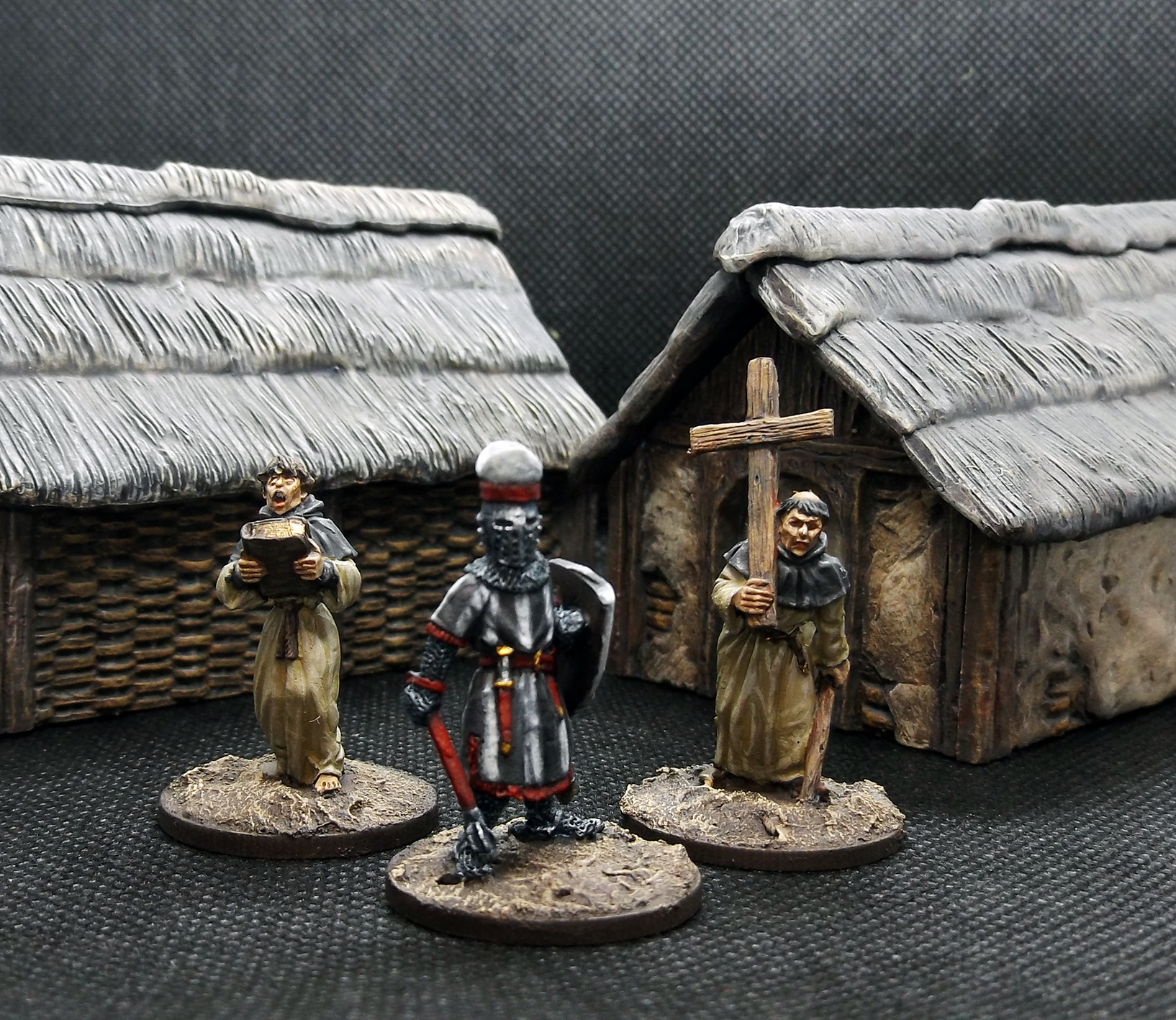
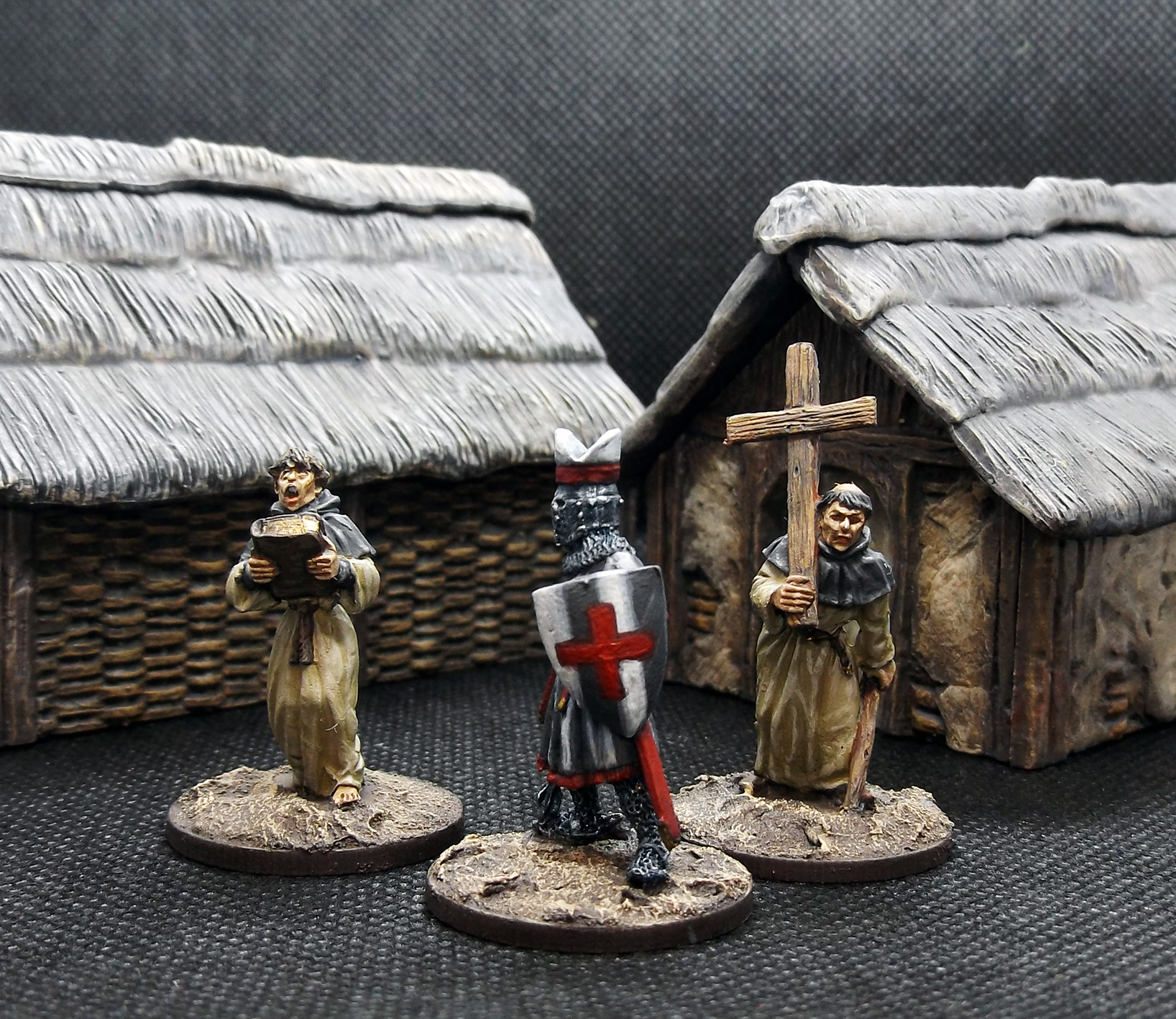
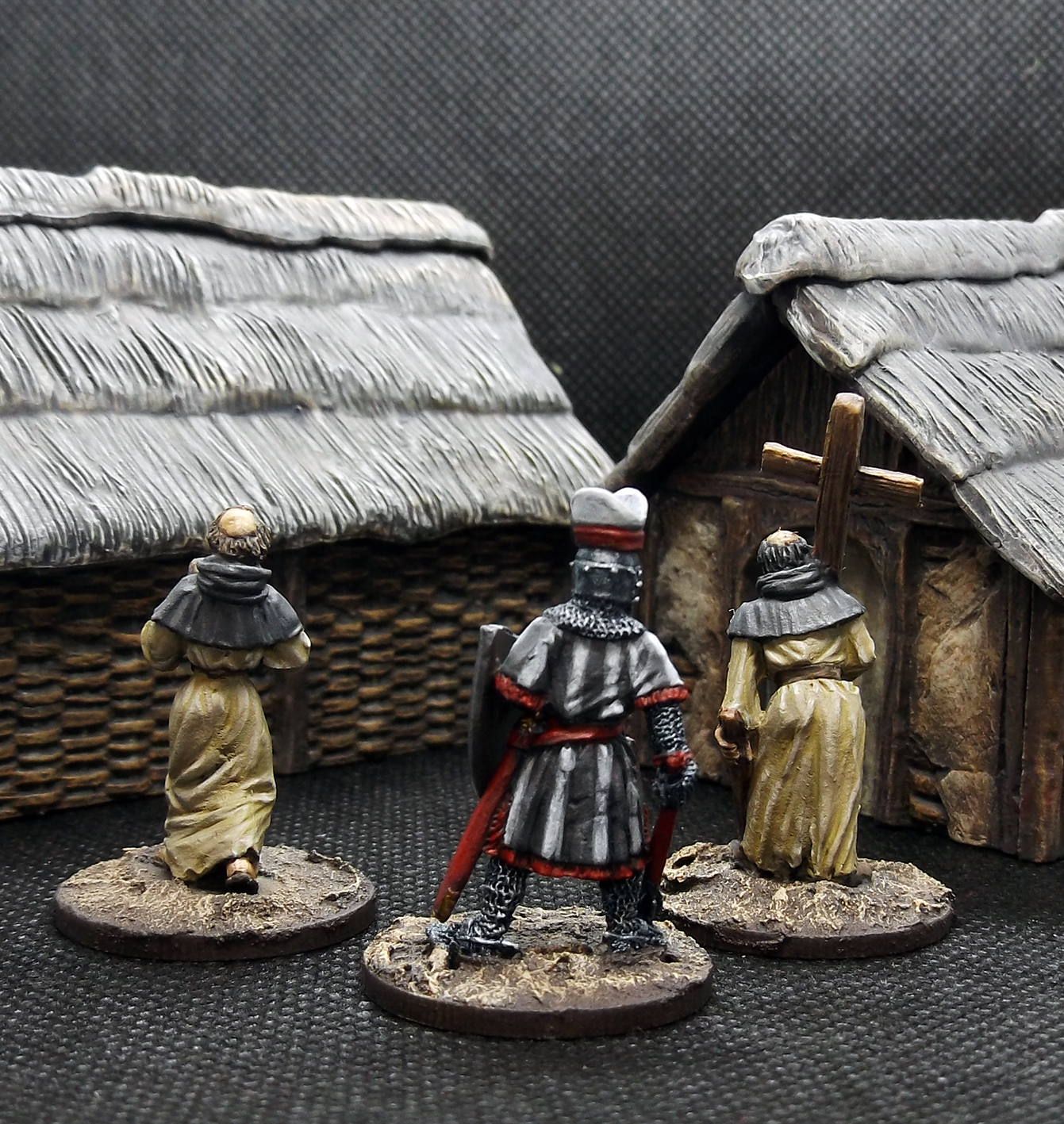
 Abbot William Pepyn
This is the leader and command section, a priest and standard bearer, for me St Mary de Pratis force. William Pepyn was the Abbot from 1205 to 1222 and in their is no evidence that he was a militant Abbey or a warrior but lets not reality stand in the way of a good game.
I have painted him is same colours as the Monks but have made them brighter to reflex his status.
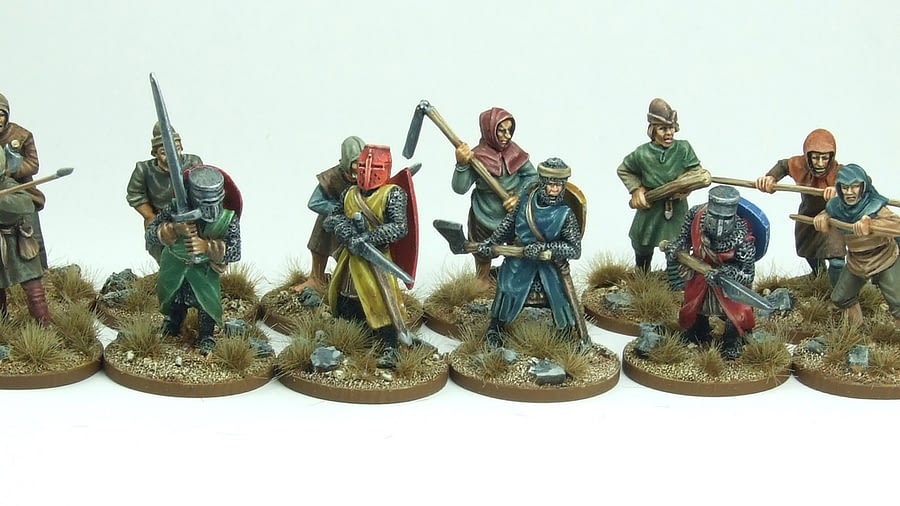
The Second Militant Monk Unit
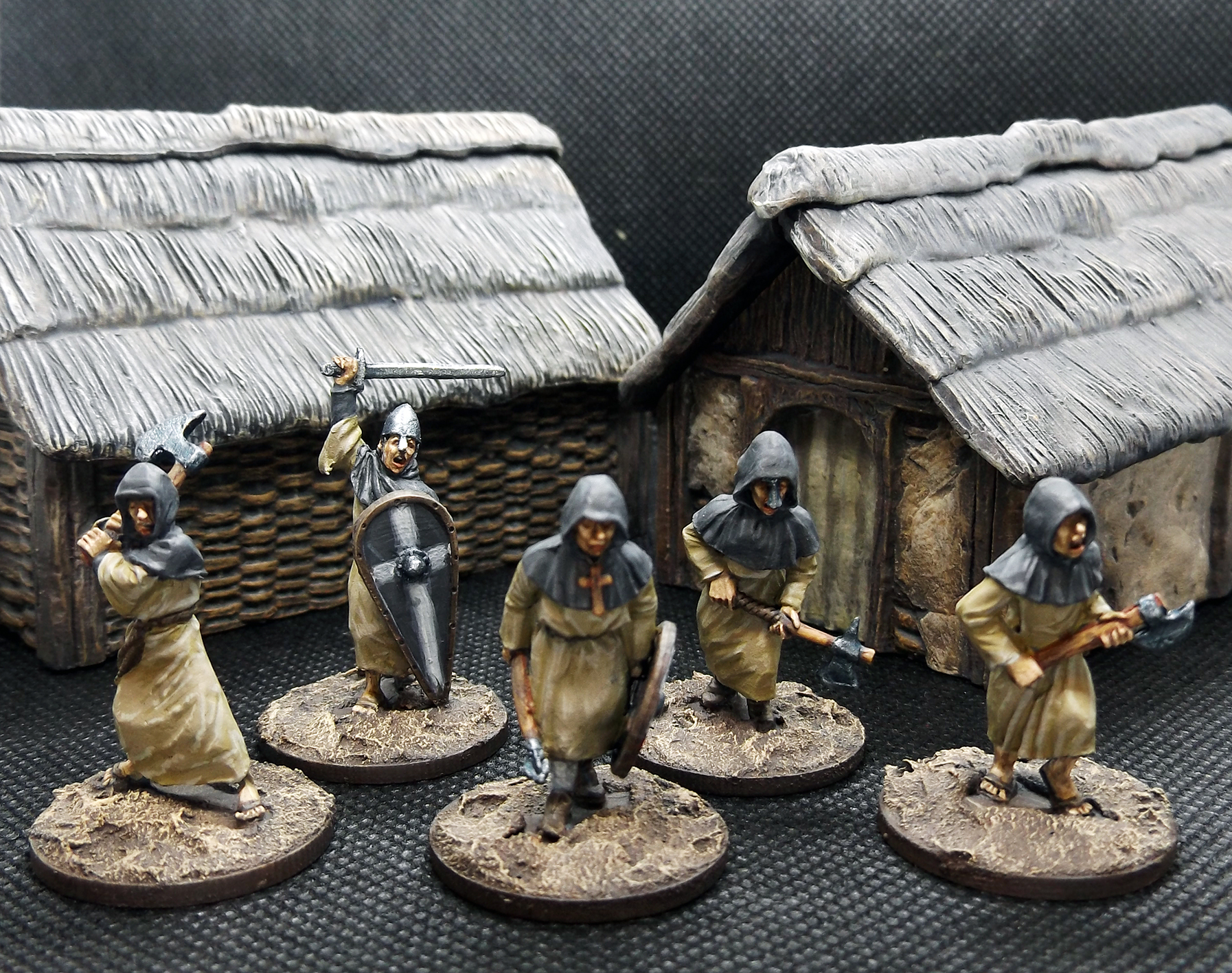
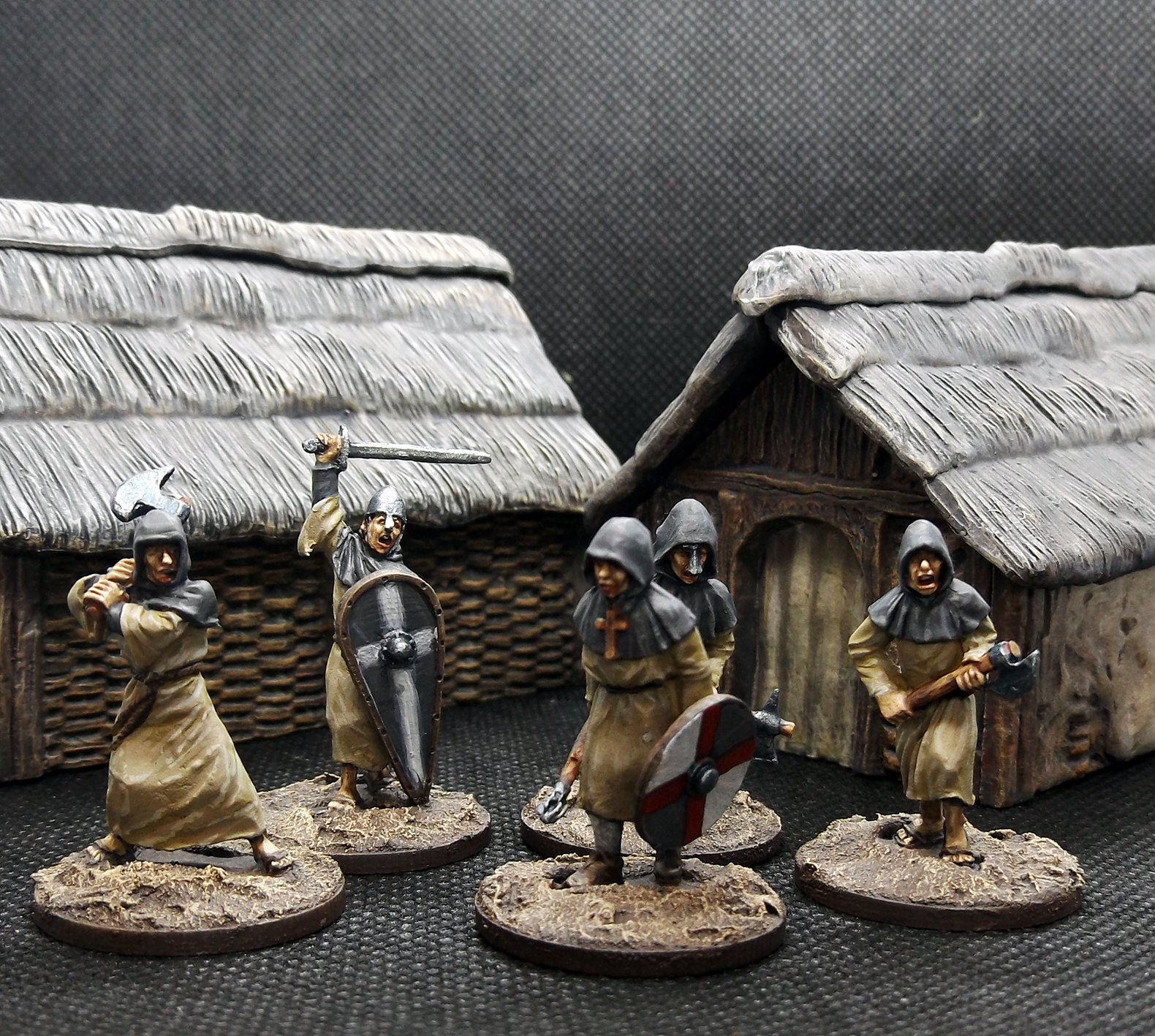
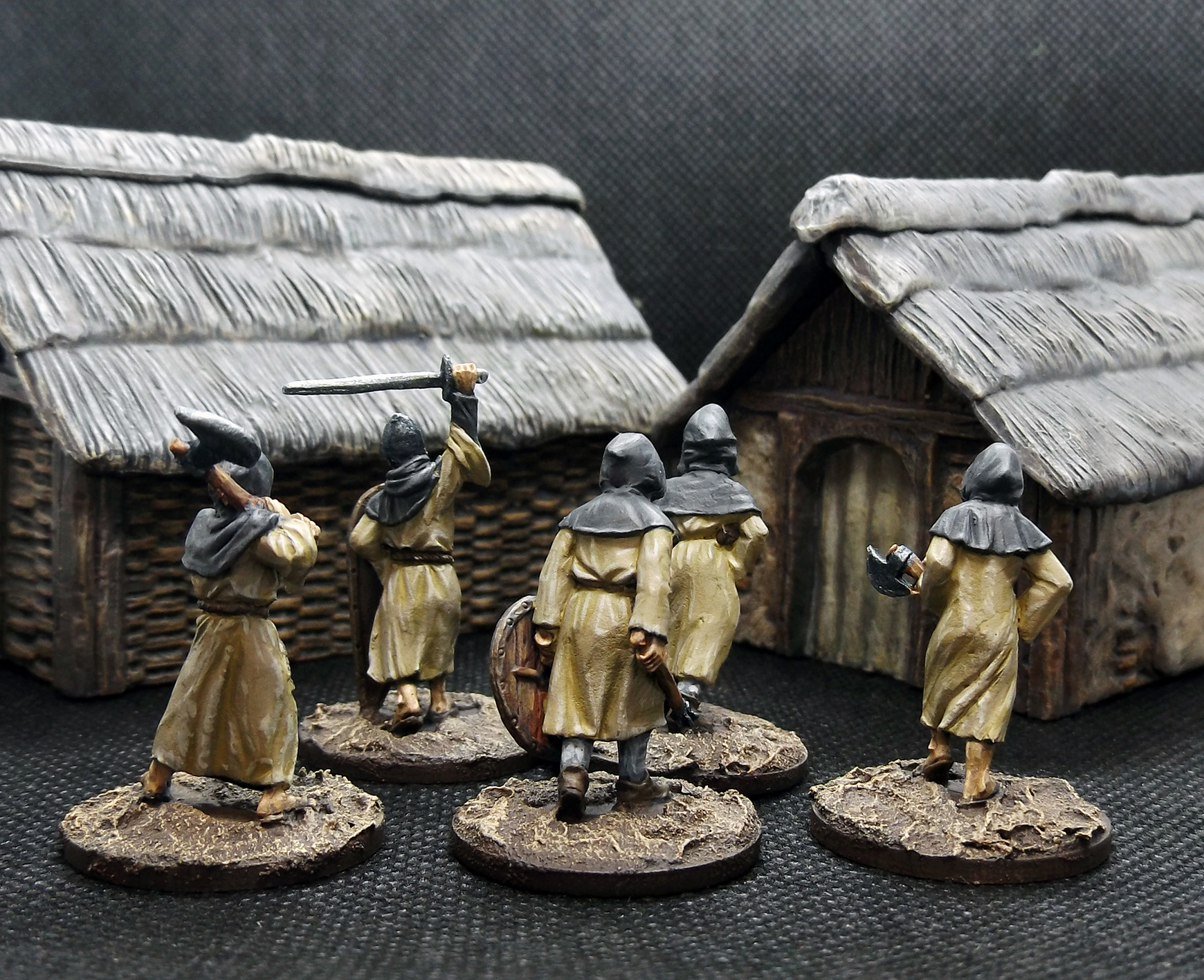
This is the second unit of Milites Christi finished for my St Mary de Pratis force. As you can see these monks are more militant than the first unit with there double handed axes to been the word of God to the faithless. Again I have based these on the Black Canons of Leicester Abbey, an Augustinian order.
The Barons' War Rules
 The Rules
In the Kingdom of England by 1215, a group of powerful barons had reached breaking point due to King Johns despotic rule, high taxes and failed leadership. It was time to rebel!
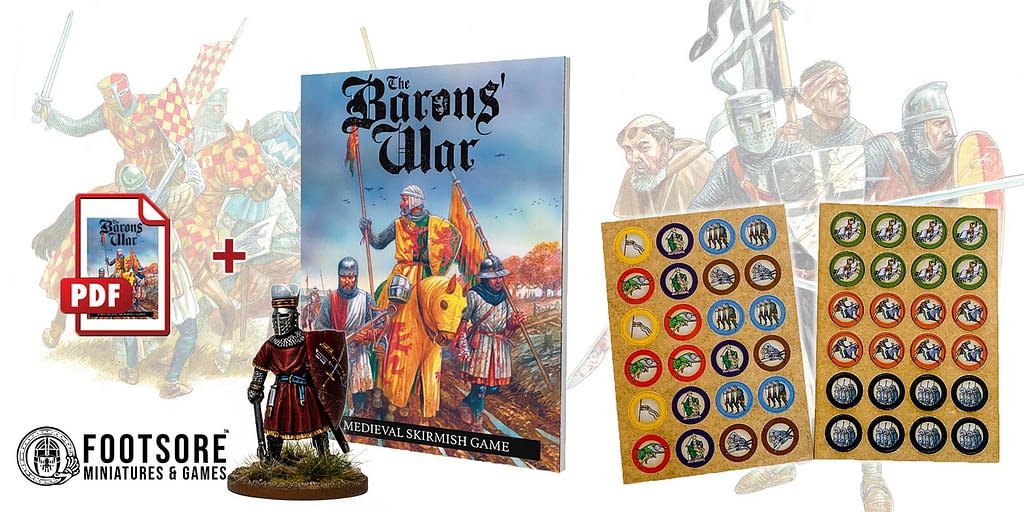
Written by Andy Hobday, creator of The Barons’ War, co-developed Test of Honour and Mortal Gods & Mortal Gods Mythic., and a bit of a geek., these rules enable narrative-driven tabletop games set in an England gripped by civil war played out against the backdrop of the Magna Carta and the invasion by the Crown Prince of France.
The historically themed gameplay is fast-paced and tactical. With warriors of this period being pretty similar, it is easy to base your medieval skirmish games using these rules in any setting.
This comprehensive flick through video by Wargames Illustrated takes you through the rulebook section by section presenting a clear overview.







![New Carolingians & A Pillage Starter Set From Victrix? [Updated]](https://images.beastsofwar.com/2026/07/pillage-introductory-cover-600-338.jpg)