








A Veteran Wargamer’s Journey Into Kings Of War Part 3: Learning The Game
July 29, 2026 by avernos
Zoidpinhead returns with his third article on Mantic Games' fantasy massed battle game, Kings of War. This time around, he's looking at what you need to get started playing and what you can expect to see from your opponent's army on the tabletop.
Follow The Entire Getting Started In Kings Of War Series
Kings of War is a simple game with clear rules and no complexity to deal with. The main rulebook is well laid out, logical and with clear diagrams. Surprisingly, there aren’t many how-to-play guides out there. I’d recommend the twenty-minute overview by Steve Hildew from Death by Dragons.
Fortunately, the game is straightforward. Anyone who has played a ‘bucket-o-dice’ system like Warhammer will be familiar with the basics of movement, shooting and combat. The important thing to remember about Kings of War is that it is fundamentally a game of manoeuvre. There is a significant bonus to fighting an enemy from the flank or from the rear. Getting into those positions is a priority in offensive play and ensuring flanks are protected is a focus of defence.
What Do You Need To Play?
The most essential things are the rules, armies, dice and a measure. I also used a 3’ x 3’ playmat as I’m starting with Ambush, which is the reduced version of the game. The game tracks damage, so some way of recording this for each unit is needed. Most players use dice on a small tray or holder placed behind the unit, and I’ve even seen playing cards used. An arc template is very handy.
The game also has a series of statuses that can affect a unit. The common ones are Steady, Wavered, Devastated and Hindered, but there are others, often caused by spell effects such as Frozen or Hexed, and these also need to be easily recorded, with most players using tokens. After playing a few basic learning games, you’ll need to introduce terrain, and I started with Mantic’s 2D set.
You can see a complete review of everything I bought in my Project Blog.
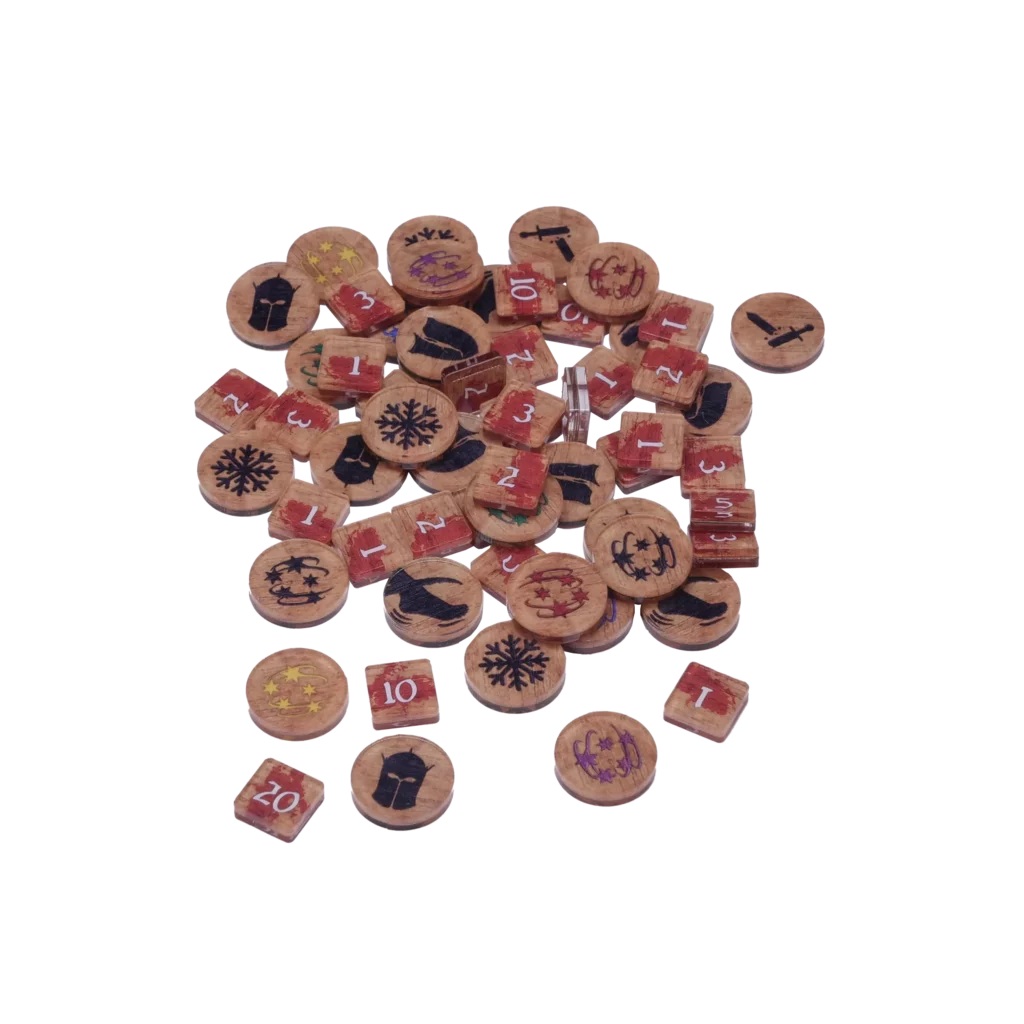
Kings Of War // Game Token Set
Official Game Accessories: There are two sets of tokens, one for status/damage and one for scenario/objective markers. Mantic also offer a set of rulers and a full table setup containing a 6’x4’ playmat with 2D and 3D terrain.
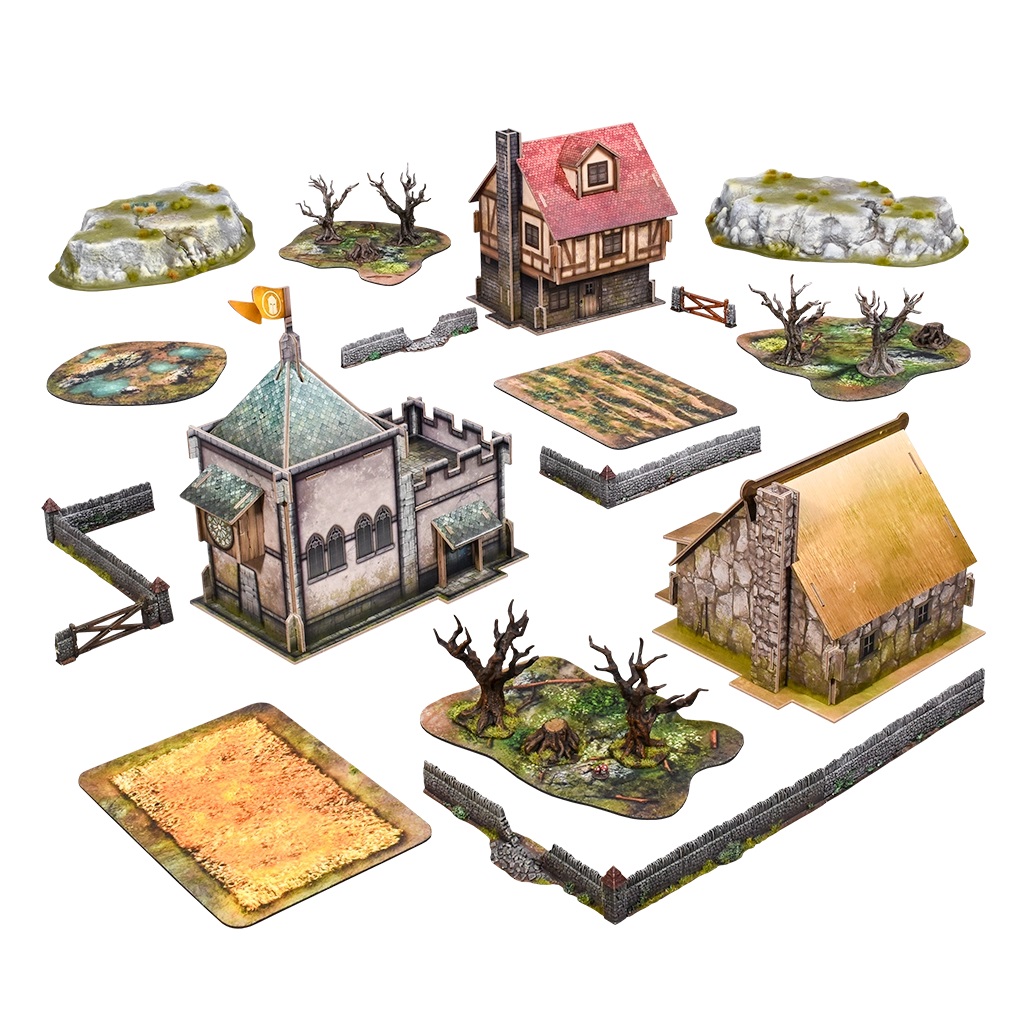
Fantasy Battlefield Review
The game has a limited range of terrain, so a small set like this contains everything needed for most games. Gameplay is scenario-based with standardised setups and objectives in the rulebook detailing table layout and deployment. Check out a fantastic review on the link above...
Basic Tactics And Generic Army Builds
With a balanced game, the scenarios are important. In the Kings of War rulebook, there is a set of twenty scenarios that standardise the table and objectives. The Fracture book adds two more. These create known conditions for players who can then focus on the challenge of beating the opponent, knowing that the terrain placement or objectives are unlikely to strongly favour one side or the other. Therefore, armies tend to be built to a broad tactical plan that will work on most setups.
There are different types of army build which favour different tactics:
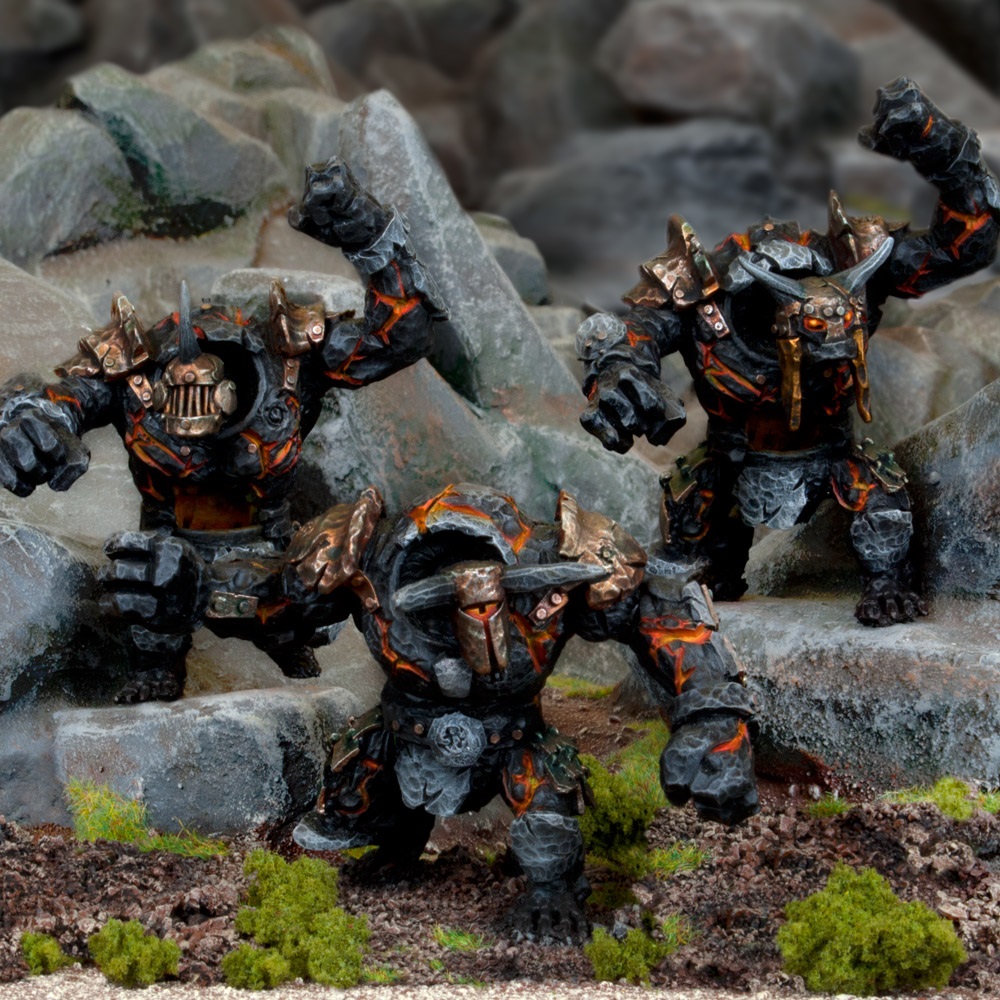
Lesser Obsidian Golems // Definitely An Anvil And Probably The Hammer As Well
Hammer and Anvil: As the name implies, some of your army are good defensively and hold the opponent in place, and the remainder are good in melee and hit hard. Variants of this include a “Grind” army, built with mostly anvils, and an “Alpha Strike” army with mostly hammers. [editor: your anvils need to take a charge and still be standing; look for defence 6+ units with a high nerve to stand their ground and make sure you have inspiring heroes behind them to keep them there while your hammers get into position. Crushing Strength 3 may seem like overkill for Hammers but believe me it's not; Bane Chant and Artefacts are your friends. Make sure what your Hammer hits it crushes; otherwise you'll discover the meaning of Glass Hammer!]
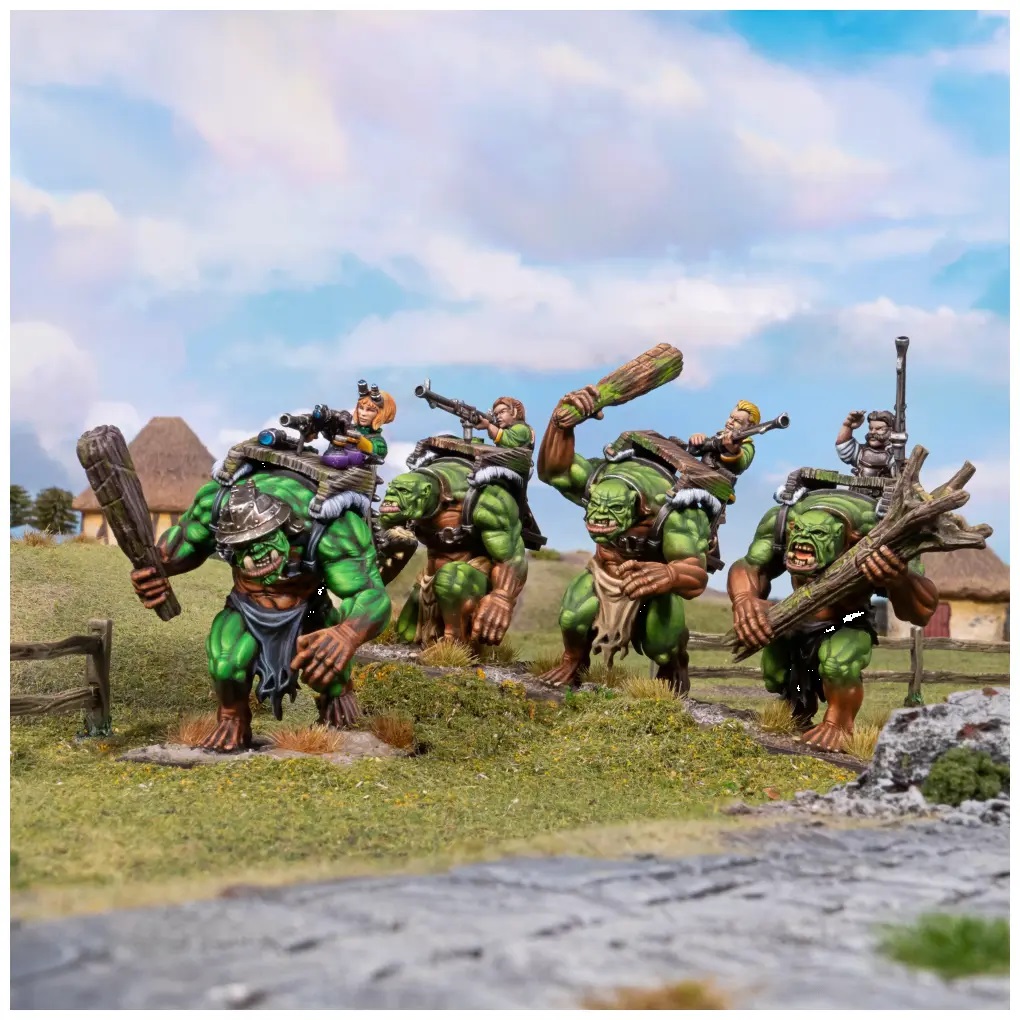
Forest Troll Gunners // A Gun Line With Attitude!
Gun Line: Mostly strong shooting units that can put damage onto an opponent before they can get at you. Skilful use of terrain, war machines with indirect fire, and simply setting up your army as far away as possible all help. Pew, pew, pew! [editor: the changes to shooting in 4th edition mean that it is a lot harder to shoot an enemy off, needing to devastate the unit first. This was to counter gunline armies that are no fun to play with, or against. Watch out though because a gunline can still seriously soften your army up ready for a thunder punch to the throat to finish you off]
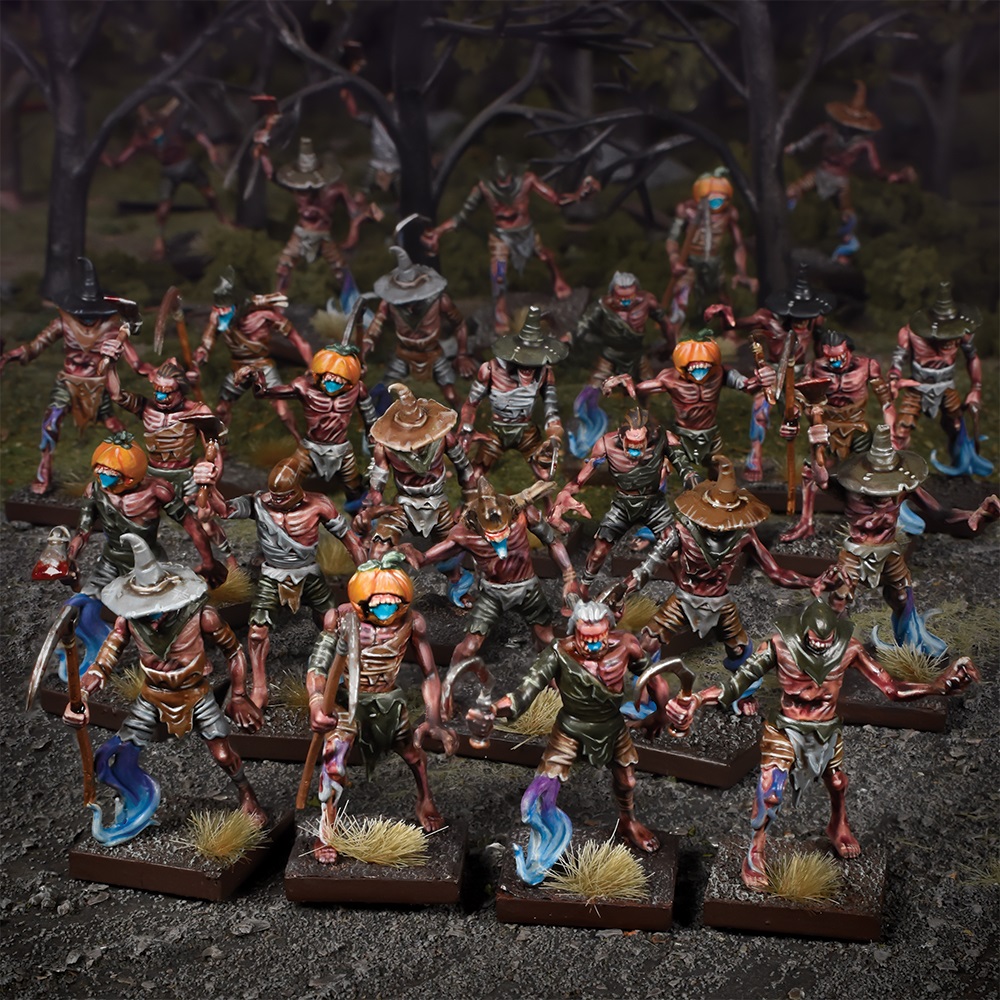
Nightmares // If You Think A Horde Is Hard To Shift Watch Out For Legions
Tar Pits: Cheap, high nerve units used to hold ground and objectives. They block and bog down an opponent while your remaining units shoot or run around the board hitting flanks. [editor: hordes and the rarer legions excel at this, but with a large frontage you'll find them targets for multicharges. Combining a high nerve with regeneration or some other form of self-healing means demons and undead, among others, do the tarpitting thing extremely well]
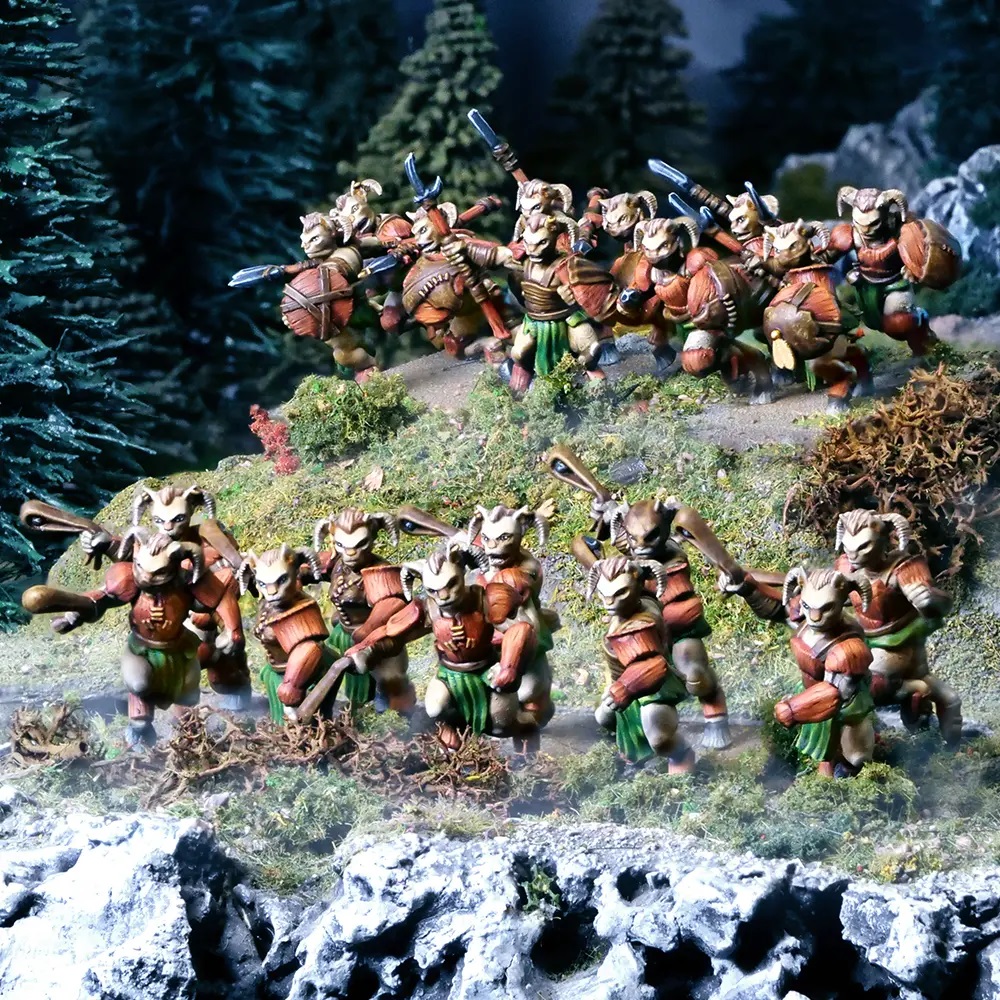
Tribal Warriors // Sometimes You Want Chaff To Stand, Sometimes You Need Them To Die
Chaff: A tactical response to the threat of strong attacking units. These are cheap units that you throw in front of the opponent’s hammers or direct fire to delay them and protect you. They are expendable and die to save better units, allowing them to counter-charge or shoot. Flying chaff are a great response to the threat of war machines hiding behind your opponent’s army. [editor: Kings also has Thicc Chaff units with a high defence that will stick around longer than your opponent wants and may even deal some damage for a slightly higher cost]
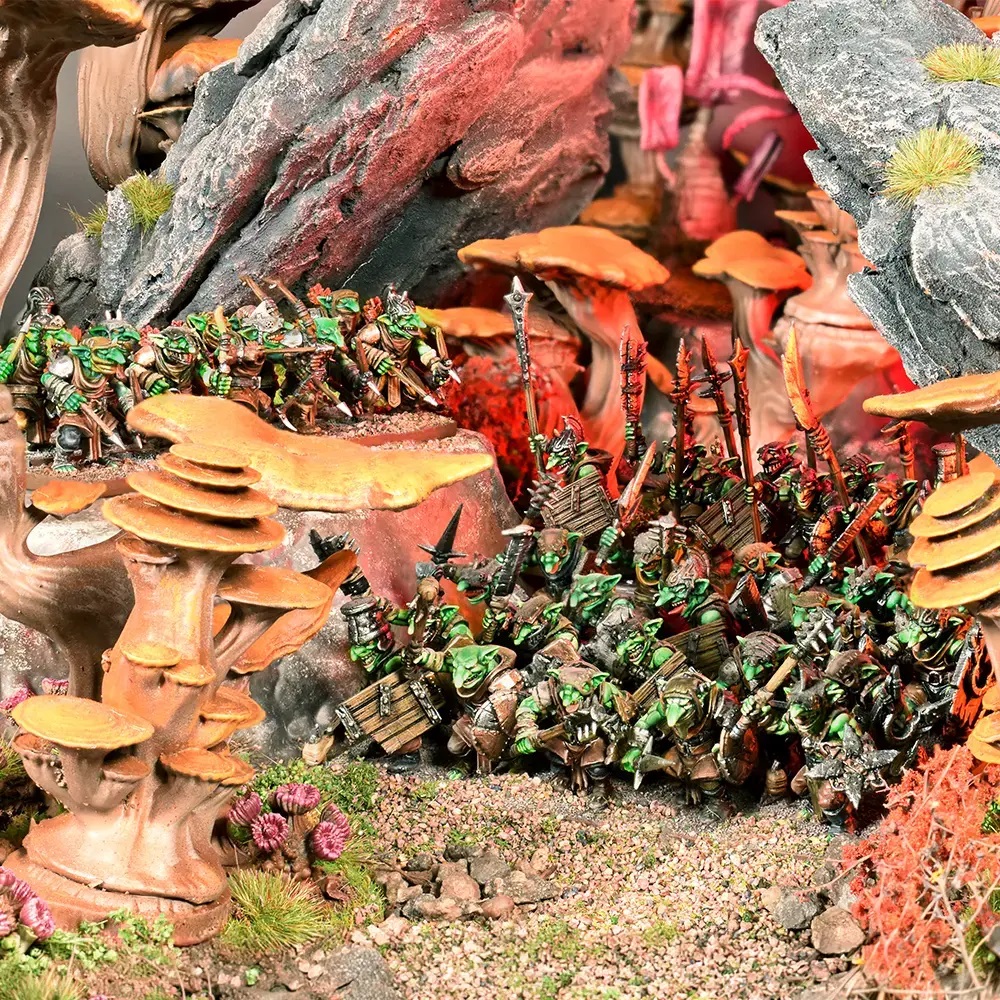
Goblins // When Your Army Is Chaff Who Cares What Dies!
Swarm: You can make a whole army of chaff that has too many units for your opponent to kill. A competitive edge is gained from the off by having more ‘drops’ (initial unit placements) than your opponent. At the start of the game, units are deployed by alternating between the players, one unit at a time. An opponent with fewer units will have deployed their entire force before you are finished, so you benefit from seeing their entire deployment. [editor: there is even an artefact that forces your opponent to put down d3 units in case you come up against swarms]
What Should I Choose?
The army build most helpful to the beginner is a “Mixed Arms” approach where there are some, if not all, of the different types of units. This way your army has a chance to perform well regardless of opponent, terrain or game objectives. You can also learn what works best with your playstyle and begin to refine your list accordingly. I’m going with this principle although I’m naturally very aggressive in my play so will stick a few extra speedy hammers in there too.
Chasing The Meta - Does The Min/Max Extreme Win?
Unlike some systems, Kings of War is hard to min/max in an extreme way. In previous editions, players had the option to pick lots of a single unit, but in this version, they must follow the build requirements, which encourages more variety.
At the highest levels of competition (Masters), there is an assumption that players will be maximising the army build options to take the best units available. In practice this is hard to do as there isn’t a clear winning faction. Players have to find combinations that work against any enemy whilst also trying to maximise their faction’s best attributes.
Most factions get played. At the US Masters this year, there were 18 out of the 20 factions played (no Twilight Kin or Empire of Dust [editor: that's because dry undead are the worst!). Ratkin (1st) and Goblins took the top 3 spots (see a full report here). Lots of core tar pits and chaff with shooty wizards and war engines. They get more drops and higher total unit strength, usually at the cost of higher defence and attack strength. Anything that gets a bit strong usually gets a fairly swift nerf, and rules for both Goblins and Ratkin were amended in the latest rules updates in the Fracture book (US Masters was played before this update).
There were players with armies that went the opposite way, with fewer, bigger, stronger units. They seem to have been at a disadvantage in scenario play as they weren’t able to deal with either the volume of units in these horde armies or the spread of objectives across the table.
Do I Have A Chance?
Fortunately, the skill level of a player is a significant deciding factor. In any single game, you can get unlucky with the dice, but these things even out over time. The main deciding factors will be how well you can deploy and use your army against your opponent, given the table layout and scenario requirements. Never forget what the objectives of the scenario are. Your army can take an absolute battering, but you can still win the game. With some skilful positioning of remaining units, you can outscore your opponent in the scenario on the final turn. [editor: playing the scenario is especially important now as some have progressive scoring throughout the game]
Visit The Project
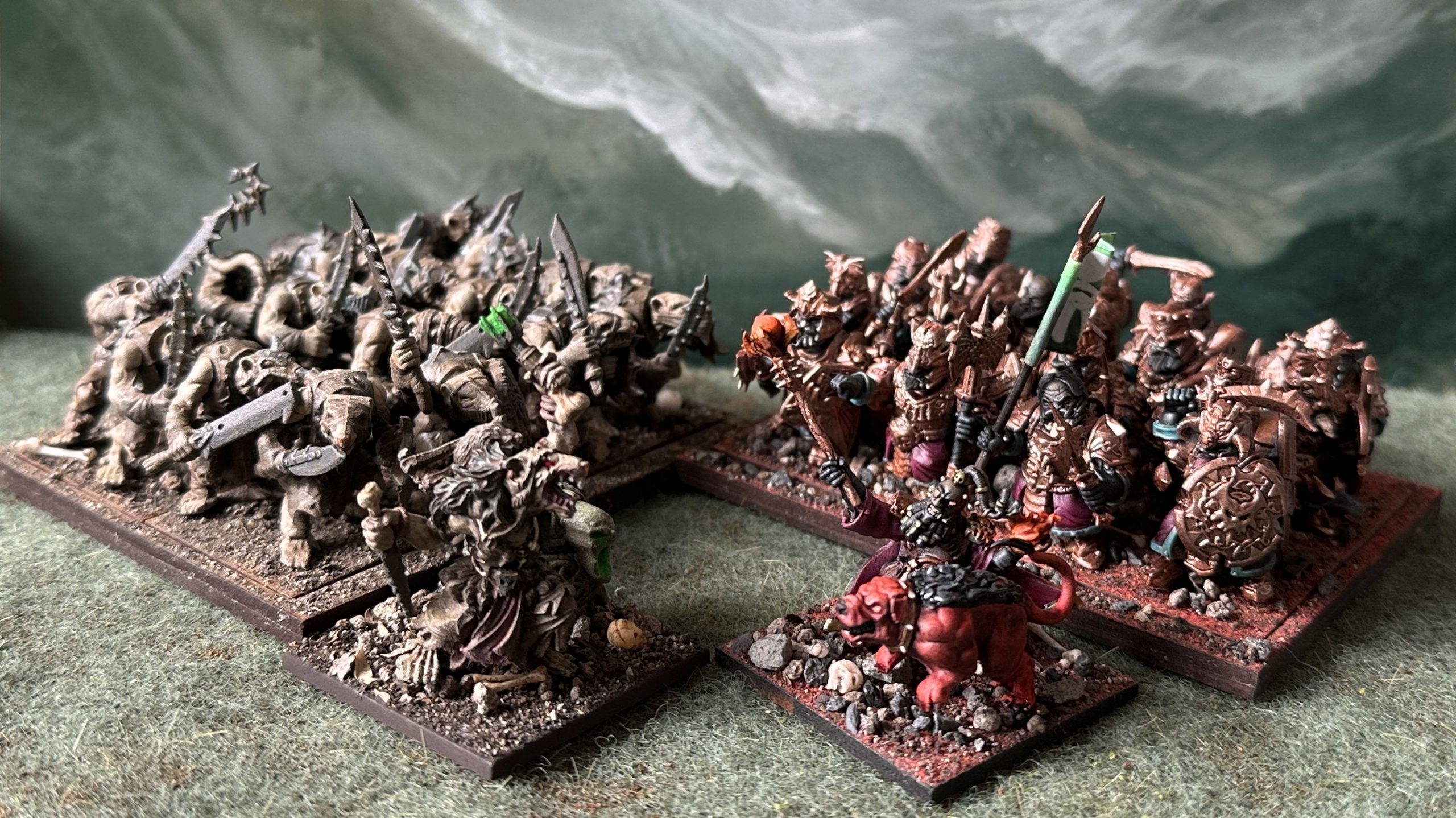
Until Next Time! Here at Zoid Acres, frantic painting continues. Next time I’ll show you how to get a better-than-basic army onto the table quickly. We’ll see the joys of multi-basing and Zoid’s Adaptable Basing System™. For now, here’s a glimpse of the first Abyssal Dwarfs and Ratkin.
Article by zoidpinhead
Supported by (Turn Off)

Supported by (Turn Off)
Supported by (Turn Off)





Intriguing looking into the make-up of a good army for Kings of War – I like how you’ve got to try and find a good balance alongside just being able to pick what you think is cool.
I pick things that look cool and then worry about the balance later…or neverer. The good thing with the new list building that min max tournament players hate is it requires you to take core units so you’re on a pretty even keel with others off the bat
I’ve really enjoyed the list building and the tool on the Mantic Companion pages is excellent. Although the theory suggests trying to go for a balanced approach, rather like Gerry, I’ve bought the miniatures that looked the coolest and now have to come up with a sensible build where I try and squeeze as many of them in as possible 😀
I kind of wonder how Mantic manages to make all factions viable for tournaments, but then I suspect they likely start with a solid system and don’t have to sell a new fancy model every month … (and they don’t appear to have a favourite faction either)
@limburger I think you have it there. The success of the game is in not being intimately tied to the development of their miniatures range. Whilst they are starting to bring the two closer together than they have been, there is still no evidence that Mantic are trying to force a particular range onto players. If a new range is popular it is because players like the look of the miniatures and fancy having a go at it on the table. They aren’t expecting to get a deliberately overpowered army and will therefore get a much better gaming experience.
I think it helps that their rules themselves allow for creativity and freedom.
Little things like instead of ‘x models make a unit’ (which most games do) you get ‘x – y models make a unit of this type’ help too as it kind of gets you into their way of thinking and it makes it easier to use alternative models.
When you factor in that even their new releases lean into this (like that unit with a few big brutes surrounded by tiny helpers) and you get a game that inspires as you realise they did not have to write a single special rule to accomodate.