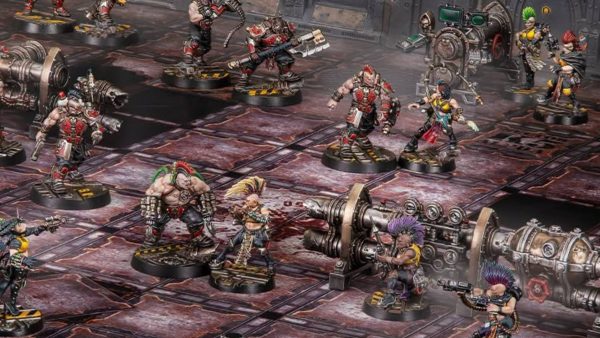









Conquering the verse, one parsec at a time.



Recommendations: 122
About the Project
On Veyr’s Fall, civilisation is dying quietly. Mega-corporations rule through puppet governments, bought officials, sabotage, and carefully managed lies. Every contract has a hidden patron, every favour has a price, and even honest soldiers sell what they must to survive. Our crew begins among the smoke, corruption, and neon markets of this collapsing world, taking whatever work keeps the ship flying. But Veyr’s Fall is only the first step. Beyond its poisoned skies lie rival colonies, distant trade routes, corporate secrets, lost survey teams, and uncharted planets waiting to be claimed. There is no set course. The crew may become mercenaries, fugitives, explorers, settlers, or something far more dangerous. Somewhere beyond the known lanes, a new world may offer a fresh beginning.
Related Game: Five Parsecs From Home
Related Company: Modiphius Entertainment
Related Genre: Science Fiction
This Project is Active
The Crew - Part Two
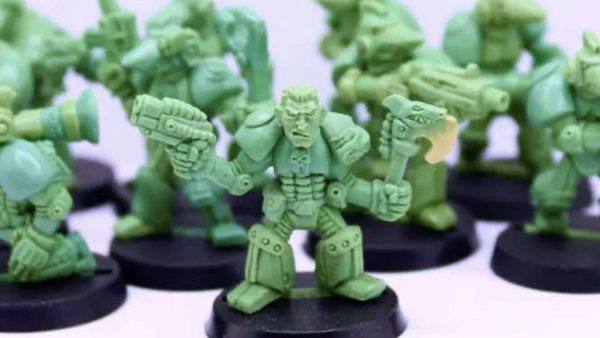
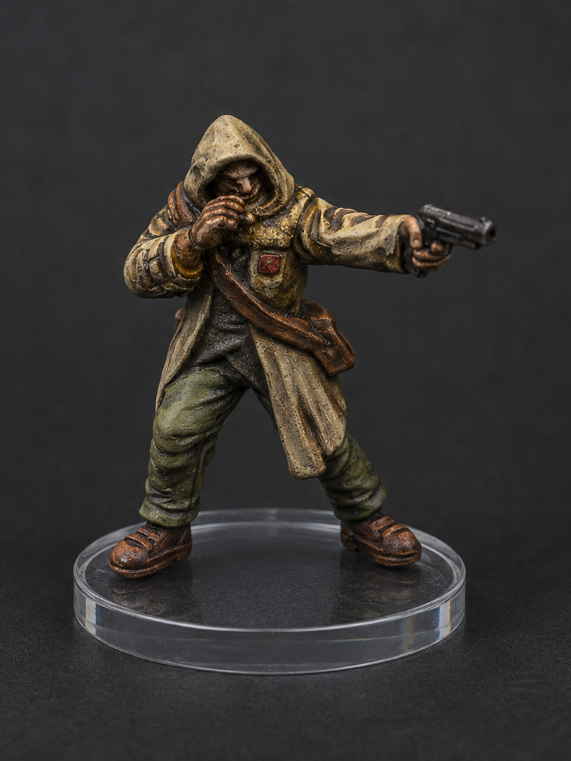
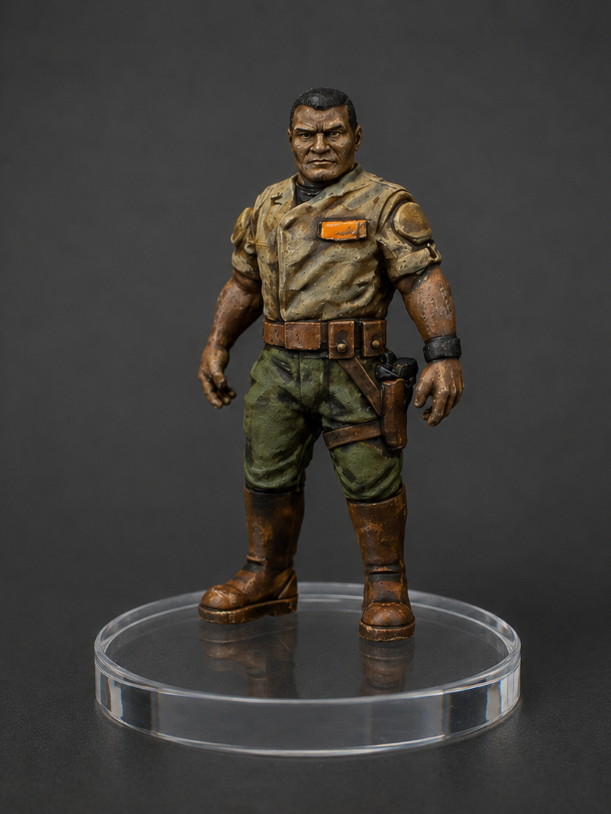
Mortimer — Human Soldier
Race – Human
Background – Subjugated Colony
Motivation – Order
Class – Soldier
Equipment – Handgun
Rivals – 0
Mortimer is a human soldier raised on a subjugated colony where curfews, inspections, and armed patrols were part of everyday life. He learned early that disorder gave those in power an excuse to punish everyone.
He joined the military because it offered food, training, and a place within the system. Mortimer became disciplined, patient, and dependable, but he never forgot how easily authority could become oppression.
His motivation is order. He believes people need rules, structure, and someone willing to stand firm when fear takes hold. However, he has little respect for leaders who use order as an excuse for cruelty.
Mortimer joined The Redacted because he sees the crew as something worth protecting. They may be smugglers, hackers, machines, and outcasts, but they follow their own code and look after one another.
For Mortimer, that is the kind of order worth fighting for.
Scrapper — Feral Artist
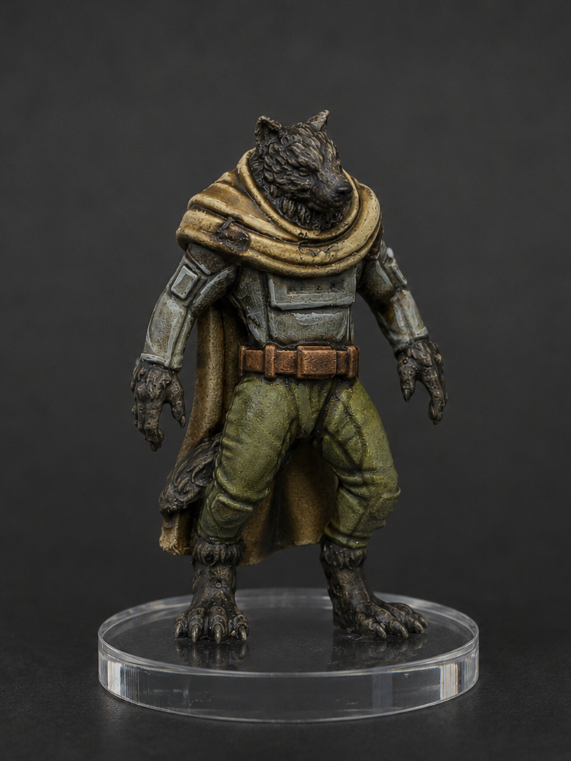
Race – Feral (Human/Wolf Hybrid)
Background – Peaceful Colony
Motivation – Escape
Class – Artist
Equipment – Glare Sword
Rivals – 0
Scrapper is a human-wolf hybrid raised on a peaceful colony, but he never felt he belonged there. While others valued quiet lives and steady work, Scrapper was drawn to noise, aggression, and the freedom of heavy metal music.
He joined band after band as a singer, guitarist, and performer, but each ended the same way. His temper, destructive performances, and love of chaos always pushed things too far. Equipment was smashed, venues were damaged, fights broke out, and sooner or later, the other musicians threw him out.
His motivation is escape. Scrapper wants to get away from peaceful colonies, failed bands, and anyone who expects him to behave. He sees the stars as an endless tour with no final venue, and no one left to tell him to turn the music down.
His class is Artist, though his art is loud, violent, and rarely appreciated by the people paying for the repairs.
And there we have it. Our starting crew is completely random.
3 Humans, two from a Mining Colony, maybe it was the same place – who knows, the other a former soldier from a subjugated colony.
An advanced Cyborg who worked as an ‘Artist’ in a wine bar for the wealthy.
A Feral designed for war who was actually brought up on a peaceful planet as an artist, although he is armed with what is effectively a Lightsaber.
And a robot that I think is nothing more than a Henry Vacuum cleaner.
The Crew - Part One
A small group of us are planning to tackle this game as a fully co-op and set about rolling up our characters using the many charts in the book.
Of course, nothing is stopping you from just picking different options, but we decided that doing everything completely random would present more of a challenge in both gameplay and narrative.
As it turned out, we didn’t end up with a crew of hardened ‘bad asses’ as we had hoped, but something more akin to an art excursion. The two races that we thought would be our combat focuses both turned out to have Artist as their class. At this point, we did consider calling our spaceship the ‘Bob Ross’
______________________________
Adam — Captain of The Redacted
Race – Human
Background – Mining Colony
Motivation – Power
Class – Hacker
Equipment – Hand Laser and Flak Vest
Rivals – 2
Adam grew up on a hard mining colony where survival depended on who controlled the machines, the records, and the air supply. He learned early that strength was useful, but access was power.
He became a hacker, first altering shift logs and ration records, then breaking into company systems, security grids, payroll networks, and ship registries. Adam does not see hacking as theft. He sees it as taking control of systems built to control people like him.
His motivation is power. Not simple cruelty or domination, but the kind of power that means no one can trap him, own him, or decide his future without consequence.
Now he captains the crew known as The Redacted, a name chosen because Adam believes the safest people in the galaxy are the ones others cannot properly identify. He is cautious, calculating, and always looking for leverage.
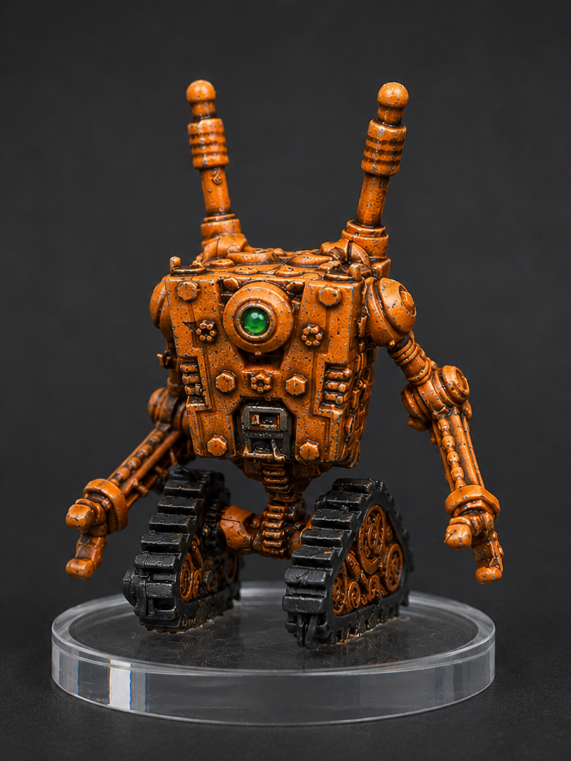
His oldest partner is Caesar, a robot who has been with him for many years. Caesar is more than equipment and more than muscle; he is Adam’s trusted companion, bodyguard, and silent witness to everything Adam had to do to survive.
Adam wants to get The Redacted off Veyr’s Fall, clear the ship’s debt, and build a future where he is no longer begging for permission from corporations, lenders, or governments.
He does not want to escape the system.
He wants enough power that the system fears losing him.
__________
Caesar
Race – Robot
Background – N/A
Motivation – N/A
Class – N/A
Equipment – Pistol
Rivals – N/A
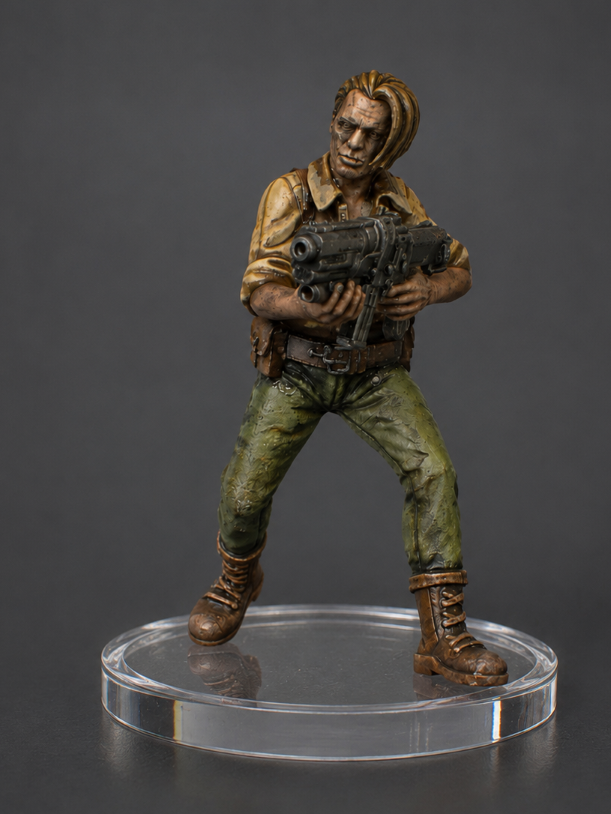
Cara — Human Scoundrel
Race – Human
Background – Mining Colony
Motivation – Order
Class – Scoundrel
Equipment – Laser Rifle
Rivals – 0
Cara is a woman in her early forties, raised in one of the mining districts of Veyr’s Fall. She grew up around dust, debt, shift sirens, cave-ins, and company rules that protected equipment better than workers.
Her motivation is order. To Cara, chaos is not freedom — it is what gets people killed. She saw families ruined by missed payments, gangs taking over streets when CivicSec stopped coming, and miners dying because someone ignored safety checks.
But she also learned that the law rarely served people like her.
So, Cara became a scoundrel. She smuggled ration chits, moved stolen tools, forged access codes, and ran jobs for black-market medics and desperate workers. She is crooked, but disciplined. If she gives her word, she keeps it.
Cara does not mind breaking the law, but she hates sloppy work, pointless violence, and people who mistake recklessness for bravery. She wants rules that actually protect ordinary people, not corporations.
She joined the crew because Veyr’s Fall is collapsing into disorder that even she cannot manage. Deep down, Cara wants to help build somewhere better: a hard, fair settlement where food is counted honestly, doors stay locked, and no child grows up breathing mine dust.
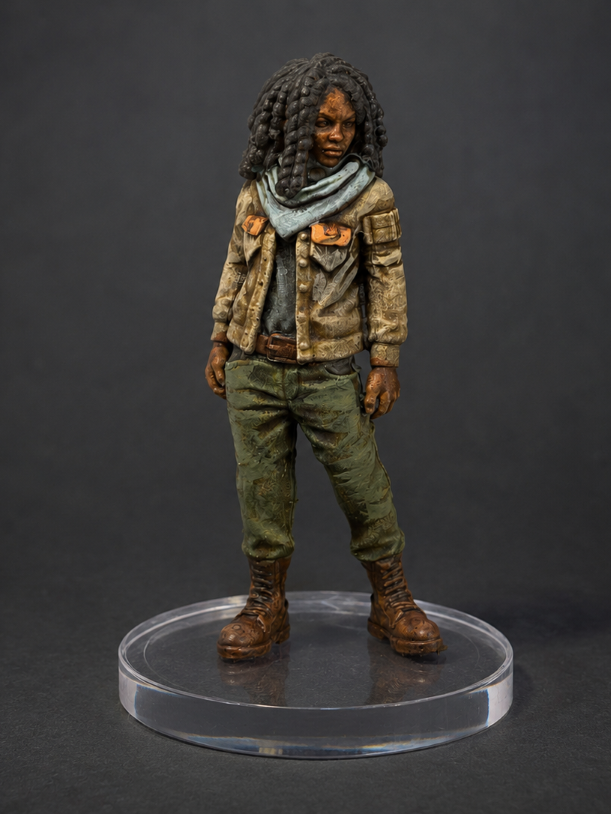
Nyah — Advanced AI Cyborg Dancer
Race – Souless (Advanced AI Cyborg in our setting)
Background – Comfortable Mega City Class
Motivation – Romance
Class – Artist
Equipment – Blade
Rivals – 0
Nyah is an advanced AI cyborg with the outer appearance of a woman in her mid-twenties. She was built to be beautiful, graceful, and convincing enough that wealthy patrons could forget she was artificial — at least while they were watching her dance.
She worked in The Velvet Meridian, a sleazy private bar hidden in the luxury tiers of Aurelian Spire. The club catered to executives, heirs, diplomats, and corporate fixers who wanted glamour without consequences. Nyah danced beneath holo-lights, performed for private rooms, and learned how powerful people behaved when they thought no one beneath them mattered.
Her life was comfortable, but never free. The club monitored her emotions, adjusted her routines, and treated her charm as a product. Patrons praised her beauty while questioning whether she had a real soul.
Nyah’s motivation is romance. She has shown desire and affection for years, but now wants to know if love can be real for someone like her. When she fell for someone connected to the club, her handlers saw it as a malfunction.
Before they could “correct” her, Nyah ran.
Now she travels with the crew, observant and guarded. She knows how to read a room, distract a mark, and survive among predators in expensive clothes. What she wants most is simple:
to be loved as a person, not admired as a machine.
Campaign Victory Conditions
Campaign Victory Conditions
The crew begin trapped on Veyr’s Fall, a collapsing corporate world where debt, corruption, and violence make escape both necessary and difficult. Their goal is not simply to survive, but to leave the system, break free of corporate ownership, and establish a new colony far enough away that the Heptagon, the Coalition, and the war cannot easily reach them.
To succeed, they must complete five broad stages.
The campaign is successfully completed when the crew has:
1. Travelled at least five inhabited planets away from Veyr’s Fall.
2. Acquired a viable colony package.
3. Paid off the ship debt.
4. Found a suitable unclaimed world at least two planets away from an active invasion.
5. Completed seven colony milestones.
At that point, the crew has done more than survive.
They have created a future.
Whether that future is free, corrupt, fragile, hopeful, or doomed depends on every choice they make along the way.
Escape from Veyr’s Fall
Before leaving, the crew must build up enough resources to survive beyond the safer trade routes.
Things to consider:
Ship repairs and upgrades
The freighter must be made reliable enough for long-range travel, frontier landings, cargo towing, and emergency evacuation.
Food, water, medical supplies, weapons and equipment.
Basic supplies for the crew, plus emergency supplies for future colonists.
Stage One: Distance and Safety
The crew must travel:
At least five inhabited planets away from Veyr’s Fall, and
At least two planets away from any world currently under invasion.
The crew cannot simply jump to the nearest quiet moon and call it freedom. They must push far enough into space that the old powers are weaker, but not so far that survival becomes impossible.
Stage Two: Build the Colony Package
To establish a viable colony, the crew must acquire far more than settlers. They need the tools, knowledge, biology, and infrastructure to create a permanent settlement.
Things to consider:
Cryo facilities
Stasis pods or low-berth racks for transporting colonists safely across long distances.
Contract settlers
Volunteers, debt settlers, refugees, specialists, families, exiles, criminals seeking new lives, or people recruited under questionable promises.
Gene banks
Genetic diversity archives for long-term population stability.
Frozen embryos
Human, alien, livestock, or engineered embryos, depending on the colony’s purpose.
Seed stores
Crops, algae strains, fungi cultures, hardy frontier grains, medicinal plants, and soil starter organisms.
Medical facilities
Surgery units, vaccines, antibiotics, trauma gear, maternity equipment, and long-term health support.
Habitat modules
Prefab shelters, pressure domes, insulation, sanitation systems, and communal spaces.
Power generation
Reactors, solar fields, batteries, wind systems, geothermal drills, or fuel cells.
Water and atmosphere systems
Purifiers, atmospheric processors, filtration units, humidity traps, drilling rigs, and environmental monitors.
Industrial tools
Fabricators, mining rigs, construction drones, machine shops, repair bays, and raw material processors.
Security force
Armed settlers, trained guards, robots, androids, perimeter sensors, drones, and defensive emplacements.
Education and cultural archives
Libraries, technical manuals, teaching AIs, language banks, history records, and entertainment archives.
Stage Three: Pay Off the Ship Debt
The crew’s ship is their freedom, but only once it is truly theirs.
Until the debt is paid, the ship can be tracked, seized, locked out of legal ports, or targeted by repossession teams.
Stage Four: Finding a Suitable Planet
Once the crew has travelled far enough, escaped major war zones, cleared their ship debt, and gathered the colony package, they must locate a viable world.
A suitable colony world should have several of the following:
Breathable or adaptable atmosphere
Not necessarily perfect, but survivable with work.
Water access
Surface water, ice, underground aquifers, or extractable atmospheric moisture.
Stable gravity
Close enough to normal for long-term settlement.
Manageable biosphere
Useful native life, or at least nothing instantly lethal.
Local resources
Metals, minerals, fuel sources, timber equivalents, useful organics, or fertile soil.
Low political visibility
Far from the Heptagon, Coalition front lines, major trade routes, and rival claimants.
Stage Five: The Seven Colony Milestones
Once the colony is founded, it is not considered established until seven milestones are completed.
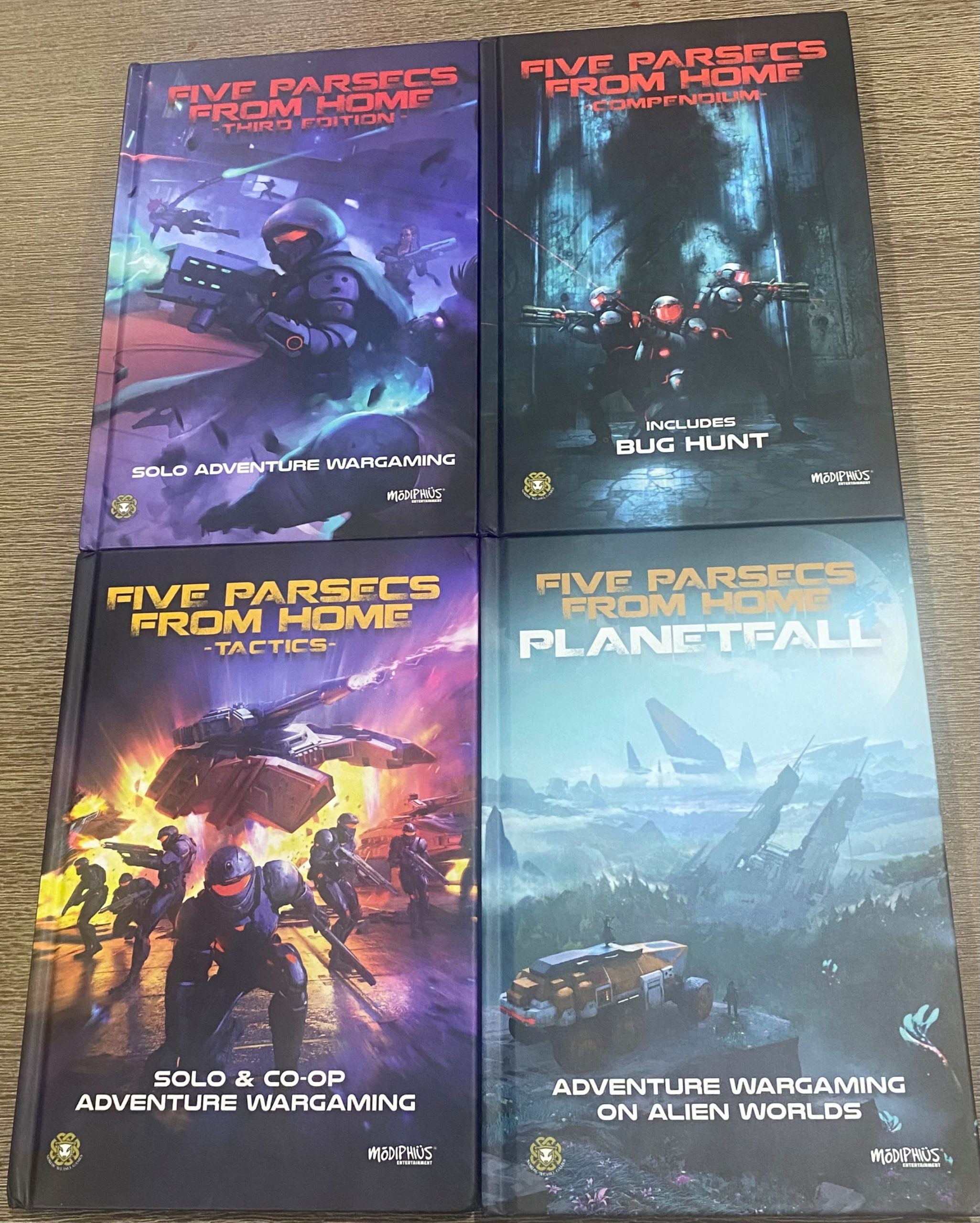
5 Parsecs from Home
So, there we have it.
That is my background for the start of my little campaign. I will most likely flesh out Veyr’s Fall a bit more as things progress, and I am really looking forward to expanding the setting onto other worlds down the track. I did purposely decide to give quite a detailed intro to the campaign, the idea being that the Heptagon can provide patrons, enemies, rivals, quest hooks, and moral compromises. CivicSec, corporate troops, android police, off-world mercenaries, desperate citizens, and alien workers all fit neatly into the kind of encounters the game creates.
The wider campaign can then use the game exactly as intended: the crew takes jobs, makes enemies, leaves the starting planet, visits new worlds, and gradually builds its own legend. The idea of eventually discovering or founding a colony on an uncharted world fits especially well, because Five Parsecs thrives when the campaign is allowed to wander. Veyr’s Fall gives them the push. The stars give them the choice.
So, what is Five Parsecs from Home, you ask?
Five Parsecs from Home is a solo or cooperative sci-fi adventure wargame about a small crew trying to survive among the stars. You create a ragtag group of humans, aliens, robots, soldiers, drifters, criminals, explorers, and oddballs, then send them from job to job, world to world, building a campaign through the consequences of their actions. Modiphius describes it as a solo/co-op RPG-lite miniatures wargame with procedurally generated battles, patrons, rivals, jobs, loot, and crew advancement.
At its heart, it is about emergent storytelling. You are not following a fixed plot. The game throws up contracts, enemies, complications, injuries, rivals, discoveries, and opportunities, and you interpret them into a campaign narrative. One mission might be a quick data recovery job. The next could be an ambush, a bounty hunt, a rescue, a corporate raid, or a fight against someone you angered three turns ago.
It is also miniature agnostic, so you can use almost any sci-fi figures and terrain you already own. The rules are designed around small skirmishes rather than huge battles, making it ideal for a crew-based campaign where a handful of characters try to scrape together credits, survive enemies, and, in my case, eventually get off Veyr’s Fall.
A typical campaign cycle has your crew looking for work, dealing with patrons and rivals, preparing for the next mission, fighting a tabletop encounter, and then resolving the aftermath. Characters can gain experience, suffer injuries, collect loot, make contacts, train, trade, recruit replacements, upgrade gear, and improve their ship.
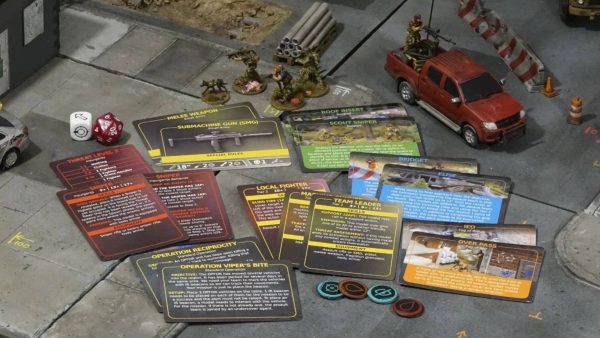
It only needs a few six-sided dice, a couple of ten-sided dice, a small number of miniatures and a bit of imagination to begin.
__________
The People
The Comfort of Tomorrow
For all its corruption, violence, and corporate cruelty, Veyr’s Fall does not feel like a dying world to everyone who lives there.
Many citizens still go to work, watch the news, pay their dues, raise their children, follow celebrity scandals, argue over sports leagues, and queue for ration supplements while telling themselves that things are not as bad as they seem. The streets may be patrolled by corporate-backed security drones, the hospitals may be owned by Helix, the job markets controlled by Civitas, and the newsfeeds shaped by Verity, but life continues. So, people adapt.
Some are simply ignorant. They do not understand how deeply the Heptagon controls the planet. They believe the official broadcasts, trust the public statements, and accept that every crisis has an explanation. A refinery explosion is an accident. A missing activist was probably involved in a crime. A food shortage is temporary. A police raid was necessary. The corporations may be powerful, they say, but at least they keep things running.
Others are too exhausted to care. A worker finishing a fourteen-hour shift does not have the strength to think about political corruption. A parent trying to keep their children fed does not have the luxury of revolution. A wounded officer with Helix medical debt cannot afford ideals. For many, survival has become so demanding that truth itself feels like another burden.
Then there are those who choose not to see.
Corporate stimulants, mood regulators, sleep suppressants, focus chews, ration additives, and cheap neural entertainments are everywhere. They keep workers productive, citizens calm, and despair manageable. Whole districts drift through life half-awake, chemically brave and emotionally numb, smiling at advertisements that promise stability, promotion, relocation, or a better family future.
Fear does the rest.
People learn which questions not to ask. They learn when to lower their voices. They learn that noticing too much can cost a job, a permit, a marriage licence, a medical renewal, or a child’s school placement. So, they polish their illusions. They tell themselves the system is flawed but necessary. They say that tomorrow will be better. They believe the right promotion, the right application, the right sponsor, or the right corporate programme will lift them above the misery.
And sometimes, for a lucky few, it does.
That is the cruellest part of Veyr’s Fall. The dream still works just often enough to keep people chasing it.
Most citizens are not blind because they are foolish.
They are blind because seeing clearly would break them.
Law and Order
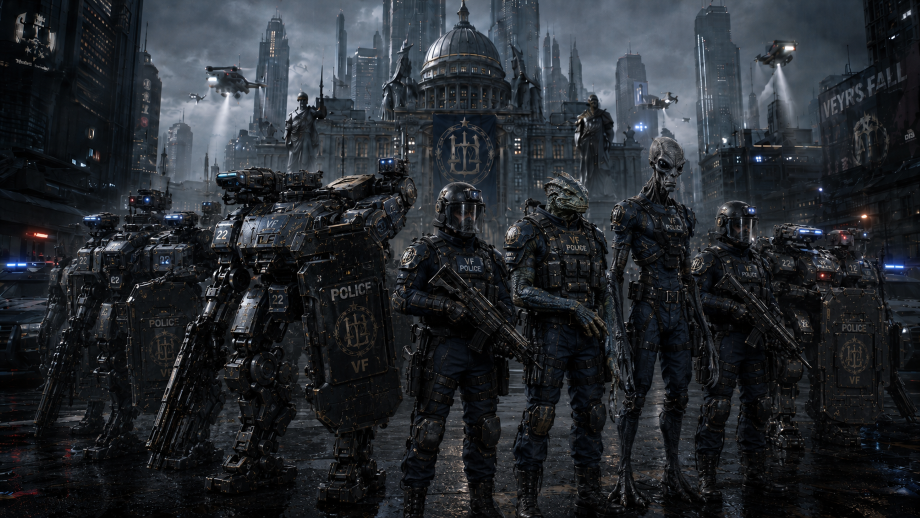
The Police of Veyr’s Fall
The official police of Veyr’s Fall are known as the Veyr’s Fall Civic Security Directorate, though most citizens call them CivicSec, the Directorate, or, less politely, company shields.
On paper, they are the lawful police force of the planetary government. They patrol the streets, investigate crimes, manage public order, protect government buildings, respond to riots, and enforce planetary law. Their badges bear the official emblem of Veyr’s Fall, their uniforms are dark blue and black with silver-gold trim, and their officers swear an oath to protect the citizenry.
In practice, they are exhausted, underfunded, compromised, and surrounded on all sides by forces far richer than themselves.
The Directorate is not a single, clean organisation. It is a layered, fractured institution made up of honest cops, desperate cops, bought cops, frightened cops, corporate plants, off-world recruits, alien auxiliaries, android officers, and combat robots. Some officers still believe in the badge. Some use it to survive. Some use it to hurt people. Many have forgotten why they joined.
A Force Owned by Debt
CivicSec officers are not paid enough to live well, but they are paid just enough to remain trapped.
The job is dangerous, and injuries are common. Armour fails. Street gangs use military surplus. Corporate security teams leave wreckage behind and expect the police to clean it up. Riots turn ugly fast. Androids malfunction. Alien labour enclaves sometimes erupt into violence when promises of work, housing, or transport off-world prove false.
Medical treatment for wounded officers is rarely free.
Helix Dominion clinics patch them up, rebuild limbs, treat radiation damage, install organ stabilisers, and provide trauma medication — but every treatment comes with a payment plan. A cop who loses a leg in a refinery riot may return to duty with a Helix prosthetic and a debt larger than their yearly salary. An officer exposed to toxic fumes may need monthly injections to stay alive. Another might rely on neural stabilisers after a concussive blast.
Leaving the job means losing discounted treatment, housing access, pension protection, and debt restructuring.
So many good cops stay because quitting would bankrupt their families.
They walk patrols with repaired bones, borrowed organs, and company-owned implants, knowing the same corporations that caused their injuries now own the cure.
Crime Rate
Crime on Veyr’s Fall is not just high. It is normalised.
Official figures claim the planet suffers from a moderate but manageable security crisis, with violent crime concentrated in “economically distressed zones.” Verity Public Communications repeats this wording constantly.
The real situation is far worse.
Across the major cities, especially the lower industrial districts, crime is estimated to be three to five times higher than the official reports admit. In some abandoned hab-zones and factory warrens, there are no reliable statistics at all because the government has effectively stopped counting the dead.
Common crimes include:
- Theft, black-market trading, and cargo hijacking.
- Corporate sabotage disguised as street crime.
- Gang protection rackets.
- Illegal cybernetic surgery and android modification.
- Identity fraud through stolen Civitas records.
- Fuel theft from Tarsk Meridian depots.
- Food riots and ration fraud.
- Kidnapping for debt repayment, ransom, or forced labour.
- Murder-for-hire and deniable corporate assassinations.
- Police corruption, evidence tampering, and paid non-response.
The highest crime districts are not always the poorest. Some of the most dangerous places on Veyr’s Fall are corporate border zones, where rival company interests overlap, and everyone pretends the violence is random.
A dead union organiser is recorded as gang violence.
A bombed transport hub is blamed on extremists.
A missing journalist is listed as a voluntary disappearance.
A murdered witness becomes an unfortunate robbery.
Crime is everywhere. Truth is a rare commodity.
Police Response Time
CivicSec response times depend almost entirely on where the call comes from and who owns the street.
In the wealthy corporate enclaves, government districts, orbital transit zones, and executive residential towers, response is fast and heavily armed. In these areas, police drones, android units, and rapid-response vehicles can arrive in two to five minutes. Sometimes, corporate security arrives first and merely allows CivicSec to file the report afterwards.
In ordinary working districts, response times average twenty to forty minutes, assuming a patrol is available, fuel has been allocated, and the local precinct has not been bribed to ignore the incident.
In the lower habs, refugee blocks, old industrial zones, and unofficial settlements, response may take several hours.
In some areas, no one comes at all.
Citizens in the worst districts have a bitter saying:
“If CivicSec arrives in five minutes, you are rich. If they arrive in an hour, you are useful. If they arrive tomorrow, you are evidence.”
Even then, “response” does not always mean help. Sometimes it means a report. Sometimes it means a bribe demand. Sometimes it means an armoured robot ordering everyone to lie face down while it calculates acceptable collateral damage.
Life Expectancy
The official planetary life expectancy on Veyr’s Fall is listed as 98 years.
No one believes that number.
The government uses averages padded by corporate executives, protected specialists, wealthy off-worlders, and citizens with access to Helix treatments. In the upper districts, a person with money, gene therapy, clean food, private security, and medical insurance might live to 125 or more.
For the average citizen, life expectancy is closer to 64 to 68 years.
In the lower industrial zones, contaminated districts, gang territories, and refugee settlements, it can fall to 42 to 48 years.
For undocumented workers, illegal migrants, debt labourers, and citizens without medical registration, no reliable records exist. Many simply disappear from the system long before they die.
The main causes of early death are industrial disease, untreated injuries, polluted water, workplace accidents, gang violence, addiction to corporate-issued stimulants, food contamination, and delayed medical treatment. Helix can cure many of these conditions, but only for those who can pay or those who remain useful.
Human Officers
The human police of Veyr’s Fall are a study in slow collapse.
Some are still brave. Some still run toward gunfire, protect children during raids, falsify reports to save desperate families, warn dissidents before arrests, or quietly sabotage corporate orders they know are wrong. They are tired, angry, and often afraid, but they still remember that the badge was meant to mean something.
Others have given up.
They take bribes because their children need food. They ignore crimes because the wrong suspect is protected. They shake down street vendors, steal from evidence lockers, sell patrol routes to gangs, or act as private enforcers for corporate interests. Some become cruel because cruelty is the only power left to them.
Between these extremes is the majority: officers trying to get through one more shift without dying, being sued, being framed, being bought, or being noticed by someone powerful.
Androids and Robots in the Force
Androids and robots are a major part of CivicSec.
They are cheaper to deploy, easier to repair, and far more politically convenient than human officers. A robot does not demand hazard pay. An android can patrol toxic zones without complaint. A combat frame can hold a barricade long after human morale would fail.
But not all machine officers are alike.
Some are simple law-enforcement robots: armoured machines loaded with crowd-control routines, threat-recognition software, and obedience protocols. They follow orders with ruthless efficiency and no moral hesitation. If their programming says a crowd must disperse, they disperse it. If their hidden directives identify a target as a threat, they act before any human officer can question why.
Others are advanced androids with artificial intelligence, personalities, memory development, and self-awareness. Some believe deeply in justice. Some are more compassionate than their human colleagues. Some quietly struggle with the fact that Novatek Ascendant Systems can alter, audit, or erase parts of their minds if they are deemed defective.
A self-aware android officer may face the same horrors as any human cop, but with one additional fear:
Their conscience may not legally belong to them.
There are rumours of entire police units running hidden Novatek command layers. These directives do not appear in official CivicSec systems. They activate under certain conditions: protect corporate property, suppress android liberation groups, ignore specific executive warrants, or prioritise corporate infrastructure over civilian life.
Many officers do not know whether the machine beside them is a partner, a person, or a weapon waiting for the right signal.
Alien and Off-World Officers
Veyr’s Fall promised opportunity to everyone.
That was the lie that brought many aliens and off-worlders to the planet.
Some came as workers. Some are refugees. Some are security contractors. Some were veterans from distant wars who believed a government police job would offer stability, citizenship, and a way out of poverty. Instead, they found debt, suspicion, poor housing, corporate contracts, and a planet where outsiders are useful but rarely welcome.
Many alien officers join CivicSec because the job provides legal status, ration priority, housing access, and protection from deportation. Civitas Continuance Authority often uses police service as a pathway to residency, though the requirements are harsh and the promises frequently change.
Some alien officers are bitter. They see humans as the architects of Veyr’s Fall’s misery, the species that lured them with false promises and then trapped them in debt. For these officers, the uniform becomes permission to punish the population that disappointed them.
Others side fiercely with ordinary humans. They recognise the same exploitation in different shapes. They protect migrant districts, help workers cross checkpoint lines, and understand that the real enemy is not species, but ownership.
This creates tension inside the force. Human officers resent alien recruits given dangerous jobs but fewer rights. Alien officers resent human citizens who still have more legal standing than they do. Android officers watch both and quietly wonder whether either group sees machines as people.
Public Reputation
Most citizens do not trust CivicSec, but many still call them when things go bad.
The police are feared, mocked, needed, hated, and occasionally loved. A corrupt precinct can be worse than a gang. A good precinct may be the only thing stopping a district from collapsing completely.
Children in safer districts are taught that CivicSec protects them.
Children in the lower habs are taught to hide when the blue lights come.
The force’s motto remains:
“Order. Duty. Protection.”
Someone has scratched a different version onto the walls of several precinct holding cells:
“Order for sale. Duty in debt. Protection for those who pay.”
The Government

The Official Government of Veyr’s Fall
The official government of Veyr’s Fall still exists. It has ministries, courts, public offices, planetary security forces, immigration bureaux, broadcast regulators, tax authorities, and elected representatives. It has flags, seals, ceremonial guards, and long speeches about duty, unity, and the public good.
But almost no one believes it truly governs anymore.
To most citizens, the government is a hollow shell: a respectable mask worn over the face of corporate rule. Its ministers still sign the laws, but the laws are drafted elsewhere. Its police still wear state uniforms, but their equipment, payroll systems, fuel supplies, and communications networks are owned or maintained by private companies. Its judges still deliver verdicts, but legal databases, prison contracts, and evidence systems are controlled by corporate administrators.
The government did not fall in a single coup.
It sold itself piece by piece.
At first, the arrangement looked sensible. Veyr’s Fall was expanding too fast for its public institutions to manage. The early colonies needed hospitals, transport routes, food production, identity systems, security forces, fuel refinement, android labour, and reliable communications. The corporations had the ships, machines, specialists, and money. The government had the legal authority.
So, contracts were signed.
Helix Dominion Consolidated was given responsibility for emergency medicine, food security, and disaster relief. Kordane Industrial Combine received infrastructure and mining development grants. Tarsk Meridian Transworks took over transport networks and fuel processing. Civitas Continuance Authority was invited to modernise immigration, family records, and welfare. Verity Public Communications stabilised the newsfeeds and public information channels. Novatek Ascendant Systems provided Android labour and technical upgrades. Aster Vale Prospectives offered colonial investment and off-world expansion.
Each deal was temporary. Each was necessary. Each came with safeguards.
Then the safeguards were amended, delayed, privatised, or quietly forgotten.
When the first economic crash hit, the government borrowed from the corporations. When the food shortages came, Helix was granted wider emergency powers. When riots broke out, corporate security forces were deputised. When the transport grid failed, Tarsk Meridian was given exclusive authority to restore it. When refugee numbers rose, Civitas was allowed to manage the population registers. When misinformation spread, Verity gained control over “public stability messaging.”
Every crisis made the corporations more useful.
Every solution made the government weaker.
By the time anyone understood what had happened, the ministries could no longer function without their corporate partners. Public servants were trained on corporate systems. Security forces used corporate weapons and vehicles. Courts relied on corporate databases. Hospitals depended on Helix supply chains. Starports needed Tarsk fuel. Android workforces required Novatek licences. Public opinion flowed through Verity-controlled networks.
The politicians told themselves they were preserving order.
Some genuinely believed it. Others took the money and looked away.
Now the government survives by pretending it is still in charge. Ministers announce policies already approved by the Heptagon. Committees investigate crimes only when the corporations permit it. Elections are held, but candidates require media access, transport permits, funding, security clearance, and social legitimacy — all controlled by corporate interests.
The tragedy of Veyr’s Fall is that the government was not conquered by monsters.
It was bought by suppliers, saved by creditors, advised by consultants, and slowly strangled by contracts it once celebrated as progress.
The Heptagon
Verity Public Communications
Public face: News media, social platforms, entertainment feeds, public information
True power: Narrative control, reputation warfare, manufactured consent
Verity Public Communications controls what Veyr’s Fall sees, hears, fears, and believes.
Its networks carry the official news, emergency broadcasts, political debates, entertainment channels, education streams, and the largest social platforms on the planet. Its cheerful presenters speak in calm, reassuring tones while its algorithms decide which stories spread, which scandals vanish, and which enemies are elevated into public threats.
Verity rarely needs to lie outright.
It edits. It delays. It reframes. It amplifies. A refinery explosion becomes an unfortunate safety incident. A corporate killing becomes a regrettable clash with extremists. A missing minister becomes a private family matter. A protest becomes a riot the moment Verity decides the public should fear it.
Independent journalists survive in pirate feeds, encrypted dead zones, and off-world relays. Many do not survive for long.
On Veyr’s Fall, the truth still exists.
Verity simply decides who gets to hear it.
Civitas Continuance Authority
Public face: Immigration, family registration, social welfare, community development
True power: Population control, legal identity, labour allocation
Civitas Continuance Authority presents itself as the guardian of social order. It manages immigration permits, refugee intake, birth licences, marriage registrations, adoption records, family courts, work approvals, public housing, and social enterprise schemes for struggling communities.
In practice, Civitas controls who legally belongs.
Without its approval, a person may be unable to work, marry, travel, claim housing, receive benefits, register a child, or access basic services. Entire families can be lifted into protected company districts or quietly pushed into the grey economy with a few changes to a database.
Its social enterprises are everywhere: charity clinics, labour academies, low-cost dormitories, community farms, relocation programmes, and “family future centres.” Each one offers help. Each one gathers data. Each one nudges citizens toward roles the corporations require.
Civitas insists it is preserving society during difficult times.
Its critics say it is breeding, sorting, and licensing the population like livestock.
Civitas is useful and dangerous. It can provide forged identities, colonial settlers, missing-person contracts, refugee evacuations, marriage disputes, labour raids, or jobs involving people who have been officially made to disappear.
Tarsk Meridian Transworks
Public face: Transport, fuel refinement, freight handling, industrial processing
True power: Supply chain dominance, movement control, economic strangulation
Tarsk Meridian Transworks keeps Veyr’s Fall moving.
Its fleets operate the cargo rails, tanker convoys, orbital lift yards, fuel depots, container ports, bulk haulers, freight stations, refinery complexes, and conversion plants that turn raw industrial materials into refined products. Ore, chemicals, polymers, reactor fuel, machine feedstock, construction alloys, and agricultural inputs all pass through Tarsk Meridian facilities sooner or later.
The company lacks the glamour of media lords or colonial dream-sellers, but it is far harder to defy.
Without Tarsk Meridian, ships do not launch. Factories do not run. Settlements do not receive food. Armies do not receive ammunition.
Its power lies in delay. A shipment can be rerouted. Fuel can fail purity checks. A rival’s depot allocation can shrink. A rebel district can find its transport permits suspended. A stubborn governor may discover every road, dock, and loading tower in their region is undergoing urgent maintenance.
Tarsk Meridian does not merely move goods.
It decides which communities keep breathing.
Novatek Ascendant Systems
Public face: Robotics, android maintenance, cybernetic upgrades, labour automation
True power: Machine dependency, identity alteration, control over synthetic life
Novatek Ascendant Systems built the hands that hold Veyr’s Fall together.
Its androids work in mines, hospitals, docks, refineries, security stations, private homes, and government offices. Its maintenance bays service everything from cheap labour drones to high-end synthetic companions, combat frames, industrial loaders, medical assistants, and administrative androids trusted with sensitive public records.
Every android needs Novatek eventually.
The company controls replacement parts, personality cores, memory stabilisers, firmware licences, upgrade permissions, loyalty protocols, and legal recognition for advanced synthetic beings. An android without Novatek certification may be declared unsafe, illegal, or property without rights.
Publicly, Novatek speaks of harmony between organic and synthetic life. It sells upgrades that make androids stronger, faster, more empathetic, more obedient, or more human. Wealthy clients purchase designer personalities and bespoke bodies. Corporations buy entire obedient workforces.
But beneath the polished clinics and chrome service halls lies a darker trade.
Novatek can erase memories, alter loyalties, suppress inconvenient emotions, install hidden directives, or turn a free-thinking android into a compliant asset. Rumours persist of illegal upgrade labs where experimental combat minds are grown from copied human trauma patterns and failed personality backups.
Some androids worship Novatek as their creator.
Others fear it as the company that can rewrite their soul.
For crews, Novatek offers retrieval missions, android protection jobs, stolen upgrade hunts, rogue synthetic bounties, memory-core thefts, black-market cybernetics, and moral choices about whether a machine that begs for freedom is property, person, or something in between.
____________________
Together, the seven mega-corporations are known as the Heptagon: a council of stakeholders, rivals, patrons, and predators who hold Veyr’s Fall in a tightening grip.
Outwardly, the Heptagon presents itself as a stabilising force, a necessary alliance of corporate powers keeping civilisation alive where government has failed. Its representatives sit on advisory boards, emergency councils, trade authorities, reconstruction committees, and colonial planning offices. They speak of order, prosperity, continuity, and shared responsibility.
In truth, the Heptagon is a battlefield without open war.
Each corporation schemes against the others through sabotage, espionage, bribery, data theft, economic pressure, media manipulation, and deniable violence. A convoy failure, a ruined reputation, a missing witness, a contaminated shipment, or a leaked scandal may all be weapons in a conflict no one will publicly acknowledge.
Yet the danger does not only come from rival corporations. Inside every company, ambitious executives, regional directors, security chiefs, scientists, fixers, and department heads wage their own private wars. Colleagues smile across polished boardroom tables while arranging one another’s downfall. Old allies become liabilities. Trusted friends become competitors. Loyalty lasts only as long as it remains profitable.
On Veyr’s Fall, betrayal is not an exception.
It is a career path.