



A Foray into Napoleonic Wargaming



Recommendations: 1726
About the Project
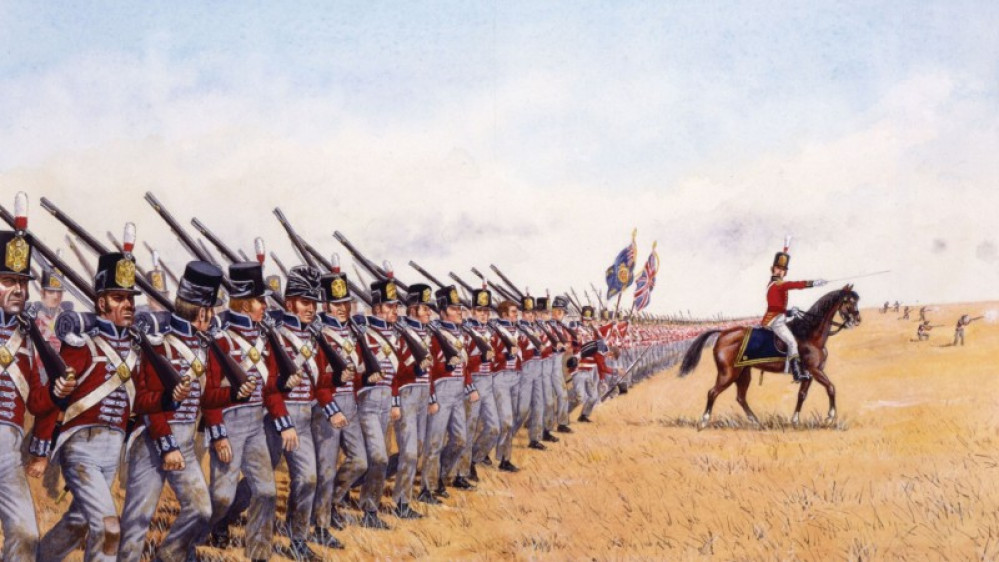
Documenting my progress on collecting and painting 15/18mm Napoleonic miniatures. This started with challenging myself to try my hand at painting miniatures at a smaller scale, and to look at a historic setting rather than fantasy or Sci-fi. I went for Napoleonics as I have an interest in the history of the period, there are some great ranges of minis, and there's a certain appeal in having painted blocks of Napoleonic troops. I'm not building a collection for any particular game system, or following an order of battle, this is very much about enjoying the painting. I tend to have limited hobby time and I'm also a slow painter, so this is a very slow burn project.
Related Genre: Historical
This Project is Active
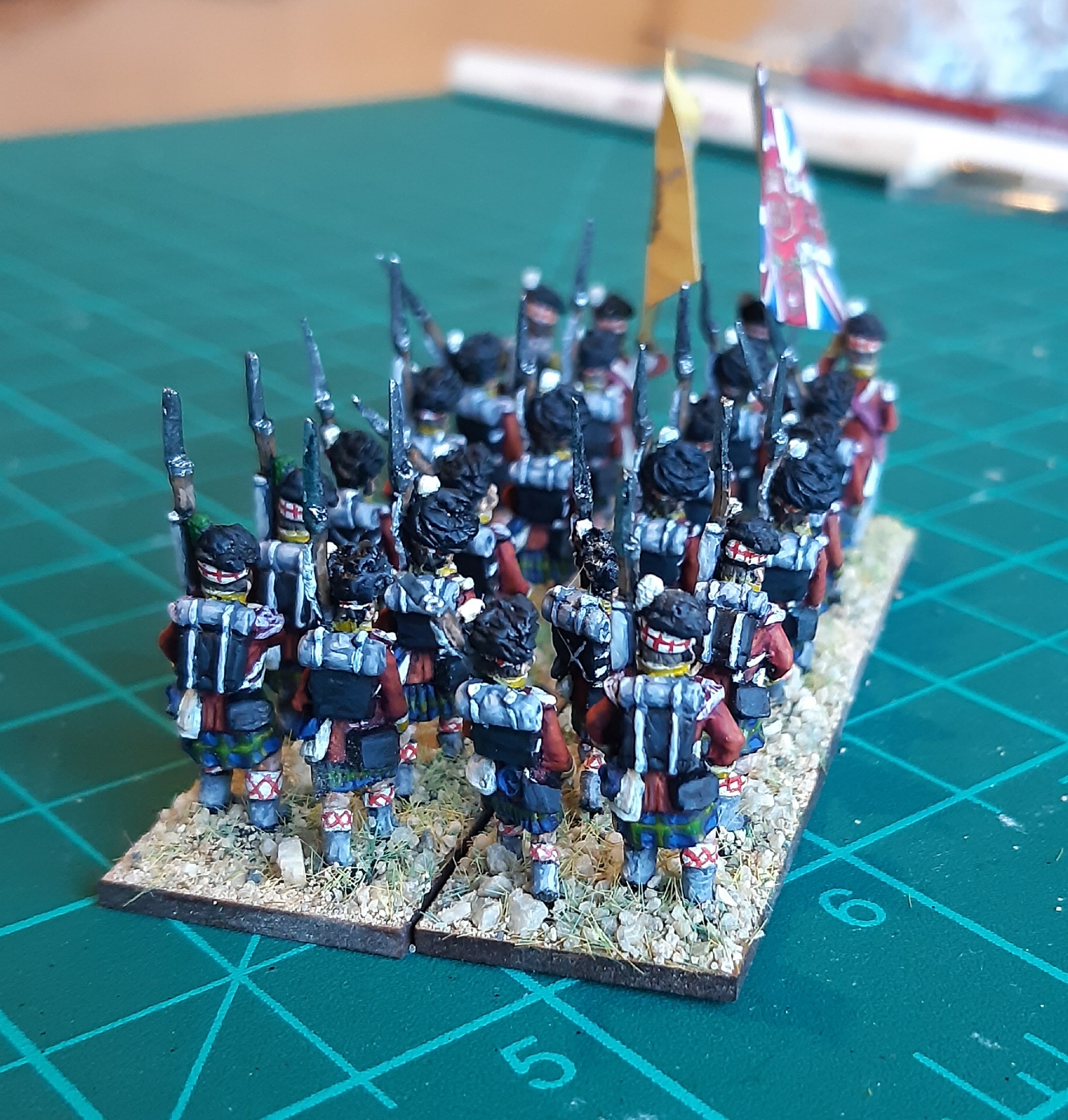
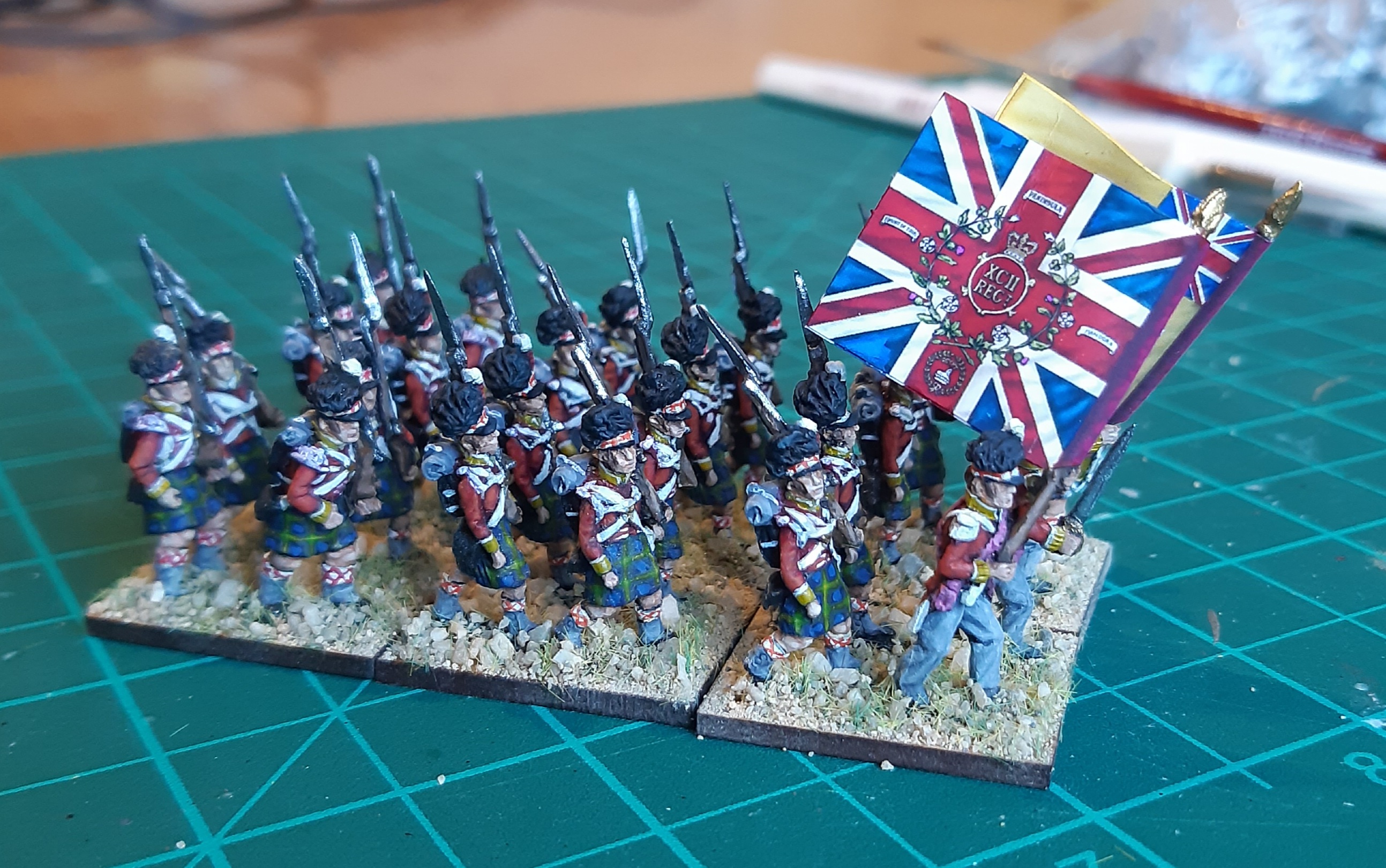
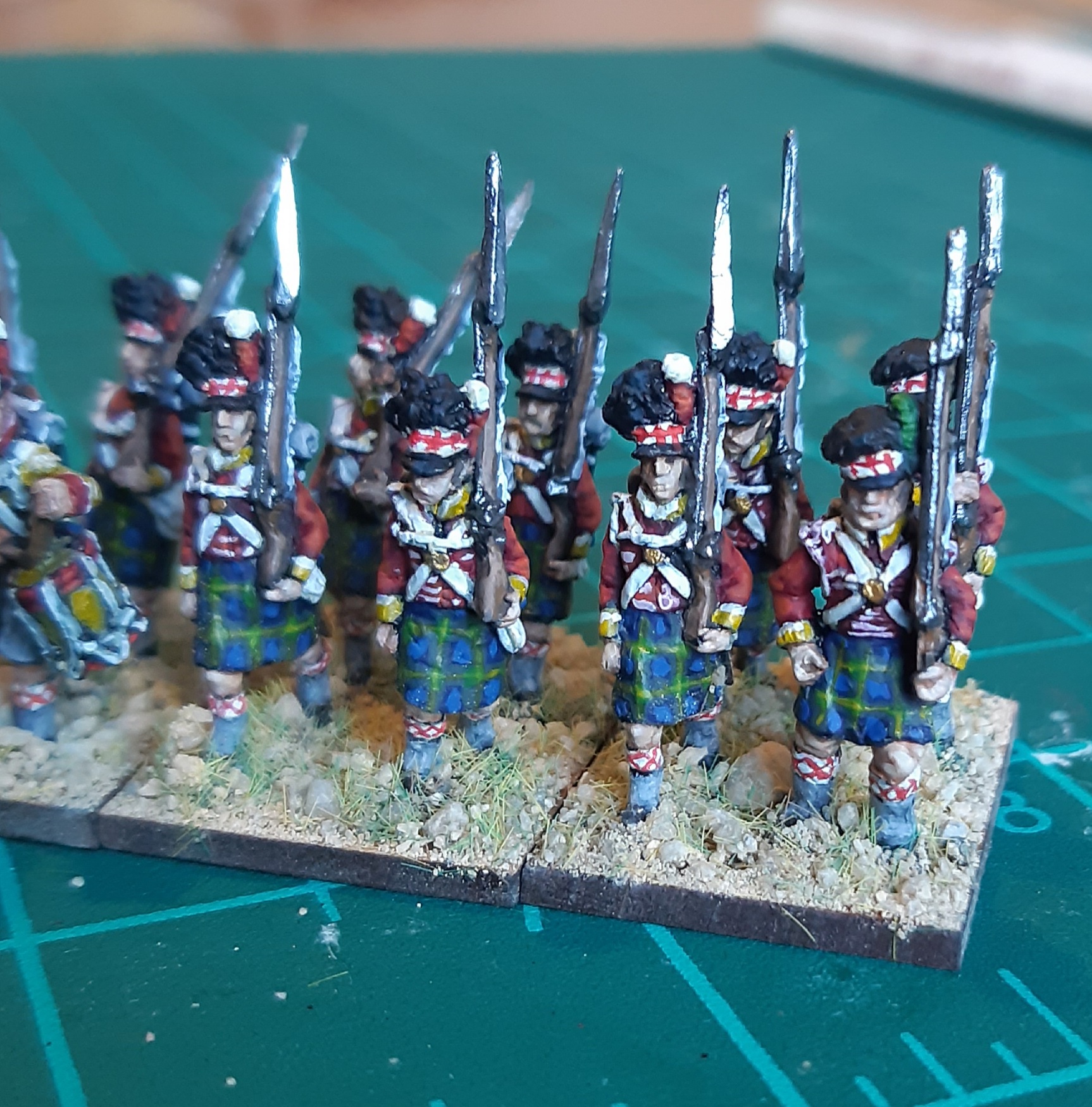
92nd Regiment of Foot - Gordon Highlanders
The Gordon Highlanders were originally raised in 1794 by the Duke of Gordon, and were known as the 100th Regiment of Foot. Many of the original recruits were drawn from the Gordon estates. The early recruitment campaign was assisted by the Duke’s wife, who was said to have offered a kiss as an incentive to join her husband’s Regiment.
Renumbered the 92nd regiment in 1798, the Gordon Highlanders saw extensive action during the Revolutionary and Napoleonic wars – from the Netherlands, Egypt, Denmark and the Peninsular War through to the Battle of Waterloo in June 1815.
There’s a painting called The Gordons and Greys to the Front by Stanley Barkley, which captures an event at Waterloo, where some soldiers from the Highlanders clung to the stirrups of the passing Scots Greys so that they could reach the French troops as the cavalry passed by the regiment to chase down the scattering French. I think this incident seems to encapsulate the fearsome fighting spirit of the Gordon’s very well.
The regiment’s cap badge and motto come from the crest of the Dukes of Gordon, being a stag head surrounded by ivy. The motto ‘Bydand’ is a Scots word meaning ‘Steadfast’
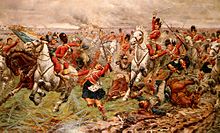 The Gordon's and Greys to the Front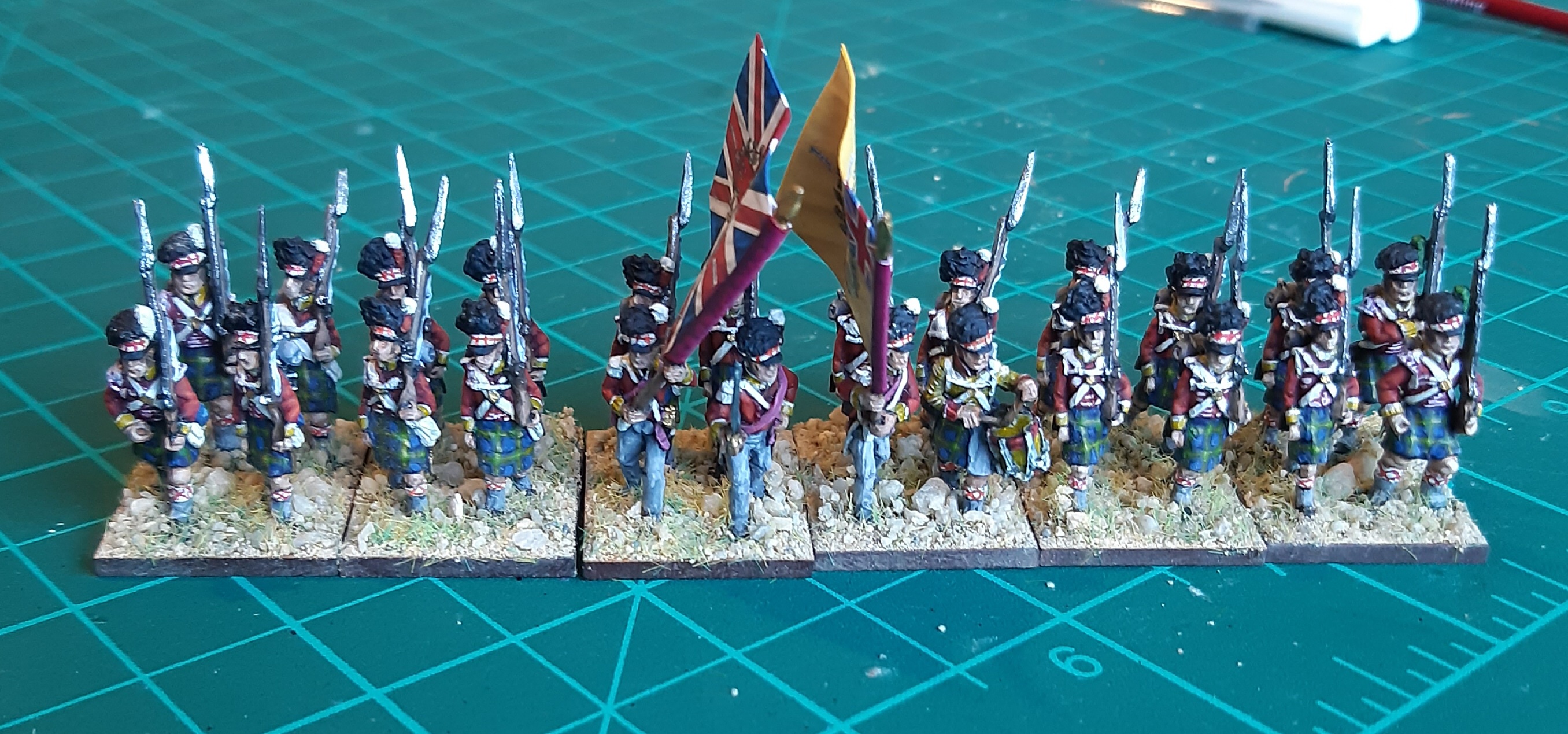
The models are a mix, with the flank companies and command group by Campaign Game Miniatures, and the centre company by Xan. The colours are from GMB Flags.
Finishing the Gordon’s means I’m also done with tartan for a while. Next up will be some more cavalry.

71st (Highland) Regiment of Foot (Light Infantry)
The 71st were sent to Portugal as part of Moore’s army in 1808. After the retreat at Corunna, the regiment took part in the Walcheren Campaign in 1809, before returning to the Peninsula in 1810. It fought at the battles of Fuentes de Onoro, Albuhera, Arroyo dos Molinos, Alamaraz, Vitoria, Sorauren, Nivelle and Nive.
The 71st also fought at Waterloo in 1815, and formed part of the army of occupation in Paris.
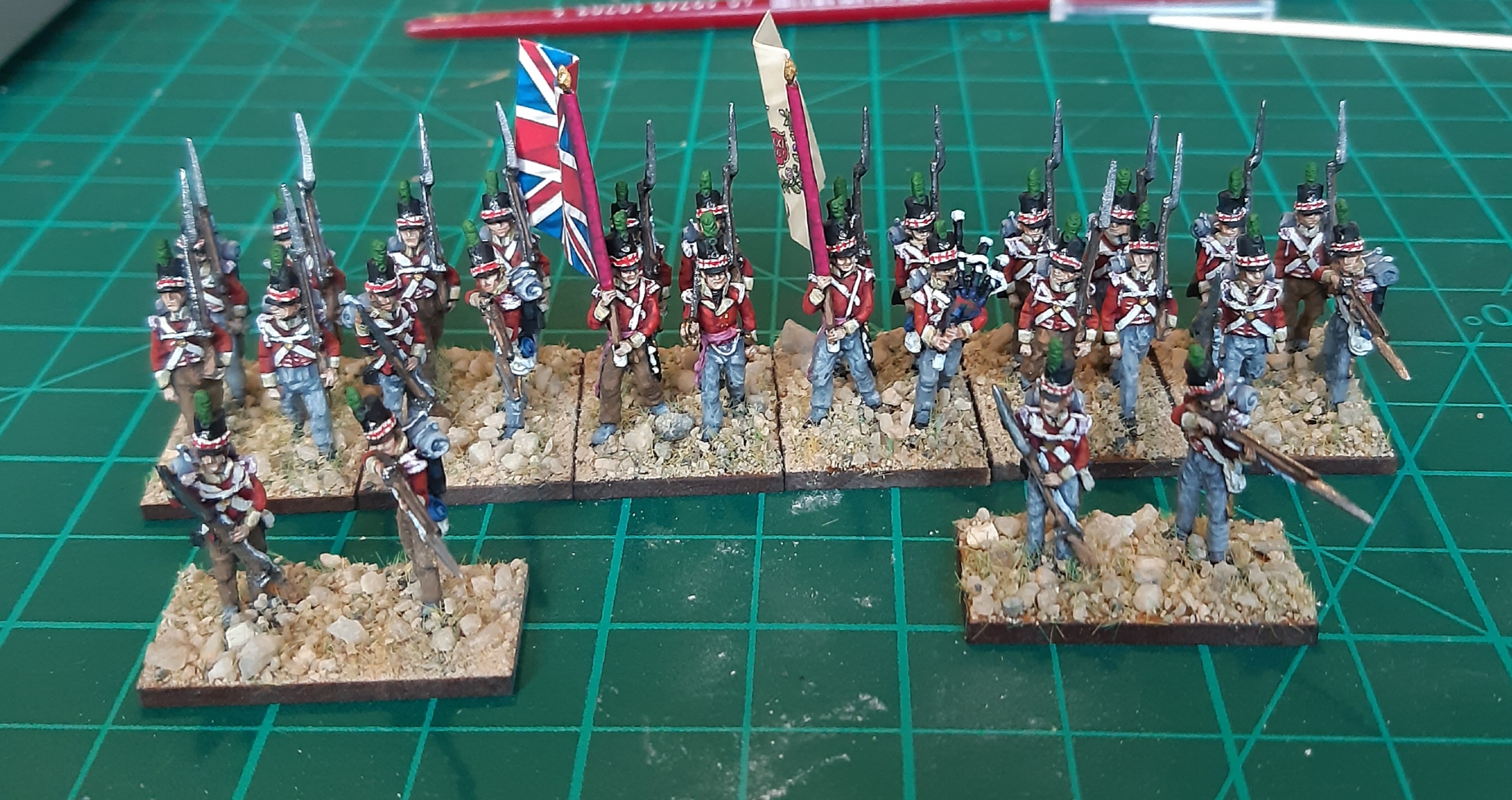
The majority of figures are by Xan, with the command group by AB Miniatures. The colours are from GMB Designs.
Nice to paint some Highlanders and not worry about tartan, although I should now try and finish the Gordon Highlanders.
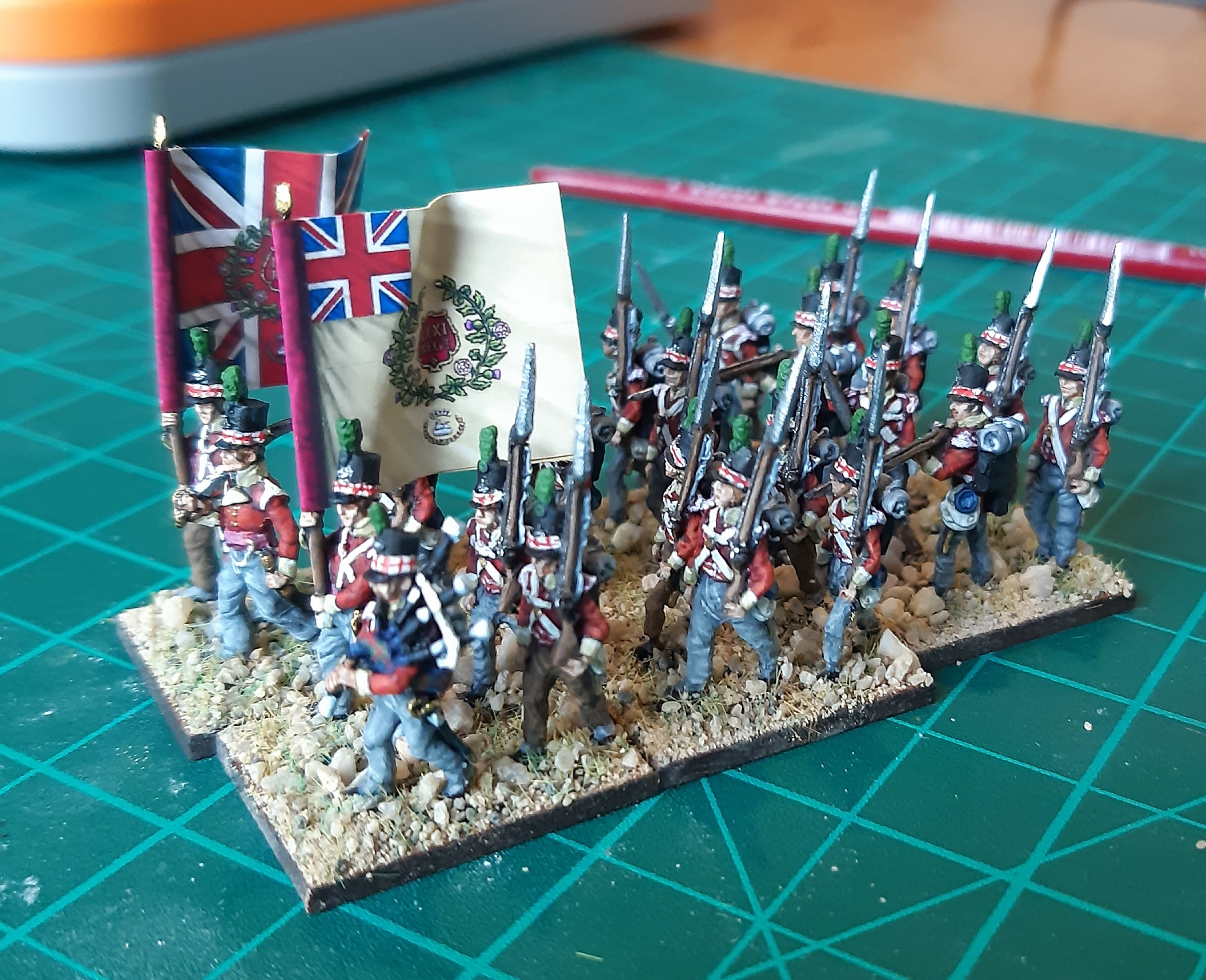


Preparing Highland Light Infantry
Whilst waiting for a couple of Highlanders to arrive so I can finish my Gordon Highlanders, I turned my attention to another Highland regiment, this time the 71st Glasgow Highland Light Infantry. Despite being a Highland regiment, the light infantry worn the same uniform as the other light infantry regiments in the British army, so there’s no kilts or tartan to worry about. However, they did retain a chequered hand band around their shako, as seen in the images below.
 71st at Waterloo, capturing a French gun at the end of the day's fighting
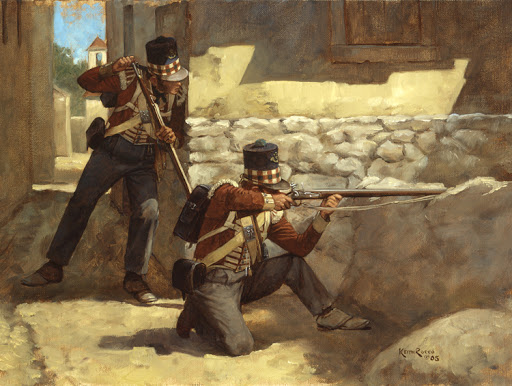 Skirmishing Highland light infantry by Keith Rocco
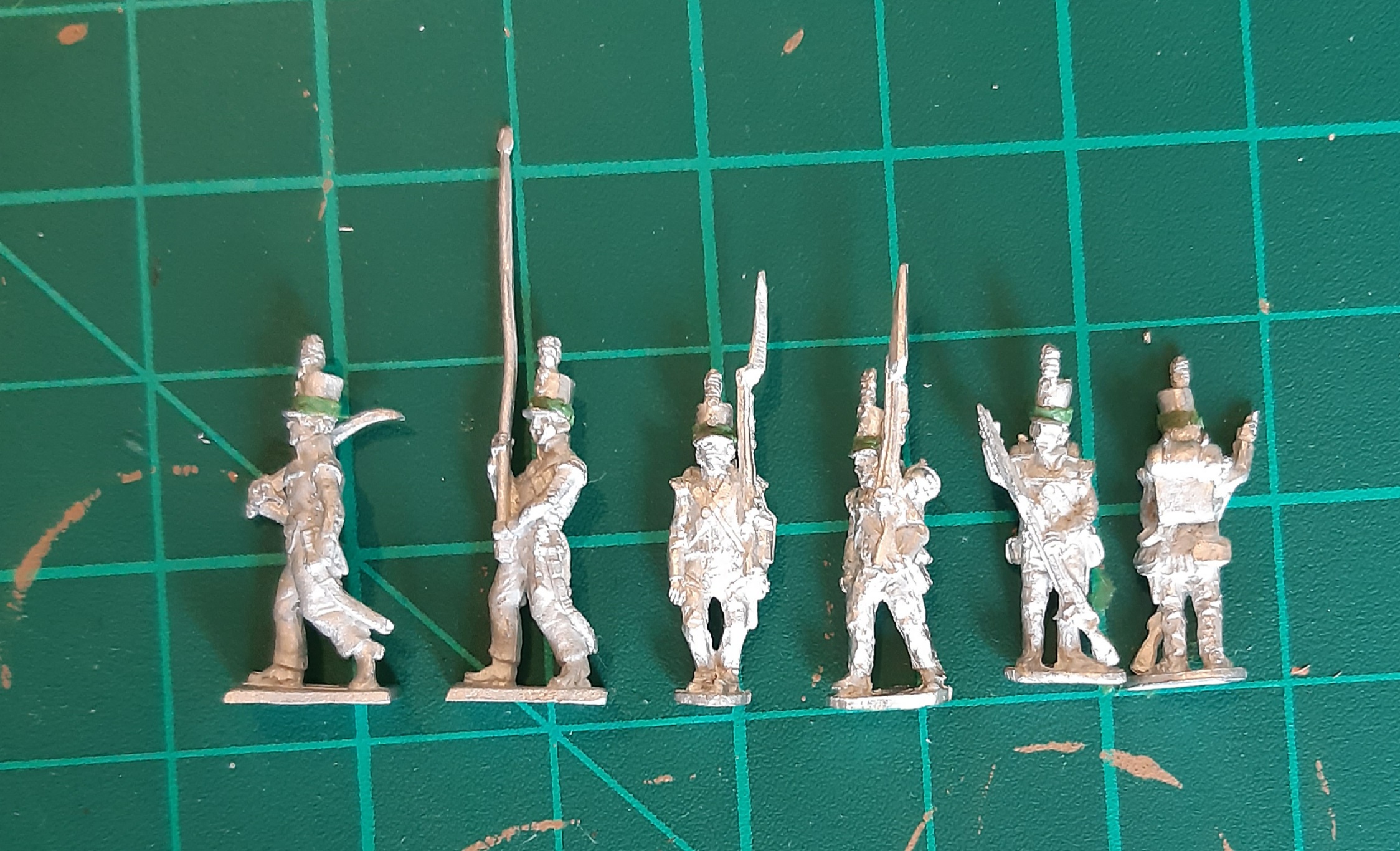
I’m quite keen to include the hand band on my models, as it is a great visual cue to the identity of the figures. There’s a slight problem in that no one produces figures with that precise detail (at least that I’ve seen), bar a lone piper model made by AB Miniatures. I had two choices – either simply paint the band on, or go for a much more fiddly option, and add the band in using green stuff. Under the influence of covid related cabin fever, I decided that the second choice was the one to pursue.
I started to regret that choice quite quickly, until I had worked out the trick in how to best approach it. I don’t have a huge amount of experience at using green stuff, so this was partly an exercise in practicing something new. I’m fairly happy with the outcome, although the proof will be after the painting.
Plans for 2021
A New Year, sadly not that different from the last. My plans for my Napoleonics are to finish up a few British regiments, and then make a start on some French. After all, you can’t really have Napoleonics without them.
I’ve made a start on a battalion of Gordon Highlanders, wanting to get this year off to a good start, but have hit a minor hitch in that I’m a couple of models short. The second half of the battalion are therefore on pause for the moment. Instead I’m going to paint up a battalion of light infantry, and then I’ll switch back to the Highlanders. After those, there’s just some KGL hussars left for my current lot of British, and then onto the French.
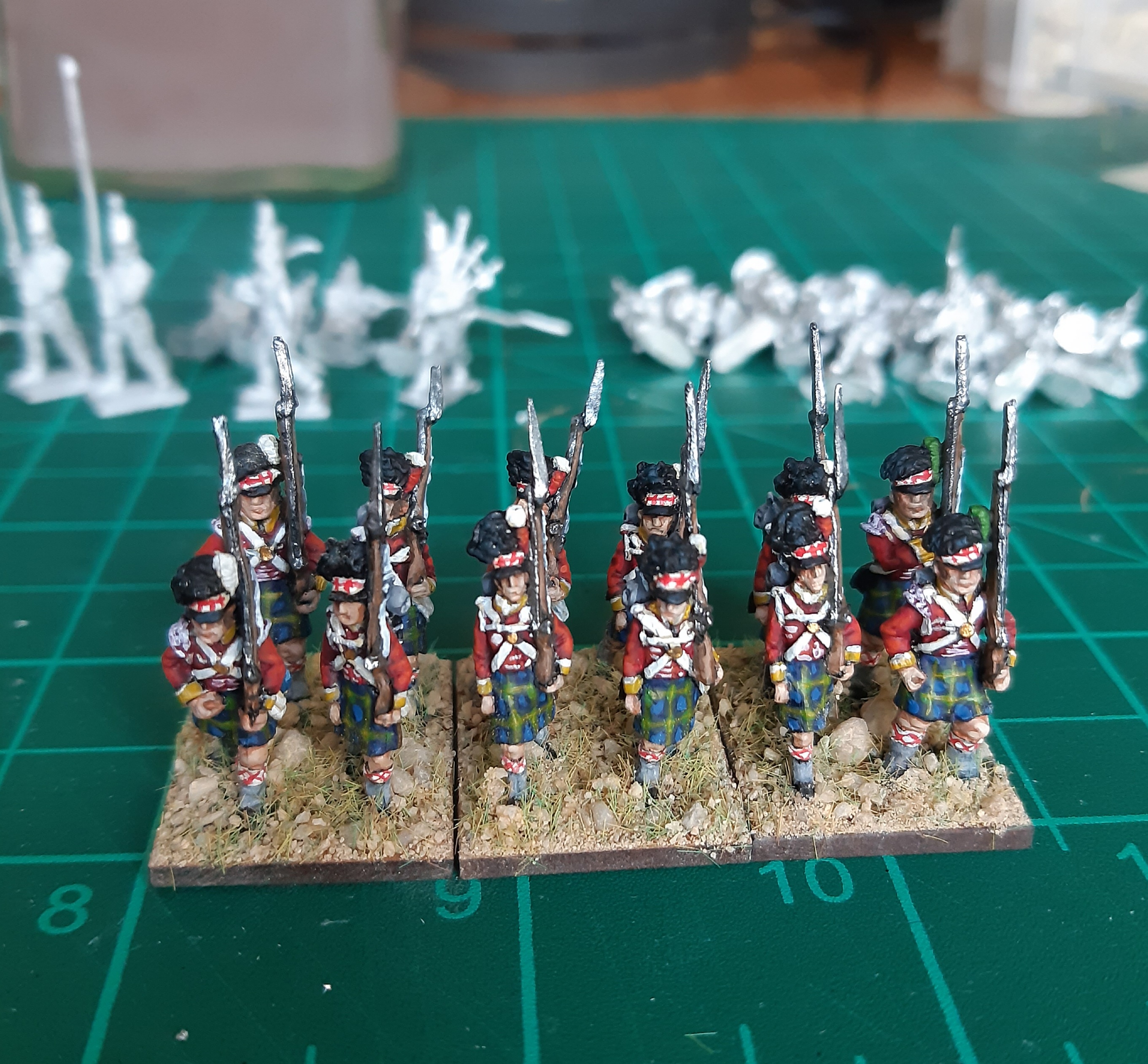 Half a battalion of Gordon Highlanders. More photos when I finish the rest.
Mounted Scottish Officers
Most of November and December have been spent on other projects, but spurred on by reading a book on the Peninsula War, I felt an urge to paint at least a few Napoleonics before the year finished.
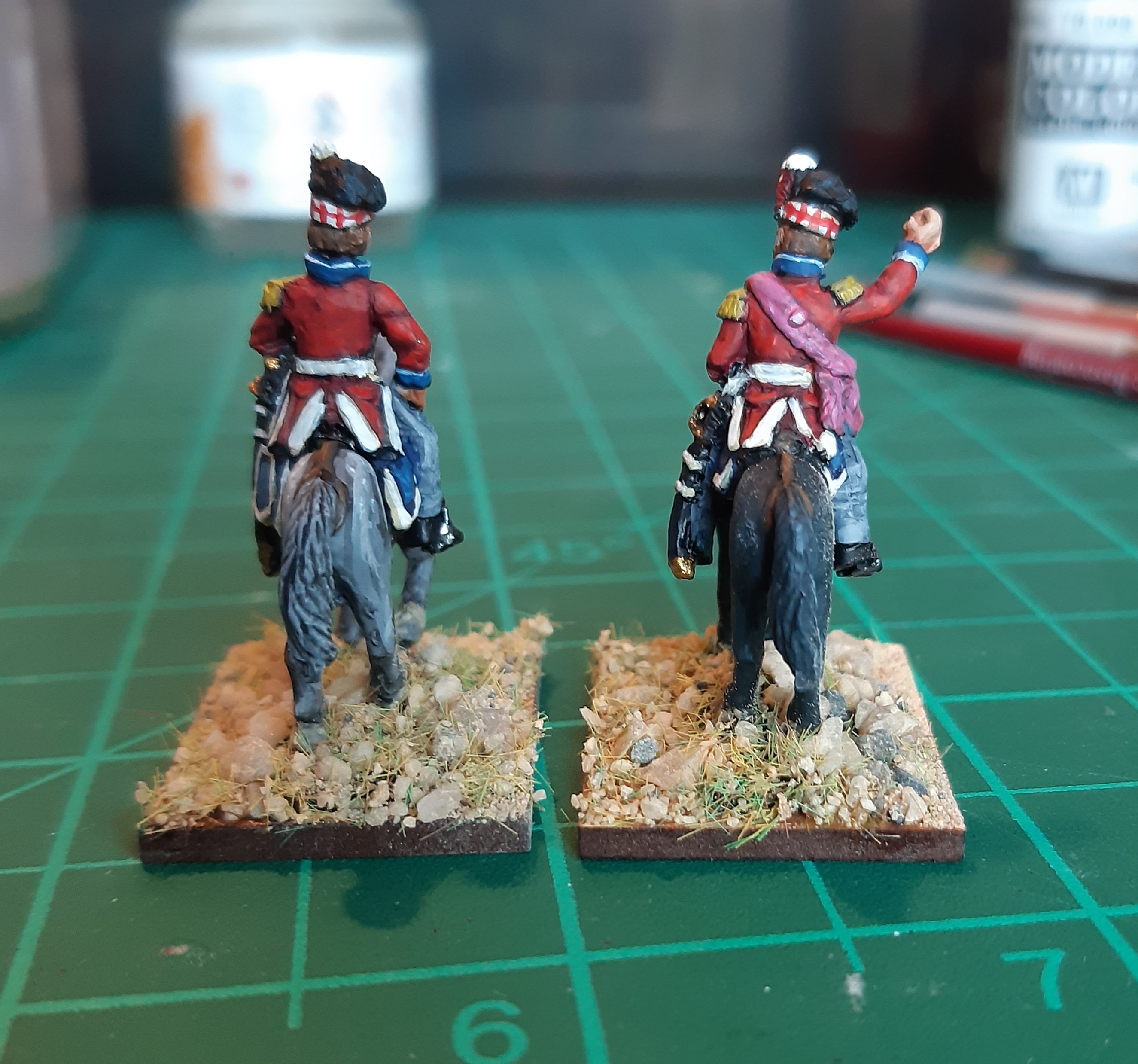
I grabbed a pair of mounted British officers, both Scots to accompany my highland regiments. I was a little lazy and didn’t bother checking any uniforms, so chances are they don’t subscribe to dress regulations.
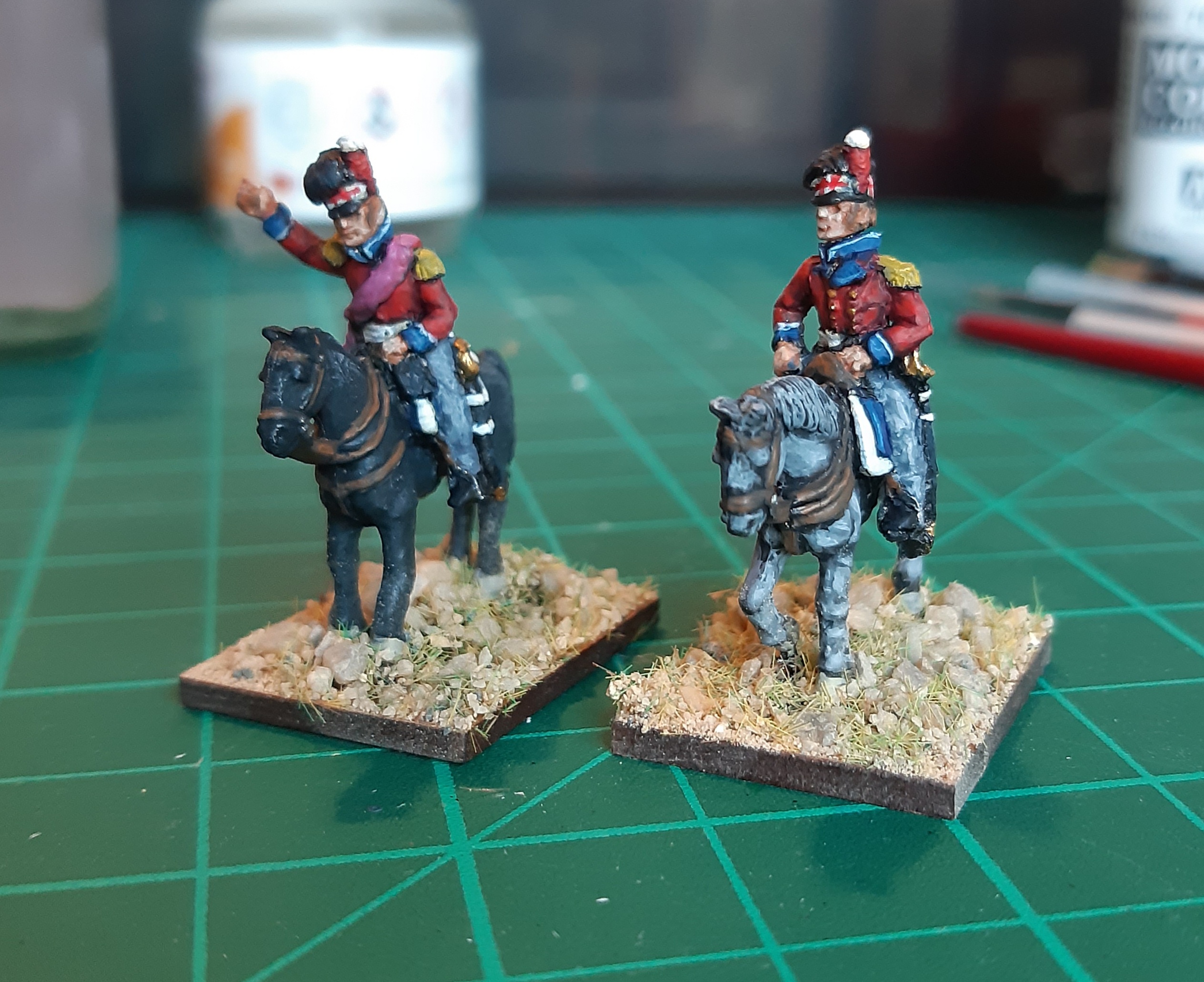 Both models and horses are by Campaign Game Miniatures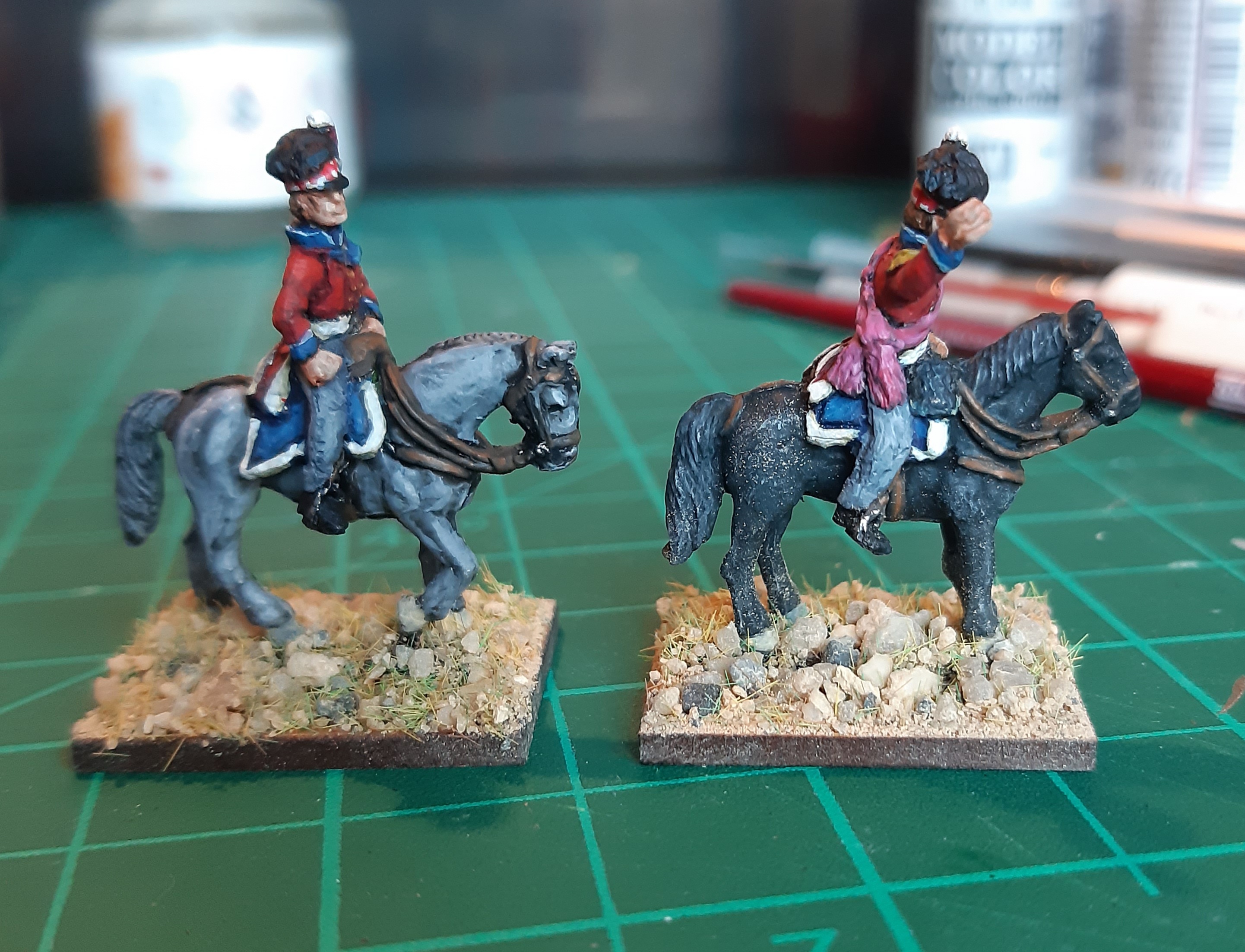
50th Regiment of Foot
The 50th (West Kent) Regiment of Foot had the nickname of the ‘dirty half-hundred’, due to the dye from their black coloured facing running and staining their hands and faces.
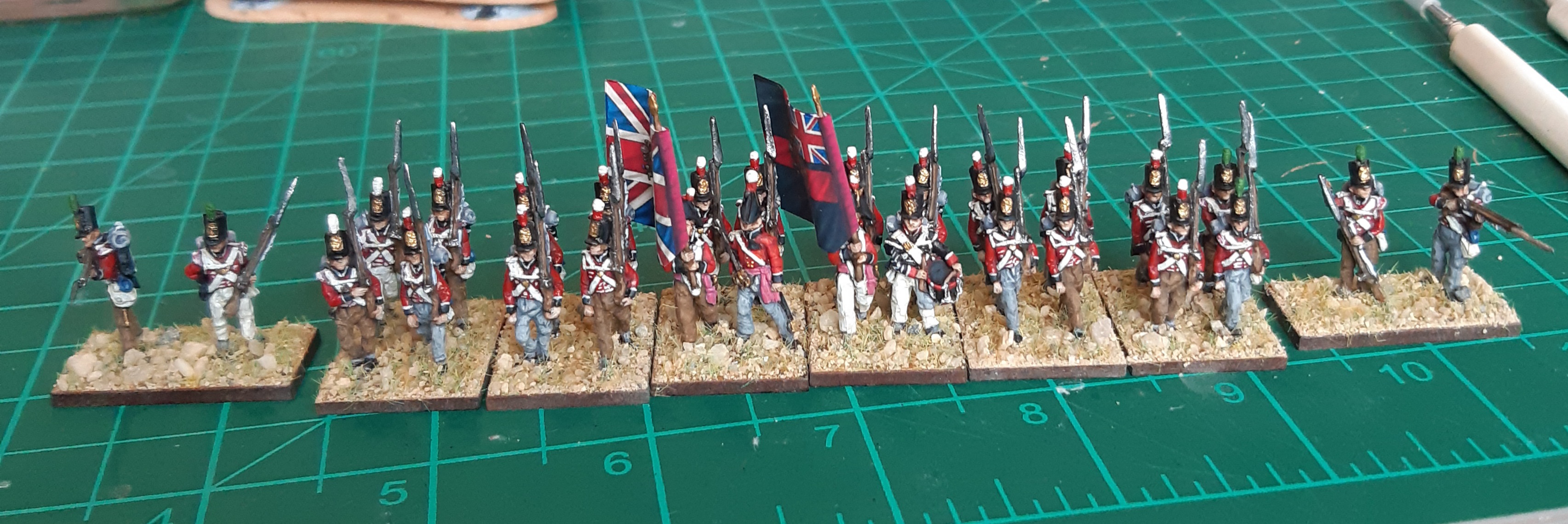
The first battalion fought in the Peninsula at Vimiera and Corunna, where they bore the brunt of the fighting, holding off the French with repeat bayonet charges, and suffering heavy casualties.
After the withdrawal at Corunna, the 50th were sent to the Netherlands as part of the ill-fated Walcheren expedition, before returning to the Peninsula by 1811. They fought in numbers of the campaign’s major battles, including Fuentes Onoro, Vitoria, the Pyrenees, Nivelle, Orthes and Toulouse.
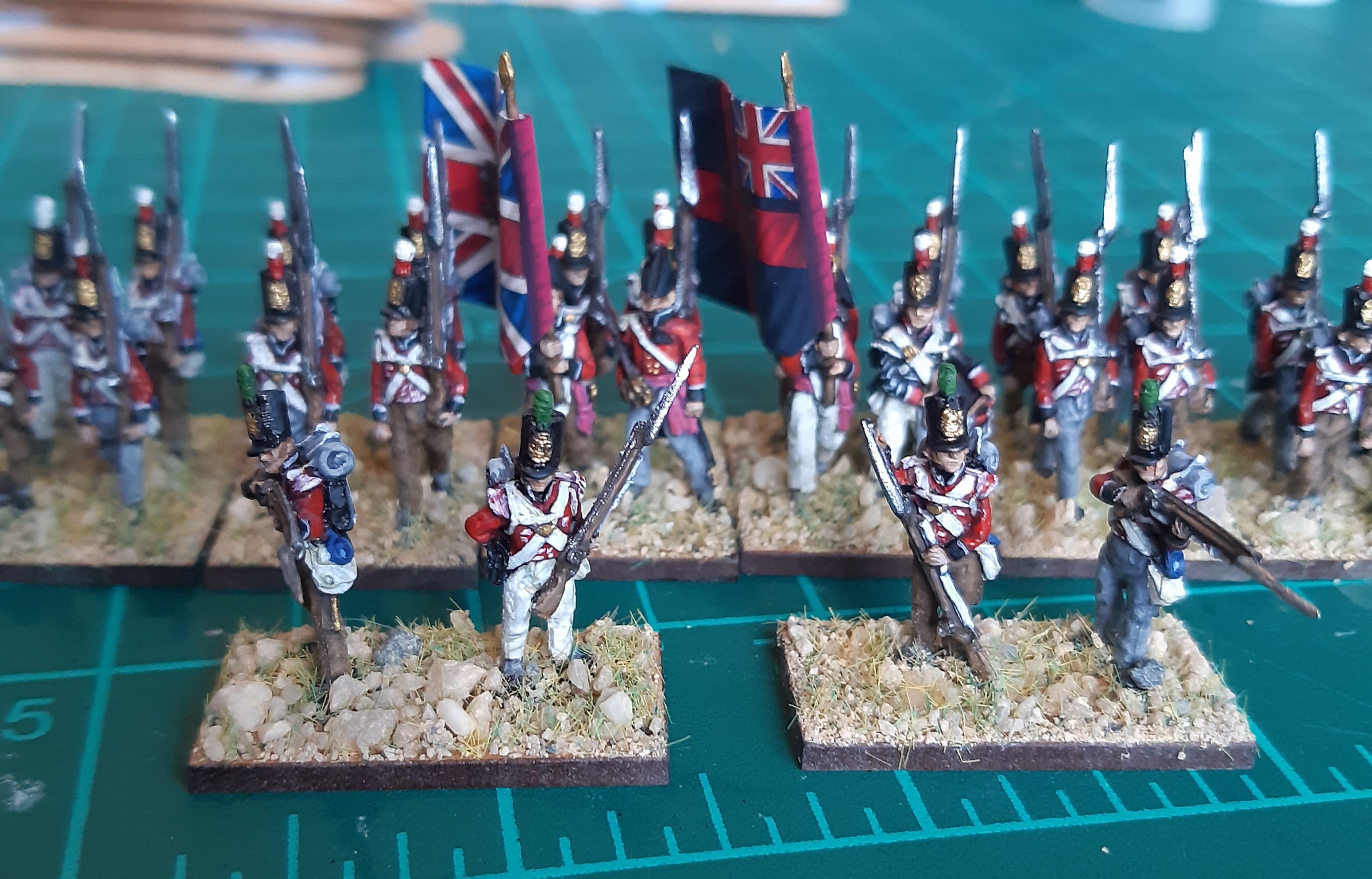


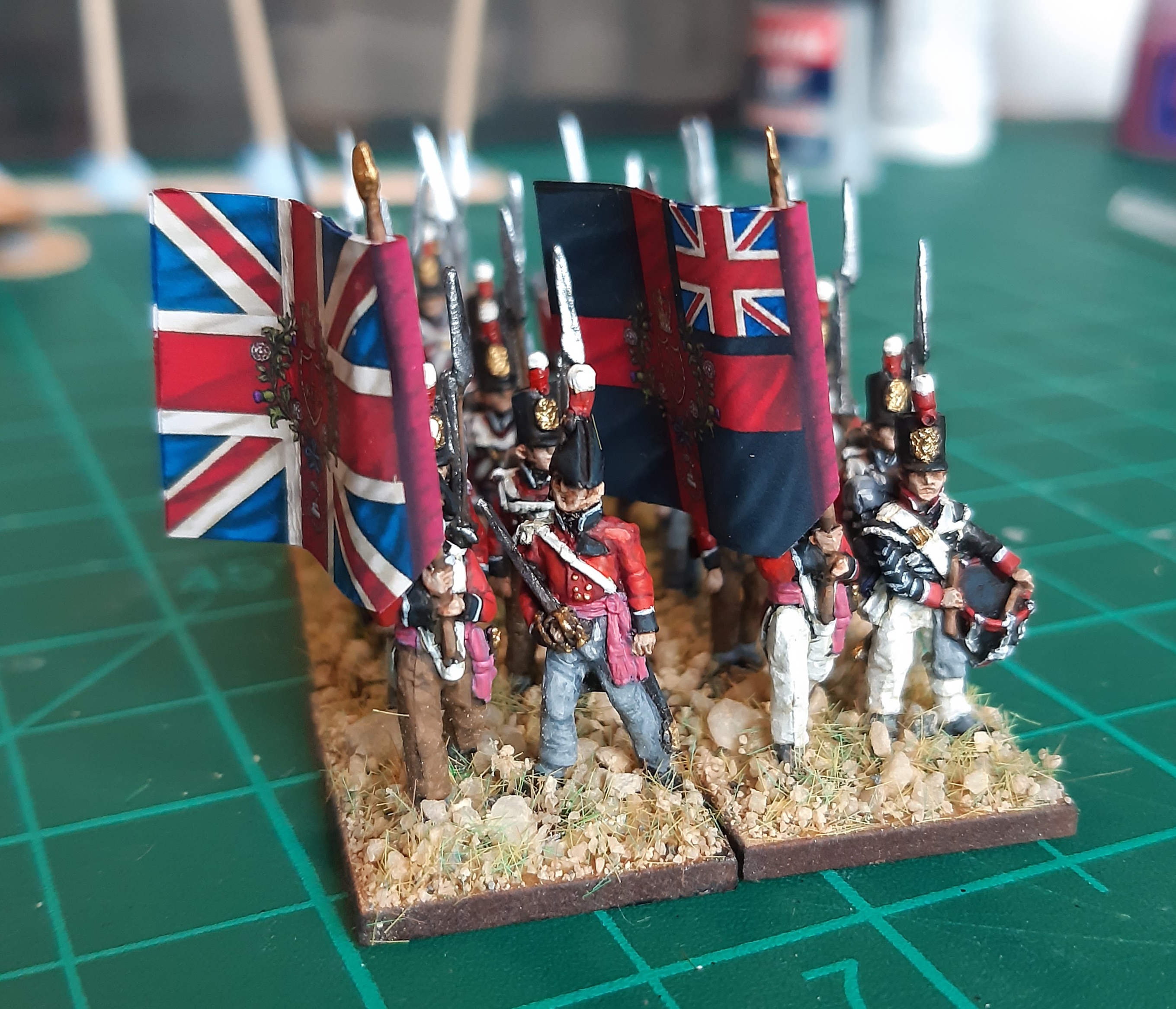
The models are all by Xan, barring the command group, which are from AB Miniatures. The colours are from GMB Flags.
14th Light Dragoons
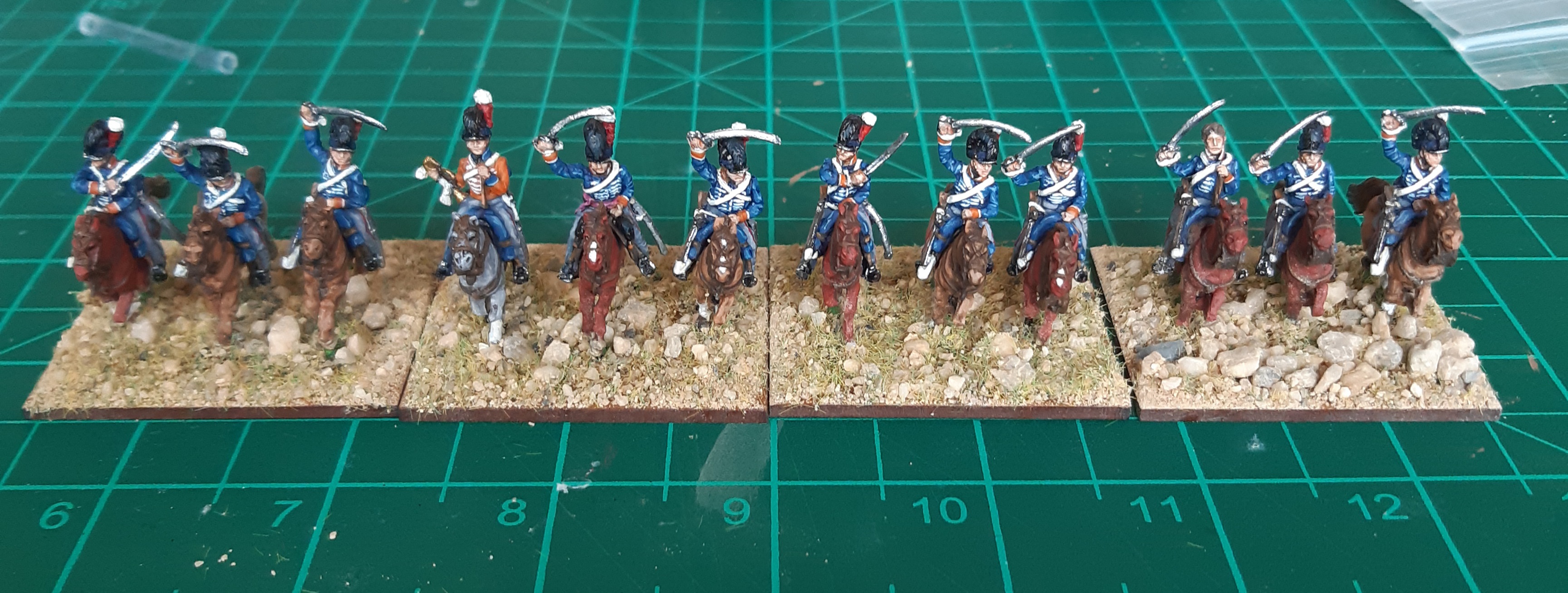
The 14th Light Dragoons (Duchess of York’s Own) Regiment served in the Peninsula from 1809 to 1814, and were present at a number of major battles, with their battle honours for the period noting Duoro, Talavera, Fuentes D’Onor, Salamanca, Vittoria, Pyrenees, Orthes and Peninsula. After the defeat of the French at Vittoria, which caused Joseph Bonaparte to abandon his baggage and royal carriage, the 14th participated in a little bit of light looting. Most of the valuables were recovered by the British General HQ, except for a silver chamber-pot, which was retained by the 14th and became part of the valued silverware of the regiment. This is also responsible for the regiment getting the nickname of the Emperor’s Chambermaids.
After hostilities ended in 1814, the 14th Light Dragoons were shipped to America, and did not return to Europe in time to participate at Waterloo. Only three British light cavalry regiments served throughout the Peninsula campaign and through to Waterloo (the 12th, 13th and 16th Light Dragoons).
The models are all by AB Miniatures, and are wearing the Tarleton helmet, which was replaced in 1812 along with some other uniform changes. As with all Napoleonic uniform changes, there was a transition phase before the new uniform was adopted in its entirety, and apparently, there was a particular reluctance to ditch the Tarleton in favour of the new shako.
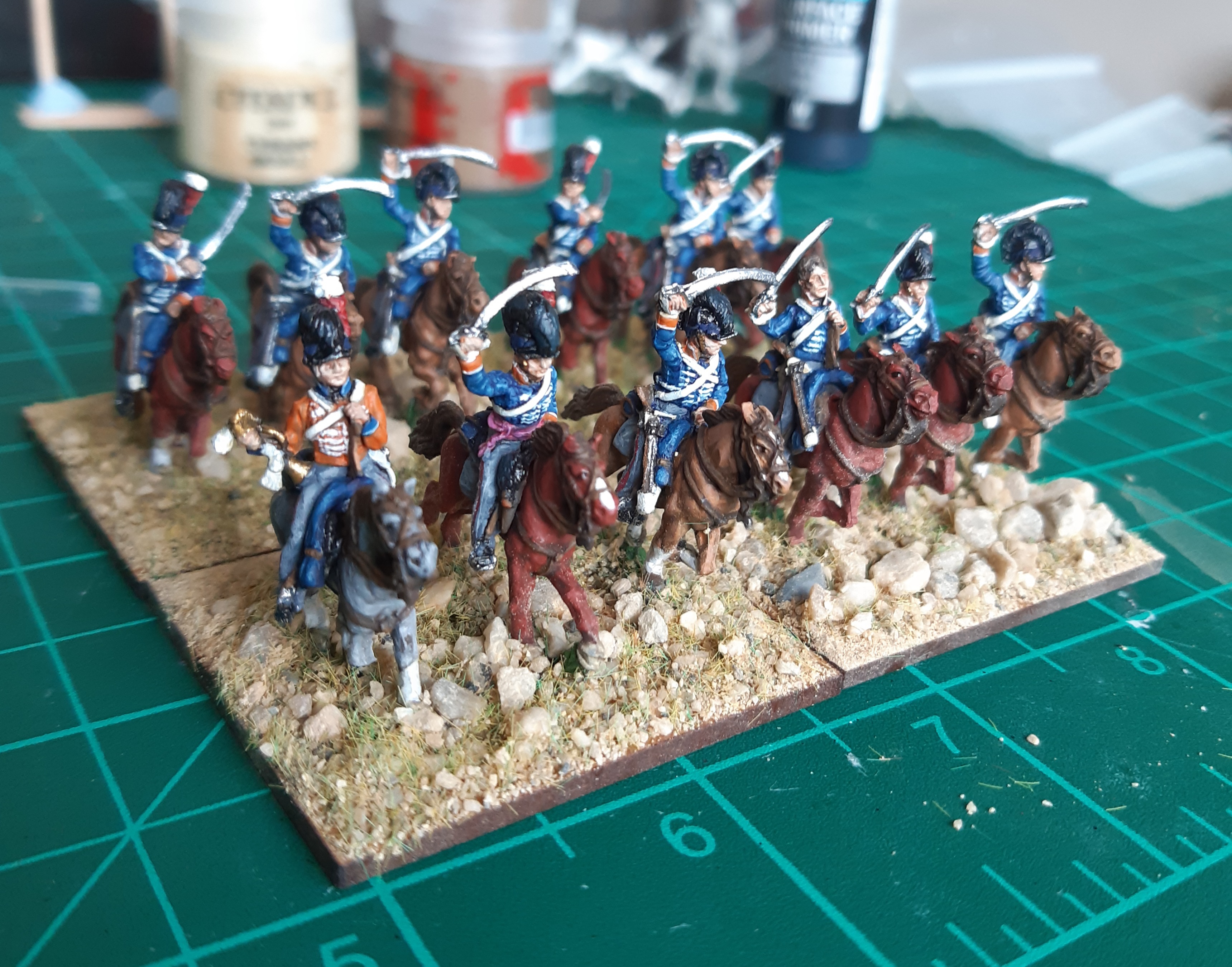
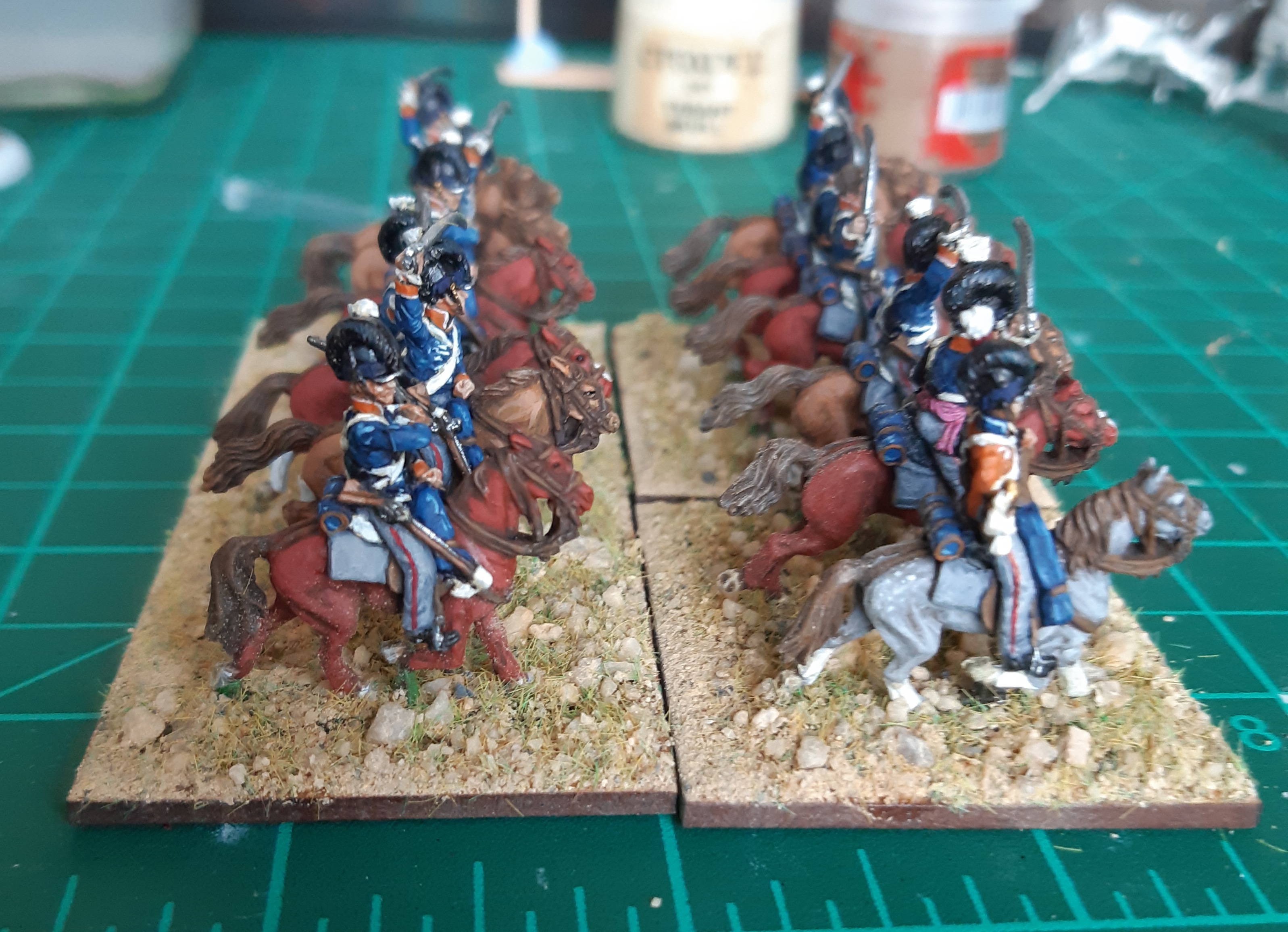
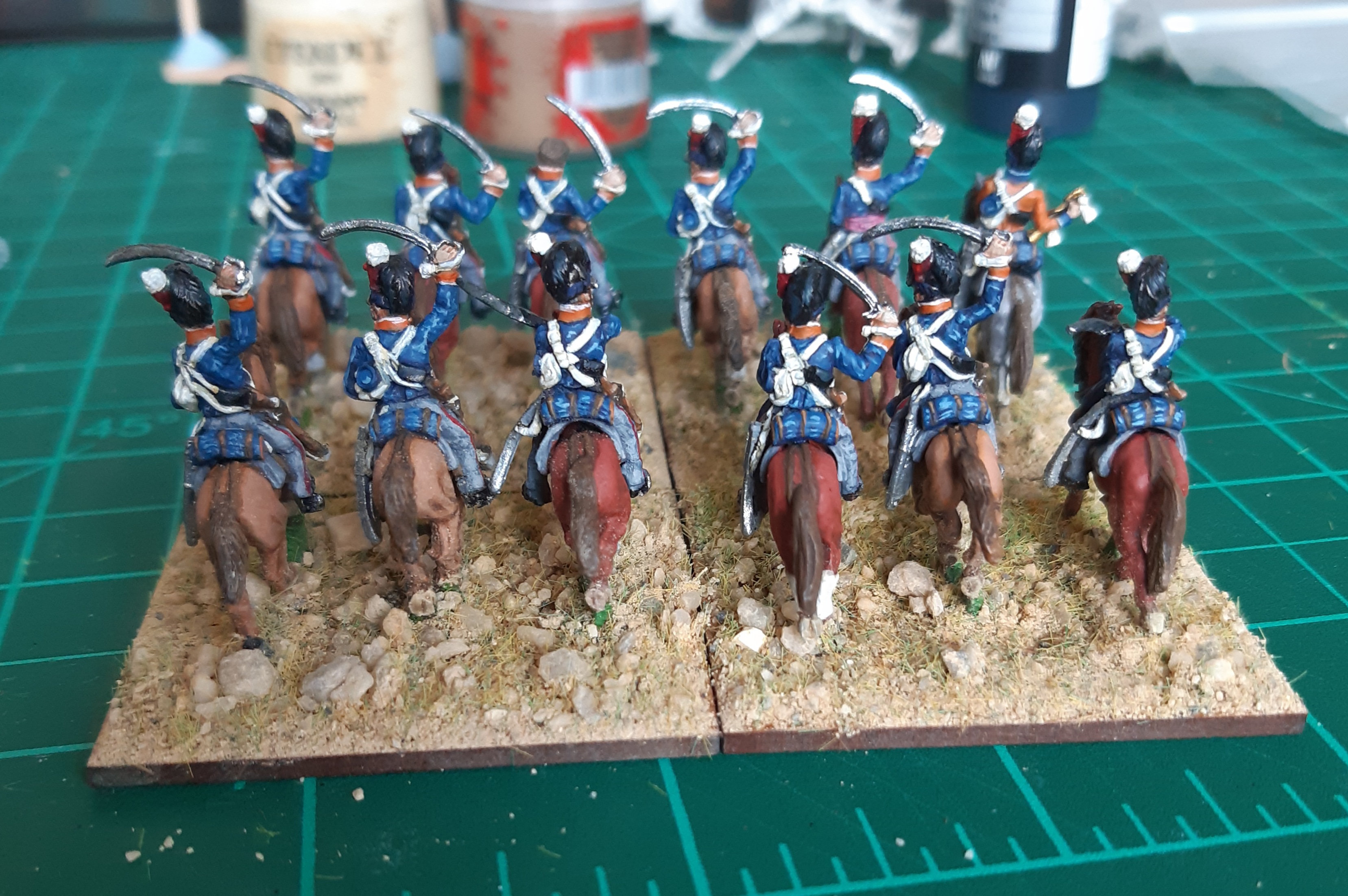
Couple of notes on the details. The dragoons are sporting grey coveralls rather than dress whites. There’s a bit of conflicting evidence over whether the coveralls should have an outside stripe in red or the facing colour, or indeed a single or double stripe. I plumped for a single red stripe rather than matching the facing colour of orange. The officer’s sash is wrong; I was struggling to find good information on the colours, so painted it as if it was an infantry officer’s sash. It should be white with red braids.
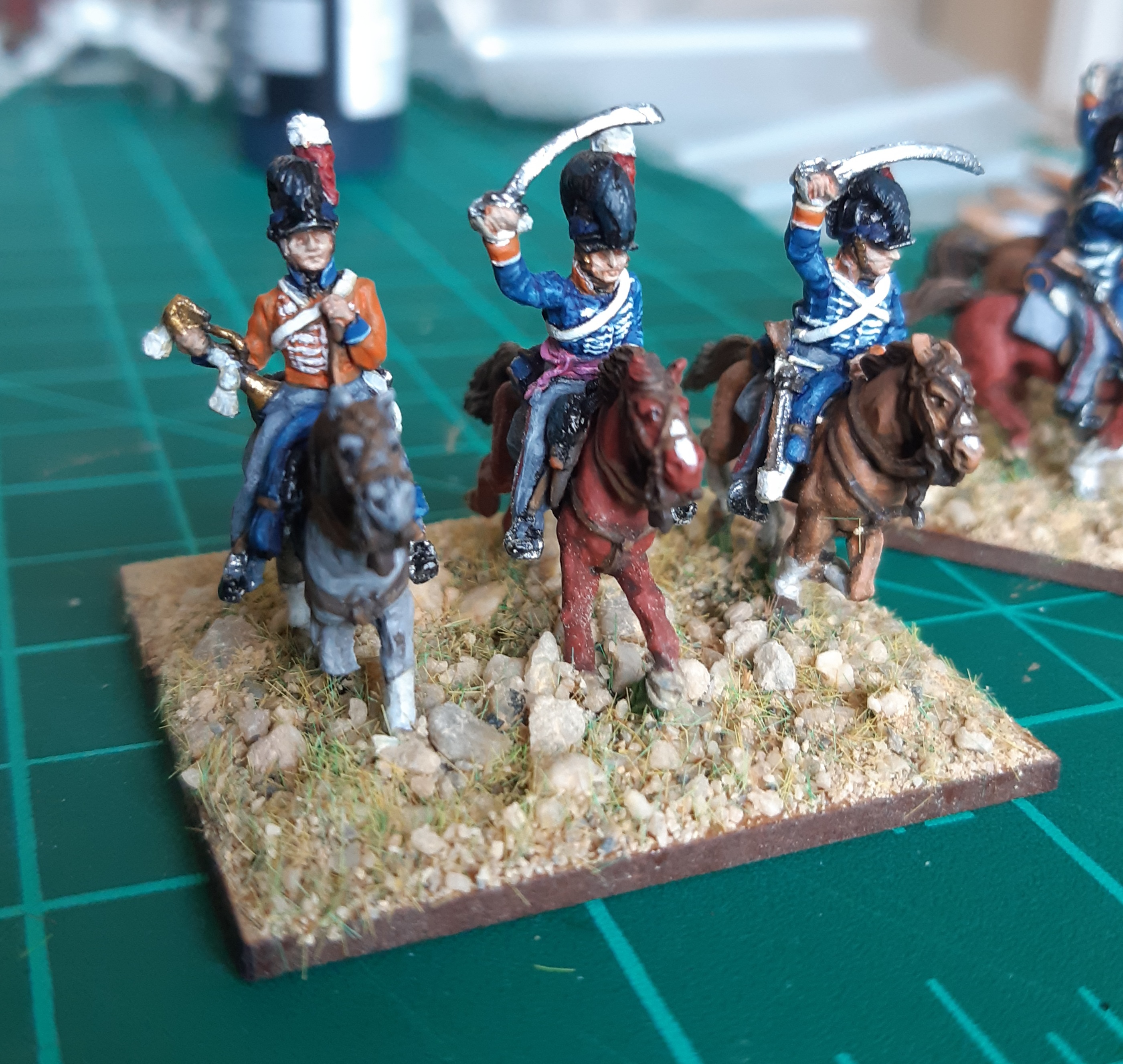

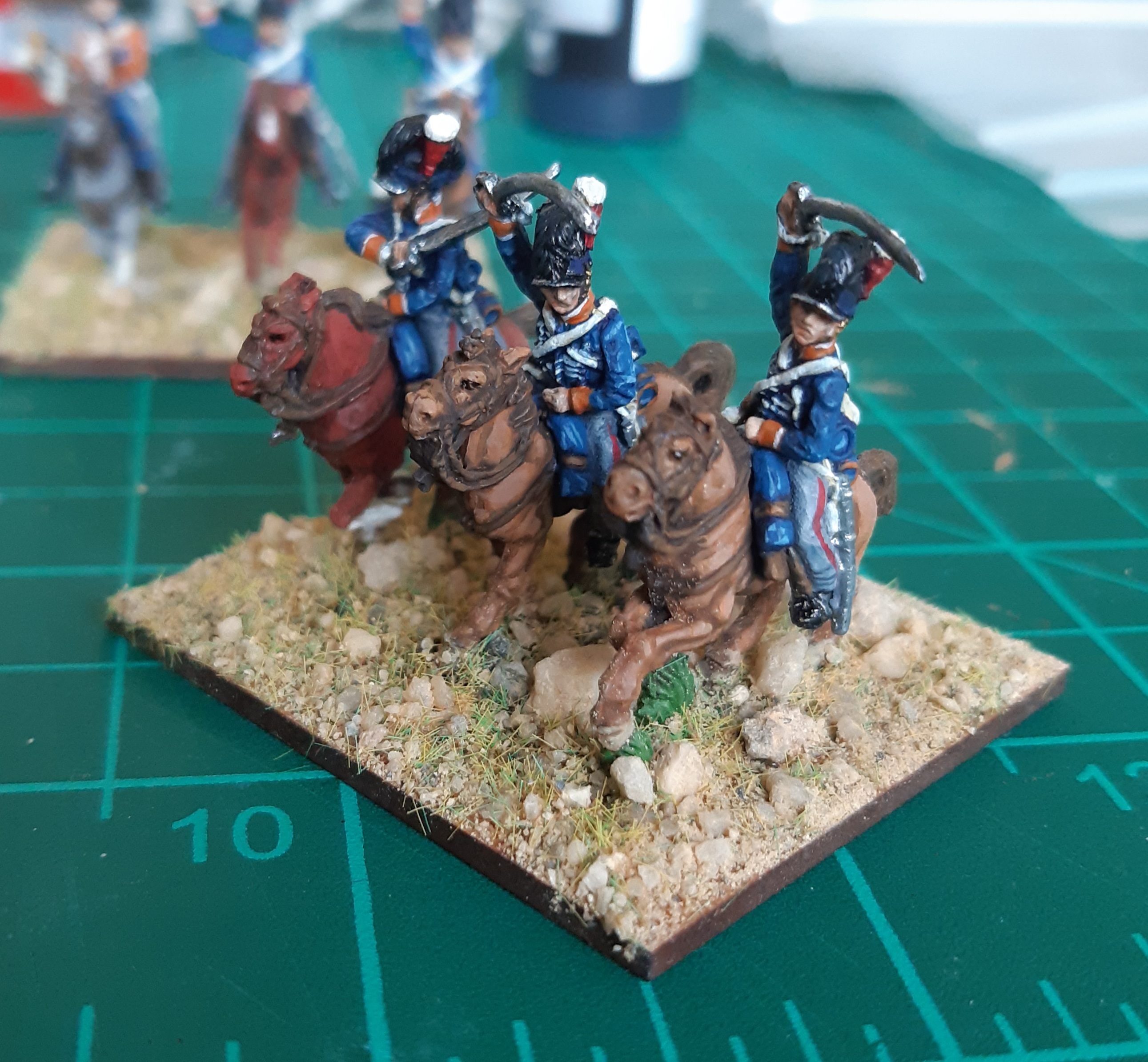
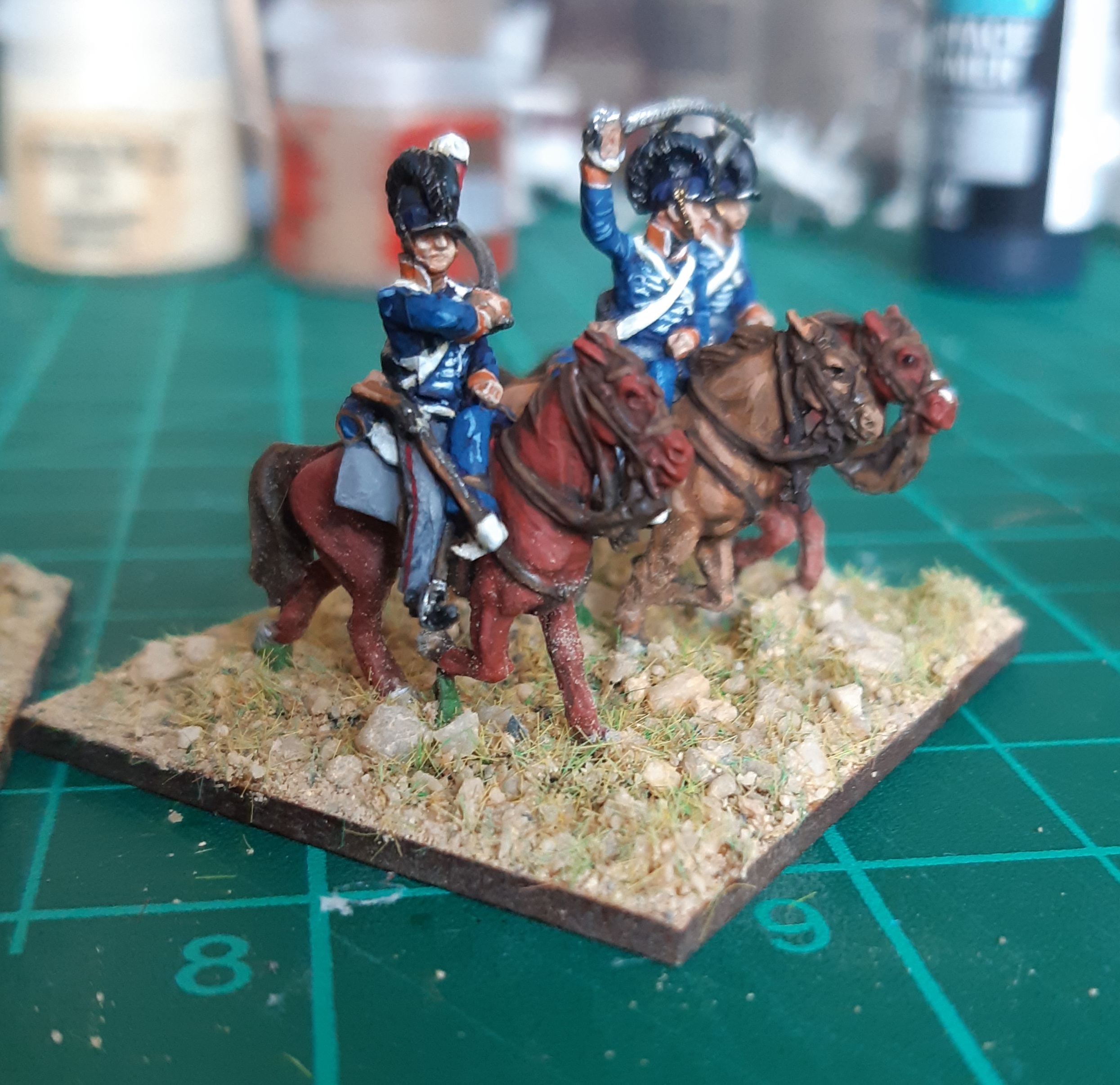
Having got some artillery and cavalry completed, I think I’ll be working through some more infantry next. Thanks to the Event, I’ve been fairly productive with painting this year, and I’m aiming to get at least 200 painted models fully completed in 2020. Another infantry battalion will almost reach that milestone, and hopefully can be turned around relatively fast now I’m pretty familiar with the models and the colour schemes.
Horses
I’m just putting the finishing touches on some British Light Dragoons. I experimented with some different paint colours for the horses, so wanted to make a note of the schemes for future reference.
I had a bit of a read around the different colours of horses used by British for their light cavalry, and couldn’t find a definite answer, beyond trumpeters riding grey horses (to help them stand out in the field so their officers could locate them in a scrum and thus get their orders signalled to the rest of the troop). I’ve previously read somewhere that the different squadrons within a cavalry regiment had distinctly coloured horses, but couldn’t track it down again, and I had an idea that this was more a Germanic thing than British. I expect that any sort of distinction of horse colour by squadron probably would shortly dissolve during a campaign, as getting a remount of any colour was undoubtedly more important than visual niceties.
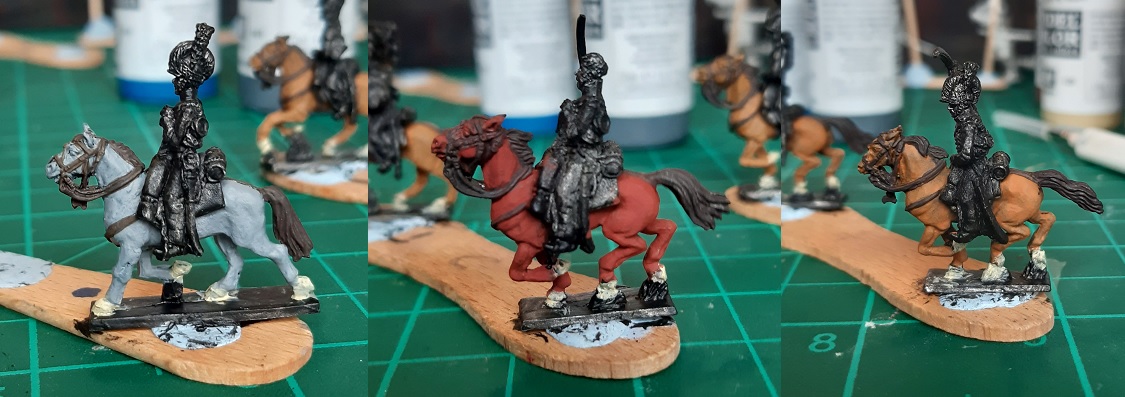 Base colours (L-R) VJ London Grey; VJ Cavalry Brown; VJ Orange Brown. All manes/tails based with VJ German Camo Black Brown, hooves are VJ Buff
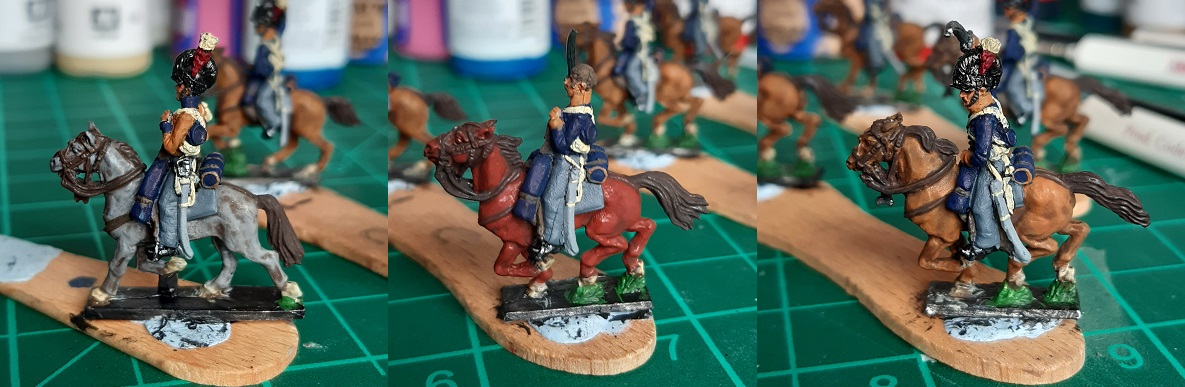 All colours washed with VJ Umber
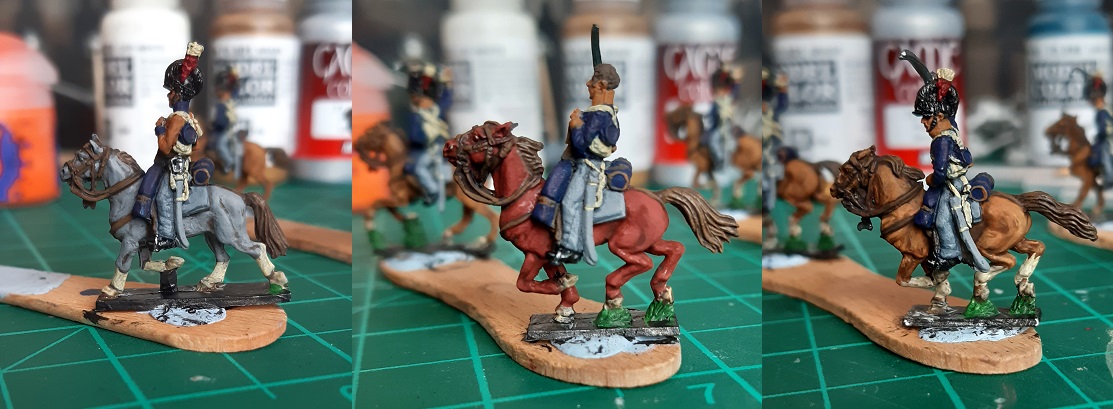 1st highlight done using a thin coat of the base colour. White details like socks and stars and painted with VJ Buff. Mane and tails dry brushed with VJ Beastly Brown
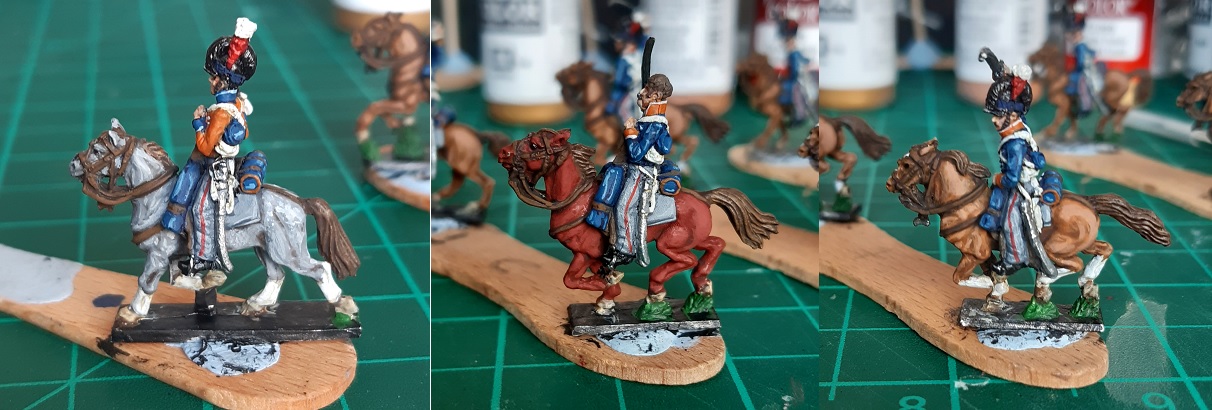 Finishing touches. A very thin highlight (L-R) VJ Stonewall Grey; VJ Cavalry Brown mixed with VJ Brown Sand (50:50); VJ Brown Sand. VJ Off-white used for socks and stars etc.
With hindsight, I’d wash the manes and tails with black instead of umber to get a darker colour, but I’m pretty happy with the end results. There’s a few more bits to finish on the riders before the regiment is ready for basing, but I’ll be putting them up as a next post soon.
A pointless fact to finish – the modern British Army has more horses on strength than tanks.