








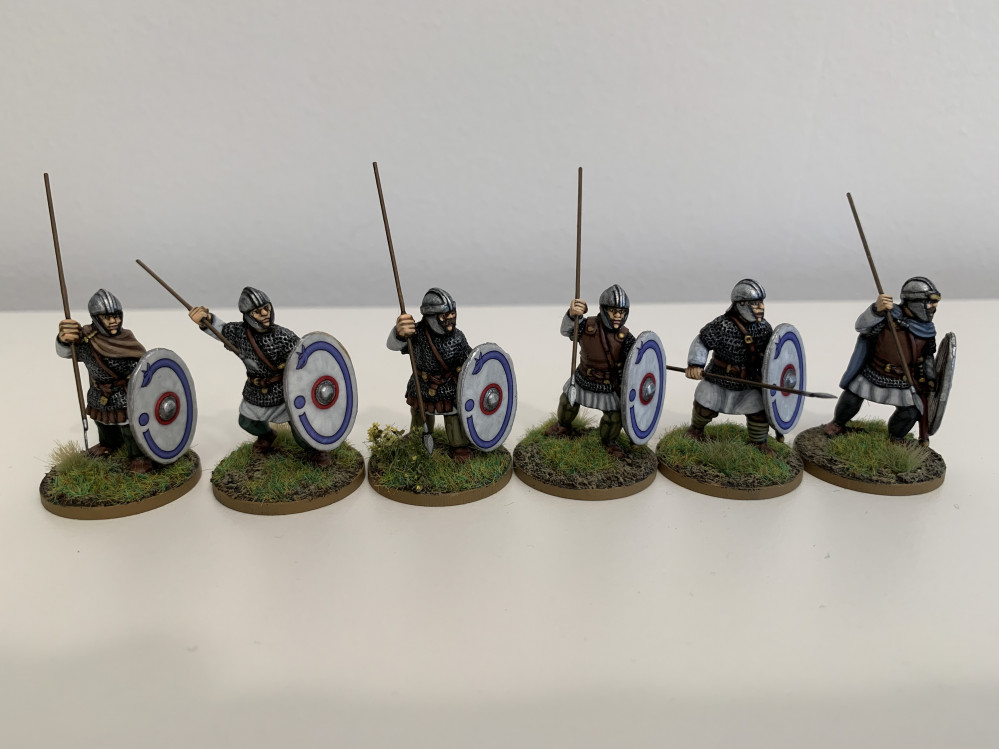
Romano-British for Dux Britanniarum




Recommendations: 1546
About the Project
This was a project started during lockdown to build a Romano-British war band for Dux Britanniarum by Too Fat Lardies. It's stalled of late, so my hope is that by documenting progress on this project I'll be incentivised to finish it.
Related Company: Too Fat Lardies
Related Genre: Historical
This Project is Active
About this Project
I had written this introduction as the first entry on this Project, but for some reason it didn’t load, so apologies if the first entry appeared to be a little lacking in context. Anyway, this Project is about putting together a Roman-British war band for Dux Britanniarum (or “DB” for short). DB is one of the older games published by Too Fat Ladies, released in 2012. It is set in the Fifth and Sixth Centuries AD and models the struggle of the Romano-British to defend their homeland from the Saxon invaders after the Roman Legions had left Britain in 410 AD.
The basic unit in DB is a “Group” of six models. A starting force for a Romano-British warband consists of:
- Three Groups of Levy or “Numeri”;
- Two Groups of Warriors or “Milites” and
- One Group of Elites or “Comanipulares”.
In addition, you also receive:
- A Group of four missile troops (archers or slingers);
- A Lord;
- A Lord’s Champion; and
- Two Nobles.
To date, I’ve completed two Groups of Numeri, one Group of Milites and one Group of Archers. That leaves me with one Group each of Numeri, Milites and Comanipulares, plus the Leaders to go. As seen in the prior entry, I’ve prepped and based the second Group of Milites, but I’ll also post some entries on what I’ve done so far.
Milites Group Two - preparation
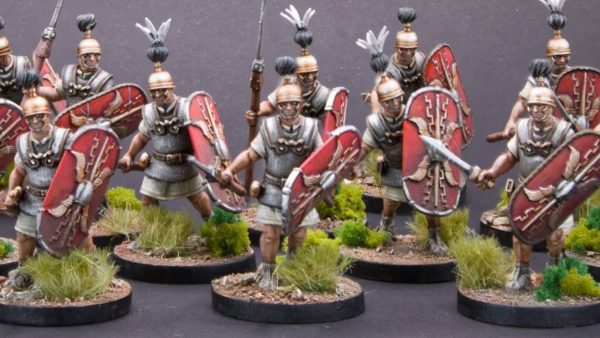
There are a lot of very good manufacturers that produce miniatures for the Fifth and Sixth Centuries AD, but for this project I decided that the Late Roman range from Footsore Miniatures was what I wanted. They are probably a little bit better equipped than the unfortunate Romano-British actually were, but I’m prepared to sacrifice an element of realism to obtain some figures that I think will look suitably heroic on the tabletop.
The last Group that I completed was the first Group of Milites, so I’ve decided to start the second.
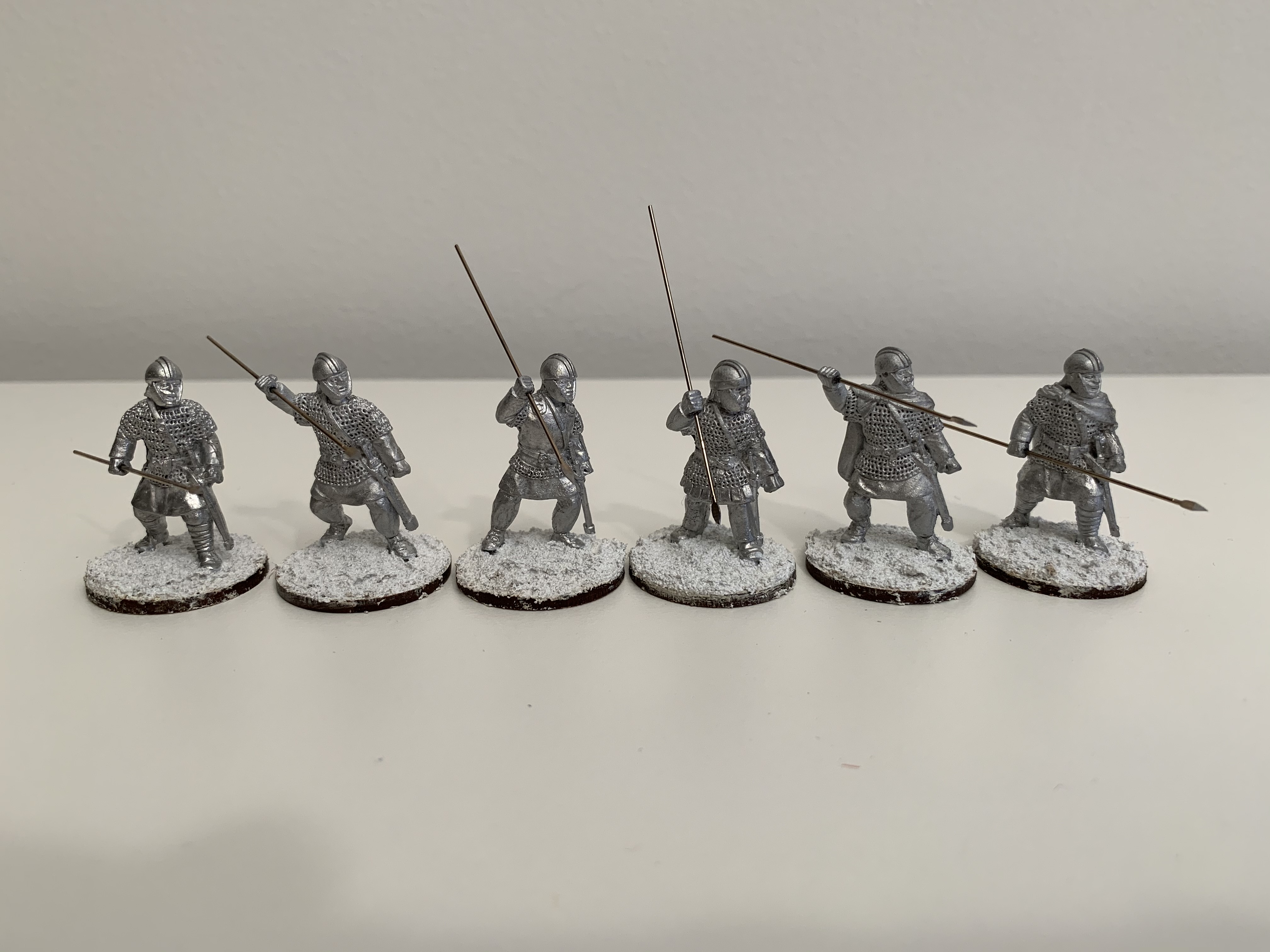 Milites Group Two - cleaned and attached to their bases
The miniatures are good quality and don’t require much in the way of clean up. Flash and mould lines appear in obvious places and are easy to remove.
One point of note is that Footsore don’t cast their figures with spears, so it’s necessary to use a pin-vice to drill a hole in the weapon hand. This is fairly straightforward once you get the hang of it. There is an obvious point where you start drilling into the fist. I found it easiest to go about three-quarters of the way on one side, and then swap and complete it from the other. I then inserted spears made of steel wire and secured them in place with superglue. Be sure to match the diameter of your drill closely with the diameter of your spears, otherwise the fit will be too loose. The steel spears are available from Footsore. There was a period over lockdown when they were out of stock, but they now seem to be available again.
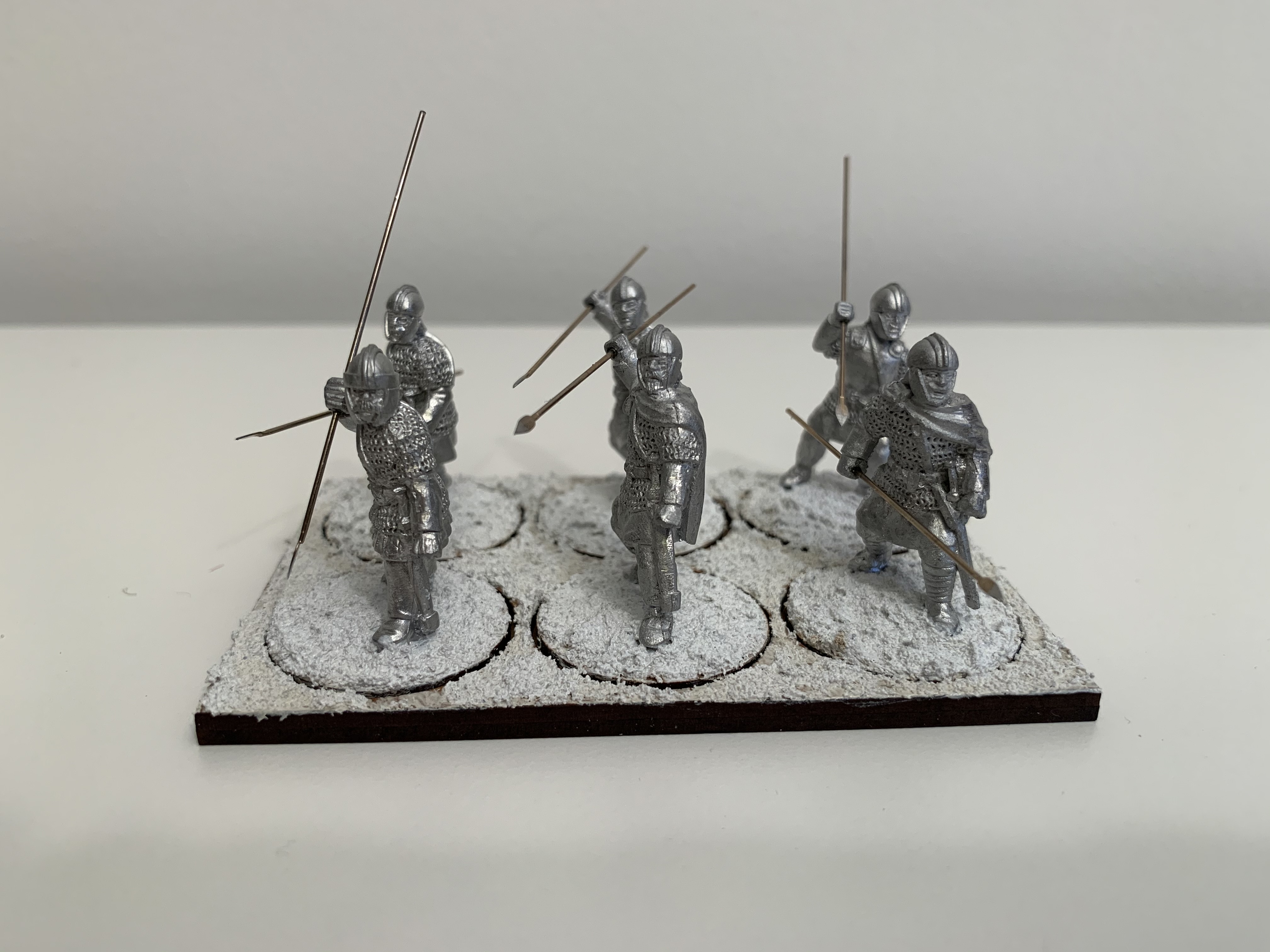 Milites Group Two on sabot base
I decided for this project to attach the figures to their bases before priming and painting. This probably wouldn’t work for a game involving element basing, but for something like Dux Britanniarum which focuses on individual figures, it works well. I’m using 2p-sized bases, with the figures superglued and then secured in place using Vallejo Acrylic Ground Texture, specifically the Rough White Pumice variety. I’ve not seen many other people do this, but for me the main advantage is that is secures the miniature to the base and, in my opinion, paints up very well. It can be a bit fiddly and messy to apply, but I’ve found that the same applies to PVA and sand.
I’ve also covered a sabot base in the same Ground Texture and will be painting that at the same time that I paint the bases on the miniatures.


![Sneak About With Star Wars: Legion’s Guerilla Troopers & More [UPDATED]](https://images.beastsofwar.com/2026/09/g-troops-star-wars-cover-600-338.jpg)