




Shining some light into Darkest Africa

Recommendations: 291
About the Project
After getting a Runner up prize in Spring Clean 2025 I'll be continuing occasional returns to the long neglected but much invested in Darkest Africa collection. Specifically I'm going to build armies for Death in the Dark Continent. I started with Bornu-Kanembu who controlled an area broadly equivalent to modern Chad during the period of colonial expansion. They were the most eastern of the Fulani style emirates and interacted with many of the other forces I am now going on to build; Azande, Turkana, Sudanese and Congo Arab slavers and Congo tribal forces amongst others.
Related Company: Wargames Foundry
Related Genre: Historical
Related Contest: Spring Clean Hobby Challenge 2025
This Project is Active
Kanuri Warriors 1
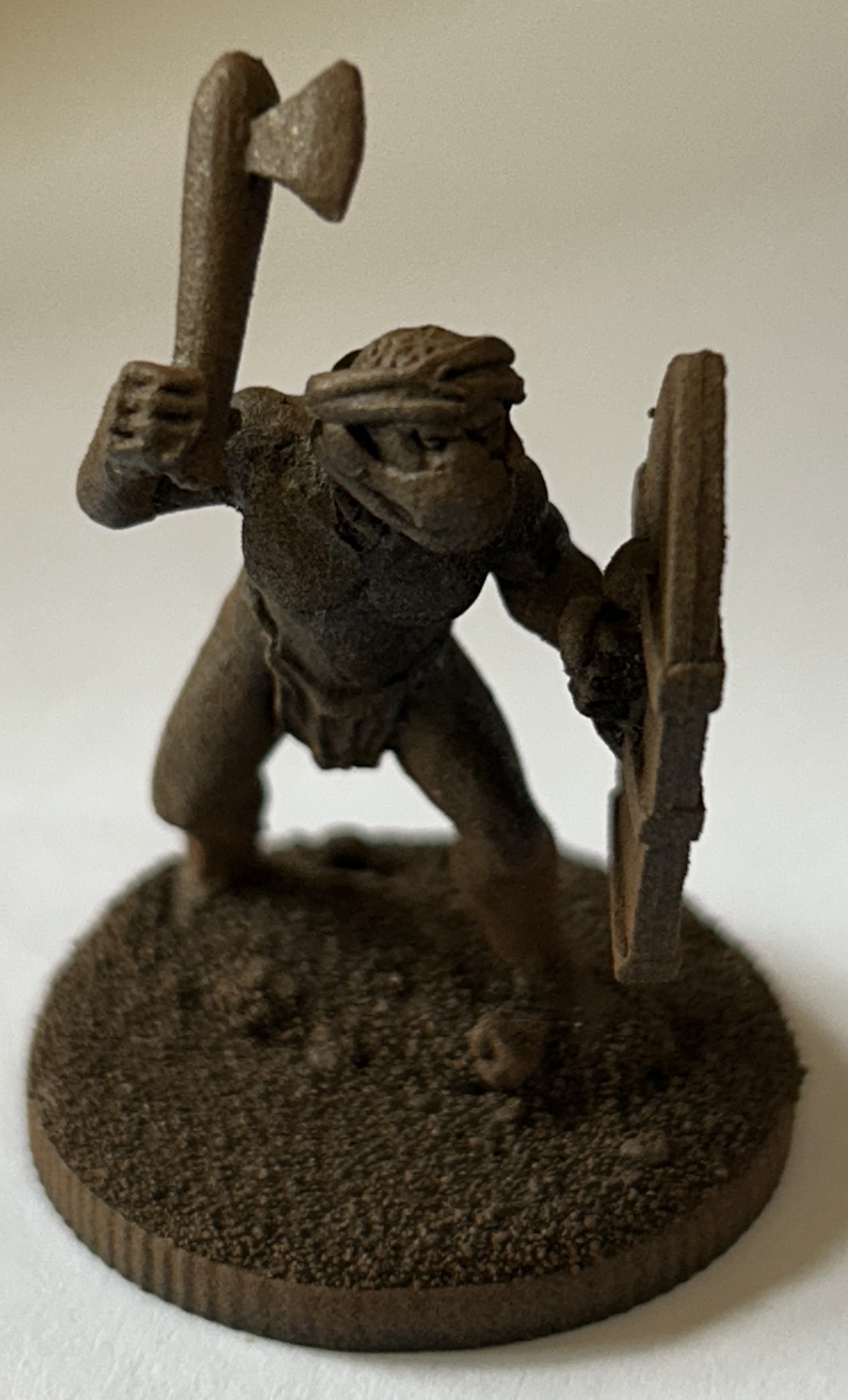
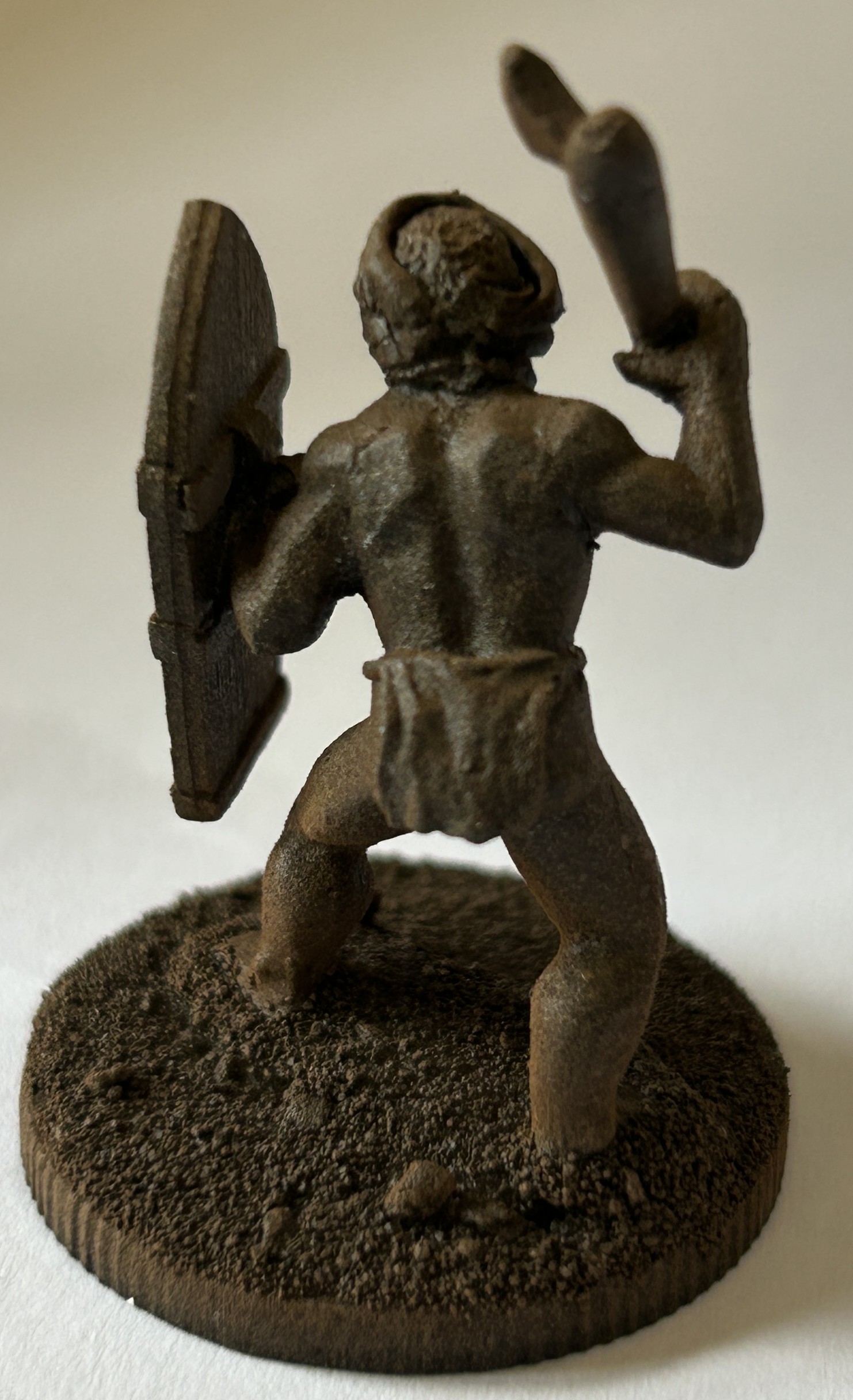
This was the starting point, Black spraycan undercoat with Leather Brown zenithed over the top.
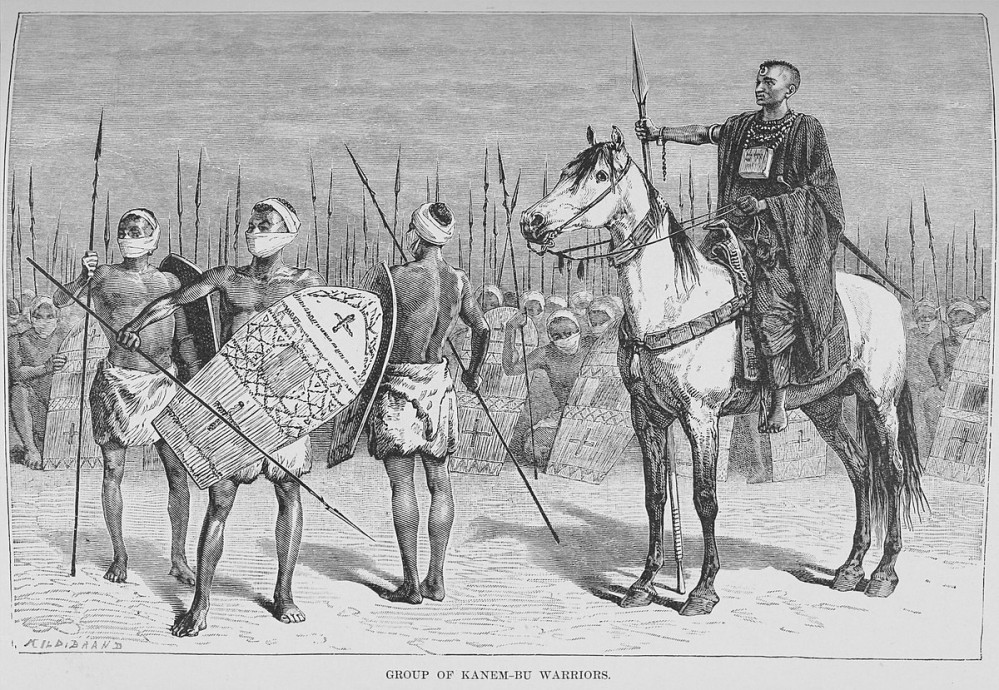
The first stage is a bit hard to see much difference but is vital in getting the level of contrast needed for the final finish. Vallejo Game Earth was heavily drybrushed onto the base. When the brush was almost out of paint I then ran it between the support struts on the shield, front and back. I’d picked a brush that just fit between the struts which thankfully are evenly spaced. Thus:
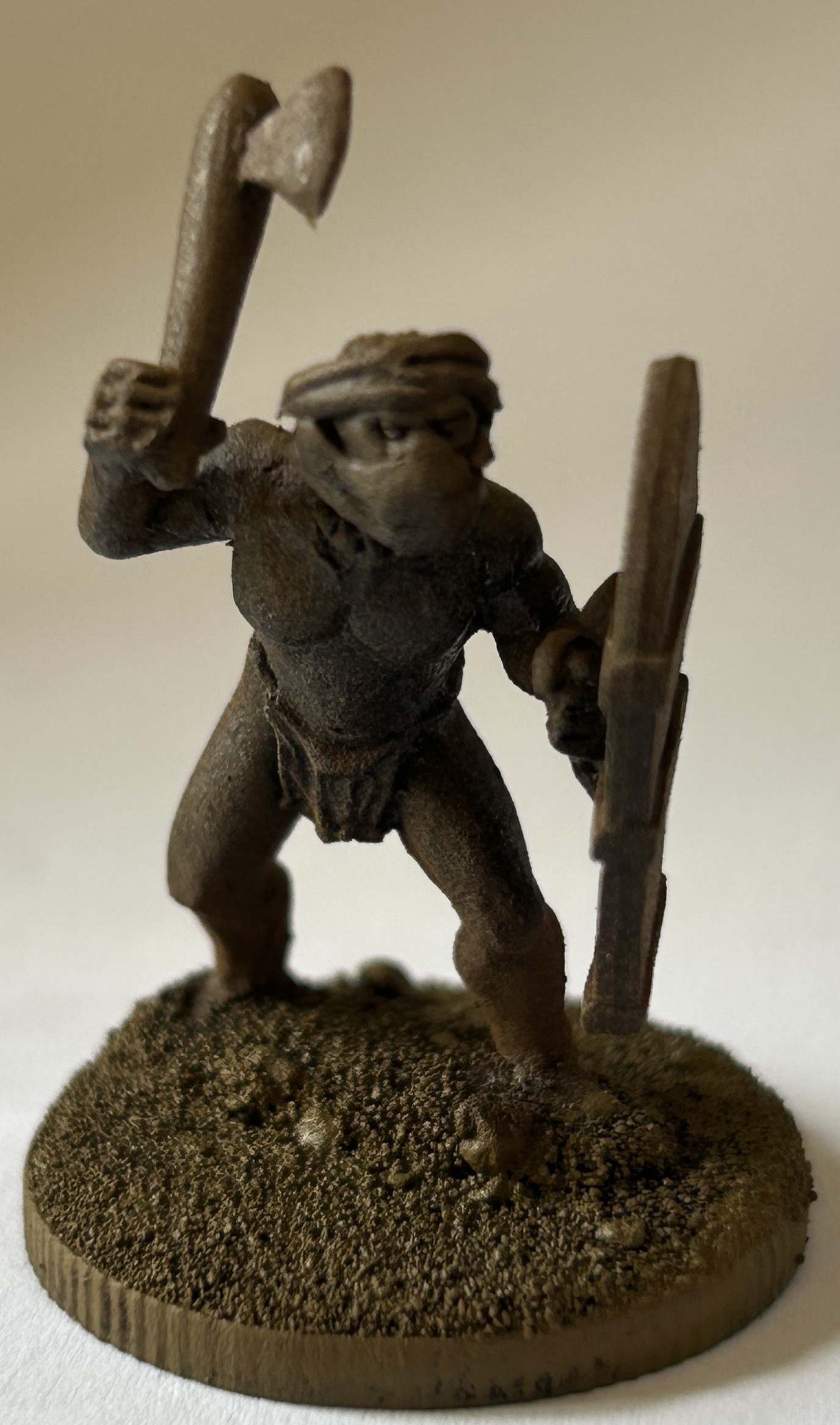
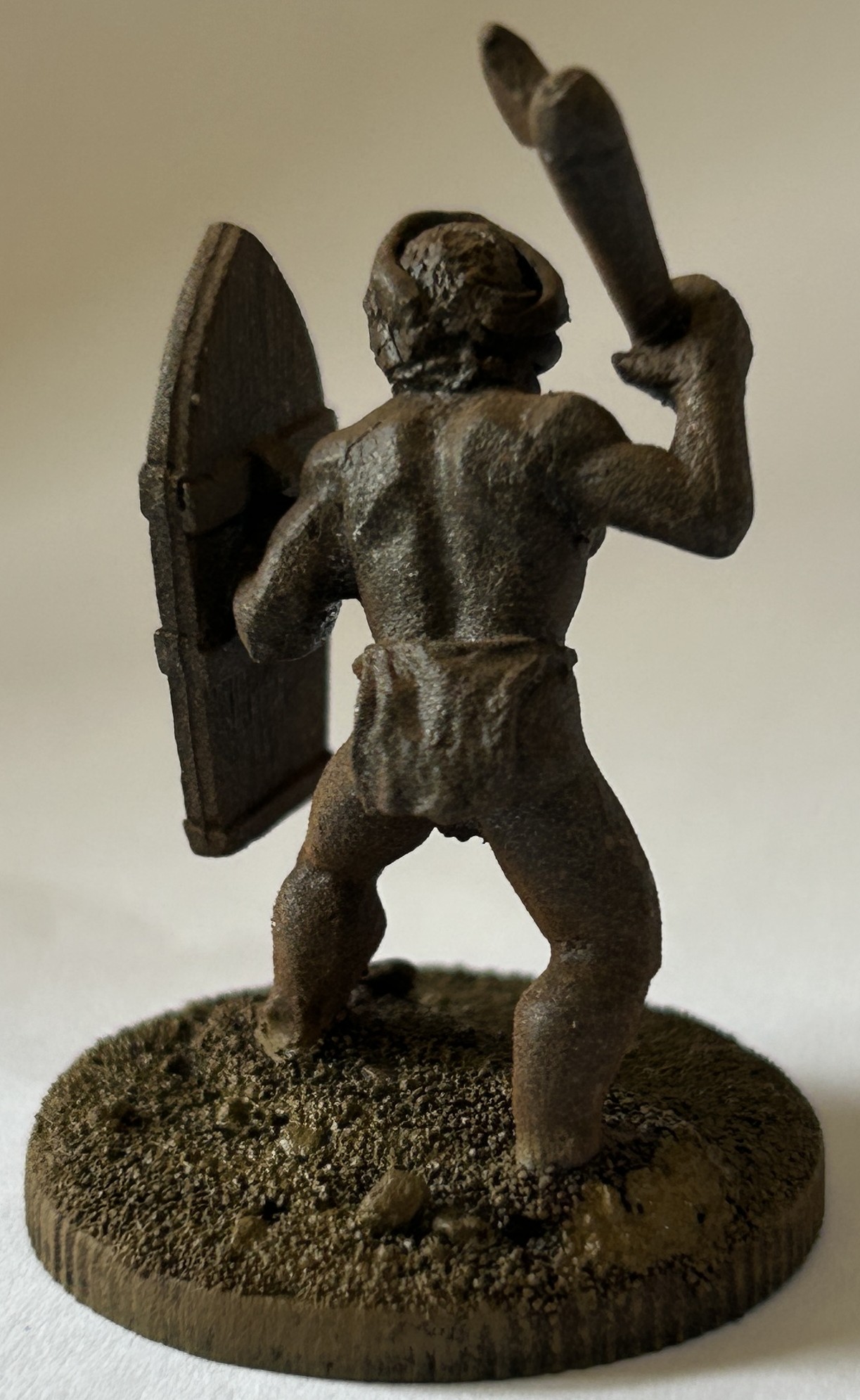
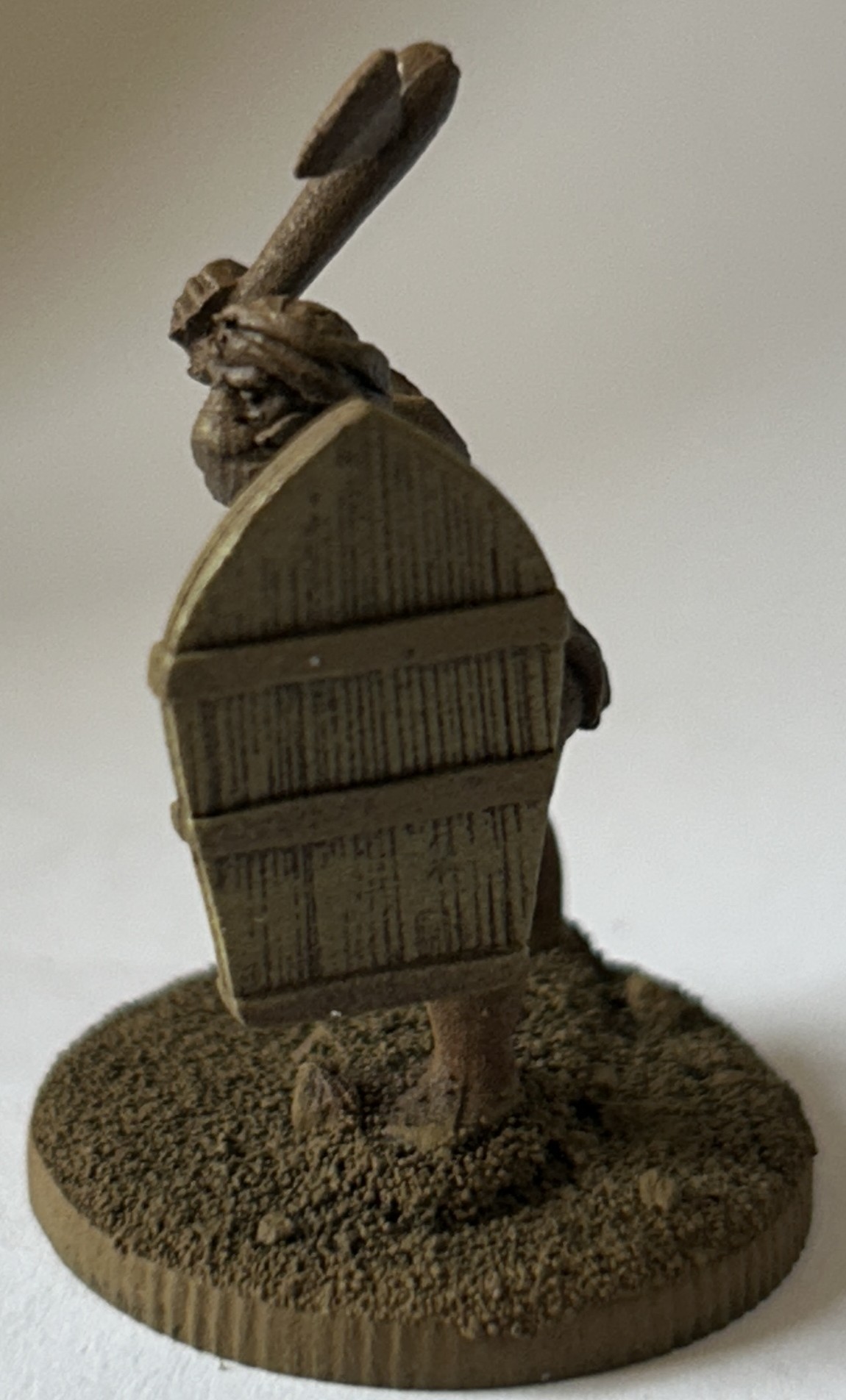
Now onto weapons. Most of the warriors have spears. The art shows long slender shafts so I went for wire spears that I cut to length with tin snips. For a bit of visual variety on axeman is in each unit. Vallejo Earth on the haft and Gunmetal for the head.
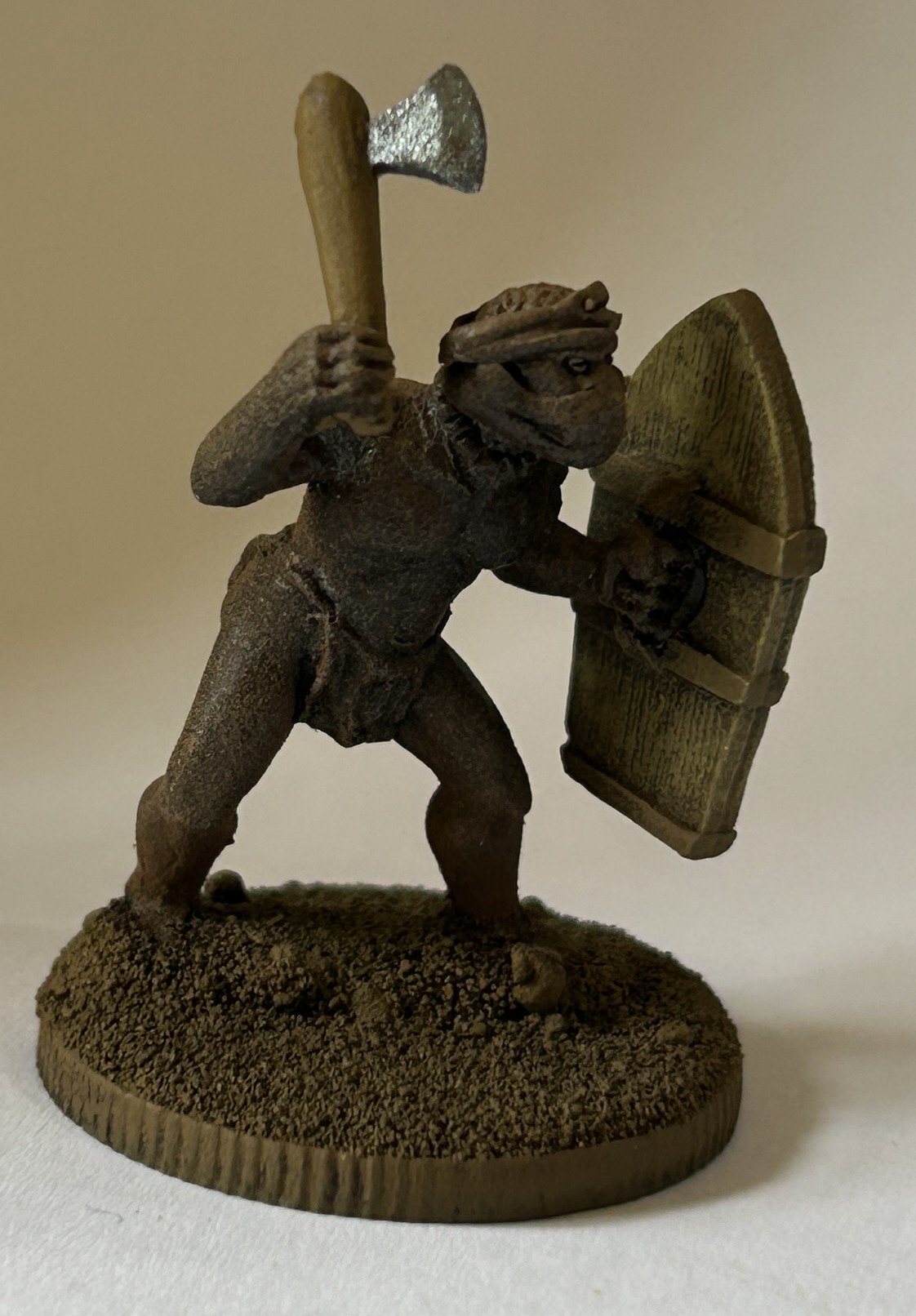
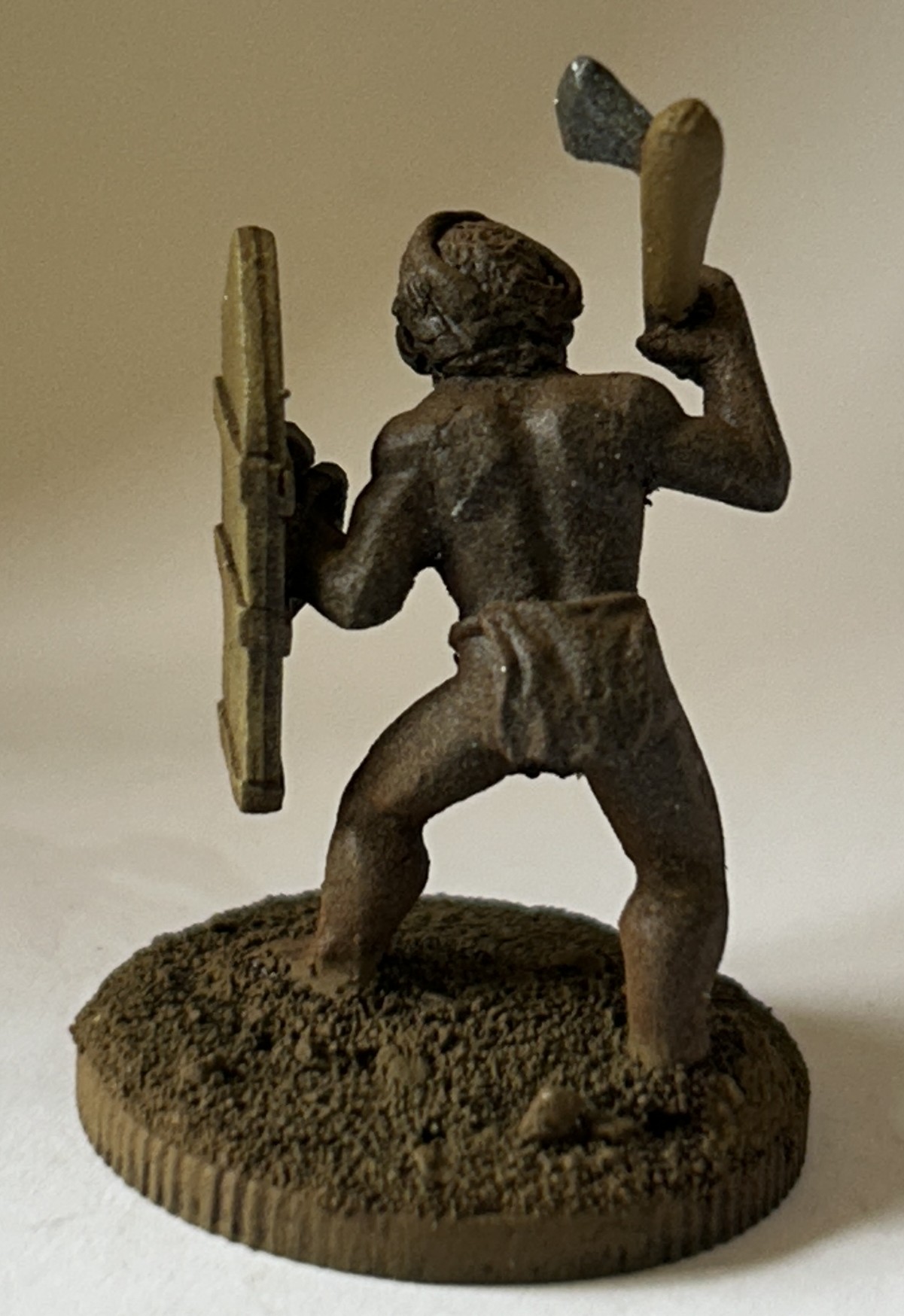
Now Vallejo Bonewhite on a very dry drybrush and highlight the shield – same one as before that just fit between the support struts. This means the struts catch a fortuitous edge highlight but stay the basic undercoat colour.
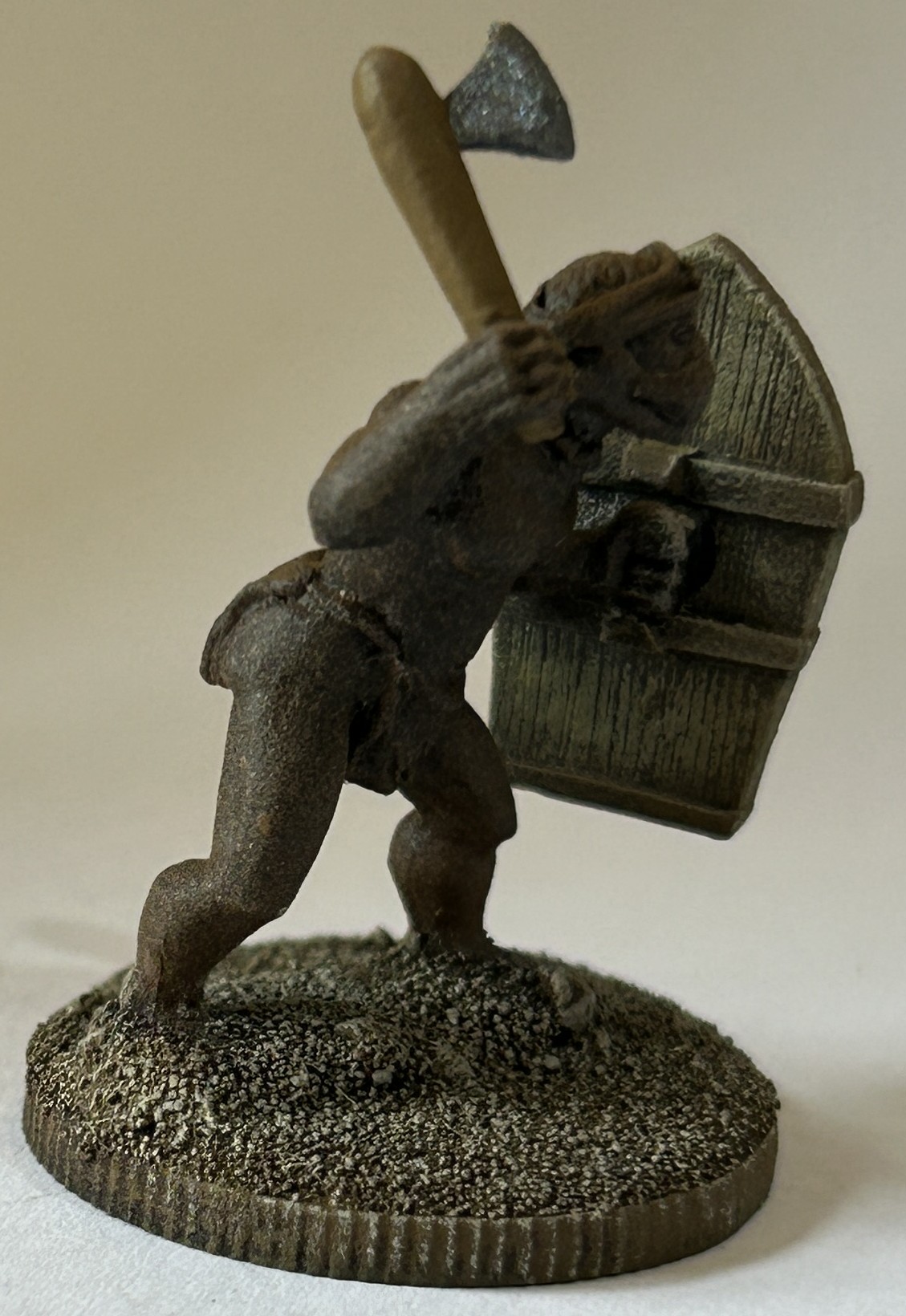
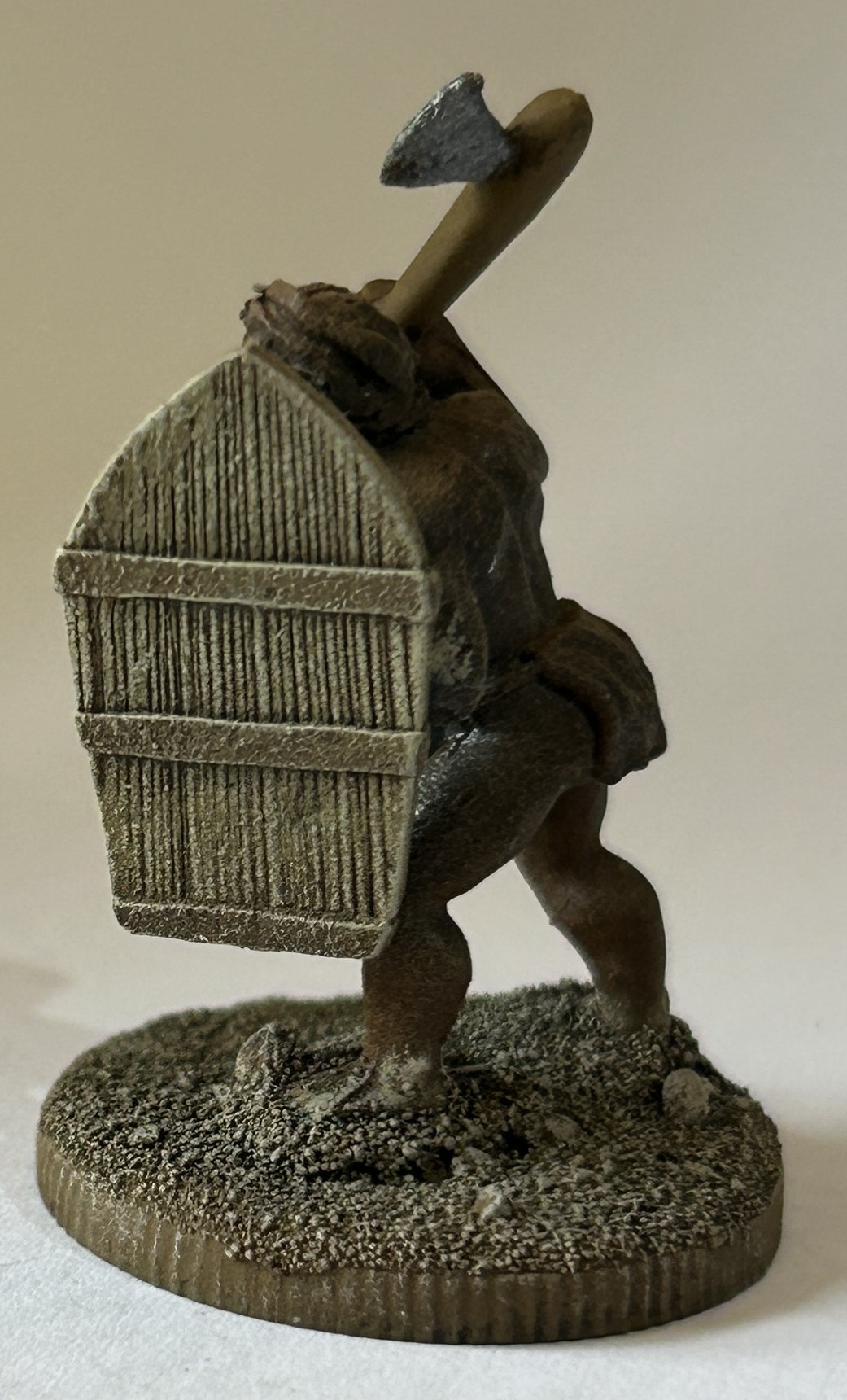
Staying with the Bonewhite change brush and put a layer onto the loincloth and head scarf. This will look a little patchy but that helps us with depth in the final finish so no second layer or touch ups required.
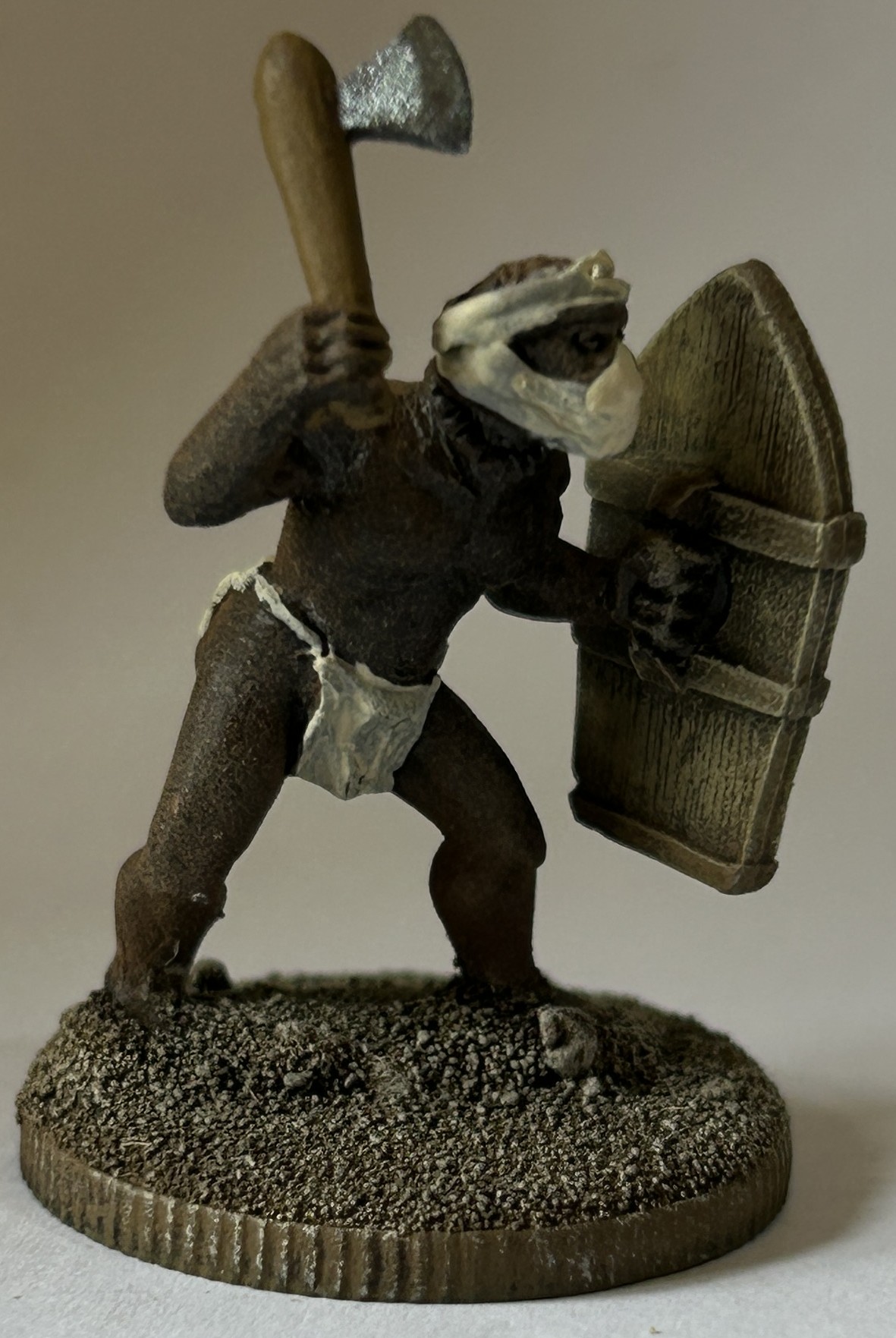
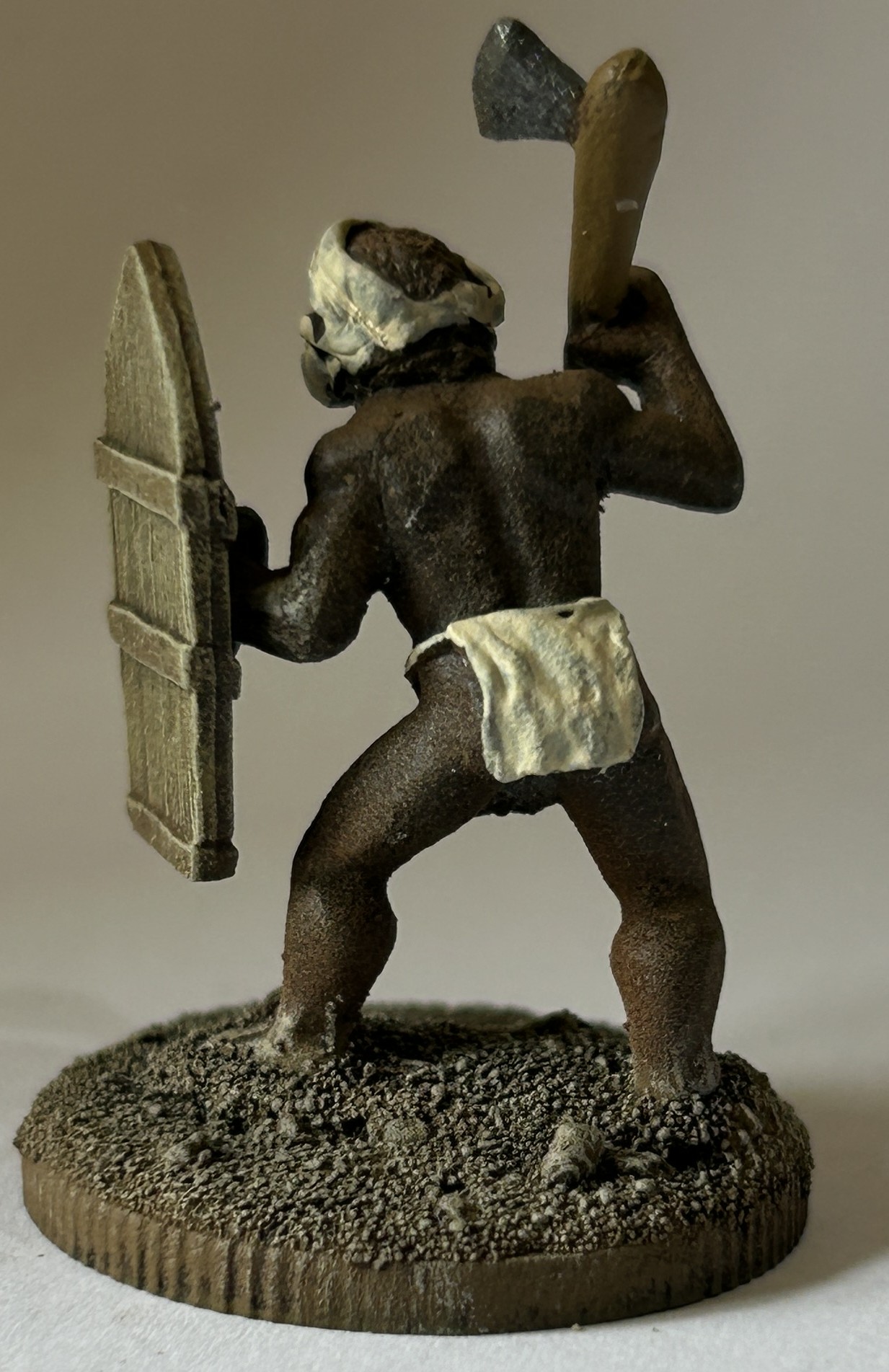
Finishing touches now. White is generously overbrushed (like dry brushing but with a wet brush) onto the cloth areas. Any final details also picked out – this one has a necklace but there are arm bands too, most probably they were made of ivory. The shield is finished with some basic designs inspired by the artwork – crosses (even ones, like a plus sign) seemed quite important so most shields got these. I used Black Speedpaint but ink would have been fine too, anything thin so you get good flow whilst using a very fine brush, mine’s 0000. The lines are thicker than in the art but they don’t take long to do and look fine en masse.
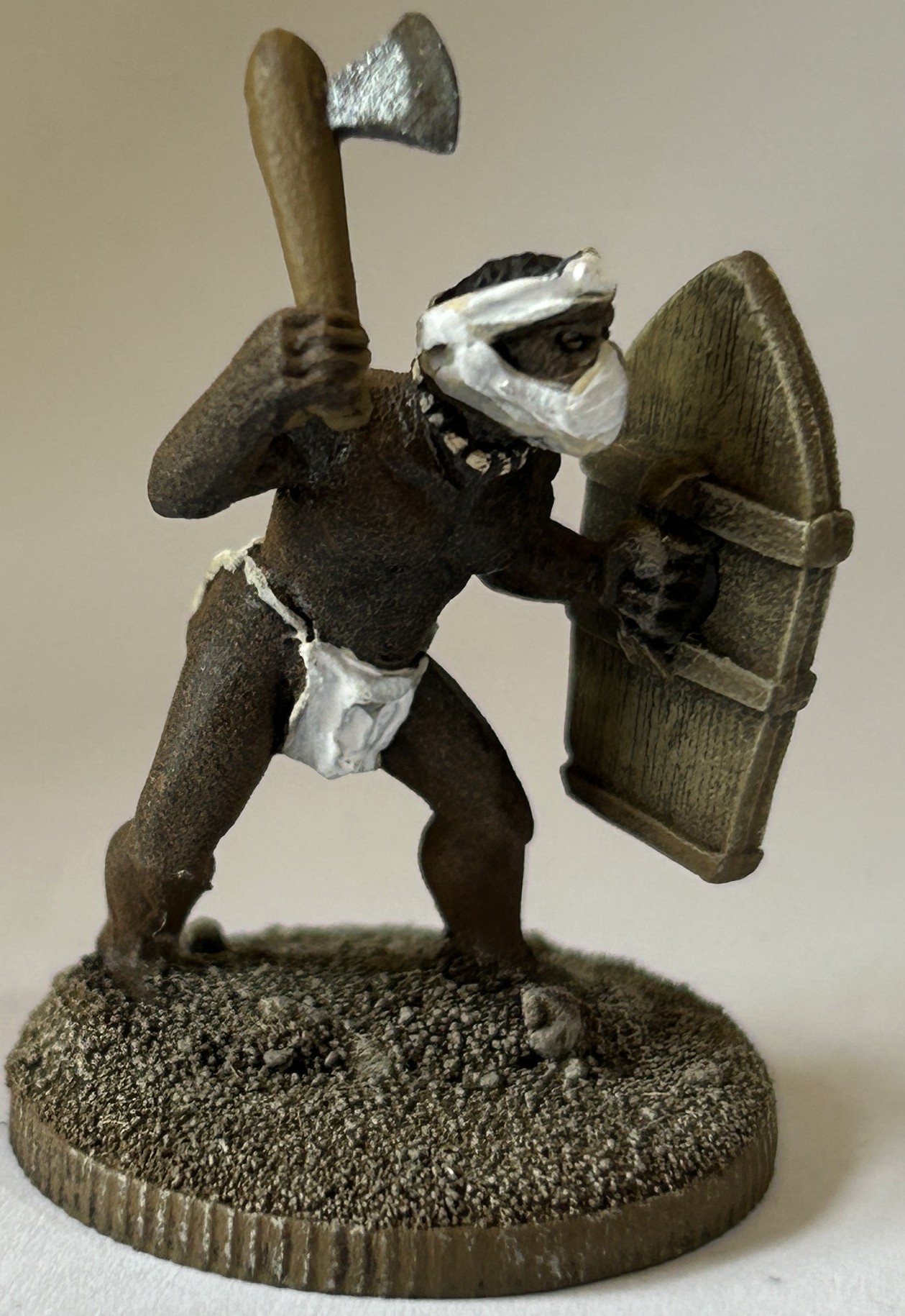
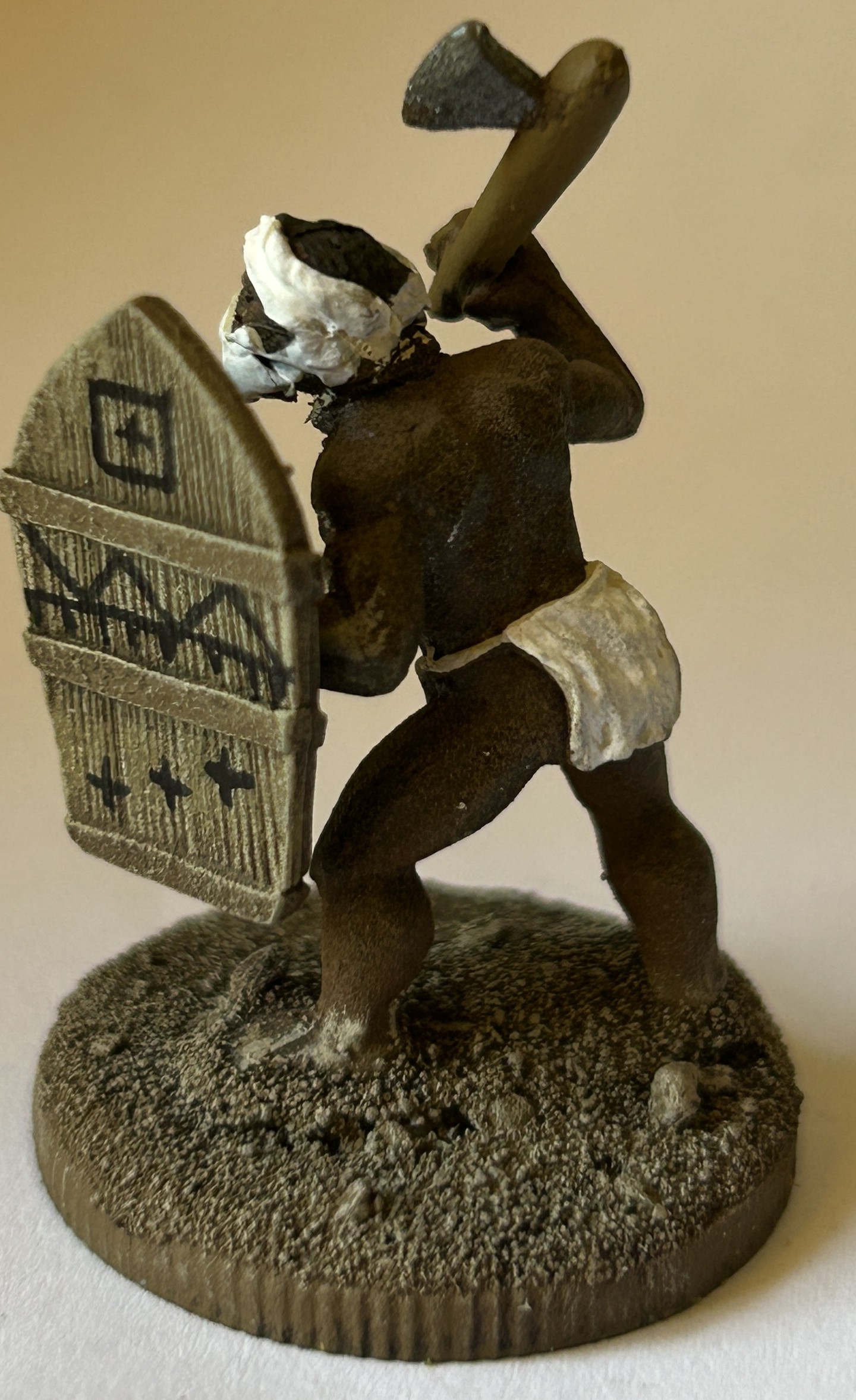
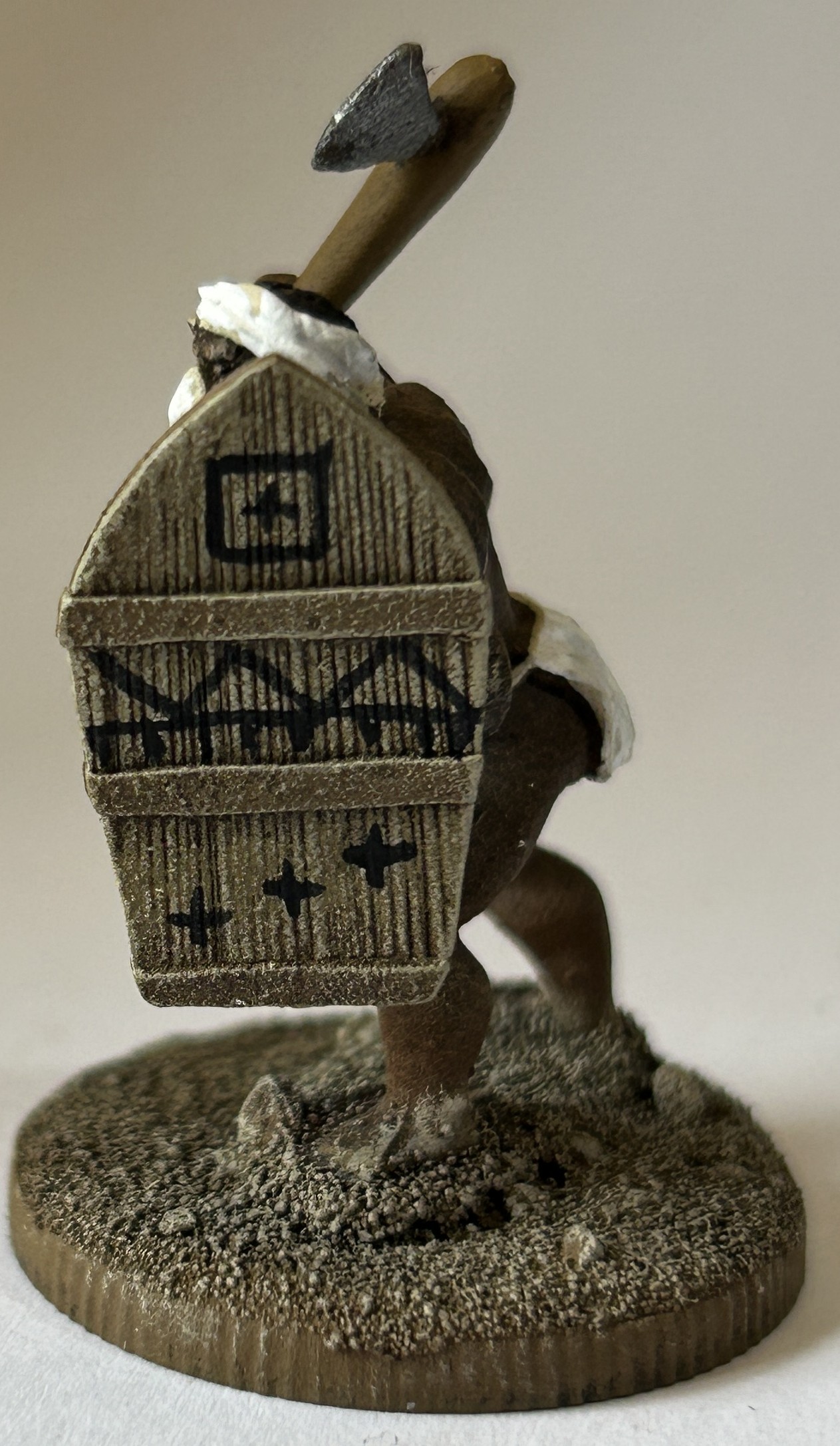
That’s it. On to basing using the scheme I detailed earlier.
Random Camel
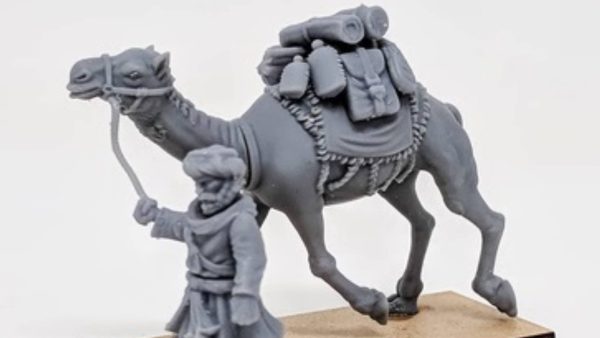
This miniature is just a game marker to remind me of the Strategem: Drums rule that this army uses. I often forget special rules or abilities so this physical reminder will jog my memory.
He’s a Perry metal miniature. Painted mostly in Speedpaints but with liberal use of Game Air Desert Yellow.


Kanuri Cavalry finished


These are the Kanuri cavalry. They are the local notables who have gathered to support their emir and hopefully share some plunder without any significant risk.
I didn’t paint these so I tweaked the colour scheme, fixed the horse colouring (never enough white on legs!) and then added some LBMS shield transfers and flag. I didn’t fix the lack of filling on some horses but as a unit it will still look fine at a wargaming distance.
I really didn’t like the multi-coloured scheme that had been used. Probably more historically correct that what I’ve finished with but I prefer some consistency of colour, it just looks better as a unit on the table.
Do you agree? Here are the development shots I took where I got rid of most of the warmer colours (purple, pink, red and orange) and replaced with white and a few extra blue pieces.


Shuwa Arabs 2 Finished, onwards!

This second unit is marked by having 2 flags. I try to keep differentiators simple so I don’t get mixed up in the heat of on-tabletop action.
An now on to the first mounted unit. Kanembu mounted warriors. Made up of higher ranking warriors that were native to the kingdom but not high status or rich enough to equip as knights. Still good quality kit on show with a couple of mail corselets of either Soudanese or North African manufacture.

Shuwa Arabs 1 Finished
A word on flags. I had a few to choose from and I’d like at least one in every unit, some will have two. The Perry Sudanese Tribesmen box comes with some Mahdist flags on the information leaflet and they look good to me. I’ve also got some Islamic flags from LBMS that I’ll use:
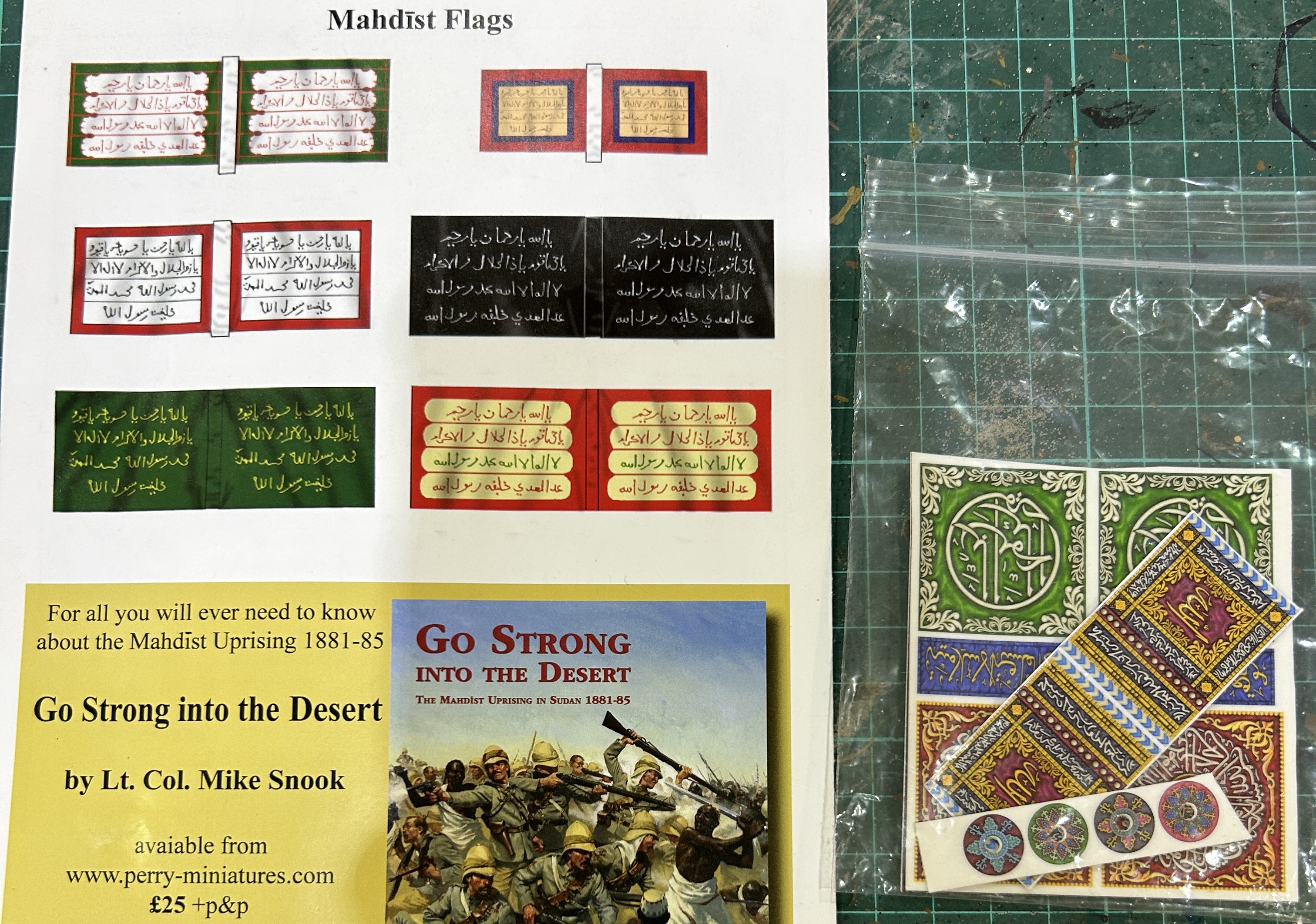
I like the bordered Perry flags for the Shuwa Arabs, the red and green Perry ones will go the the other infantry units. The cavalry will get the larger LBMS banners but I love the black flag for the main savannah knights unit so let’s hope it looks good when I fit it.
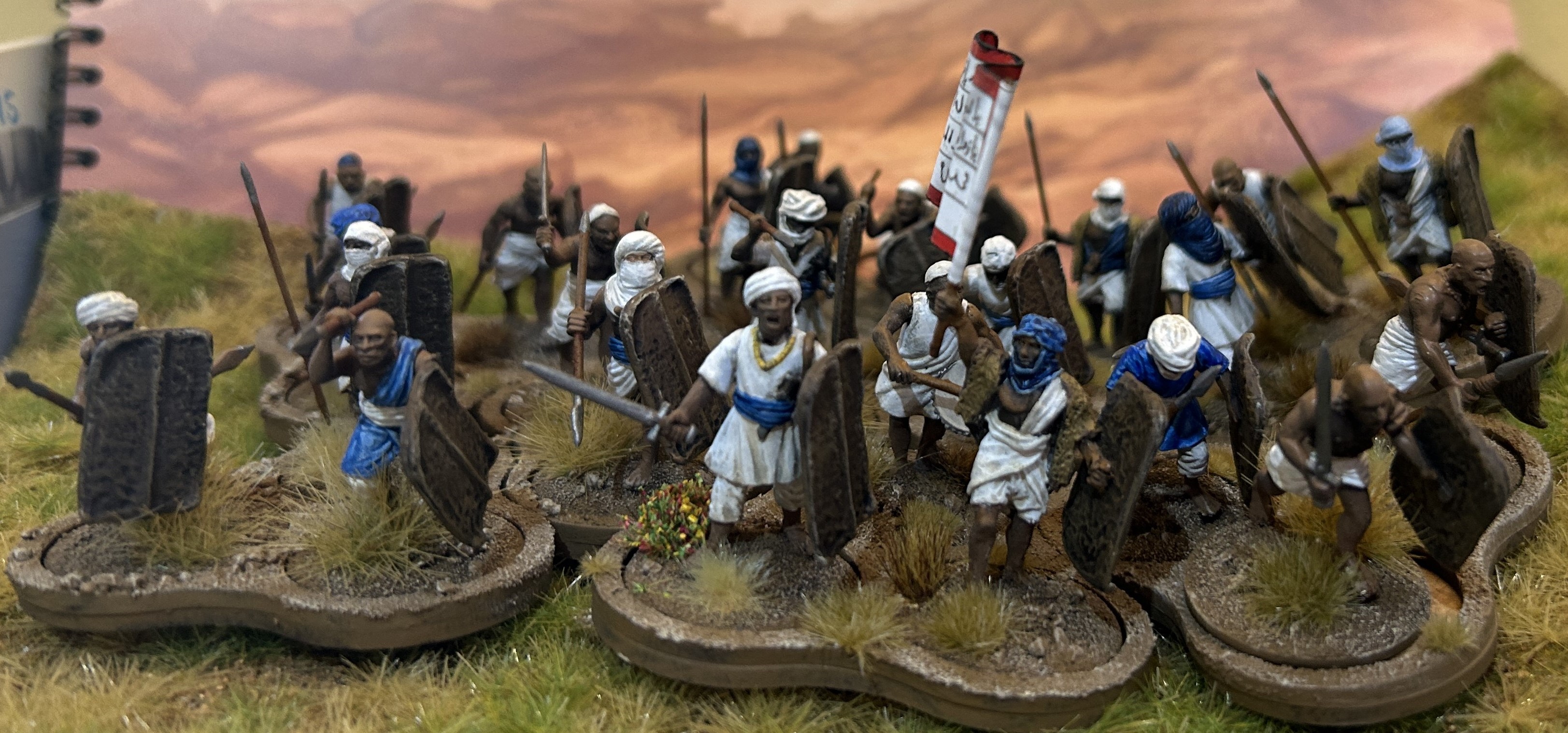
The finished unit:
Painting Shuwa Arabs 1
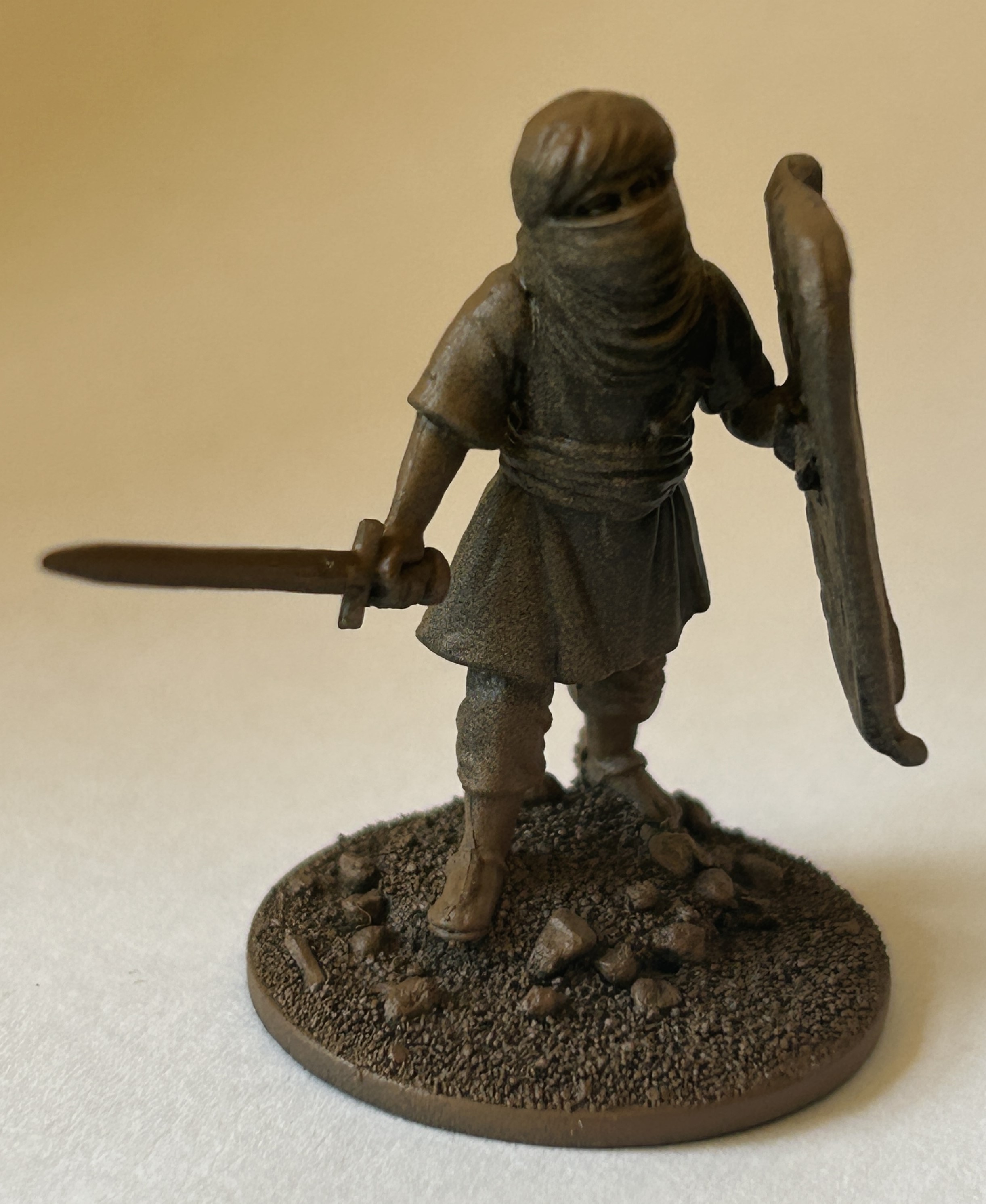
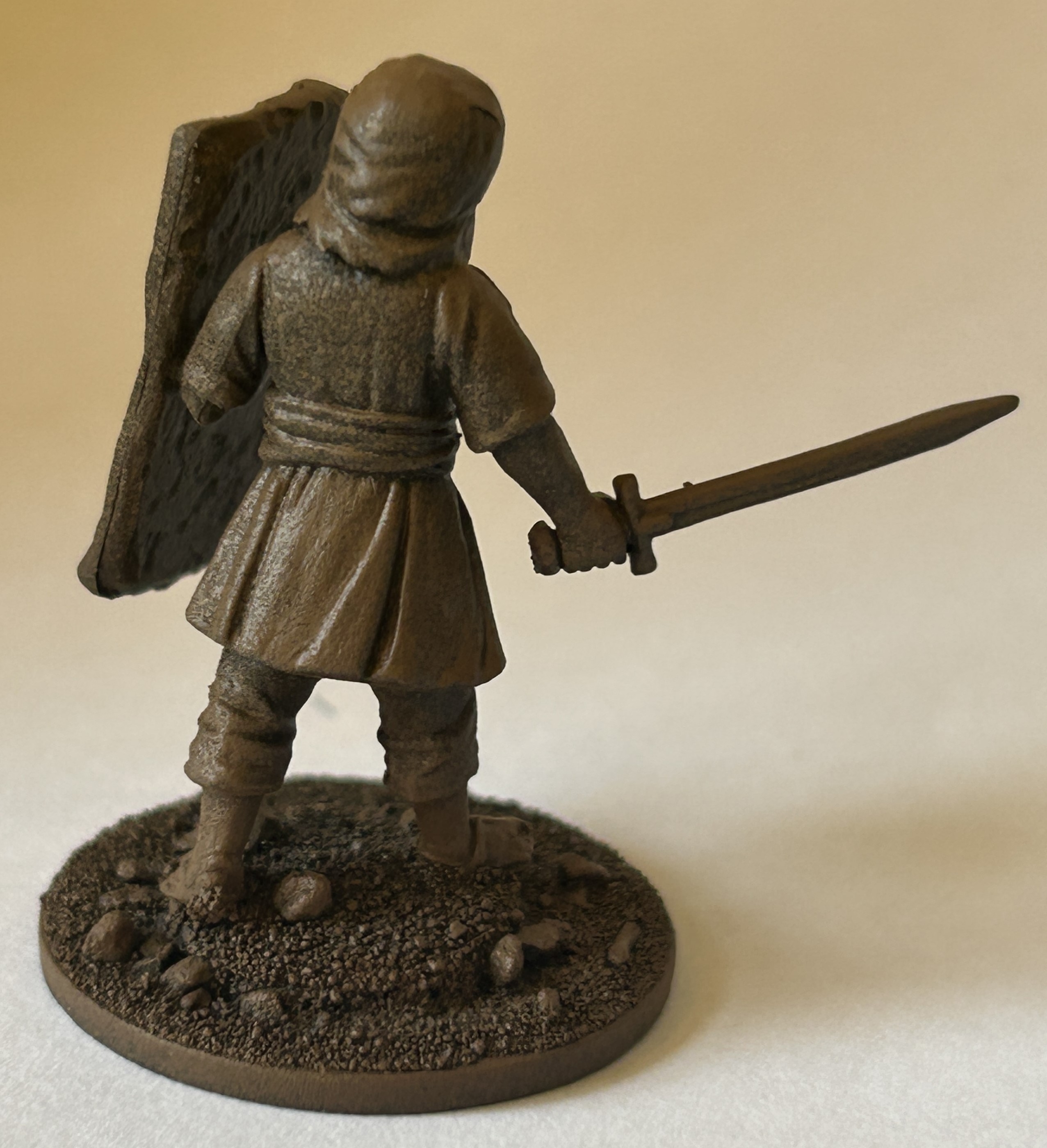
They started like this after the zenithed undercoat (leather brown over black). Next stage was Vallejo Bonewhite as a base coat on the clothing.
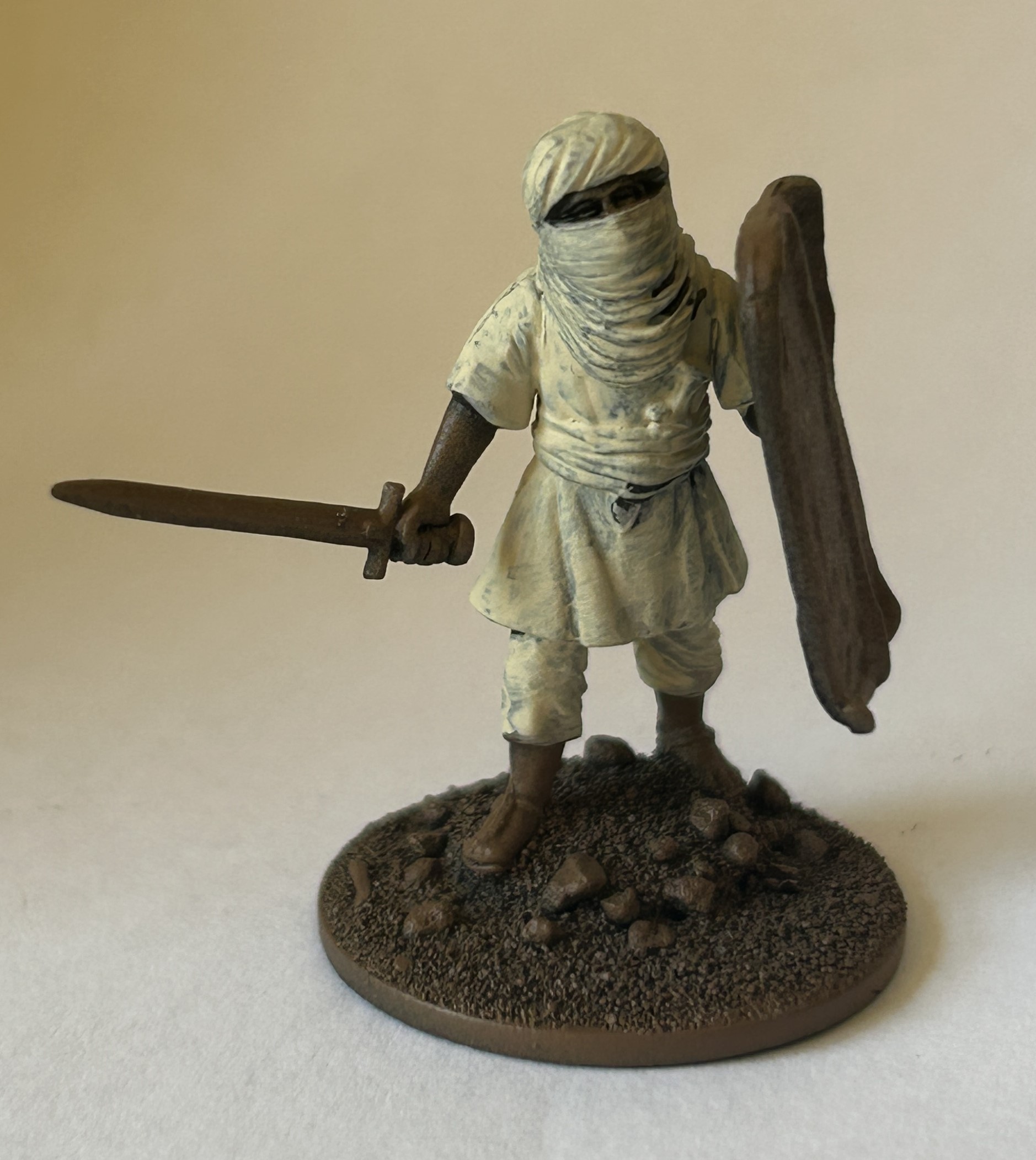
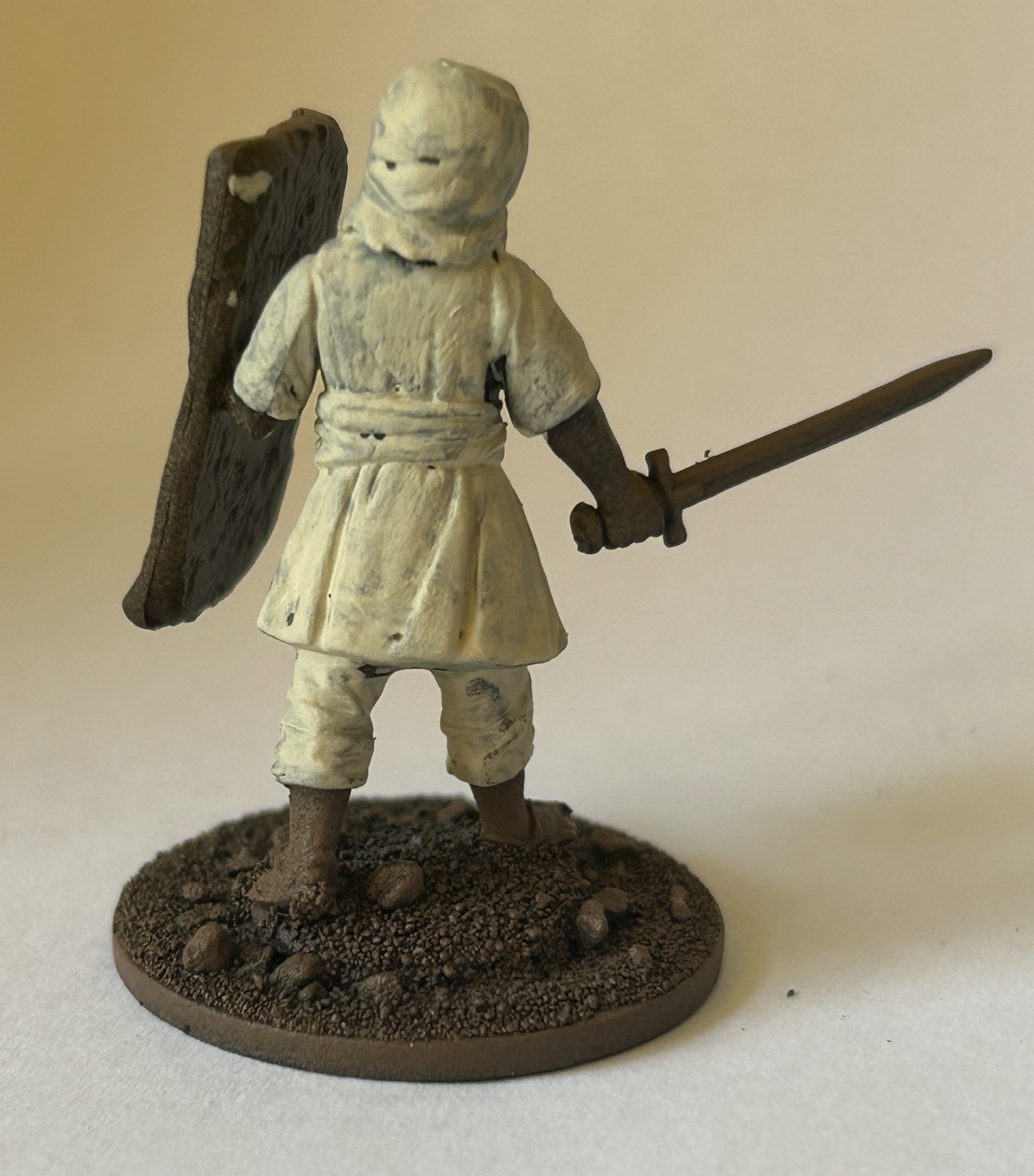
This basecoat doesn’t need to be too even as the next stage is a robust drybrush with white:
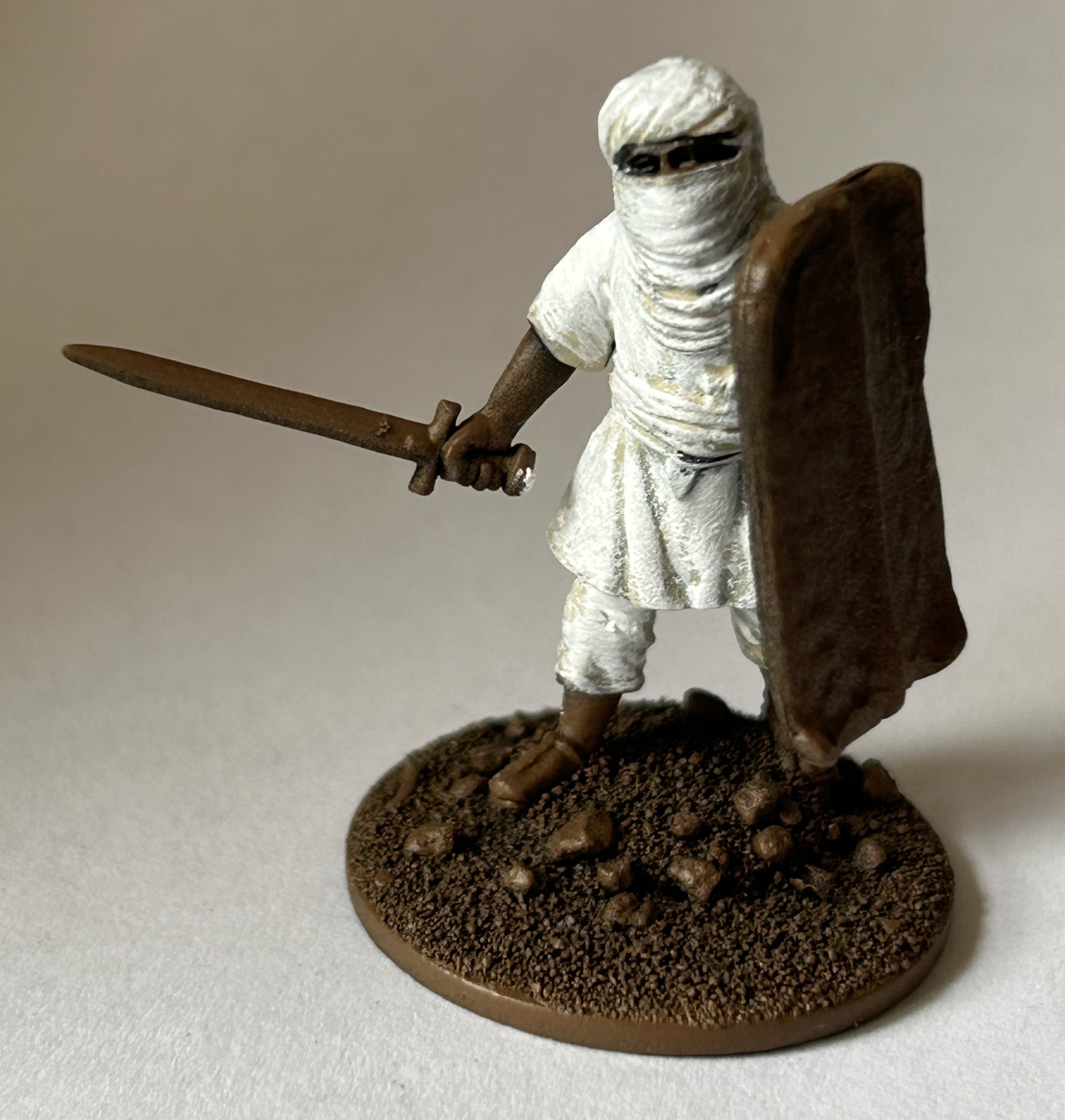
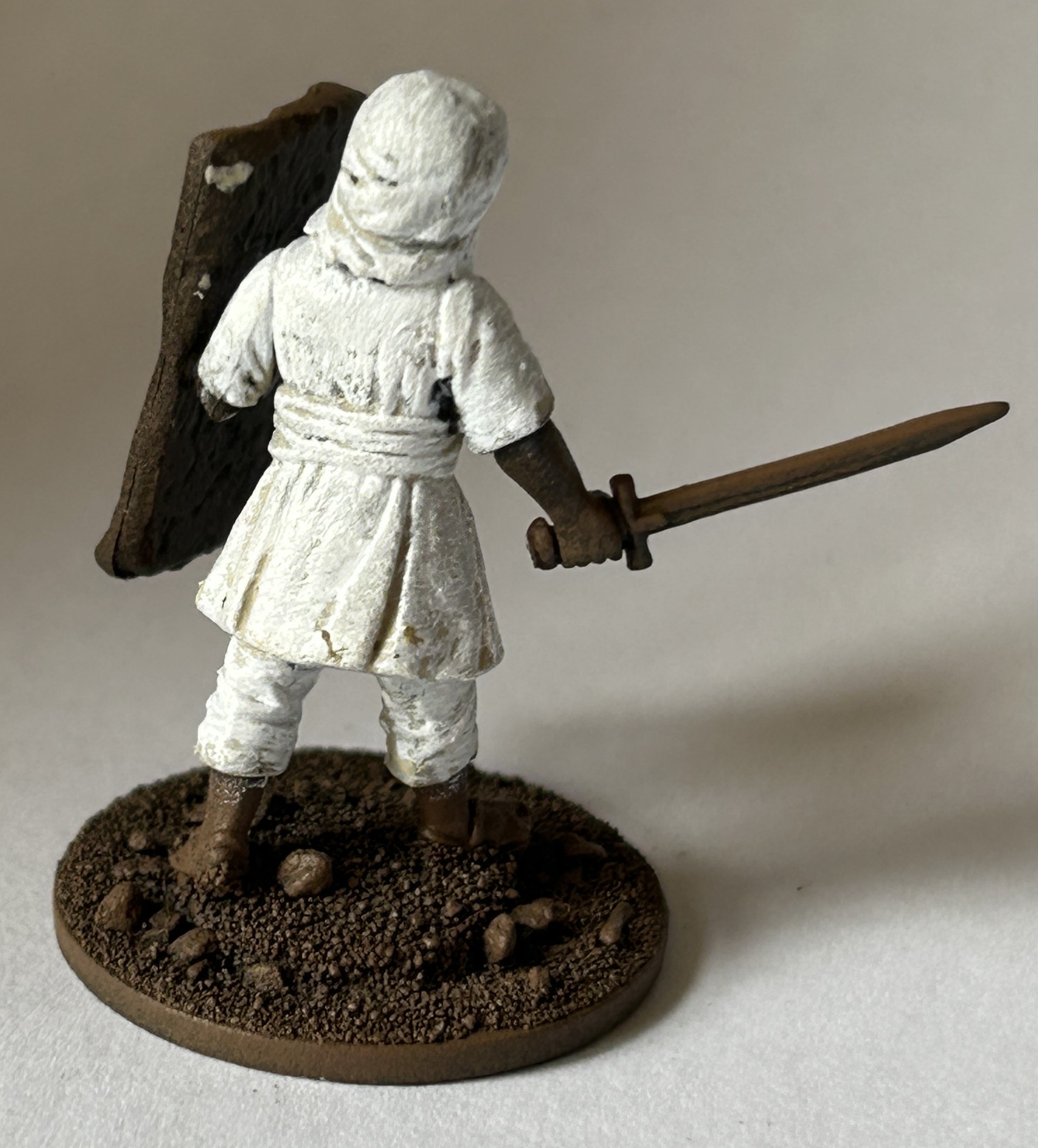
So now the minis have their clothes in the main colour of white with some tonal variation where the bonewhite shows through in the folds. Attention was turned to the shields. No clear evidence for what sort of skin was used for these shields. The larger Touareg ones are a pale colour but I thought that buffalo or elephant were likely candidates for these ones from the savannah. Therefore we’ll go for a deep tone. The examples of historic Beja shields (usually hippo hide) show a deep grey/green almost olive drab colour. I’m going to start with a layer of AP Speedpaint Gravelord Grey straight over the top of the undercoat. I’m going to mix in a squirt of green at some point and then a bit of lighter grey so there is a bit of variation in colour. They look quite dark in the photos:
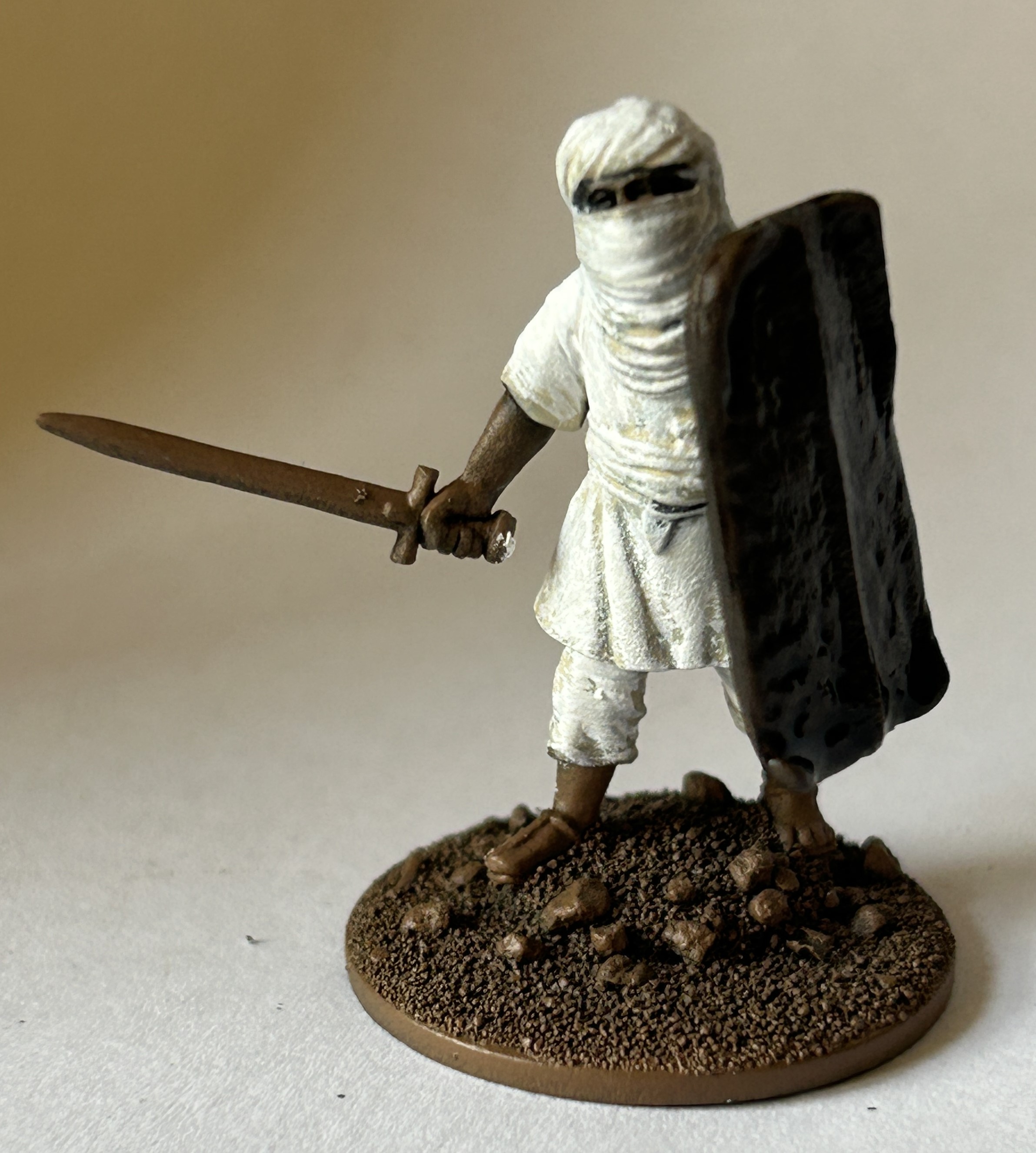
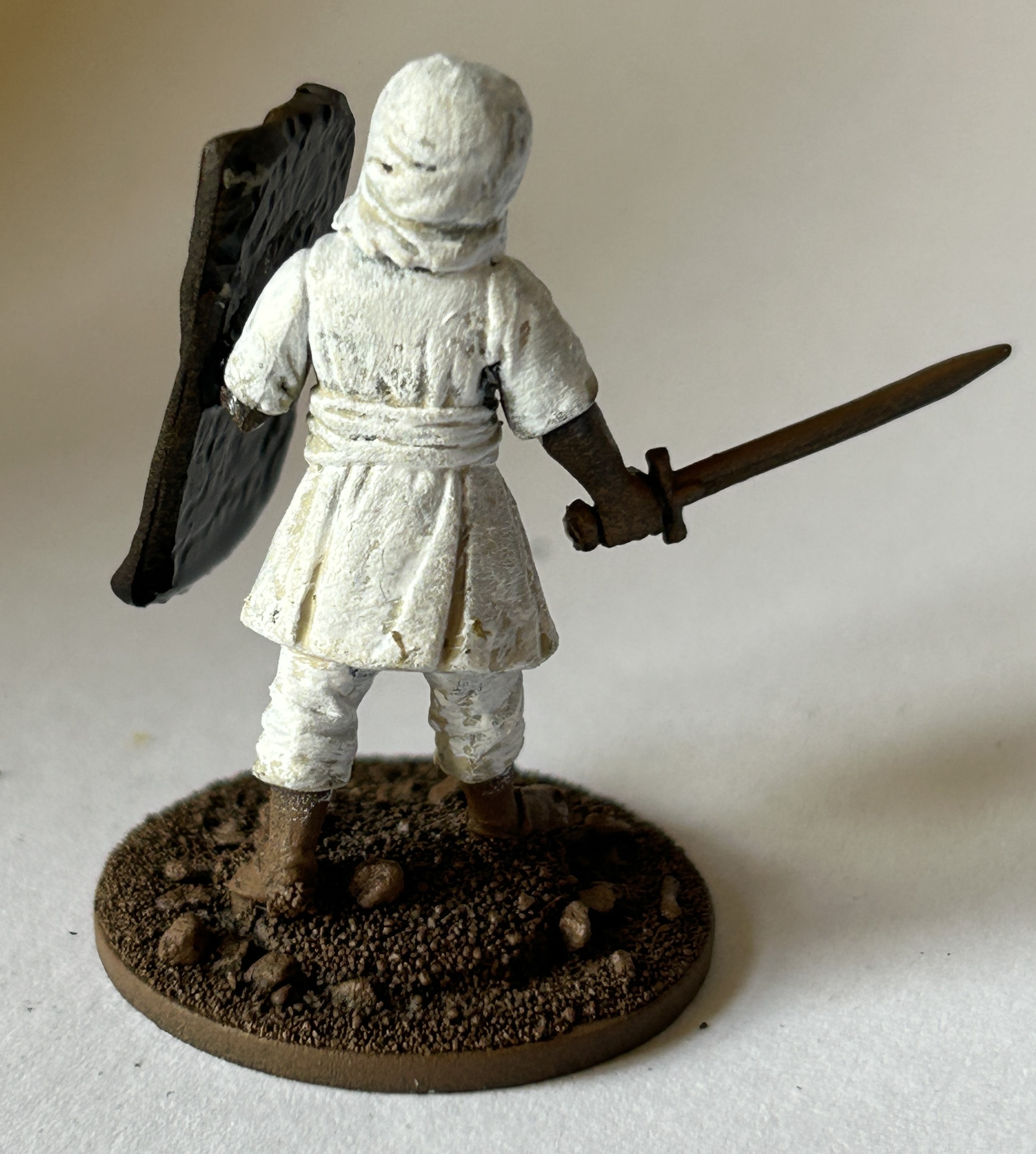
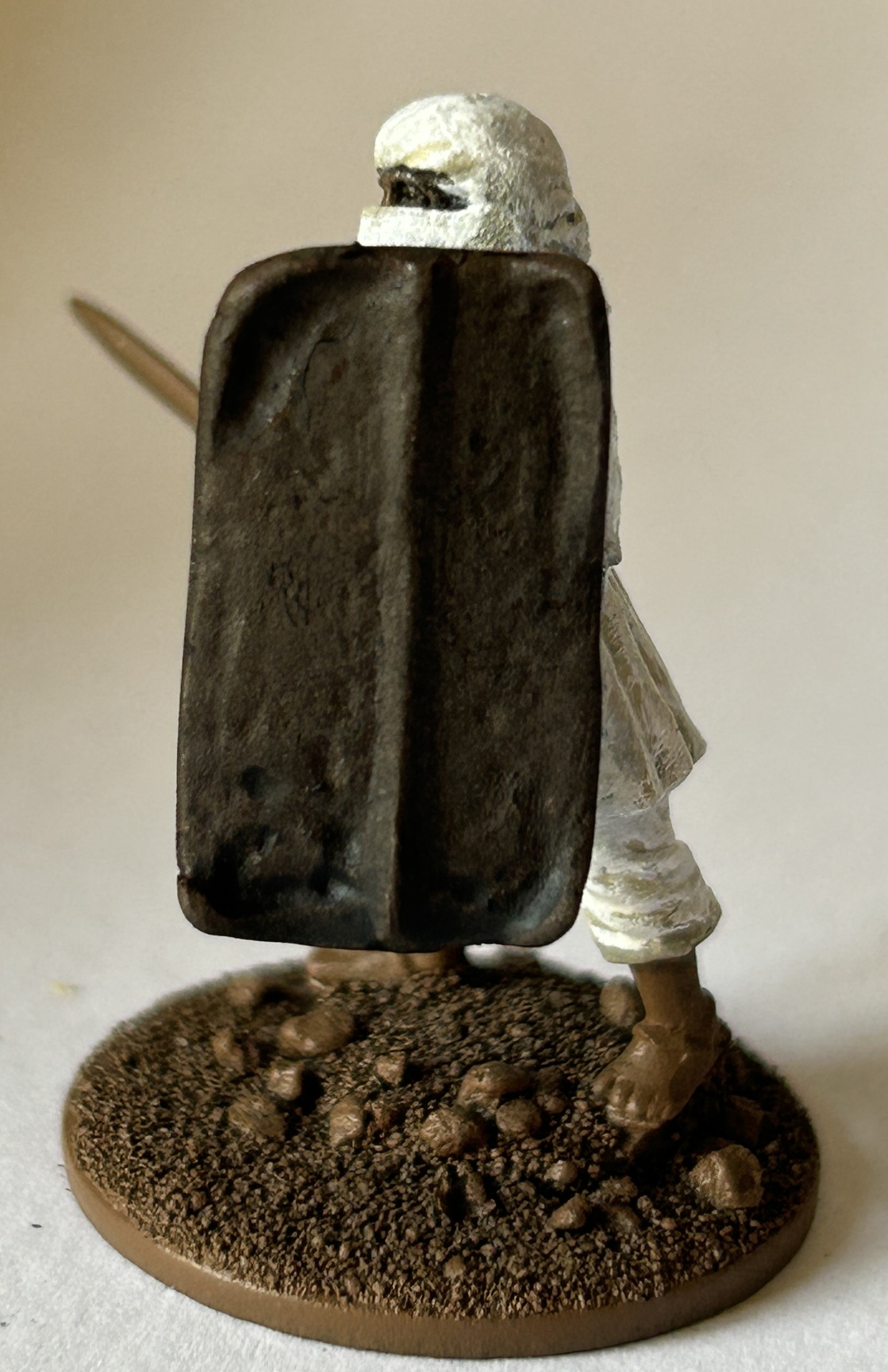
After some consideration I’ve decided the shields are darker than I wanted but I actually quite like it. I’m highlighting with a light dry brush of Vallejo Earth. Then another highlight with Bonewhite. Here they are after the first highlight. (After reviewing these images I decided to go with the second, lighter highlight):
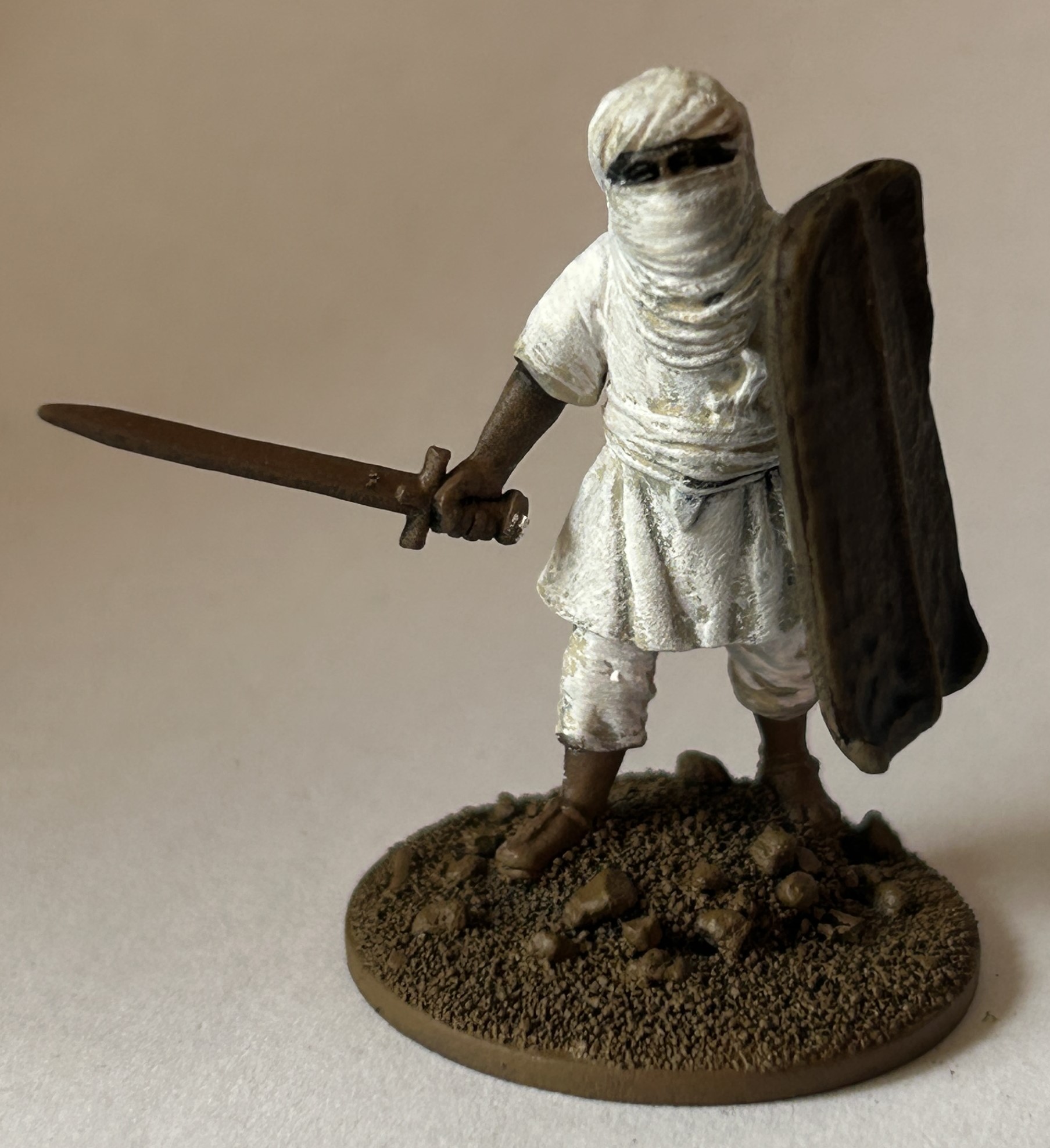
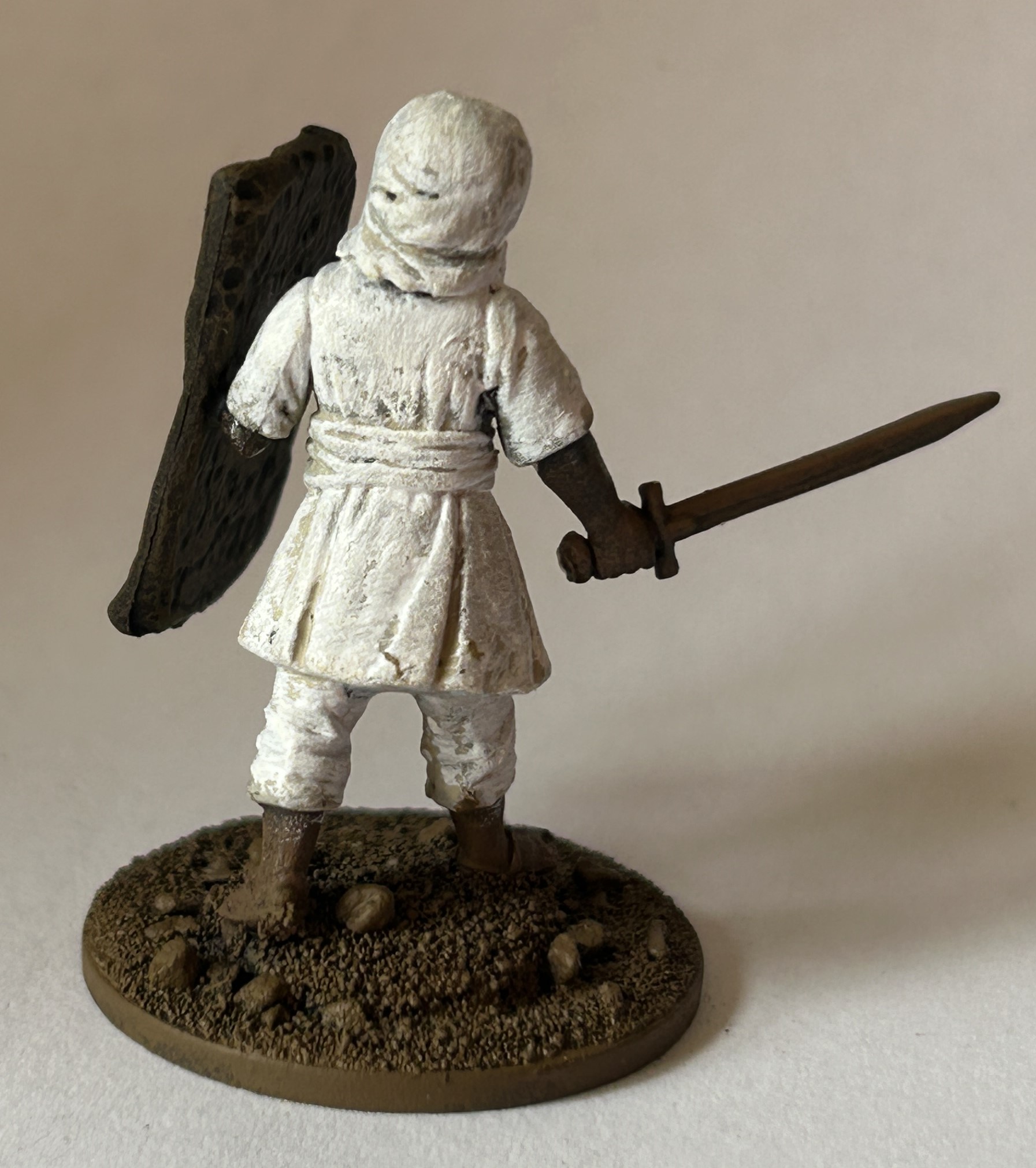
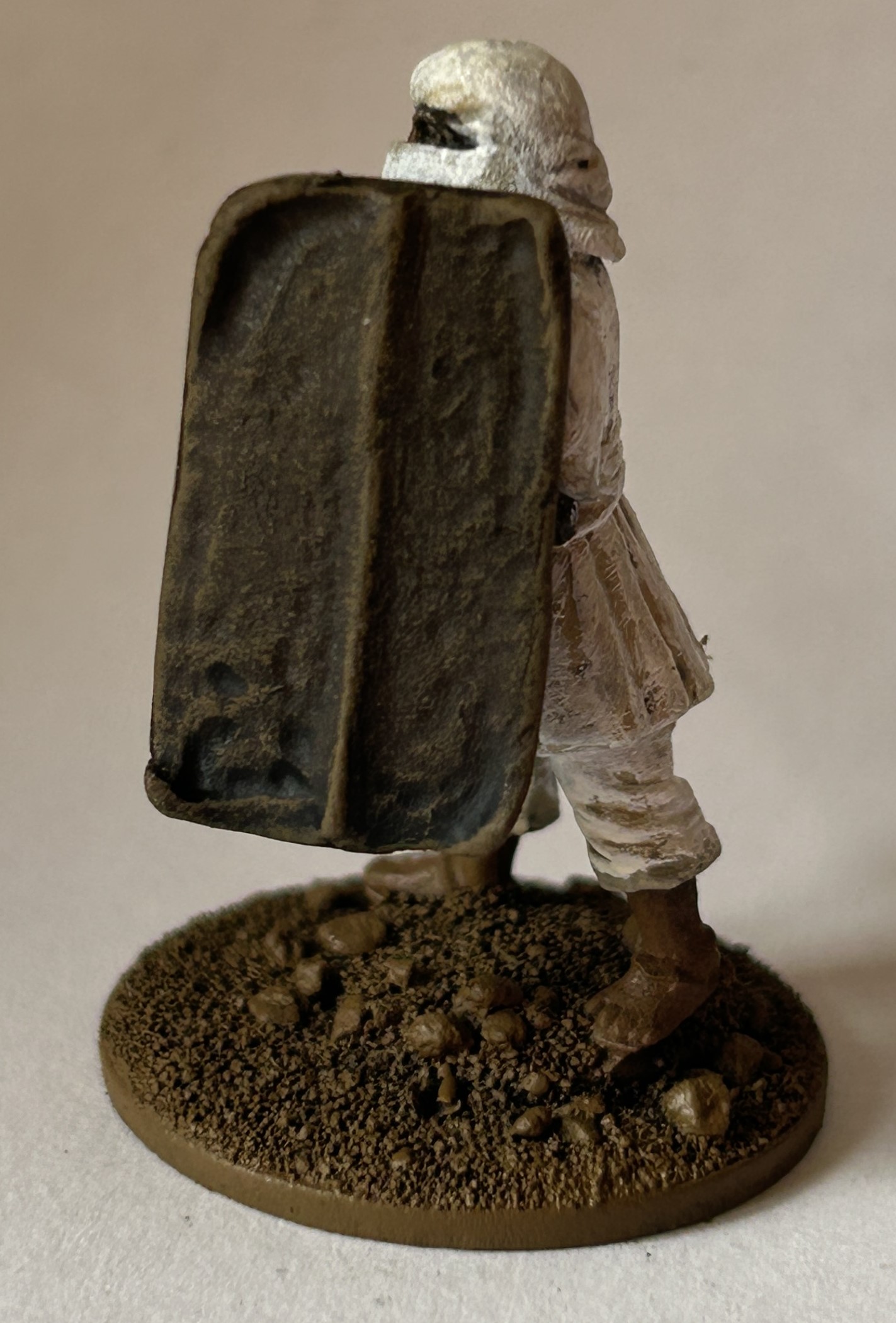
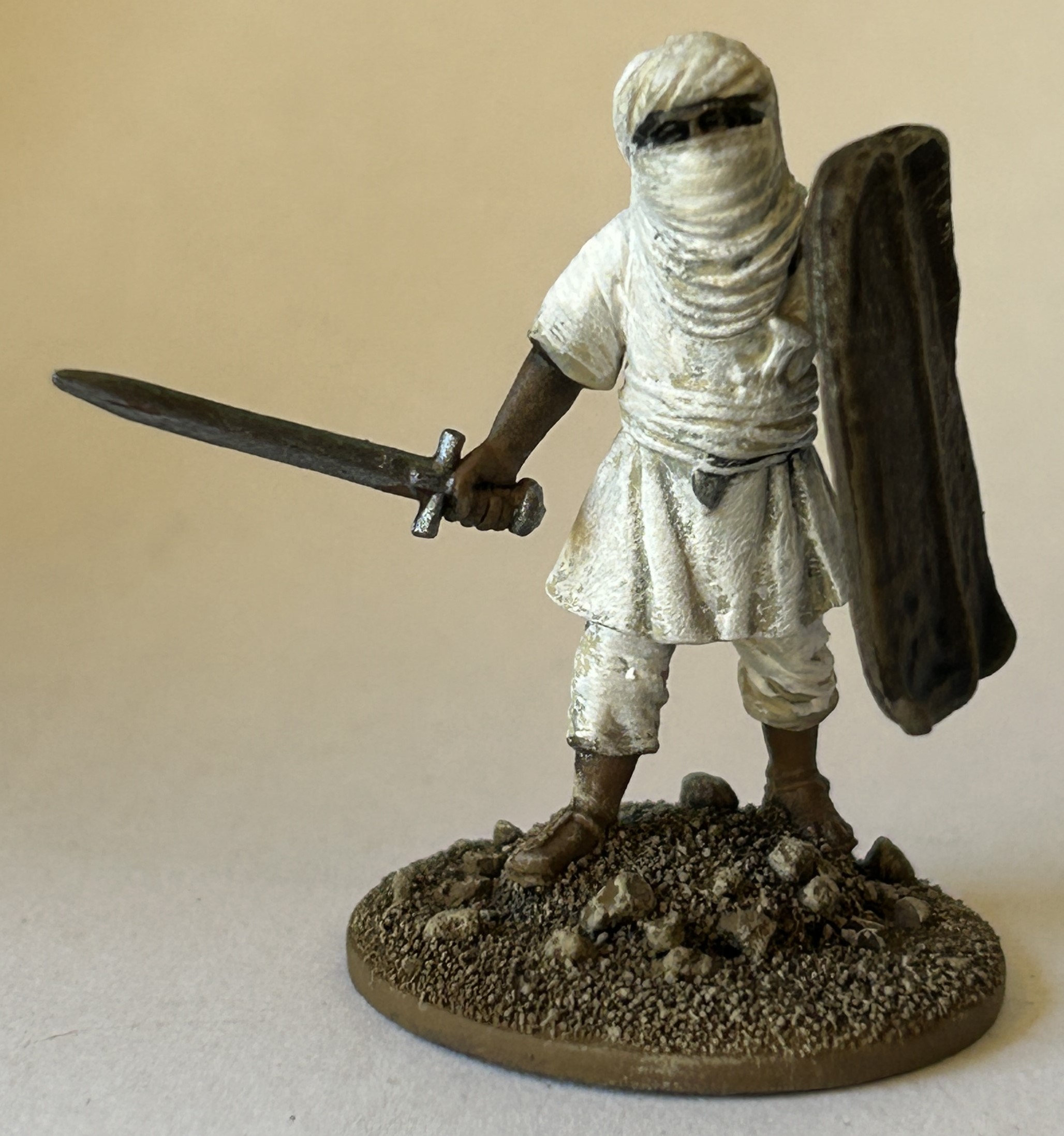
Now some focus colours. First photos are metal which is Vallejo Gunmetal. Then in the second some blue material using the same Speedpaint blues either neat or blended that were used on the Mungu archers. At this point I also tidied up the skin with some leather brown and black – blended to match the relevant colour for the area being repaired. Using this colour the handles of the daggers were also completed.
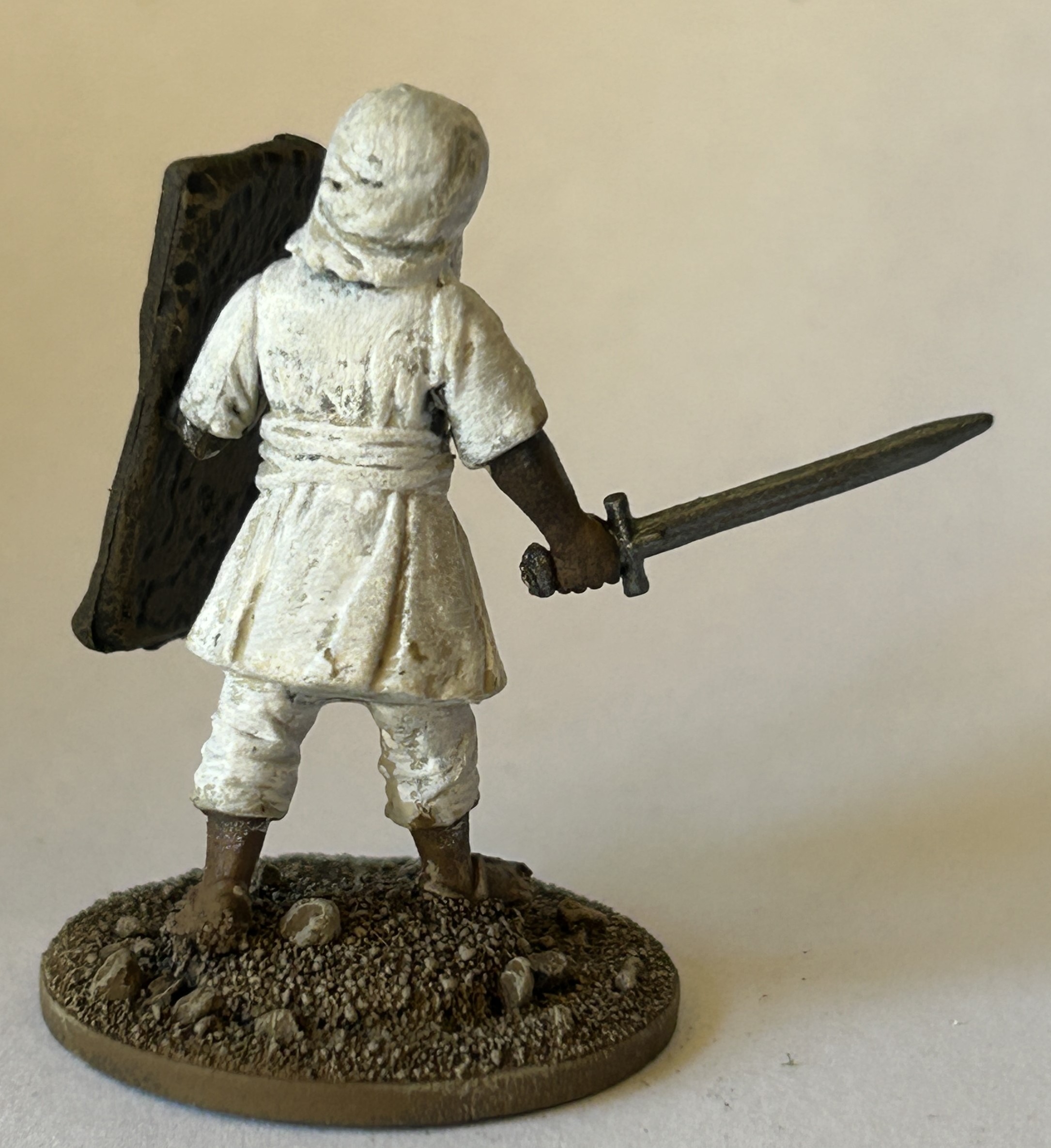
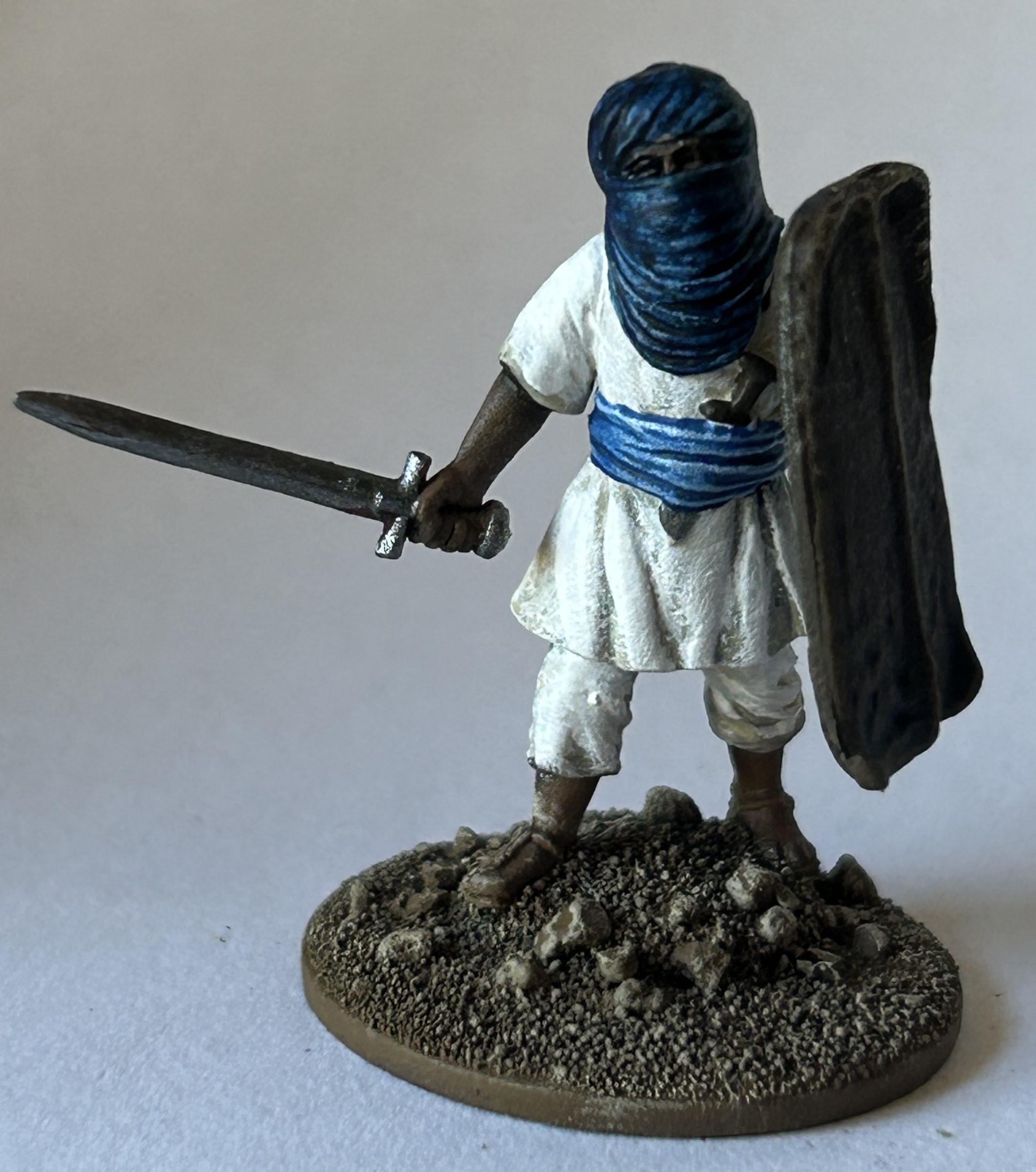
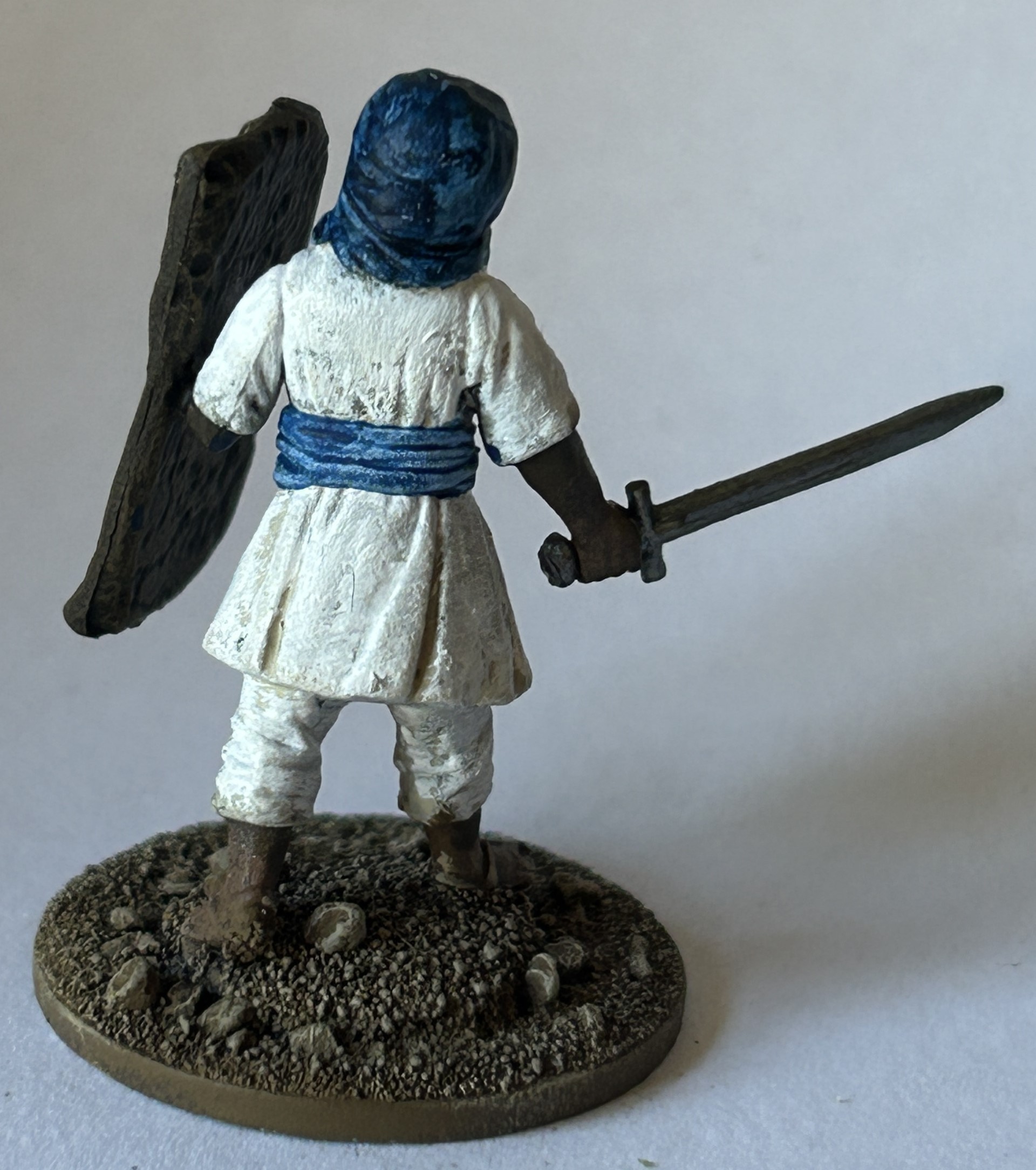
Finished Mungu Archers
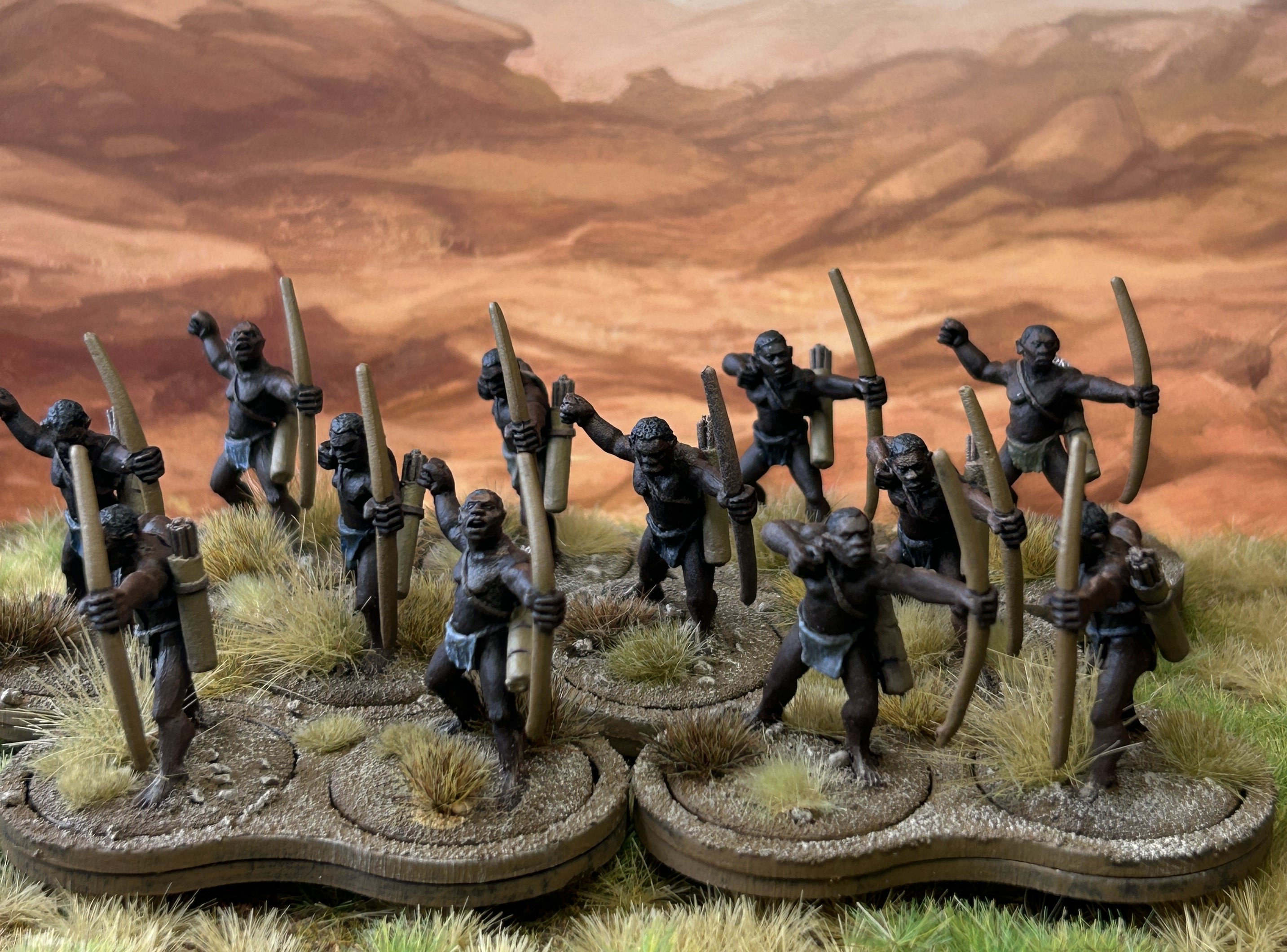
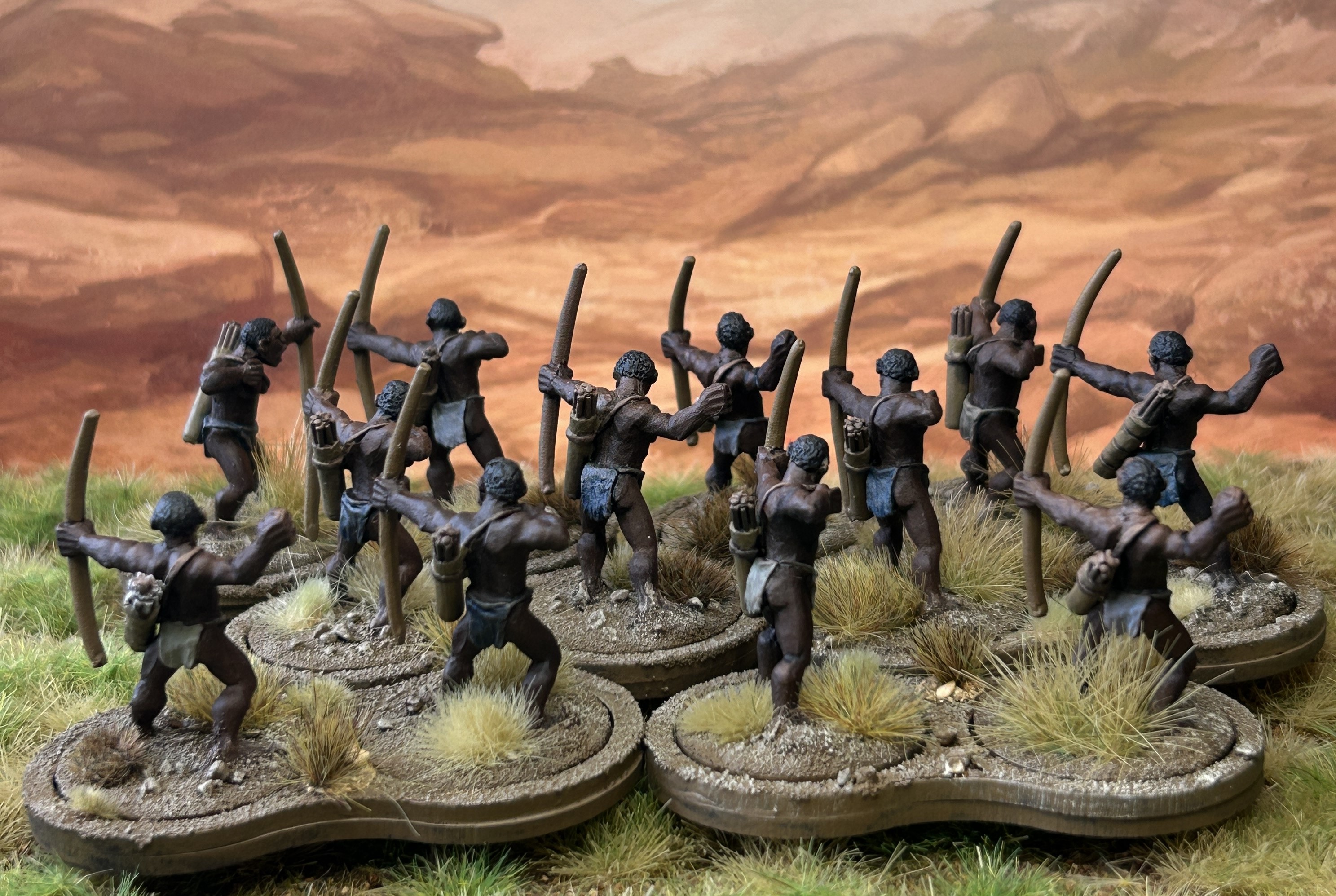
The completed unit. You can see the subtle variation in the loincloth colours despite the limited palette. Basing scheme as previously detailed. These six bases come in at 24 points and can be altered or omitted to provide points that I can use to upgrade one of the mounted units to Shuwa Cavalry.
Painting Mungu Archers
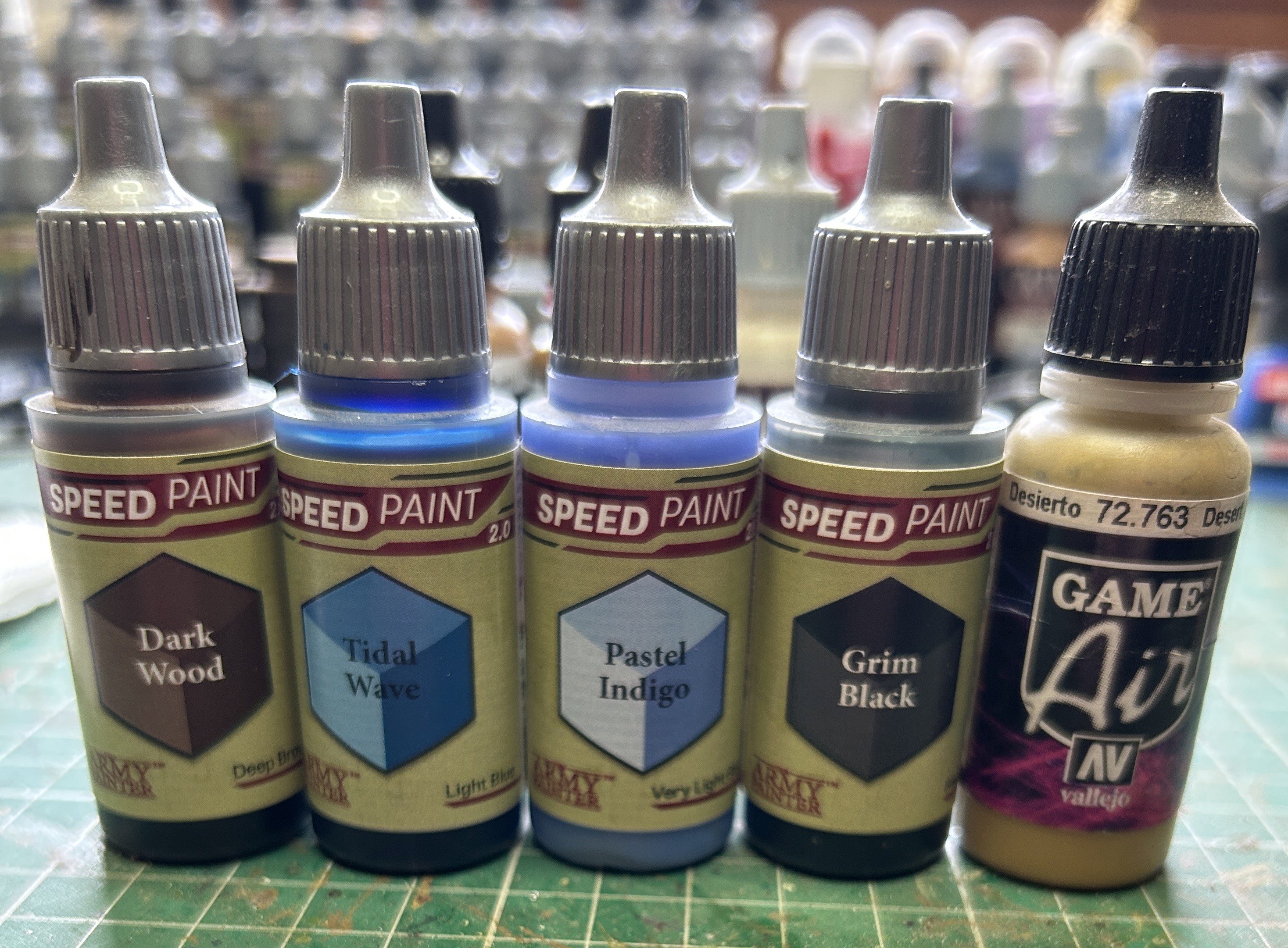
These are the selection of paints. I started with deepening the skin tone as these allies are from further south. Dark Wood Speedpaint in a slightly thinned (80:20 paint:water) even coat over all of the exposed skin. Looks like this:
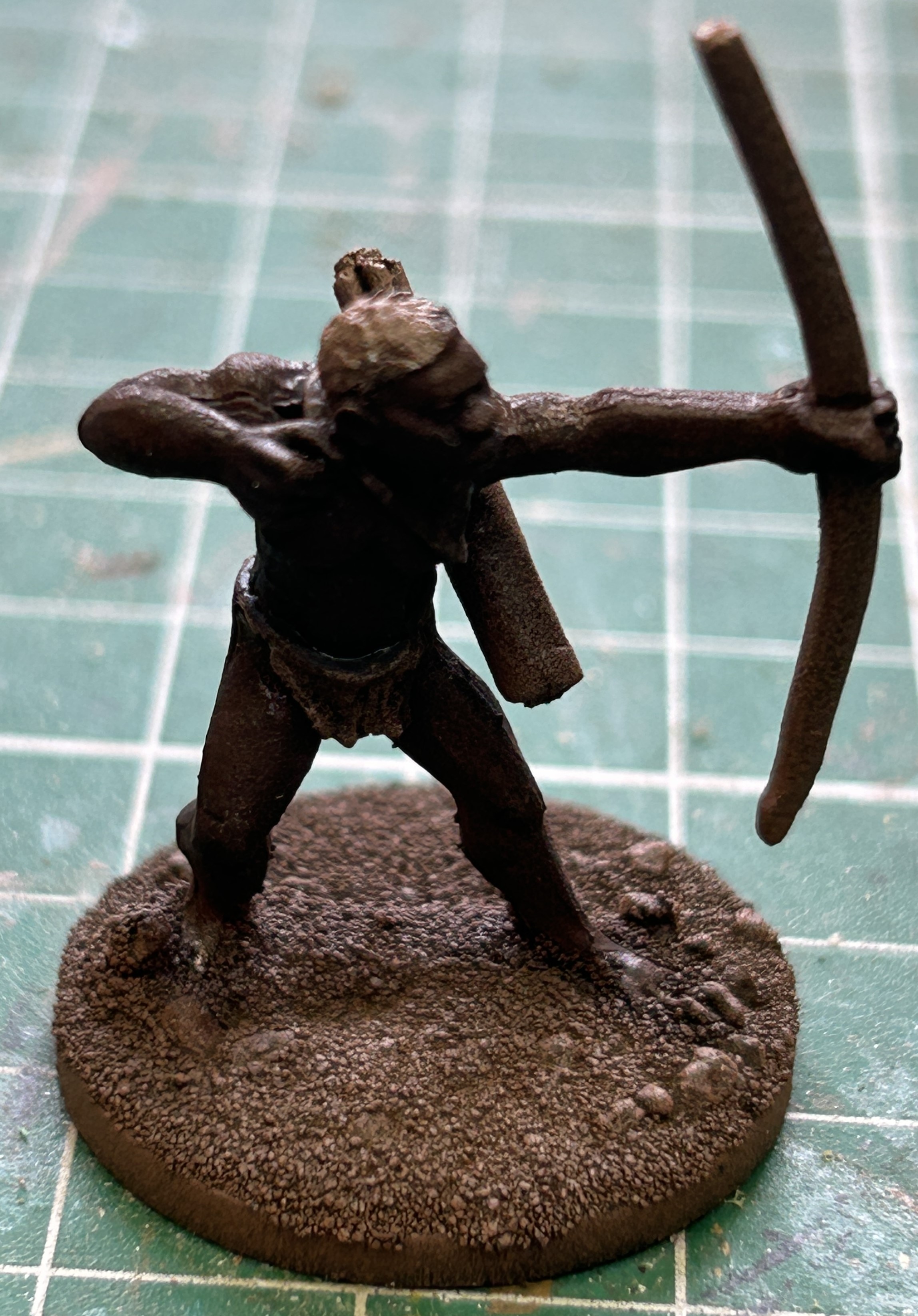
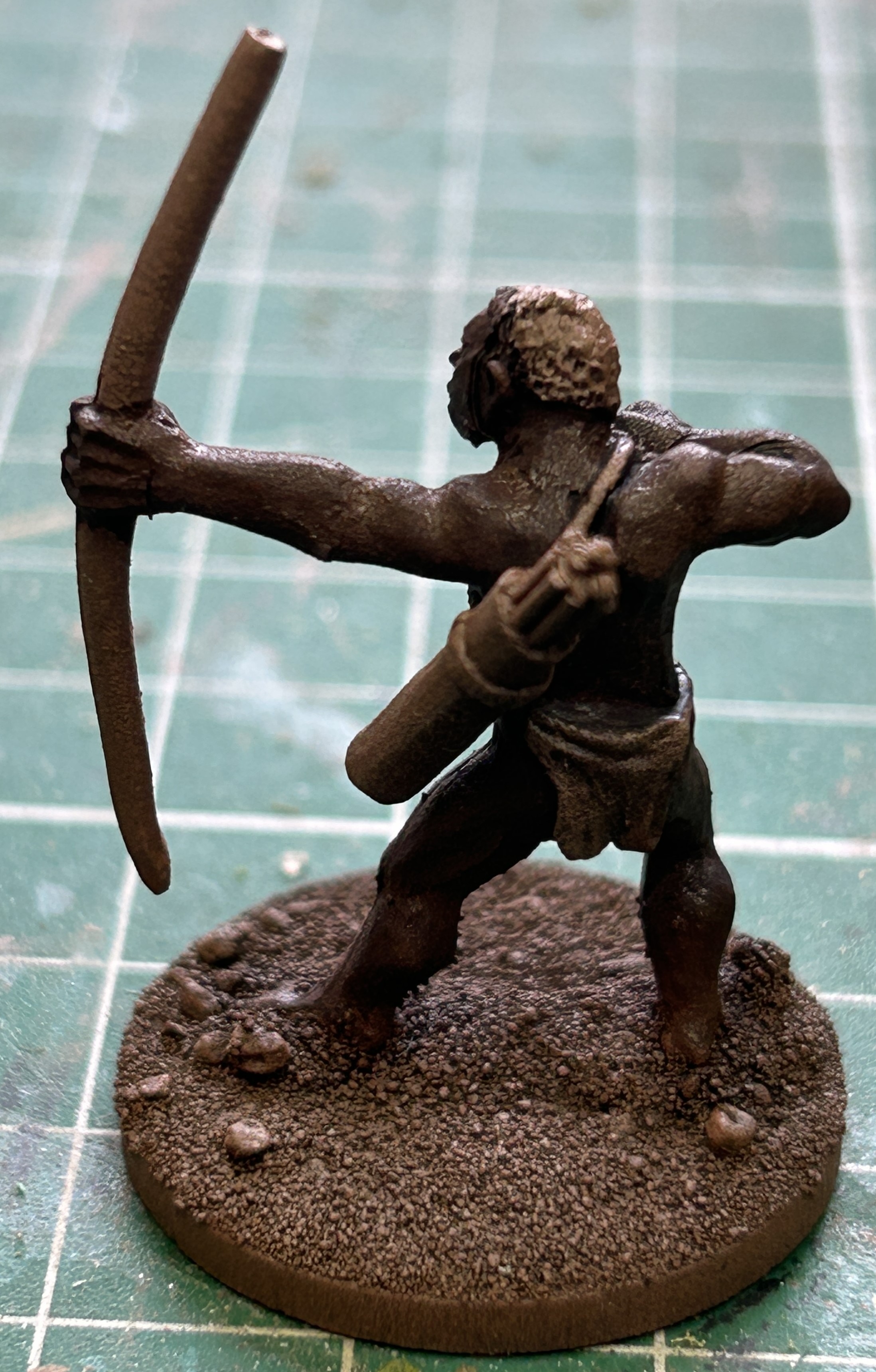
Desert Yellow on the quiver. The strap was unpainted as it already has the leather colour on it from the final layer of the zenith undercoat. The Air paint is pre-thinned and taking care not to get too much into the grooves or shadow areas it is possible to achieve a ready layerd effect:
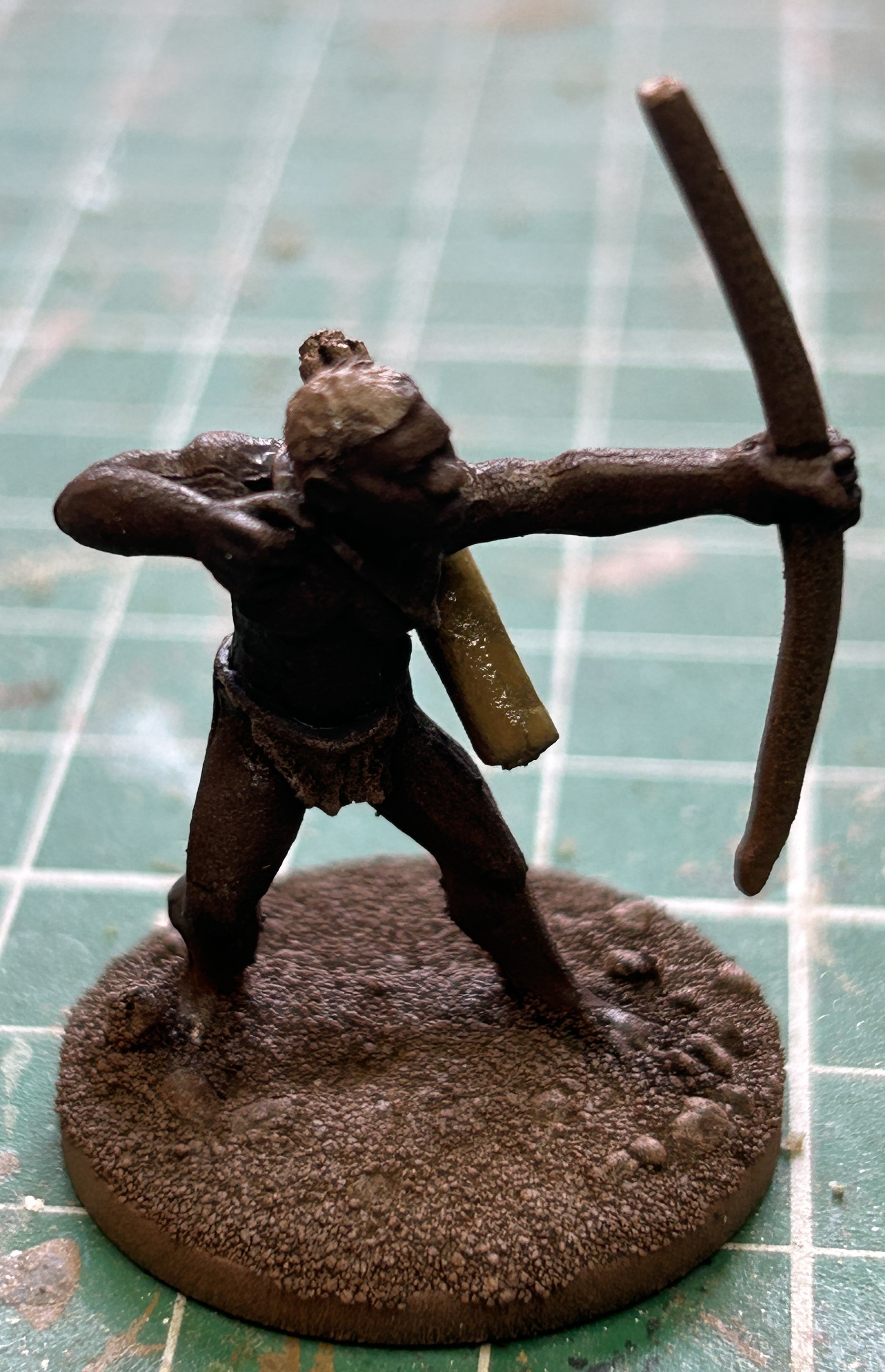
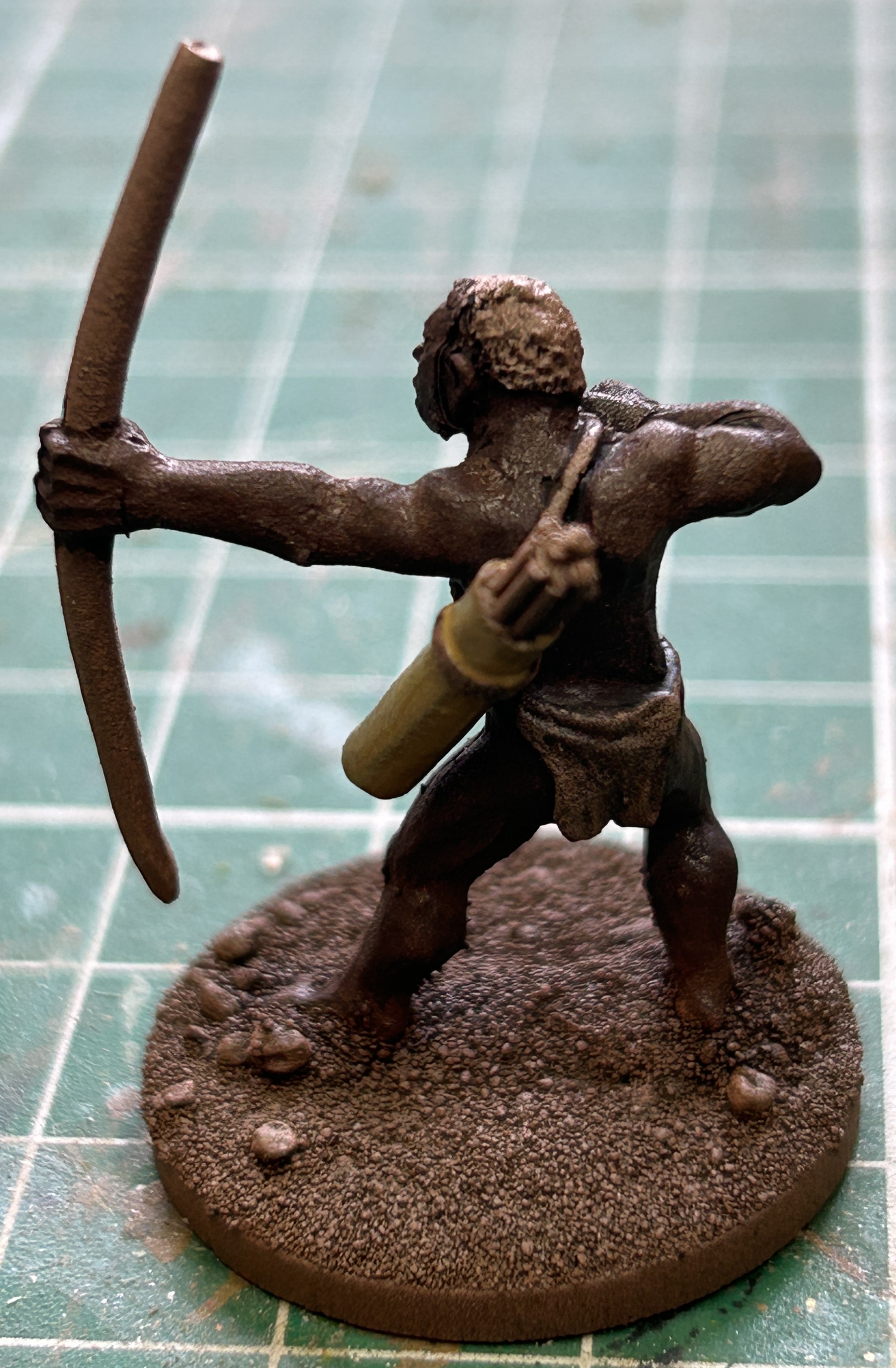
Next I mixed a bit of Vallejo Earth into the Desert Yellow on the palette. This was put onto the bows. The stronger pigment in the Earth helps to create a more even coat. Care was taken not to overpaint the shadow area where the hand meets the bow.
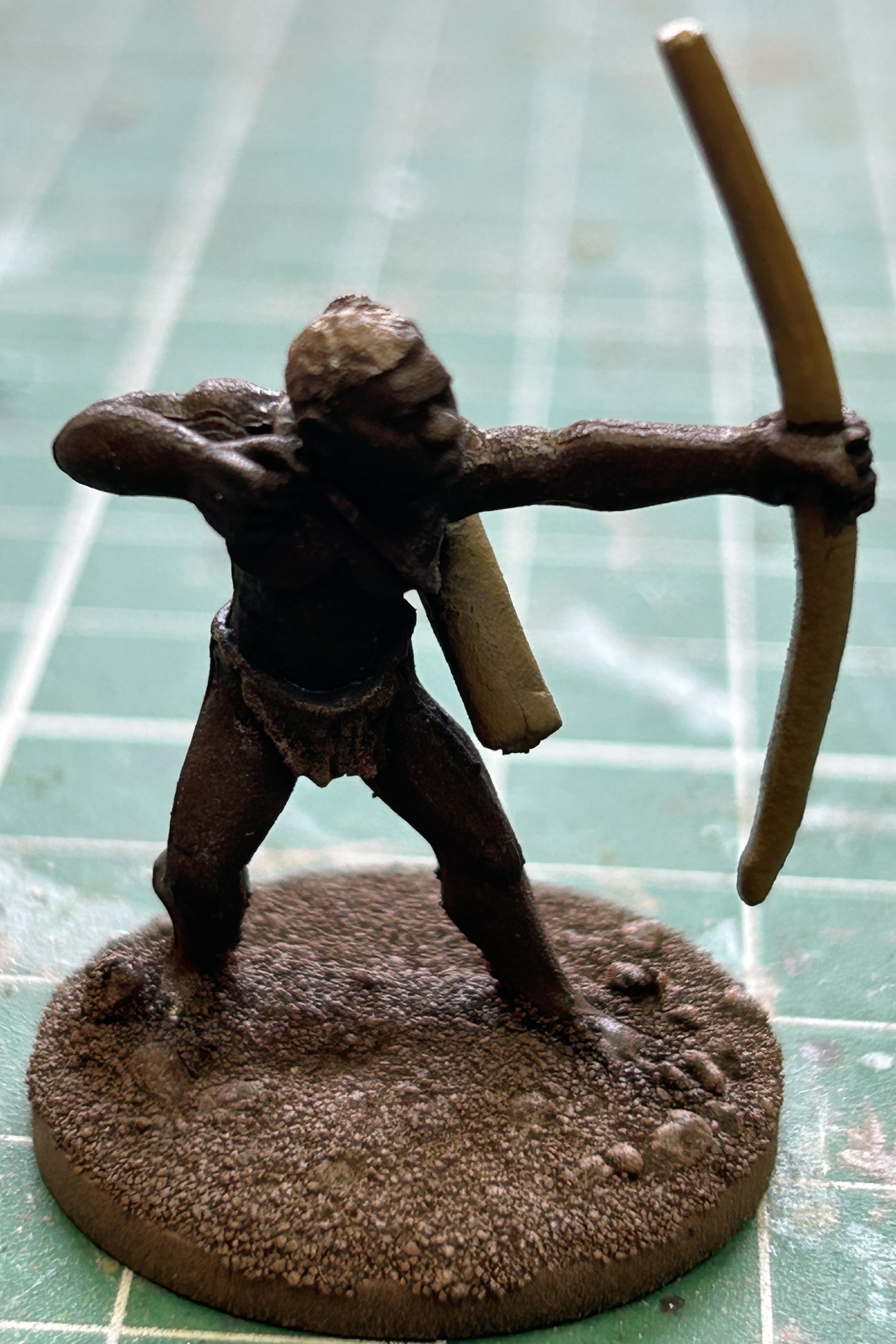
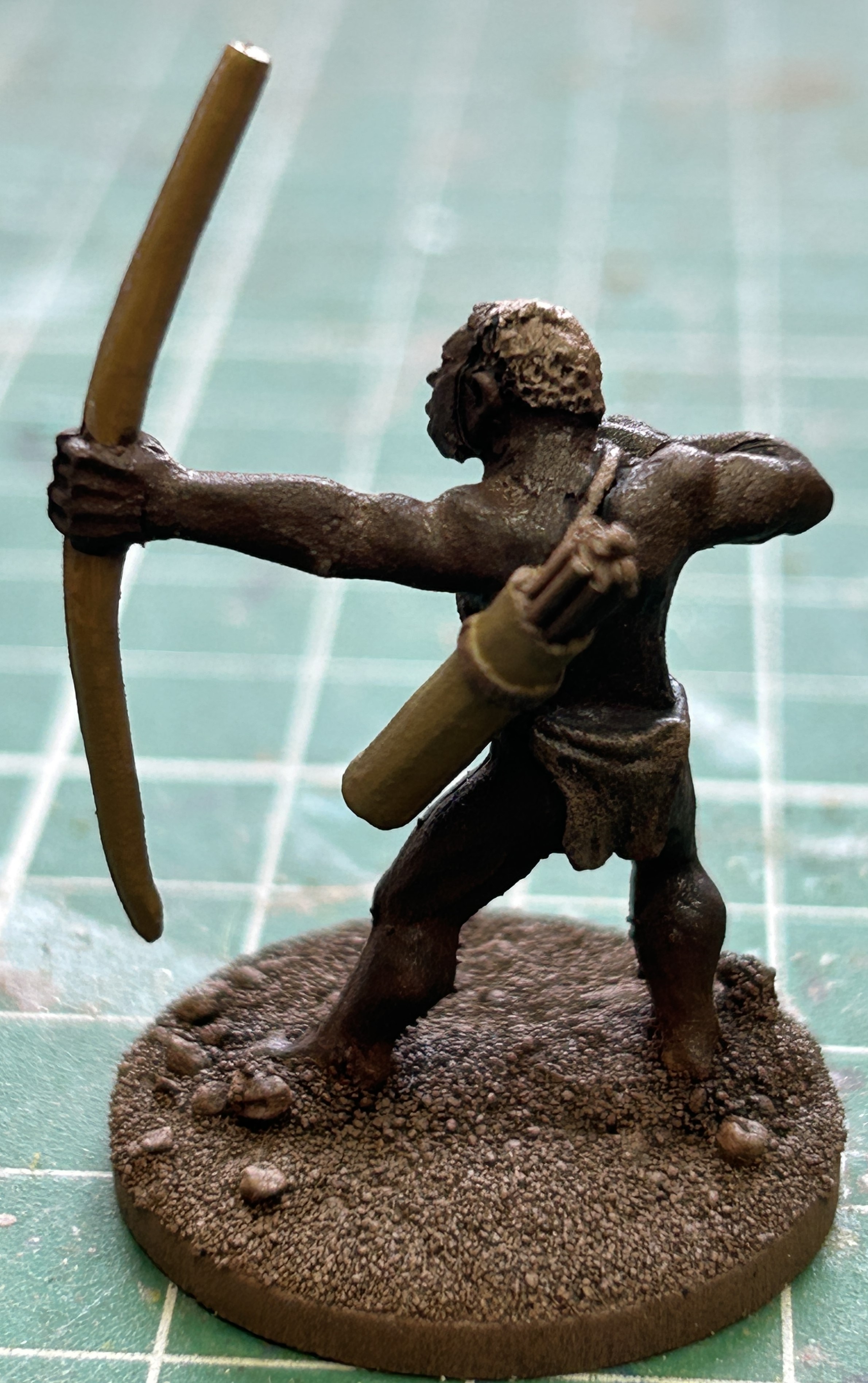
The two blue shades were used on the loincloths. I started with the Pastel Indigo and painted three, then mixed in a drop of the bow colour that was already on the palette. This desaturated the blue and gave a faded looking version of the same shade for another three models. Next the darker blue went onto the palette. This exemplar was painted with the neat Tidal Blue along with two others. Then a couple of drops of the lighter mixed colour was added to the neat dark blue to provide a mid-tone and the final three were painted with that.
With the dark undercoat these blues don’t show strongly. Instead you get quite a subtle blue hue with the highlights of the undercoat still showing. I prefer this more subtle colouring for historical miniatures:
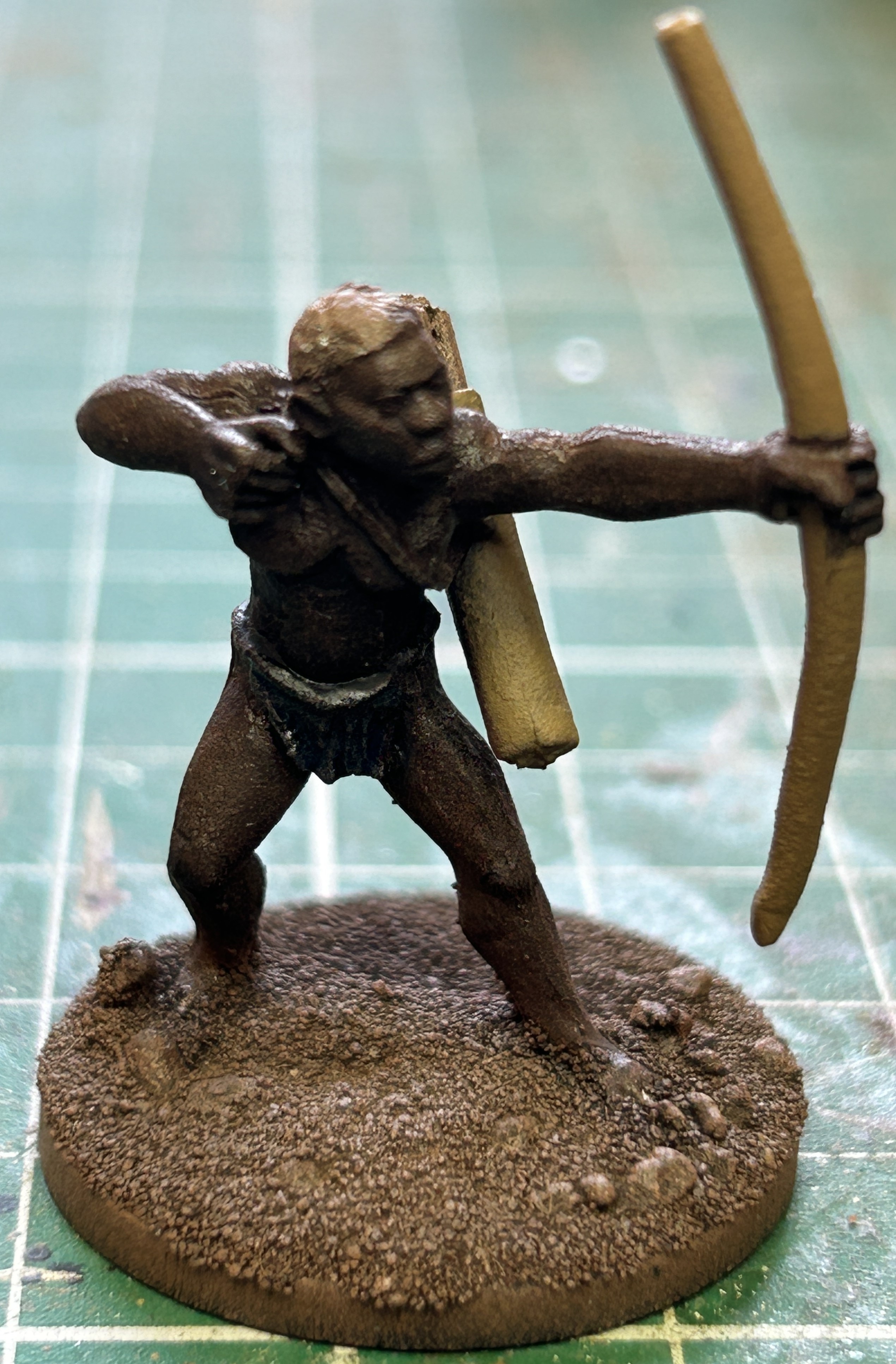
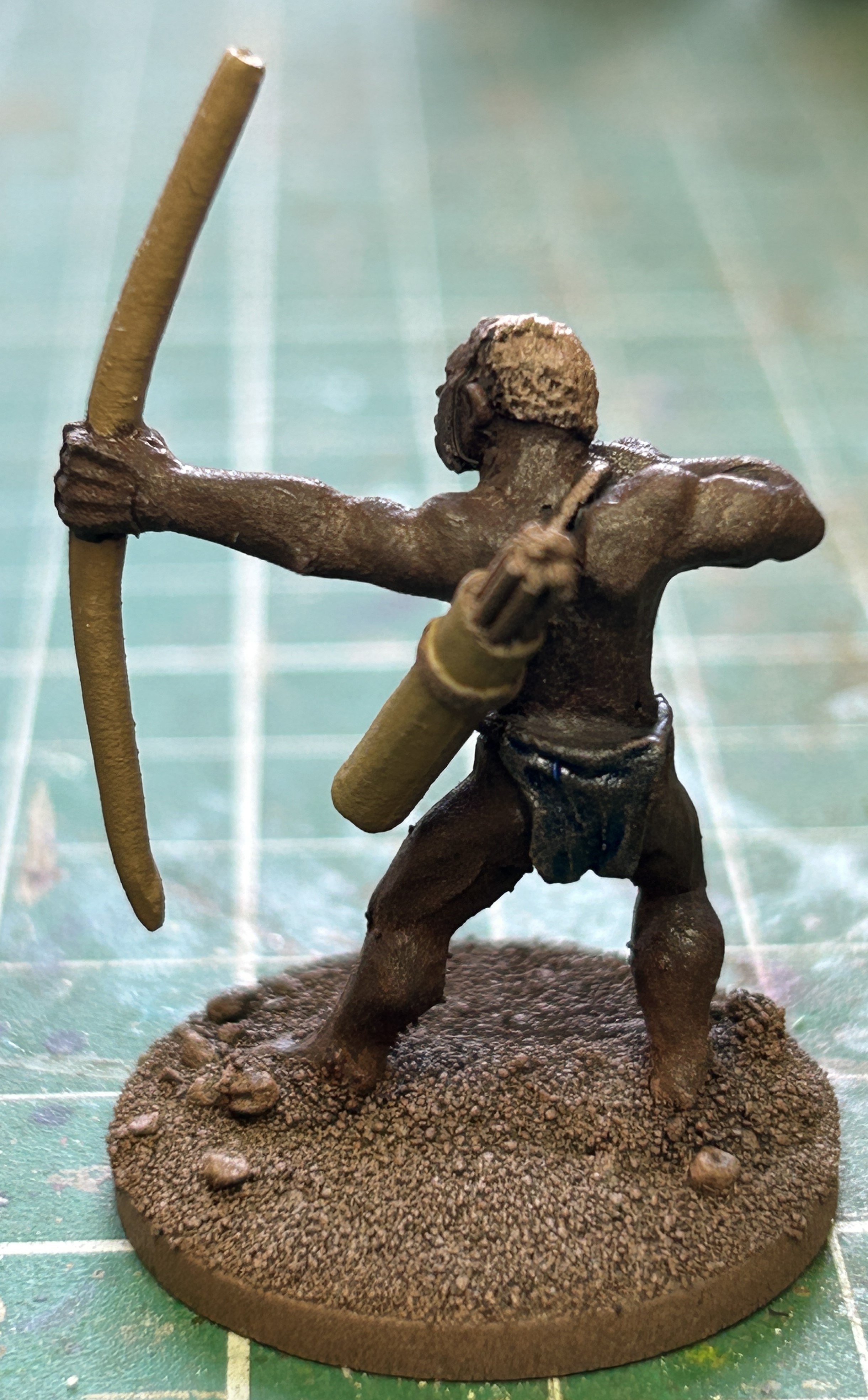
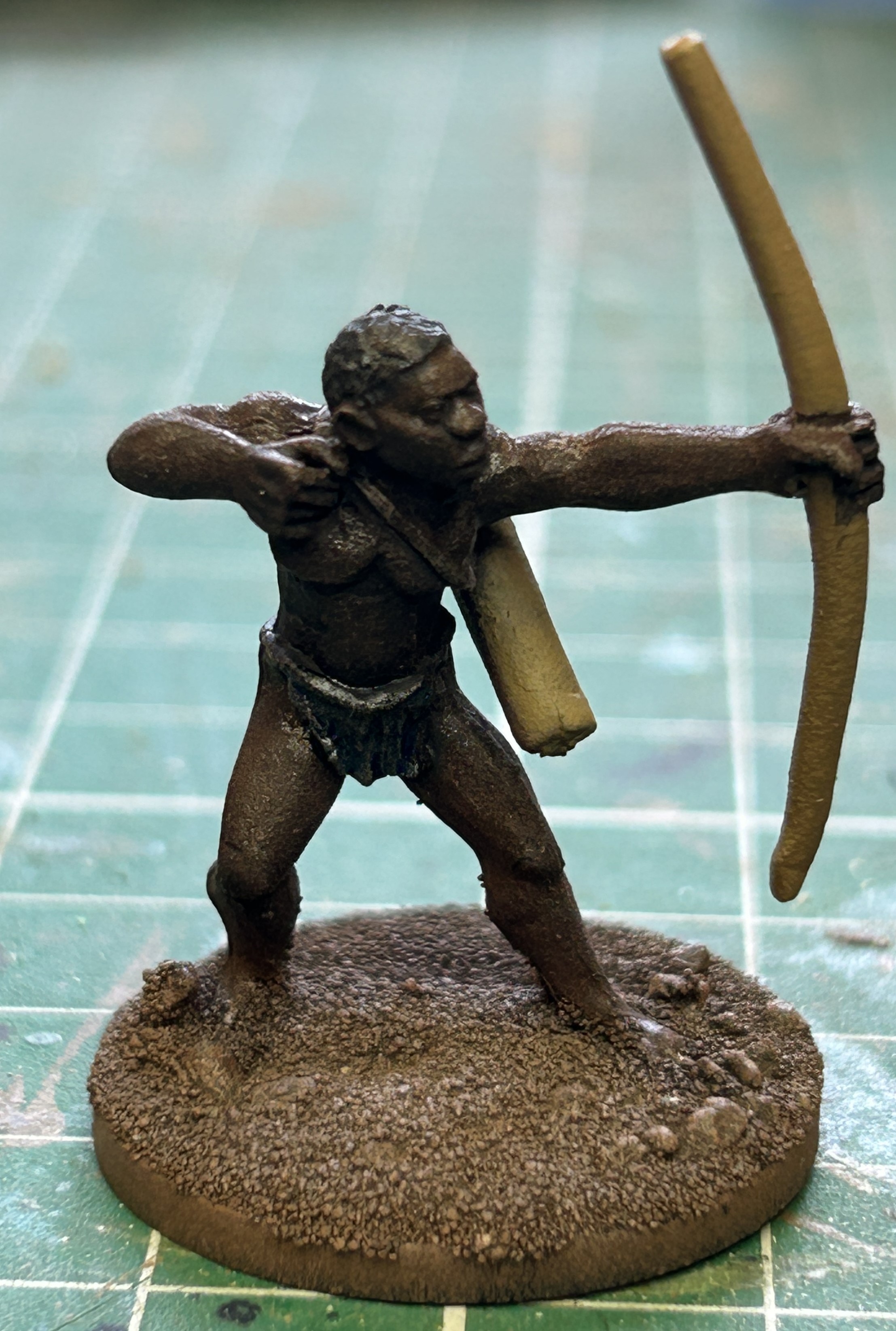
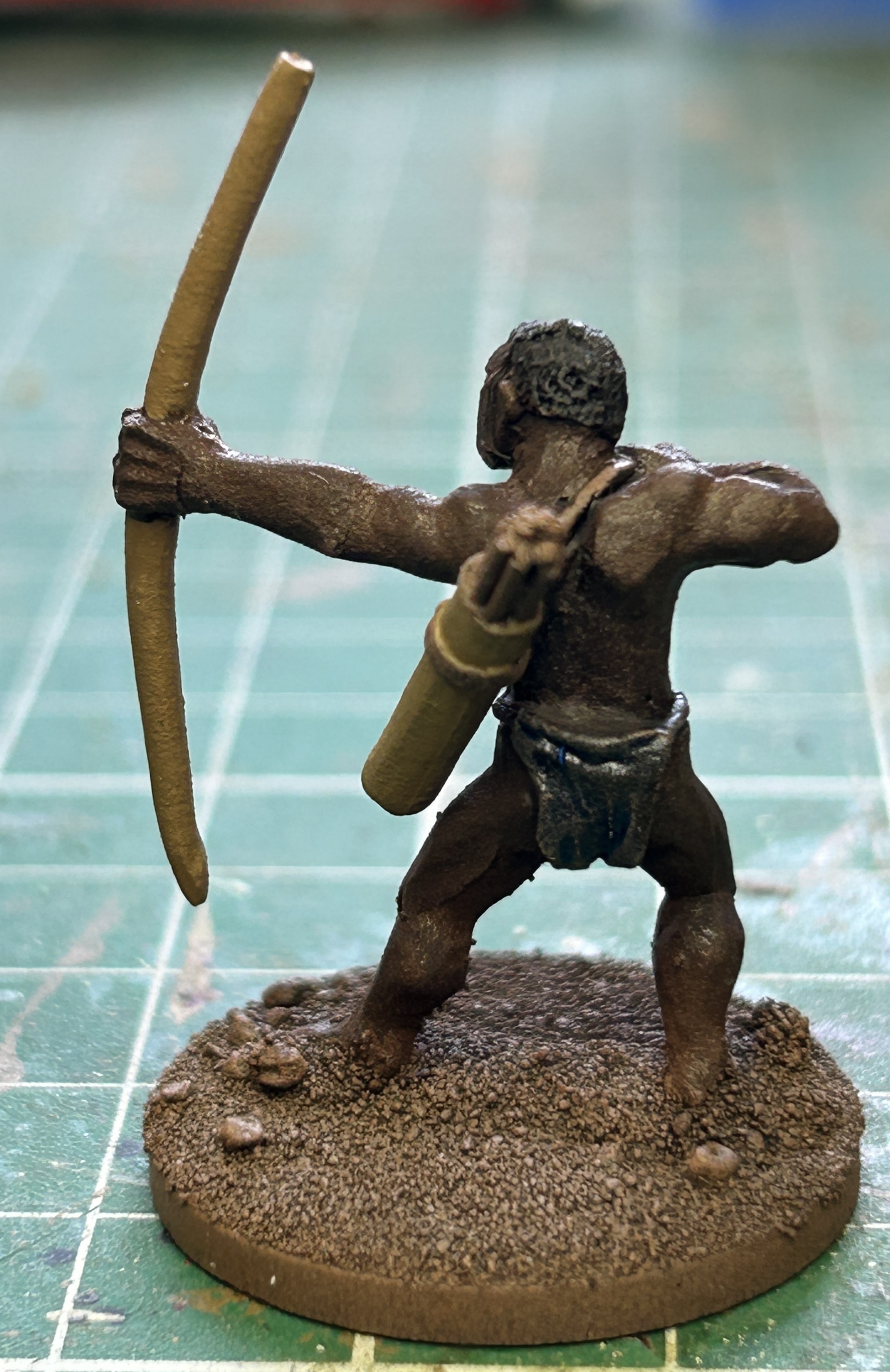
Finally Grim Black neat onto the hair. This is the most saturated Speedpaint and you don’t get much of the lower highlights showing through. I quite like that so didn’t thin it before use:
![Gripping Beast Announce They Are Closing Their Doors [Updated]](https://images.beastsofwar.com/2026/09/gripping-beast-announcement-cover-600-338.jpg)