







PanzerKaput Goes To Barons’ War


Recommendations: 11332
About the Project
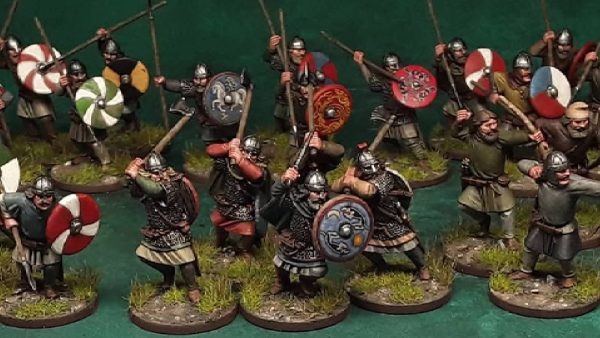
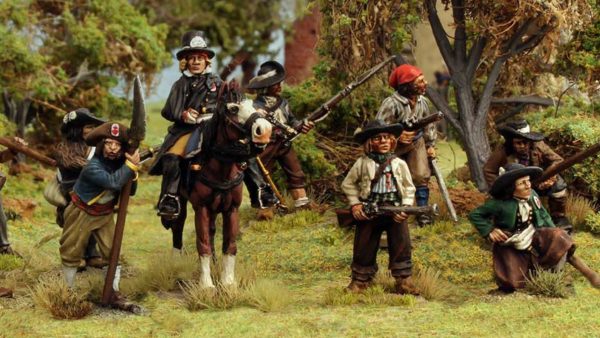
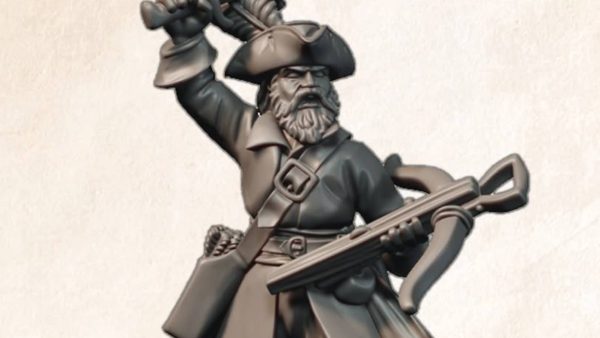
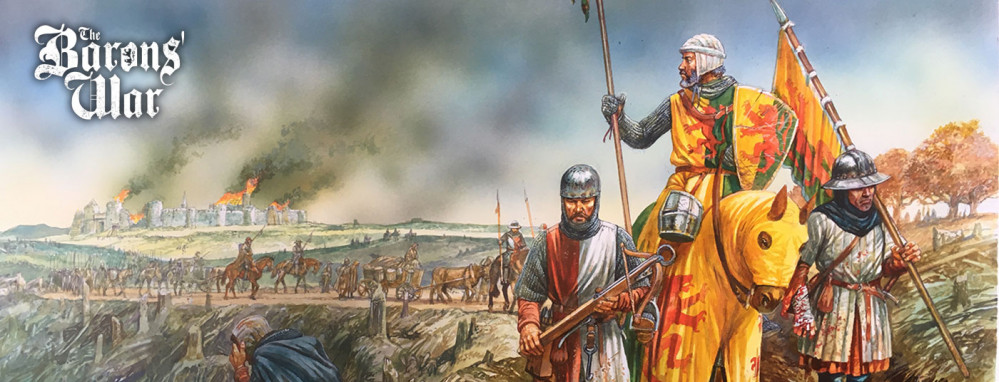
Set against a backdrop of a Civil War that lasted for two years, 1215-17, as a result of the issuing of Magna Carta. A civil war was the perfect opportunity for the leading nobles of the time to grab land and power while settling some old scores along the way. This vying for land and power hadn't stopped since the invasion of 1066 with only the strongest of kings being able to keep their nobles in check. Our narrative focuses on small groups of warriors brought together under a lord or baron to raid and steal or defend land and property. With the strong, wise, cunning and lucky aiming to rise out of this civil strife in a better position than when it started. The Barons' War skirmish game has been written to enable players to fight out tabletop battles against the backdrop of the First Barons’ War between rival Barons or rival factions who find themselves on either side of the conflict. The game is historically themed, the gameplay is fast-paced and tactical with plenty of narrative and where force building presents you with lots of options enabling two players to muster very different retinues. However, as intended, this is an alpha set of rules which does not include rules for siege warfare, although rules for fighting in buildings are included. Campaign rules are something that will be addressed at a later date and released online. Having grown out of the Barons’ War Kickstarter project, the intention is for this ruleset to develop into a system that could be used throughout the Medieval period. Starting with England from when the Western Roman Empire withdrew around 410 AD to 1485 AD when Richard III died at the Battle of Bosworth Field. This presents us with a huge span of history for gaming which can be broadly divided into Romano-British, Anglo-Saxon and Viking, Anglo-Norman, Angevin and Plantagenet. And that’s just when looking at it from Great Britain. With warriors of this period being pretty similar, it would be easy to use the profiles in this rulebook to play out tabletop battles in any setting. Over time we see these rules evolving with additional warriors, characters, abilities and scenarios being added starting with the Dark Ages, the Anarchy and the Crusades and shared to www.warhost.online, which has been set up to be the community website for the game.
Related Game: The Barons' War
Related Company: Footsore Miniatures and Games
Related Genre: Historical
This Project is Active
Bishop Hugh of Wells, Bishop of Lincoln
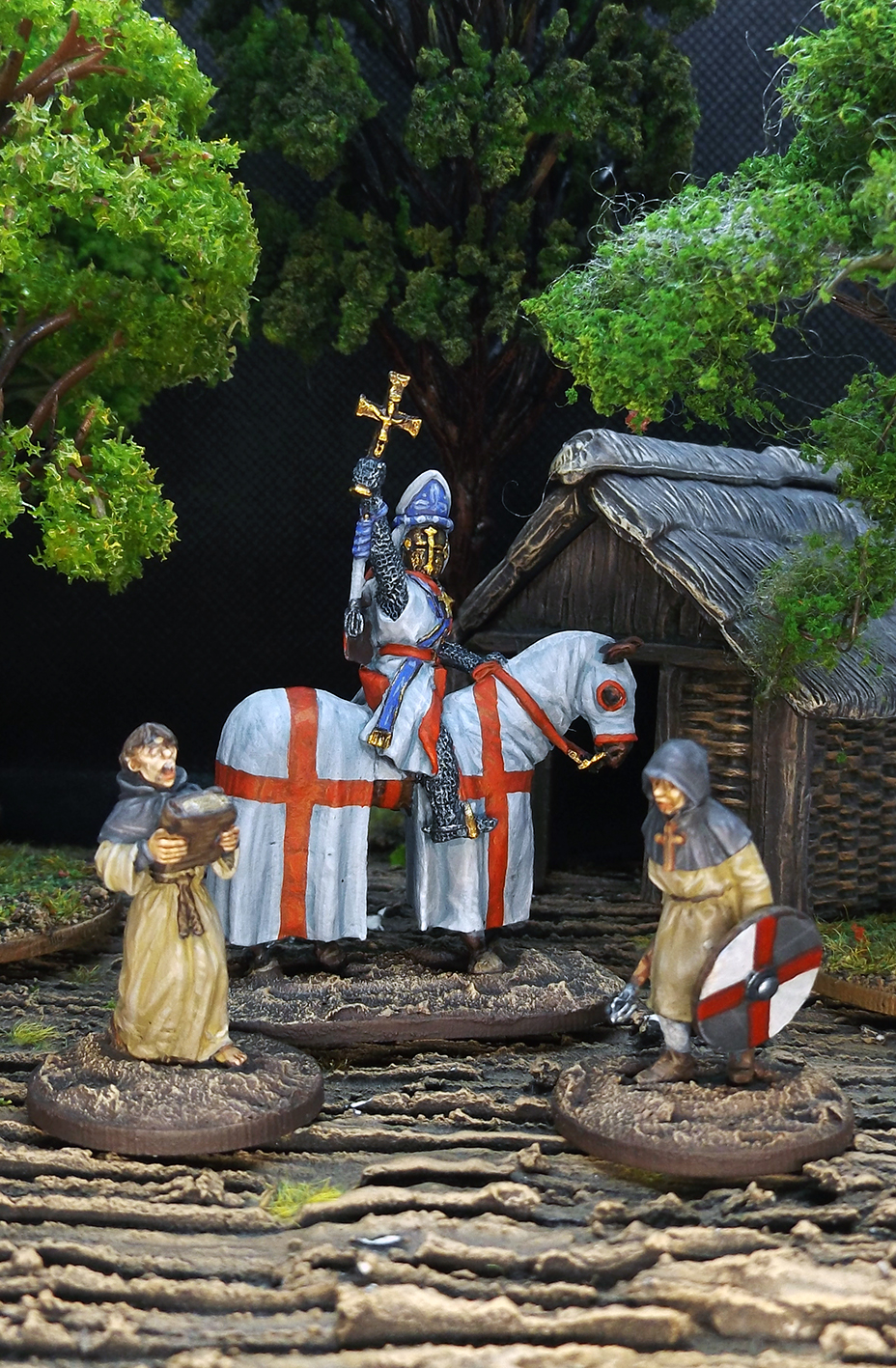 Bishop Hugh of Wells, Bishop of Lincoln
 I finished Bishop Hugh of Wells, Bishop of Lincoln to led the militant monks and arranged forces, okay he is another commander so I have choices. With him done this means that all of the 1st wave of The Barons’ War and I’m chuffed.
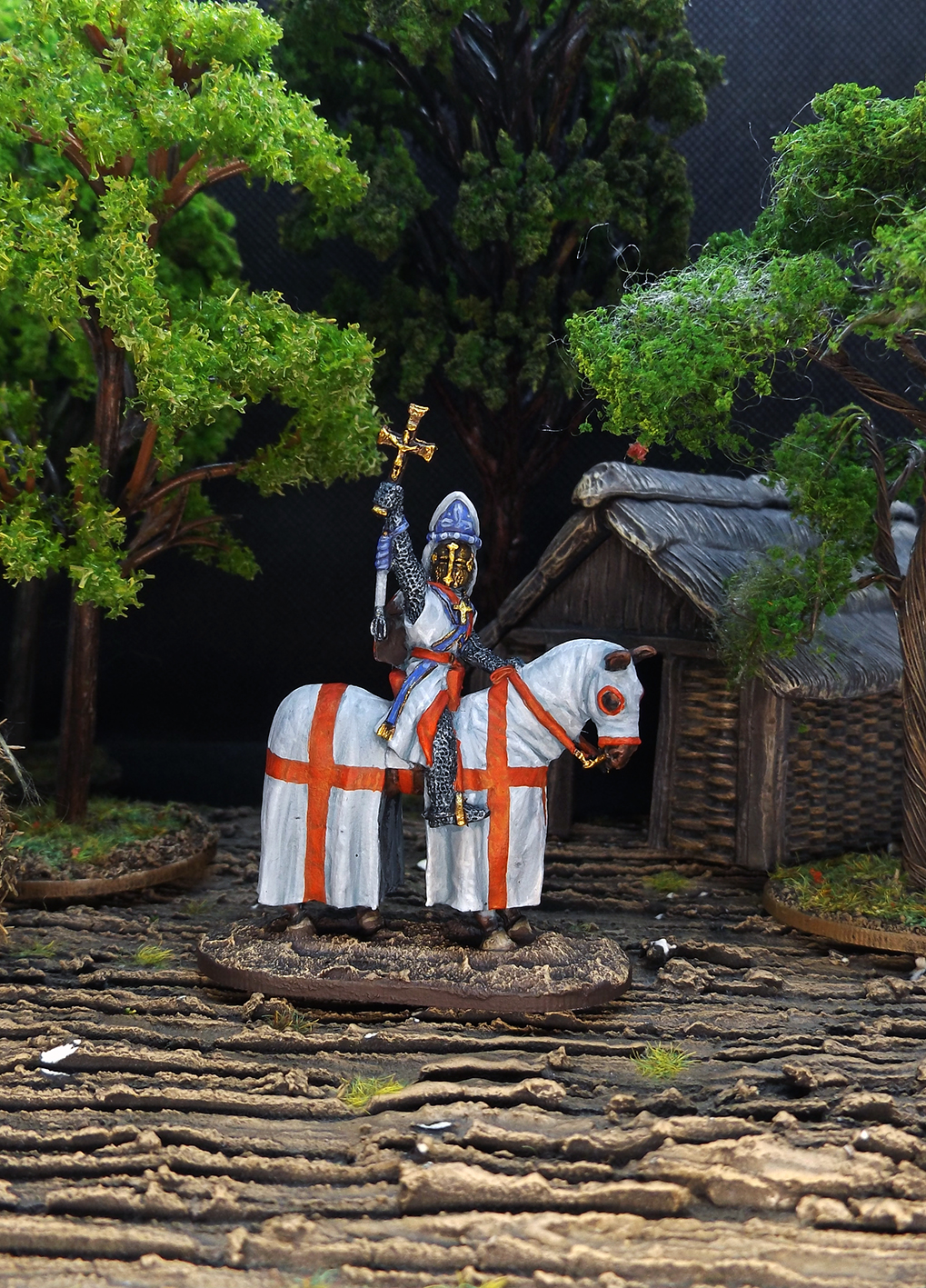
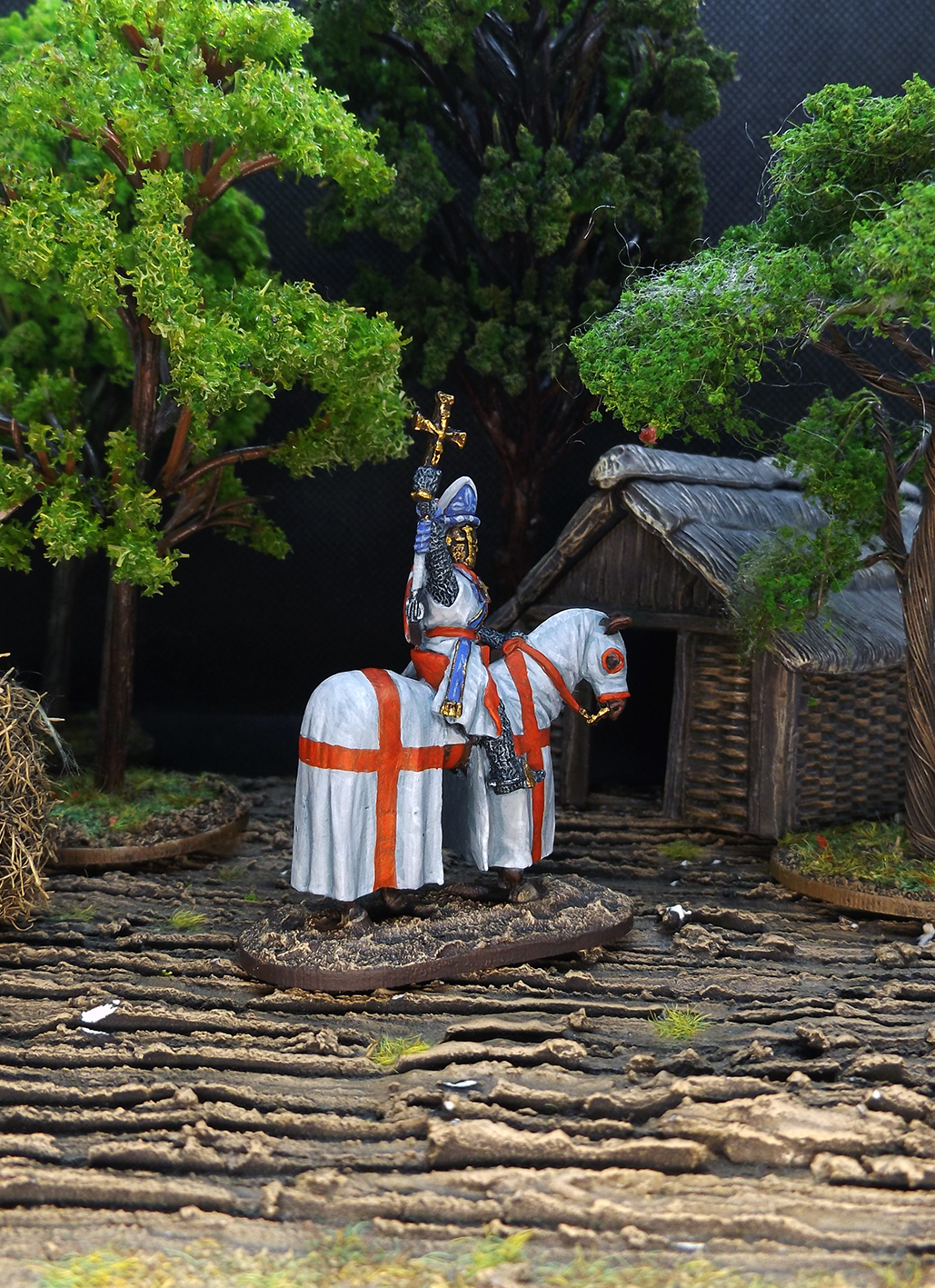
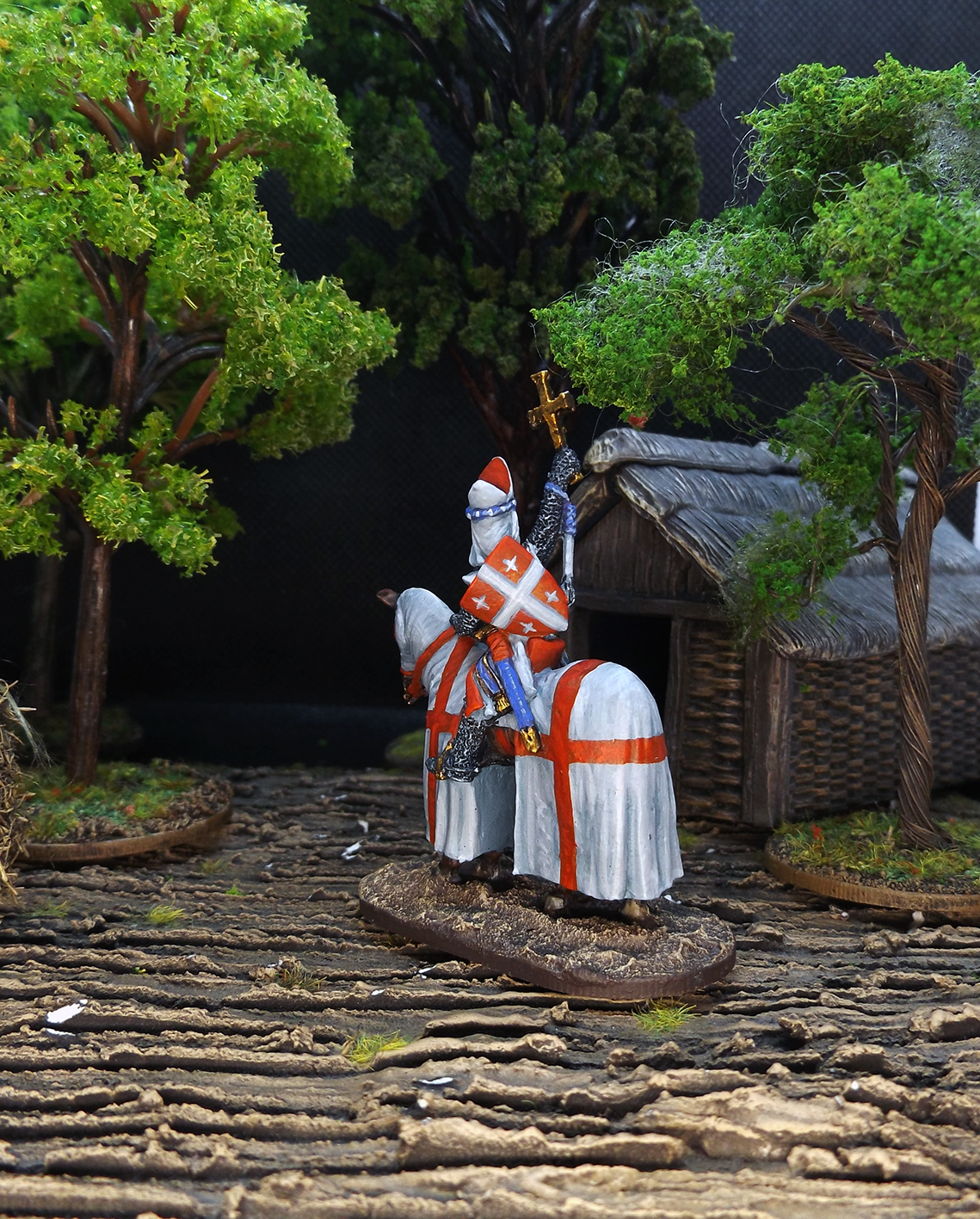
Hugh of Wells (died 7 February 1235) was a medieval Bishop of Lincoln. He began his career in the diocese of Bath, where he served two successive bishops, before joining royal service under King John of England. He served in the royal administration until 1209, when he was elected to the see, or bishopric, of Lincoln. When John was excommunicated by Pope Innocent III in November 1209, Hugh went into exile in France, where he remained until 1213.
When he returned to England, he continued to serve both John and John’s son King Henry III, but spent most of his time in his diocese. He introduced new administrative methods into the diocese, as well as working to improve the educational and financial well-being of his clergy and to secure the canonisation of his predecessor Hugh of Avalon as a saint in 1220. Although the medieval writer Matthew Paris accused Hugh of being opposed to monastic houses and monks, there is little evidence of the bishop being biased, and after his death on 7 February 1235 parts of his estate were left to religious houses, including nunneries.
The Last Two Knights
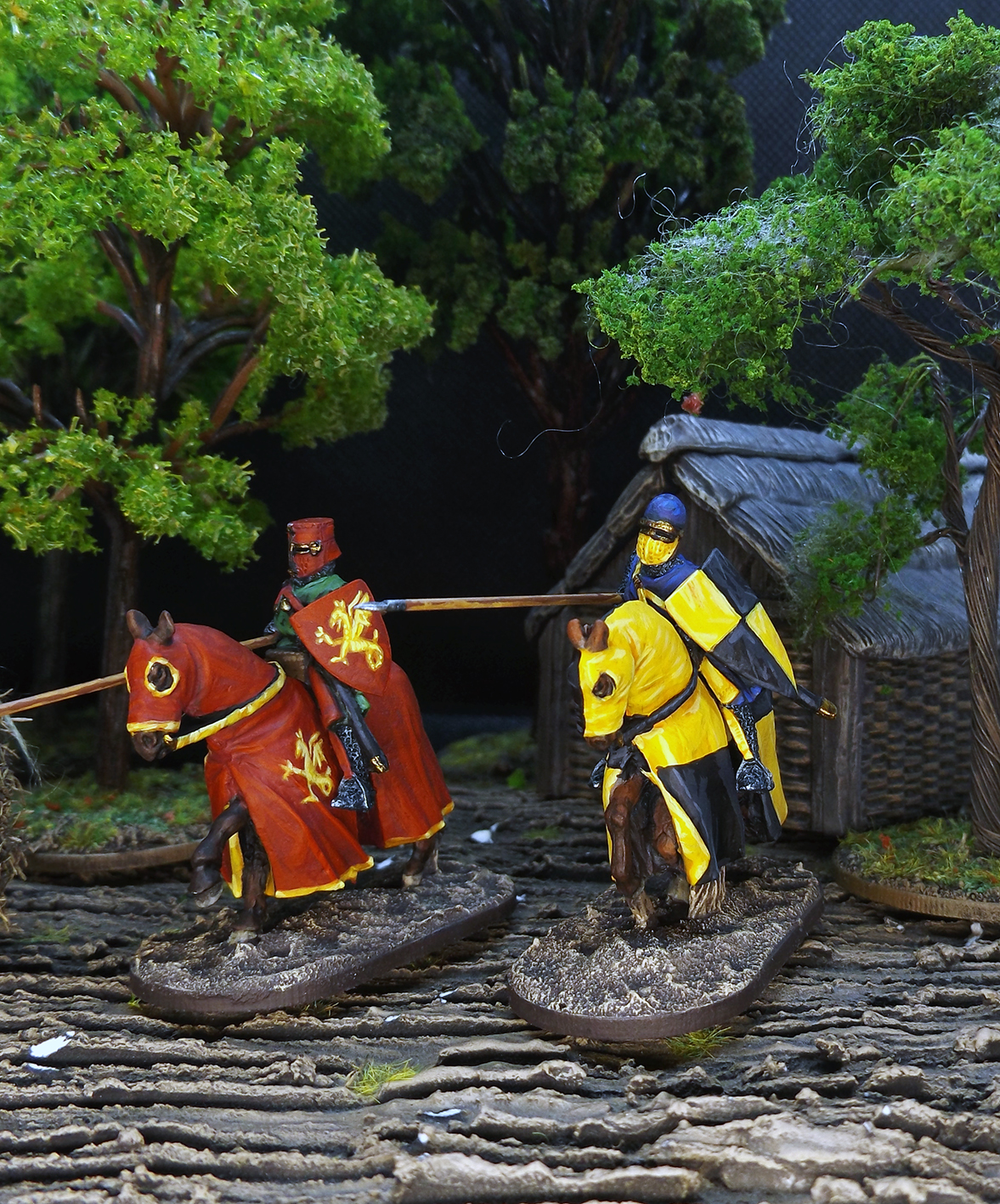 Two more Knights
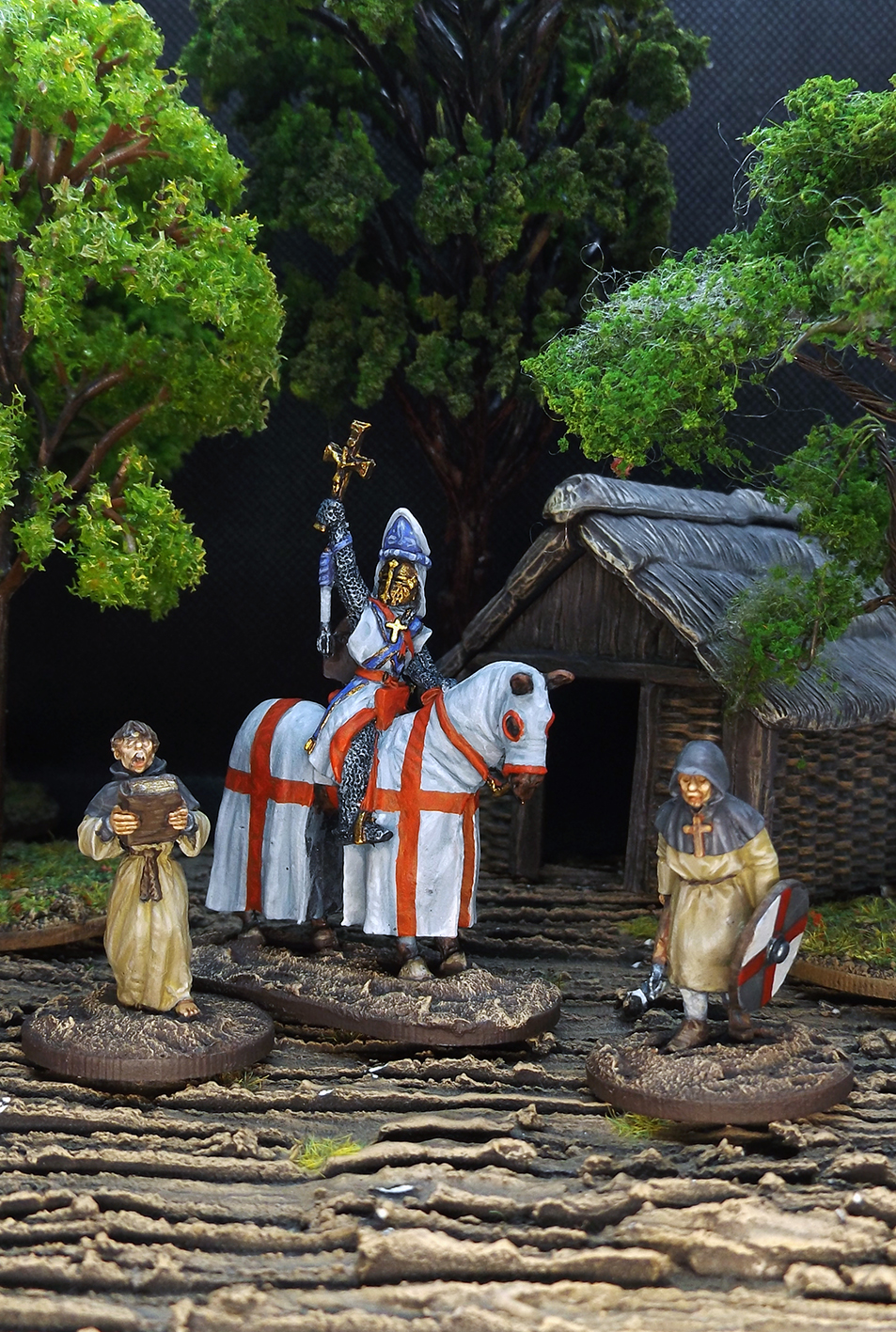
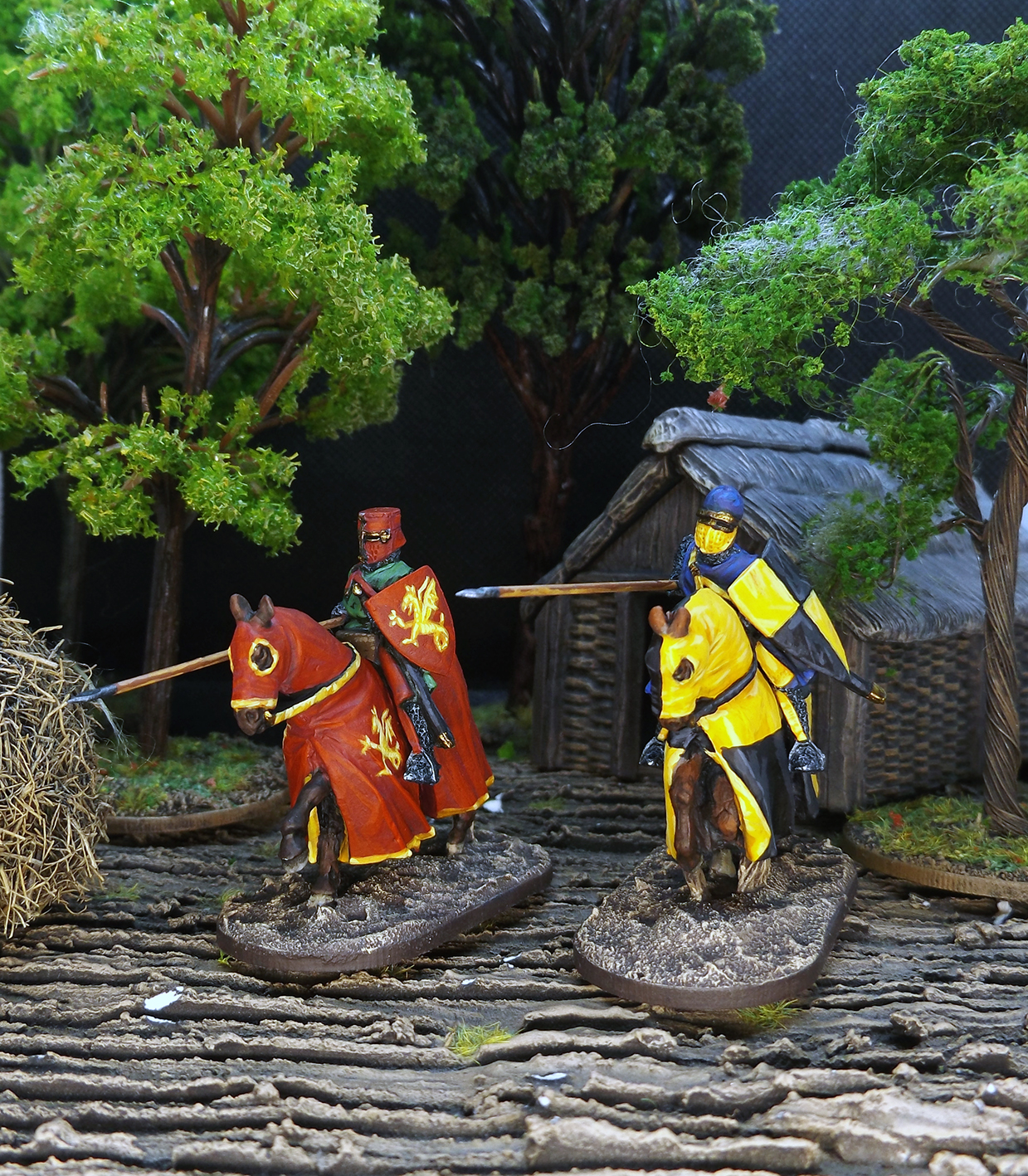
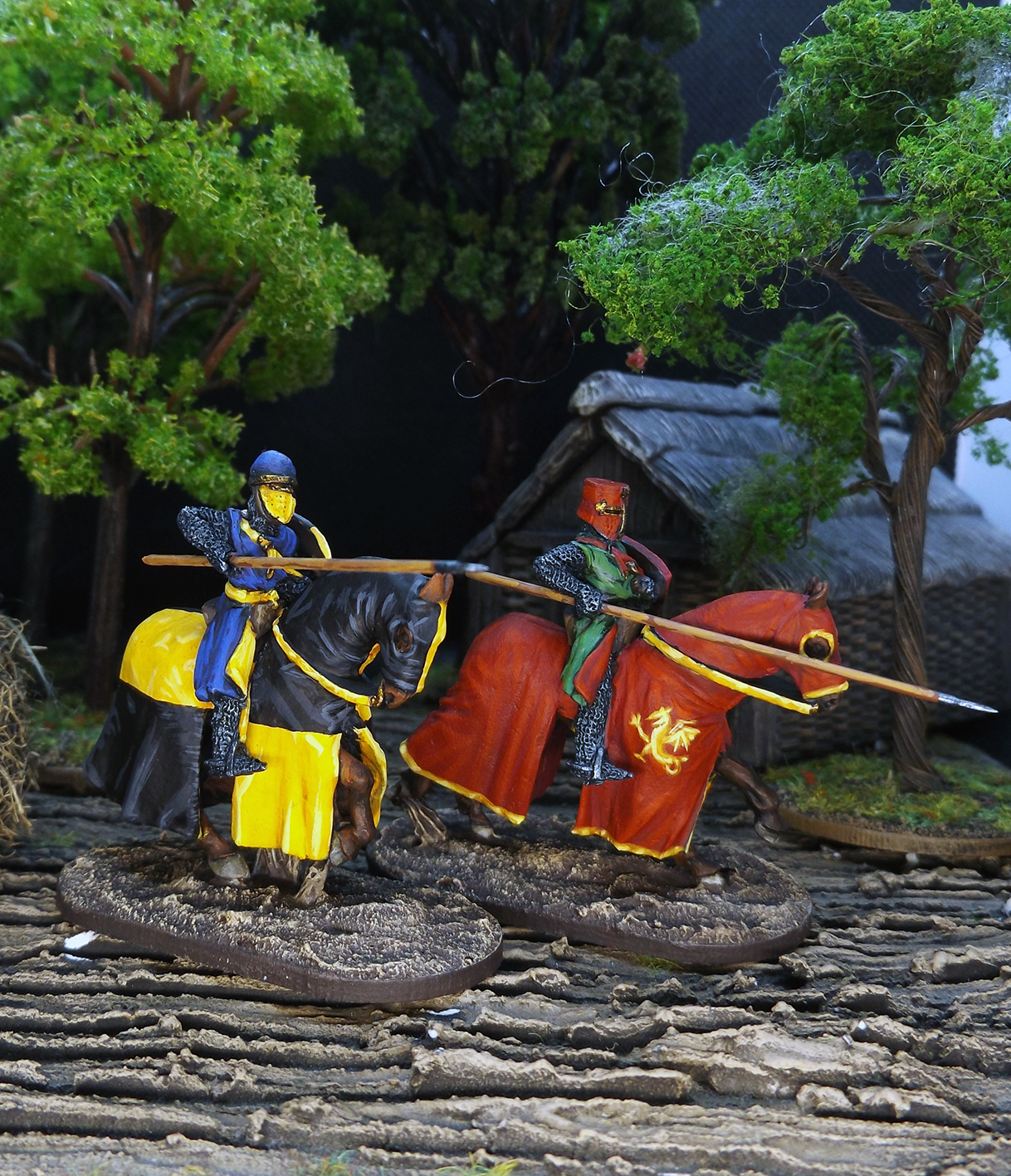
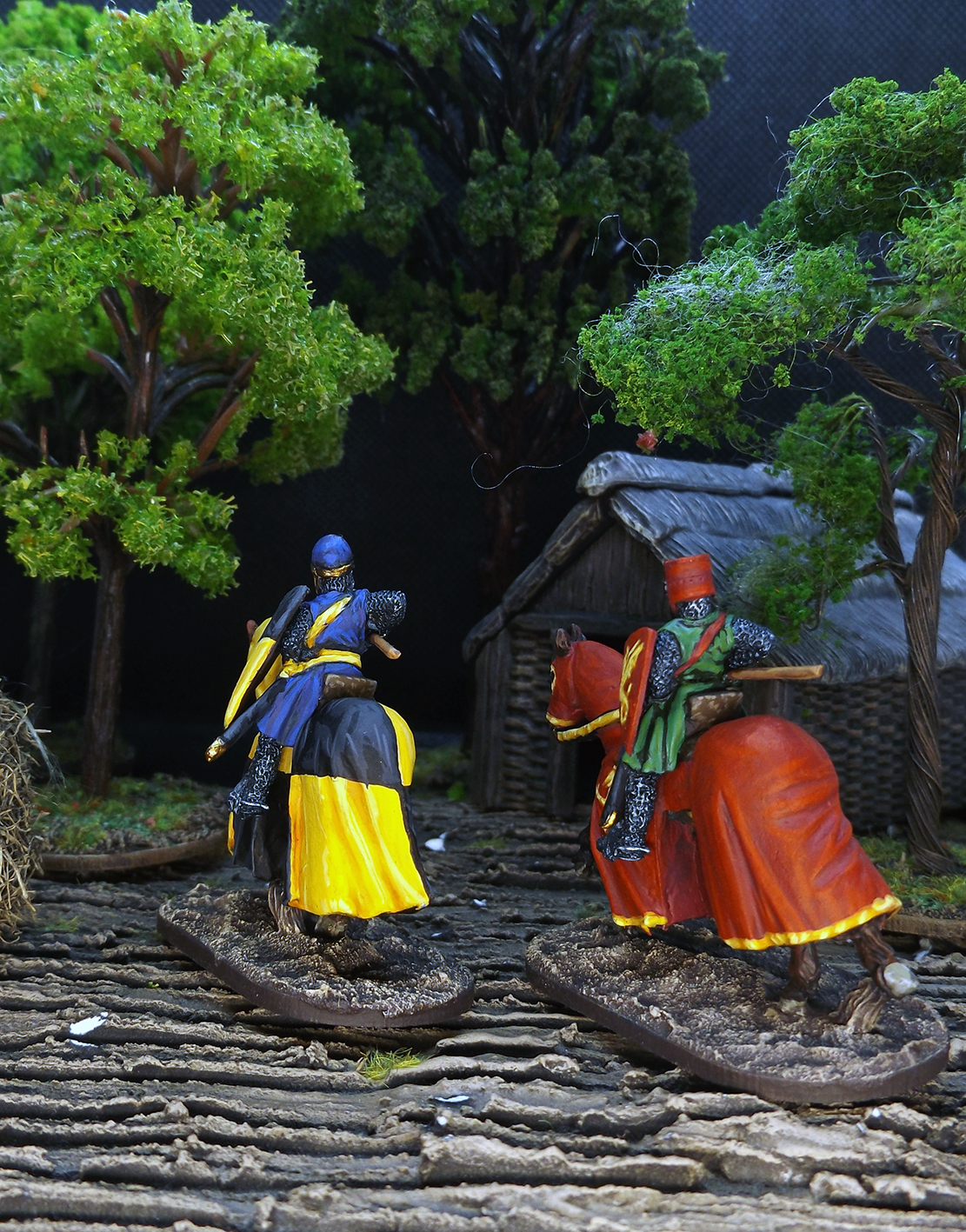
I have finished my last two mounted knights and have nearly finished the whole first wave of my Barons’ War stuff. I have gone again for that more individual look to them as though they are minor knights, not Lords and Barons, they all had their own heraldry, even if it was in the early days of design.
I have hand painted the devices and design on the shields and horse curtains, okay they do have a real name, Caparison, but I like the name horse curtains. I wish I could say I have based them on real shields and devices but no.
Robert de Ros
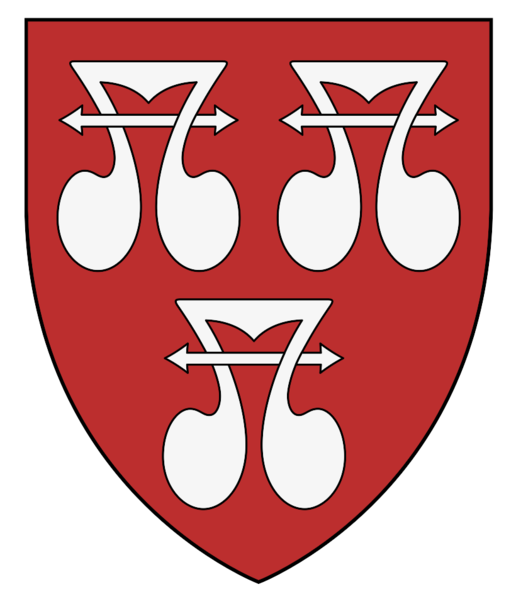 Robert de Ros
Robert de Ros (c. 1182-1226/7), kinsman through marriage of Eustace de Vesci, and the son of Everard de Ros and Roese, née Trussebut, was a Yorkshire lord, the owner of extensive estates centring on Helmsley in the North Riding of Yorkshire and Wark-on-Tweed in Northumberland. He was married, at an unknown date, to Isabella, an illegitimate daughter of William the Lion, king of Scotland, and widow of Robert III de Brus.
In the early 1200s Robert is found co-operating actively with King John, witnessing a number of his charters, chiefly at locations in northern England, and in 1203 assisting in the king’s defence of Normandy, where by descent from his mother he held the hereditary office of bailiff and constable of Bonneville-sur-Touques in the lower part of the duchy. In 1205, however, a year of rising political tension, there are signs that his relations with the king were worsening, and John ordered the seizure of his lands and, apparently shortly afterwards, had his son taken hostage. Robert, a little later, recovered his lands, but an indication that he might have been interested in leaving England is given by his acquisition of a licence to pledge his lands for crusading. It is not known, however, if he ever actually did embark for the East.
In 1212 Robert seems to have entered a monastery, and on 15 May that year John handed over custody of his lands to one Philip de Ulcot. His monastic profession, however, cannot have lasted for long, for on 30 January 1213 John appointed him sheriff of Cumberland, and later in the same year he was one of the witnesses to John’s surrender of his kingdom to the pope. In 1215, as relations between the king and the baronial opposition worsened, John seems to have tried to keep Robert on his side, ordering one of his counsellors to try to secure the election of Robert’s aunt as abbess of Barking. By April, however, Robert was firmly on the baronial side, attending the baronial muster at Stamford and, after June, being nominated to the committee of twenty-five.
When war between the king and his opponents broke out towards the end of the year, Robert was active on the baronial side, forfeiting his lands as a result and suffering the capture of his son at the battle of Lincoln in May 1217. After Louis returned to France, Robert submitted to the new government and recovered most, although not all, of his lands. He witnessed the third and definitive reissue of Magna Carta on 11 February 1225. Sometime before 1226 he retired to a monastery and he died either in that year or early in 1227. At some stage he was received into the ranks of the Templars and on his death he was buried in the Temple Church in London, where a few years earlier William Marshal, the one-time Regent had been buried. An effigy in that church sometimes associated with him dates from at least a generation later.
Robert is an enigmatic individual who had close ties with Eustace de Vesci but did not openly join the rebellion until just before Runnymede. He probably felt a conflict between his sense of loyalty to his fellow Northerners and his obligation of obedience to the king.
Saer de Quincy
 Saer de Quincy
Saer de Quincy’s career is illustrative of the complex of ties that held the English and Scottish nobilities together as part of an international chivalric elite whose interests spanned personal and regnal allegiances. The son of Robert de Quincy (d. 1197) and his wife Orabile, daughter of Ness, lord of Leuchars in Fife, he acquired English interests by virtue of his marriage to Margaret (d. 1235), daughter of Robert, earl of Leicester (d. 1190). Another member of his family, an uncle likewise called Saer, had served Henry II in Normandy in the 1180s and his son in turn, also confusingly called Saer, acquired lands in England which eventually were to descend to his namesake.
Saer’s early career was spent mainly in Scotland. In the 1180s and 1190s he witnessed several charters of the Scottish kings and confirmed his parents’ grants to Newbattle Abbey, near Edinburgh, and made new gifts to the abbeys of Dunfermline and Cambuskenneth. Following his father’s inheritance of the other Saer’s lands he moved to England and entered the service of Richard the Lionheart, fighting alongside the king in 1198. In 1202 and 1203 he served with John in Normandy, being appointed with Robert FitzWalter joint castellan of the strategic Norman stronghold of Vaudreuil. In the spring of 1203 the pair, offering no resistance, surrendered the castle to King Philip of France, who was then over-running Normandy, and John in disgust refused to contribute to their ransom. There is evidence that Saer and Robert may have contracted a relationship of brotherhood-in-arms: Saer’s arms before he became earl bore a small shield bearing Robert’s arms of a fess between two chevrons, while Robert’s surviving seal carries the arms adopted by Saer after he became an earl.
In 1204 the death without issue of his brother-in-law, the earl of Leicester, brought a dramatic improvement in his fortunes, as the earl’s heirs were his two sisters, one of whom was Saer’s wife. By 1207 a partition of the family’s estates had been made, and Saer, by right of his wife, found himself taking over valuable and extensive lands in the English Midlands, the other part of the inheritance going to the second sister, the wife of Simon de Montfort the elder. In recognition of his enhanced status, Saer was awarded the title of earl of Winchester. From this time on, he was often employed in John’s service, leading an embassy to Scotland in 1212 and acting as justiciar between 1211 and 1214.
Despite his apparent closeness to John, however, he had unresolved grievances relating to properties of which he felt he had been deprived, notably Mountsorrel castle in Leicestershire, a part of his wife’s inheritance that King John had denied him. In 1215 he went over to the opposition, joining their ranks at his principal residence of Brackley (Northants.). He marched with the rebels to London and was present at Runnymede. When war erupted again in October between the king and his opponents, he and another of the Twenty Five, the earl of Hereford, headed an embassy to France to seek French assistance and to offer the crown to Philip’s son, Louis. In January 1216 he returned to England with a force of French knights, followed in May by the dauphin and his army.
Although John’s death later in the year presented an opportunity for reconciliation between rebels and royalists, Quincy remained steadfast in his allegiance to the former and their champion Louis. In the spring of 1217 he learned that his rival, Ranulph, earl of Chester, was besieging Mountsorrel, and on 30 April he and FitzWalter led an army to its relief, only to find on arrival that the siege had been lifted. They then turned east to attack the royalist-held castle of Lincoln, unaware that a royal army was coming to its relief, and under the walls of Lincoln, on 20 May, they were defeated. Saer himself was taken prisoner. In September he was released as part of the general settlement and he went on to play a respectable part in the Minority government of Henry III. In November he was a witness to the reissue of Magna Carta and issue of the Charter of the Forest.
In the spring of 1219 he embarked on crusade to assist in the siege of the Egyptian port of Damietta in the company of his son Roger, Robert FitzWalter and William, earl of Arundel. Soon after his arrival in Egypt, however, he fell ill, and he died on 3 November. In accordance with his instructions, he was buried at Acre and the ashes of his organs returned to England for interment at Garendon Abbey (Leics.), of which he was patron.
Saer’s career affords a good illustration of the role that a dispute over property could play in determining political allegiance. The same point emerges with equally clarity from other periods of instability in the Middle Ages, notably the civil war of King Stephen’s reign in the 1140s. Saer was one of the most experienced administrators in the ranks of the opposition, having served as a baron of the exchequer and a justice of the bench, and was heavily involved in the negotiations with the king that led to the making of Magna Carta.
Richard de Percy
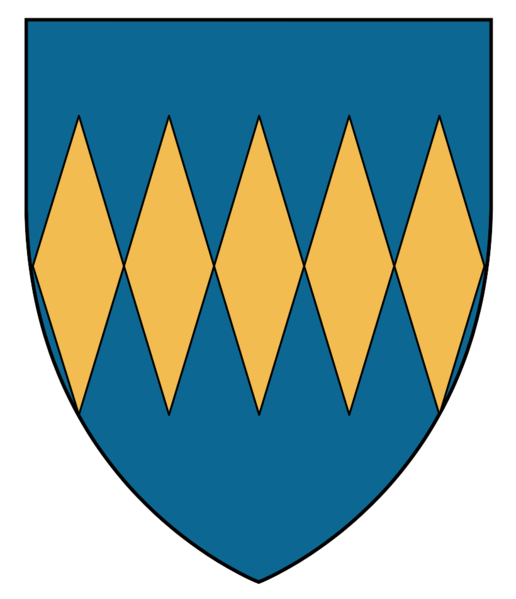 Richard de Percy
Richard de Percy (before 1181-1244) was the second son of Agnes, heiress of the original Percy family, and Jocelin de Louvain, a younger son of Godfrey, duke of Lorraine, and brother of Adeliza, second wife of Henry I. His background and parentage are illustrative of the cosmopolitanism of the Angevin world.
Early in John’s reign Richard served on military expeditions with or for the king, but as the community of northern lords of which he was part moved into opposition to the king, so he went along with them, and in 1214 he refused to join John’s Poitevin expedition. On 26 June 1215 he was excommunicated by the pope for his disobedience, and in the following year he and other Yorkshire lords went over to Louis, the French king’s son, the leader of the baronial armies. He only returned to the king’s peace in November 1217.
Richard married, first, Alice, of unknown parentage, and, on her death, Agnes de Neville. He died in 1244, before 18 August. In his lifetime he had been a benefactor of two Yorkshire abbeys, Sawley (or Salley) and Fountains, and he specified in a grant to Fountains that, if the arrangements specified in the grant were carried out, he was to be buried in that house.
A shadowy figure, he stands out less vividly than some of the northern lords with whom he was associated.
Richard de Montfichet
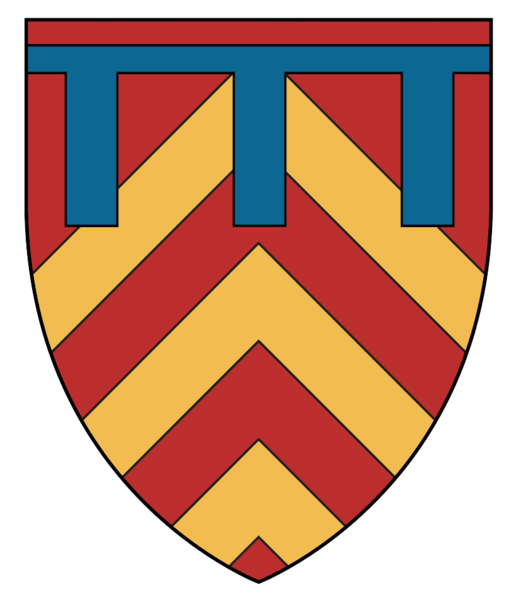 Richard de Montfichet
The largest group represented on the committee of Twenty Five was not so much the hard-line barons from northern England as the leading landowners of East Anglia and the south-east. Once the movement of rebellion against John had gathered strength and spread out, it was these men who were at its head and who, after June, took the lead in enforcing the Charter. One of these home counties lords was Richard de Montfichet.
Richard was possibly drawn into the rebellion against John by his kinship ties with other rebel barons. His grandfather, Gilbert, had married Aveline de Lucy, the aunt of the rebel leader, Robert FitzWalter, and further back still, William, the first holder of the Montfichet barony, had been married to Margaret, daughter of Gilbert de Clare, earl of Hertford, forebear of two other members of the committee. Richard’s own sister was to marry William de Forz, yet another member. It is by no means clear, however, how kinship ties fitted into the matrix of baronial motivation alongside such other factors as personal grievance and questions of political principle. Quite possibly, their principal role was simply to reinforce decisions already made.
Richard (after 1190–1267) was the eldest son of Richard de Montfichet (d. 1203), a servant of Richard the Lionheart, and his wife Millicent. He was a descendant of William de Montfichet (d. before 1156), whose barony of Stansted Montfitchet (Essex) comprised nearly fifty knights’ fees, and from whom he inherited a claim to the custody of the royal forests in Essex, forfeited by his grandfather, probably for his part in the uprising against Henry II in 1173-4. The younger Richard came of age before 1214 and in that year served on King John’s failed expedition to Poitou in western France. Shortly afterwards, however, he is found on the rebel side, perhaps in the hope of recovering the rights forfeited by his family under Henry II, perhaps too as a result of the pull of the kinship ties already mentioned. On 21 June 1215, just six days after the king had given his assent to Magna Carta and by which time he had probably been named to the Twenty Five, he secured restoration to the custody of the forest of Essex, once held by his ancestors.
After the papal annulment of Magna Carta and the renewal of civil war, Richard remained in the rebel camp and was captured at the battle of Lincoln in May 1217. In the following October, after the French withdrawal, he returned to the royal allegiance and recovered his lands and rights, including custody of the Essex forests. He was to be a witness to two of Henry III’s reissues of Magna Carta, the first in 1225, the authoritative reissue, and the second in 1237. In 1244 he was a baronial representative named to consider the king’s request for a grant of taxation and so probably had a hand in drafting the remarkable scheme of government reform of that year recorded by Matthew Paris in his chronicle. From 1242 to 1246 he served as sheriff of Essex and Hertfordshire.
Richard was married at least twice but left no male heir and on his death in 1267 his estates were partitioned among the children and grandchildren of his three sisters. Living to over 70, he was the longest-lived and last surviving of the Twenty Five Barons of Magna Carta.
Among his estates was to be numbered the manor of Wraysbury in south Buckinghamshire, on the banks of the Thames immediately facing Runnymede and Old Windsor. It is not recorded what role, if any, Wraysbury played in the events of June 1215.
Roger de Montbegon
 Roger de Montbegon
Roger de Montbegon (c. 1165–1226) was another of the group of hard-line opponents of King John referred to by contemporaries as ‘the Northerners’. Roger was the son of Adam de Montbegon and his wife Maud, daughter of Adam FitzSwain. His family held the barony of Hornby in Lancashire and other estates in Nottinghamshire, Lincolnshire and the West Riding of Yorkshire.
In Richard I’s reign Roger had been a close supporter of John, then count of Mortain, joining him in his rebellion against the king during the latter’s imprisonment in Germany, and suffering temporary forfeiture of his estates as a result. In 1199 he offered 500 marks (about £333) to John, by now king, for the marriage of Olivia, widow of Robert FitzJohn, whom he shortly took as his wife. In the new reign Roger found himself in receipt of fewer favours than he had expected, and as early as 1205, when trouble was brewing in the north following John’s loss of Normandy, he was suspected of disaffection. Not surprisingly, he had many ties of association with other northern malcontents, notably Eustace de Vesci and William de Mowbray, to both of whom he stood surety for the repayment of debts to the king. In 1214 he was one of four members of the future Twenty Five who from the start resisted payment to the king of tax in lieu of military service in Poitou – the others being de Vesci, Mowbray and Richard de Percy. In the wake of John’s rejection of Magna Carta and the outbreak of civil war he was active on the baronial side but managed to avoid involvement in the baronial defeat at Lincoln. With de Percy, he made his peace with the new regime in August 1217.
Roger spent much of the next three years engaged in a bitter struggle for the recovery of his Nottinghamshire manors of Clayworth, Oswaldbeck and North Wheatley. Throughout the process he faced stubborn opposition and delaying tactics from the sheriff of Nottingham, Philip Mark, a former ally of John and a possible real-life model for the sheriff of Nottingham of the Robin Hood ballads. Roger himself, however, proved overbearing, and determined to get his own way. In 1220 he was accused of holding onto stock which he had seized ‘contrary to the king’s peace and the statutes of the realm’. A decision on his right to present a deputy to represent him in a duel was postponed since he was, in the court’s words, ‘a great man and a baron of the lord king’. When the Nottinghamshire court insisted on holding onto some of his own stock which had been distrained, he withdrew from the court exclaiming that, if it would not restore that stock, he would see to it himself. The constable of Nottingham then asked him three times ‘by the counsel of the court’ that he should return to hear the consideration of the court. This he refused to do. It was said in the court that if he had not been a great man and a baron of the king ‘his person might well have been detained for so many transgressions’. Roger, for all his involvement in the campaign to subject royal authority to the law, was not so keen on application of the same idea in his own case.
William Marshal, the Younger
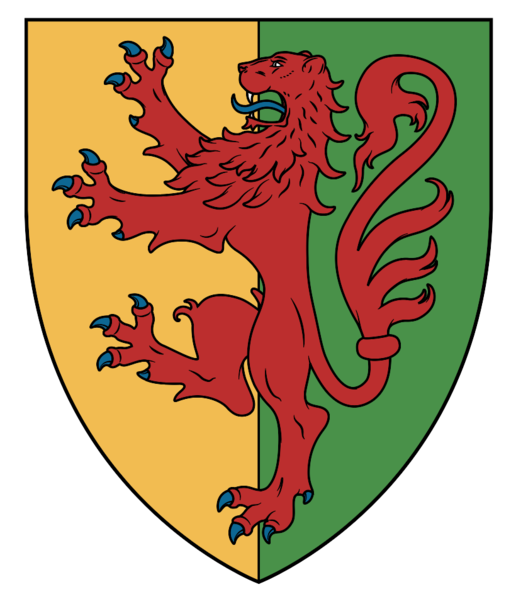 William Marshal, the Younger
The younger William Marshal (c. 1190–1231) was the eldest son of William Marshal (d. 1219), the future Regent, and his wife Isabel, heiress of the line of de Clare earls of Pembroke.
For seven years from 1205 William was detained in King John’s custody, a hostage for his father’s good behaviour, only regaining his freedom in 1212, when John needed the latter’s support. In the crisis of 1215 John enjoyed the unswerving support of the elder William but his son threw his lot in with t he opposition, perhaps partly as a result of the experience of his youth, perhaps in part as a family insurance policy. He joined the barons in their muster at Stamford in the spring, and in June was named to the Twenty Five. In the civil war that followed John’s rejection of the Charter he fought on the baronial side, and after Prince Louis’ arrival, was named marshal of his army. Although active in the field, he took care to avoid any direct engagement with his father. A failure to secure satisfaction on a matter of personal concern, however, led him to change sides. He was keen to secure restitution of the great castle and lordship of Marlborough in Wiltshire, which had been held seventy years before by his grandfather, John Marshal. When Louis denied him this, he reverted to the royal allegiance. He then fought actively for the new regime, capturing Winchester and Southampton for the royalists and Marlborough for himself, and contributing to the great royalist victory at Lincoln.
On his father’s death in 1219 he succeeded him as earl of Pembroke and marshal of England, while on his mother’s death in the following year he succeeded to the lordships of Chepstow in South Wales and Leinster in Ireland. William ranked as one of the richest men of his day. Nonetheless, among his portfolio of properties were some to which other important magnates laid claim, principally those of Fotheringhay (Northants) and Marlborough itself. Over the next five years the Minority government’s attempts to resume these, and assign them to new owners, were to form a major thread in the political life of the day.
A claim to Fotheringhay was entertained by John the Scot, earl of Huntingdon, someone whom the Minority government was keen to satisfy him in the interests of better relations with Scotland. For nearly two years the Marshal steadfastly refused to give way. In 1220, however, his hand was forced when Llewellyn of Wales attacked his lordship of Pembroke, and he was in need of the Minority government’s assistance. When the justiciar, Hubert de Burgh, came to his aid, he quietly relinquished control of Fotheringhay.
His eventual surrender of Marlborough was brought about by a different means. In 1214 William had married Alice, daughter of Baldwin de Béthune, count of Aumale; Alice, however, had died in 1216. In 1221 the justiciar and the papal legate together came up with the proposal, designed to secure him to the justiciar’s party, that he take as his second wife the king’s sister, Eleanor. The marriage eventually took place in 1224, and the Marshal, as a small price to pay for a royal bride, surrendered Marlborough.
Once these property matters were sorted out, William proved himself an active champion and supporter of royal authority, fighting against the Welsh in 1223 and in Ireland in 1224. In 1230 he joined the king on his expedition to Brittany, to challenge the French, conducting raids in the direction of both Normandy and Anjou.
At the beginning of 1231 he returned to England for the wedding of his widowed sister, Isabella, to the king’s brother Richard, earl of Cornwall. However, he died suddenly in London on 6 April. Nine days later he was buried by the side of his father in the Temple Church, London, where one of the celebrated group of early effigies is presumably his.
Both of William’s marriages were childless, and his heir was his next brother, Richard, who died without issue in turn, and was succeeded by the next brother Gilbert. In 1241 Gilbert was killed in a tournament accident at Dunstable and, again being childless, was succeeded by the next brother again, Walter. He too being childless was succeeded by the last in the brood of brothers, Anselm. When Anselm died also without issue in 1245, the line of Marshal earls of Pembroke came to an end, and the vast inheritance was partitioned between the representatives of their five sisters and coheiresses. Among the families which benefited, either then or later, were those of Bigod, Clare, Ferrers, Mortimer, Bohun, Cantilupe, Valence and Hastings.