









Cult Of Games XLBS: Can Logisitics Help You Win Wargames?
June 14, 2026 by avernos


For some website features, you will need a FREE account and for some others, you will need to join the Cult of Games.
Or if you have already joined the Cult of Games Log in now
What difference will having a FREE account make?
Setting up a Free account with OnTableTop unlocks a load of additional features and content (see below). You can then get involved with our Tabletop Gaming community, we are very helpful and keen to hear what you have to say. So Join Us Now!
Free Account Includes
- Creating your own project blogs.
- Rating and reviewing games using our innovative system.
- Commenting and ability to upvote.
- Posting in the forums.
- Unlocking of Achivments and collectin hobby xp
- Ability to add places like clubs and stores to our gaming database.
- Follow games, recommend games, use wishlist and mark what games you own.
- You will be able to add friends to your account.
What's the Cult of Games?
Once you have made a free account you can support the community by joing the Cult of Games. Joining the Cult allows you to use even more parts of the site and access to extra content. Check out some of the extra features below.
Cult of Games Membership Includes
- Reduced ads, for a better browsing experience (feature can be turned on or off in your profile).
- Access to The Cult of Games XLBS Sunday Show.
- Extra hobby videos about painting, terrain building etc.
- Exclusive interviews with the best game designers etc.
- Behind the scenes studio VLogs.
- Access to our live stream archives.
- Early access to our event tickets.
- Access to the CoG Greenroom.
- Access to the CoG Chamber of Commerce.
- Access the CoG Bazarr Trading Forum.
- Create and Edit Records for Games, Companies and Professionals.
Supported by (Turn Off)

Supported by (Turn Off)
Supported by (Turn Off)






Happy Sunday CoGs OTTers and of course, Backstagers!
Logistics in warfare is fascinating enough, but getting it into wargames is even more fascinating! There’s so many examples where logistics has proved the difference between victory and defeat (least of all the current war in Iran). One of the best rules I’ve seen doing this was in 1st ed Necromunda – ‘Ammo Check’. Finding out your ganger had run out of ammo meant they were now fighting hand to hand. I you introduced that into historical modern arms battles itw ould be very interesting.
Also, in Bolt Action there was also rules for the Fall of Berlin where tanks could run low on fuel and be stuck put. The Maus in BA also has rules for being unreliable which does a great job of simulating a damaged, but still functional tank or a tank awaiting recovery. One of the best stats I saw for the battl;e of Kursk is the differemce between the proportion of knocked-out german tanks recovered between when the Germans were attacking vs when they were being pushed back and the difference was considerable.
Logistics is much like fatigue in that people always assume it’s tougher to manage or kee track of than it actually is. Saga does a great fatigue management system. I’d argue heat in Battletech is a similar idea and so are resource management systems like damage control in Adeptus Titanicus.
The scenario for the bolt action was mainly written by AI. I just edited it until I got something I was happy with. As the scenario booklet that came with the pegasus bridge set, wouldn’t have worked on the table we had
i do need to make a few changes to it for the next time we play the mission. for example the commandos should have came on the table in the north west and the Germans should have come in south and east
I think with logistics in the skirmish level game we’re talking about wither or not something turns up on the table. So a tank or APC with low fuel or ammo just isn’t there (the crews wouldn’t deploy forwards unless their supplies would give them a fighting chance). Mechanical reliability forms another possible reason for things not turning up.
With larger scale games, I remember playing a company level game in 15mm back in the 90s (where the figure ratio was 1:1), things like HMG/LMG and on table heavy weapons were counted as “low ammo” unless they were deployed as fixed position (then you couldn’t move without losing that benefit for full rate of fire), or if you use “ammo runners” (as single figure) running between the heavy weapons and an ammo truck/supply dump (hopefully parked hidden and out of sight and not too close to the firing unit), with the ammo runner carrying enough ammo for one round of full rate of fire. The ammo was represented with small ammo crate or shell counters, if no counters then you fired at “low ammo”. Granted infantry squads carried extra ammo for the squad LMGs, but as the author said trying to resupply a squad LMG is a bit difficult if the rifle section is off try to flank the enemy target. Those rules were quite fun and relied on players showing a bit of self restraint when building up army lists (no wall to wall or tank car parks here akin to World of Flames). The campaign rules on logistics were more based around AFVs and off table Artillery and they were done before you put any troops down on the field (basically you paid the points and then rolled a dice to see if they appeared during the game. The worse the logistics, the harder the dice roll). Infantry always turned up, so they were a safe bet for your points in game. I do wish I could remember the name of those rules, they are long OOP and were released in the UK back when the main source for rulesets were individuals or Wargames clubs self publishing.
I think part of the issues as to why we no longer see logistics appearing in miniature games (board games still use the mechanic, in fact some board games are ALL about the logistics) is the “simplification” of rules these days. A lot of wargames are skirmish level games in 28mm, whereas the larger scale games (company/battalion) were usually in 6mm or 15mm to fit on the table. Skirmish level games have always assumed that troops have full ammo (and have usually simpler rules, although there’s no good reason as to why this is the case), and logistics is almost always left out. To try and put logistics mechanics back into games, rather than trying to find OOP rules from 30 years ago, perhaps looking at some board game mechanics might be a way to go?
You guys covered 1941: Race to Moscow at one point, which i believe deals only with logistics. Haven’t tried it but always wanted to. Looked and sounded great.
I haven’t played too many big hex and counters games, but one i remember fondly is Barren Victory, dealing with the battle of Chickamauga during the American Civil War. Here logistics played a big part, where infantry and artillery did run low on ammunition and fired on a reduced level of effectiveness until they were resupplied by the ammo train.
HAPPY SUNDAY
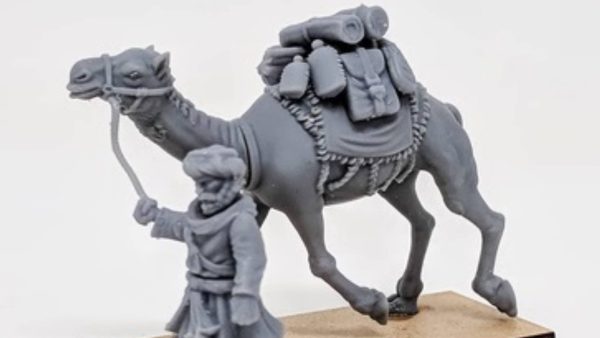
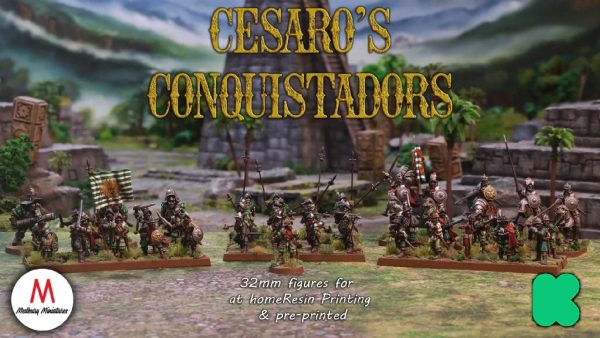
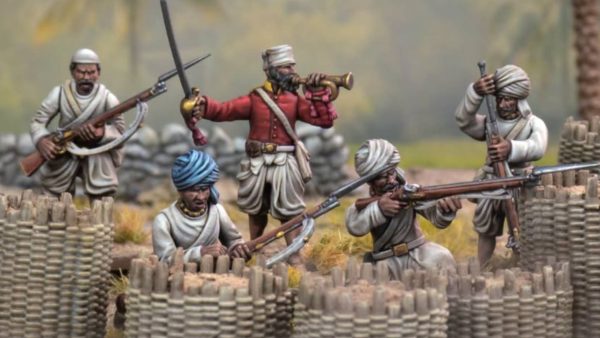
That Indian army of fantastic. It’s definitely something that I’d love to tackle sometime, so the project is an instant follow.
There are only two games I play that keep record of ammo and other resources.
Classical Battle Tech but I never felt like it hindered anything as you have enough ammo in your mech for a one of game. If you would play in a campaign that might change but I never played campaigns for classical.
The other is the Battle Tech aces campaign. After each mission you need to pay to refit your mechs of ammo, armor and pilots, if you lost a mech you need to pay for that as well. But again I don’t feel it has that much impact. Because if you lose the mission it counts as game over so you just need to replay it. If you win your mission, you earn enough to cover those costs or you have to do very badly with a lot of destroyed mechs.
Three fantastic projects, well done all
Sunday innit?
00:00 A duet!
01:30 A new page that’s going to do crowd funding games?
19:35 Spellcrow?
26:30 Lasers fire forever? Tell that to the poor guardsman who ran out of battery for his laser rifle. And if you really want to do book keeping: Battletech!
46:21 I don’t want logistics in my games. Even in Battletech we tend to forget about ammunition counting.
48:25 Squirrel in pants? oO
1:01:00 Bolt Actio *hur hur hur* XD
1:05:00 Lady Di day?
1:07:00 Oh noes!
BUY MÖRCH!
Logistics win wars so I’d definitely like to see a system in a campaign that explores how vital supply is.
Have a great time in Sweden Gerry.
The games I’ve played where logistics are most important are Wild West games like Dead Man’s Hand and What a Cowboy. They carefully track shots fired and remaining ammo. This means you are careful about when you shoot and will often move very close before firing in the hope you will be able to knock the opponent out of the fight completely. They are fun games and it would be good to see other systems taking these mechanics on.
I find the Logistics side of wargaming is very neglected, to be that guy for a moment sorry, Bolt Action I think also has Panzerfaust is a one shot weapon? I think Battleground by Kinrade has resupply as well, and maybe Rapid Fire.
But otherwise yes, its not like in Waterloo were someone says, there down to 5 rounds a man, or Gettysburg and Chamberlain Charge in part because there out of ammunition. There aren’t things like that in game to create that sort of situation or represent the tension that could arise such as stand or withdraw.
Historically, Arrow tracking aside which Never mind the Billhooks has, and is otherwise absent from may rulesets.
The biggest factor missed though with pre gunpowder especially is fatigue, one of the things I thought interesting in Saga is that has a simple mechanic for fatigue. Something in Baron’s War, you only get two cavalry charges then the horses are knackered and no more charges. Some rule sets you charge cavalry around all day long.
Ultimately in the olden days, folks could only do so much fighting, Romans developed rotating the front line, which is again a tactic you don’t see incorporated into rule sets.
There is interestingly a Skirmish game just released 1812 retreat from Moscow that deals with logistics as part of a campaign structure, do you get enough food or firewood, or overnight does someone starve or freeze to death.
Happy Sunday COGz an OTTers 👍
🤔 Gerry says No 😄
Fab show guy’s
Great show guys! Also great seeing you last week! Looking forward to moving over there next year!
Its been a while, but i believe “To the Strongest” Ancient and Medieval rules only gives the ranged units limited shot which does make a difference.. I should really get that back on the table top…