












75th Anniversary of the Battle of Monte Cassino and Northern Italy (Gaming The Battles)



Recommendations: 781
About the Project
BEST READ IN REVERSE ORDER! The project charts and recreates the battles of Monte Cassino, fought between January 1944 to May 1944, and the onward Allied push through Northern Italy.
Related Game: Flames of War: The World War II Miniatures Game
Related Company: Battlefront Miniatures
Related Genre: Historical
This Project is Active
Monte Cassino - 1st Battle
It was 75 years ago today, 17th January 1944, that Allied troops launched their assault on Monte Cassino. It was to be a bloody, brutal battle lasting four months. This project pays respect to those who fought there and the sacrifices made all those years ago.
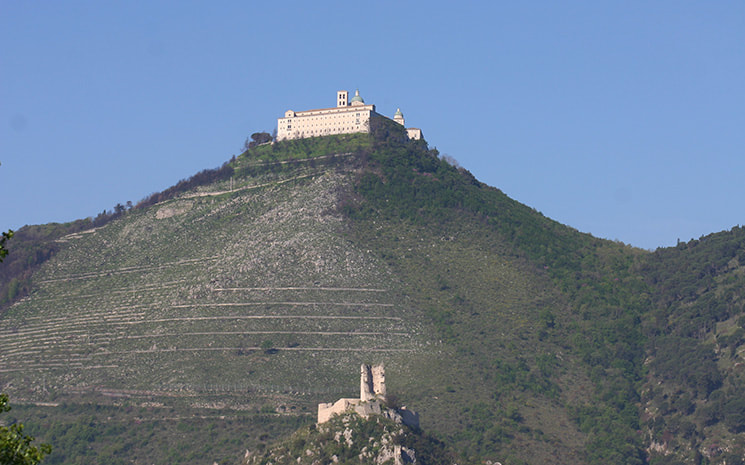 A modern day Monte Cassino with the rebuilt monastery
Field Marshal Albert Kesselring had been instructed by Hitler to build a defensive line South of Rome, later called the Gustav Line. The topography was well suited to defence with rugged hills and the Apennine Mountains running through the centre of the country. The Western part of the Gustav line was anchored around the 6th Century Benedictine monastery built atop Monte Cassino.
From this high vantage point, the German defenders overlooked the Liri valley and Route 6, the primary route from Naples to Rome. The Allies had to take this stronghold before they could advance further. At the foot of the hill lay the small town of Cassino, which linked to a small road that snaked up the side of the hill to the summit. On the Western side of Cassino lay the railway station, again connecting to Rome in the North as well as to Naples to South. Just South of Cassino, flowing East to West was the Rapido river. This aptly named river often burst its banks with flood water maker the surrounding ground near impassable. Despite being only 10m wide, it offered a difficult obstacle and one that the German defenders had built into their defensive plans. Downstream, the Rapido became the Garigliano river which joined the Liri river South West of the town of Cassino.
The German 14th Panzer Corps and had set about building a formidable defence. Much of the banks of the Liri and Rapido rivers had been mined while barbed wire entanglements lay in wait to slow advancing troops. Machine gun nests and bunkers covered these approaches. Buildings in the town had been converted into small fortresses while overlooking this, troops, machine guns and mortars lay dug in around the slopes of the hill.
Despite the German defenders and the presence of Allied troops, the ancient monastery was still staffed with a few monks who had refused to leave despite advice to the contrary. The Germans had agreed with the Pope in Rome to not use religious buildings in their defence and so the monastery itself had not been fortified.
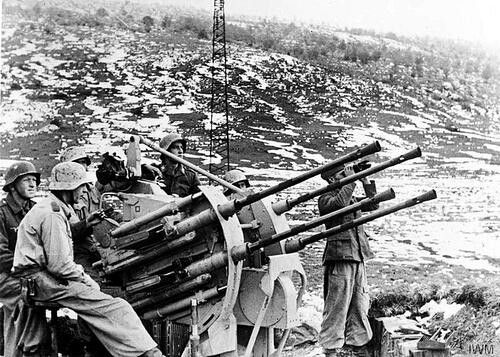 German AA gun on the Gustav Line
First Battle Monte Cassino
US 5th Army, commanded by Lieutenant-General Mark W Clark, was initially tasked with capturing Monte Cassino and breaking through the defensive line. He drew up plans that required flank assaults followed up by a frontal assault on Monte Cassino. In conjunction with the Monte Cassino assaults, a beach landing further North at Anzio was planned. The idea being to either draw German reinforcements in Rome South to the Gustav Line, making the Anzio landings more likely to cut off the troops at Monte Cassino or, to force the reinforcements to react to the Anzio landings and make a break through at Cassino more likely.
5th Army had only arrived at the Gustav Line on 15th January but were forced to move quickly as landing boats for Anzio were only made available until early February. After this time, the landing equipment was required back in the UK to prepare for Operation Overlord. This rushed approach was not ideal; 5th Army had endured a particularly attritional advance up the West coast from Naples and had not had time to reorganise or rest. Optimism among the Allied forces was not high when the assault was launched.
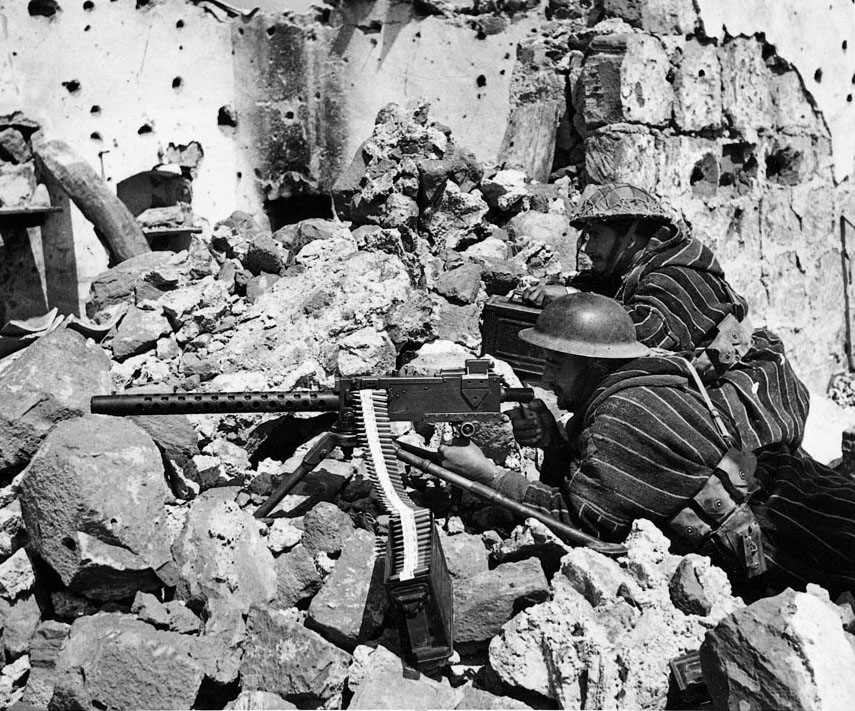 Algerian Troops at Cassino
Britsh X Corps, positioned on the West flank of the 5th Army, close to the coast, launched the assault, with two divisions crossing the Garigliano on the 17th January, 1944. They quickly established a beach head on the Northern side of the river and were able to dig in despite heavy resistance from the German 94th Infantry Division. A further British Division successfully crossed two days later however the three British Divisions lacked the man power and support to push further inland. It did however cause the Germans to request reinforcements and 29th and 90th Panzer grenadier Divisions were sent from Rome to bolster the defences. By 21st January, the German reinforcements had stabilised the bridge head and the British made no further progress. British X Corps suffered around 4000 casualties in this opening assault.
Further inland, to the East of Cassino, Moroccan and Algerian troops of the French Expeditionary Corps advanced into the mountains and engaged the German 5th Mountain Division. In atrocious weather and freezing conditions, the North Africans fought bravely and made good progress. However, a lack of men, support and supplies left many soldiers with frostbite and trench foot and coupled with the bitter fighting, the assault eventually ground to a halt on 31st January.
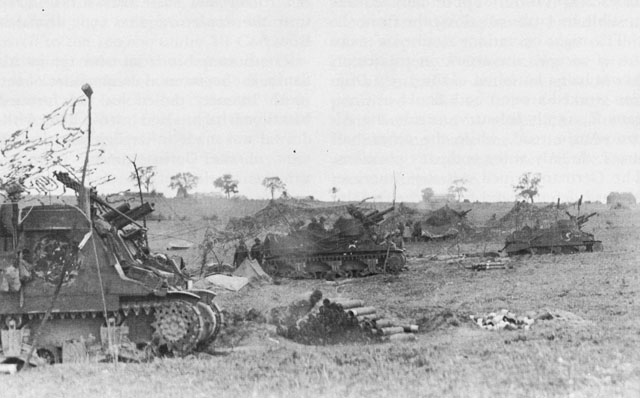 Artillery ready for the bombardment
With the flank assaults well under way, the main central assault started after sunset on 20th January. The 36th (Texan) Infantry Division sent elements of the 141st and 143rd Infantry Regiments across the Garigliano river just down steam of the town of Cassino. The 15th Panzer Grenadiers had prepared their defences well and the 36th suffered heavy casualties. Supporting armour was trapped on the Southern side of the river unable to cross the thick mud caused by the flood waters. This left the Infantry exposed to counter attacking tanks and self propelled guns.
The 143rd Infantry were forced back over the river by mid-morning on the 21st and the 141st were barely hanging on. The assault was renewed on the evening of 21st and both divisions managed to cross two Battalions with the 141st managing to advance almost a kilometre from the banks of the Garigliano. However, as sun came up on the 22nd, the 36th were left horrible exposed and were cut down by the German counter attacks. Barely 40 men of 141st made it back to the Allied side of the river. Major General Walker, commander of 36th Infantry Division decided not to commit his final Regiment to the attack but rather call off the assault. In just two days, the 36th had lost over 2000 men and had been reduced to a third of its fighting strength. One US Officer reported ‘I had 184 men… 48 hours later I had 17. If that’s not mass murder, I don’t know what is.’ The horrific losses became the focus of a Congressional Inquiry after the war.
On 24th January, a little up river of Cassino, US 34th Infantry Division launched their assault. Like the 36th, they also found the defences on the other side of the river well prepared and suffered similarly but managed to make slow progress up the steep, broken hills. During the day, any movement among the rocks and broken buildings was raked by German machine gun fire and infantry men were left inching forward, feeling with their finger tips for trip wires and mines. The steep gullies offered little protection and the Germans had laced the thick bushes with mines, booby traps and barbed wire. Despite the formidable defences and the freezing weather conditions, the 34th managed to continue to push forward along the hills, looping around the back of Monte Cassino.
By early February, the 34th were just over 1km from the monastery and over the following few days got within 4oom. Monks inside the monastery observed a US patrol reach the walls of the monastery and exchange fire with the defending 1st Fallschirmjager. For a further three days the 34th tried to break through and take the final hill, known as Calvary Mount but without success. On 11th February, US troops were withdrawn, having fought to exhaustion.
The Allied Invasion of Mainland Italy
With Sicily in Allied hands and Mussolini removed, the Allies considered their plans for mainland Italy. With the Italian army all but removed from the fight, more aggressive plans could be considered, with the eventual plan calling for the British 8th Army to cross the Straits of Messina and land at the Southern tip of Italy. It was hoped that this initial landing would divert German forces into Calabria, away from the main landing point of Salerno, on the West coast south of Naples.
Operation Baytown was launched on 3rd September 1943. Two Divisions from 8th Army crossed the Straits of Messina and landed almost unopposed on mainland Italy, with the Italian defenders surrendering almost immediately. They advanced inland, meeting only minor opposition from 15th Panzer Grenadier Regt, who were ordered to delay the British to allow other German forces to withdraw.
The Germans offered little opposition beyond destroyed bridges and other engineering obstacles. The 8th Army’s progress was slow as every obstacle had to be tackled as the surrounding terrain offered no options for bypassing them. It quickly became apparent that the Germans did not fall for the diversion tactic and made no move to intercept the British who now had over 450KM to cover to meet up with the planned US landings at Salerno.
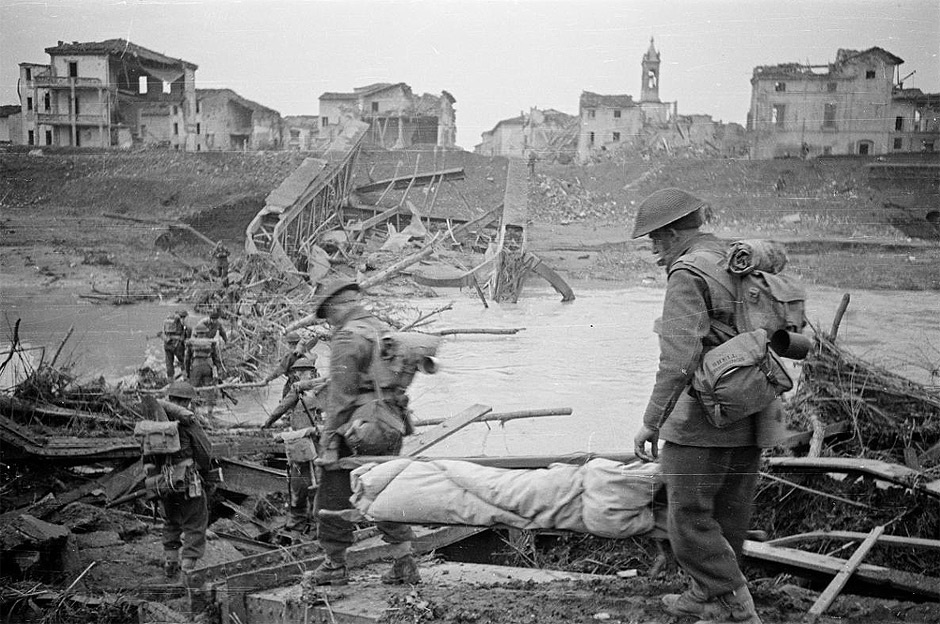 New Zealand Troops of British 8th Army tackling just one of the destroyed bridges
With the formal surrender of Italy announced on 8th September, German forces in the country disarmed local Italian units and took up their positions. The Italian navy sailed to Allied ports to surrender and what was left of Italian resistance was removed. A day later, on the 9th September, elements of the 8th Army landed unopposed at Taranto on the Southern coast of Italy. They found the port largely intact and were quickly able to disembark and begin advancing up the East coast, reaching Bari by 11th September.
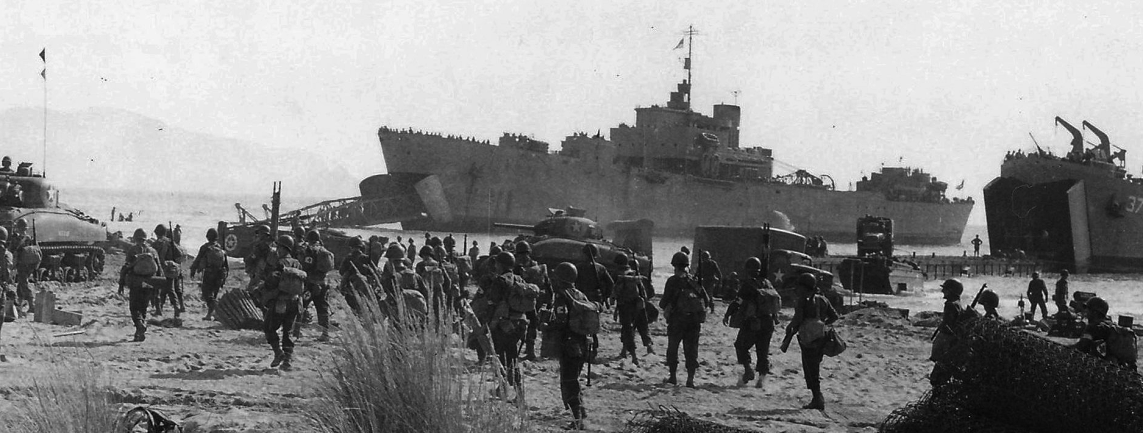 US 5th Army landing at Salerno
Operation Avalanche
General Mark Clark’s US 5th Army started Operation Avalanche, the codename for the beach landings at Salerno, on 9th September. Comprising US VI Corps, British X Corps and 82nd Airborne Division in reserve, they were well supported by US and British naval power in the Mediterranean. The invasion covered a long stretch of coastline, approximately 56km which given the limited availability of troops, was ambitious. Furthermore, the coastline curved around, creating a large cove, resulting in any front being much longer that the beach. The Sele River also split the attackers, creating problems for linking up.
The German defence had been reorganised into the newly formed Tenth Army, commanded by Heinrich von Vietinghoff and comprising 2 Corps with a total of 6 Divisions. Among these were the elite Herman Goring Panzer Division and 1st Fallschirmjager. Albert Kesselring still had overall command of Southern Italy.
The Northern element of the Salerno landings were carried out by British X Corps. The US Rangers and Commando units landed largely unopposed and quickly pushed in land to secure the necessary roads and bridges North to Naples. The rest of X Corps, 46th and 56th Infantry Divisions, who landed South of the Commandos and North of the Sele River met fierce resistance from the 16th Panzer Division and were only able to secure the beach head due to the support of the big naval guns offshore.
To the South of the Sele River, 36th (Texas) Infantry Division struggled to gain a foothold. German observers from the hills overlooking the Salerno beaches were able to direct artillery fire onto the landing craft and beaches with some accuracy. Despite the incoming fire and the attention of the Luftwaffe, 142nd Infantry and 143rd Infantry Regiments of the 36th Division did manage to make progress in land. The 141st Regiment however were pinned down on the beach, making necessary additional supply landings impossible.
In response, the German defenders quickly moved their reinforcements into position to encircle the beach head. The Allies spent several days making slow gains inland and by 12th September, X Corps had advanced around 10km inland but were lacking men to continue to push and had started digging in. To the South, 36th Division had gained around 8km of ground however Allied troops were not landing quickly enough and with the build up in German reinforcements, a counter attack was expected at any time.
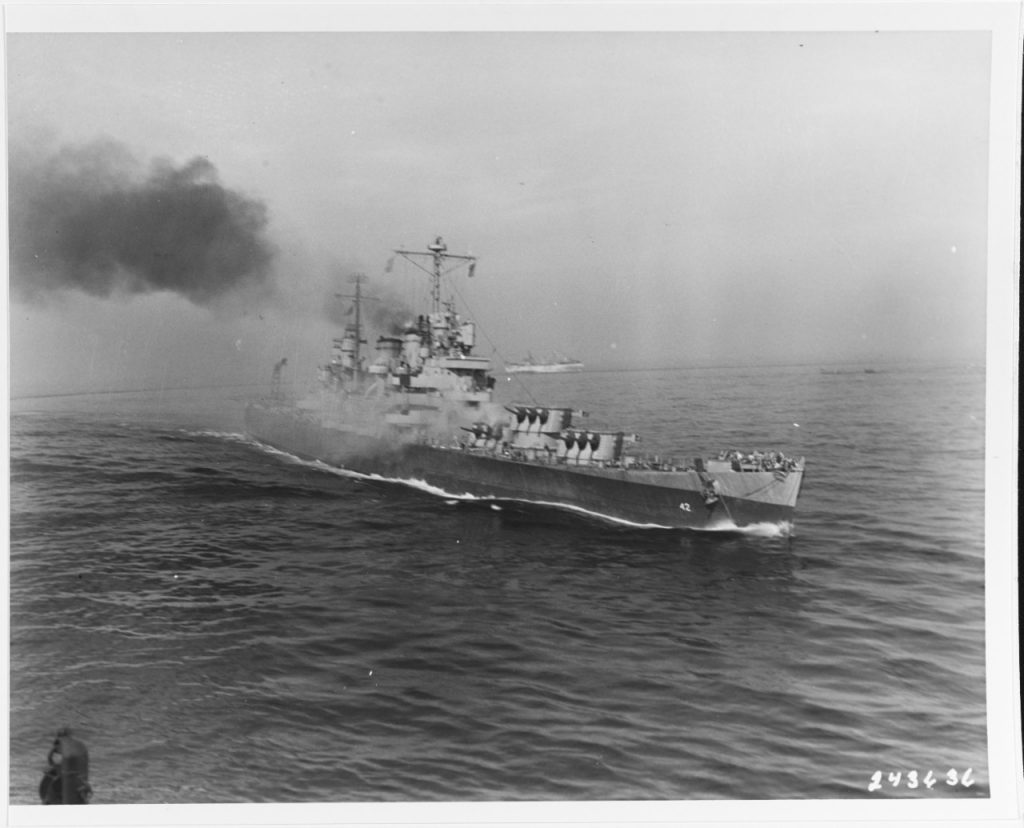 British and US Naval Ships supporting the beach landings at Salerno
The German counter attack started on 13th September. The main attack came roughly where the two Allied Corps met and two German battle groups engaged the US 36th Infantry Divsion and pushed them back. The battle groups continued to drive South West, pushing deep into Allied territory. It was eventually halted although only by naval gunfire and artillery firing over open sights. The counter attack had pushed far enough into Allied territory to make evacuation a consideration but rather than take such drastic action, the US VI Corps decided to enact a partial withdrawal to reduce the front that they had to defend.
The Germans continued their counter offensive on the 14th September, attacking along most of the Allied beach head. During the day, naval gunfire and artillery pounded the Germans while every available Allied aircraft was airborne straffing and bombing. The German losses, particularly in tanks, was high and they failed to achieve any significant break through.
Allied air attacks continued on the 15th September and began to force the Germans back on to the defensive. The continued pounding from the naval fleet was taking its toll and further attempts by the Germans to counter attack failed.
Meanwhile, the British 8th Army was continuing its slow advance up Italy. By 16th September, advanced patrols from the 8th Army made contact with the Southern most elements of the 36th Infantry Division. Relief was at hand for the Allied troops at Salerno. The arrival of 8th Army, coupled with the relentless naval and air bombardment caused the German Tenth army to request a withdrawal to which Kesselring agreed. German troops began withdrawing North on 18th September.
With the Salerno beach landings now secure, US 5th Army turned North toward Naples. British X Corps was tasked with taking the city and armoured cars from 1st Kings Dragoon Guards entered the city on 1st October. US 5th Army reached the Volturno River on the 6th October. Meanwhile, the British 8th Army had turned East and crossed the Apennine Mountains and were busy pushing up the East coast.
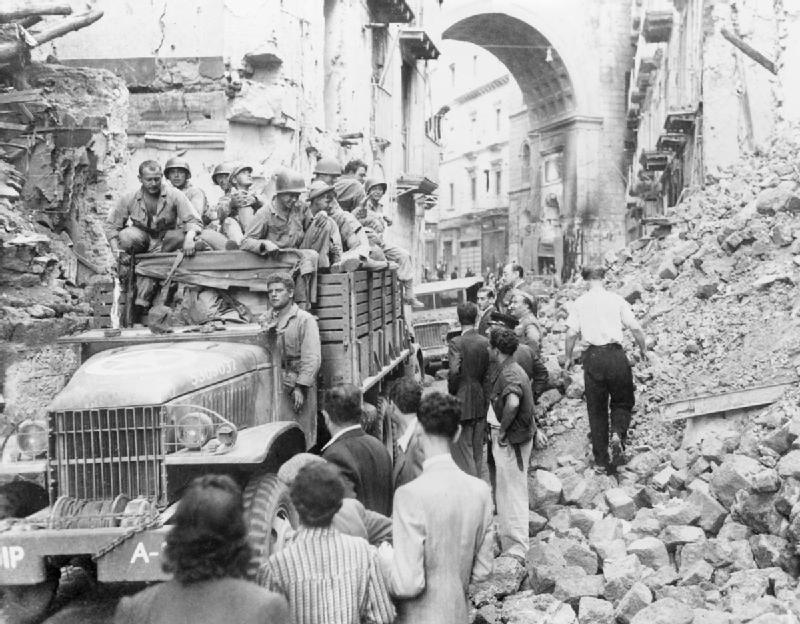 Allied troops enter Naples
Volturno Line and North to the Gustav Line
US 5th Army crossed the Volturno river on the night of 12 October and engaged the defending German forces. The defenders had not had long to prepare their defences and engaged in a fighting withdrawal while the Americans advanced. German forces gradually fell back to a much better prepared defensive line – the Bernhardt line – further North.
On the East coast, the British 8th army crossed Biferno river on 3rd October and began their assault on the defensive positions. This progressed well until the redeployed 16th Panzer Division arrived on the 4th October and launched a counter offensive. 8th Army struggled to support the Infantry North of the river due to a lack of bridging equipment and heavy rains having washed away make shift fords. By 5th October, British infantry had been pushed back and were taking heavy losses but efforts by the engineers to put in place a bridge were successful and Canadian and British armour raced the infantry’s support. They were eventually able to push the Germans back who eventually began to withdraw to North of the River Trigno.
The British 8th Army were now strung out along the East coast with well over 100km separating their front forces to their rear. Poor weather, destroyed bridges and damaged roads had caused numerous delays and supplies were struggling to reach the front effectively. Upon reaching the River Trigno, Montgomery decided to halt and reorganise to facilitate a better assault. It wasn’t until 2nd November that the 8th Army were ready to launch their attack when the 78th Infantry Division along the coast and 8th Indian Division inland crossed the river. Fighting was fierce but by the end of the day, German forces withdrew to the Gustav line.
Back on the West coast, the US 5th Army had been advancing up Route 6 and encountered the German defenders on the Bernhardt Line, a 10km deep defensive line, which ran through the town of San Pietro Infine. The town blocked the Mignano Gap and the only effective route North. It had taken the US 5th Army 5 weeks of heavy fighting to advance to San Pietro Infine and loses had been high.
German 15th Panzer Grenadier Division, on the surrounding hills, commanded an excellent view of the Allied advance and had to be removed before a more direct assault on San Pietro infine itself could take place. For a week, the 143rd Infantry Regiment of 36th Division attacked and were counter attacked before they could hold the Western hill. On the other side, 142nd Infantry Regiment, supported by 1st Italian Motorised Group, took Mount Lungo. With both sides of Route 6 now in US 5th Army hands, 141st Infantry Regiment could now assault the town itself. 16 Shermans were also sent forward however only 4 survived due to the mines and anti tank fire. After several assaults, the town was finally taken on 16th December and the Germans withdrew to the Gustav line further North. The US 5th Army had taken 16,000 casualties in the 6 weeks it took to break through the Bernhardt Line but could now advance on Monte Cassino and the formidable Gustav Line.
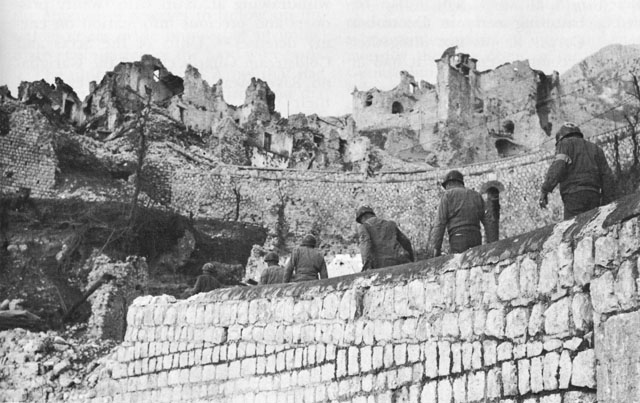 US Troops in the captured town of San Pietro Infine
Sicily Falls into Allied hands
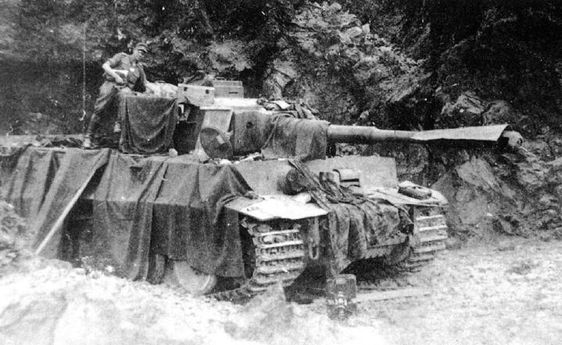 Abandoned Tiger in Sicily
In the last week of July, Allied troops took a few days to reorganise and consolidate before pushing forward toward the Etna Line. This defensive line around the South Western side of Mt Etna ran from the North coast to Catania on the East Coast. Montgomery launched the British attack on 1st August 1943 and targeted the town of Adrano, half way along the line to try to split the German defenders.
Troops from the British 78th Division and Canadian 3rd Brigade moved forward on the night of the 1st August, aiming to capture a hill overlooking Adrano. They found the position defended by the Hermann Goring Division and supported by Fallschirmjager, who were well prepared and dug in. Heavy fighting continued throughout the 2nd August as the Allied troops made gradual progress up the hill while also moving into the town of Adrano. By the morning of the 3rd August, Adrano was cleared of German defenders and the Allies had split the German defensive line.
To the North, Patton was advancing two separate divisions Eastward, the 45th along the coast while 1st took an inland road. On the 31st July, 1st Division encountered the 15th Panzer Grenadier Division dug in around the town of Troina. Like the British at Adrano, the decisive action was the capture of a hill overlooking the town on 7th August. From the lofty vantage point, US forces could accurately direct artillery on the defenders. This, coupled with the British break through on the German left flank, caused the defenders to gradually withdraw to a new defensive line set up further Eastward.
 US 30th Infantry advancing along a destroyed coastal road
The fall of Adrano allowed the British 8th Army to continue their push Northwards. Over successive days, they continued to move forward capturing towns while the Germans fought a withdrawal back to the North Eastern port town of Messina. Kesselring had already realised that evacuation to the mainland was the most likely outcome and had already started a planned withdrawal.
Along the Northern coast, the Americans had a tougher time advancing. The Germans had demolished many of the bridges and coastal road making progress slow. The excellent defensive terrain allowed the defenders to harry the Americans at every opportunity. On several occasions, Patton had to order amphibious landings further along the coast to bypass and surround defensive pockets. Despite the difficulties, the US army entered Messina on 16th August.
The defenders started to withdraw from Sicily on the night of 11th August with the full withdrawal lasting until the 17th August. Despite Allied attacks, the Germans were almost completely successful in withdrawing back to the mainland. By the morning of 18th August, Sicily was completely in Allied hands.
The campaign came at some cost, the US army lost in excess of 8,700 men and almost 1,000 naval personnel. The British 8th Army suffered over 11,800 casualties and a further 300 naval personnel. Meanwhile, the German losses were estimated at between 20,000 and 28,000. The Italian army suffered significantly, with estimates put at 4,500 killed, 36,000 missing and 32,000 wounded. Over 100,000 Italians had been taken POW.
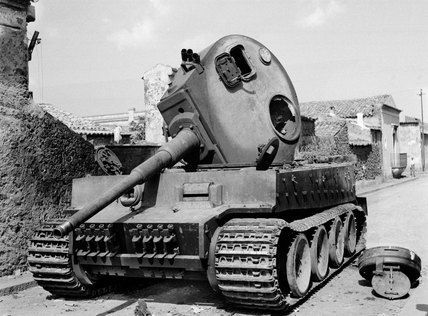 A destroyed Tiger in Sicily
The Invasion of Sicily
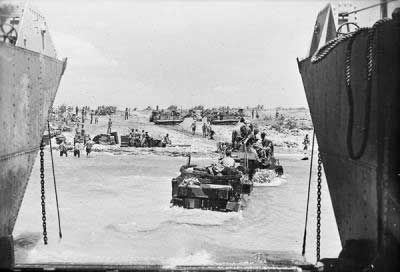 US landing in Sicily
Operation Husky was launched on the evening of 9th July. The weather had deteriorated during the day with a strong wind blowing up from the West/South West and consideration was made to postpone the assault. With the naval fleet moving into position, the risk of discovery was deemed to high and so the green light was given.
The assault called for airborne troops to land over night and capture key bridges and locations. Airborne assaults by US 504th and 505th Parachute Infantry Regiments were blown widely off course, landing scattered across a wide area of South Eastern Sicily. It took several days for these troops to meet up and become effective although many, acting independently, harassed the defenders and their supply lines wherever possible.
British air landings suffered similarly, with only 12 of the nearly 150 gliders landing on target. Of the remainder, 69 gliders crashed into the sea with the loss of nearly 200 men. British objectives included capturing the Ponte Grande, a bridge over the river Anape into Syracuse. Holding this bridge would be key to taking Syracuse and opening the port to Allied naval forces while denying the Axis an escape route to the mainland.
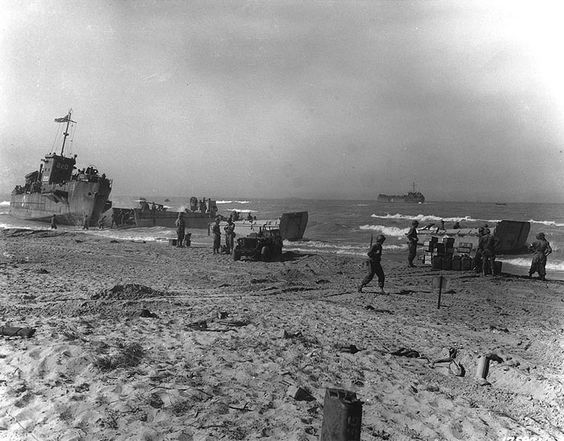 US Troops landing near Gela, Sicily
The beach landings started in the early hours of the 10th July. These were tough given the rough sea conditions but were largely uncontested. This was primarily due to the defenders believing that conditions were too bad for a beach landing to be attempted and consequently being caught by surprise.
26 beaches were used along a 105km length of coastline. US landings were tougher given the wind direction whereas the British were landing on the more sheltered East coast. The conditions put the operation significantly behind schedule but the lack of a cohesive defensive force allowed for much of this to be made up during the daylight hours on the 10th.
During the day on the 10th, US 1st Infantry Division were engaged by the defenders around Gela. They had been expecting to find elements of the 504th Airborne but ended up repulsing an attack from the Italian 4th Infantry Division Livorno. The US defence was aided significantly by the big guns aboard the US naval fleet who were able to bombard the Italians, destroying several tanks and scattering the infantry.
In the British section, 5th Division was tasked with pushing North to meet up with the airborne troops holding Ponte Grande. They arrived 45 minutes after the surrender of the 1st Airborne who had been reduced to just 17 by the Italian 75th Infantry Regiment. 5th Division quickly retook the bridge and by the end of the day had captured Syracuse, opening the port to the British Naval fleet.
Over the coming days, Allied troops continued to advance with ports and airfields being key objectives. The already captured ports were quickly cleared and opened for further troop deployments. The Axis launched a number of counter attacks and, despite coming close on a number of occasions, failed to decisively break through. By 13th July, the British 8th Army had advanced further up the Eastern coast and captured the port town of Augusta. In land, Canadian forces had pushed forward to Ragusa, capturing around 500 Italian defenders and linking up with the US Right flank. The US left flank had taken the port town of Licata and were making rapid progress along the Sicilian coast line.
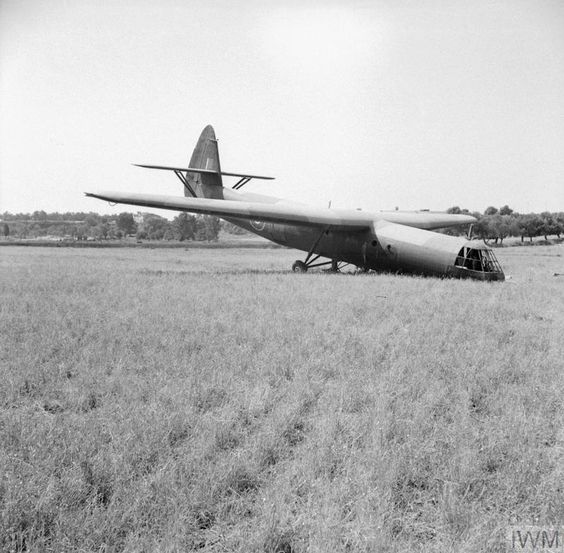 British glider abandoned near Syracuse
Albert Kesselring, in command of the German forces in Southern Europe, came to the conclusion that German forces on the island were fighting without much support from their Italian allies and ordered reinforcements to be sent. He also ordered that the Western side of Sicily should be abandoned and a shorter defensive line put in place running from Catino on the East coast to Santo Stefano on the Northern coast. This defensive line would take in the hills around Mt Etna.
Kesselring’s reinforcements, 1st Fallschirmjager and 29th PanzerGrenadier Division, began arriving later in July. They took up positions along the designated defensive line while the remaining Axis forces carried out a fighting withdrawal back to the line.
The Axis decision to abandon the Western side of Sicily allowed the US forces to advance quickly and by 24th July, the North Western most port town of Trapani had been taken. Two days earlier, US troops had entered Palermo on the Northern coast. Within less than two weeks, the Allies had the Axis pinned into the North Eastern corner of Sicily.
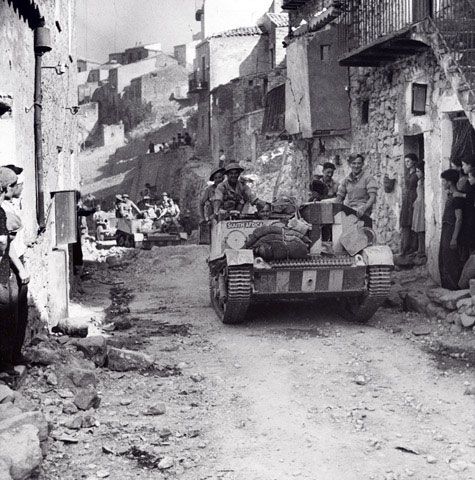 British Bren Carrier advancing through a town in Sicily
The Fall of Mussolini
Even as the Allies advanced on the Axis troops dug in on the Etna Line, in Rome, political wheels were grinding. The Italian Grand Council met on the evening of 24th July with Dino Grandi, the Count of Mordano, presenting a document outlining his concerns with Mussolini’s rule. Mussolini presented the current war situation and how the Italian army would resist the Allied advance. A number of those present were doubtful of the claims, particularly given how quickly the Allies had advanced across Sicily and that Rome was now being bombed by Allied aircraft. In the early hours of 25th July, the Council voted on the document and it was carried. It was presented to the Italian king later and Mussolini was summoned to a meeting with the king at 17:00. Mussolini expected to outline his next actions to unify the political factions but the king interrupted him and stated that the country needed him to quit. Mussolini left the meeting in a pre-prepared ambulance accompanied by police.
Marshal Badoglio was appointed replacement to Mussolini and the announcement to the Italian citizens was made almost immediately. Italians took to the streets celebrating the end of Fascist rule although martial law was implemented the following day. The Government took little action over the following weeks and Italian troops were left without orders, continuing to fight alongside their German allies but without much conviction. This effectively removed the Italian army as a reliable ally for the Germans until Italy formally surrendered on 3rd September 1943.
The German response to the fall of Mussolini was to begin redeploying troops into Italy to protect their southern front and bolster the defences there. The first divisions began moving on 26th July and in a two week period, 8 German Divisions had entered Italy without Italian consent. Italy was now effectively an occupied country.
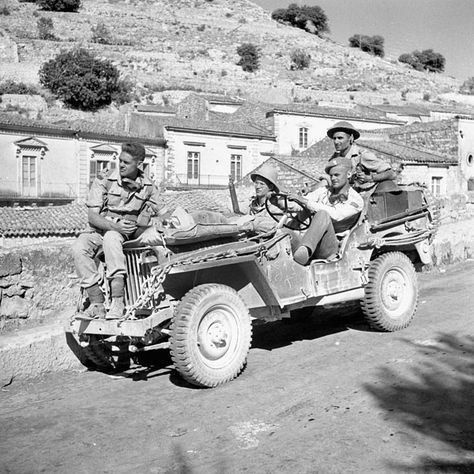 Canadians of the 8th Army
The Build Up to the Italian Campaign
The planning for an invasion of Italy started several months before the final defeat of the Axis in North Africa. During the Casablanca Conference in January 1943, British military chiefs pushed for an invasion of either Sicily or Sardinia. Indeed, Churchill himself was very supportive of the plan, famously calling Italy the ‘soft under belly of Europe’. Part of the British insistence came from wanting to protect the Southern Mediterranean and keep shipping lanes open, especially to British colonies in East Africa, India, Burma and Australia. Loss of the Med would mean extensive detours via the Cape of Africa. Furthermore, within the Med, and less than 100km from Sicily, lay the strategically important island of Malta. Malta had been under siege for most of the war and subject to constant air bombardment from Italian and German bombers based on Sicily. Holding Malta was key to maintaining Southern Mediterranean shipping lanes.
US Chiefs of Staff initially dismissed the invasion proposals as irrelevant and a diversion however were later persuaded otherwise, based primarily on the argument of maintaining safe shipping lanes. Allied commanders and politicians were also grimly aware of the situation in Russia and the invasion of Sicily would open a new front. This would have the effect of diverting German troops from the Russian front and alleviating some of the pressure on the Russians while also demonstrating to the Russians that they were capable and able to take on Germany on mainland Europe.
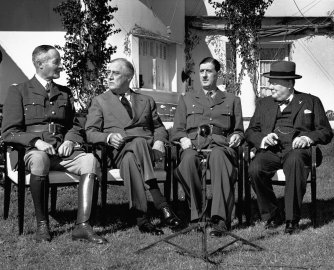 Allied leaders at Casablanca, January 1943
General Eisenhower was appointed Chief of Command and General Alexander was appointed Deputy CoC. Admiral Cunningham took command of the naval fleet while Air Chief Marshal Tedder was appointed Air Commander. There was much discussion around suitable landing sites and strategic planning with several options rejected. Montgomery’s proposal was finally agreed on calling for a two pronged attack with the US 7th Army, commanded by Patton, landing between Licata and Scoglitti on the Southern Sicilian coast. The British 8th Army were to land between Pachino and Syracuse on the Eastern coast. The plan was code named Operation Husky.
Allied commanders were concerned with the airfields in Sicily allowing the Axis’ air force to launch counter strikes against the troops as well as the supporting naval fleet. Prior to the invasion, Allied bombers relentlessly attacked the airfields and by the start of the invasion, all but two were rendered inoperable. To further confuse matters, the Allies set about ‘Operation Mincemeat’ that arranged for a corpse, dressed as a British Royal Marine officer and carrying a briefcase, to wash up on the shores of Spain. Inside the briefcase were detailed top secret plans for Operation Brimstone, the proposed Allied invasion of Greece. German high command accepted the papers as valid and diverted some troops to defend Greece rather than Sicily.
The Axis in Sicily
The Italian 6th army, commanded by General Alfredo Guzzoni, was tasked with the defence of Sicily and numbered around 200,000 men. About half this number were support staff and inferior coastal defence forces who were placed as a screen in front of the more experienced and better equipped field units. The general plan being for the field units to intervene when and where the coastal defence units required support.
Attached to the Italian 6th Army were around 32,000 German troops and 30,000 Luftwaffe ground support teams. The majority of these troops were part of the Herman Goring Panzer Division and the 15th PanzerGrenadier Division. In total, these two divisions could field around 150 tanks to support the infantry.
Project Background
I spent a large part of my 2018 hobby building up to this project. You can see the progress of this with the two sister projects I created. In those, I painted the necessary armies and terrain for playing out these battles. These projects are not yet complete and will continue to run in parallel with this one.
You can find the Terrain Build project here:
https://www.ontabletop.com/project/1222955/
And the army build project here:
https://www.ontabletop.com/project/1224831/
So why the Italian campaign? Partly it’s because it is a little (not much) off the beaten track of WW2 gaming and understanding. Partly it’s due to the hard fought battles and heroic actions on all sides that took place there. Partly the setting and my fondness for Italy. There’s also the fact that the local Royal Sussex Regiment fought there alongside a huge number of nationalities – indeed, if there is one theatre of operation in WW2 that was truly global, Italy must be it. French, Algerian, Canadian, US, British, Polish, New Zealand, Italian, Indian, German, Nepalese, Moroccan and Brazilian soldiers all fought on the Italian mainland, many at Cassino. So it is hard to explain exactly why, but the Italian campaign sparked my interest and led me down the historical wargaming road – a road that I had not trodden before….
Before I start this project in earnest, I will point out that I’m not an amateur historian, more of an ‘interested bystander’. With this in mind, I expect that there will be many errors and inaccuracies. I also expect that there will be some grossly incorrect assumptions. For all of these, I apologise in advance and hope that the errors will be pointed out in the comments.
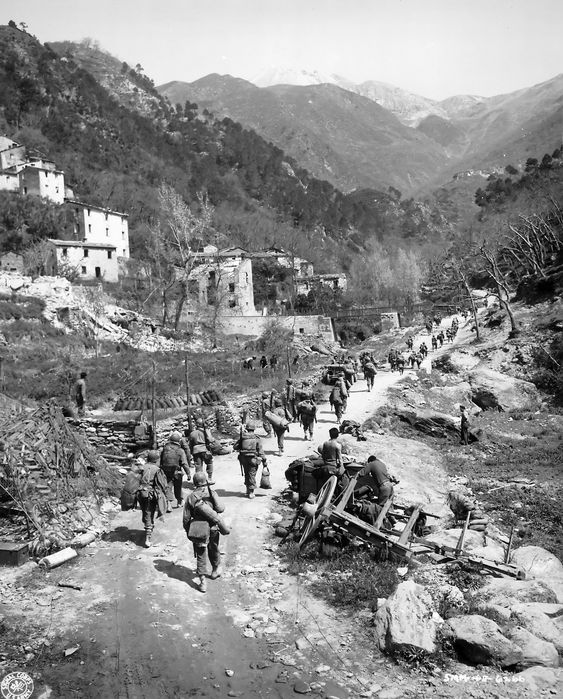 US 92nd Infantry (Buffalo Soldiers) in Tuscany, 1944

![Games Workshop Kick Off Grot Week For Warhammer 40,000 [Updated]](https://images.beastsofwar.com/2026/04/grot-new-40k-news-cover-600-338.jpg)