Google Analytics is a powerful tool that tracks and analyzes website traffic for informed marketing decisions.
Service URL: policies.google.com (opens in a new window)
_gat
Used to monitor number of Google Analytics server requests when using Google Tag Manager
1 minute
_gid
ID used to identify users for 24 hours after last activity
24 hours
_ga_
ID used to identify users
2 years
_gali
Used by Google Analytics to determine which links on a page are being clicked
30 seconds
_ga
ID used to identify users
2 years
__utmx
Used to determine whether a user is included in an A / B or Multivariate test.
18 months
__utmv
Contains custom information set by the web developer via the _setCustomVar method in Google Analytics. This cookie is updated every time new data is sent to the Google Analytics server.
2 years after last activity
__utmz
Contains information about the traffic source or campaign that directed user to the website. The cookie is set when the GA.js javascript is loaded and updated when data is sent to the Google Anaytics server
6 months after last activity
__utmc
Used only with old Urchin versions of Google Analytics and not with GA.js. Was used to distinguish between new sessions and visits at the end of a session.
End of session (browser)
__utmb
Used to distinguish new sessions and visits. This cookie is set when the GA.js javascript library is loaded and there is no existing __utmb cookie. The cookie is updated every time data is sent to the Google Analytics server.
30 minutes after last activity
__utmt
Used to monitor number of Google Analytics server requests
10 minutes
__utma
ID used to identify users and sessions
2 years after last activity
_gac_
Contains information related to marketing campaigns of the user. These are shared with Google AdWords / Google Ads when the Google Ads and Google Analytics accounts are linked together.
90 days























![Sneak About With Star Wars: Legion’s Guerilla Troopers & More [UPDATED]](https://images.beastsofwar.com/2026/09/g-troops-star-wars-cover-600-338.jpg)







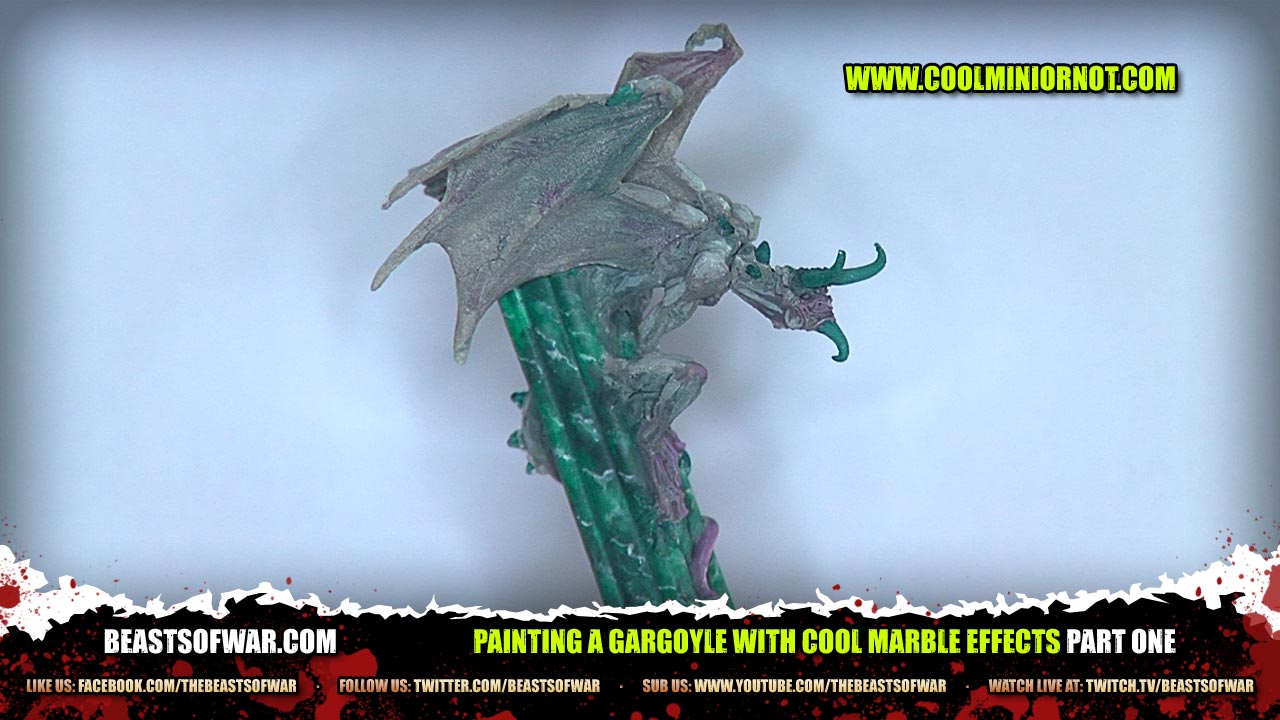
This is a great project you show to us. Wait for the next video where the marble effect comes little more. Those are the more interesting things.
Very nice tutorial. After seeing the finished product I cannot wait to watch the next video.
I’ll definately will be trying this out, I’ll be digging out something suitable to paint from my mountain of lead tomorrow.
Gargoyles have pipes in their digestive tract? Never heard that one before…
Nice tutorial. Now that we’ve gotten the Color Theory (and we are all now pro 😉 ) – why not tell us when you are desaturating, and when you are changing value, and any color temperature considerations?
Technically, the architectural element known as the “gargoyle” is merely a gutter in statue form. It has a pipe from its mouth to its back…
If it’s just a statue without a pipe, it’s called a “grotesque”.
Trust me, I live in Paris… I know my gargoyles.
As for linking to color theory… here, I’m using very mineral colors, so they’re not very saturated, except for the green that is supposed to be striking. Notice how I’ve chosen three tones : a green major, a purple/pink minor, and a very desaturated greyish blue to unify them both. The eye is attracted to the saturated green and the pinkish details, as well as the clear veins in the darker marble… Well, at least, that’s the desired effect.
This tutorial was filmed before the color theory videos, I believe… But in any tutorial, or looking at any miniature, you can find out for yourself what choices the artist did, now that you know all about it. That’s half the fun in watching someone else’s work !
BoW Romain
I’ve looked at many marbles and most are somewhat translucent. Now I know it’s almost impossible to get a true marble effect without recasting it in clear resin and working it up in very thin layers. Would painting and varnish in stages work if done a few times?
Yes ! However, at this scale, it’s unnecessary…
Good results can be obtained with one or two simple coats of glossy varnish, no need to paint again and varnish some more (even though you can).
The best polished marble I’ve done was later covered with… GW’s artificial water, applied with a brush ! It’s essentially a very thick glossy varnish… It works like a charm.
BoW Romain
Thats a good tip. I’ll try water effect over the finished area.
how have you prepared the model prior to painting the marble???????????
Removing one mold line, putting it together with superglue, white priming.
That’s it…
BoW Romain
Your primer looks very fine , can you tell us what brand it was ?
Sure !
Plain and simple, it’s only Citadel’s skull white spray can. That’s what we had lying around at the studio at the time.
It’s perfectly good and easy to use.
The Army Painter also does a very fine spray, also perfectly good and easy to use, but one has to spray slightly closer.
We’ve also used Model Mates sprays, and they’re very good indeed. Just as good, just as easy, but, strangely, one has to spray further away than the Citadel ones.
I don’t like the Tamiya sprays personnally, but many painters prefer the “feel”…
Whatever you use, always follow the instructions !
BoW Romain
I find when painting I start with the metallics then paint any flesh areas then build up from the inside out. So I was curious to see you started with the marble rather than the gargoyle.
Also do you green stuff the neck join at some stage?