







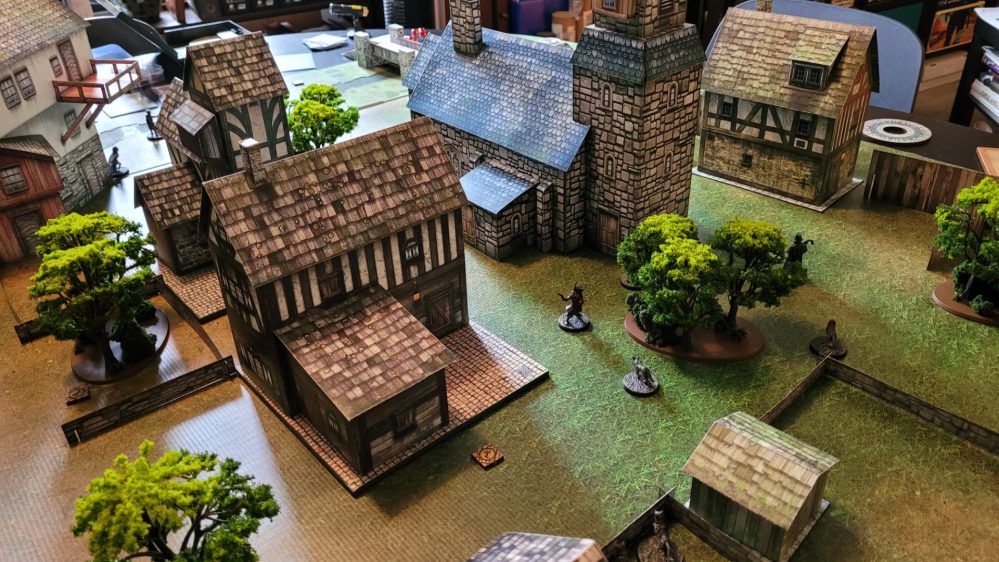
Guards of Traitor's Toll, or Possibly Return to Whitby




Welcome to Traitor's Toll
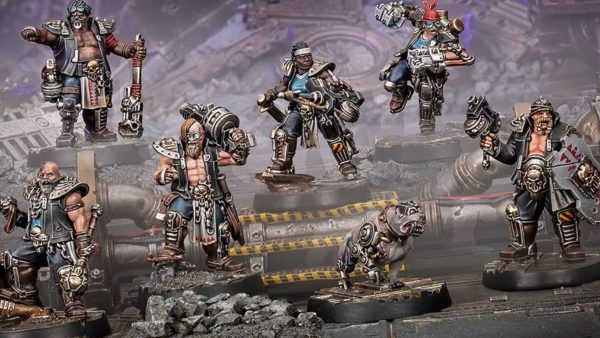
We played through the training game over the weekend. It’s designed to teach the basics of the game without overwhelming the players, which is nice since Guards of Traitor’s Toll features a lot of unusual concepts. We played with squads of three guards each, and were given a deck of four plot cards that asked us to break up a smuggling operation. The first plot introduced the game’s movement rules, which are intended to simulate the idea of guards on a meandering patrol of the city until they spot some obviously suspicious activity to investigate.
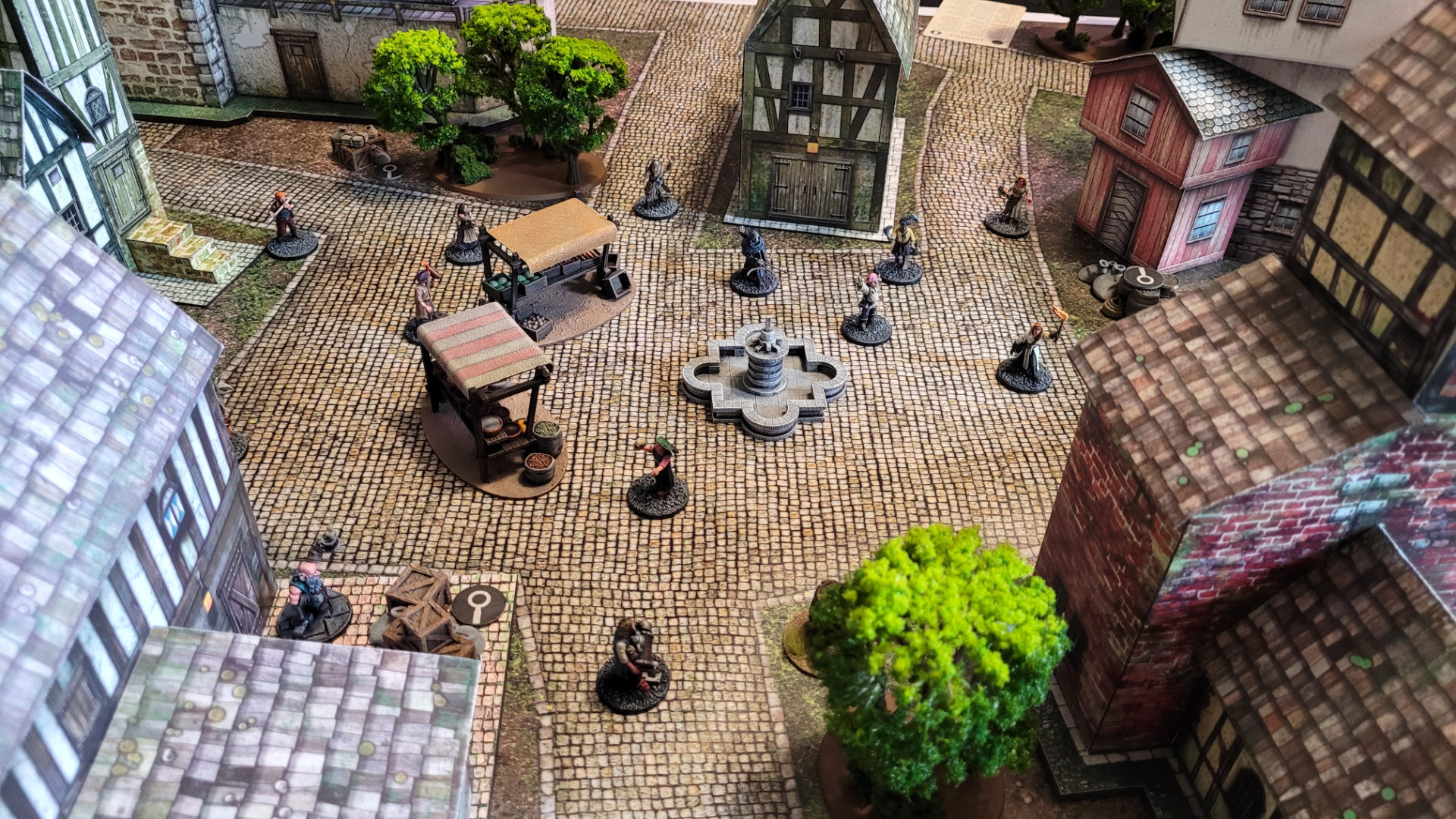 Another peaceful day in Traitor's Toll.
On each guard’s activation, they are given a choice of random directions they’re required to move in, unless they have a clear target within view. Normally I don’t like random movement in skirmish games, but in this case it was one of many unusual mechanisms that only makes sense when you consider the highly narrative nature of the game — in practice I found that it didn’t bother me too much until near the end of the game when there was only one suspect left and I couldn’t get close enough to “spot” her because my guards kept meandering in random directions.
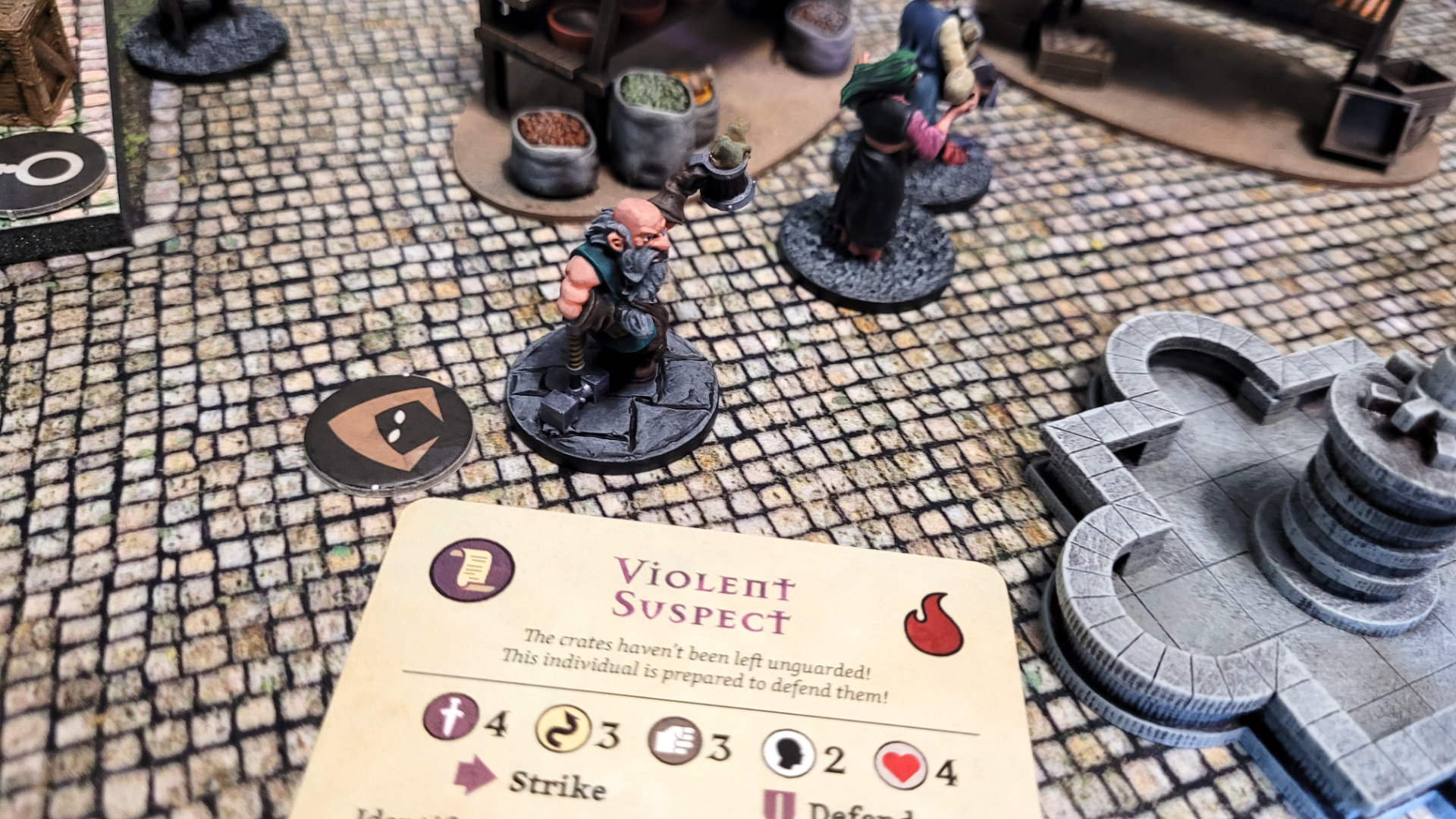 Naturally, the drunk dwarf got violent when we started poking around in his crates.
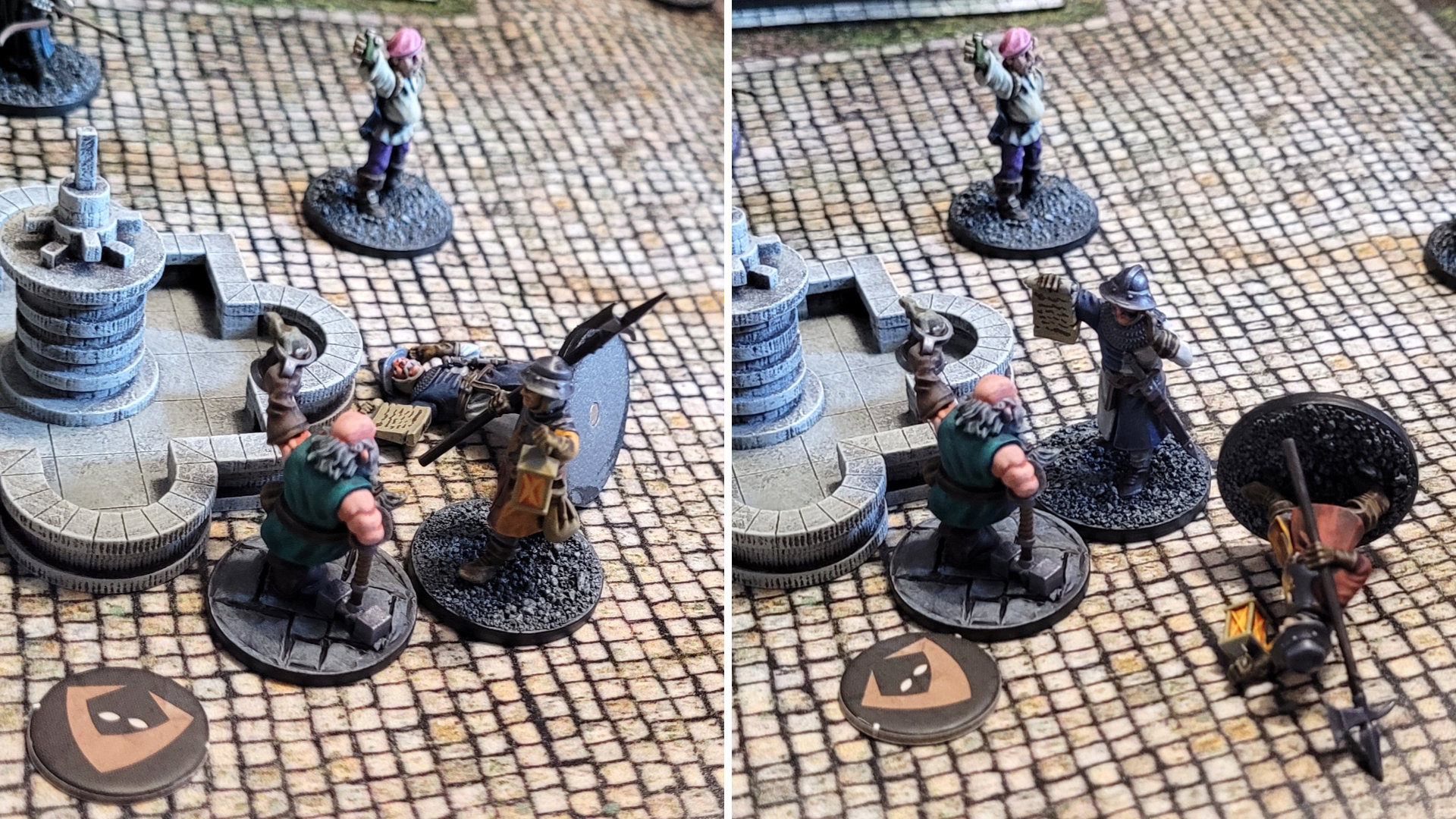 Our guards were literally stumbling all over each other to arrest the suspect.
Once you’ve identified a suspect and managed to get close enough to them to attempt an arrest, combat and damage are fairly straightforward. However, here the game uses another one of my pet peeves in skirmish game design: requiring multiple rolls to make a successful attack. In this case, you decide whether the attack is intended to wound or subdue, then roll; if the target hasn’t activated yet, they get a reaction to try to avoid the attack. If they don’t manage to evade, you have to make another roll to either inflict damage, or subdue and restrain the target. It’s something that really turned me off of the Warlord Judge Dredd game, and it’s not doing this game any favors either.
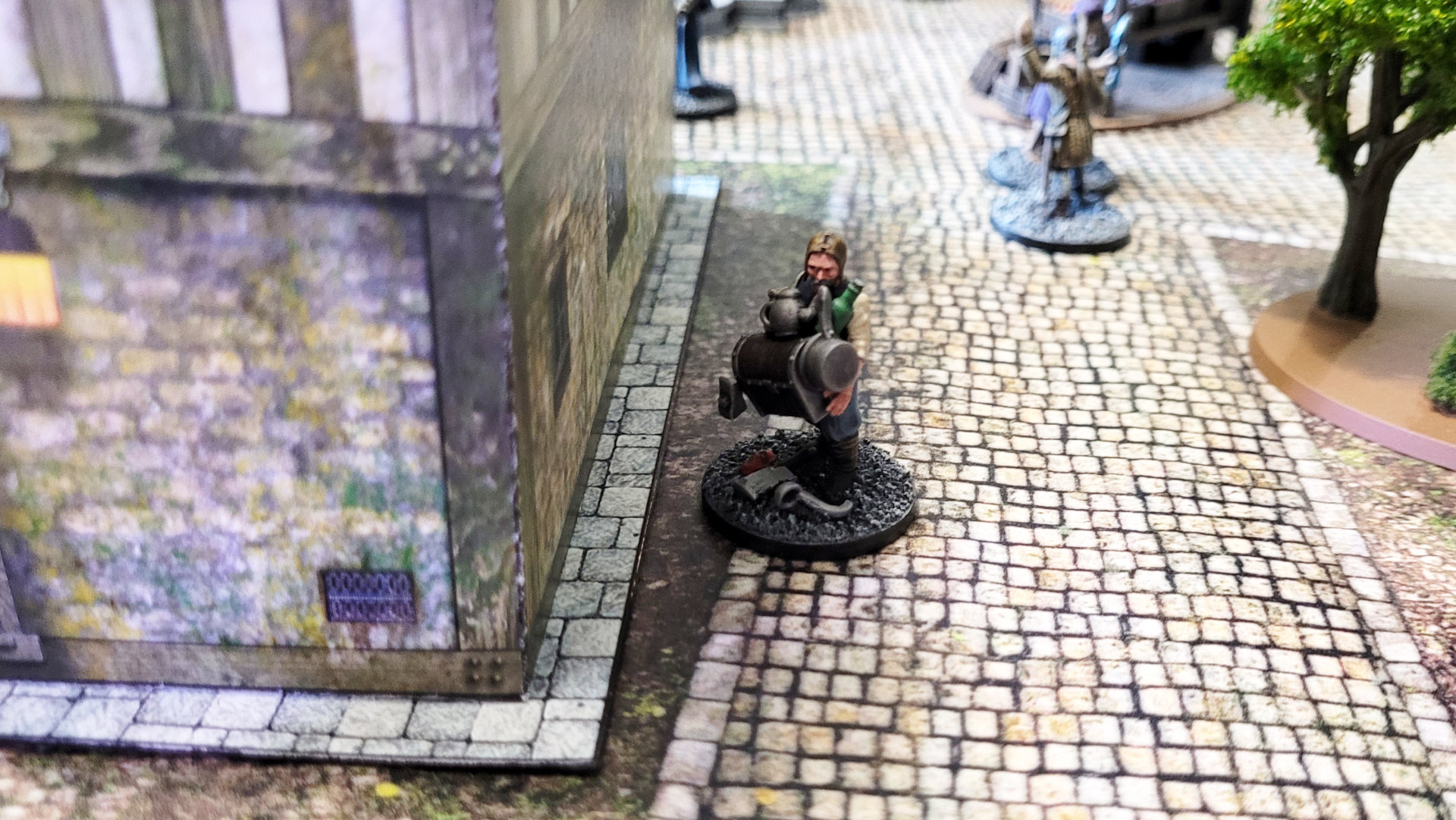 This guy nearly made it off the board will all that loot.
Another minor quibble was that, with 20 or more non-player models on the board, getting a tape measure in for movement was often very difficult, especially when most of the models are moving in random directions. I think this aspect of the game might be made much easier by playing on a one-inch hex grid, so to that end I’ve ordered a vinyl mat with such a grid on it. We’ll see if it helps in our next game.
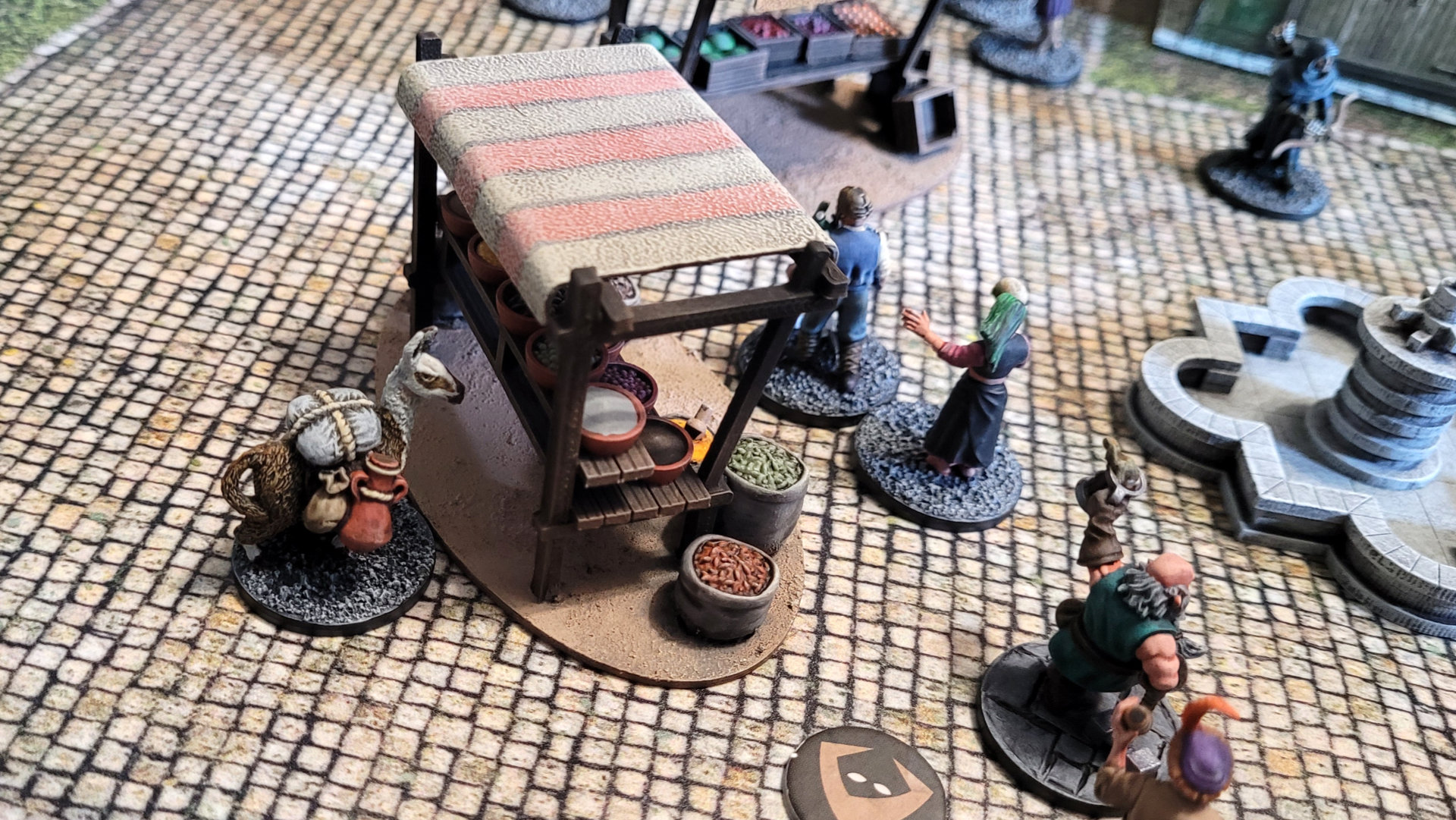 I don't care what anyone says, that llama looks shifty.
There may be one or two mechanisms I’m not 100% sold on, but overall I still found the game enjoyable enough that we’ll try a full game as soon as we get a chance. Tactically, we learned that it’s best to have your guards patrol in groups of two or more — arrest attempts are much easier if you can gang up on the suspect, especially if at least one of your guards has a rope or chain, or even an open hand. The game is highly narrative in that respect: a lot of the mechanisms seem random and arbitrary, but they lead to fun story moments, which seems to be the whole point of this game.






![Sneak About With Star Wars: Legion’s Guerilla Troopers & More [UPDATED]](https://images.beastsofwar.com/2026/09/g-troops-star-wars-cover-600-338.jpg)