







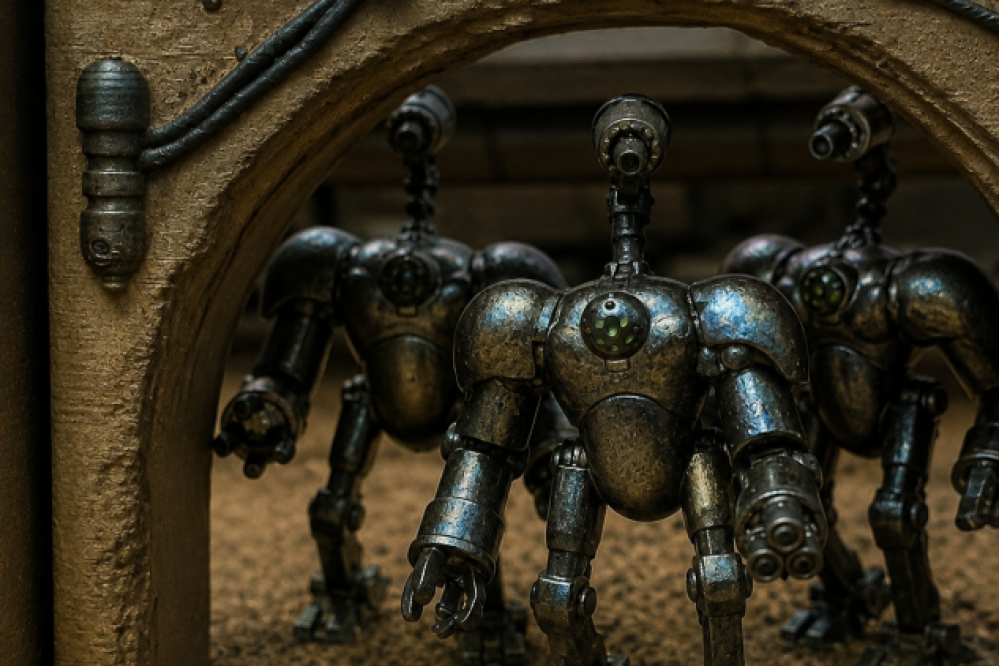
Conquering the verse, one parsec at a time.




The People
The Comfort of Tomorrow
For all its corruption, violence, and corporate cruelty, Veyr’s Fall does not feel like a dying world to everyone who lives there.
Many citizens still go to work, watch the news, pay their dues, raise their children, follow celebrity scandals, argue over sports leagues, and queue for ration supplements while telling themselves that things are not as bad as they seem. The streets may be patrolled by corporate-backed security drones, the hospitals may be owned by Helix, the job markets controlled by Civitas, and the newsfeeds shaped by Verity, but life continues. So, people adapt.
Some are simply ignorant. They do not understand how deeply the Heptagon controls the planet. They believe the official broadcasts, trust the public statements, and accept that every crisis has an explanation. A refinery explosion is an accident. A missing activist was probably involved in a crime. A food shortage is temporary. A police raid was necessary. The corporations may be powerful, they say, but at least they keep things running.
Others are too exhausted to care. A worker finishing a fourteen-hour shift does not have the strength to think about political corruption. A parent trying to keep their children fed does not have the luxury of revolution. A wounded officer with Helix medical debt cannot afford ideals. For many, survival has become so demanding that truth itself feels like another burden.
Then there are those who choose not to see.
Corporate stimulants, mood regulators, sleep suppressants, focus chews, ration additives, and cheap neural entertainments are everywhere. They keep workers productive, citizens calm, and despair manageable. Whole districts drift through life half-awake, chemically brave and emotionally numb, smiling at advertisements that promise stability, promotion, relocation, or a better family future.
Fear does the rest.
People learn which questions not to ask. They learn when to lower their voices. They learn that noticing too much can cost a job, a permit, a marriage licence, a medical renewal, or a child’s school placement. So, they polish their illusions. They tell themselves the system is flawed but necessary. They say that tomorrow will be better. They believe the right promotion, the right application, the right sponsor, or the right corporate programme will lift them above the misery.
And sometimes, for a lucky few, it does.
That is the cruellest part of Veyr’s Fall. The dream still works just often enough to keep people chasing it.
Most citizens are not blind because they are foolish.
They are blind because seeing clearly would break them.




![Sneak About With Star Wars: Legion’s Guerilla Troopers & More [UPDATED]](https://images.beastsofwar.com/2026/09/g-troops-star-wars-cover-600-338.jpg)