







Conquering the verse, one parsec at a time.



Recommendations: 122
About the Project
On Veyr’s Fall, civilisation is dying quietly. Mega-corporations rule through puppet governments, bought officials, sabotage, and carefully managed lies. Every contract has a hidden patron, every favour has a price, and even honest soldiers sell what they must to survive. Our crew begins among the smoke, corruption, and neon markets of this collapsing world, taking whatever work keeps the ship flying. But Veyr’s Fall is only the first step. Beyond its poisoned skies lie rival colonies, distant trade routes, corporate secrets, lost survey teams, and uncharted planets waiting to be claimed. There is no set course. The crew may become mercenaries, fugitives, explorers, settlers, or something far more dangerous. Somewhere beyond the known lanes, a new world may offer a fresh beginning.
Related Game: Five Parsecs From Home
Related Company: Modiphius Entertainment
Related Genre: Science Fiction
This Project is Active
Vehicles
Unfortunately, the game we had lined up to play this weekend to continue our campaign had to be postponed due to injury.
On the plus side, it did free up some time for me to do some Sci-fi Vehicles to help pretty up some future terrain layouts.
I printed these out in PLA on my K1 Max’s and then just painted them up with rattle cans before using a sponge to add some chipping and then just the odd bit of detailing here and there.
I will probably go back over them and add some more detailing later, but for now they look like pretty generic industrial vehicles that fit in with my somewhat downtrodden setting.
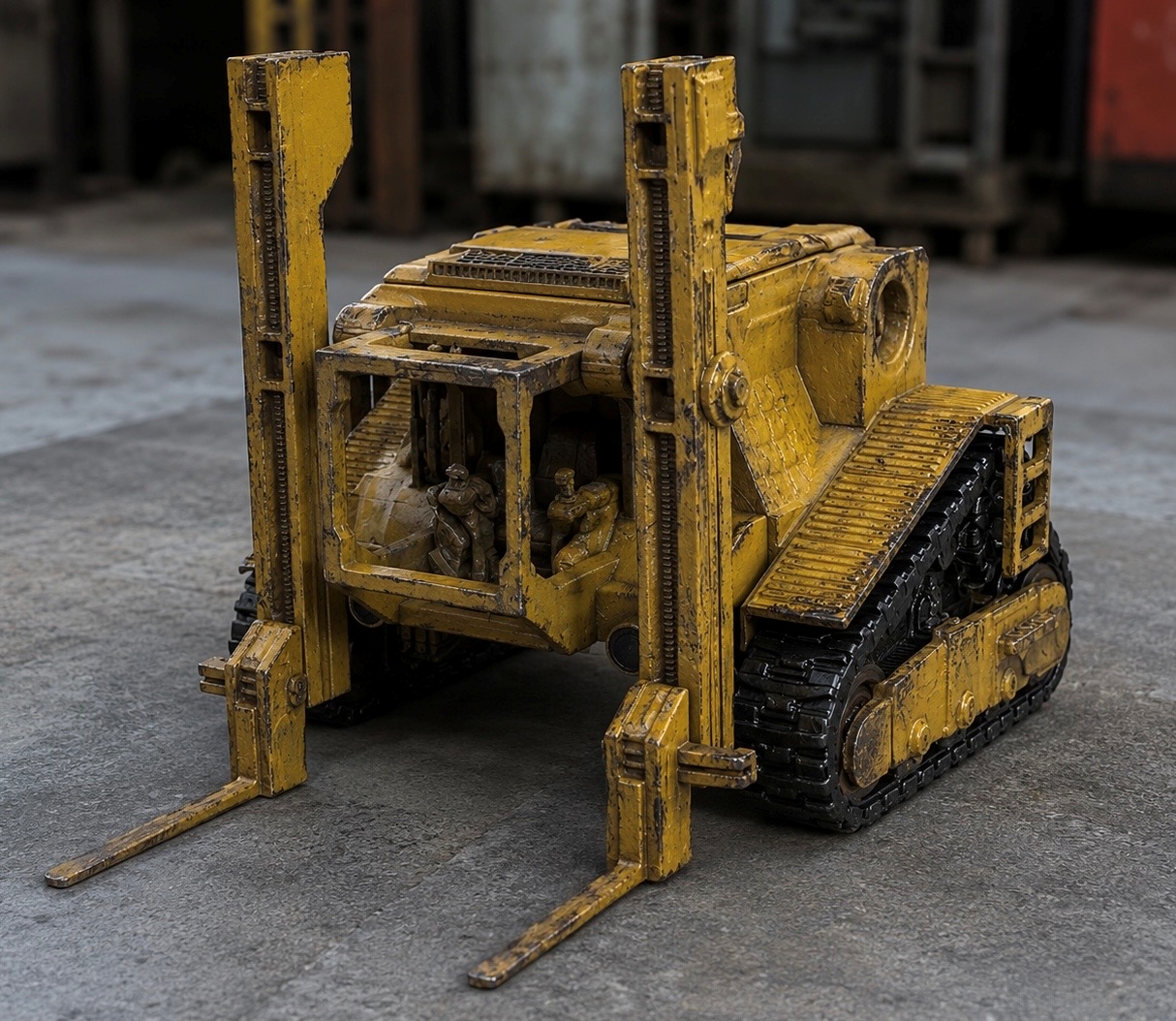
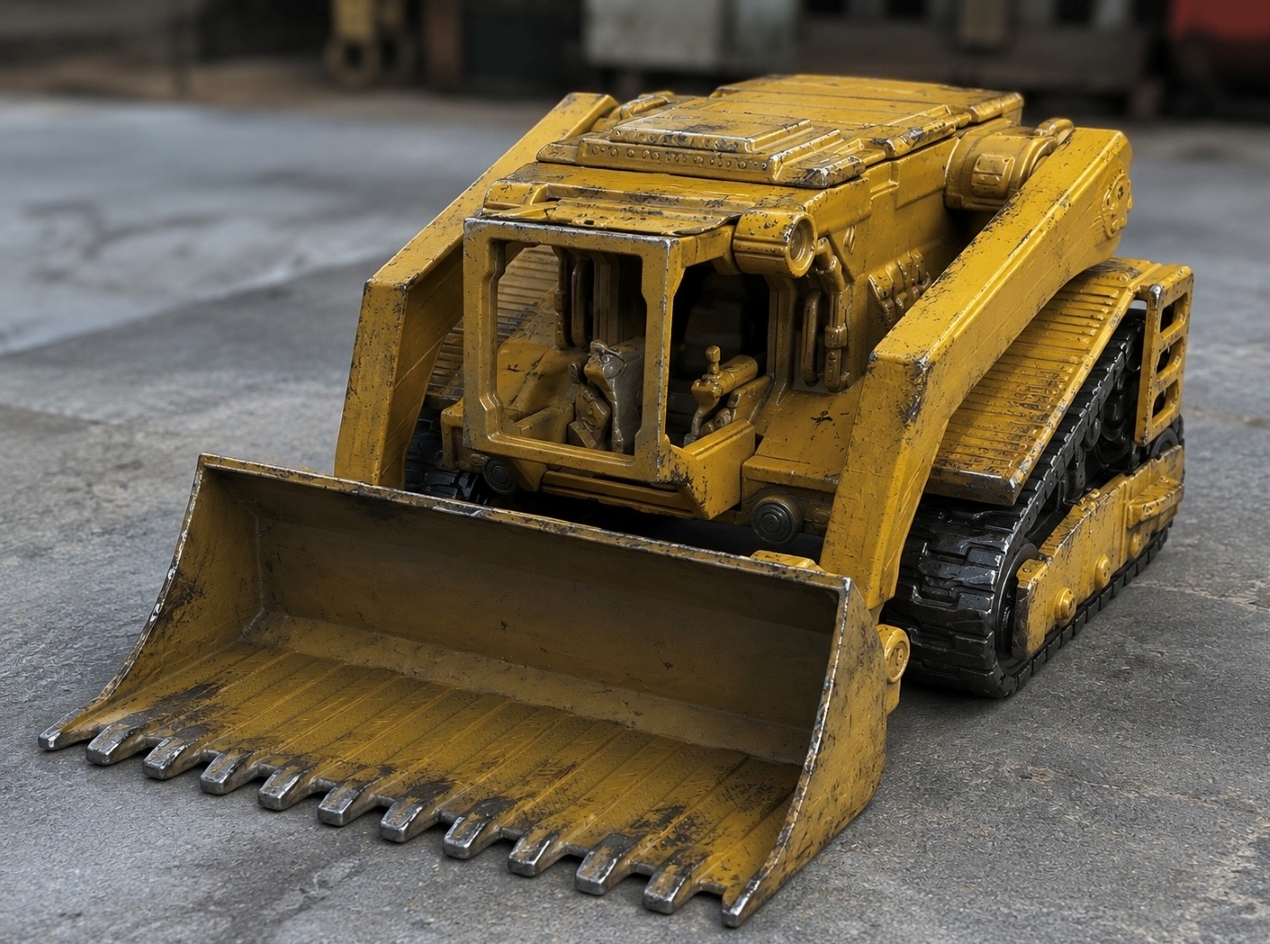
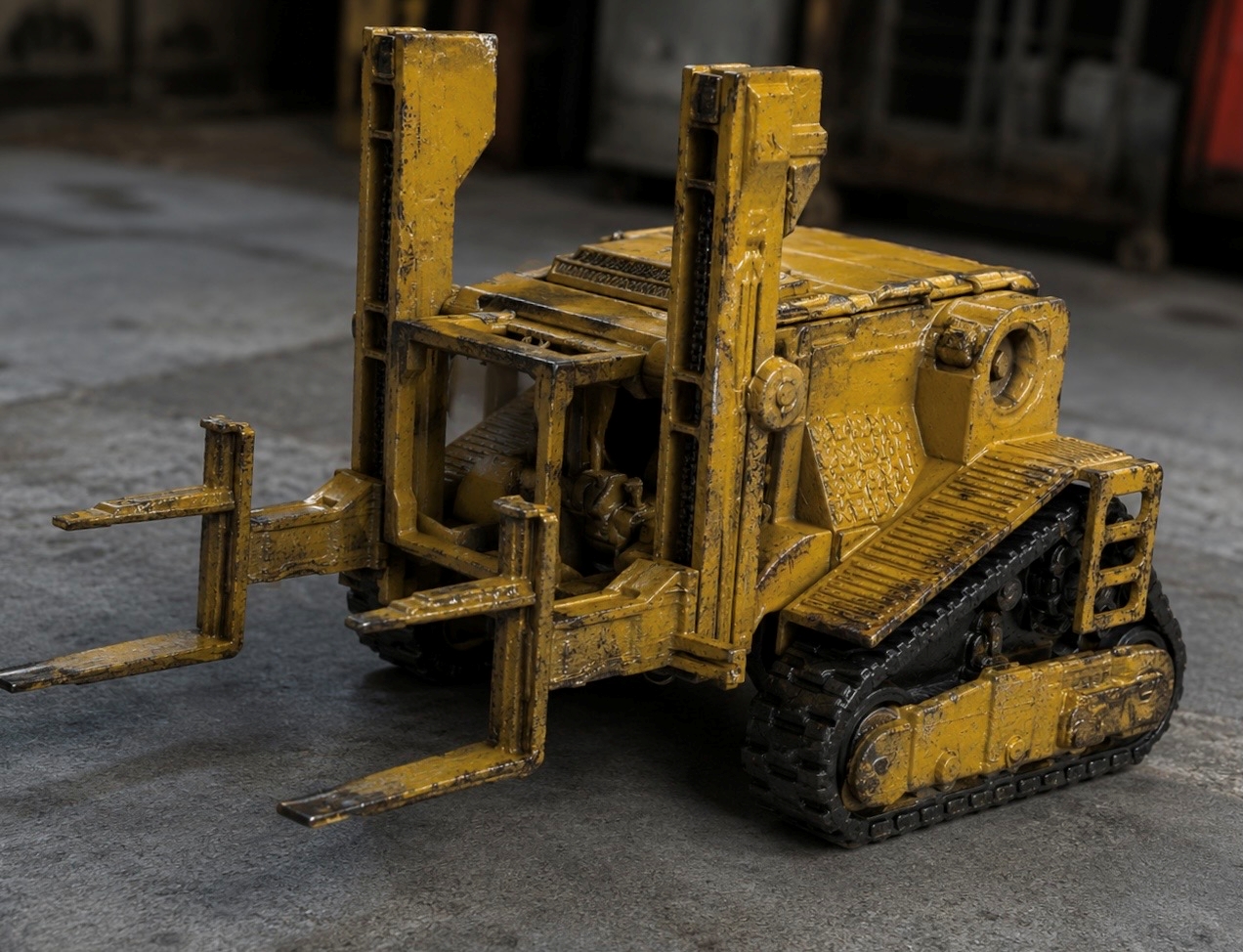
I actually printed a few of the chassis and multiples of the interchangeable ‘tool’ components so I can switch them around if needed.
The roofs are removable, allowing figures to be placed inside. Which reminds me I need to print out and paint some seated versions of our crew.
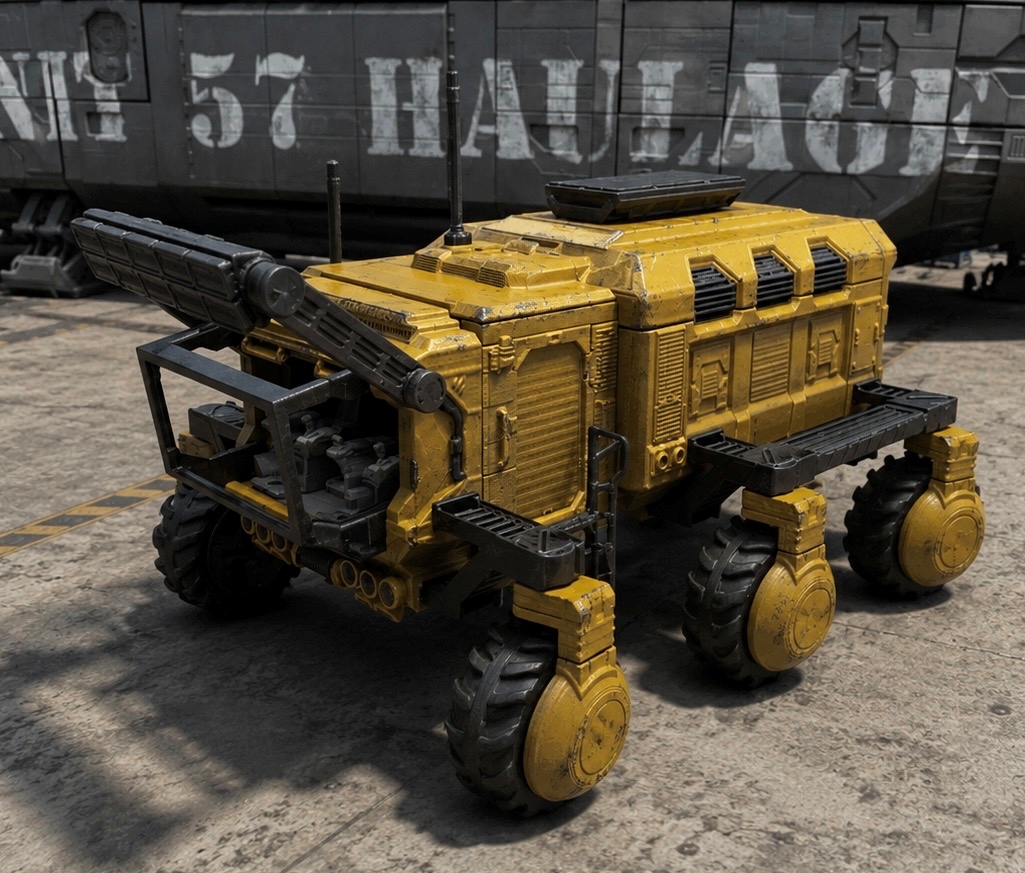
The larger explorer-type vehicle has room for 8 figures inside, and once again, the roof is removable.
Cerberus Class 4 Freighter
Part of the game is travelling from one planet to the next, and for this, you need some form of spacecraft.
It is not necessary to actually have a model to represent this ship. Still, I am completely for doing the unnecessary whenever possible, so I set about making a 28mm spaceship to represent the ‘Worn Freighter’ we rolled out when generating our starting crew.
Thankfully, the 2nd Dynasty has a range of 3D printable 28mm Starships, for which I bought the STLs some time ago.
On a side note, my crew also come from the 2nd Dynasty, and I like the way that they have various poses of the same model, including sitting and lying models. You will probably notice that I change from armed and unarmed models in some of the pictures. It really just depends on which model we pick up to use at the time, as to which gets photographed.
Anyway, back on topic, the ship.
Cerberus Class 4 Freighter
General Specifications
Length 54m (180 ft)
Beam 13.5m (45 ft))
Depth 10.5m (35 ft)
Crew capacity 8
Decks 3
Auxiliary Craft 1 x Minnow Lander (6 passenger capacity)
Escape Pods 2
Overview
The Cerberus Class 4 Freighter is a versatile medium-haul cargo vessel designed for independent operators, frontier merchants, survey teams, and colony-support missions. Building upon the proven design of the Class 3, the Class 4 introduces enhanced safety features and greater operational flexibility while retaining the rugged reliability that made its predecessor popular throughout settled space.
The most significant improvement is the addition of two dedicated escape pods mounted within the upper deck. While this increases crew survivability during emergencies, the modification comes at the cost of reduced accommodation space.
Crew Accommodations
Unlike the Class 3, which offered individual crew cabins and additional guest quarters, the Class 4 adopts a more utilitarian arrangement.
The upper habitation deck contains:
- 4 crew cabins, each fitted with 2 bunk berths
- Accommodation for a total crew of 8
- 4 large storage rooms replacing the former guest quarters
While less luxurious than its predecessor, the revised arrangement provides significantly more internal storage capacity for long-duration voyages and colonial operations.
Internal Layout
Lower Deck
The majority of the vessel’s internal volume is dedicated to cargo operations.
Features include:
- Large central cargo hold
- Heavy-duty side loading ramp
- Vehicle and pallet handling space
- Access to the Minnow lander
The cargo bay occupies the central section of the vessel and can handle a wide range of commercial and industrial freight.
Main Deck
The forward section houses the ship’s command and operational facilities:
- Spacious bridge
- Situation room and briefing area
- Fully equipped galley
- Crew recreation and dining facilities
Beneath these areas lie the vessels:
- Main data cores
- Servo banks
- Primary control systems
- Communications and sensor processors
Together, these form the ship’s central nerve centre.
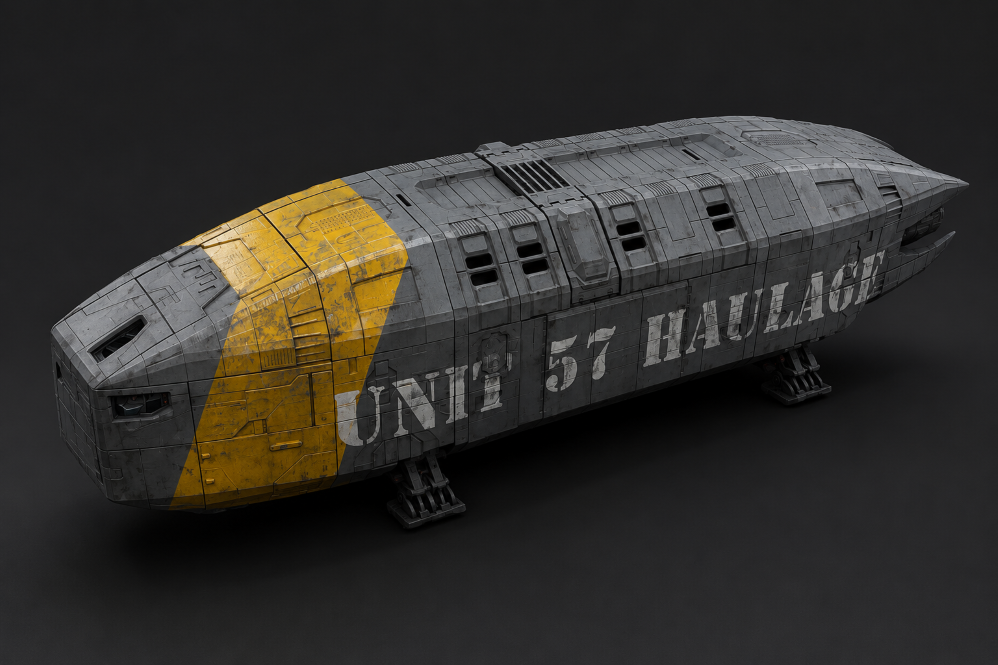 Disclaimer - AI used to put image on a black background because I didn't have a large enough piece of black card.
Upper Deck
The upper deck contains:
- Four bunk cabins
- Four storage rooms
- Two escape pods
- Access crawl spaces for maintenance
The layout is designed to maximise utility while ensuring rapid evacuation capability.
Engineering Section
Occupying the aft third of the vessel is a large engineering compartment built around the ship’s twin primary thrusters.
Features include:
- Full-height maintenance access
- Twin fusion drive assemblies
- Power distribution systems
- Environmental control machinery
- Tug Hauling Close Proximity Tractor Beam Arrays
The generous engineering space allows maintenance crews to service most major systems without the need for external dock facilities.
For those difficult-to-reach jobs, an Aft airlock is located between the main thrusters.
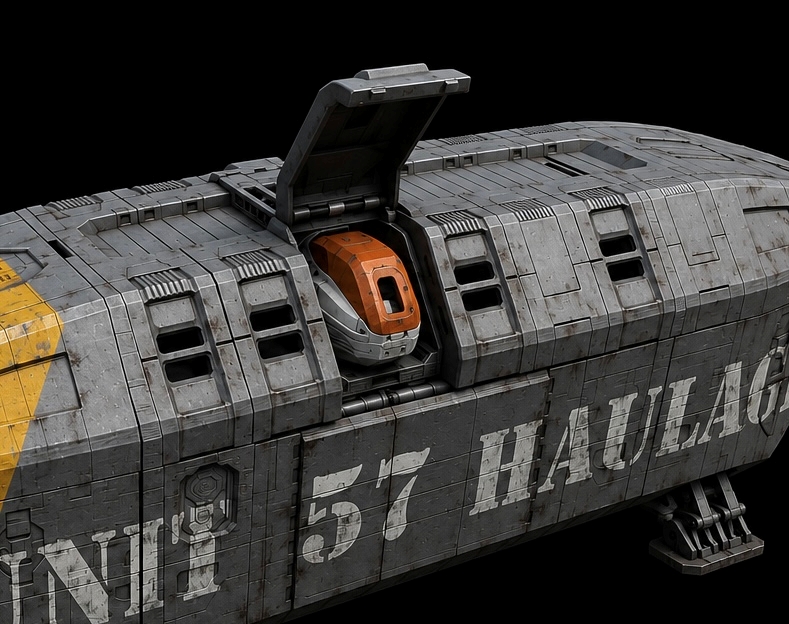 Disclaimer - AI used to put image on a black background because I didn't have a large enough piece of black card.
Minnow Lander
Every Cerberus Class 4 is delivered with a standard Minnow utility lander.
Capabilities include:
- Crew capacity: 6 personnel
- Surface-to-orbit supply runs
- Emergency evacuation support
- Survey and scouting missions
The Minnow allows the freighter to conduct operations on worlds lacking developed starport infrastructure, making it particularly valuable for colonial and frontier work.
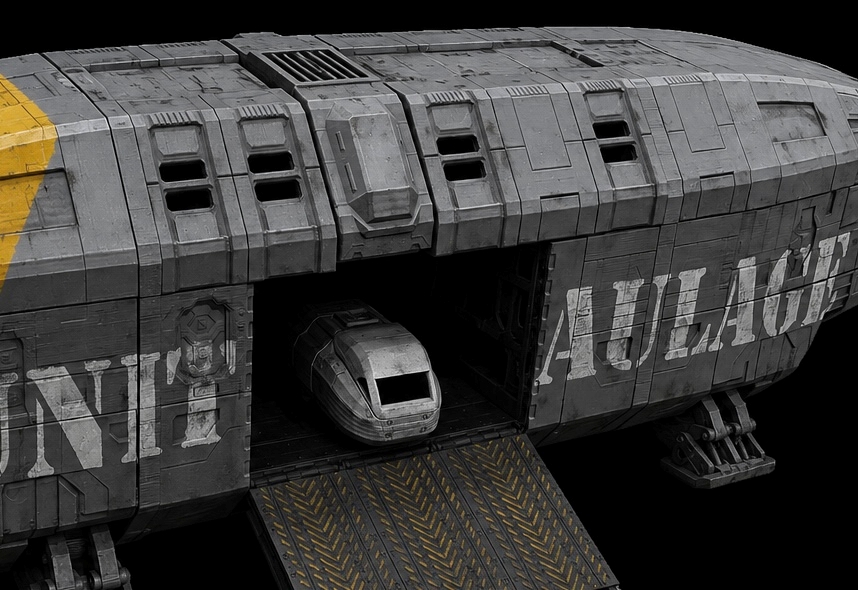 Disclaimer - AI used to put image on a black background because I didn't have a large enough piece of black card.
I did have to modify the design of the original starship to include 2 escape pods and 4 large storage rooms on the upper deck. To do that, I had to reduce the number of cabins on the upper floor.
The original plan was to have the escape pods nearer the front, but by placing them there, it weakened the integrity of the design, causing the fore section to dip down a little and creating a gap in the top of the build.
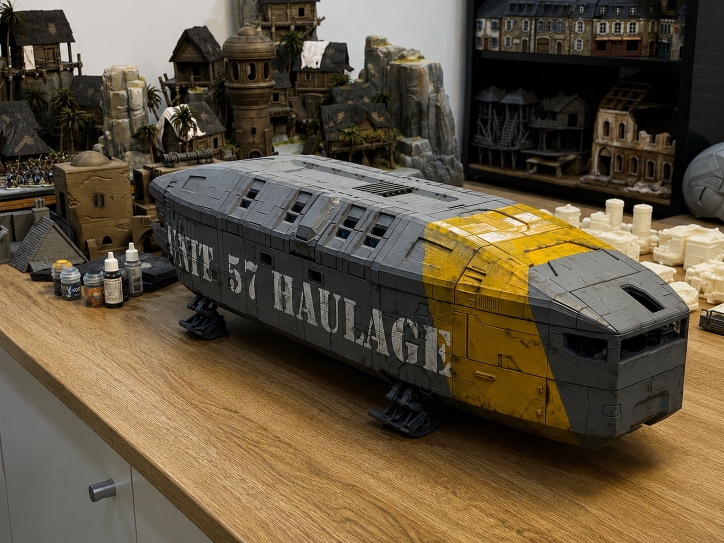
Finally, a picture of the model as it currently stands. I may add a ship name to the front and possibly a logo of some sort.
As a little fun fact, Unit 57 was the name I gave to my little gang in Necromunda when it came out and it’s kind of stuck with me through multiple game systems. You will often see 57 on my terrain builds.
Painting Warbots
One of the things I really like about the 5 Parsecs system is that the opponents are all randomly generated. For the two missions that our crew has access to for the next round, we rolled out Warbots for one and Mercenaries for the other.
The Mercenaries, I have pretty much covered, as I can just use the Salvagers from the last game. They are generic enough to cover most Human types.
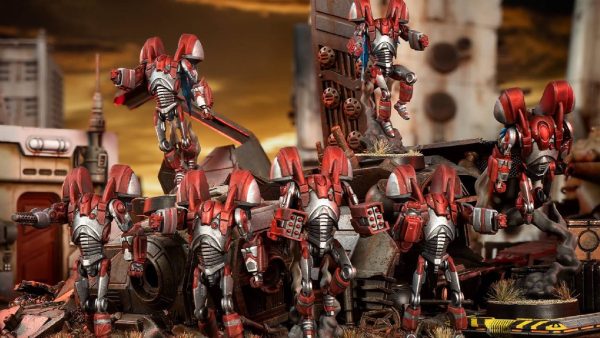
The Warbots, on the other hand, I just quickly printed out and applied a quick, simple paint scheme.
I had used Colour-shift paint on some Hummingbirds that I painted up to go with my Burrows and Badgers stuff and figured that I could use the same on the Warbots.
The Colour-shift Paint works best over a glossy black coat, so that’s what I did.
After that, I just painted the bits that were not armour plates with flat black and then highlighted them with a dark grey.
Finally, I dotted in the lenses with fluorescent paint that I had from when I did my Ghost Ship for my Pirates project.
I ended up doing 9 robots in total, which should be plenty.
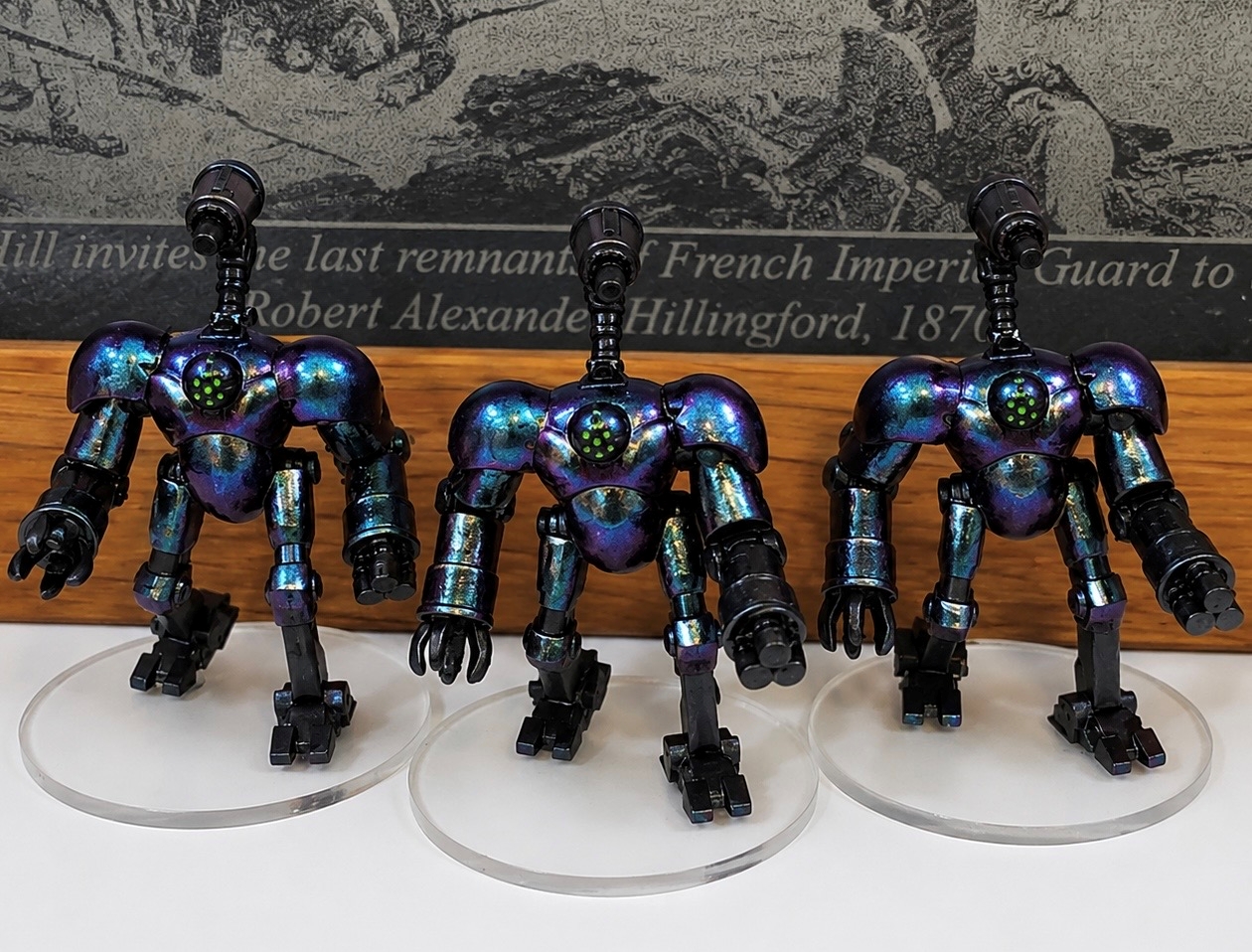 Colour-shift paint is not the easiest thing to photograph.
Game Two - The Black Box
The Black Box
Helix contacts The Redacted with a discreet but urgent contract.
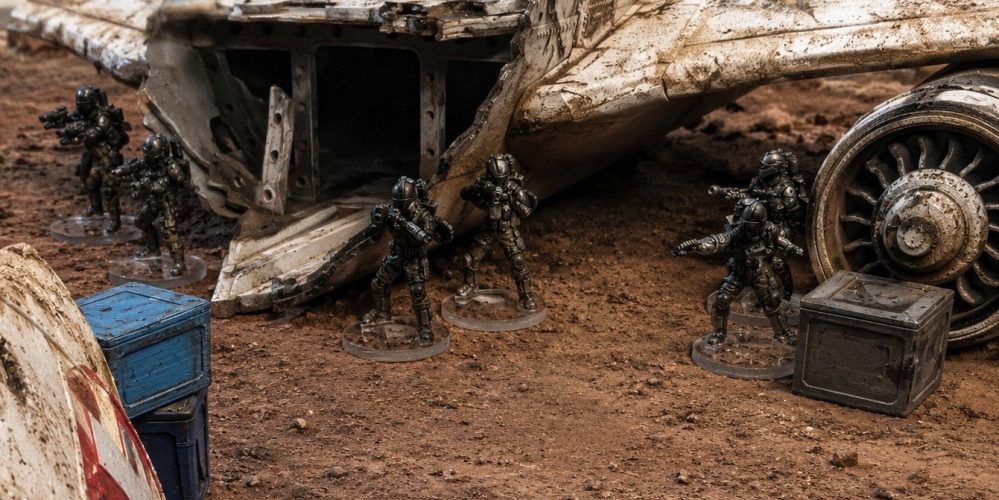
The crash site from the earlier medical flight has not been fully cleared. The wreckage is still scattered across the ruined edge-zone near Low Spire Ward, and Helix claims sensitive medical records remain aboard the aircraft.
A salvage team from another mega corporation has entered the area. Officially, they are “recovering hazardous debris.” In reality, they are searching for the aircraft’s black box recorder.
Helix says the recorder contains confidential patient data, flight records, and proprietary medical transport protocols. If stolen, it could be doctored and sold to the highest bidder, causing public panic and damaging relief operations across Veyr’s Fall.
The crew are hired to return to the crash site and stop the salvage team.
Helix’s instruction is direct:
“Fight off the Salvage Team so that Helix Scientists can safely extract the sensitive information.”
Battlefield – Crash Site: Helix Relief Flight HDC-19
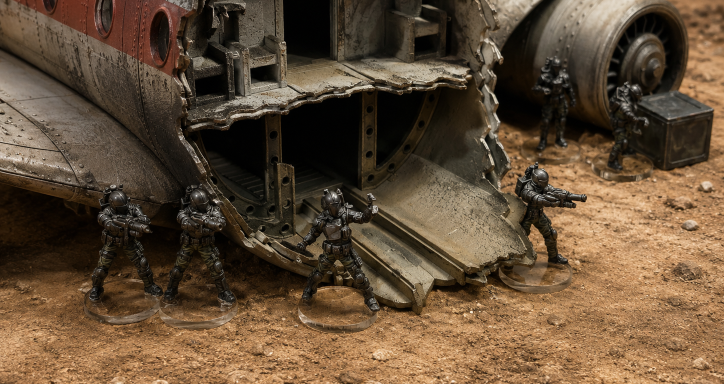
The battlefield is centred around a crashed cargo aircraft.
The aircraft has come down hard in the ruined edge-zone between Low Spire Ward and an abandoned industrial block. Its nose is buried in rubble, one wing has sheared off, and the rear cargo section has split open. Smoke rises from the wreckage. Medical crates, burned luggage, twisted cargo pallets, and broken drone containers are scattered around the site.
Objectives
Hold the field and Fight Off the enemy.
Background
Helix is lying.
The black box proves that the aircraft was deliberately sent into danger. Helix orchestrated the crash as a calculated public relations weapon.
Their plan was simple:
- Load the aircraft with medicine intended for multiple sick districts.
- Redirect it over rebel-influenced territory.
- Trigger a controlled system’s failure or remote sabotage.
- Blame the crash on Low Spire tax rebels.
- Use the disaster to portray Helix as the victim of terrorism.
- Justify harsher security action against the rebels.
- Win public sympathy while eliminating a troublesome district movement.
The crash killed innocent crew and nearly condemned multiple districts to medical shortages.
Helix wants the truth buried.
The salvage team belongs to Tarsk Meridian Transworks, though they operate through a shell contractor called Rillmark Recovery Services.
Tarsk Meridian wants the black box because it is valuable. They may sell it, doctor it, trade it to Verity, blackmail Helix, or use it to win concessions over transport and fuel rights.
They are not heroes.
They are scavengers in corporate armour.
Battle Report – The Black Box
Location: Crash Site Theta-9, Veyr’s Fall Outlands
Crew: The Redacted
Patron: Helix Dominion Consolidated
Outcome: Victory
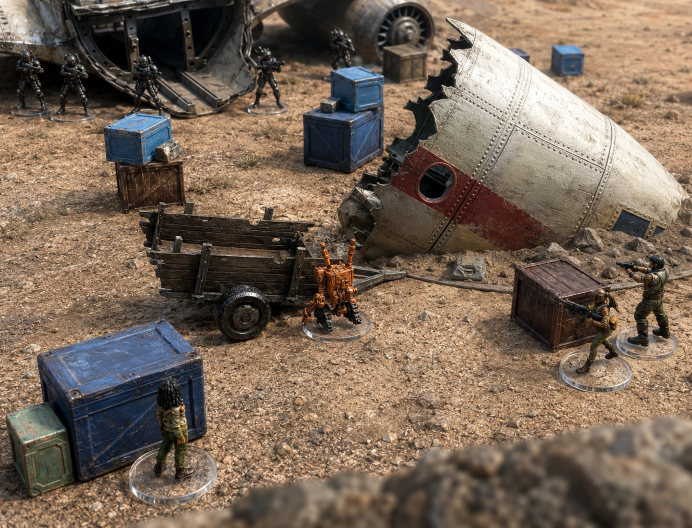
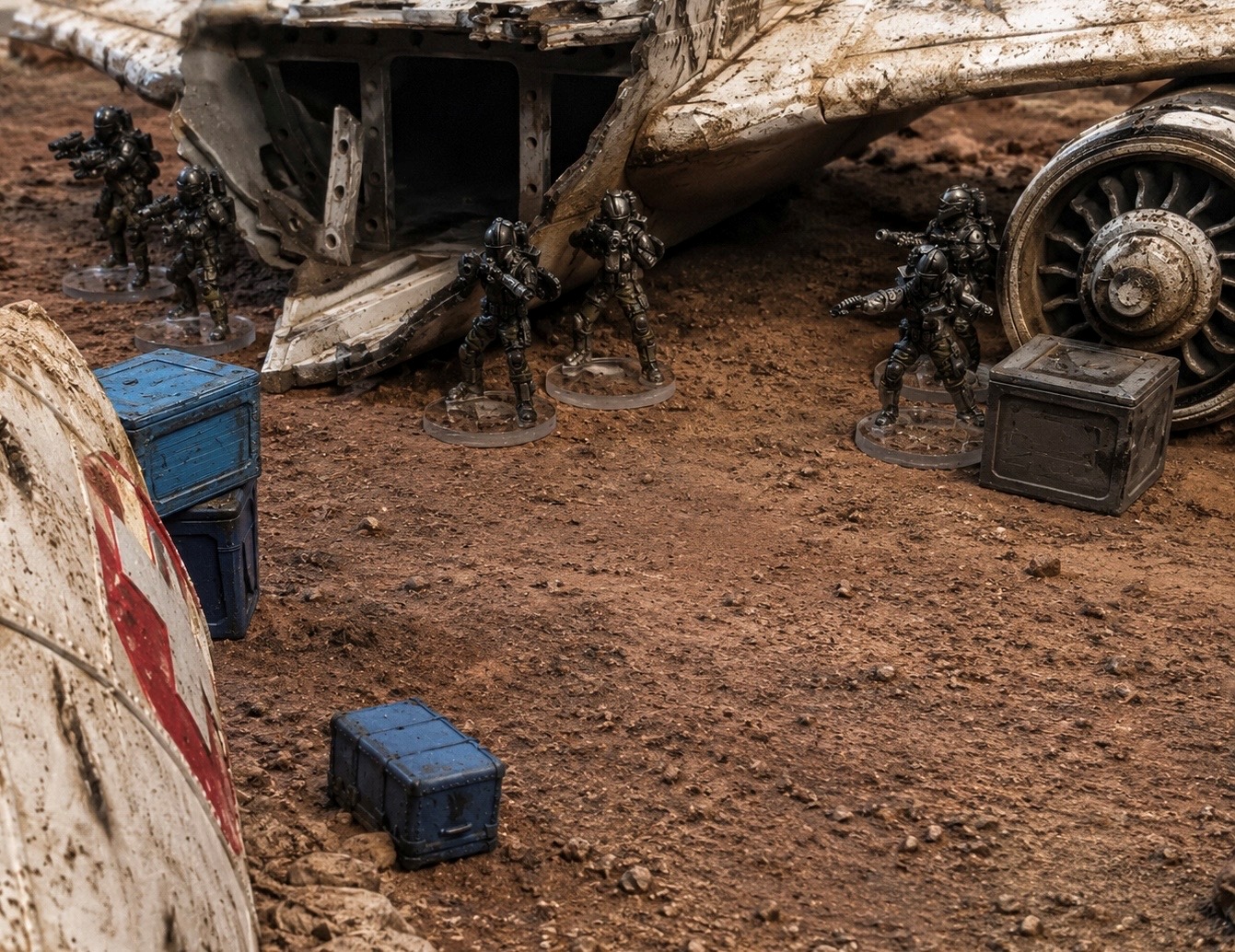
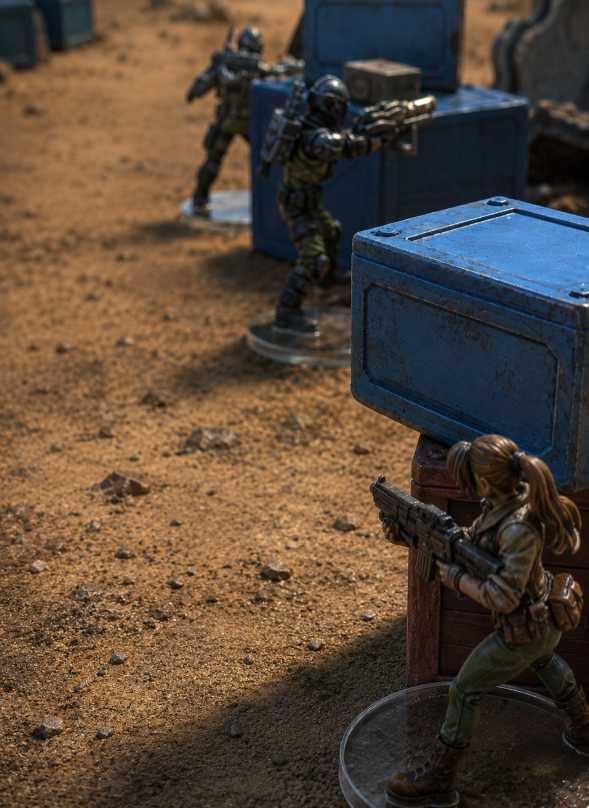
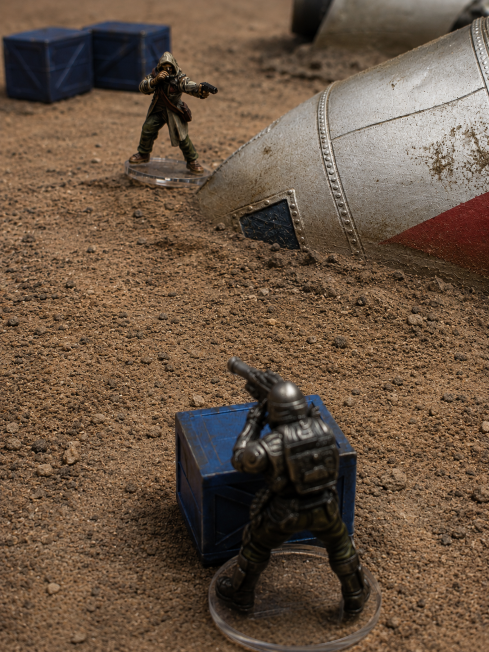
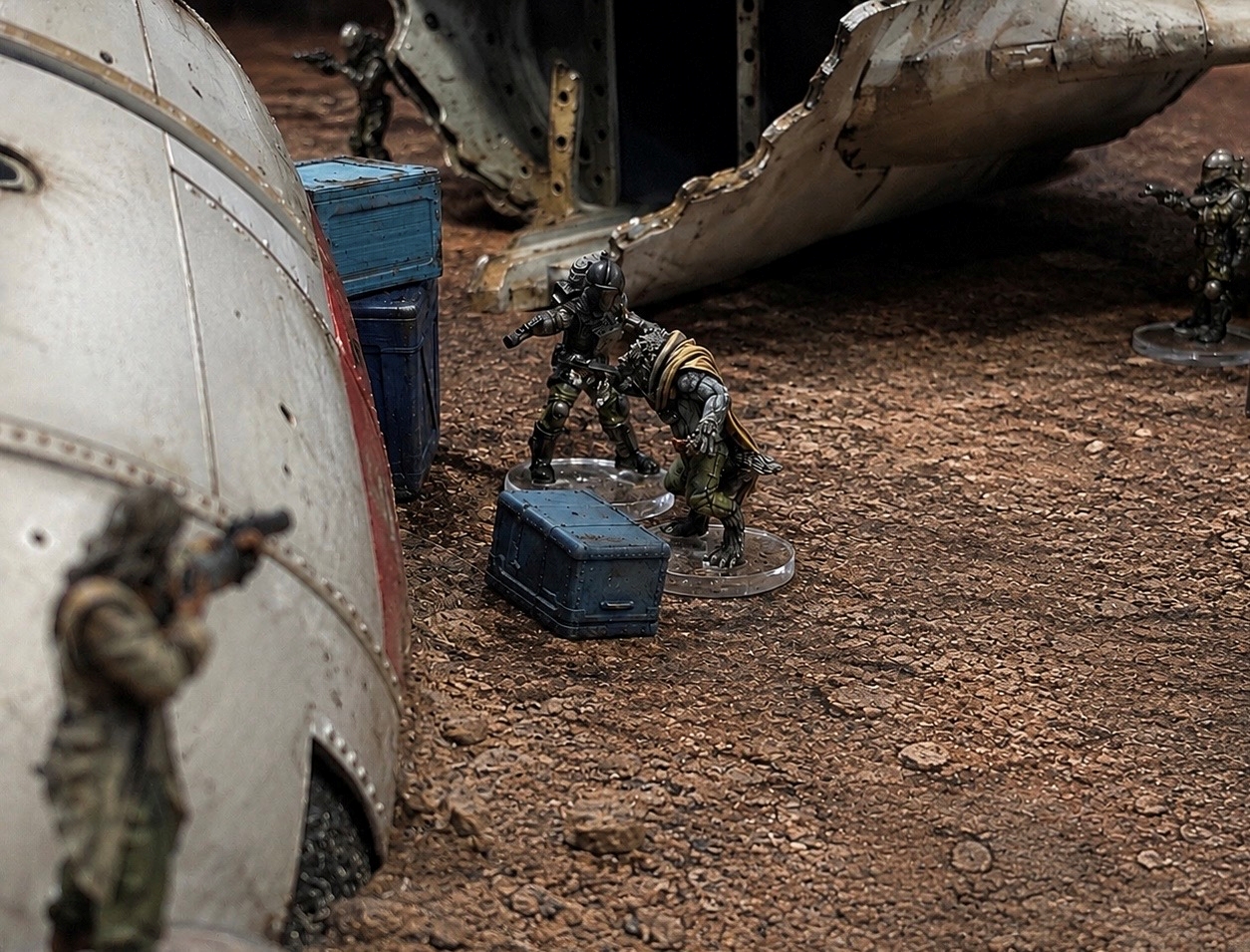
The salvage team had barely reached the crashed aircraft when Caesar opened fire with his newly fitted Rattlegun. The sudden barrage tore one salvager from their feet and sent another fleeing back toward their employer. With the enemy shaken, the rest of The Redacted moved into position.
The salvagers recovered quickly and returned fire with brutal accuracy. Caesar was struck repeatedly, sparks bursting from his chassis before the robot collapsed and went still.
Angered by the apparent loss of one of their own, the crew unleashed a storm of gunfire. Scrapper ignited his jump belt, clearing the half-buried nose cone of the wreck and crashing into the enemy line. A vicious melee followed, but the salvagers proved far tougher than expected. They overwhelmed the Feral and brought him down.
With Caesar and Scrapper lying motionless, Adam led a renewed assault. The Redacted pressed forward, inflicting several casualties and refusing to give ground. Under the mounting pressure, the salvage team’s nerve finally broke. The survivors abandoned the crash site, leaving the wreckage—and its secrets—safely in the hands of Adam and his crew.
Post Battle – Round Two
We were pretty lucky with both Caesar and Scrapper suffering no long-term effects from being taken out of action.
With the money we earned, we continued to pay off the debt owed on our spacecraft and sent the crew out on different tasks.
Two of the crew went to act as decoys so our existing rivals wouldn’t locate us. If they catch up with us, it would force us into a battle, which would then prevent us from doing a Patron mission and earning some much-needed money.
We also tried unsuccessfully to recruit another crew member. We did, however, find some meds and a few other useful supplies that could come in handy down the track.
We didn’t have the chance to go looking for any new jobs, but we were offered another job from Helix, as it appears that they were very busy.
____________________
Bitter Medicine
Helix Dominion Consolidated contacts The Redacted with an offer.
A small mercenary unit has seized an old medical distribution depot on the edge of Greyhook District, a polluted industrial zone suffering from outbreaks of lung disease and chemical fever. Helix claims the depot is needed to restart local treatment deliveries, but the mercenaries have refused to leave.
According to Helix, the mercenaries were hired by criminal interests to loot medicine, extort sick citizens, and disrupt disaster relief.
The job is simple:
Clear them out. Secure the depot. Do not damage the medical equipment.
____________________
So, there we have it. That means we still have two missions to choose from next time. This new one from Helix, or the one that we were offered last time from Verity.
Quick Paint Jobs
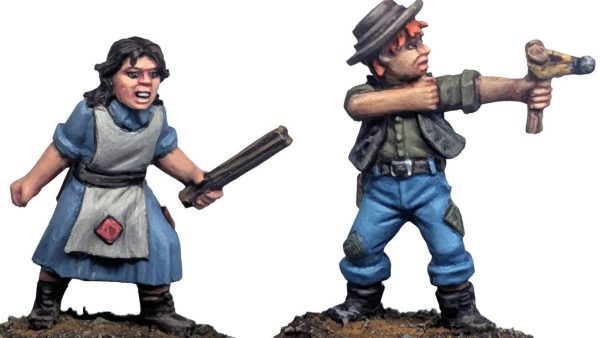
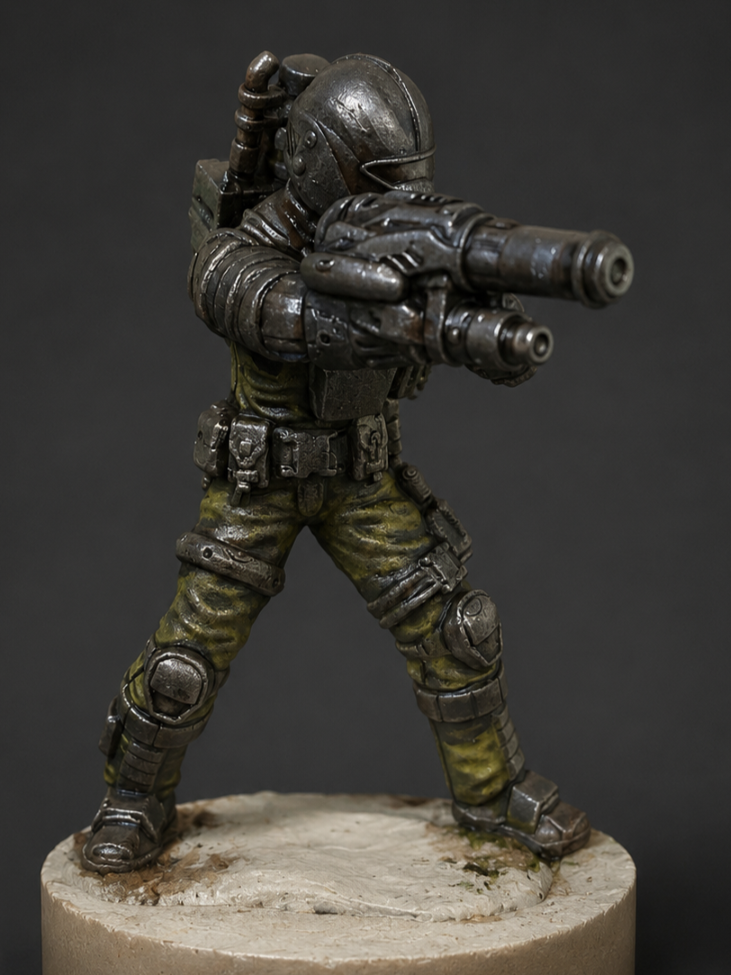
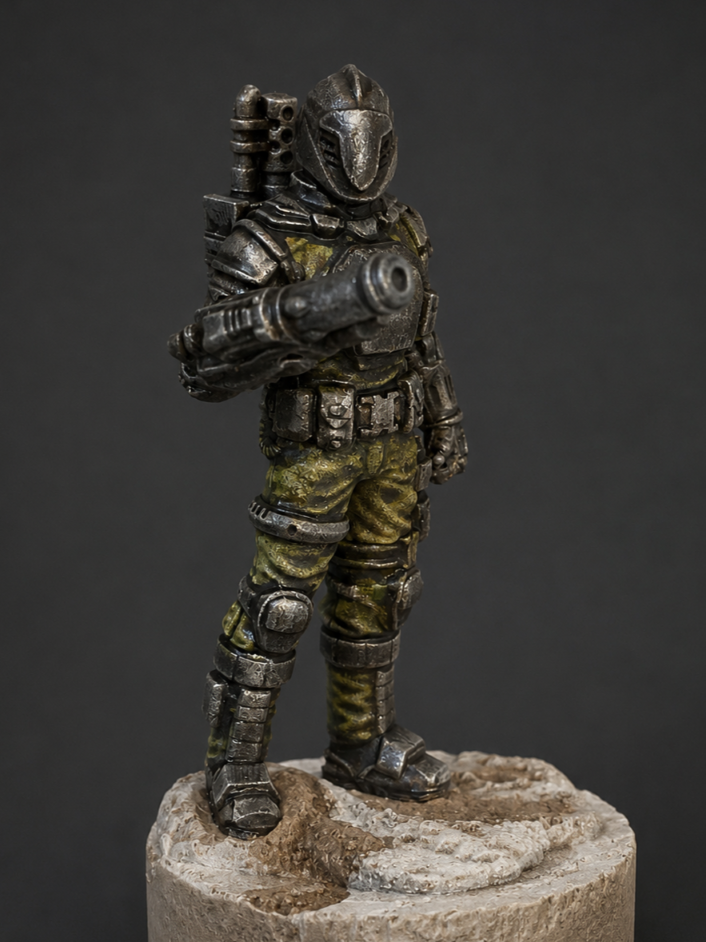
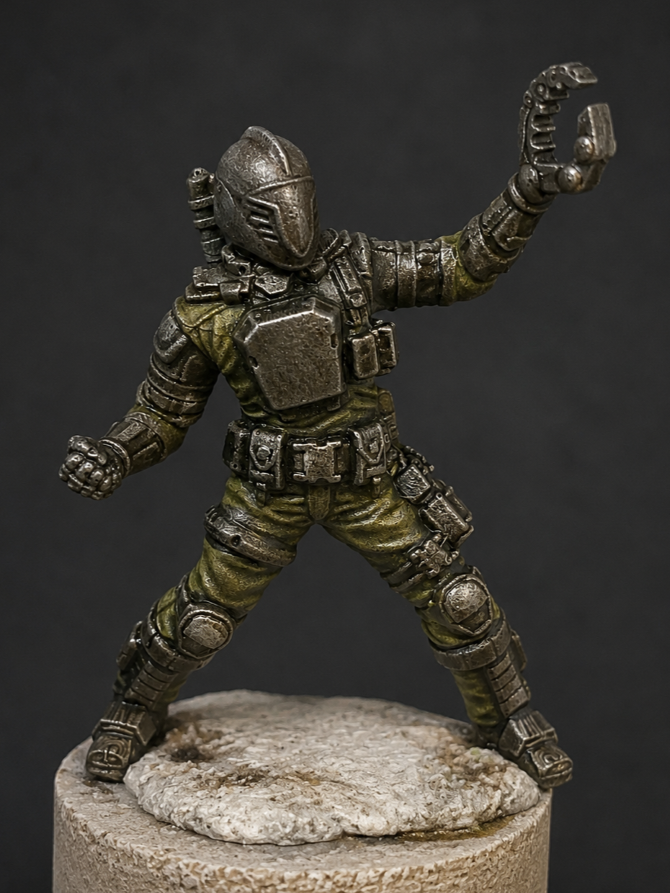
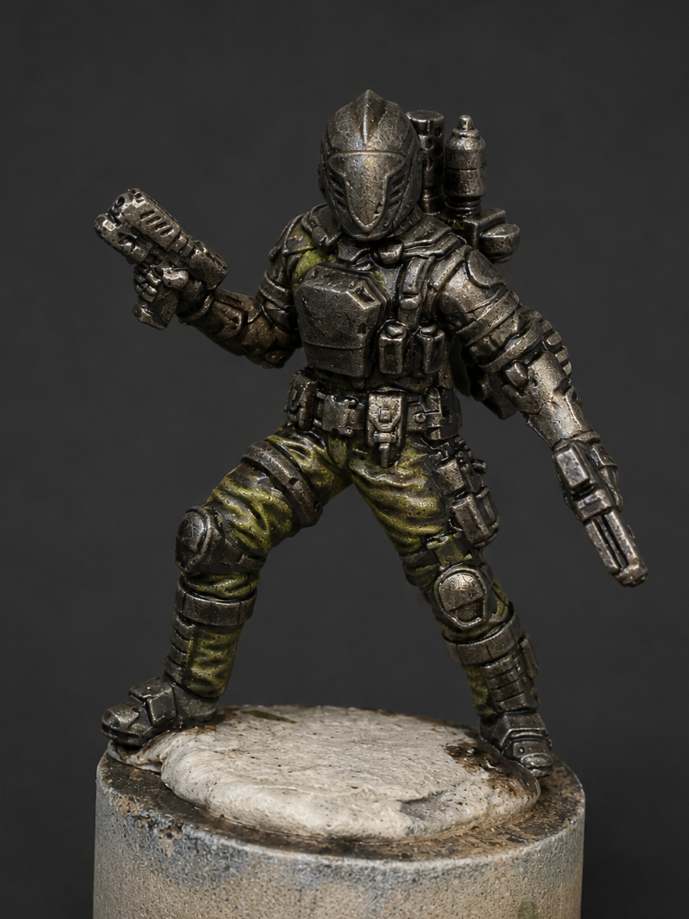
I have been knocking out a few more generic Sci-Fi figures to add some variety and so that I don’t have to resort to using Fallout Wasteland Warfare figures for the opposition.
I have gone with really quick paint jobs on these to match the character models.
First, I blu-tac the models to little wooden pegs so that they are easier to hold.
I undercoat everything brown and then do a zenithal highlight with an off-white colour. After that, I use speed paints to block in all the colours. I do this without really taking too much care, as I want to keep a grubby feel to this stuff.
Once that is dry, I cover everything in a brown wash or Army Painter quick shade, just like dipping, but I brush it on. Basically, I use whatever comes to hand first.
Once that is dry, I go back over some areas and highlight them in the Kevin Dalimore style and call them done.
I am using clear bases as I imagine that the games could take place on different settings, both indoors and out.
Post Battle - Round One
After each ‘Battle’ phase, there is a post-battle phase during which things like resolving rival and patron statuses, gaining loot and pay and a whole host of events can occur.
I won’t go over everything that happened after this very short introductory scenario; suffice to say that we gained a couple of weapons and made a small number of credits.
____
After that, we decided to continue through all the steps up to the next battle.
The reason for this was that it would give me a little bit of time to try to get any bits needed for the next scenario painted.
____
Part of the process is to see if any new interesting jobs get offered to the crew.
We got lucky and managed to score two jobs to choose from.
______________________________
The Black Box
Patron: Helix Dominion Consolidated
Job Type: Fight Off
The crash site from the earlier medical flight has not been fully cleared. The wreckage is still scattered across the ruined edge-zone near Low Spire Ward, and Helix claims sensitive medical records remain aboard the aircraft.
A salvage team from another mega corporation has entered the area. Officially, they are “recovering hazardous debris.” In reality, they are searching for the aircraft’s black box recorder.
Helix says the recorder contains confidential patient data, flight records, and proprietary medical transport protocols. If stolen, it could be doctored and sold to the highest bidder, causing public panic and damaging relief operations across Veyr’s Fall.
Helix’s instruction is direct:
“Fight off the Salvage Team so that Helix Scientists can safely extract the sensitive information.”
Battlefield – Crash Site: Helix Relief Flight HDC-19
The battlefield is centred around a crashed cargo aircraft.
The aircraft has come down hard in the ruined edge-zone between Low Spire Ward and an abandoned industrial block. Its nose is buried in rubble, one wing has sheared off, and the rear cargo section has split open. Burned luggage, twisted cargo pallets, and broken drone containers are scattered around the site.
Objectives
Hold the field and Fight Off the enemy.
______________________________
The Dead Drop Broadcast
Patron: Verity Public Communications
Job Type: Delivery
A senior Verity editor claims that one of their internal news teams has uncovered evidence of a planned attack on several civilian districts. The information must be delivered to an old emergency broadcast relay before the window closes. Verity says its main network has been compromised, and the data cannot be sent remotely.
The job is simple:
Carry the data packet through the relay district and upload it at the public broadcast terminal.
Battlefield – Uplink Relay Tower 12.
Civic communications district with a relay broadcasting station in the centre.
Objectives
The package must be delivered to the exact centre of the table and uploaded.
The Children's Share - Bat Rep
Battle Report: The Children’s Share
Location: Crash Site Theta-9, Veyr’s Fall Outlands
Crew: The Redacted
Patron: Helix Dominion Consolidated
Outcome: Victory
Following intelligence received regarding the location of a downed shipment belonging to the Children’s Share relief programme, The Redacted moved swiftly to secure the valuable cargo before it could be lost to rebel forces operating in the area.
Advancing through the scattered wreckage and stacks of cargo containers, the crew encountered a small band of rebels searching the crash site. A short but sharp firefight broke out amongst the twisted remains of the aircraft. Faced with determined resistance and accurate fire, most of the rebels quickly lost their nerve and fled into the surrounding wasteland.
One rebel, however, remained resolute. Refusing to abandon his position, he continued to engage the crew from behind the wreckage. His stand was brought to an abrupt end when Nyah closed the distance and dispatched him with a well-placed blade strike, ending the last organised resistance at the site.
With the area secured, the crew located and recovered the shipment of medical supplies. Recognising the urgency of the situation, they wasted no time gathering the precious cargo before returning to the local Helix office. There, the vaccines were immediately transferred to medical personnel and rushed onward to the settlements whose inhabitants were anxiously awaiting them.
Results
- Primary Objective: Recover the Children’s Share medical supplies — Completed
- Enemy Forces: Dispersed after brief engagement
- Enemy Casualties: One confirmed rebel was killed by Nyah, and another in the opening moments of the engagement by Cara.
- Crew Casualties: None
- Medical Supplies: Recovered intact and delivered to Helix authorities
Though the firefight was brief, the consequences were significant. Thanks to the actions of The Redacted, a vital shipment reached those who needed it most, strengthening Helix’s position in the region and earning the crew a measure of goodwill amongst the local population.
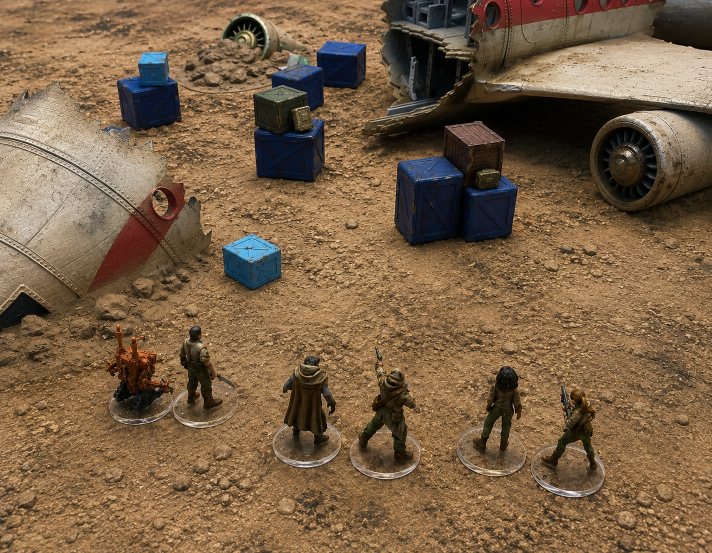
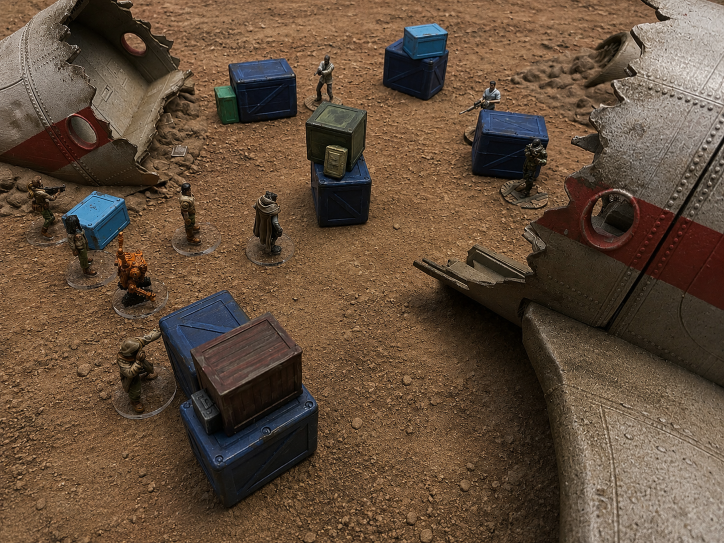
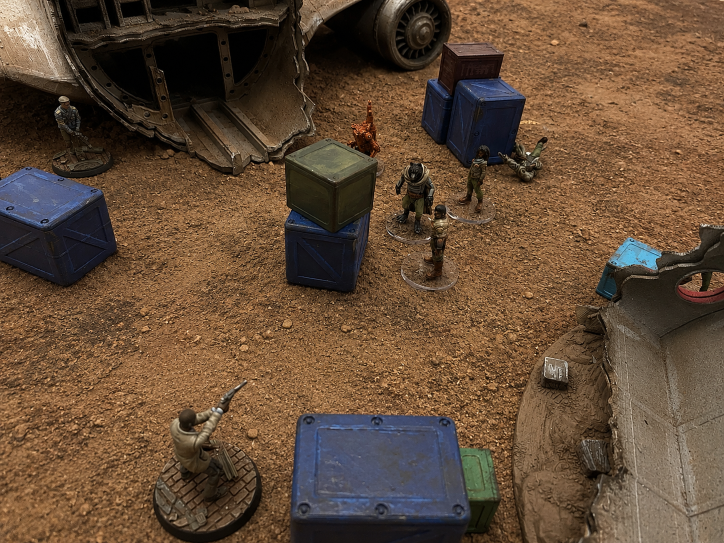
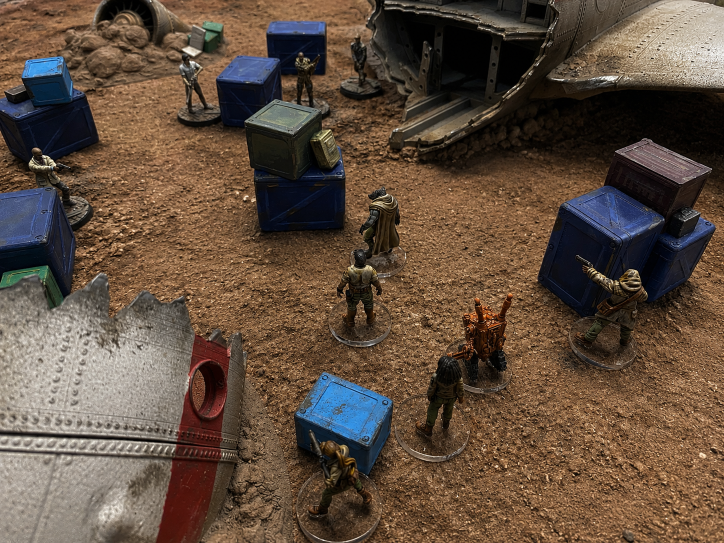
This was just a very short introduction game. We spent a fair amount of time rolling up and designing characters, and the intent of this first scenario was really to go over how the rules play.
It was a pretty simple mission: secure the goods and make sure no enemy models were too near to contest it.
Game One - The Children's Share
The Children’s Share
Helix Dominion Consolidated hires the crew after a medical transport aircraft crashes in the outskirts of Low Spire Ward, a district recently declared delinquent for unpaid taxes.
Helix claims the aircraft was carrying emergency medicine for several sick districts across Veyr’s Fall. The cargo includes immune stabilisers, anti-rad medication, fever suppressants, water purifier cartridges, and child-grade respiratory treatments.
The medicine must be recovered quickly.
Helix insists the crash was caused by rebel action. According to their briefing, tax extremists used a surface-to-air missile to bring down the plane and then moved in to steal the supplies.
But rumours are already spreading.
Some witnesses say the aircraft was never hit. They claim it suddenly banked hard, lost control, and came down in flames. Others whisper that Novatek Ascendant Systems had an AI agent hidden among the aircraft crew, and that the crash was deliberate. No one knows why.
Battlefield – Crash Site: Helix Relief Flight HDC-19
The battlefield is centred around a crashed cargo aircraft.
The aircraft has come down hard in the ruined edge-zone between Low Spire Ward and an abandoned industrial block. Its nose is buried in rubble, one wing has sheared off, and the rear cargo section has split open. Smoke rises from the wreckage. Medical crates, burned luggage, twisted cargo pallets, and broken drone containers are scattered around the site.
Objectives
Place the main medical supplies as a central objective marker near the open cargo section of the crashed aircraft.
Securing the Objective
To secure the medical supplies, the crew must end 2 consecutive rounds with two crew members within 2” of the supply objective.
However, enemy presence interferes with the attempt.
Contesting the Objective
Each enemy model within 6” of a crew member securing the objective negates one crew member.
Example:
- 3 crew members are within 2” of the supplies.
- 2 enemies are within 6” of those crew members.
- Only 1 crew member counts as securing the objective.
If the number of enemies within 6” equals or exceeds the number of crew members within 2”, the objective is contested, and that round does not count toward the 2 consecutive rounds.
The crew must hold the area under pressure, not simply touch the crates and run.
Background
Low Spire Ward was not always Rebel territory.
It was simply poor.
Then the sickness came. Children began suffering from lung scarring, immune collapse, and industrial fever. Parents missed work to care for them. Missed work meant missed wages. Missed wages meant unpaid taxes, housing fees, medical charges, and civic contributions.
Once the district fell behind, Civitas Continuance Authority downgraded its status. Benefits were suspended. Work permits were restricted. Helix relief access was reduced. CivicSec began treating the area as a centre of organised tax resistance.
The parents did not set out to become rebels.
They became rebels when the system decided their sick children were no longer worth saving.
The medical supplies aboard the crashed plane were intended for several registered sick districts. Low Spire Ward was not on the approved list.
Now the rebels are moving in to take the cargo because, for once, the medicine is within reach.
The dilemma is simple and cruel:
If the crew recovers the medicine for Helix, other sick districts’ children receive treatment — but Low Spire’s children may die.
If the crew lets the rebels keep it, Low Spire’s children may live — but other districts will be left without the supplies they were promised and effectively paid for.