







Rules of Engagement

Recommendations: 93
About the Project
Unable to find a skirmish game that ticked my boxes, I decided to write one myself!
Related Genre: General
This Project is Active
Play Testing
At the time of writing I’m play testing the game in its current iteration which I’ve dubbed V3. What I now consider to be V1 was the first version of the game to be played on the table, way back during the ‘Event’.
Back then I was play testing the game by myself, basically setting up opposing forces and running them at one another! While this wasn’t particularly satisfying from a gaming perspective, it did help identify some obvious problems. The use of both positive and negative to hit modifiers mentioned in previous entries, or the simple fact that everything was dead by turn four!
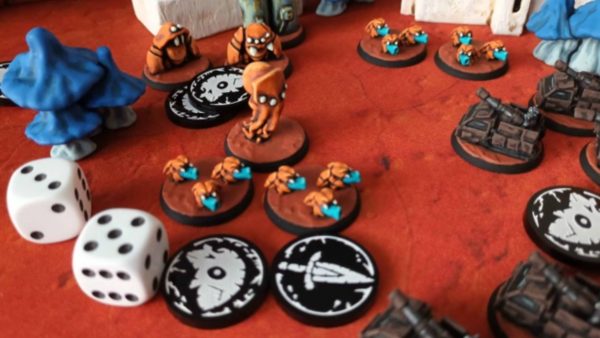
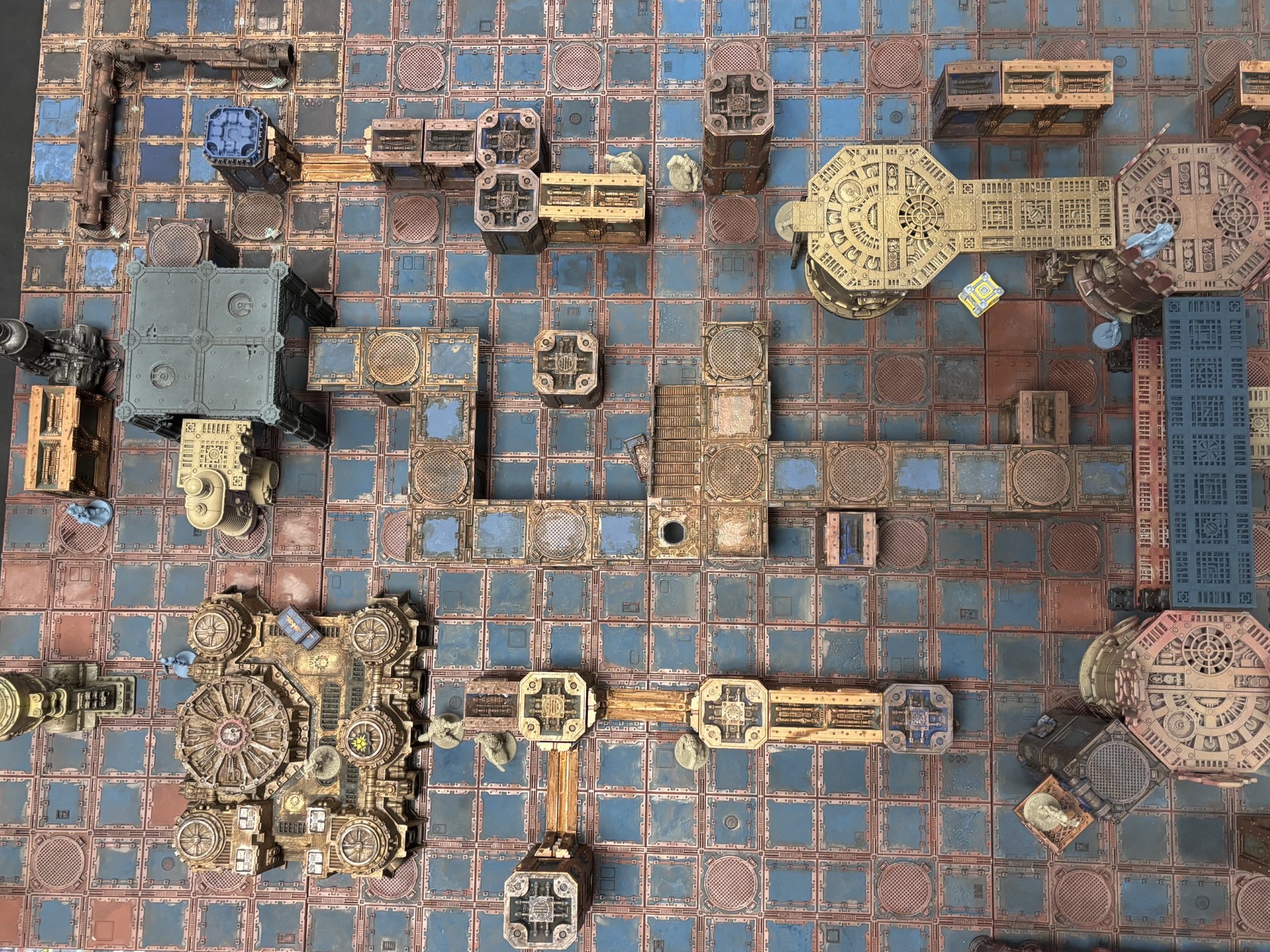 The Necromunda Boards at Dark Sphere have provided the perfect battleground
Post lockdown I found a willing opponent in my good friend Phil. Play testing against another player has moved the game forward significantly and lead to me adding actual missions as well as a chapter on terrain. These fairly key features had been largely assumed up to that point!
My focus at the moment is the Force Organisation Chart, which I have separated from the main rule book to allow me to update it more regularly. I’m currently working on balancing the various troops available and have created a troop cost calculator that provides the base cost for each type. I don’t imagine for a minute that this alone produces balanced results, so we have been playing games using multiples of the same troop type on one side, vs a different type on the other, to see if some are consistently more successful than others.
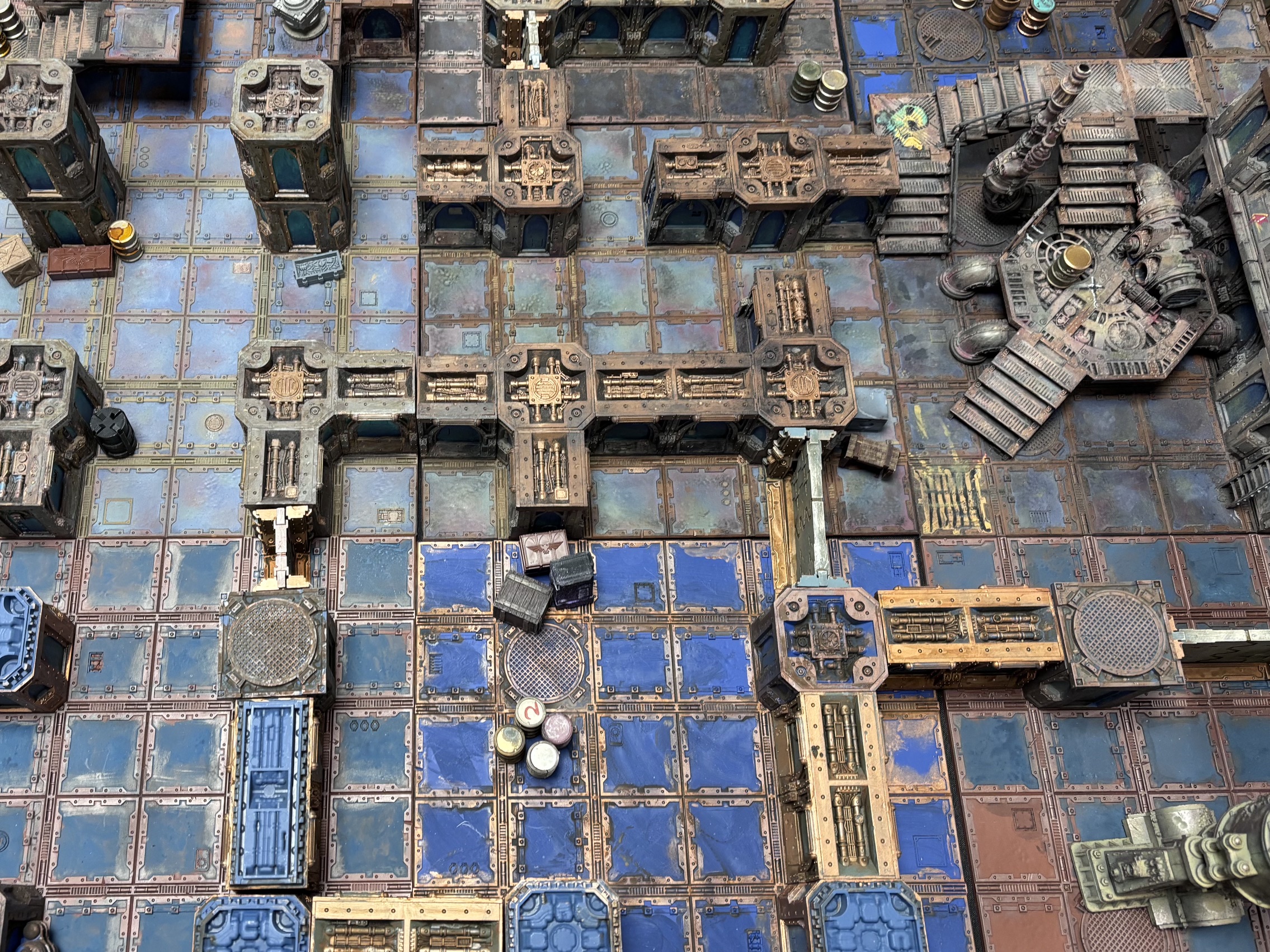 Plenty of cover and different elevations are ideal for games of ROE
Command Phase
I have always enjoyed the resource management aspect that a command deck, pool of tokens or dice bring to a game. And so I wanted to include some form of command phase in my own game.
I also hoped to get away from the standard two action system that so many games go in for. The combination of these two ideas is what led to the order/actions system that ROE employs and ultimately what makes it unique.
In ROE, you generate a pool of orders at the beginning of each turn. These are the currency by which models activate. There are three possible activations available, and each model may only perform one each round. These are Advance, Engage and Tactical. The first two are essentially move only or shoot only. The Tactical activation is the only order that allows you to both move and complete another type of action in the same turn. The catch is that both movement and range are impeded when completing a tactical action. The effect this has on game play is that prior positioning is key to getting the most economy out of your orders.
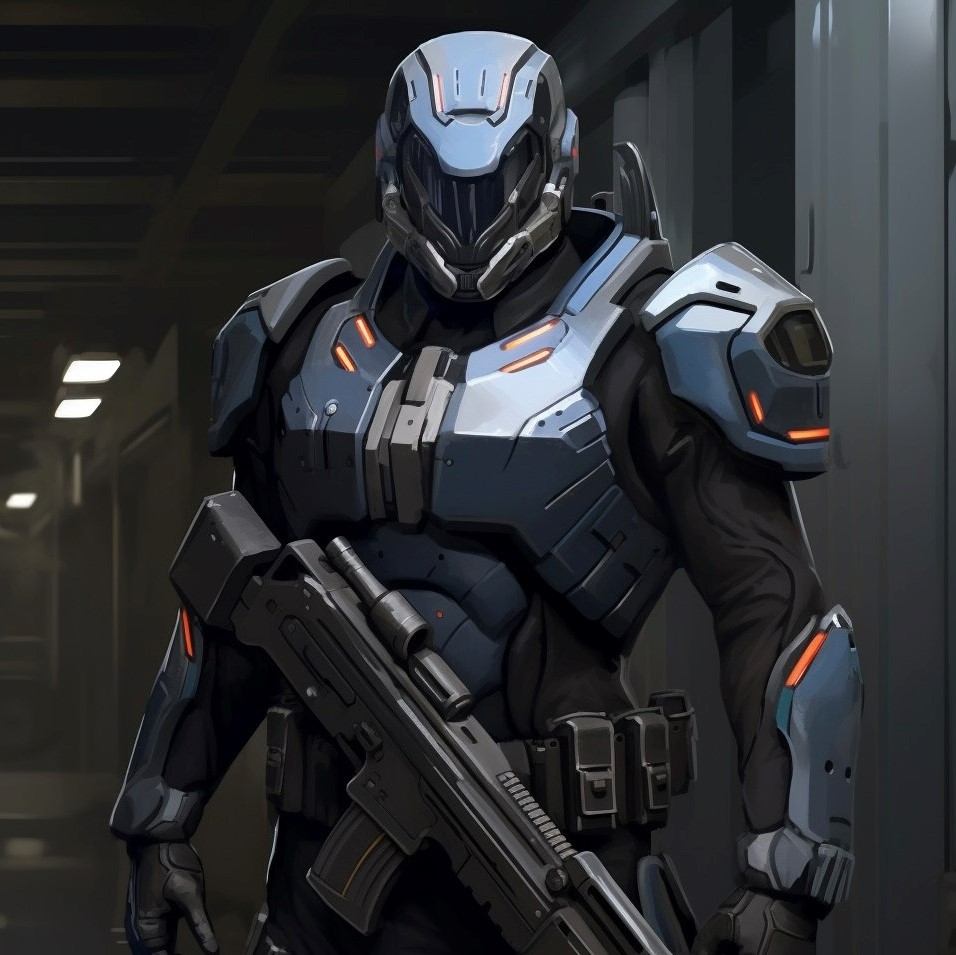
In addition to the three activation orders are several Conditional orders that can be used at the expense of further order tokens. The most commonly used of these is the Focus order, which enhances the model’s current activation with a boost to movement (if you are performing an Advance action), or a re-roll to an action if you’re performing an attack or Resolve based action. This allows players to invest more orders in models who are positioned where the action is, or reposition those who aren’t! This also creates the opportunity to trade off against other models forgoing their activation all together.
The orders that are available to players is one areas of the game that I will continue to explore. I definitely think there is scope to find other ways of spending order tokens.
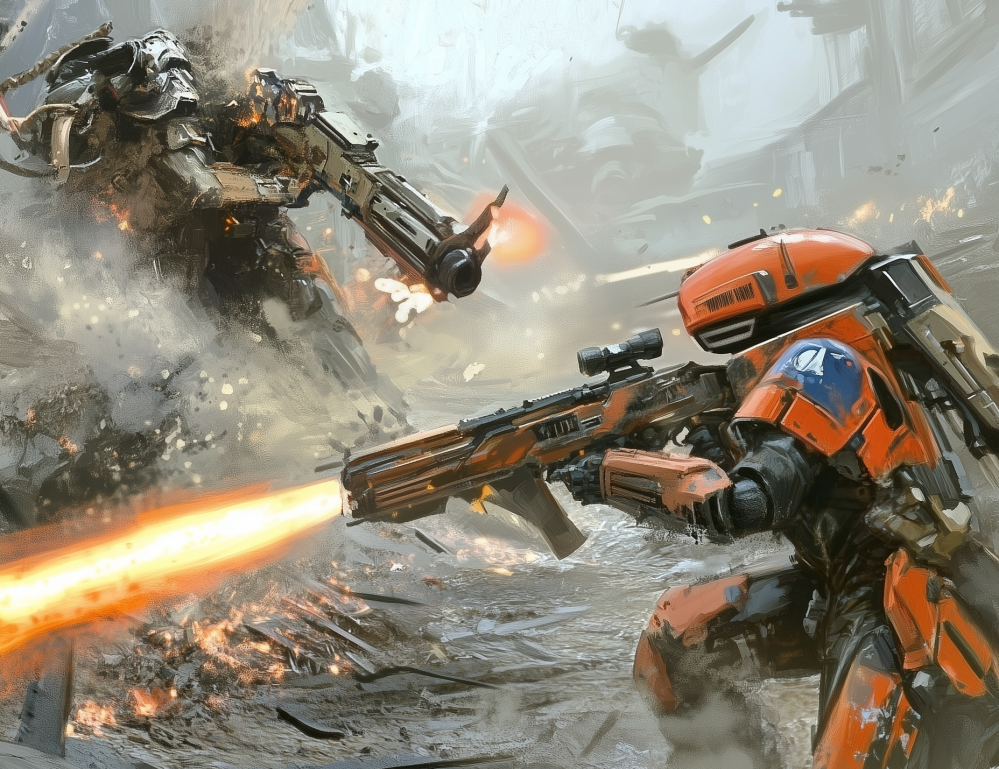
Midjourney
Once again it was Hazyboy who pointed out to me that your audience will get bored wading through pages of rules, without some imagery to break up all the text. We all grew up reading lavishly illustrated rule books and it was the fantastic artwork, along with the photographs of models that really captured our imaginations.
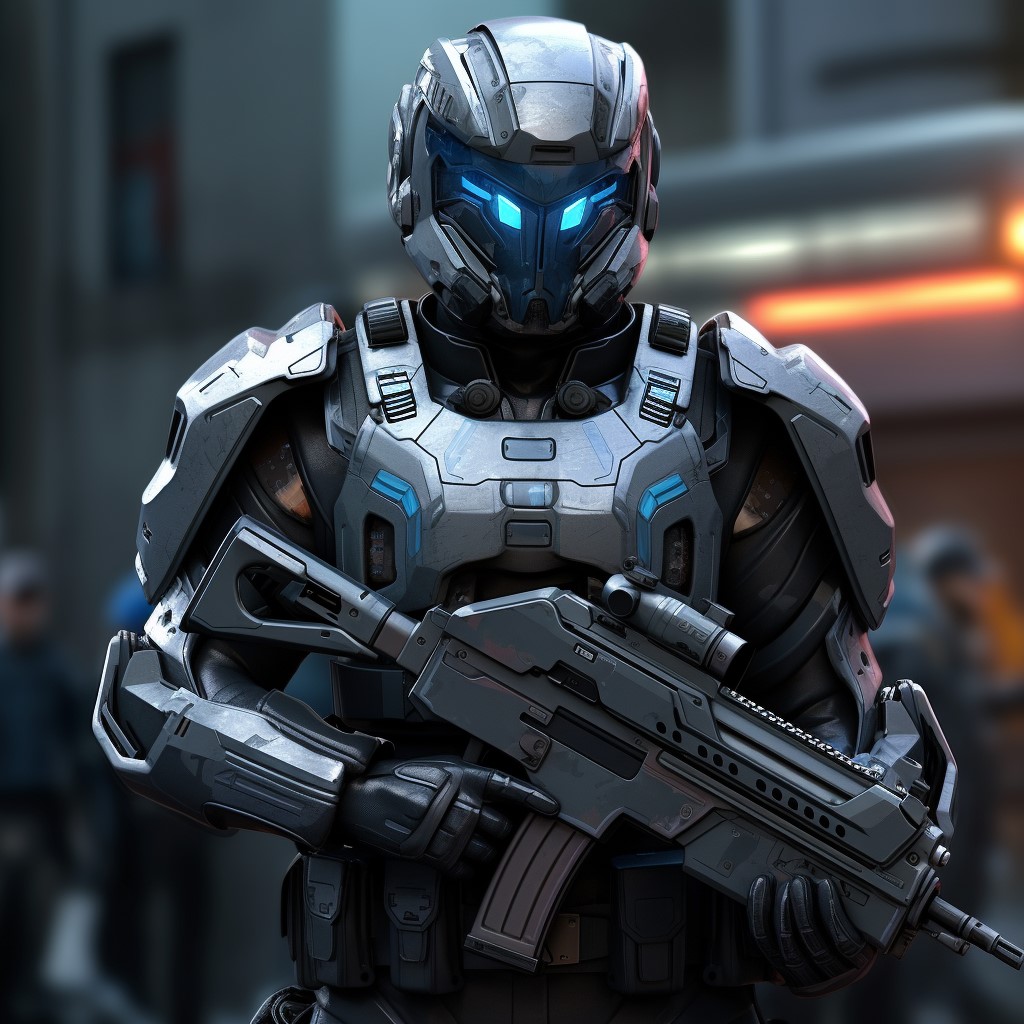
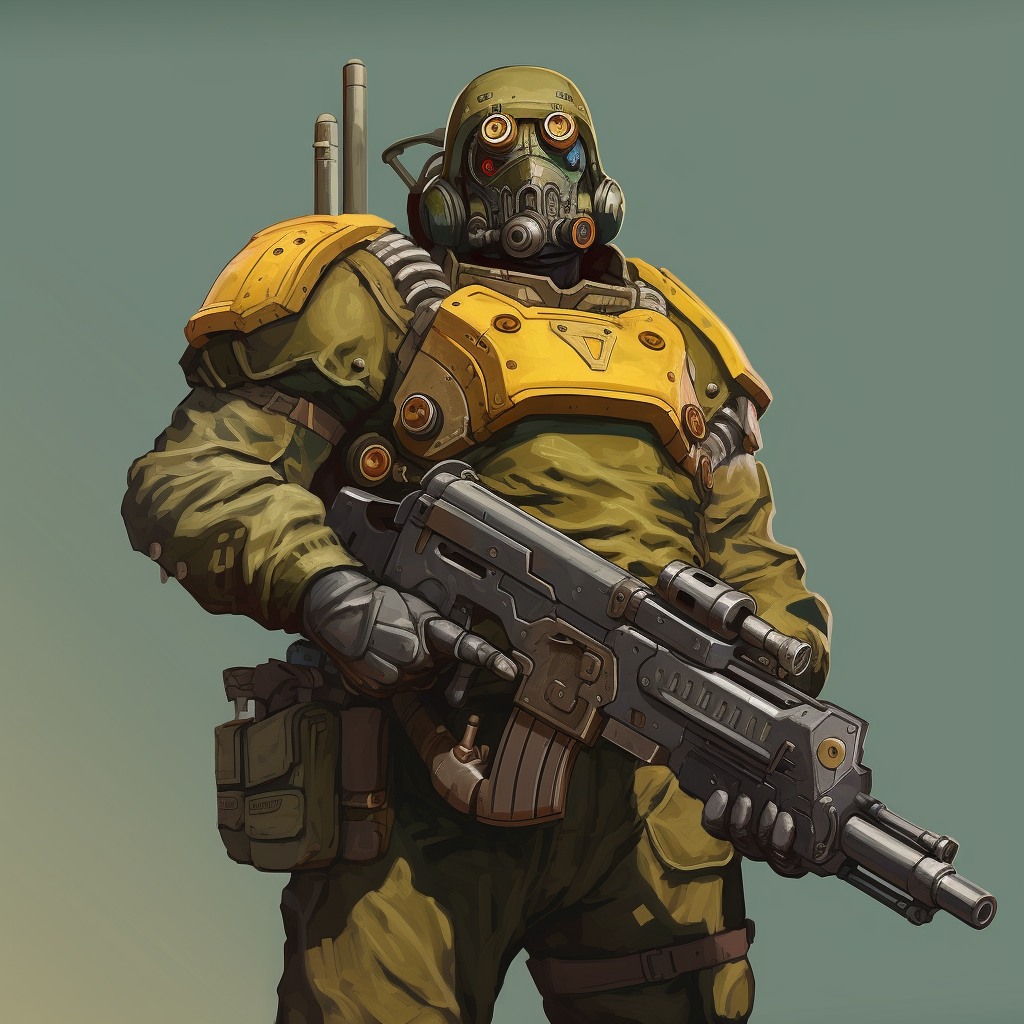
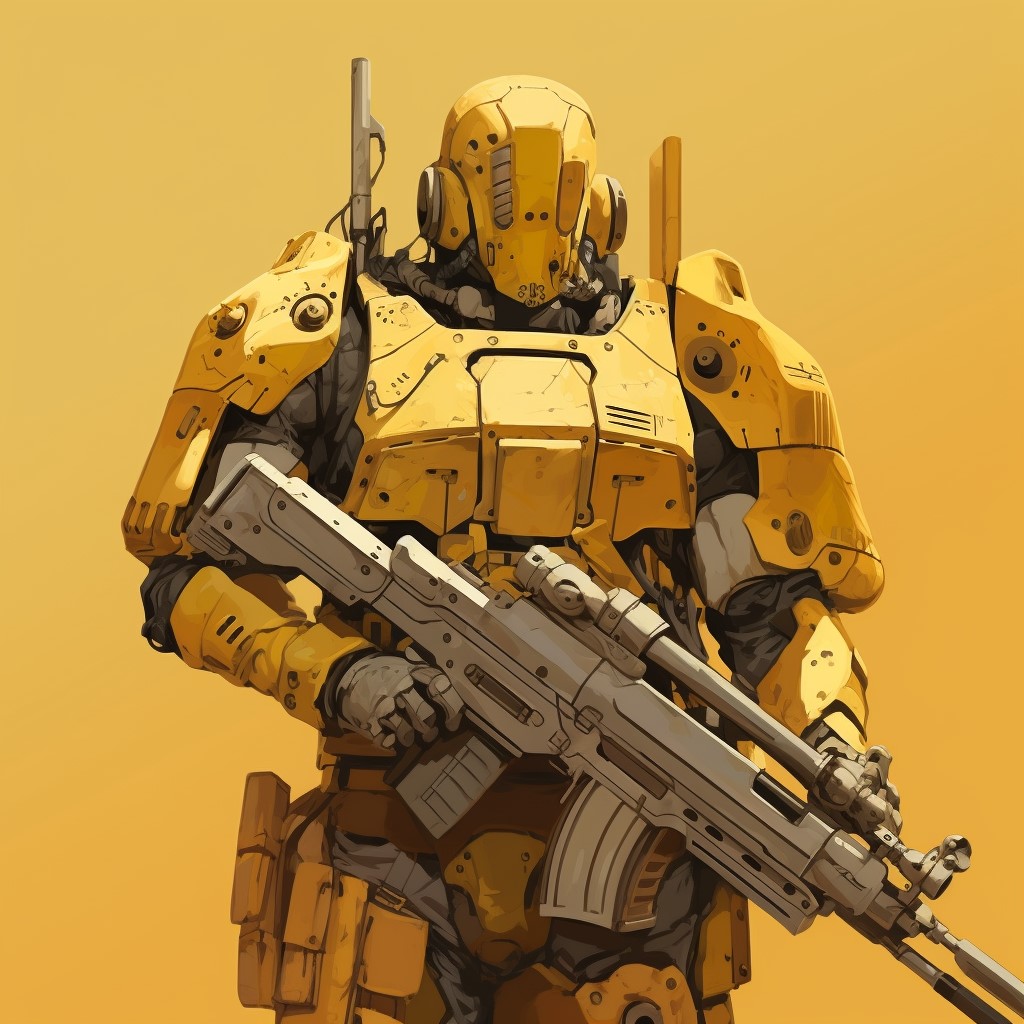
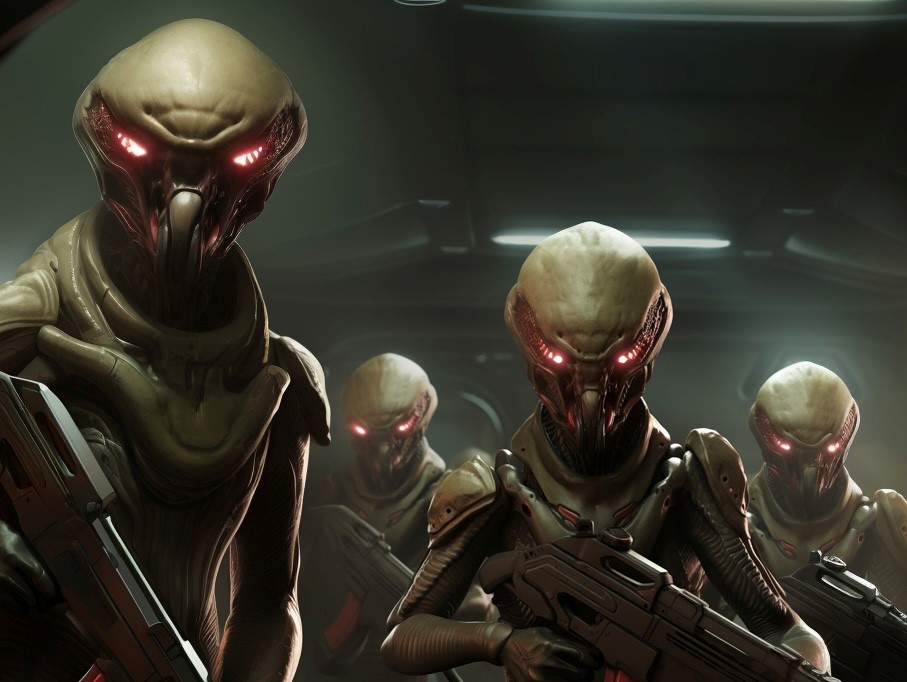
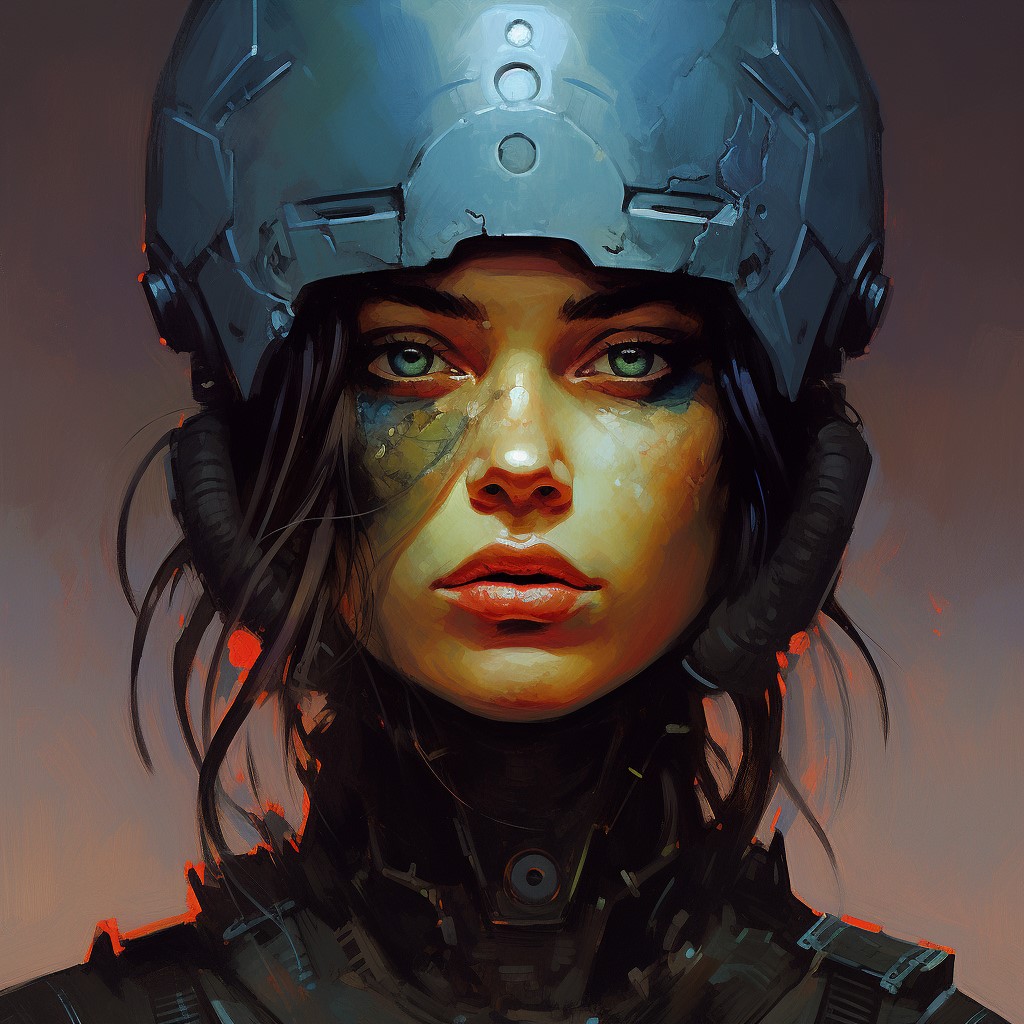
I have populated this project with artworks created for the ROE rulebook using Midjourney, to add some much needed colour and imagery.
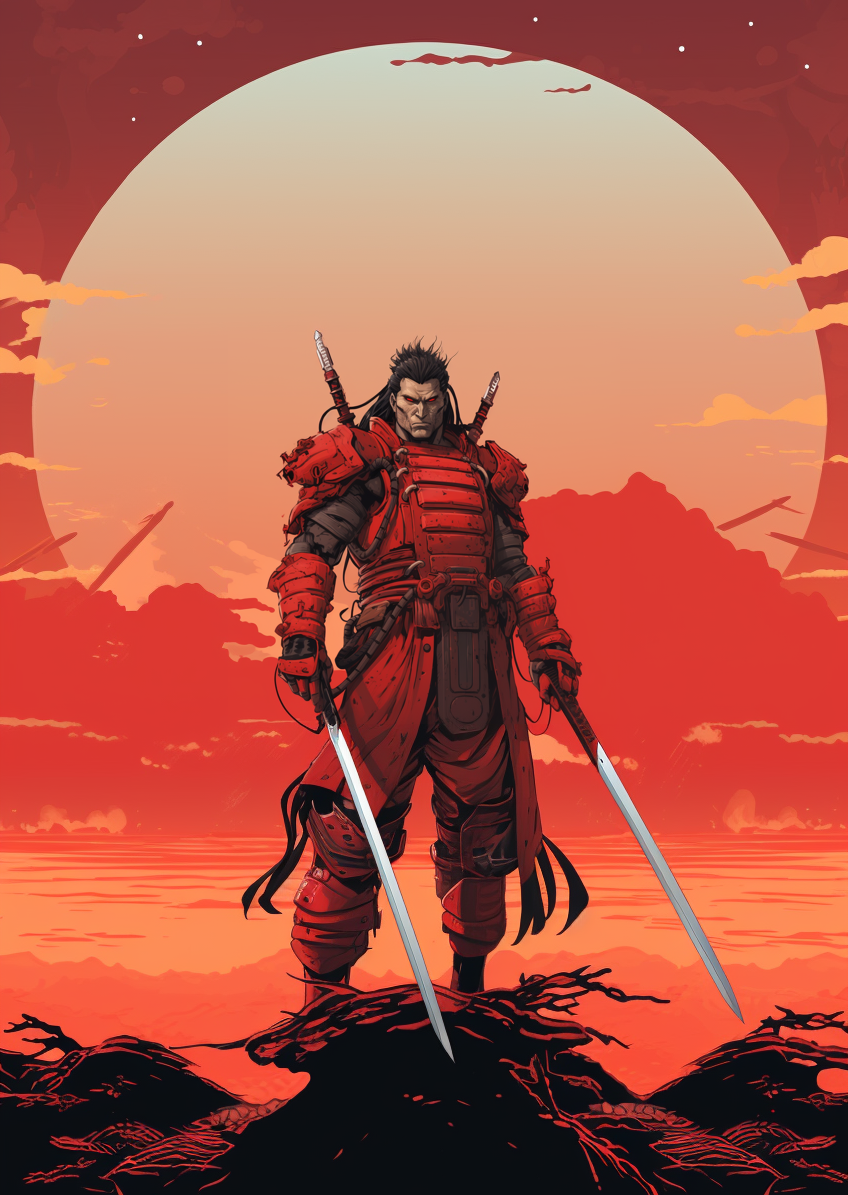
I have mixed feelings about the application of AI to produce illustrations. However there is no getting away from the fact that I was able to get ideas out of my head and into the rulebook very quickly.
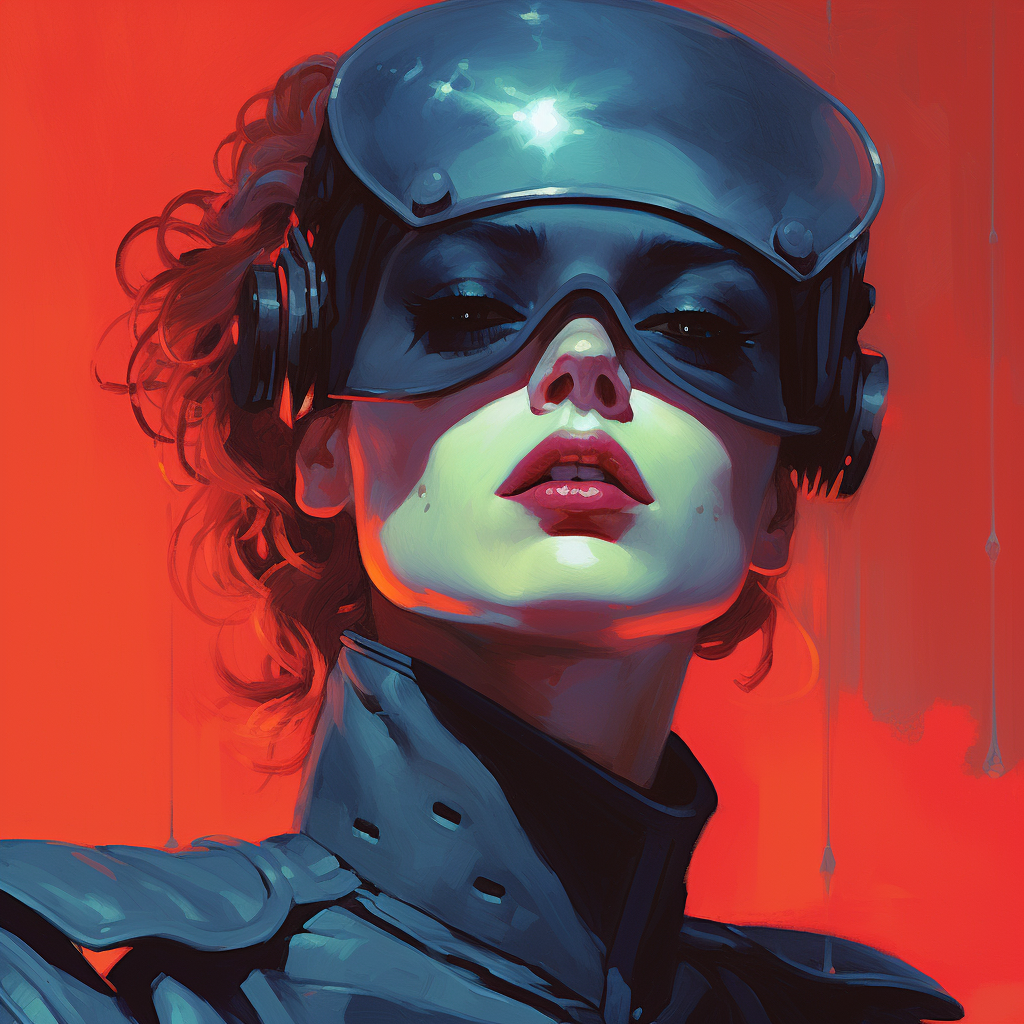
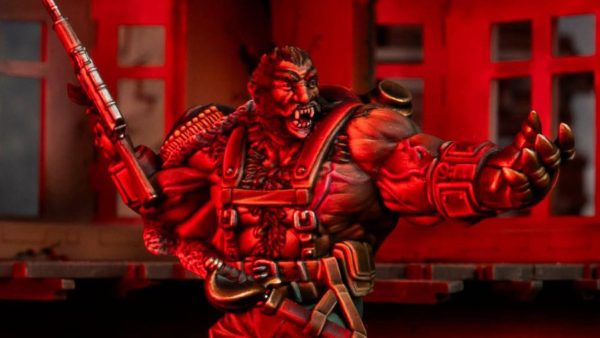
Creating illustrations from text prompts is a fascinating process and yielded some really cool results. My intention was to create several distinct factions, primarily recognisable through colour but with a common style to each. The image on this page is one of my favourites. The ‘Red’ faction were themed towards melee with a visibly Japanese influence.
Dice & Stats
I have long held the opinion that the humble D6 is the king of dice. It’s the most aesthetically pleasing (IMO), and has a simple 1-1, 2-1, 5-1 ratio.
Unfortunately, as I was employing a system of rolling against your opponents experience, I quickly realised that the D6 left me with quite a narrow experience window.
I initially moved to D8, giving me a slightly greater numerical range. I liked playing with D8’s but Hazyboy from the community suggested I try D10’s and ultimately this is where I settled.
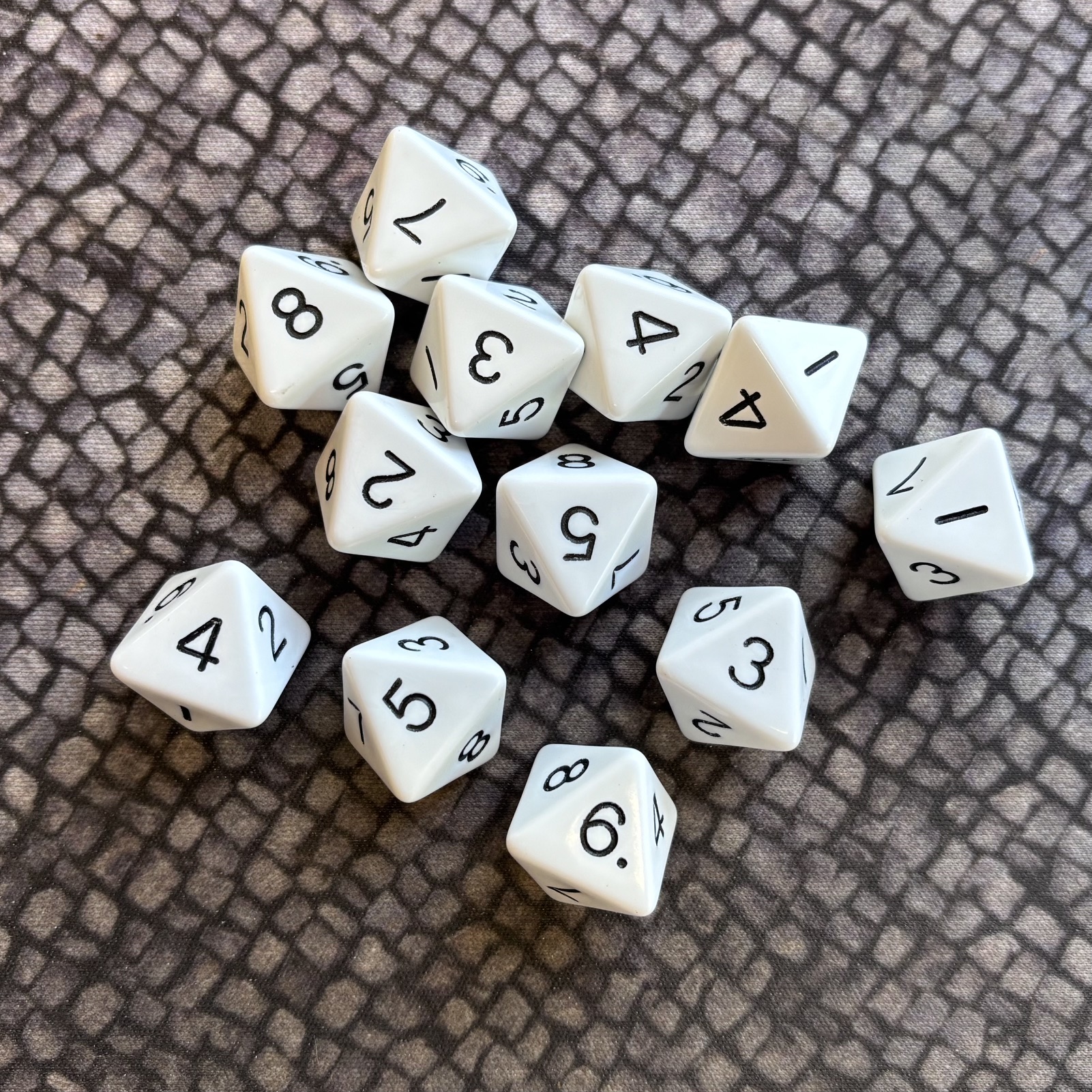
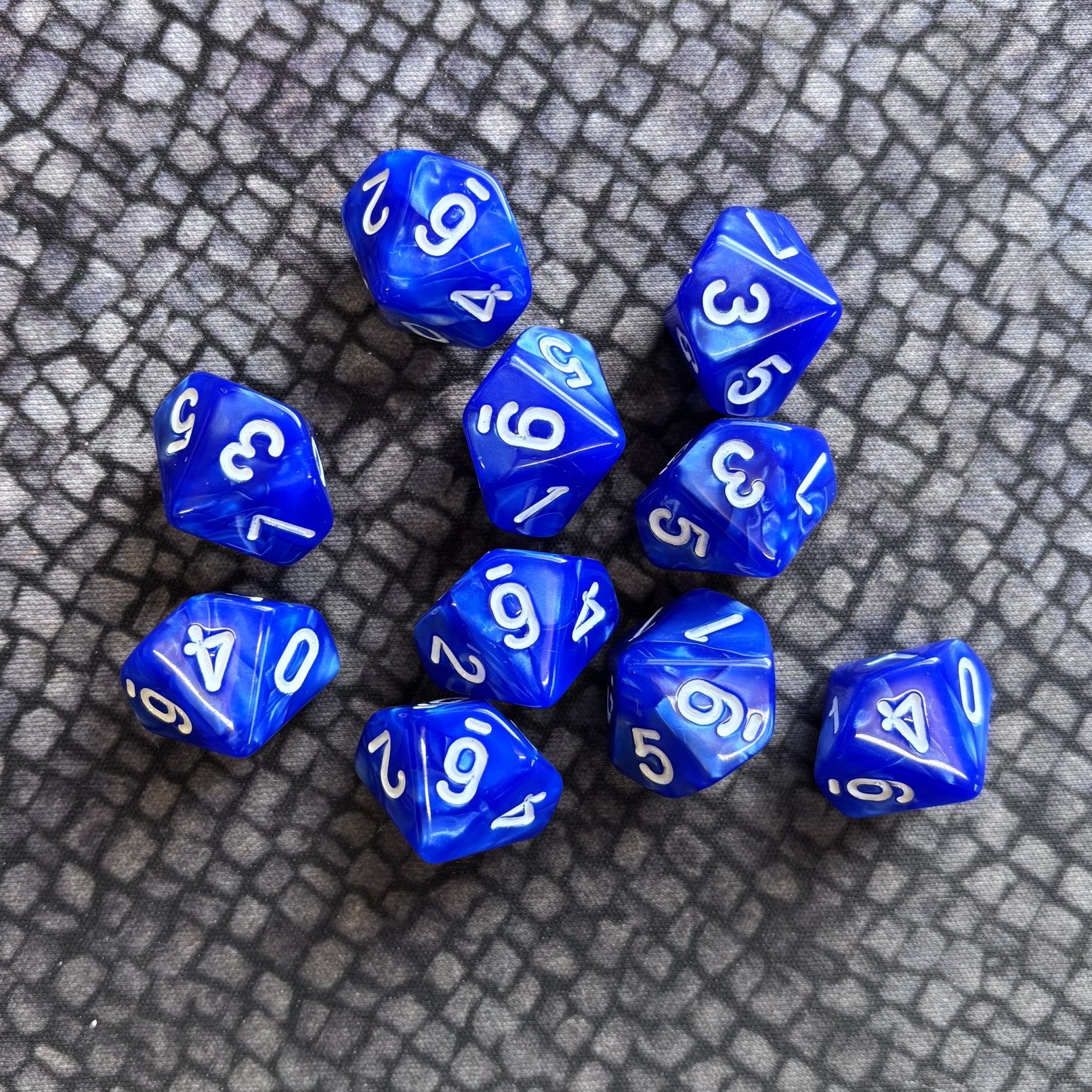
I’m still a little unsure about the switch to D10. It’s rare that you roll more than two to three dice in ROE, and my concern with high sided dice is the big swing that comes with them.
However, switching to a decimal system has allowed for some really straightforward number crunching and I definitely went down a rabbit hole with balancing the weapon stats!
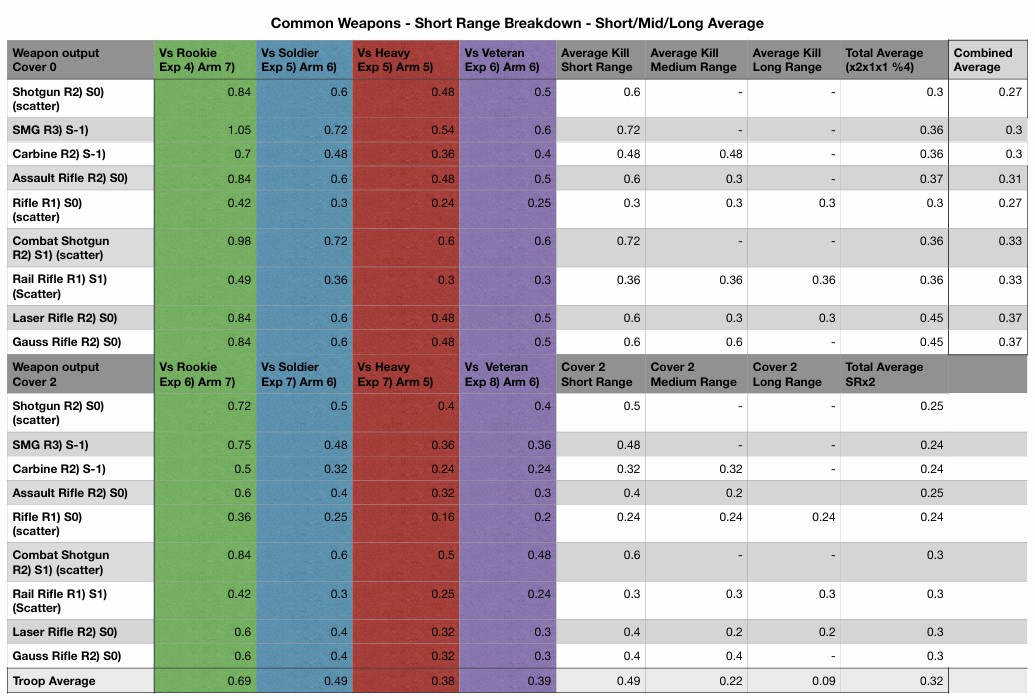
This table shows the average damage caused by each of the common weapons, vs a selection of troop types. It also illustrates what range brackets each weapon operates within, showing an average vs the previously illustrated targets.
The lower half of the chart shows the same data but with cover being applied to the shot (+2 Exp). This allowed me to see how effective each weapon was across a range of circumstances and ultimately work out an appropriate costing.
Simple to Read Vs Simple to Play
Something that struck me as soon as I started play testing, is that what is simple to put into words, doesn’t necessarily translate as simple to execute in game.
One example of this is the ‘to hit roll’. I had originally written this rule as;
Roll higher than your targets Exp
Simple to comprehend but in game terms this required you to establish the targets Exp (lets say 5), and then beat that number, so you actually need to roll 6+. This isn’t very intuitive and it gets worse once you factor in cover modifiers.
This ruling was soon revised to:
Roll equal to or higher than your opponent’s Exp
A little more wordy but far more intuitive in game, as you just establish the Exp of the target and that is the number you need to roll.

Another issue I came across was that my initial system had both positive and negative modifiers to dice rolls. Seems straight forward when you’re reading it but in practice you had a small equation on your hands every time you wanted to take a shot!
After early playtesting I revised this system so you would only ever count upwards when modifying dice.
For example, a target in cover gains a +1 Exp bonus. In this way Exp 5 simply becomes Exp 6. If a further modifier is applied you count up again. This system also means that shots only ever become harder as modifiers move the number required for success higher.
The counter point to this is that improving your chances of success only ever comes in the form of re-rolls, generally obtained through orders and when taking a specific type of action.
This results in a clear and consistent combat system which avoids contention and is fast to execute.
Stat Lines
One of the first established game mechanics was that ‘to hit’ rolls would be made against a targets experience, rather than the attackers ability. There are numerous systems that adopt this mechanic, and it allows you to field unit types who are broadly similar, while adding variation in the experience level of your troops, from Rookie through to Veteran.
I also wanted a combat experience that felt symmetrical. Which is to say, attacker rolls dice against their opponents experience, defender rolls dice to negate any hits.
This gave me two essential attributes, both of which would be used to determine how survivable a model would be. Initially these were named Experience (Exp), and Armour (Arm). I later changed the Armour attribute to Resilience (Res) as it felt more ambiguous and would be representative of things that were just plain tough, rather than wearing some kind of protection.
For a time I worked with just two stats as I wanted to avoid adding unnecessary complexity. In the games initial conception, models only had a single wound, with larger health pools being reserved for heroes, via a special rule. In the current iteration, models are generally able to take a wound before being taken out of action and the simplest way to represent this was by adding a wound attribute to the stat line (W). This had the further benefit of allowing me to add more variety to the troop types available.
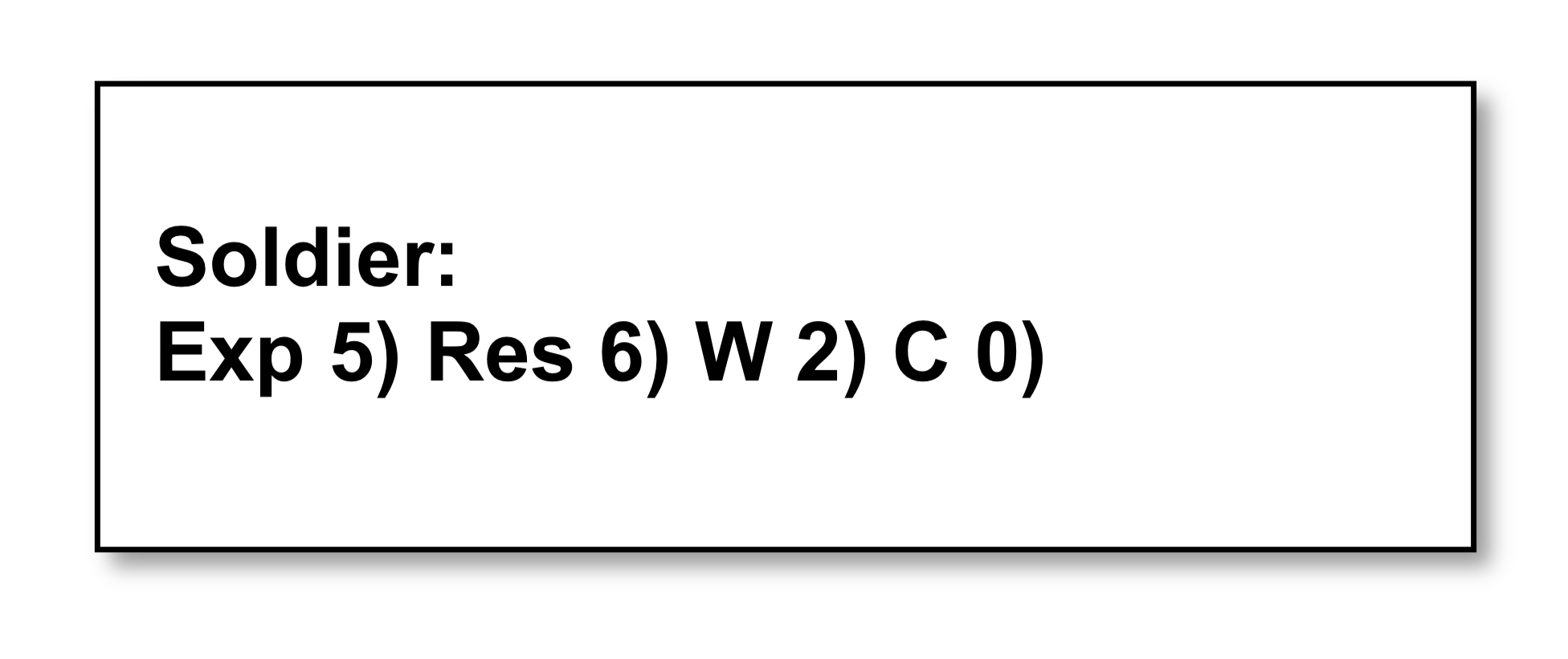
One of the major pitfalls that I wanted to avoid was creating a game that simulated a fire fight, but where close combat was a more effective way to dominate your opponent. I believe I have achieved this, however it did seem necessary to allow for units who were more adept at melee combat. This lead me to incorporating the final attribute (C), which simply stands for Combat. The function of this stat changed several times throughout the design of the game, as I tried out different ways to represent melee advantages. In the end I settled on the C stat representing a number of re rolls a model is permitted when making close combat attacks. This ties in with the general mechanics of combat as you will see in the next entry.
Game Criteria
So why play ROE over other more established systems?
When I started this project there were certain criteria that I had been struggling to find in other skirmish games. I wanted to create a game that allowed me to, for example, use whatever models I wanted and play through a couple of games in an evening.
In no particular order, I wanted a game that would be;
Model & Setting Agnostic
Low Model Count
Infantry Fire Fight
Fit on a Dining Room Table
Play in an Hour
Balanced Gameplay
Strategically Rewarding
Maximise Player Agency
Feel Challenged by your Opponent, not the rule book
If you find these concepts compelling, and have some models that you’re looking to get on the tabletop, I would urge you to download the rulebook and give it a try.
Purpose
I’ve been working on this game for many years, on and off.
What prevented me from starting a project before now was my concern that it would be text heavy. It’s only over the last year or so that I have populated the book with images, which I realised could also be used to brighten up my project entries! Additionally, I have finally reached a point where I feel the game is complete, and so I’m putting it out into the world for others to try, hopefully enjoy and offer some feedback.
I would also like to use this project to share some of the insights I have had throughout the development of the rules, as well as to record any improvements that come about as a result of further playing.
The full rulebook can be found below in PDF form. There is a separate document for the force organisation chart, which will be updated more regularly as I finesse the point costs and stat lines.
Finally there is a quick reference that summarises everything you need to hand when playing. This document is designed to be printed two pages to a side of A4 for convenience.
I will update these documents when further changes are made as a result of this project.
![Gripping Beast Announce They Are Closing Their Doors [Updated]](https://images.beastsofwar.com/2026/09/gripping-beast-announcement-cover-600-338.jpg)