Google Analytics is a powerful tool that tracks and analyzes website traffic for informed marketing decisions.
Service URL: policies.google.com (opens in a new window)
_gat
Used to monitor number of Google Analytics server requests when using Google Tag Manager
1 minute
_gid
ID used to identify users for 24 hours after last activity
24 hours
_ga_
ID used to identify users
2 years
_gali
Used by Google Analytics to determine which links on a page are being clicked
30 seconds
_ga
ID used to identify users
2 years
__utmx
Used to determine whether a user is included in an A / B or Multivariate test.
18 months
__utmv
Contains custom information set by the web developer via the _setCustomVar method in Google Analytics. This cookie is updated every time new data is sent to the Google Analytics server.
2 years after last activity
__utmz
Contains information about the traffic source or campaign that directed user to the website. The cookie is set when the GA.js javascript is loaded and updated when data is sent to the Google Anaytics server
6 months after last activity
__utmc
Used only with old Urchin versions of Google Analytics and not with GA.js. Was used to distinguish between new sessions and visits at the end of a session.
End of session (browser)
__utmb
Used to distinguish new sessions and visits. This cookie is set when the GA.js javascript library is loaded and there is no existing __utmb cookie. The cookie is updated every time data is sent to the Google Analytics server.
30 minutes after last activity
__utmt
Used to monitor number of Google Analytics server requests
10 minutes
__utma
ID used to identify users and sessions
2 years after last activity
_gac_
Contains information related to marketing campaigns of the user. These are shared with Google AdWords / Google Ads when the Google Ads and Google Analytics accounts are linked together.
90 days















![Sneak About With Star Wars: Legion’s Guerilla Troopers & More [UPDATED]](https://images.beastsofwar.com/2026/09/g-troops-star-wars-cover-600-338.jpg)


Hi Romain
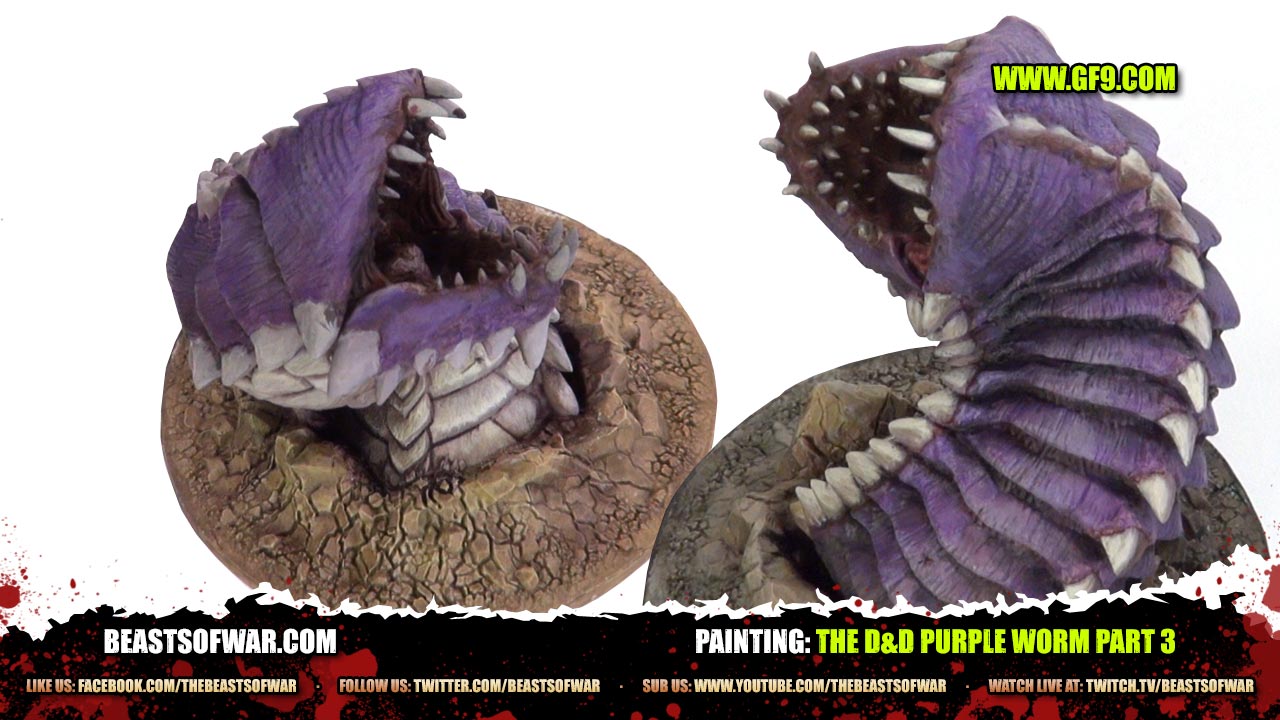
Great video as ever. I was wondering if the washes you use throughout the worm are they just paint + water or do you use a medium?
Cheers and btw, great tattoo:)
Thanks for the kind words !
No medium here, just water, even when wet blending. I’m not stopping you from putting medium in your mixes if you want to, or if you need more time to work your blending (it’s perfectly all right, even for experts), but don’t put too much or it’ll take forever and a day to dry.
The tattoos are still expanding, by the way 😉
Another great series of videos. I might be giving the wet blending a go on some of the larger Reaper Bones figures. It looks great here.
Thanks ! That’s the idea.
Happy painting ! 🙂
Great videos the three!
Hope to see more from you Romain!
B.
Thanks b !
Hi again Romain!
Thank you for the reply. I asked about the medium because both GW (lahmian medium) and Vallejo both have mediums for washes in their ranges and I was thinking about giving them a go.
Oh…I just remebered: why not a video detailing the diferences between Wash, Glaze etc.? I don’t think you have ever done one these (I could, of course be wrong).
Any chance of a full pic of the tattoo? I’m going to start learning the art very soon and i’ve found yours to be great 🙂
Cheers and once again Thank you!
Thanks for your keen interest !
I’ve answered that question about washes and glazes before, but never in a video.
A wash is a mix of paint diluted with either water, medium, or an even more surfactant product. The purpose of this dilution, in a wash, is for the pigments to slip into the crevices of the miniature, thus achieving a kind of shading. The wash is usually to be applied in the creases or the miniature, on a single surface (trusting the pigments to shade that surface in its nooks and crannies) or all over the miniature (in which case the product is often called a “dip”).
In the old days, some people used a drop of dishwashing soap in their rinsing water just to make teh paint more surfactant… I don’t know if it works, i think it’s entirely superfluous and could only lead to endangering your brushes.
A glaze is also dilute paint, but it’s generally done with water only, as it aims NOT to be surfactant. It usually contains less paint than a wash. With your brush, you will gently apply the glaze evenly on a surface so that it is tinted by a translucent “veil” of paint : the pigments should not necessarily go in the creases, but be applied regularly.
This is why the glaze is usually applies carefully, over small surfaces, repeatedly, and with higher dilution : the more water, the quicker it dries.
To achieve gradients, it is thus possible to use successive glazes on smaller and smaller surfaces, pushing the paint towards where you want the maximum concentration of pigments, making that area less and less transparent and more and more pigmented.
That is, of course, the theory…
In practice, a wash often also has the effects of a glaze, and is used as such, and vice-versa. Painters use successive glazes in selective places for shadowing, and they use washes to both shade the crevices of an area and tint all of its surface.
I suggest you don’t worry too much about what’s a glaze and what’s a wash, as long as you know what effect you want to achieve and what would work best to do so.
As for my tattoos, they’re not quite finished… but if it may help you become a good artist, there you go.

Happy tattooing ! 😉
Thank you so much Romain! You are THE MAN!!!! Looking forward to your next videos and why not…your next needloework:D
cheers!