



Romano-British for Dux Britanniarum




Recommendations: 1546
About the Project
This was a project started during lockdown to build a Romano-British war band for Dux Britanniarum by Too Fat Lardies. It's stalled of late, so my hope is that by documenting progress on this project I'll be incentivised to finish it.
Related Company: Too Fat Lardies
Related Genre: Historical
This Project is Active
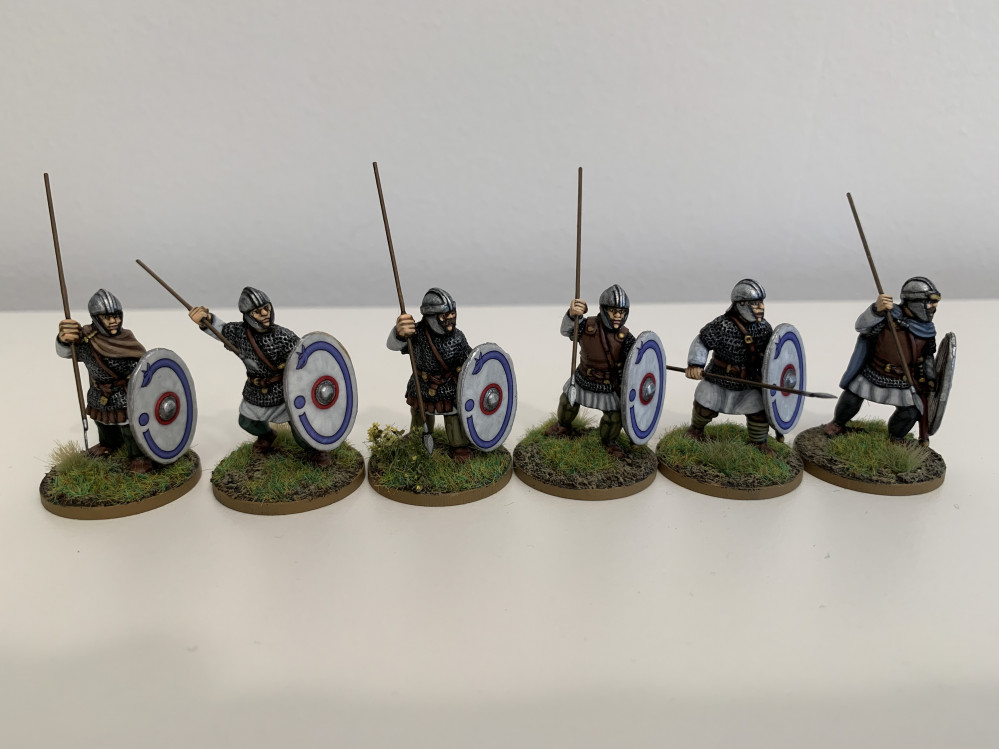
Milites Group Two - tunics
I worked on the tunics this week, sticking with the same white theme that I used for Milites Group One.
The base coat is Light Grey (VMC 70.990). This was followed by a first highlight of 50% Light Grey and 50% White (VMC 70.951). Finally, I applied a second highlight of 90% White and 10% first highlight mix.
I was so engrossed in the podcast I was listening to that I forgot to take pictures of the stages, so I’ve posted two examples of the finished product below instead.
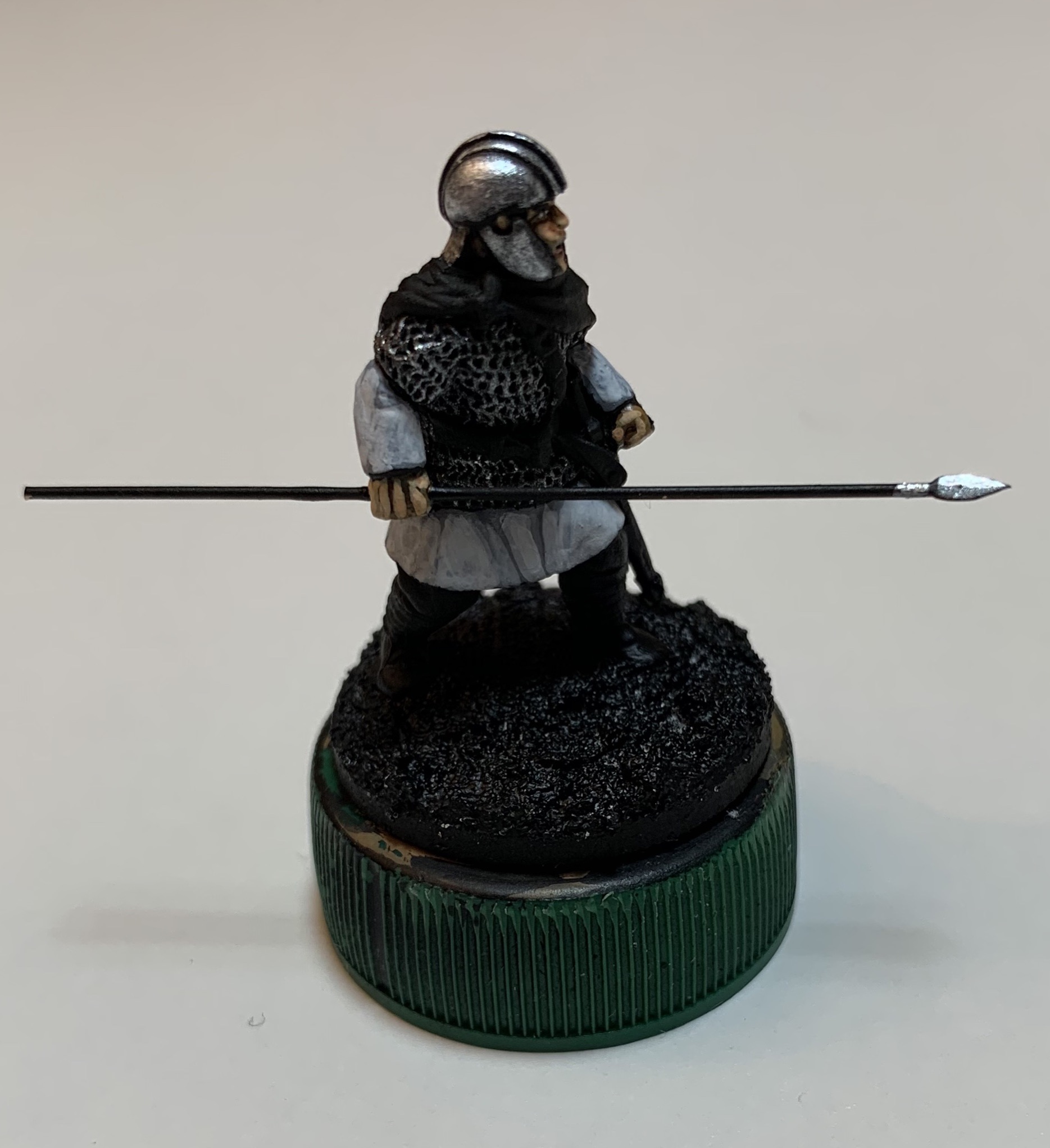
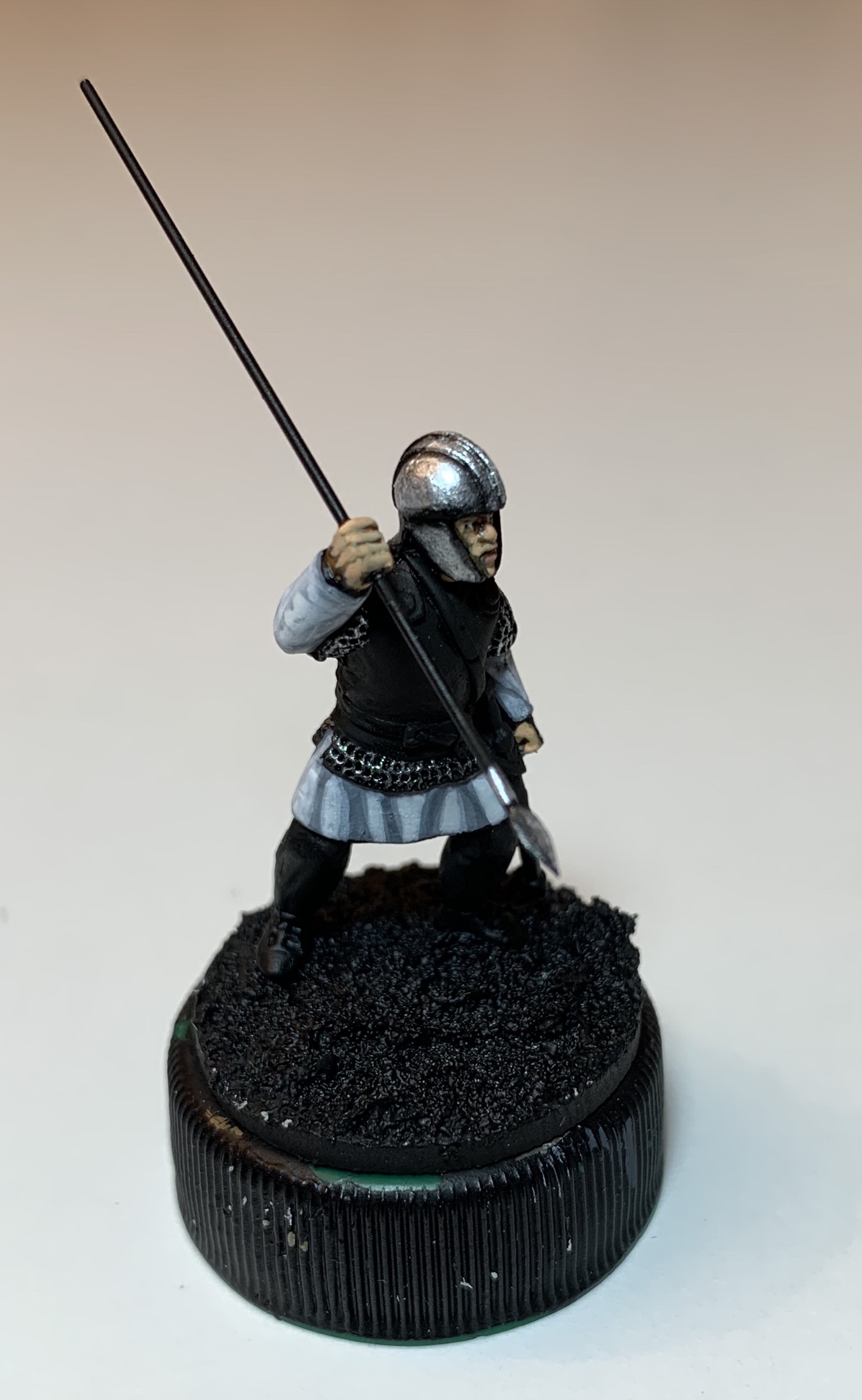
Thank you for the Golden Button!
Many thanks to Avernos and the rest of the OTT crew for the award of a golden button on this Sunday’s XLBS. I certainly didn’t expect that, but am definitely inspired to continue!
Many thanks also to all those members of the OTT community who have been clicking the recommendation buttons. It’s been great to receive such encouragement on my first project.
Milites Group Two - armour
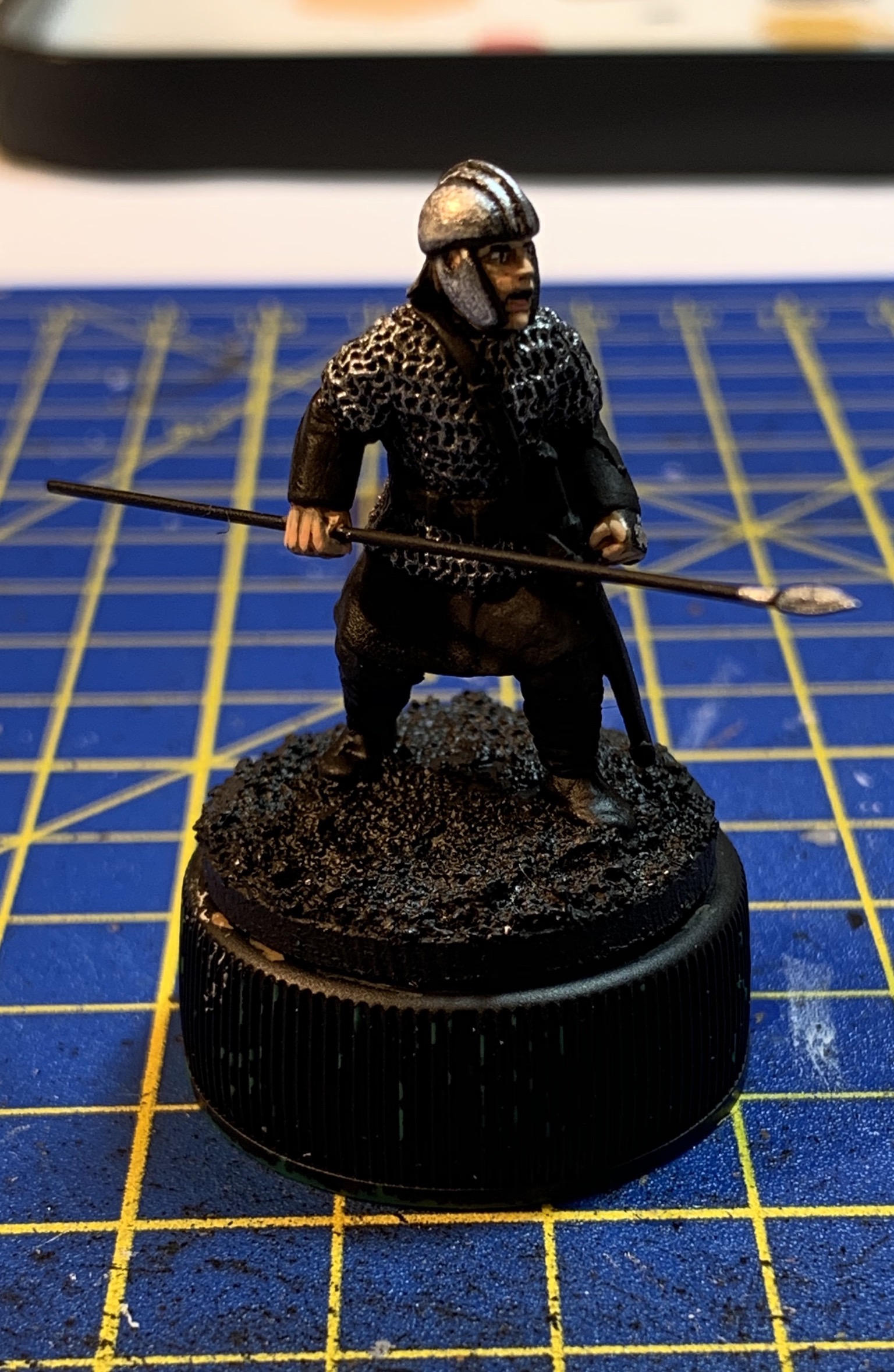
A very straightforward approach to armour, which consists of helmets and mail on these figures. I also use the same combination for the spear tips and haft. A base coat of Gunmetal Grey (VMC 70.863) with a single highlight of Silver (VMC 70.997).

Milites Group Two - faces and hands
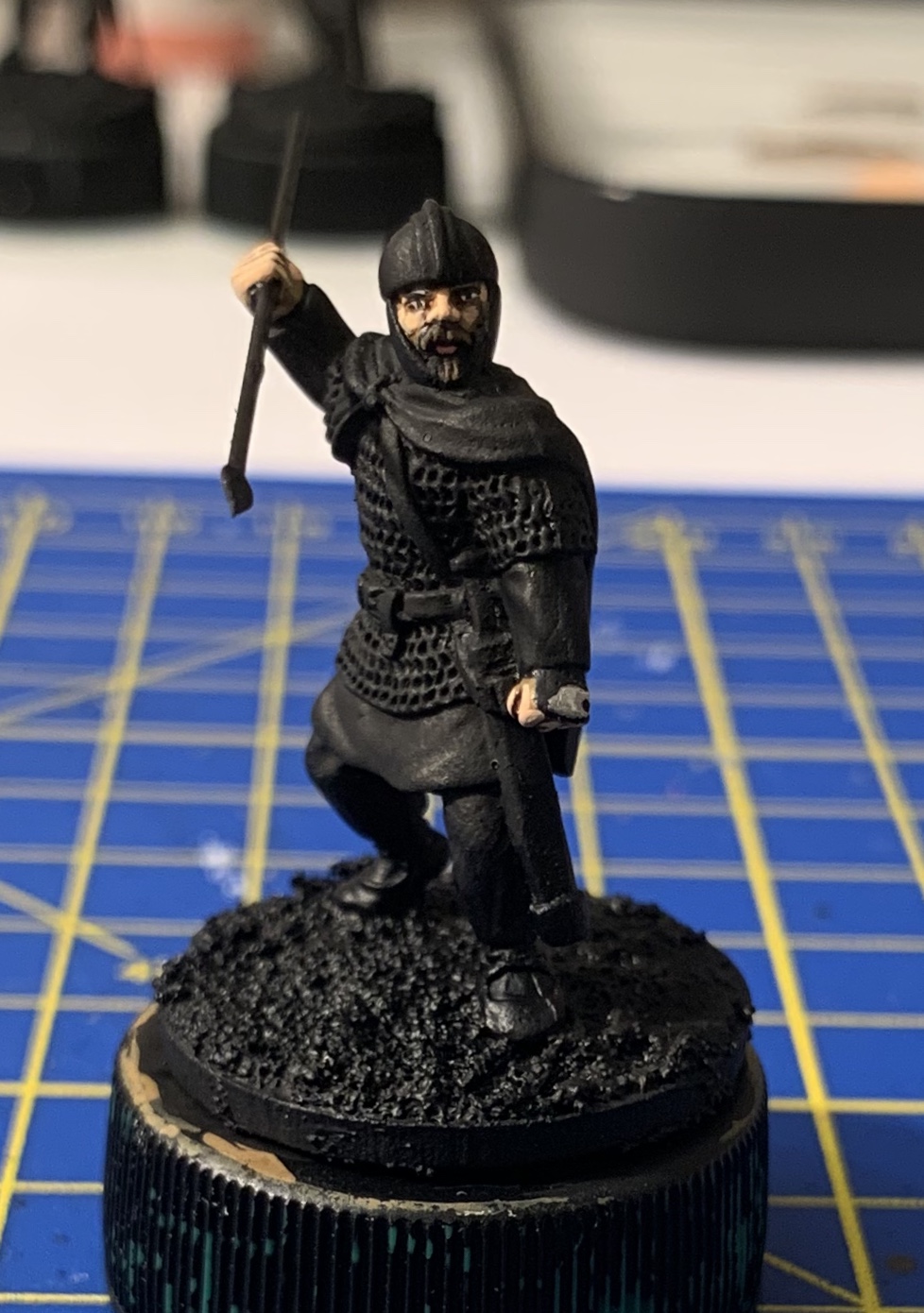
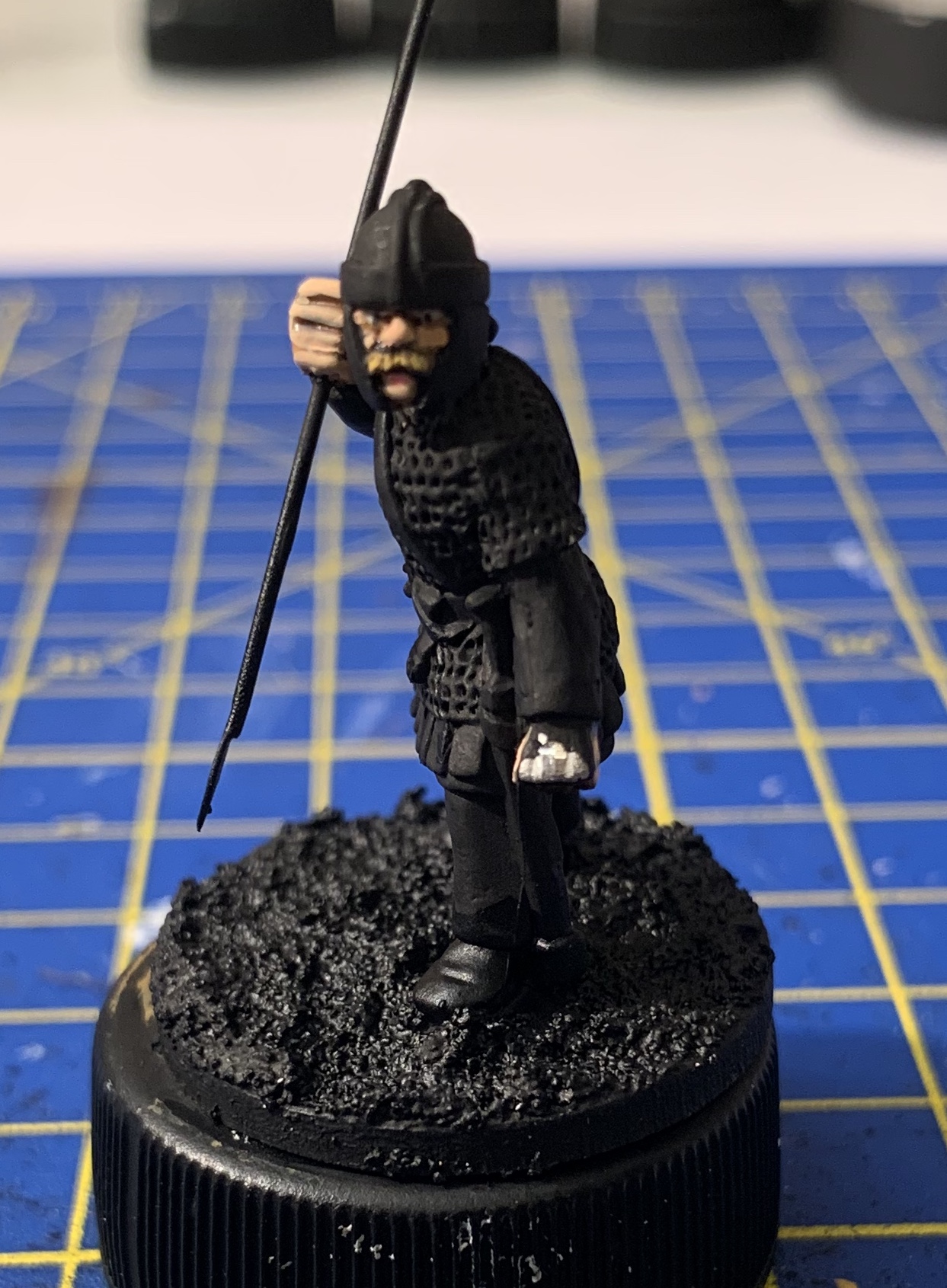
I made some progress on the second Group of Milites this week, focusing on faces, hands and visible parts of the neck, which are the only areas of exposed flesh on these figures.
Everyone on OTT will know that camera phones do miniatures few favours; making them look much less than they appear in real life. This seems to be a particular problem when documenting the steps for painting faces. However, despite the dodgy photos I’m really very pleased with the final effect, which looks much better in person.
The first step was to prime the figures in black and then cover any bits missed by the spray in a thinned coat of Black (VMC 70.950, although any black will do!).
I then scraped away the primer from the top of the left hand. This allows for a metal-to-metal bond when the shields are attached. Attaching the shields later in the process makes painting the figure easier, but it also allows me to prime the shields in white, which the instructions for the Little Big Men Studios shield transfers say is necessary for the colours to shine through.
Next, I painted the face, neck and hands (including the areas of the left hand where primer remained) in a base coat of Light Brown (VMC 70.929).
I then painted in the whites of the eyes with, obviously, White (VMC 70.951).
Once the whites of the eyes were completed, I gave the hands, neck and face a wash with Army Painter Strong Tone ink.
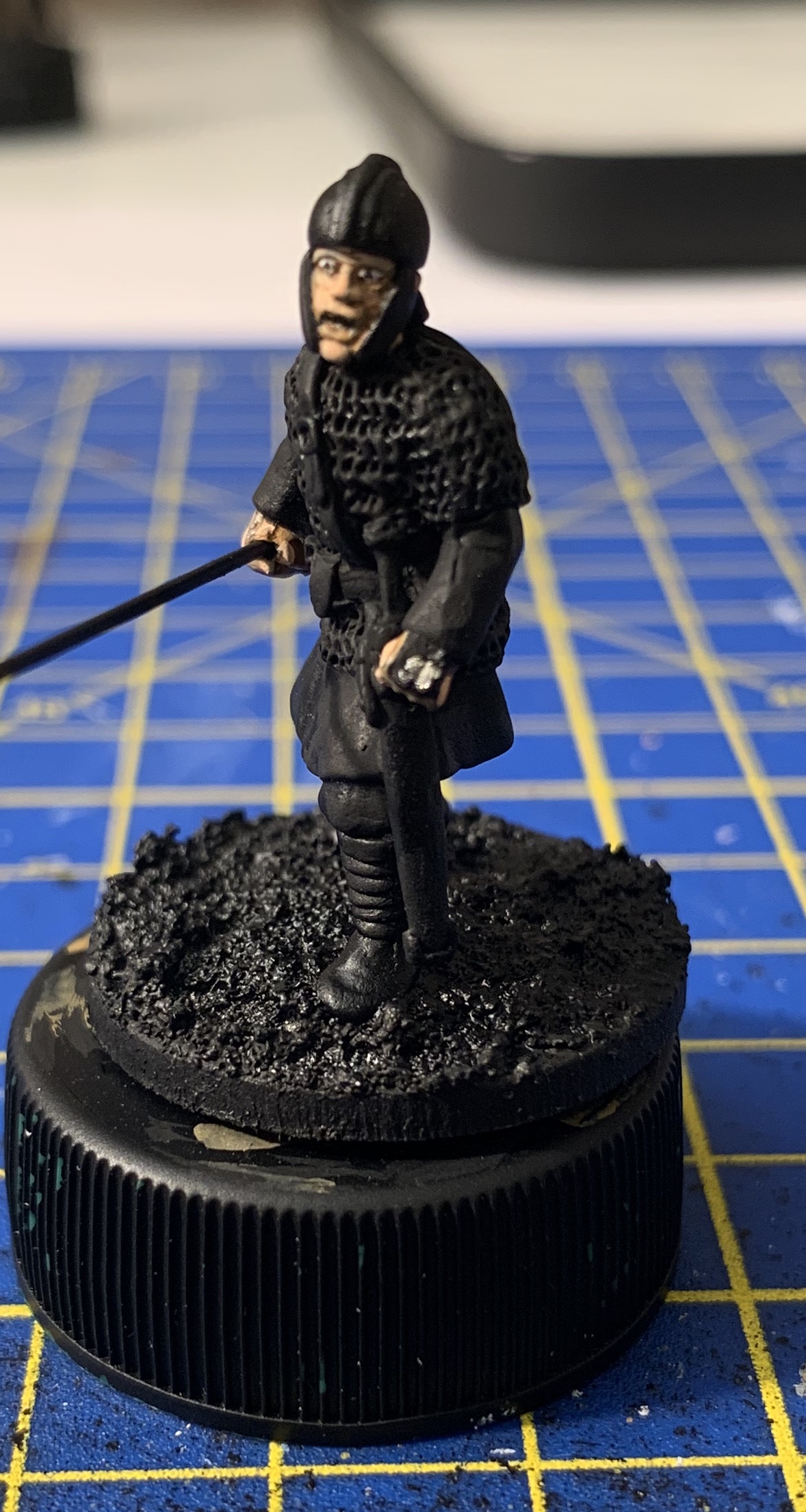
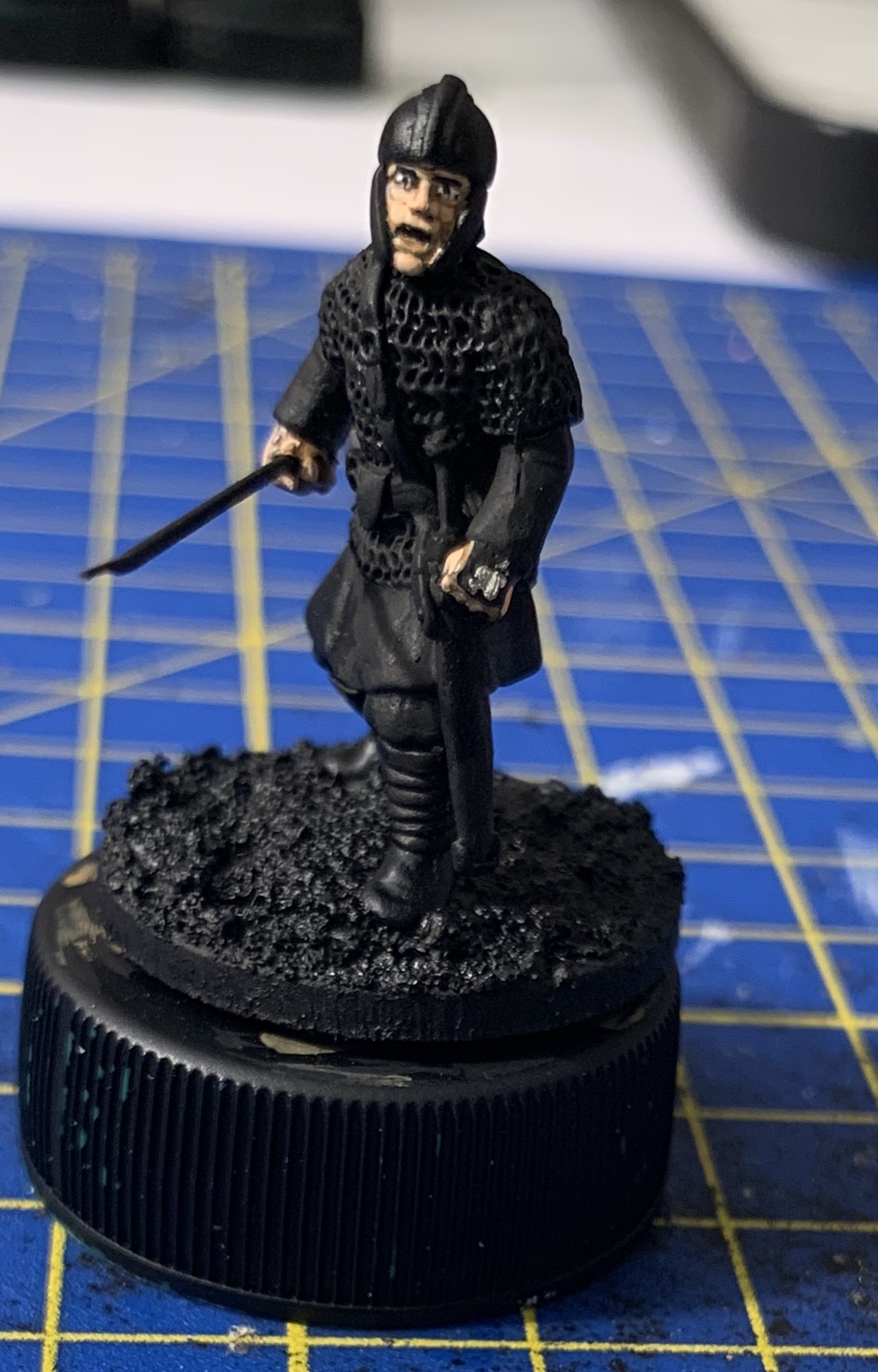
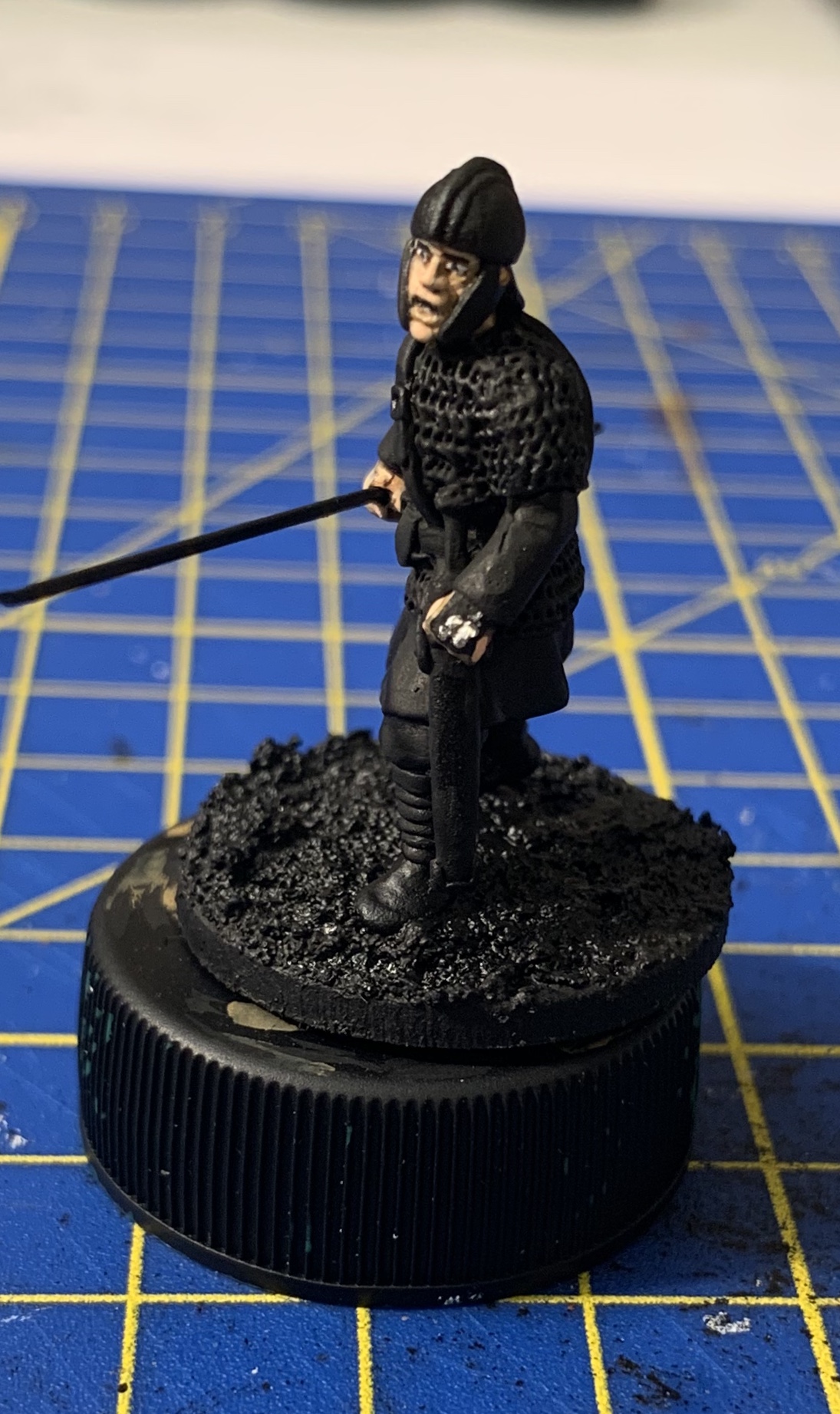
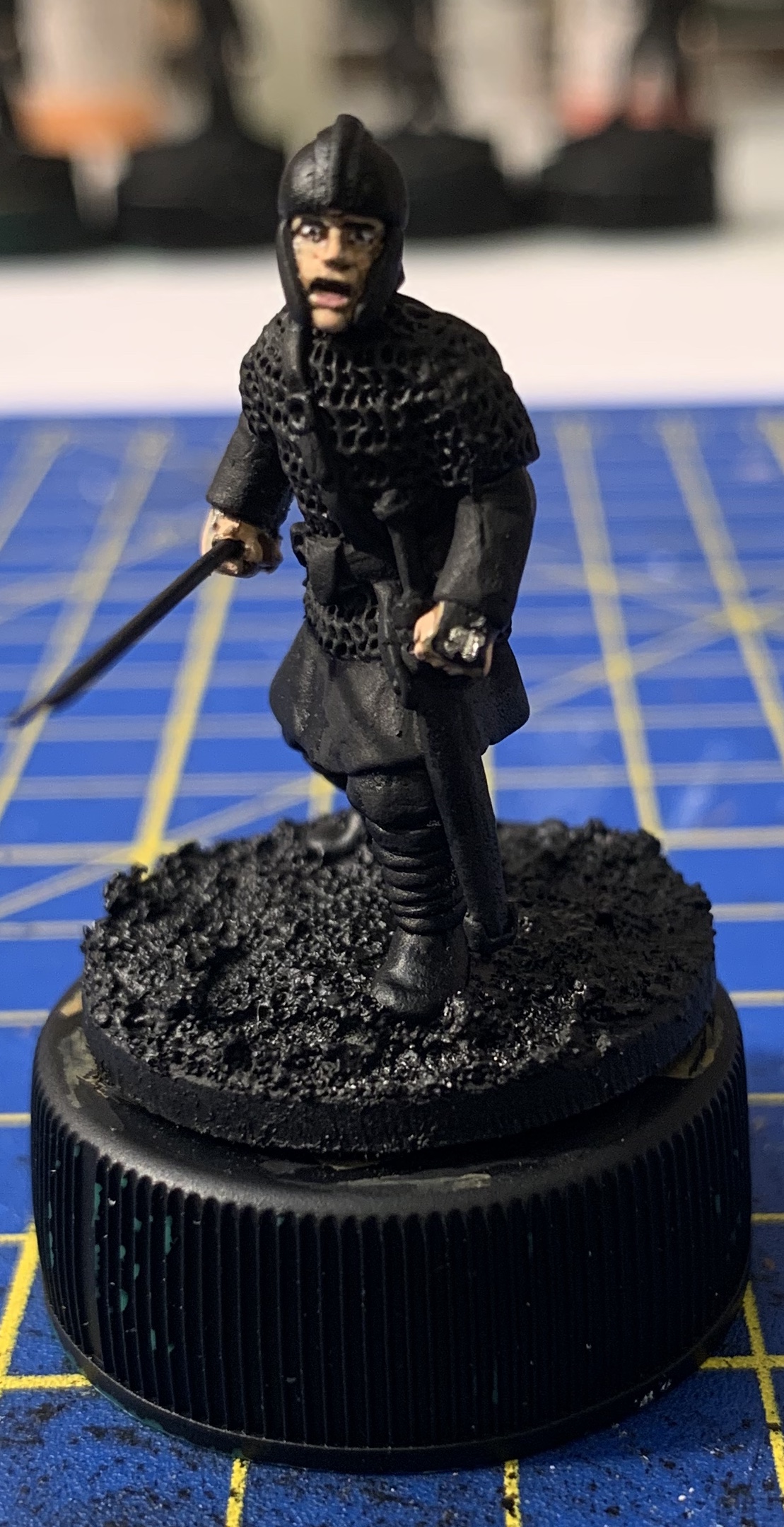
The images below document these first three steps of: i) base coat of Light Brown; ii) painting in the whites of the eyes; and iii) the wash with Army Painter Strong Tone ink.
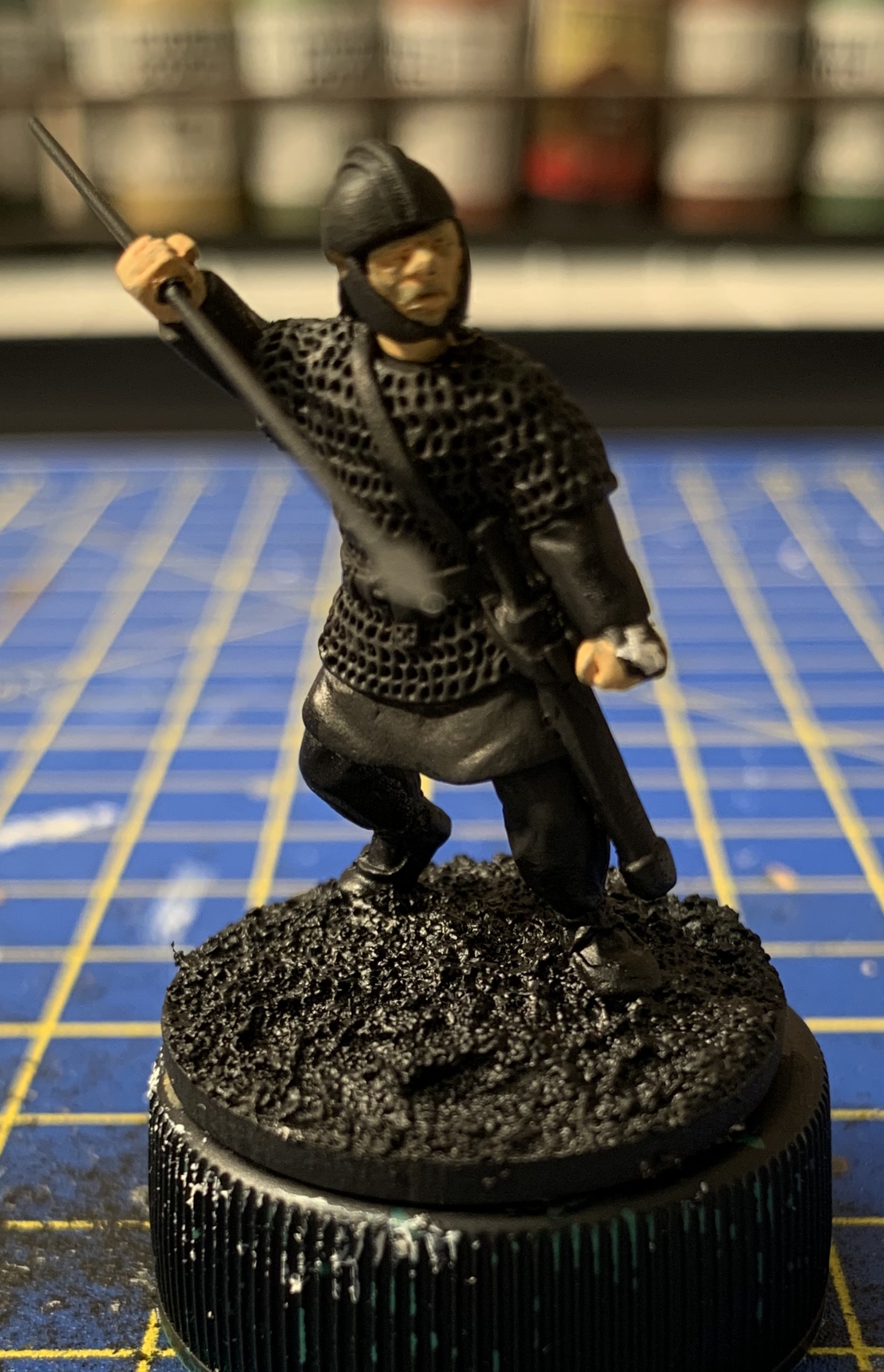
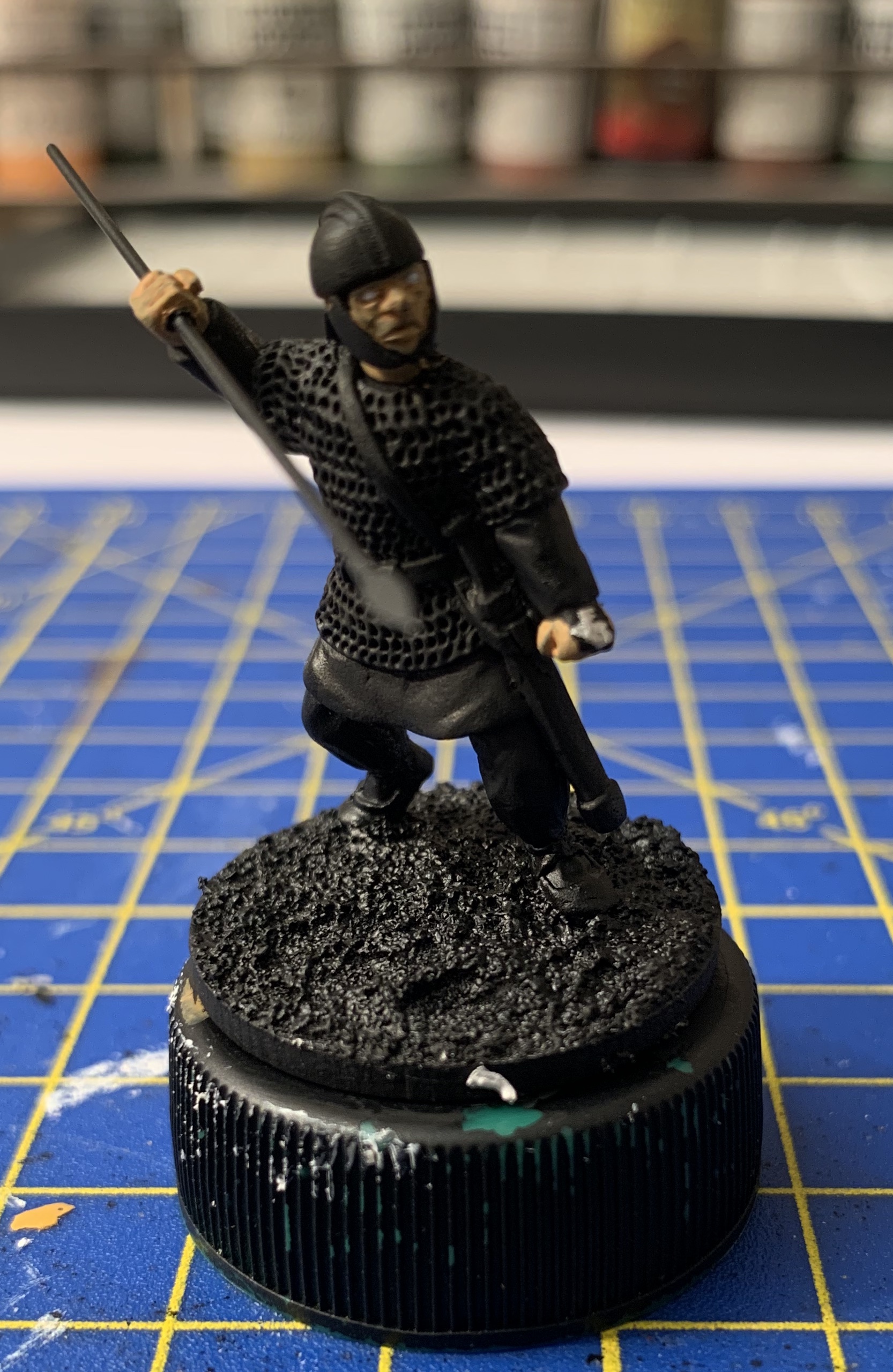
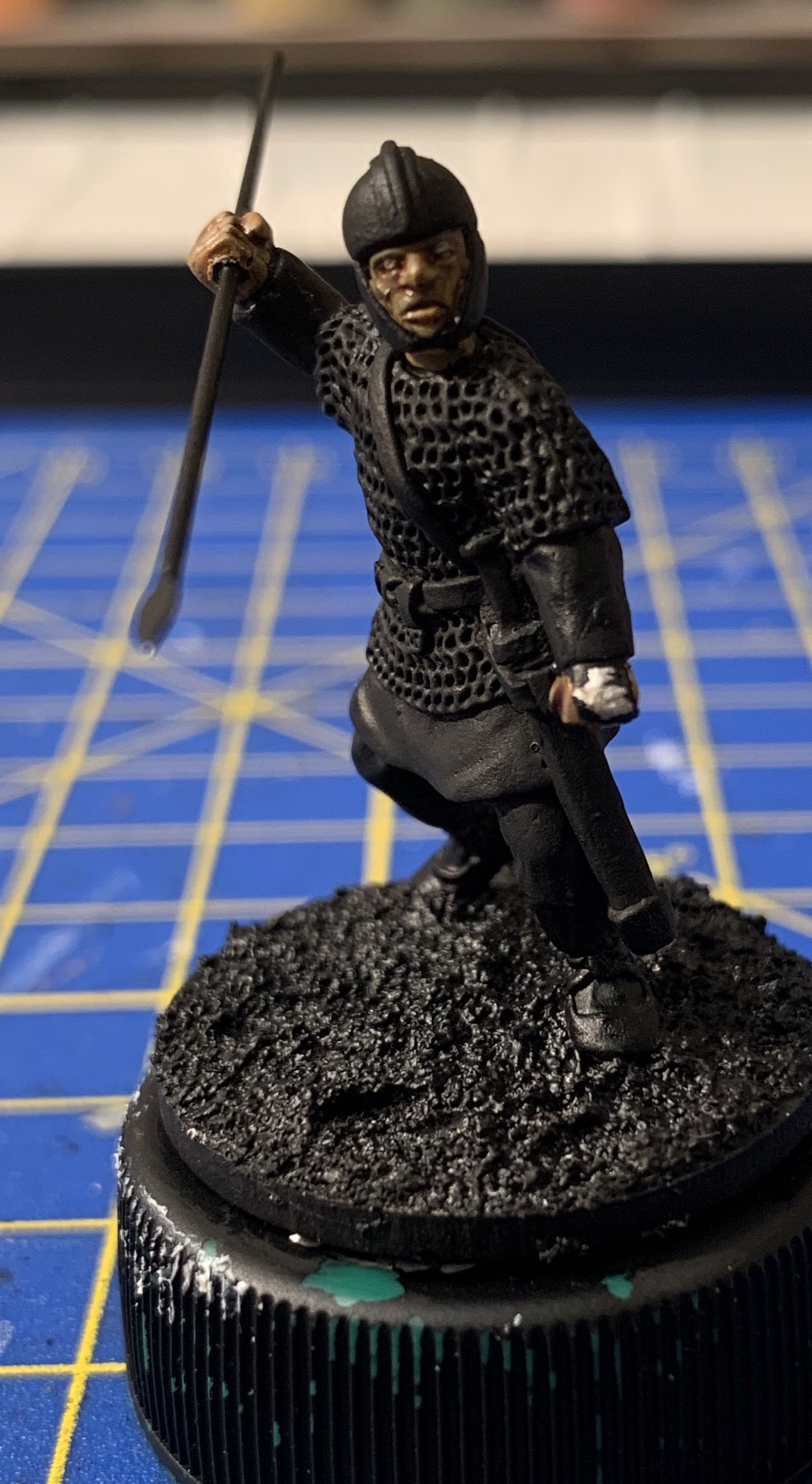
Once the ink was dry, I felt that it had dulled the whites of the eyes somewhat. This was the first time that I’ve painted in the whites before applying the ink wash. I therefore painted over the whites of the eyes again. Surprisingly, I found this order of doing things quite helpful. First, the ink covered up areas where the whites of the eyes were too large; and second enough of the original whites showed through to provide a guide for the repainting. I’ll therefore probably follow the same process again.
The next step was to draw in the pupils of the eyes with a vertical line of black.
The images below document these next two steps: iv) repainting the whites; and v) painting in the pupils.
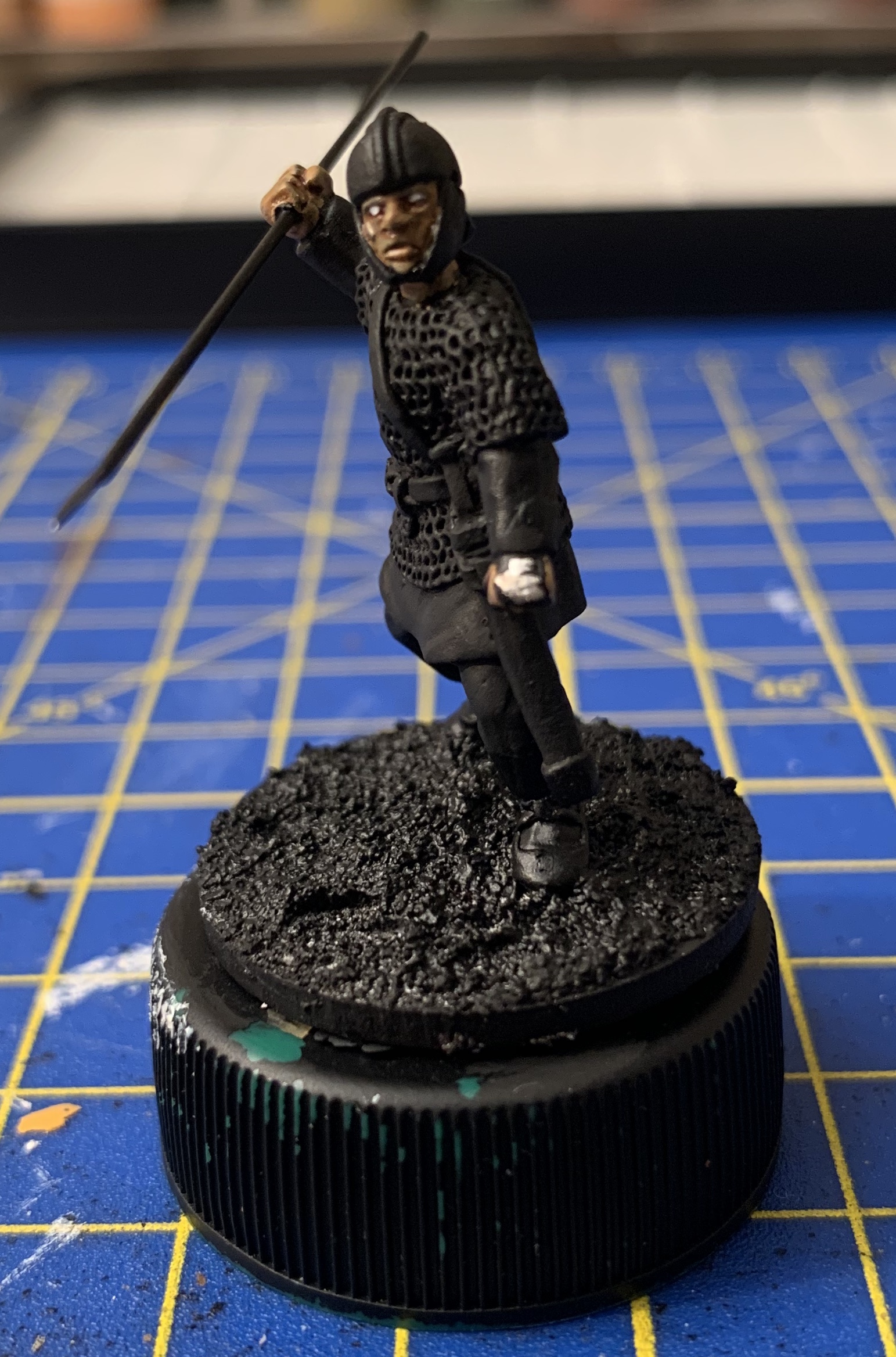
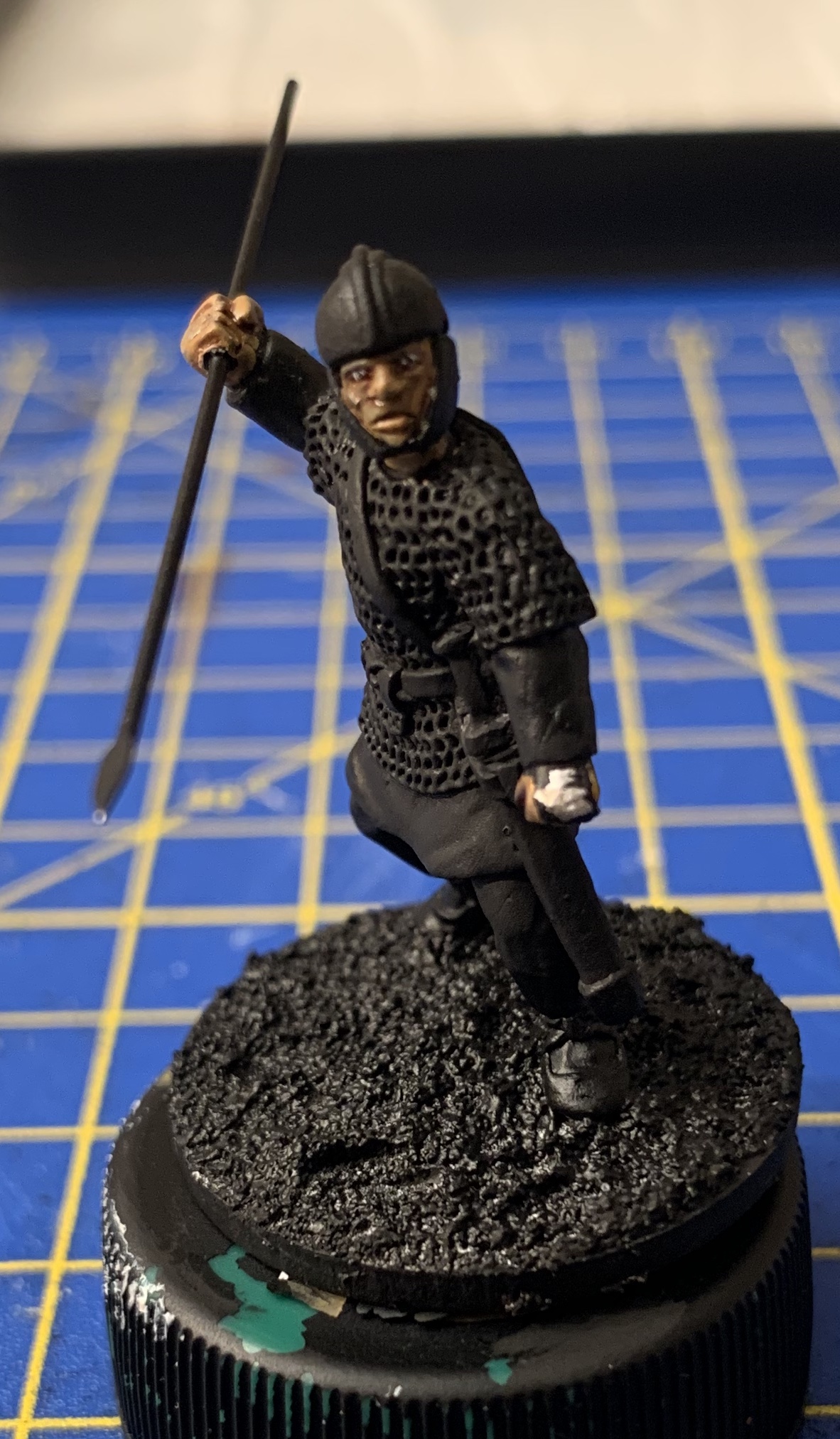
I then did a first highlight on the face, neck and hands with Sunny Skintone (VMC 70.845). At this point, one of my warriors looked like a startled rabbit, so I tried to achieve a slightly more martial look by painting in eyebrows with a couple of thin strokes of black above the eyes.
Next was a final flesh highlight on the highpoints (nose, chin, cheekbones, fingers) consisting of a mix of approximately 70% Sunny Skintone (VMC 70.845) and 30% White (VMC 70.951). The final touch was a line of Old Rose (VMC 70.944) on the lower lip only.
I’m not sure all these steps are readily apparent from the images below, but for what it’s worth they are: vi) first highlight (startled rabbit); vii) eyebrows; viii) second highlight; and ix) lower lip.
For those Milites with facial hair, I did one with a base coat of Chocolate Brown (VMC 70.872) with highlights of Beige Brown (VMC 70.873), and another with a base coat of Beige Brown with highlights of Yellow Ochre (VMC 70.913). I also used these combinations for the small areas of hair visible under the helmet, but these could equally have been left black.
Archers
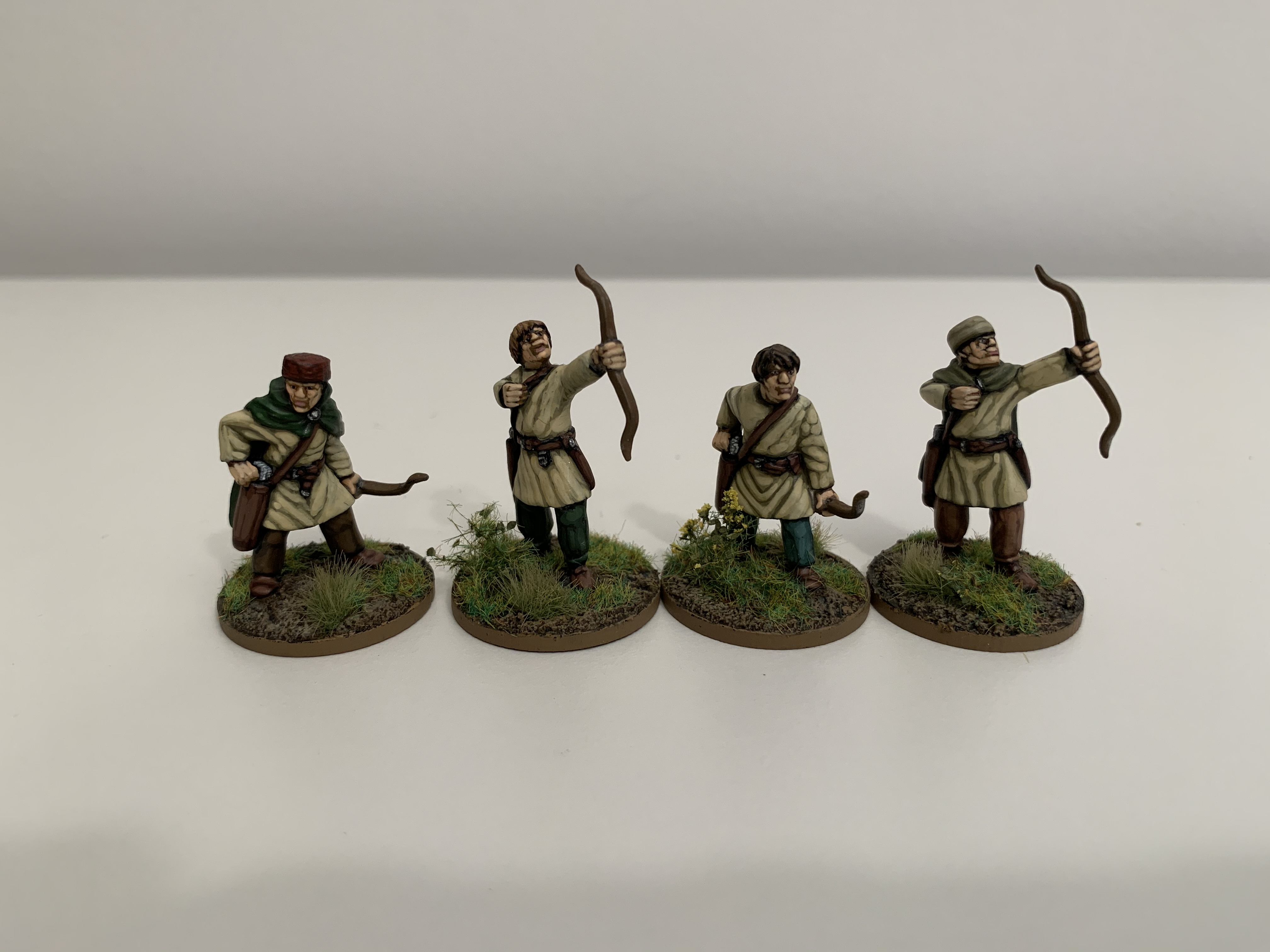
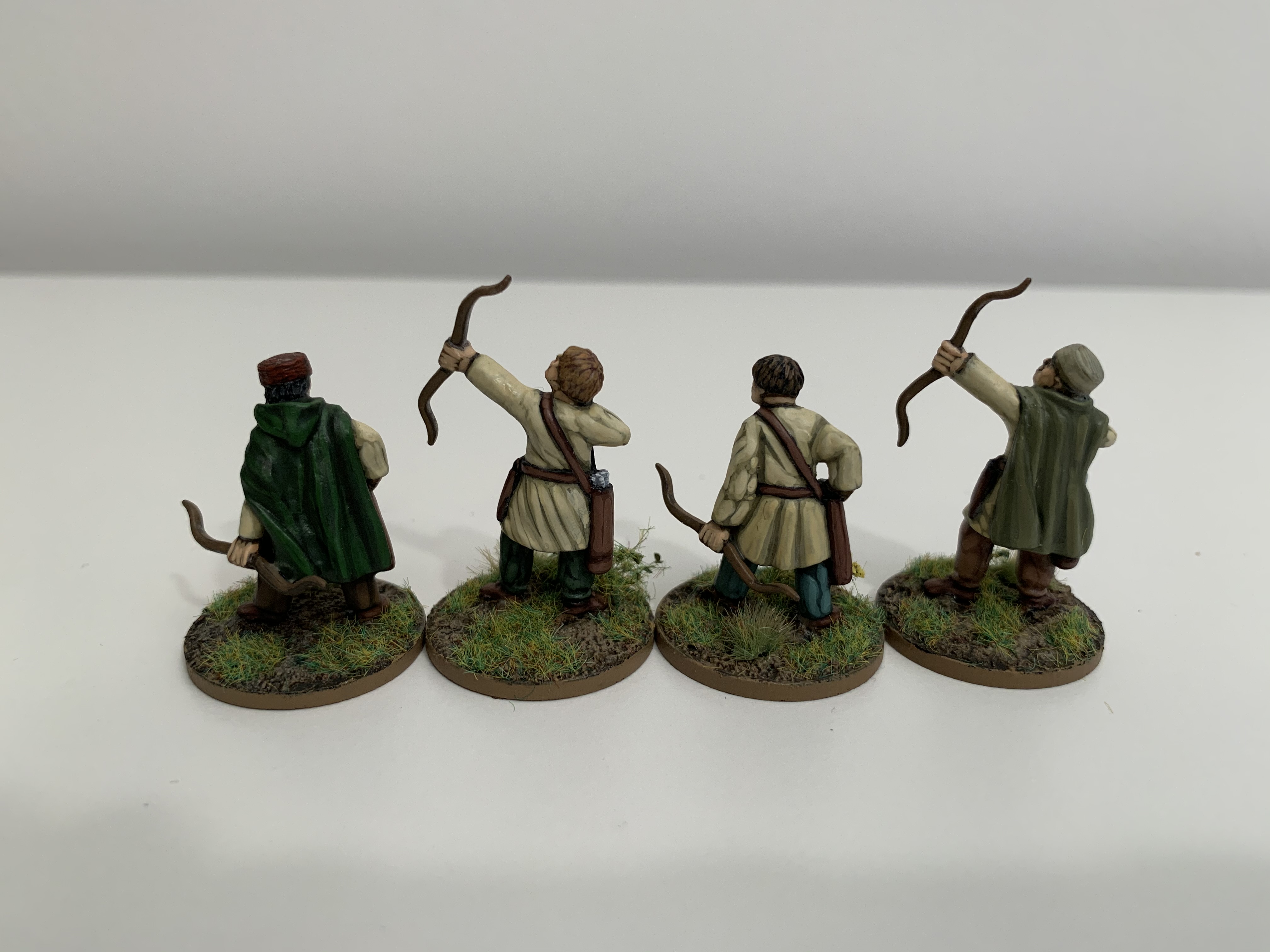
This four-man Group of Archers is the last of the Groups that I’ve completed to date. I decided to do a fairly uniform colour scheme for them as I speculated that these might be semi-regular troops in the service of the Lord, rather than the militia of the Numeri.
The figures come with the bow hand and bow as a separate casting from the rest of the model. The socket on the left arm is not quite large enough for the cast pin at the end of the bow hand, so I drilled it out a little further using a pin-vice. Where necessary, a tiny bit of blu-tack was used to hold the bow hand in place in the socket whilst the superglue dried around it. This was required for the two figures holding their bows aloft about to fire. For the two holding them down, it was possible to just hold the bow in place whilst the superglue dried.
Most clothing of the time would have been wool and I wanted to find a colour mix that could represent the raw, undyed variety that would have been common at the time. I eventually settled on the following combination entitled “Raw Fabric” that I found in Issue 9 of the Painting War series of occasional magazines, entitled “Holy War”. I generally use Vallejo Model Colour paints, denoted “VMC”.
Base Coat – Khaki (VMC 70.988)
1st Highlight – 50% Khaki (VMC 70.988) plus 50% Beige (VMC 70.917)
2nd Highlight – Beige (VMC 70.917)
 Four-man Group of Archers
 Lloyd shot
Numeri Group Two
This is the second Group of Numeri I’ve completed. When I come to the third Group I want to try and put more decorative elements on their clothing. Clothing worn in the the Roman empire of the Late Imperial period was very different to that worn in earlier centuries, looking more like the type of clothing we tend to associate with the early Medieval period. Tunics often featured official badges of office and patterned fringes and detailing. I’m sure not everybody wore such clothing, but I don’t see why some officials and bureaucrats shouldn’t be drafted into the Numeri, so will try and feature them in a way that doesn’t make them look at odds with their fellows.
For those wondering, the little caps that some of them are wearing are known as “Pannonian caps” and were adopted around the Fourth Century, when officers from the Danubian provinces began to occupy positions of influence in the Imperial army.
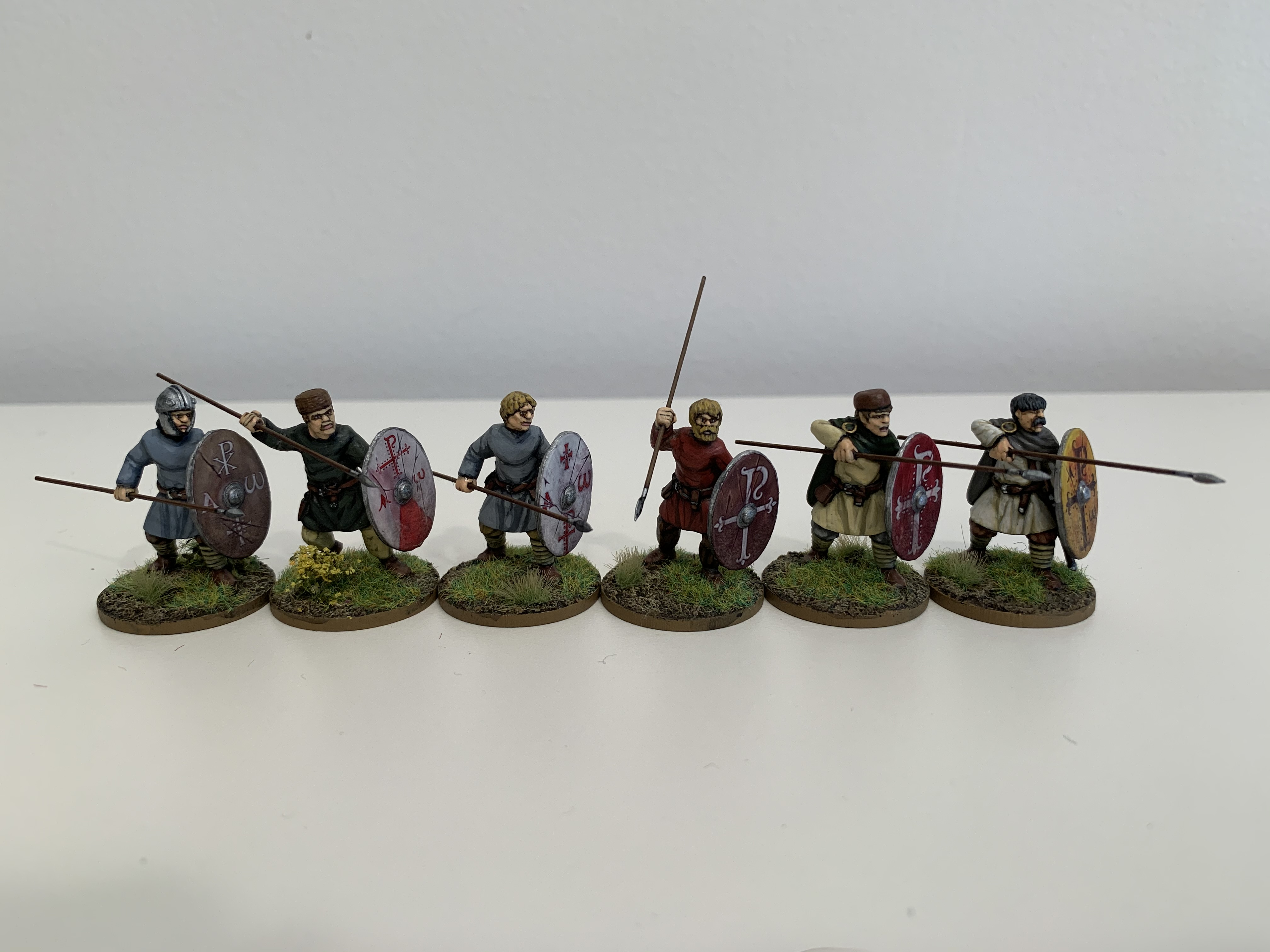 Numeri Group Two
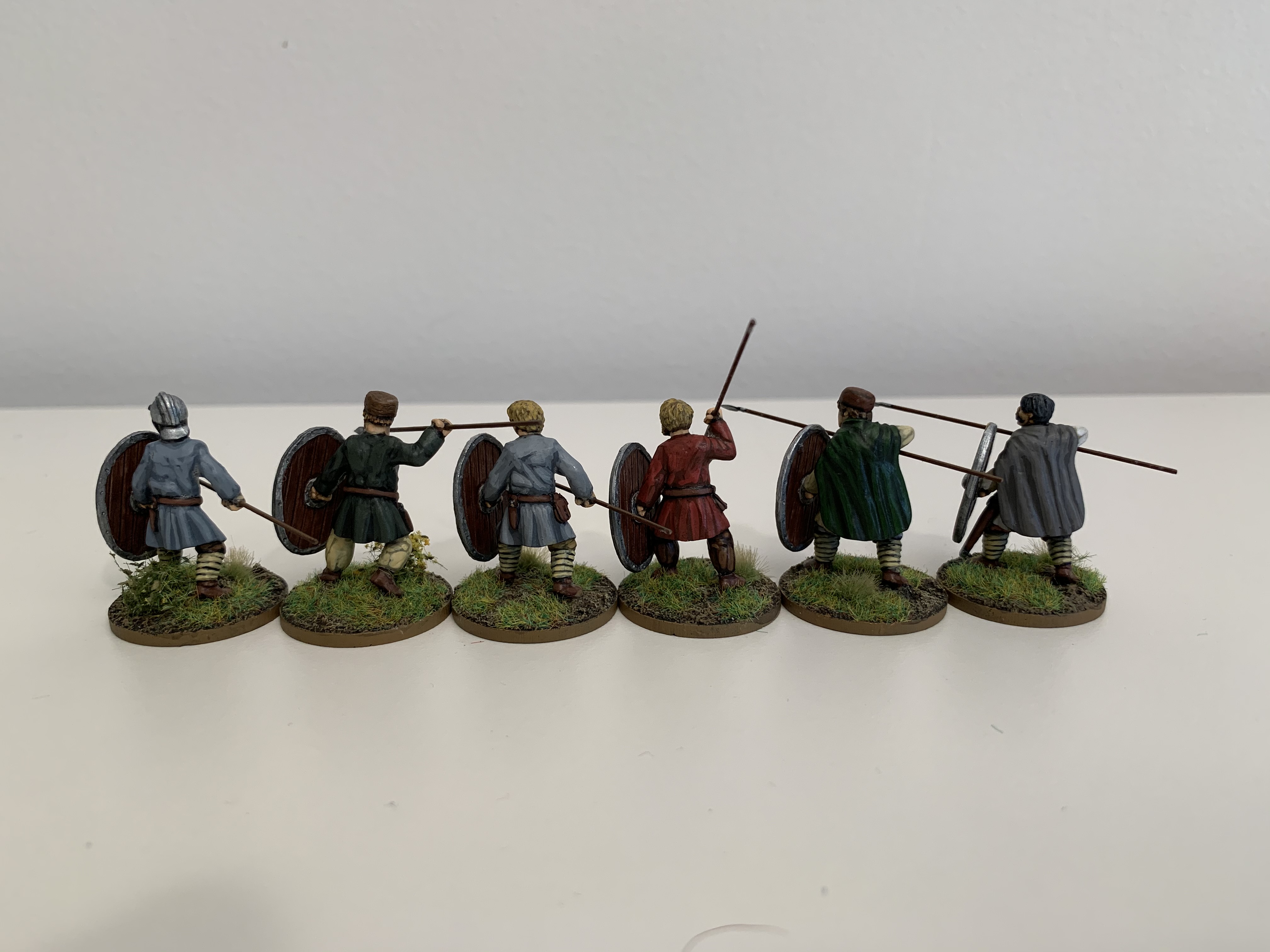 Lloyd shot
Numeri Group One
This was the first Group I completed about one month into lockdown. I wanted to go for reasonably muted shades that would fit with the natural dyes used at the time. The Numeri were the local militia, summoned at the behest of a Warlord to defend their homes, but by no means professional troops. As such, I wanted to avoid any suggestion of uniformity, so as to give the impression that these are a collection of farmers and tradesmen ordered to the battlefield at short notice.
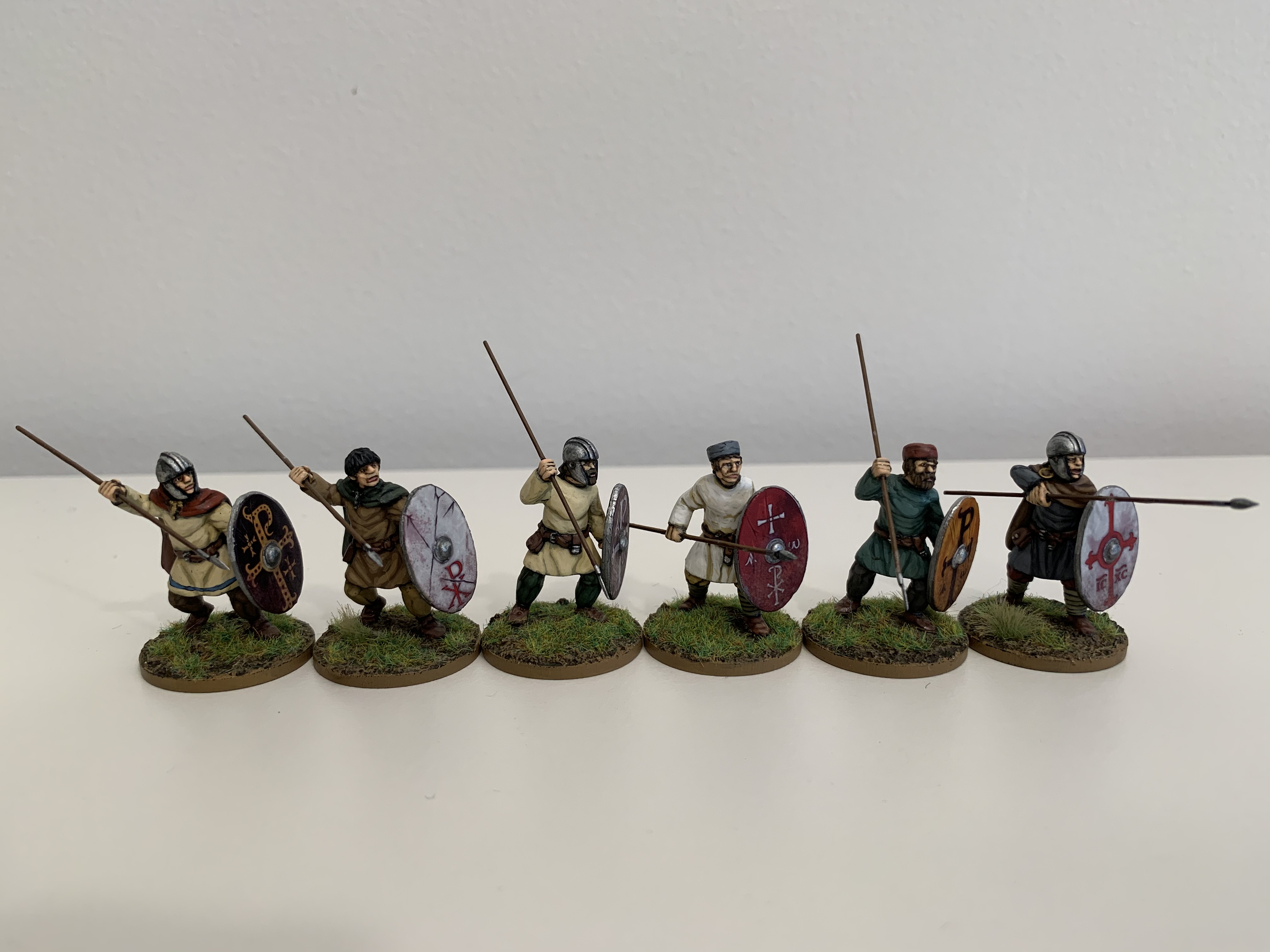 Numeri Group One
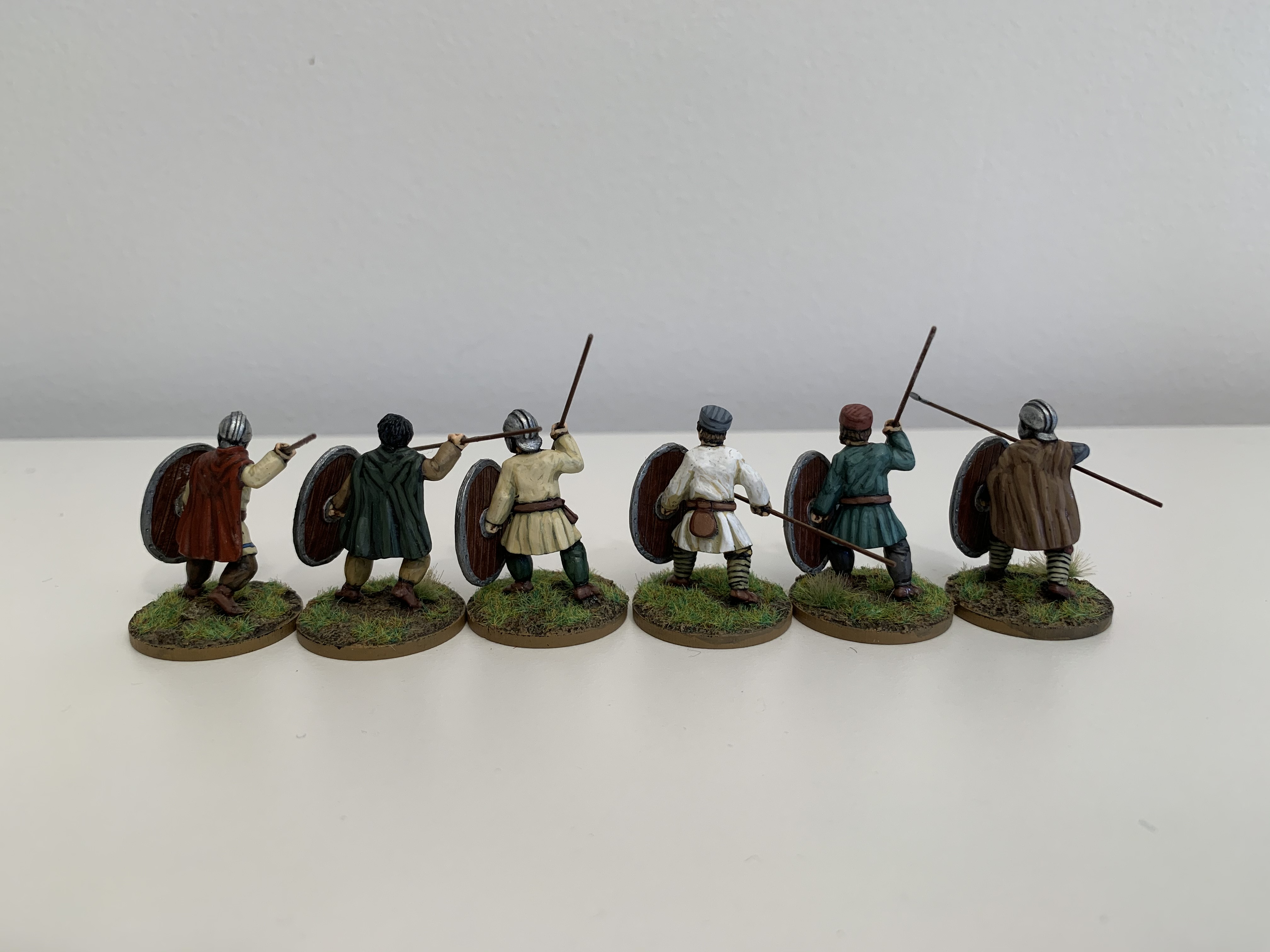 Lloyd shot
Milites Group One
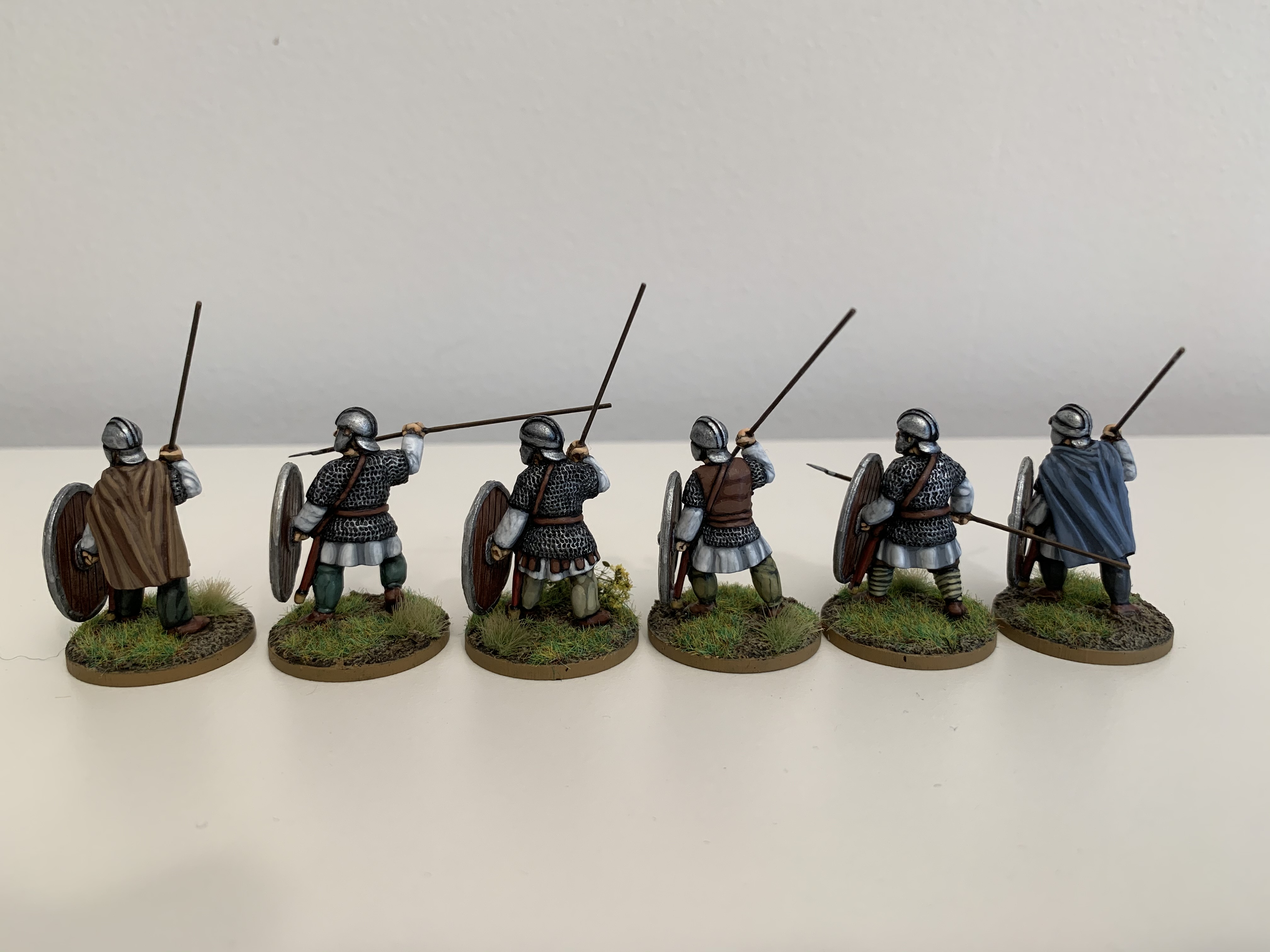
This is the most recent Group I’ve completed. Preparation was identical to that set out for Milites Group Two and I’ll explain how I went about painting them as I document progress on that second Group. The shield transfers were from Little Big Men Studios. I liked the pale blue wolf-serpent design on the white background and tried to find a combination of colours that would complement it.
 Milites Group One
 Lloyd shot
![Sneak About With Star Wars: Legion’s Guerilla Troopers & More [UPDATED]](https://images.beastsofwar.com/2026/09/g-troops-star-wars-cover-600-338.jpg)