




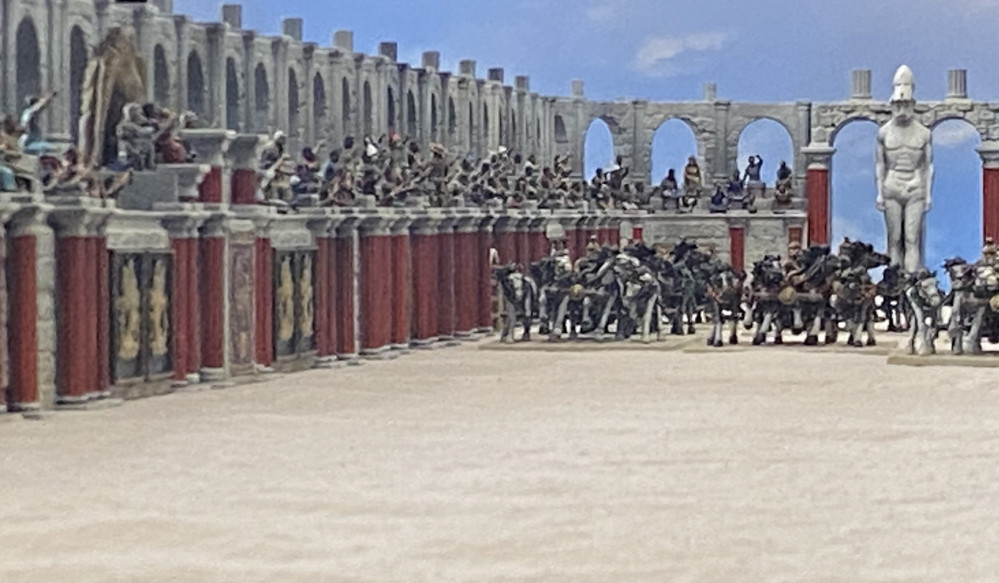
Circus Maximus




Recommendations: 843
About the Project
Faustus Furius is a fast and furious, tongue in cheek table-top game based very loosely around the chariot races of the ancient world and adaptable to any racing situation.
Related Genre: Historical
This Project is Completed
Plodding on with the Plebs
Today was a day off work so I had pretty much the entire day to sit down and paint to my heart’s content.
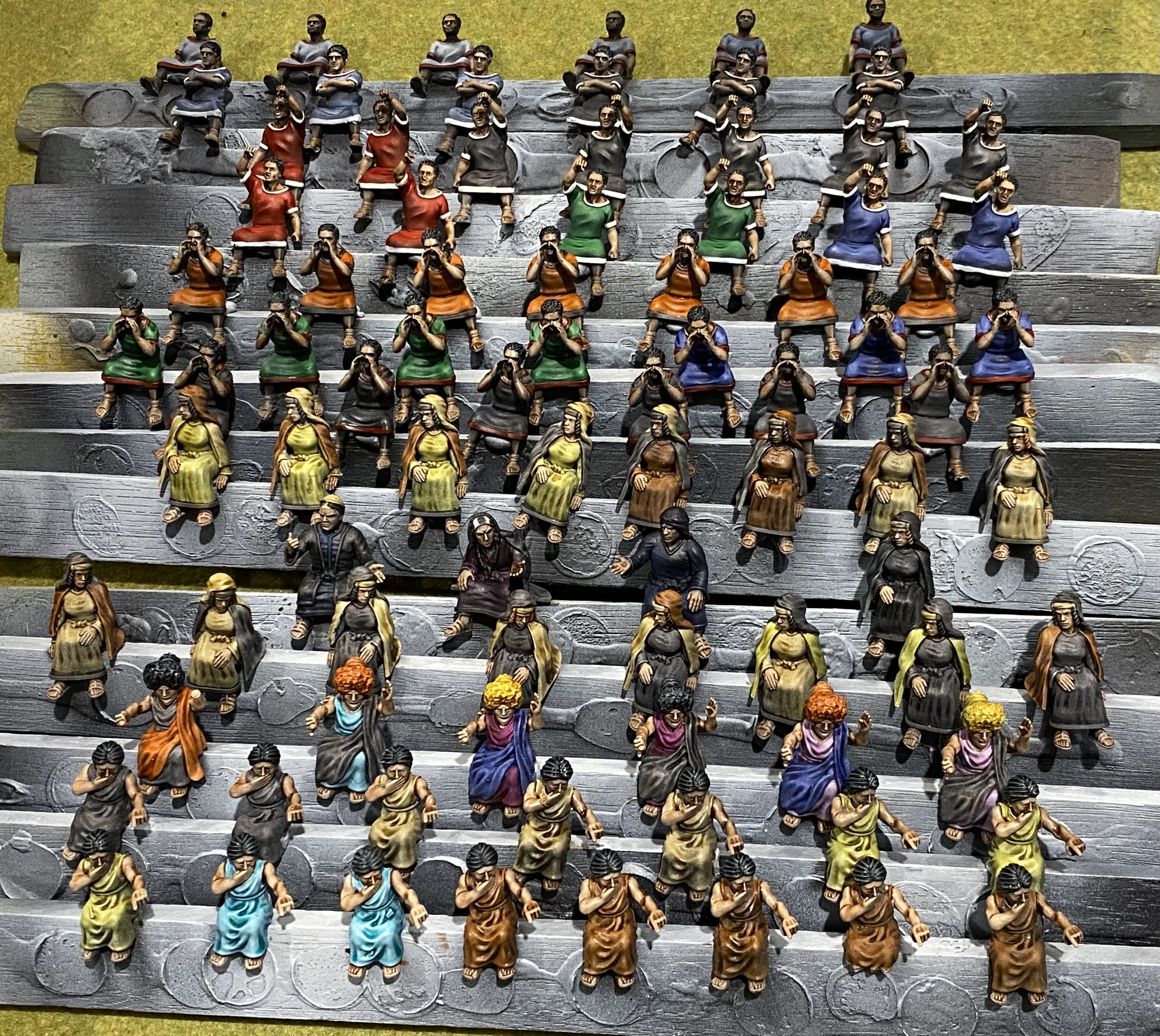
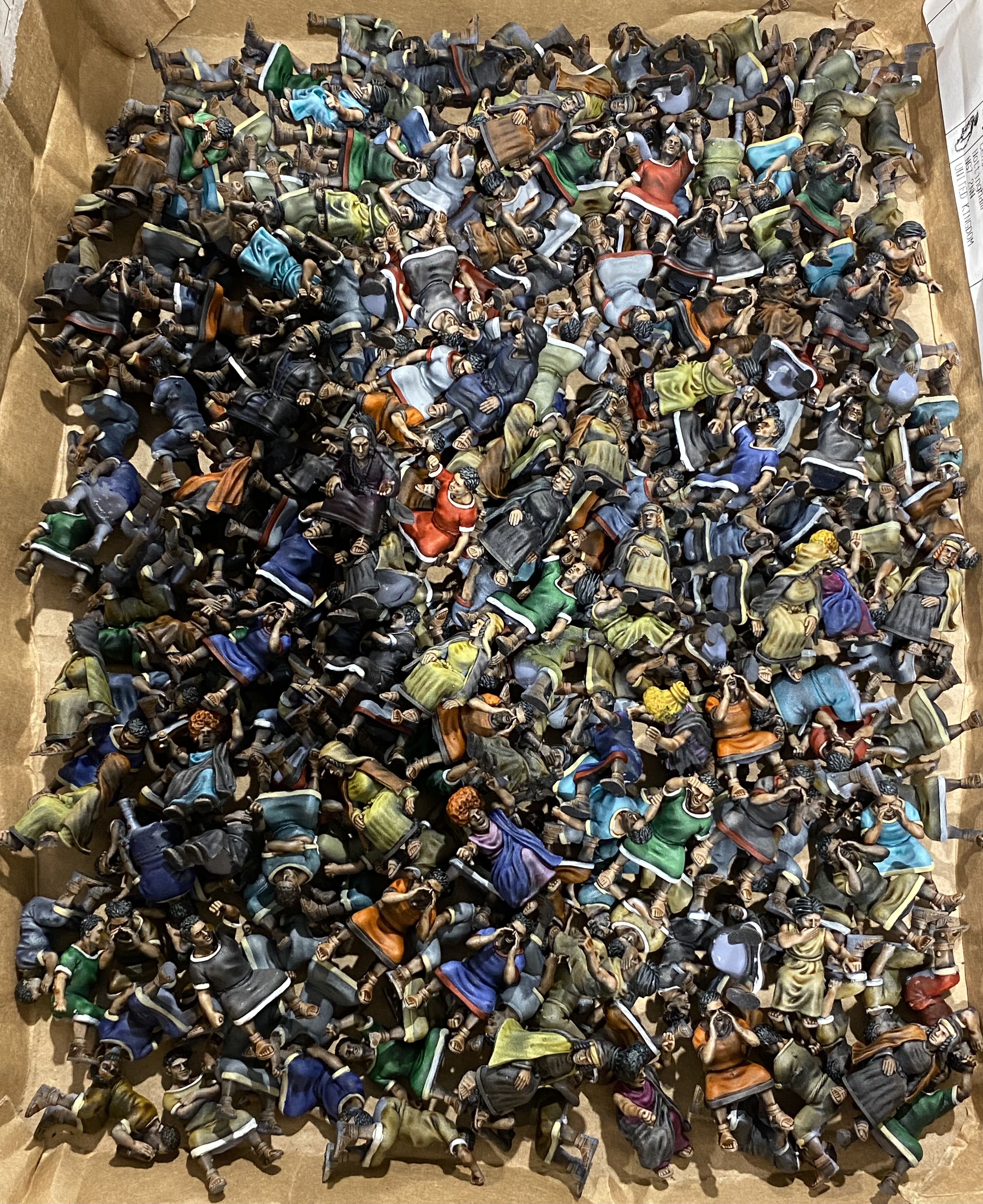
I finished off the next batch of Plebians. I’ve now lost count of how many I have done but it’s quite a few now.
Individually the paint jobs are pretty terrible, but they are not really meant to be looked at as individuals, rather as a mass effect.
I have been doing my best to mix and match the colour schemes and poses without driving myself crazy. Its easiest to paint the same pose and the same colours per ‘stick’ and then have multiple sticks the same with a different colour per batch. That may or may not make sense, but it does in my mind.
Painting walls
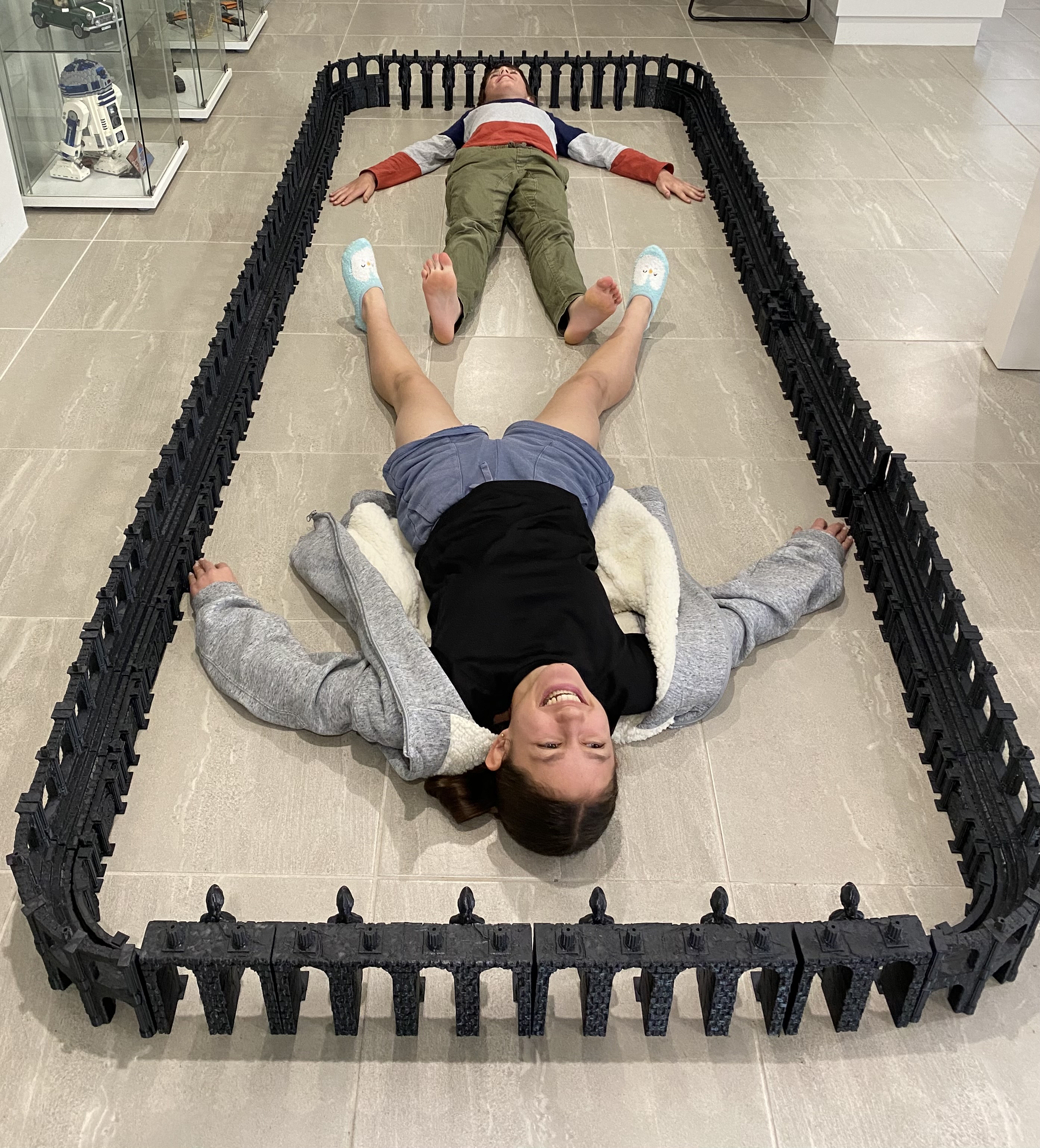
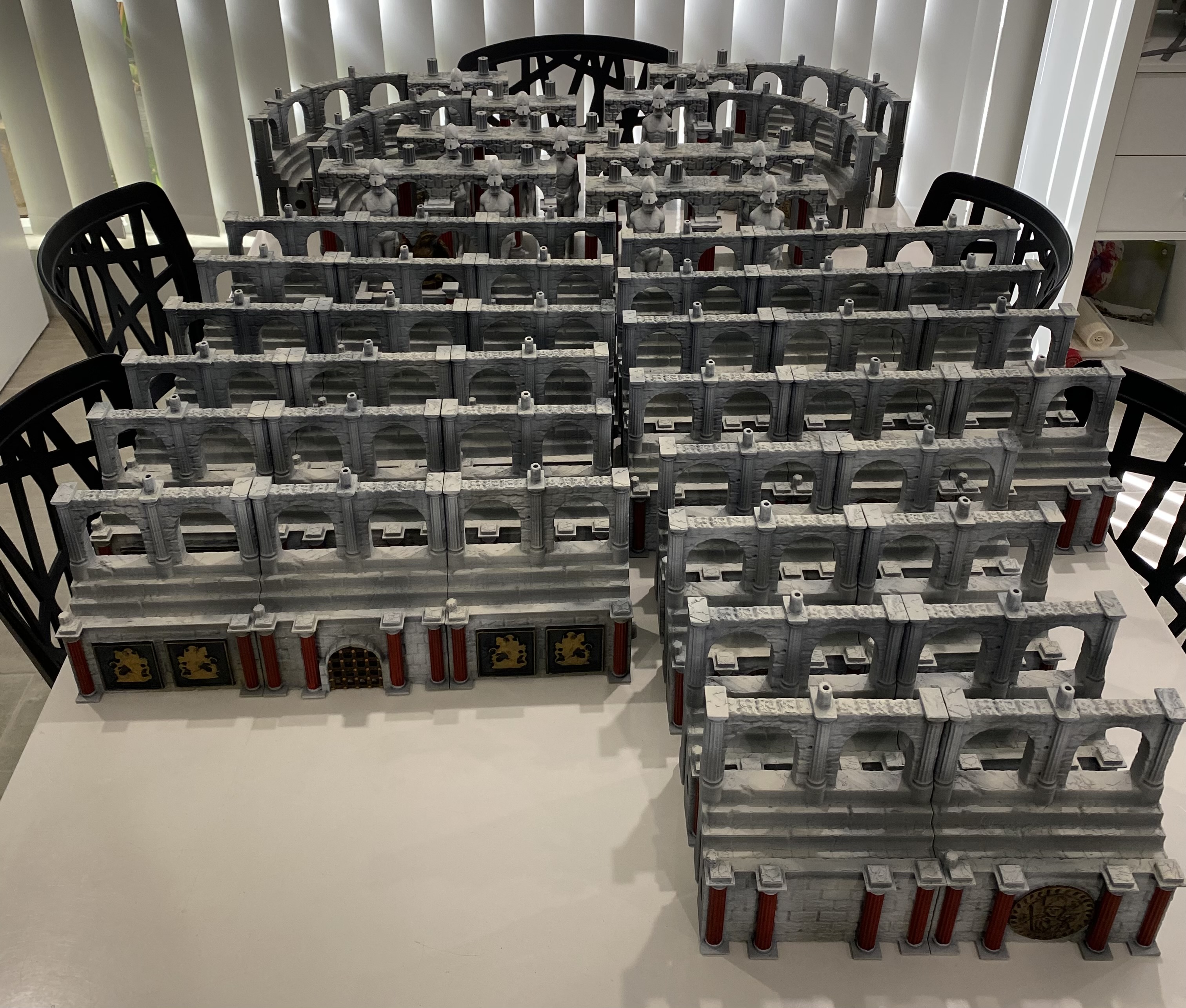
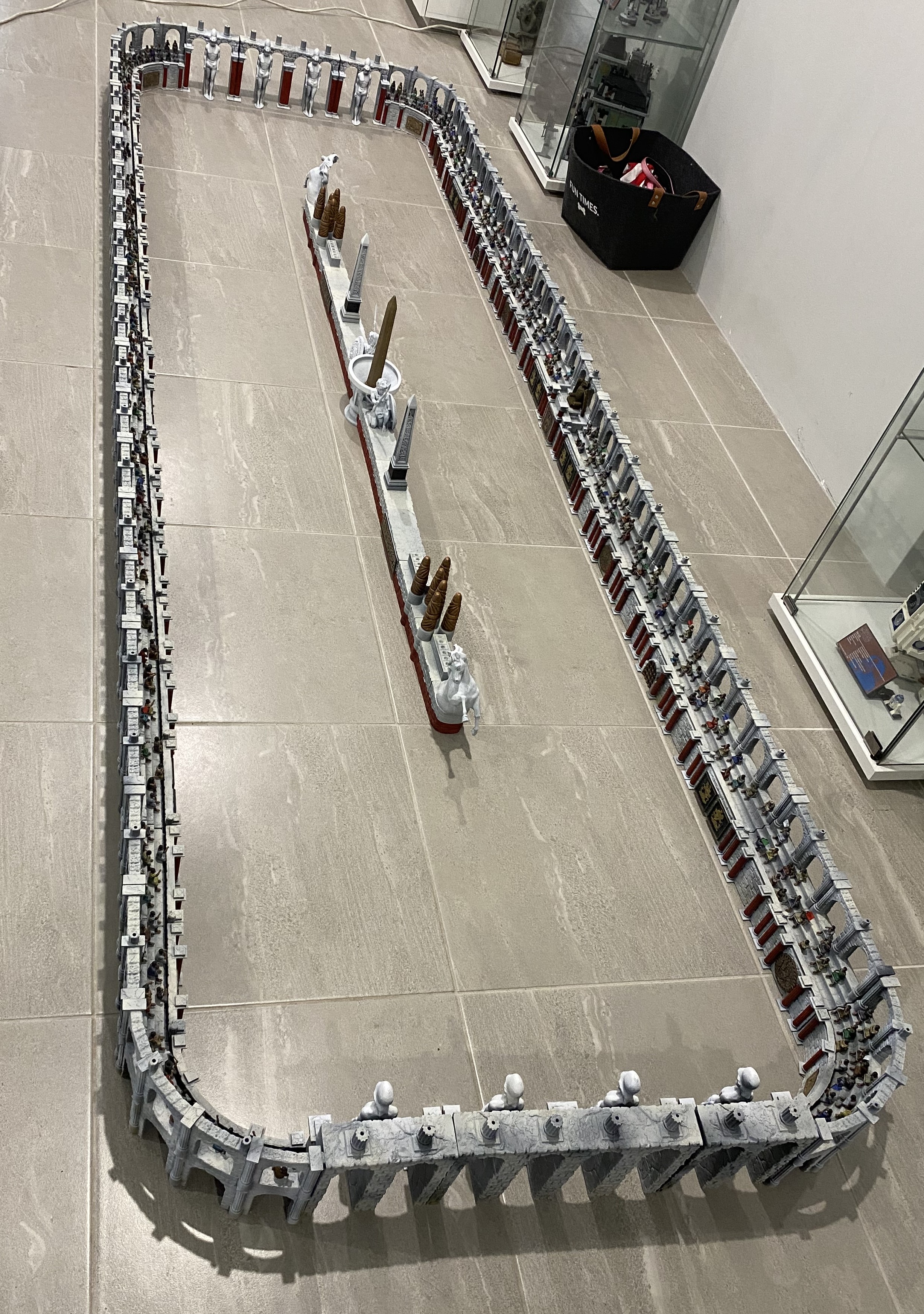
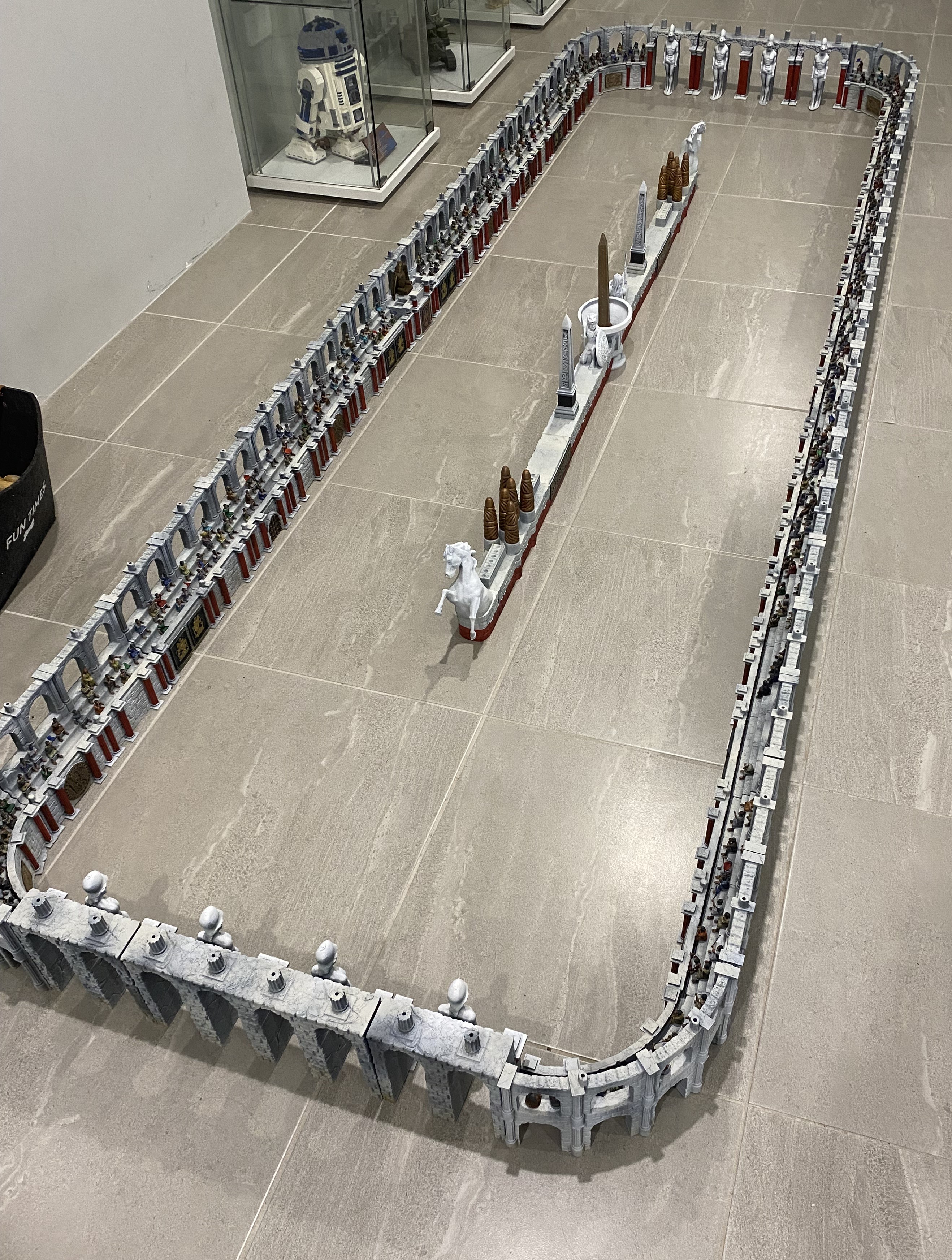
Today I set up the entire circus so that I could get all the components in the right order to glue together sub-assemblies.
Layout of the full circus if I choose to go the full distance and put 12 chariots out. (2 children for scale).
With 8 Chariots I can remove a bit of the width and a bit of the length. I actually prefer the look of the narrower layout if I’m honest but thought it would be a wasted opportunity not to make it possible to be as wide as I could.
I used really cheap grey spray primer followed by various sand and off-white colour spray paints to quickly do all the walls. Nothing fancy, just quick and simple.
I will go over and pick out some details once the base colour is dry.
I am hoping that the crowd will help break up the rather boring paint job on the walls.
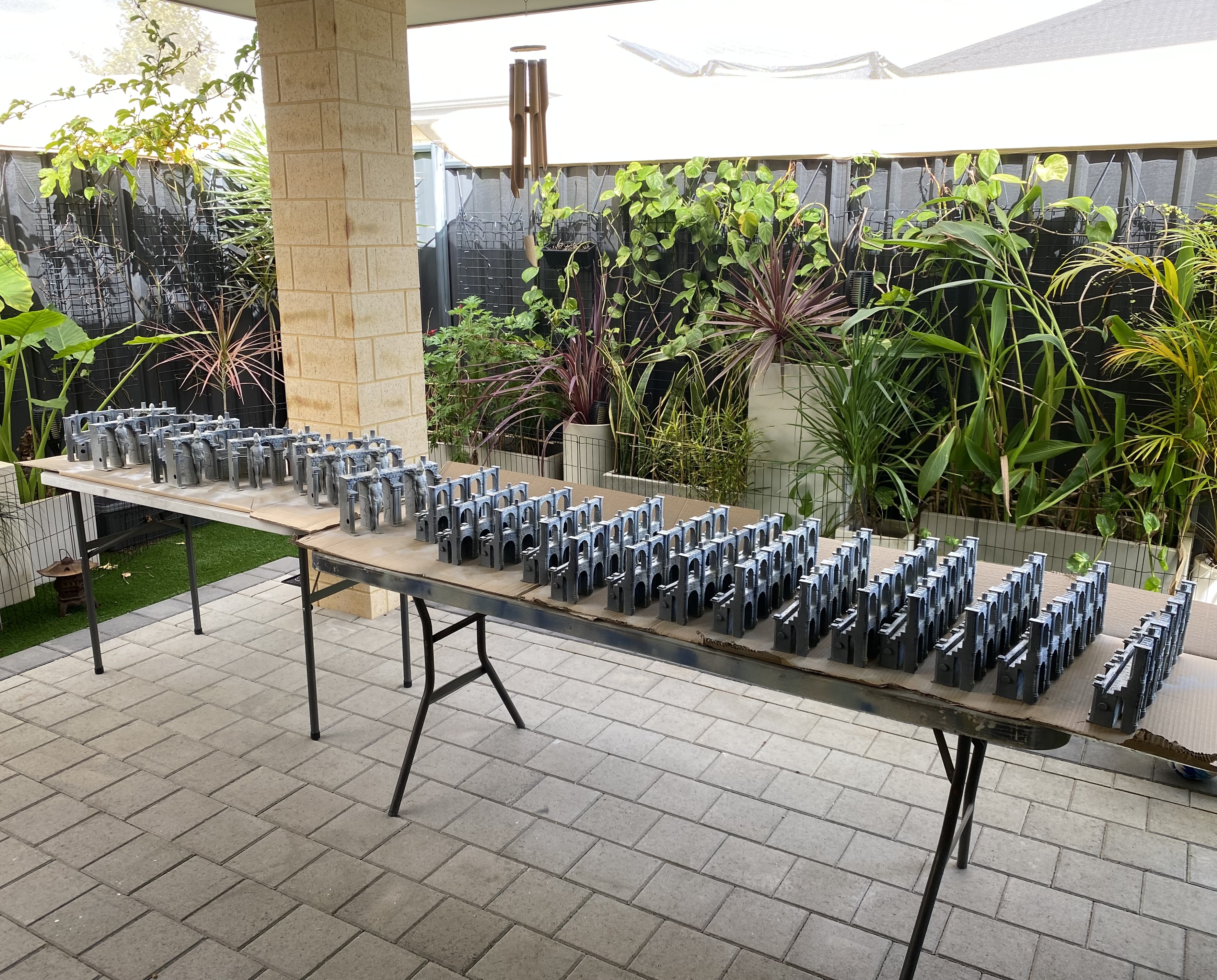
Talking of crowd, here is the next batch ready for painting. Not sure if I mentioned it but I’m getting pretty sick of painting plebs right now.
With a lot of this bunch, I modified the file before printing so that they are holding flag poles. Once painted I will attach small flags in the various team colours. I am hoping that this will add an extra layer of different poses to the crowd. I have no clue if they would actually wave colours to support their teams, but it doesn’t seem unreasonable to think they would.
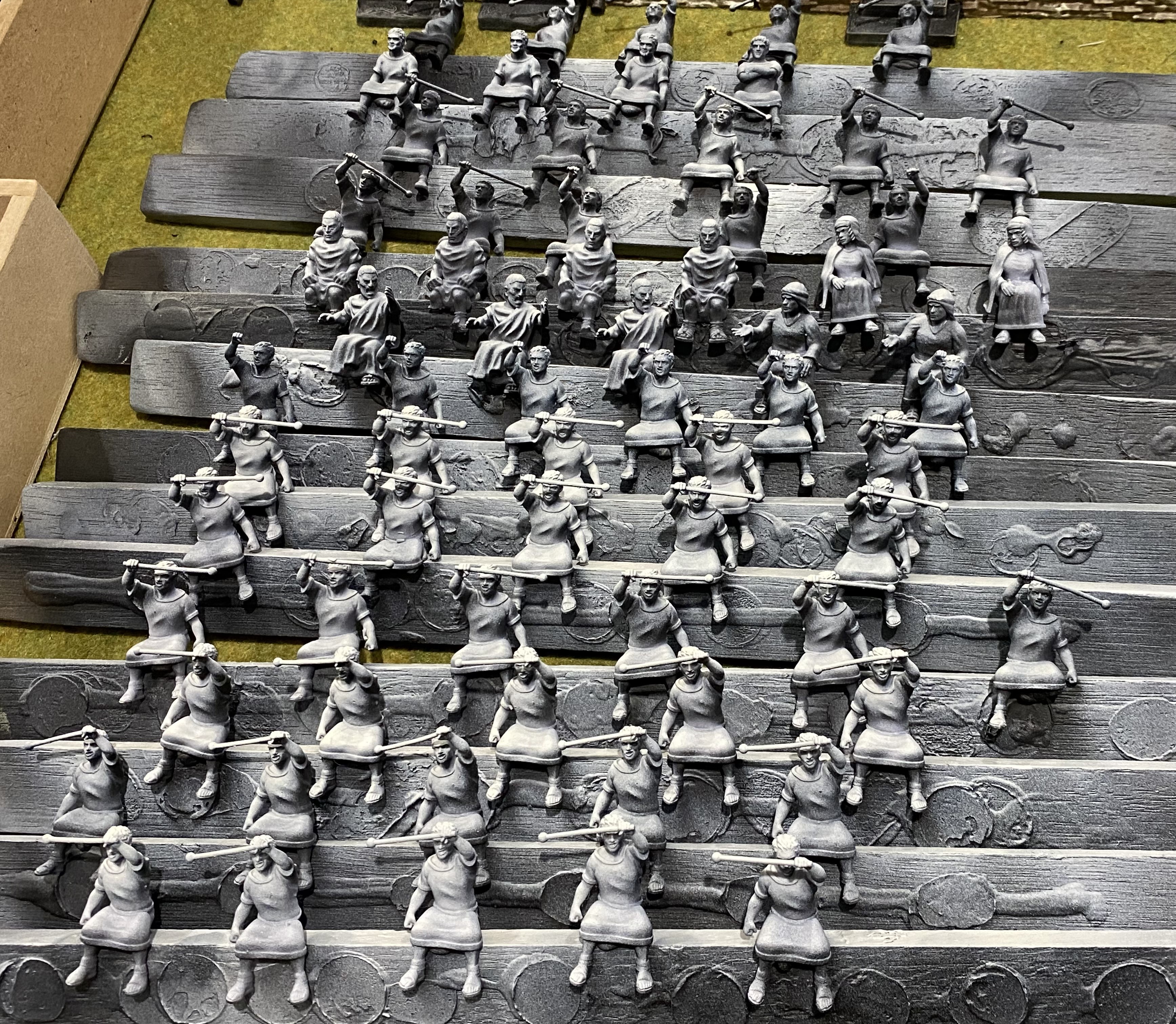
A splash of colour.
Although the Circus Maximus was designed for chariot racing, other events were held there, including gladiatorial combats and wild animal hunts, athletic events, and processions. By the time of Augustus, seventy-seven days were given over to public games during the year, and races were run on seventeen of them. There usually were ten or twelve races a day, until Caligula doubled that number, and from the end of his reign, twenty-four races became typical. The number of festivals in which racing occurred also increased, with Circus games instituted in honour of Caligula’s mother and sister, and Tiberius. Still, Domitian once had one hundred races a day but reduced the number of laps to five to fit them all in, and Commodus ran thirty races in just two hours one afternoon in AD 192.
These numbers are exceptional and not likely to have been repeated, if only because the horses had to be transported from the Campus Martius, where they were stabled, over a mile away.
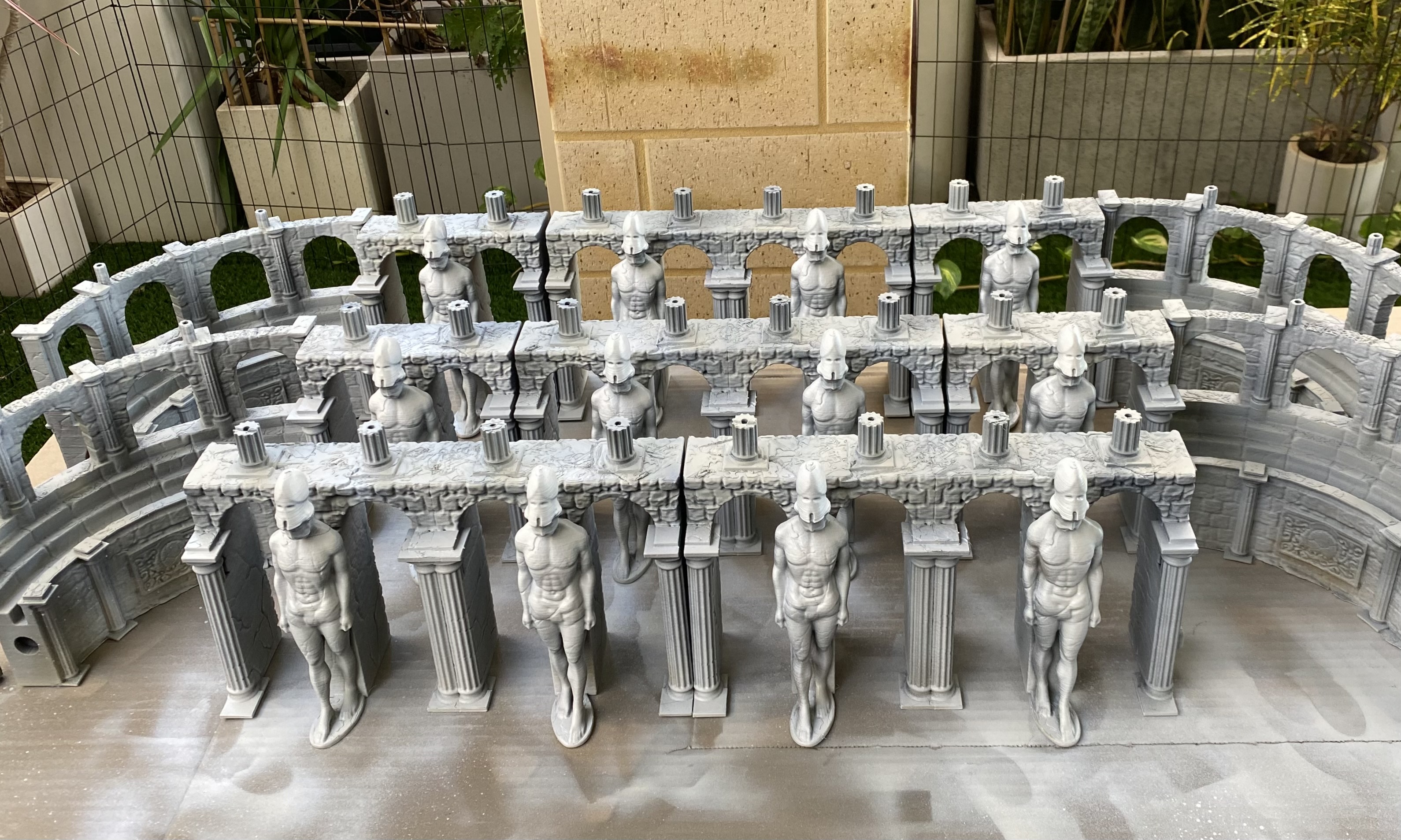
The chariots started from twelve gates (carceres), six on either side of an entrance that led from the Forum Boarium. Above sat the presiding magistrate at whose signal the races began. Far at the other end, along the sweeping curve of the track, was another gate by which processions entered the Circus. In AD 80, it was rebuilt as a triumphal arch to commemorate the conquest of Judea by Titus.
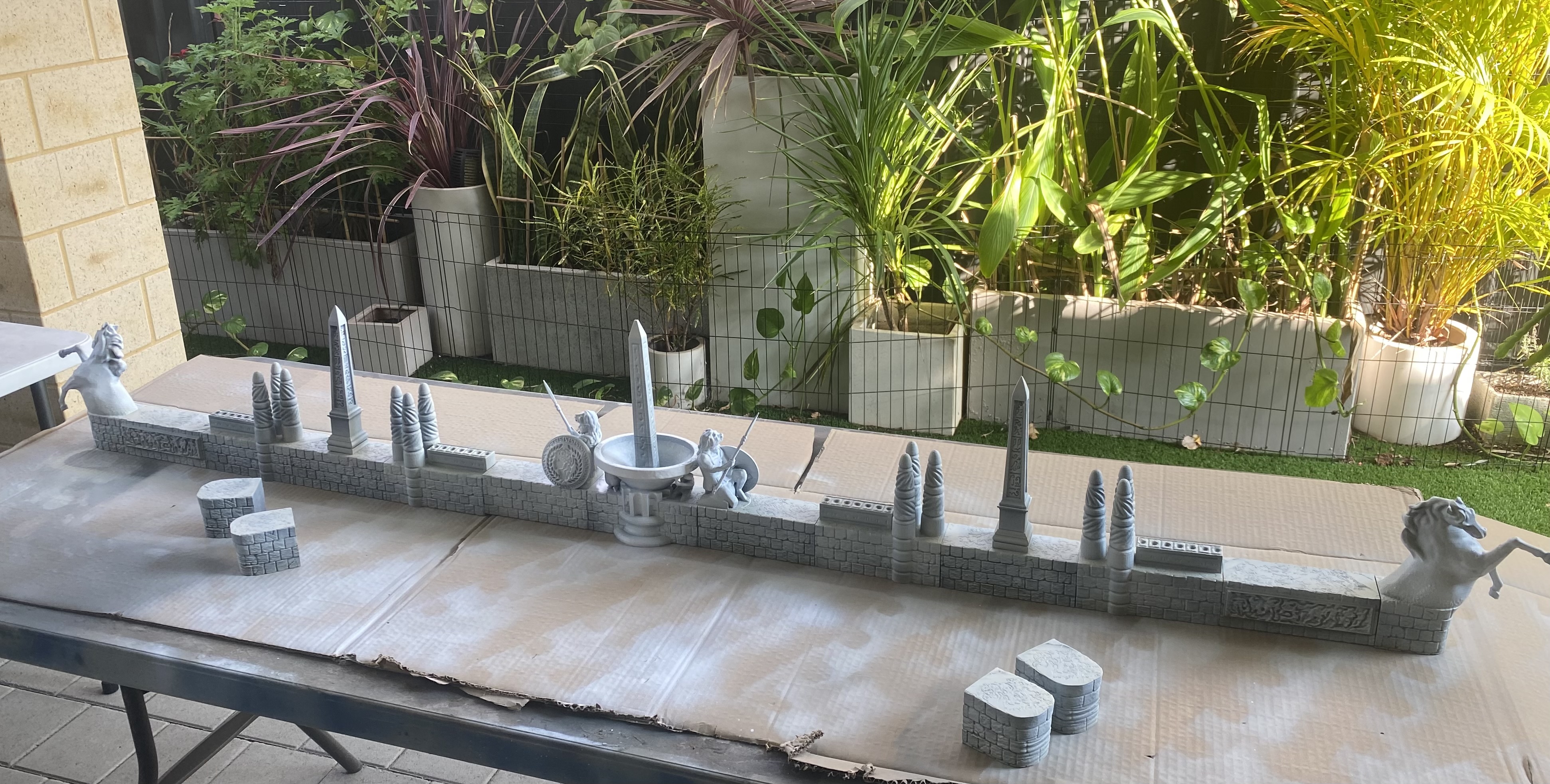
On the spina, itself, were various monuments and shrines, including one to Consus and another to Murcia, who may have been the divinity of the brook over which the Circus was built.
At either end were the metae, or turning posts, comprised of three large gilded bronze cones grouped on a high semicircular base. There were thirteen turns, run counter-clockwise, around the metae for a total of seven laps, a distance of just over three miles.
To ensure a fair start, the starting gates were built along a slight curve so that the distance to the break line, before which the chariots were not allowed to leave their lanes, was the same for each. Drivers were required to stay within a marked lane until that point was reached, after which they could jockey for position. Lots were drawn to determine which gate was selected, and it was from the gates that the race began. The presiding magistrate (either a praetor or consul) dropped a white starting flag, the gates to the stalls flew open, and the race began.
Outer walls
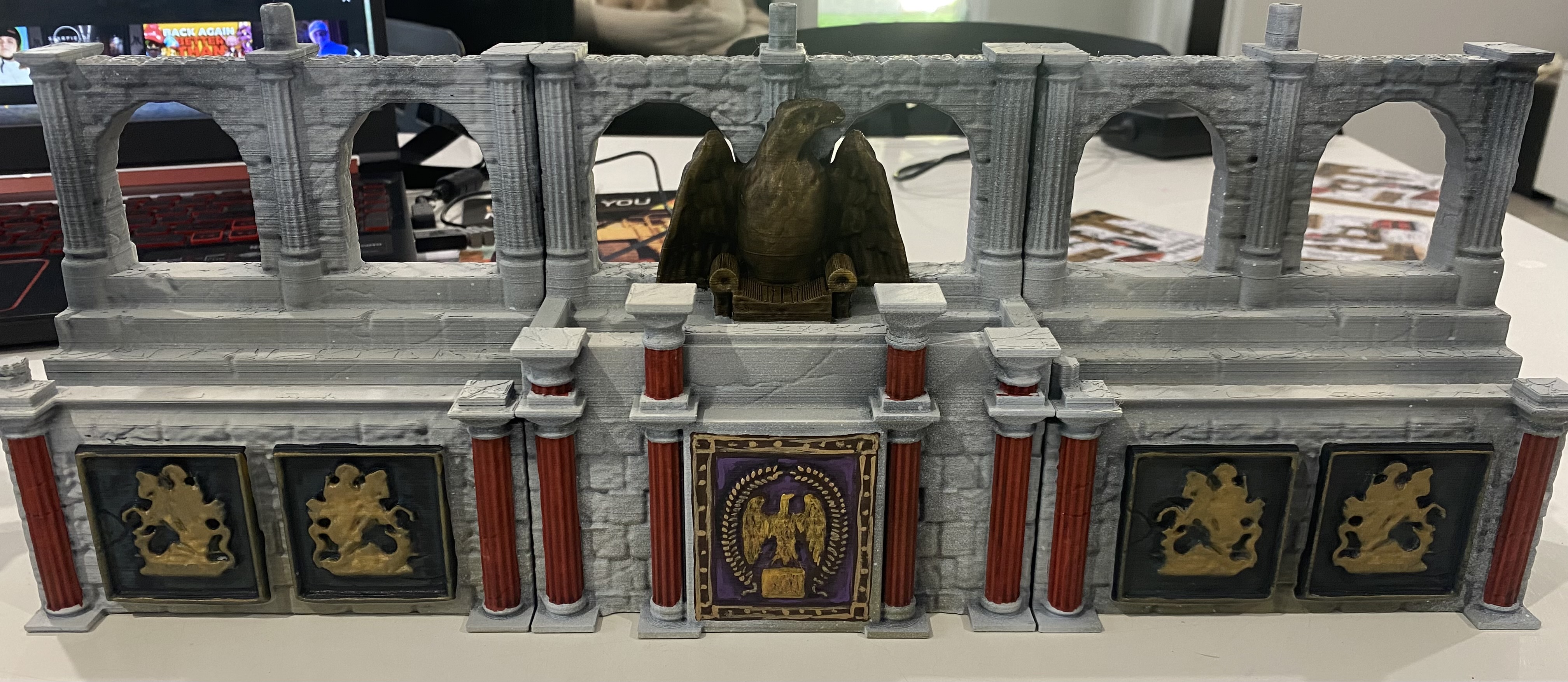
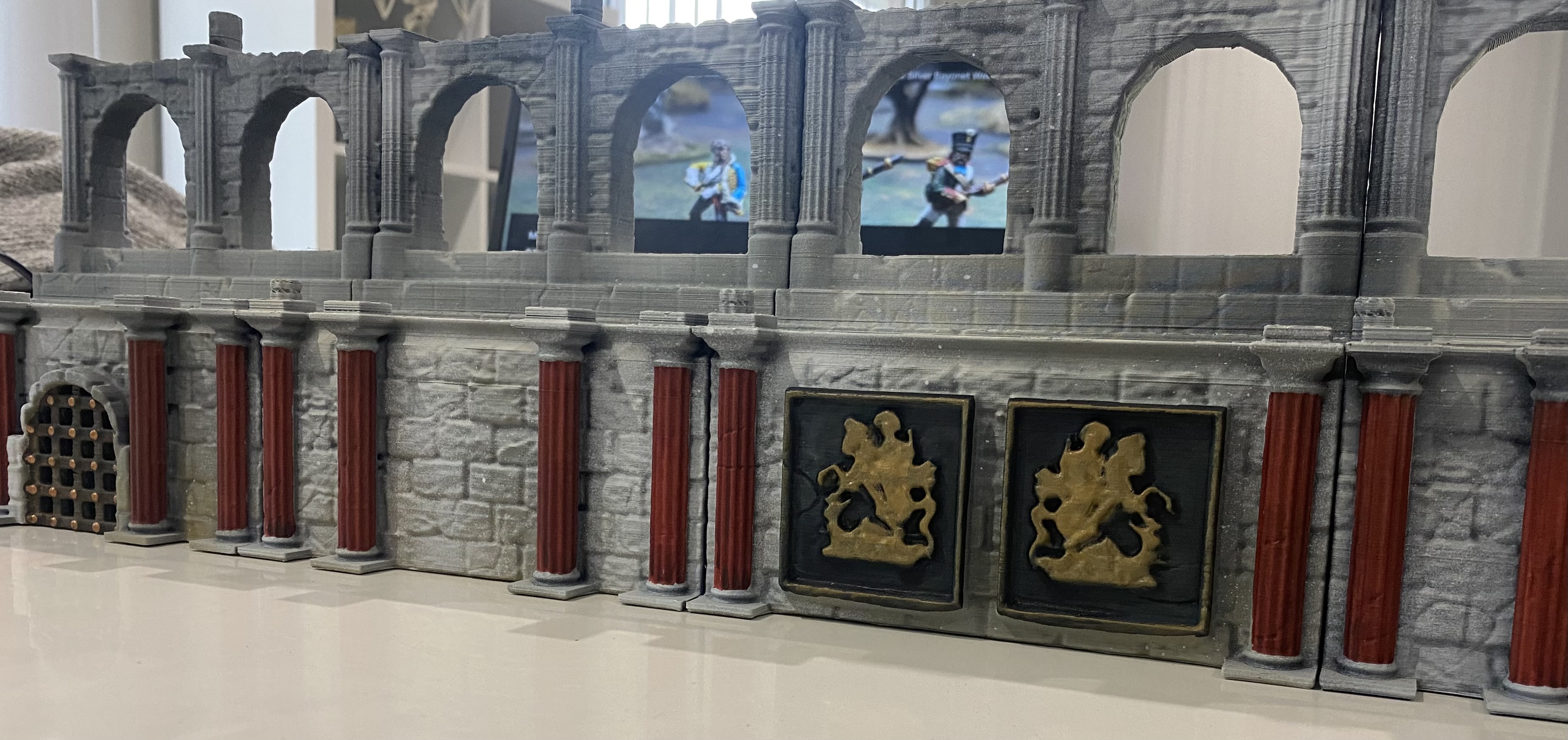
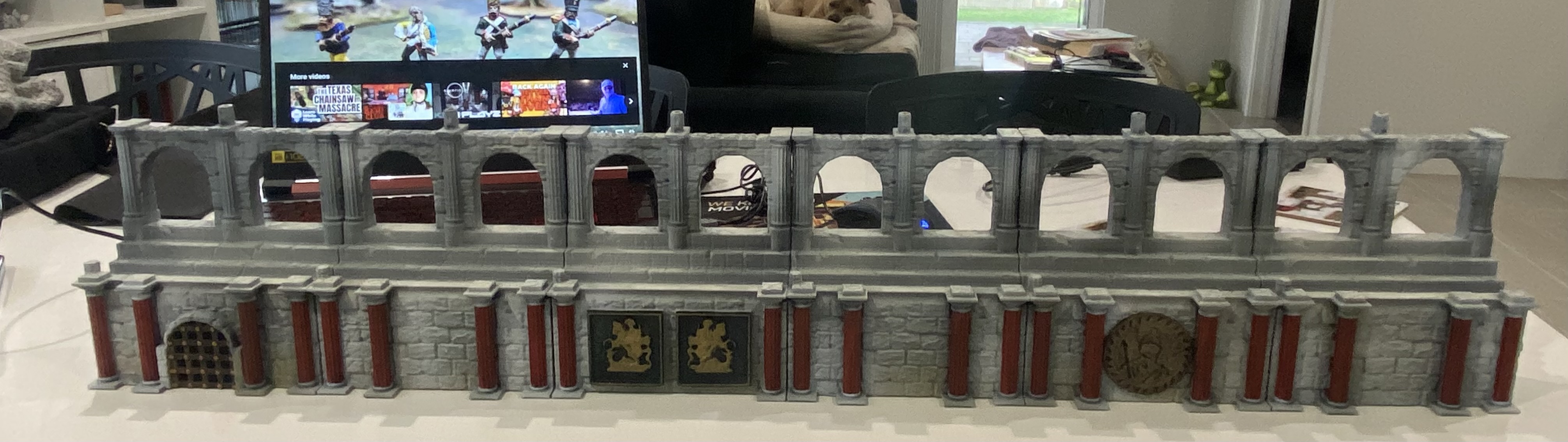
The outer walls of the circus are done, well in regard to the painting. Of course, I still need to add the crowd and some other little decorations,
Again, Contrast paints and quick dry brushing saw these get finished in a fraction of the time it would have taken me to do it the more conventional way.
I’ve not gone overboard with the colours although I suspect in reality the circus would have been extremely colourful. I think the main reason for this is because we kind of have a built-in expectation that much of the ancient world was white marble and to see it brightly coloured would just not feel right to the eyes of most people.
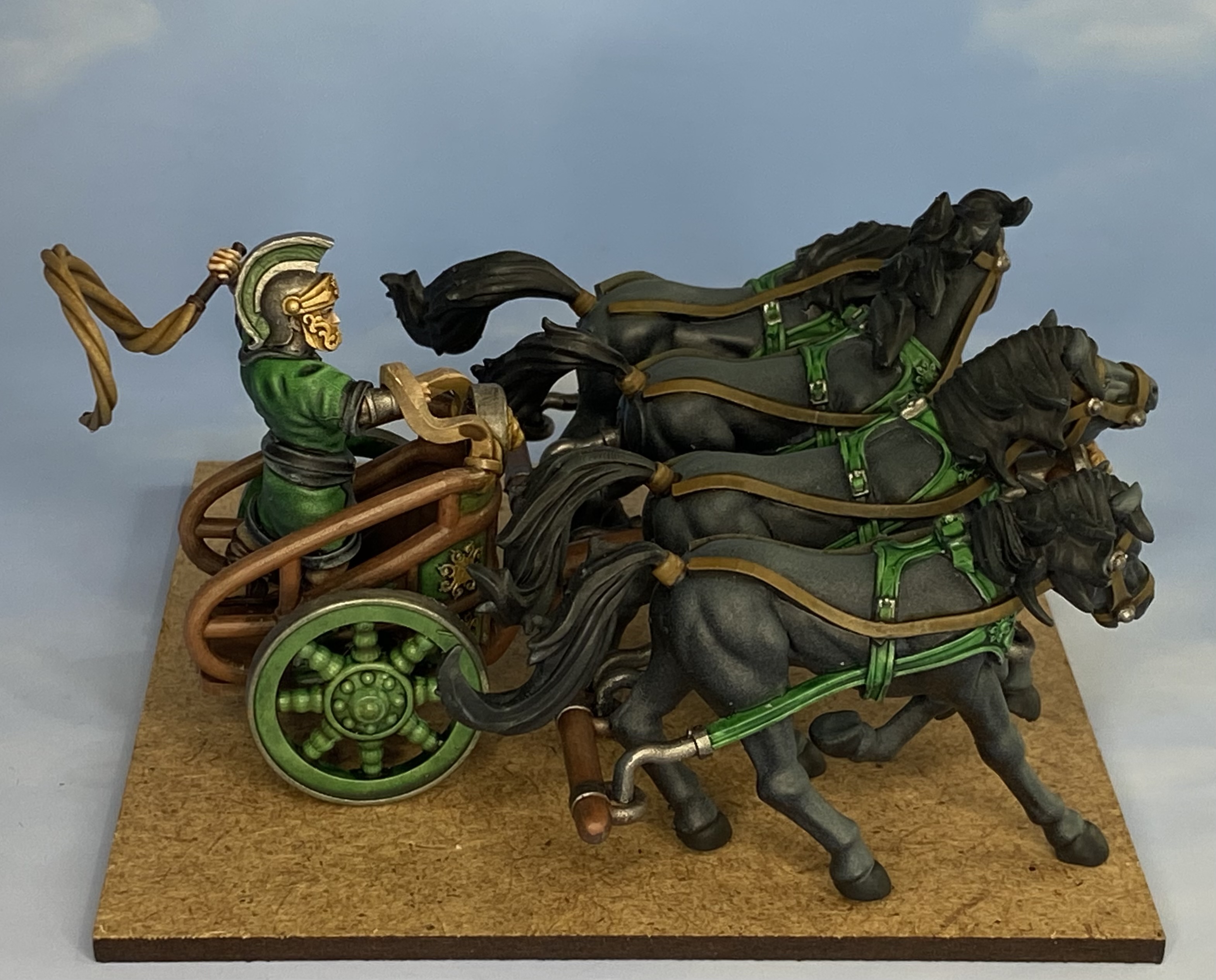
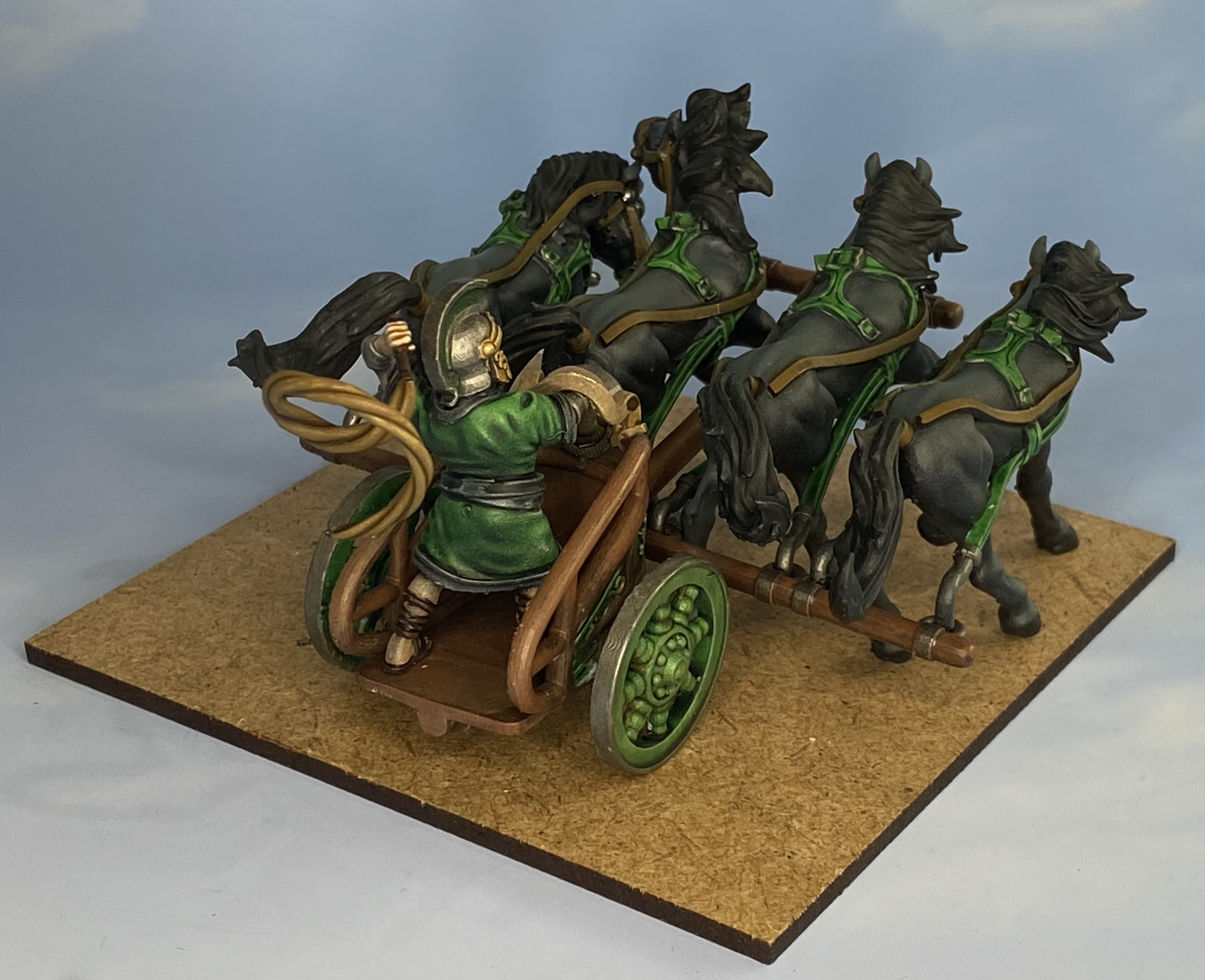
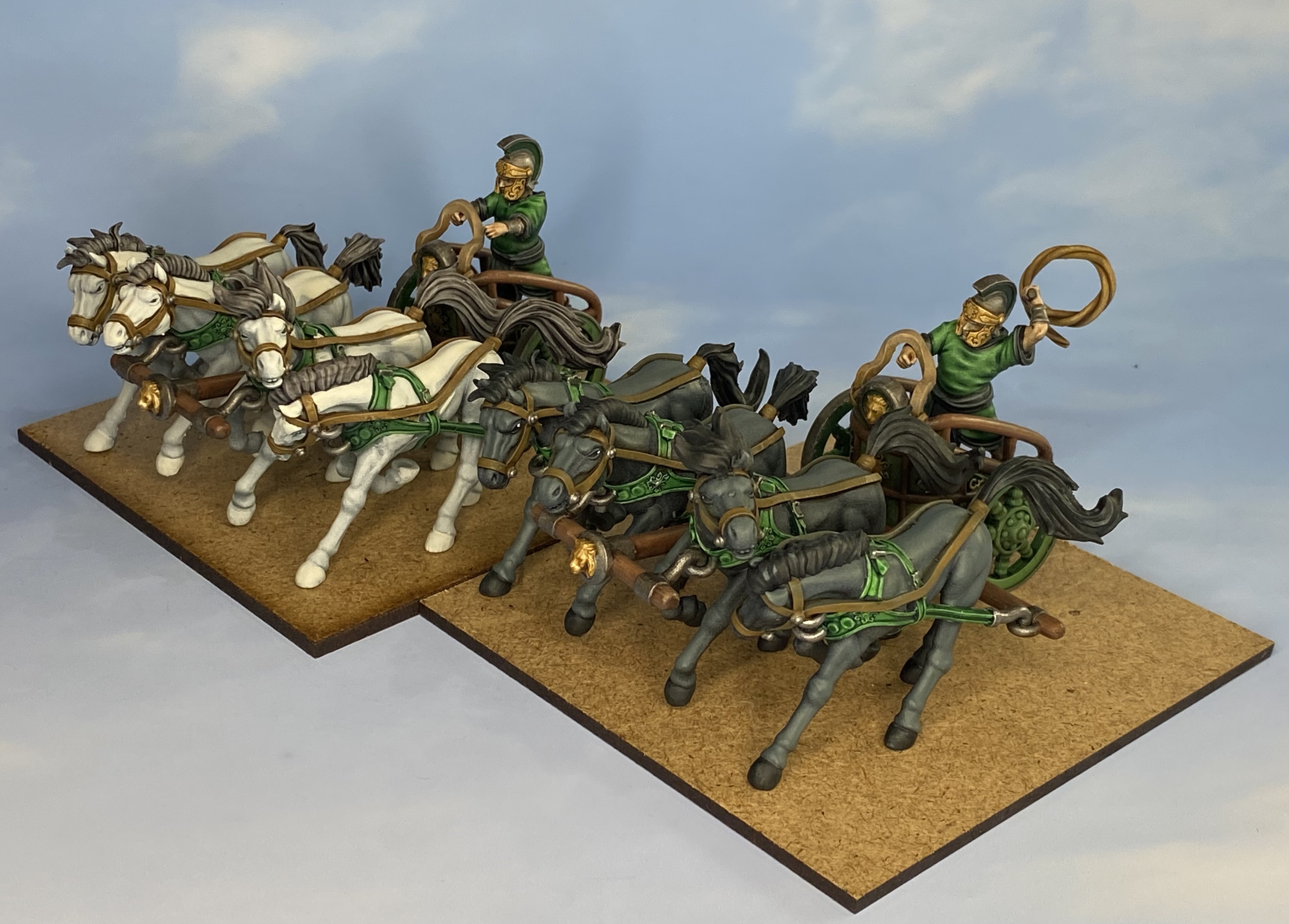
Green Team
It’s starting to feel like I’m getting near the home straight now.
The Orc flesh contrast paint is a really nice green and I am very happy with how it turned out on this chariot.
In fact, I enjoyed painting the green so much that I got both done in quick time.
A benefit of painting similar models over and over again is that they actually get a lot quicker to paint, well up to a point. Too many of the same models can have the opposite effect and become boring to do, which in turn makes the exercise feel like a chore. This is what I am starting to experience with the Plebians.
I have a small pile of failed chariot prints that will possibly be next to the painting table. I still have to print out standing Plebs for when the mob gets incited. I may also do some Roman Centurions which can act as riot control. I am unsure of how many to do per base. I was thinking mobs of 10, that means another 80 figures!
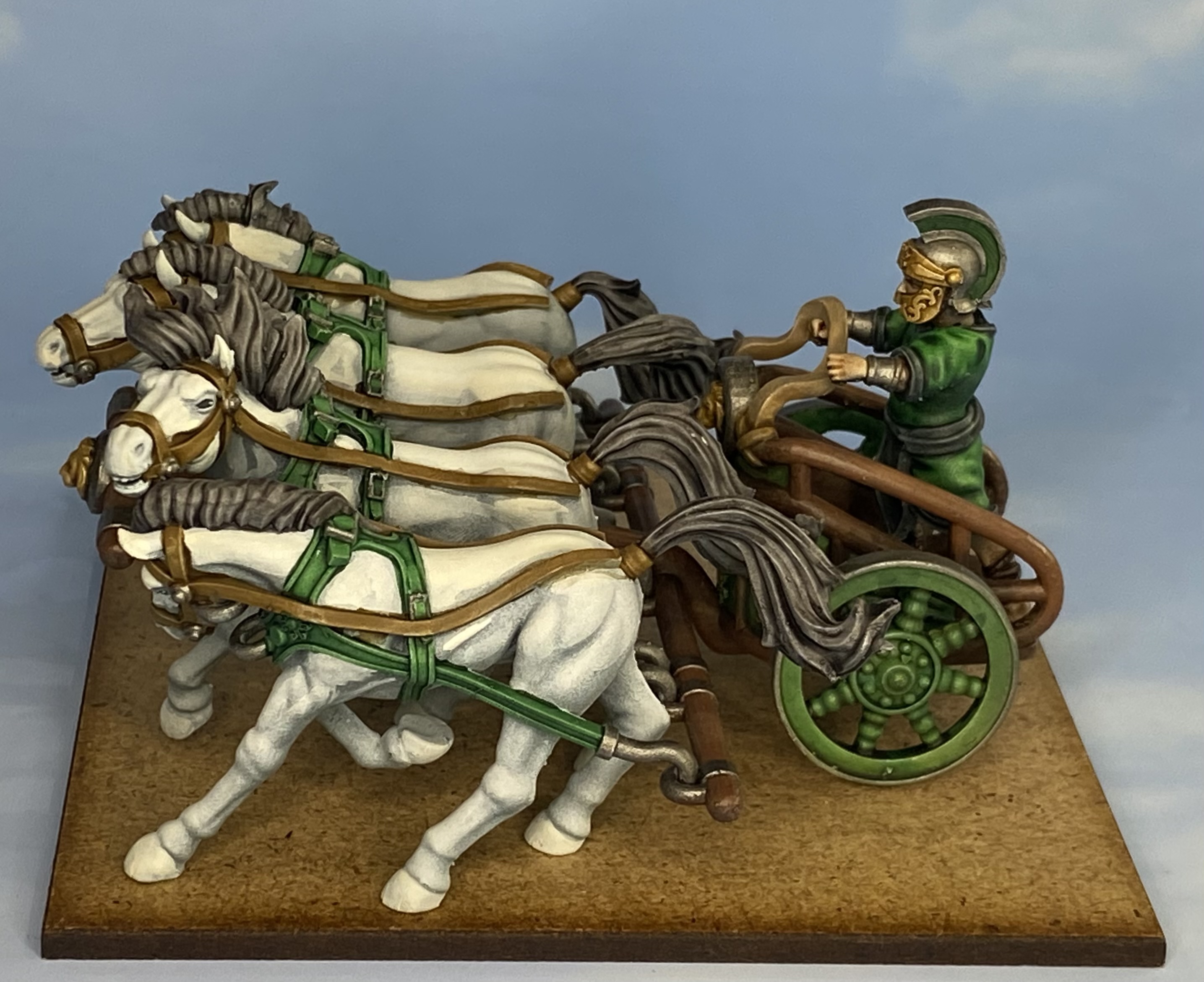
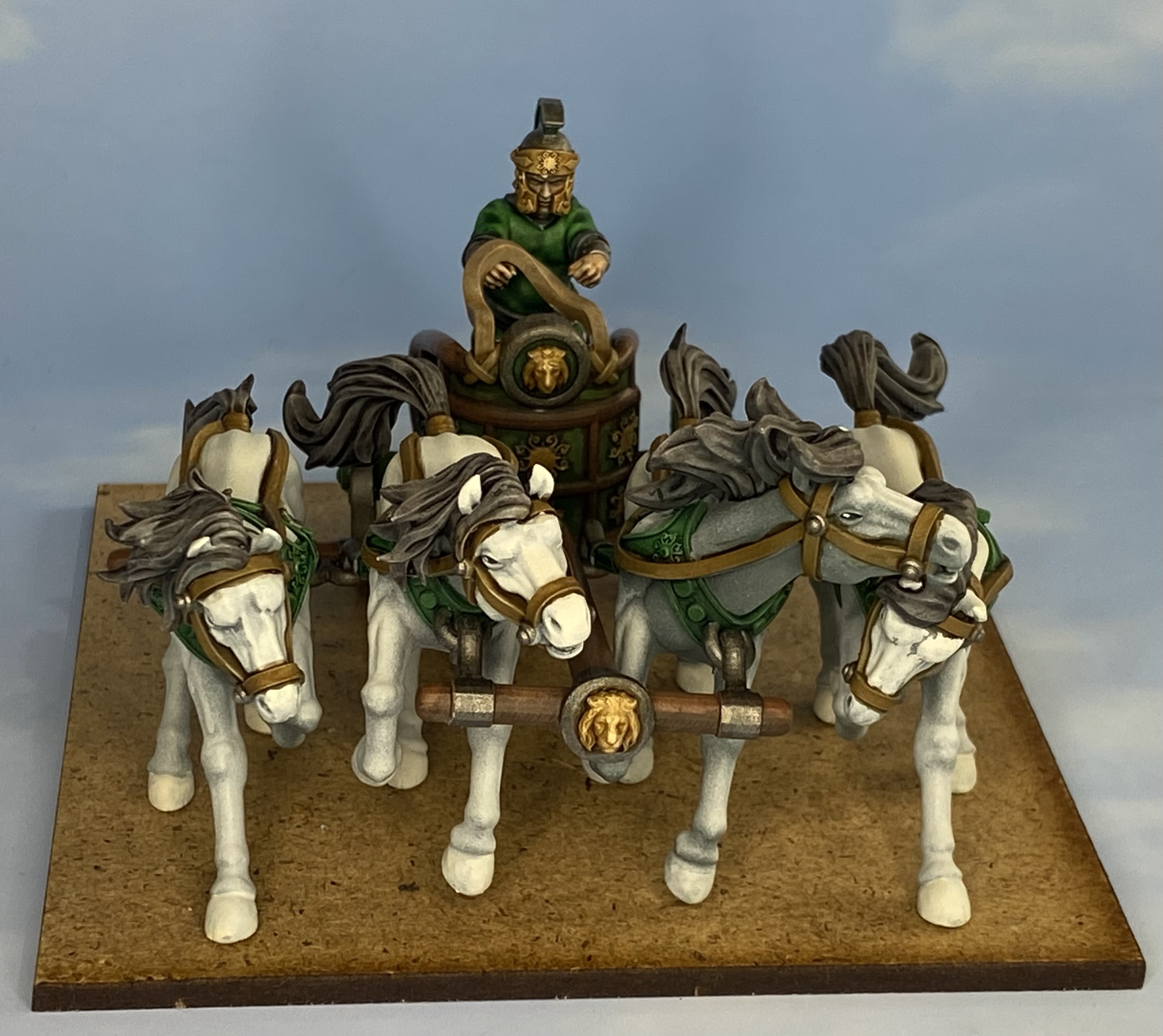
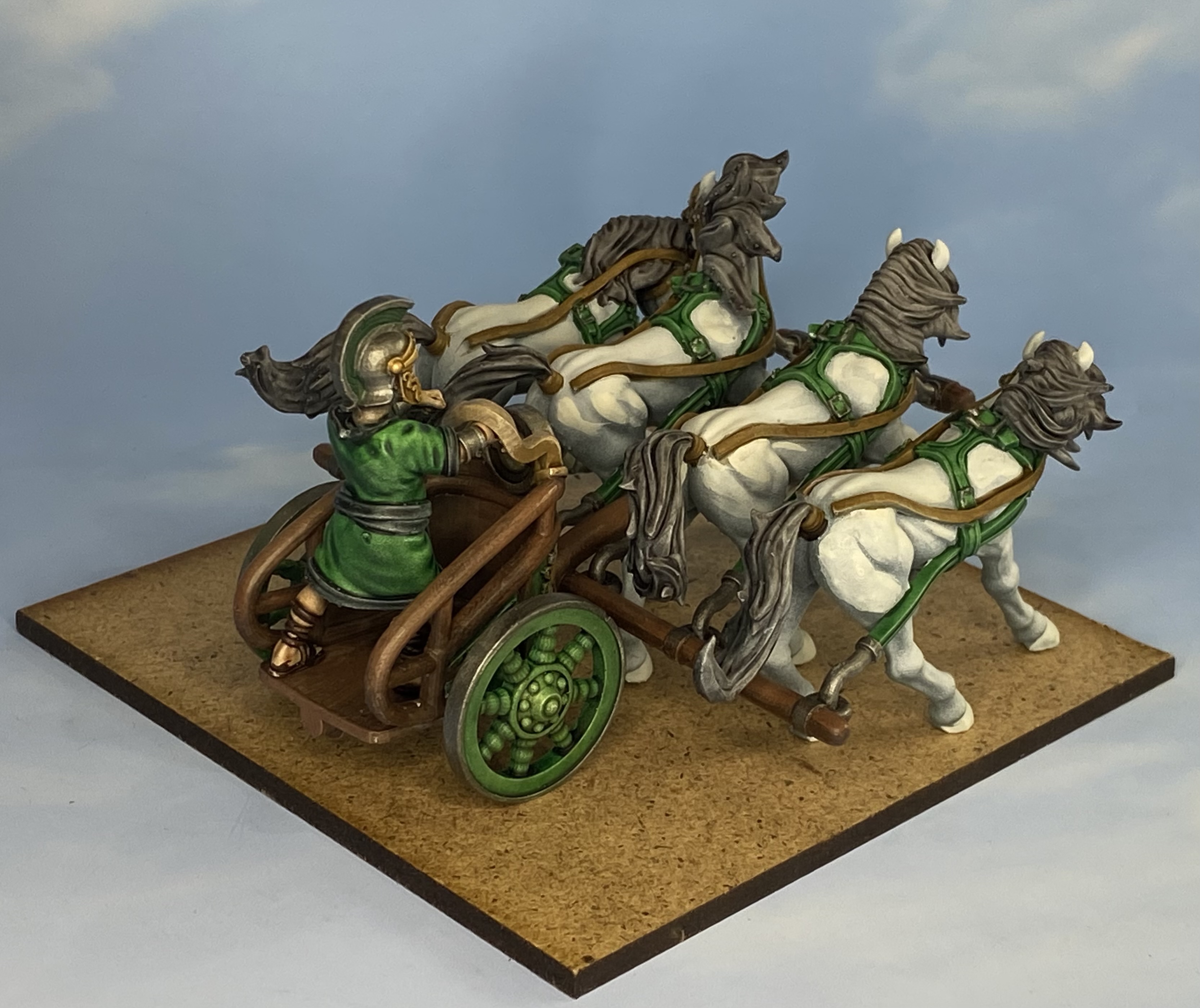
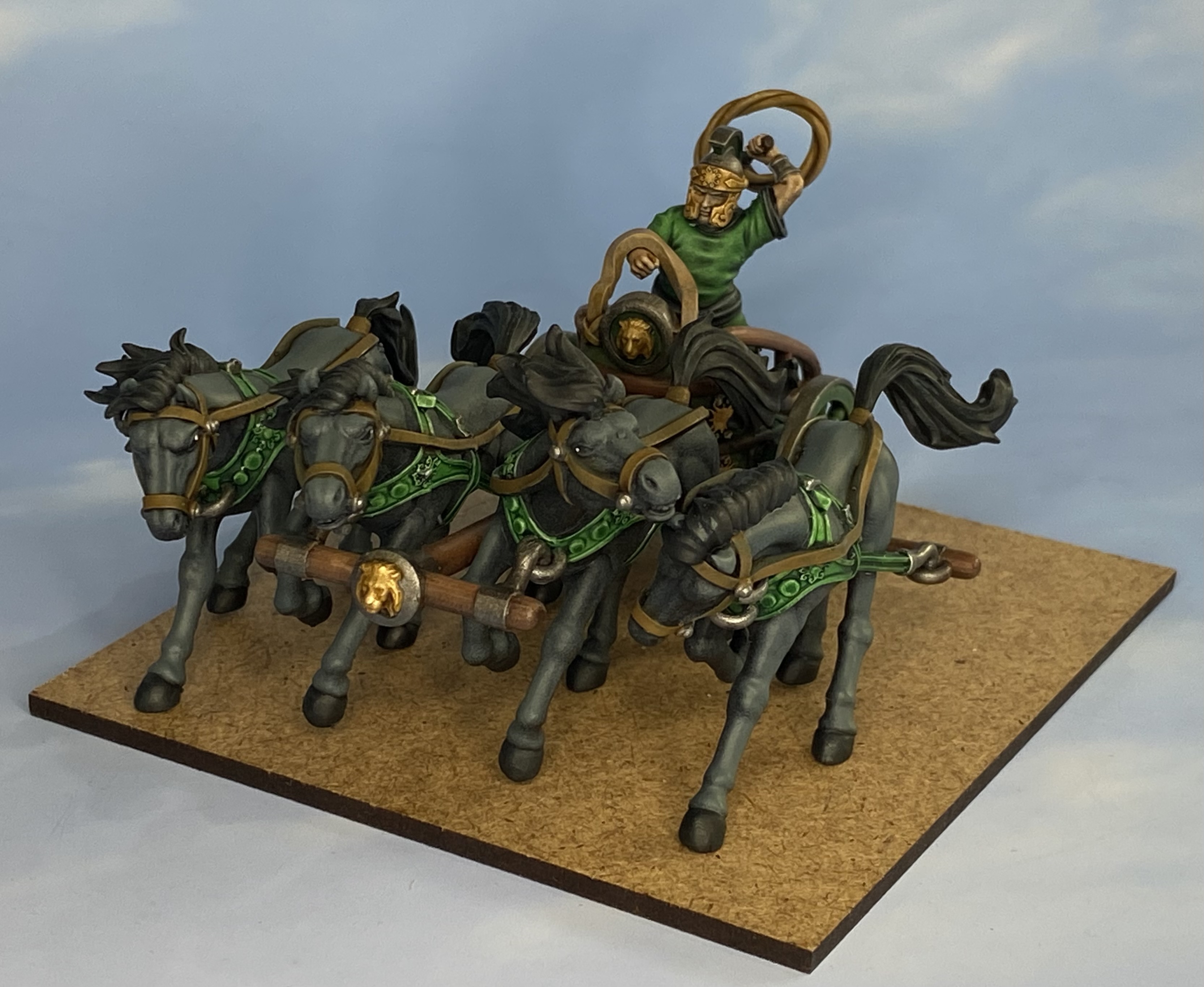

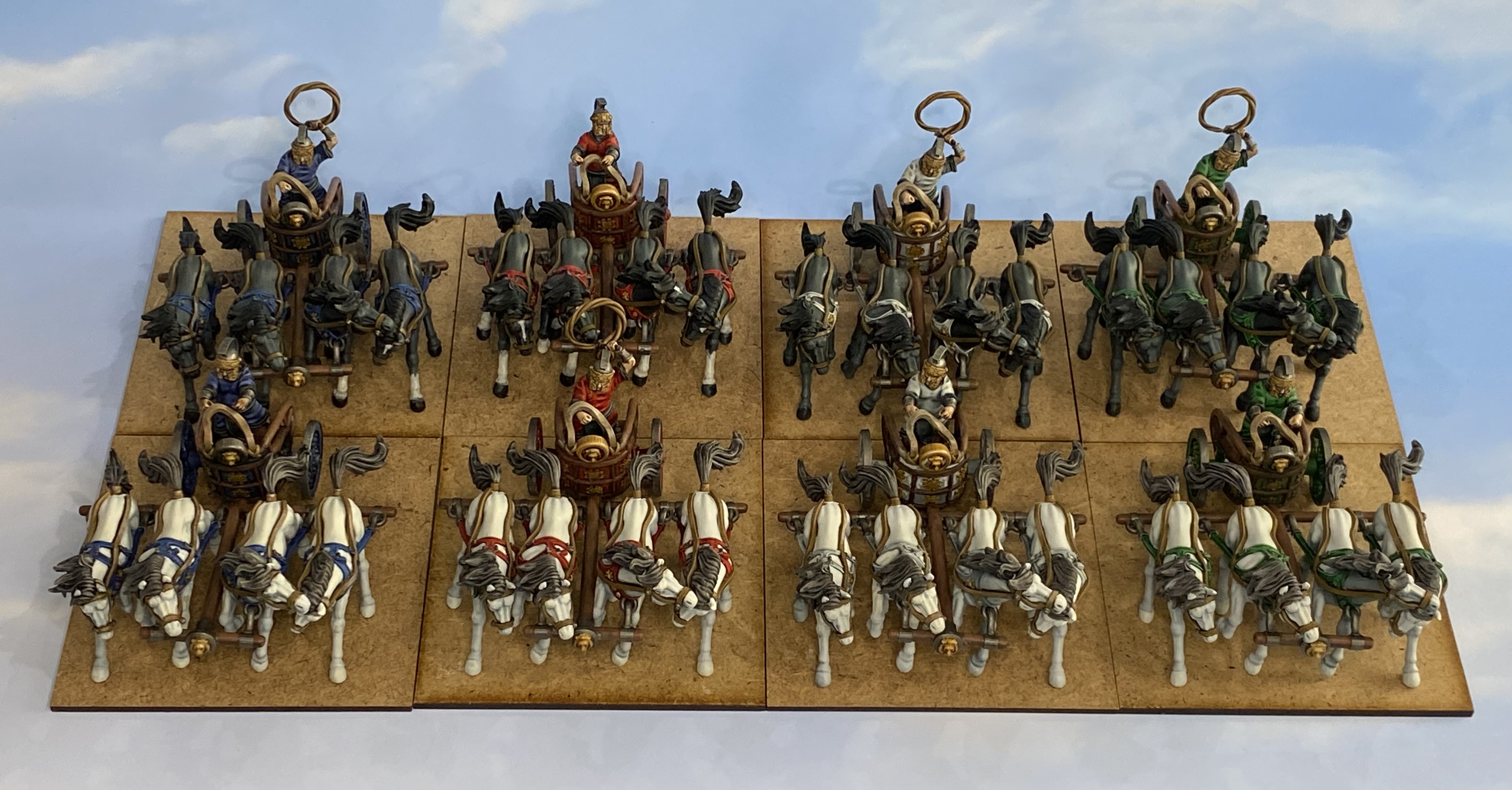
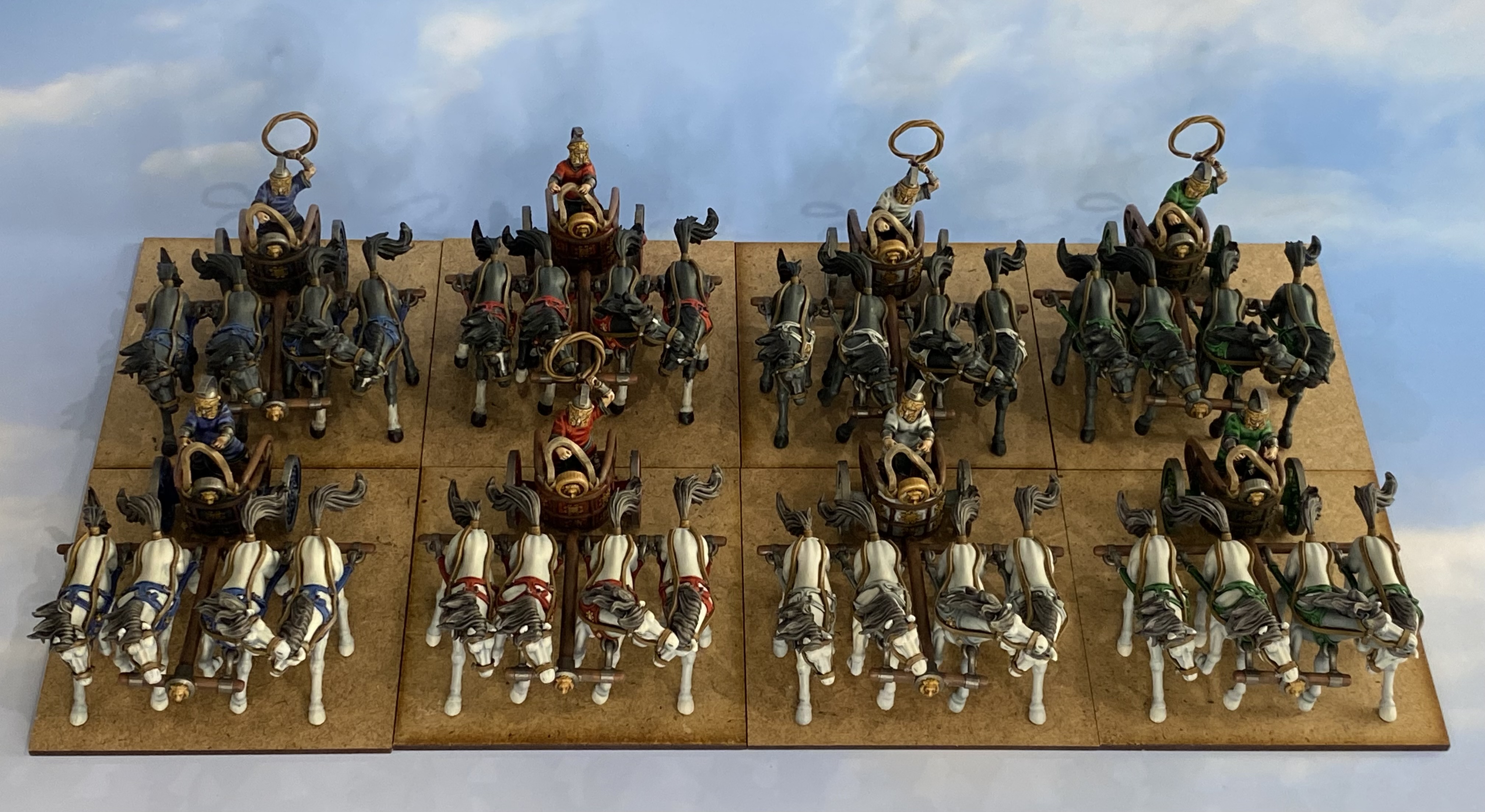
All Four Teams
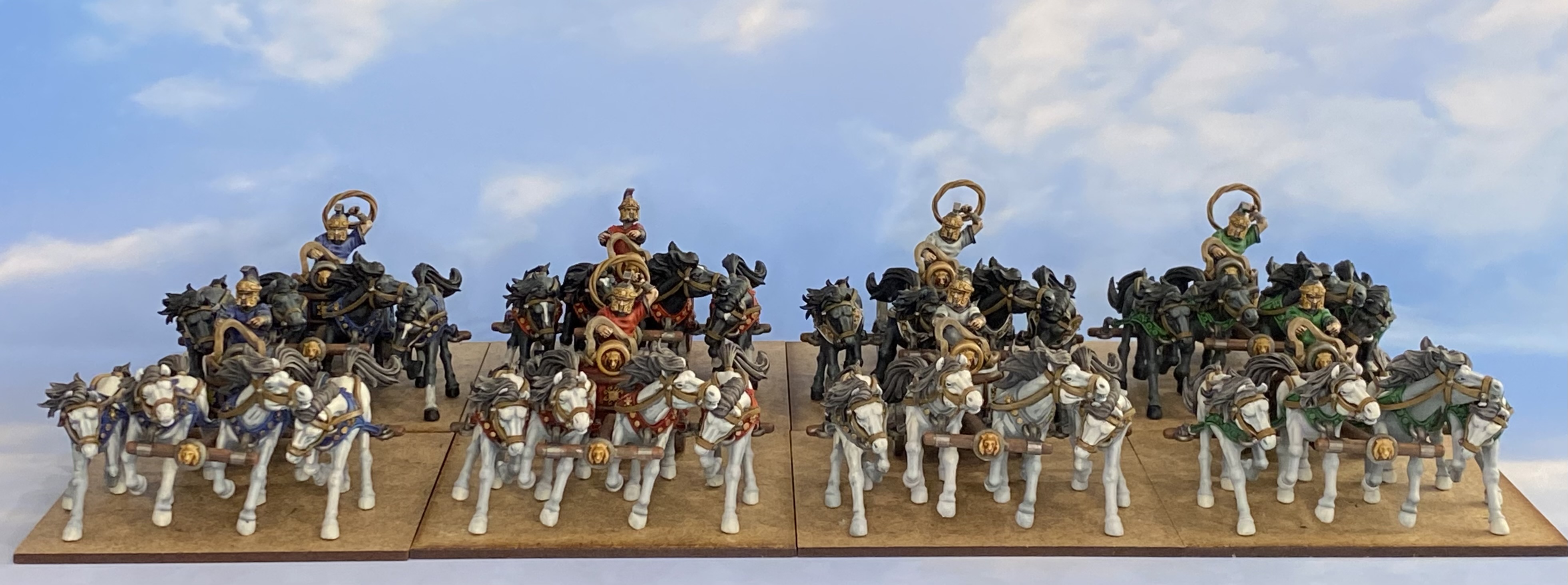
All four teams lined up for no other reason than because I wanted to get a picture or two of what they looked like together.
I may start adding crowd figures to the Circus tomorrow and possibly get a few more Plebs painted.

Spina and Plebs
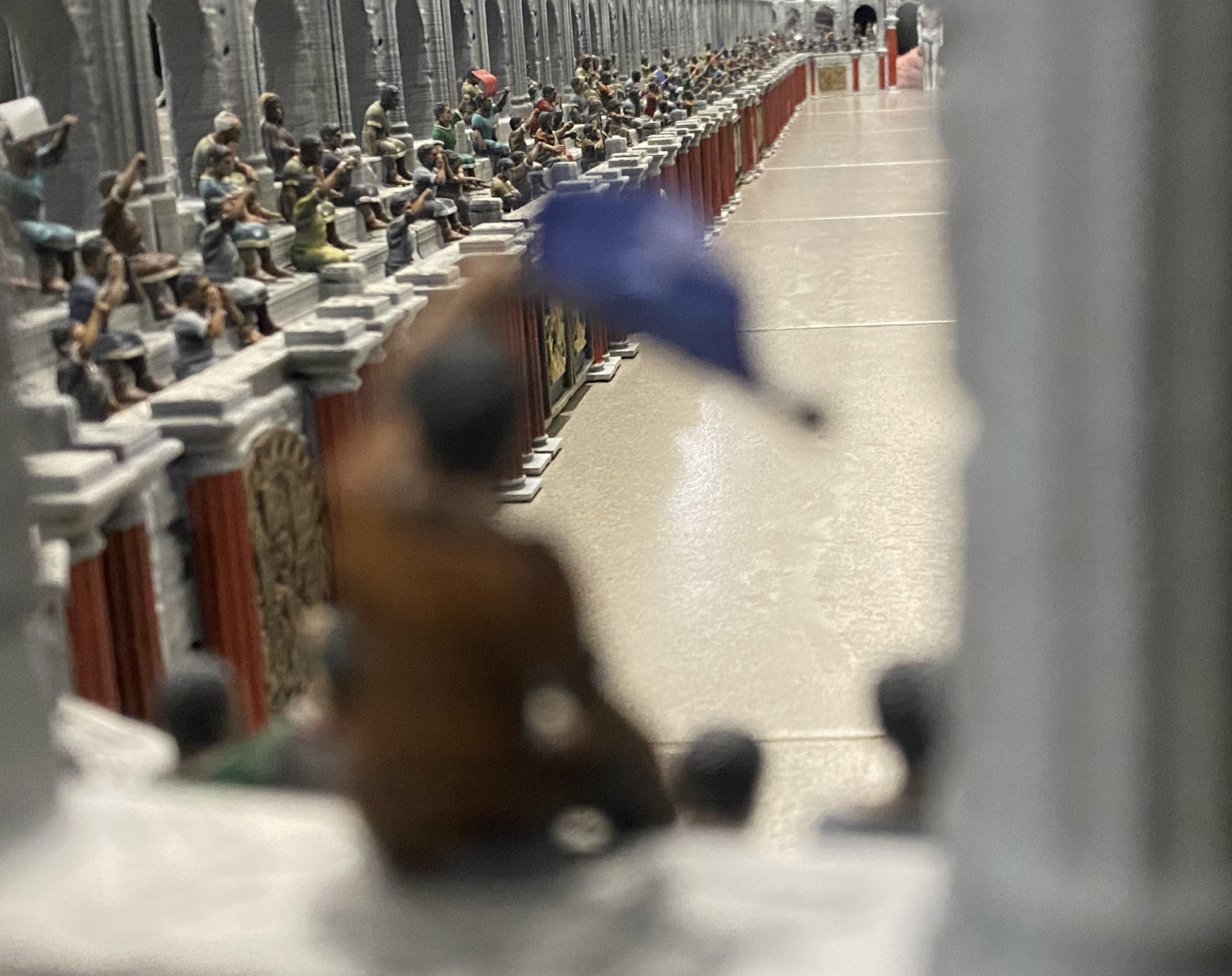
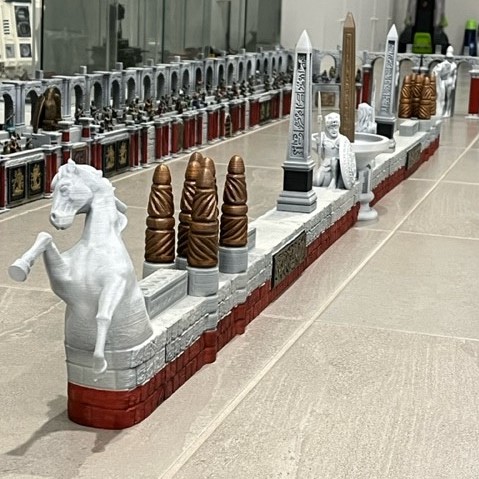
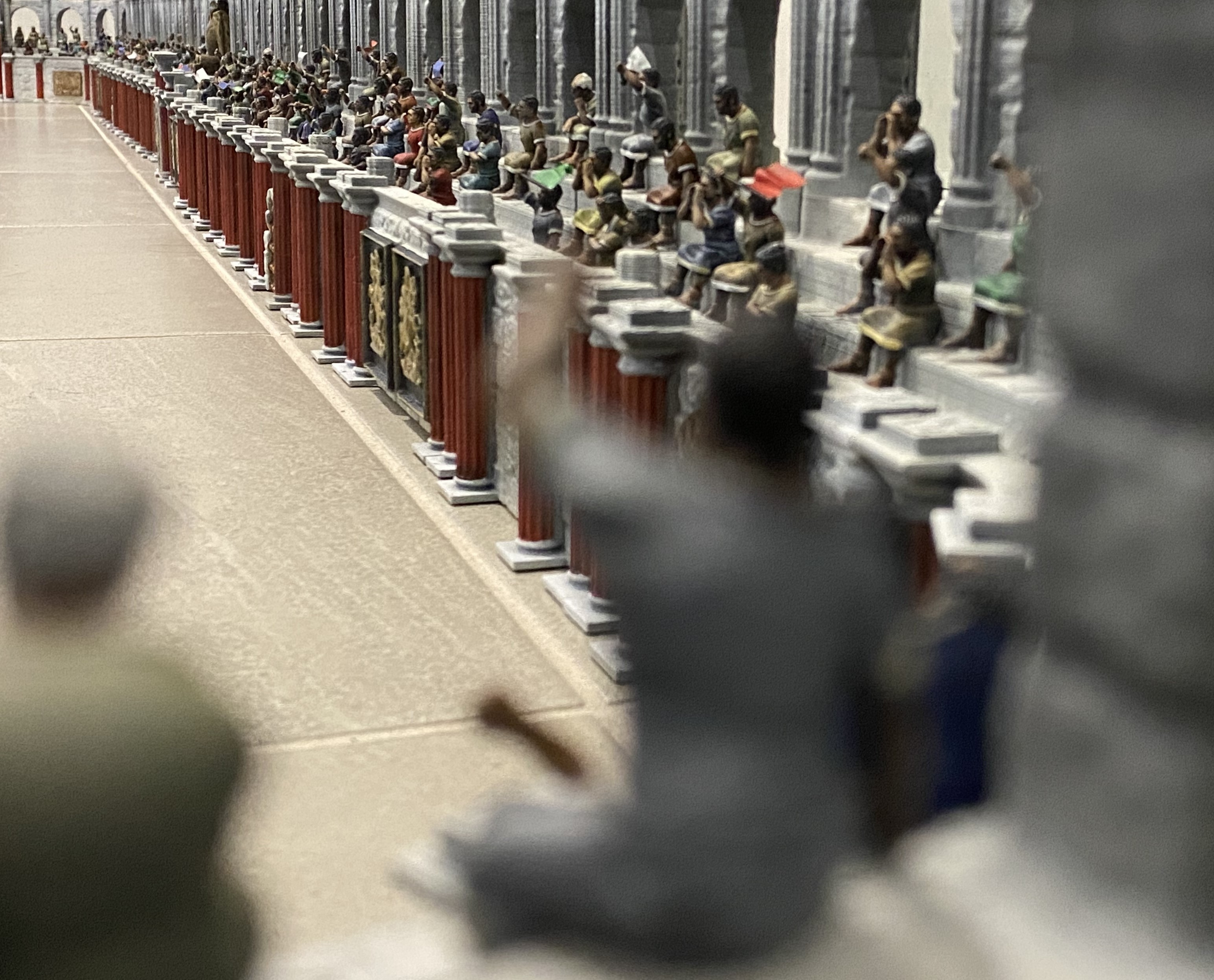
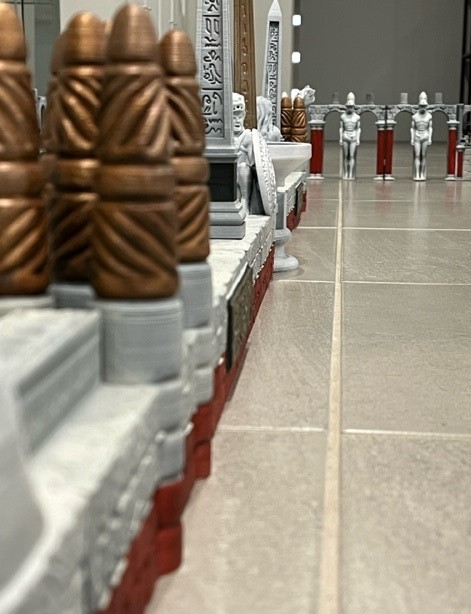
The seated Plebians are done. There are almost 400 of them. I also finished off the Spina with a few extra sections so that I could mix up the set-up a bit.
On the to-do list, I have.
- Standing Plebians and refreshment sellers.
- The occupants of the Imperial box.
- Mobs, at least 8 of them.
- Pretorian Guards.
- Measurement sticks.
- Dice.
- Flags and pennants for the Circus.
- Crashed chariots.
- Basing on the chariots and also the actual playing surface.
- Some simple game aids to indicate turn order, quick reference sheets etc.
But I’m getting there.
Dice
Huge dice.
As everything else is inbigulated it was only natural that the dice would have to be too. (Fear not though those with delicate little hands, I also have smaller dice)
16 x Huge Black Dice
16 x Huge Red Dice
16 x Regular Black Dice
16 x Regular Red Dice
The little chariot symbol on some of the faces is a success.
Trying to keep it really simple here, if there is a little chariot showing on the dice, you have scored a success, if not, you didn’t. None of this looking for which dice are 3+ and which dice are 4+ malarky.
 Regular white D6 shown for scale only
![Sneak About With Star Wars: Legion’s Guerilla Troopers & More [UPDATED]](https://images.beastsofwar.com/2026/09/g-troops-star-wars-cover-600-338.jpg)