








Spring Clean Challenge: Every Game is Miniatures Agnostic


Well, it took more than an hour
Now we come to the last of the rules sets I wanted to try out for this project: One-Hour Skirmish Wargames, an interesting rules-and-scenarios book by John Lambshead. I didn’t buy this one with anything in particular in mind — I was mainly interested in the playing card based game mechanics.
The book provides a simple set of rules for activation, moving, and attacking. So simple, in fact, that I could tell this would need to be a strongly scenario-led game. No problem there, the book also includes 6 scenarios, ranging from Napoleonic through both world wars to the cold war, and it even includes a pulp scenario involving dinosaurs and invading aliens.
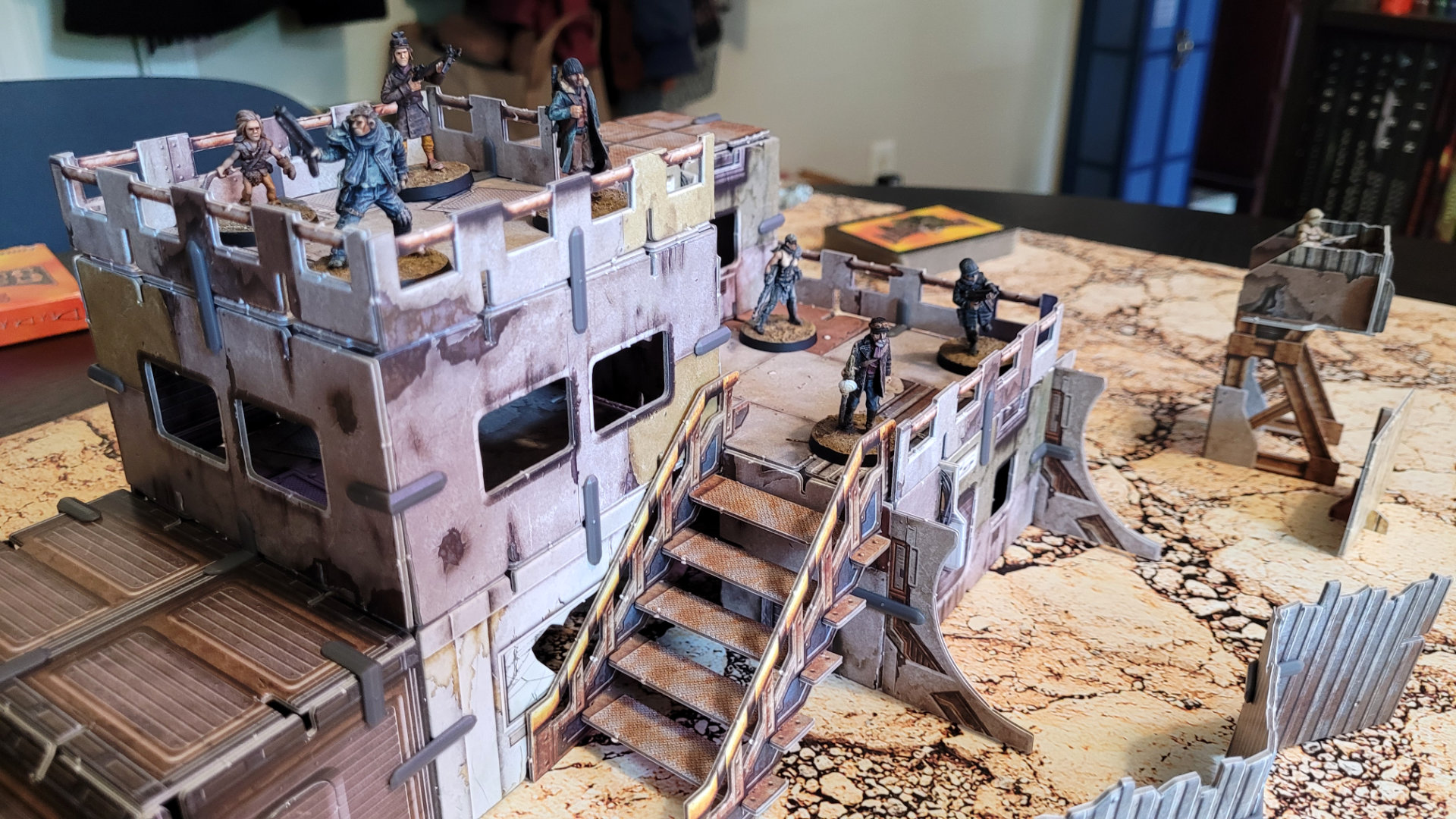 Zulu wars or after the apocalypse, it's all pretty much the same.
Surprisingly I decided to hold off on the pulp scenario, instead deciding on one that takes place during the Zulu wars. I don’t really have any historical miniatures for this period, but I was thinking I could re-skin it for the xenomorphs and colonial marines from Aliens. The other scenario that caught my eye was a WWII-era convoy raid, which I was thinking I could do with the ridiculous number of post-apocalypse models I have in my collection.
Then it hit me — if you put “defend the fortress from attacking hordes” together with the convoy raid, you essentially have the plot of the second Mad Max film. This seemed ideal as the Zulu scenario had a few units with rifles — now I wouldn’t have to explain what the Aliens were shooting…
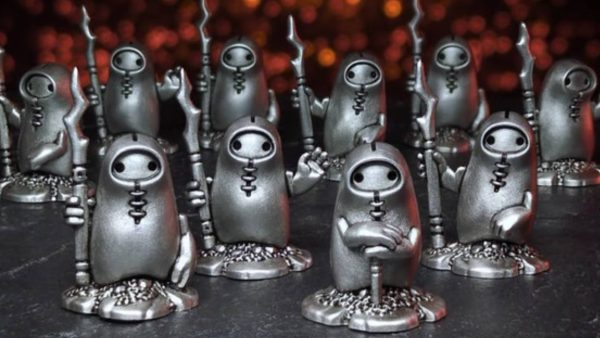
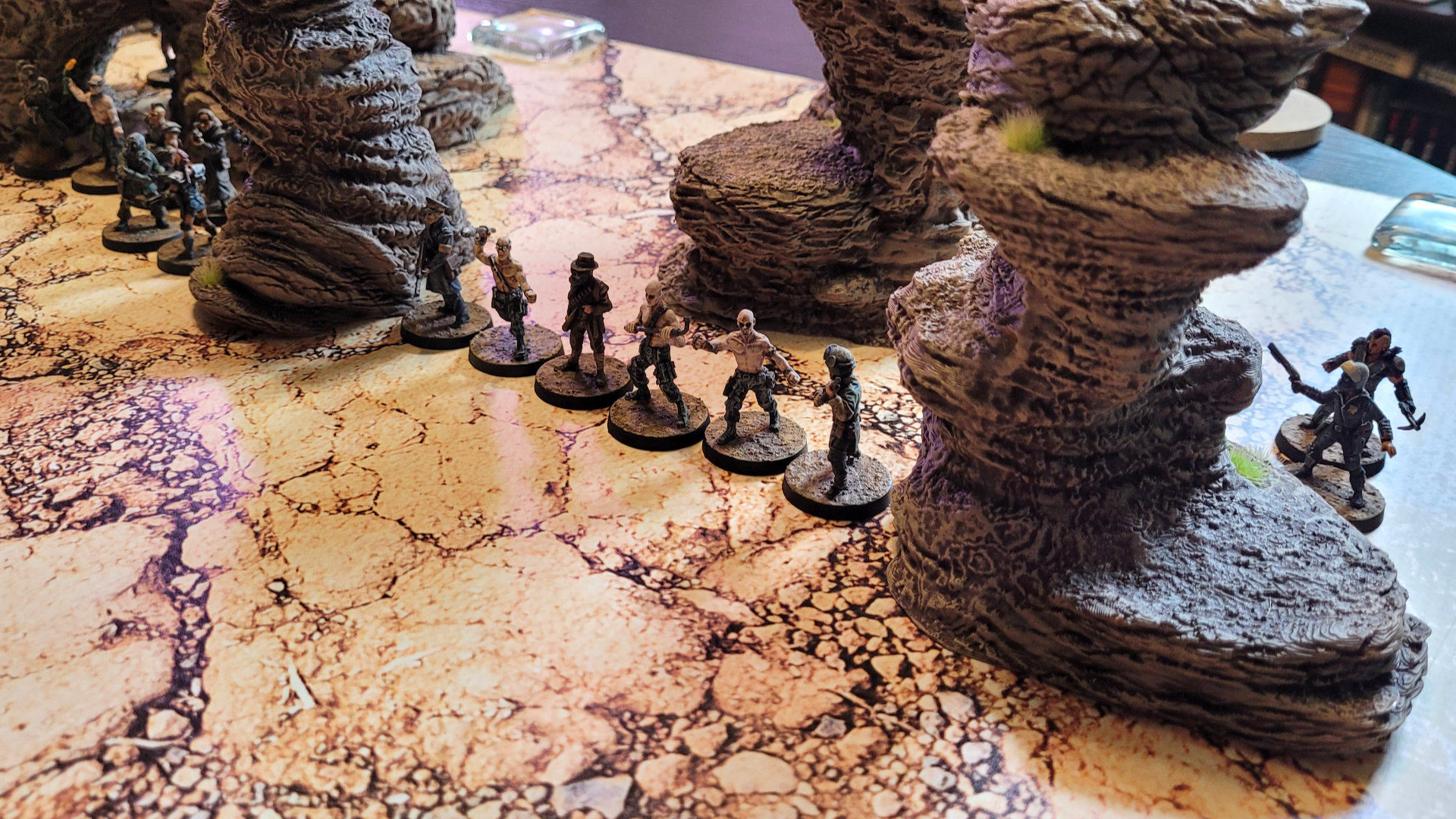 An intimidating lineup of wasteland warriors, courtesy of Crooked Dice.
Alas, while digging into the convoy scenario I decided it would need more work than I was willing to do in order to re-skin it. The scenario involves a lot of different characters with different types of weapons, on both sides. Not a problem if you have miniatures for German soldiers, SAS and French partisans modeled with the correct weapons and equipment, but it would be too difficult to keep track of which post-apocalypse models were standing in for the WWII characters without doing up some stat cards with images, which was more work than I was willing to put in.
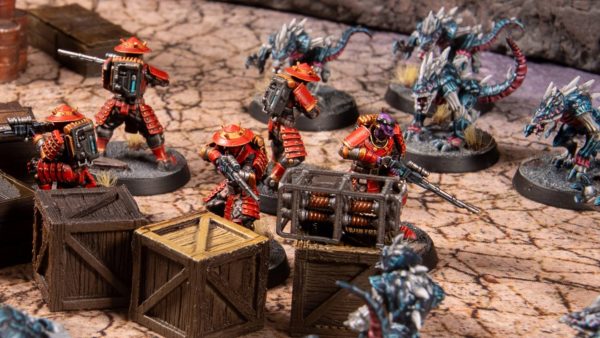
So we decided on just doing the Zulu scenario, reskinned for Lord Humongous and his mob of wasteland warriors laying siege to Max and a small group of survivors. The Zulu army consisted mainly of warriors with spears, with only three of them armed with rifles — most of the models we would be using had rifles or pistols, so we reasoned that only a few of them actually had bullets, and selected three that would be easy to identify.
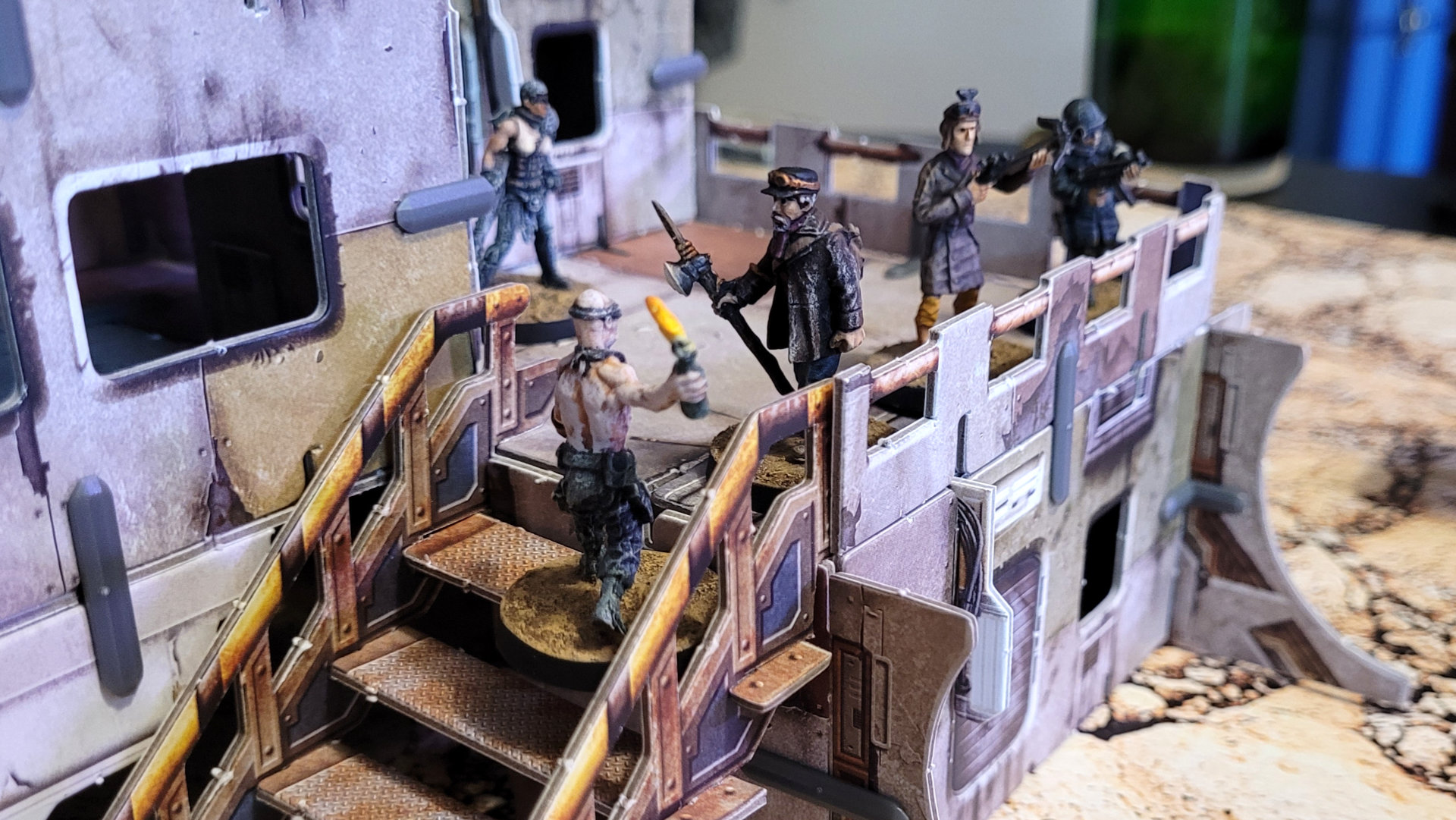 The first breach.
The scenario was interesting to play out. The wasteland warriors had to cross an open field to the defenders’ redoubt, and would win the game if they had models inside the redoubt when the game’s time limit hit. The defenders (standing in for the British) had better weapons and were able to pick off attackers at range, but the problem was that there were only 8 defenders against a starting force of 16 attackers. To make matters worse, attacker casualties re-spawn after a turn, meaning they have and endless flood of warm bodies. The defenders’ only hope of winning was to keep the attackers out of the redoubt until the time limit ran out.
The card based game system was nice and fast-paced, although most of the game did involve the defenders shooting down attackers at range. Things got a little more interesting once attacking models started making it to the wall — melee combat is quite a bit more decisive.
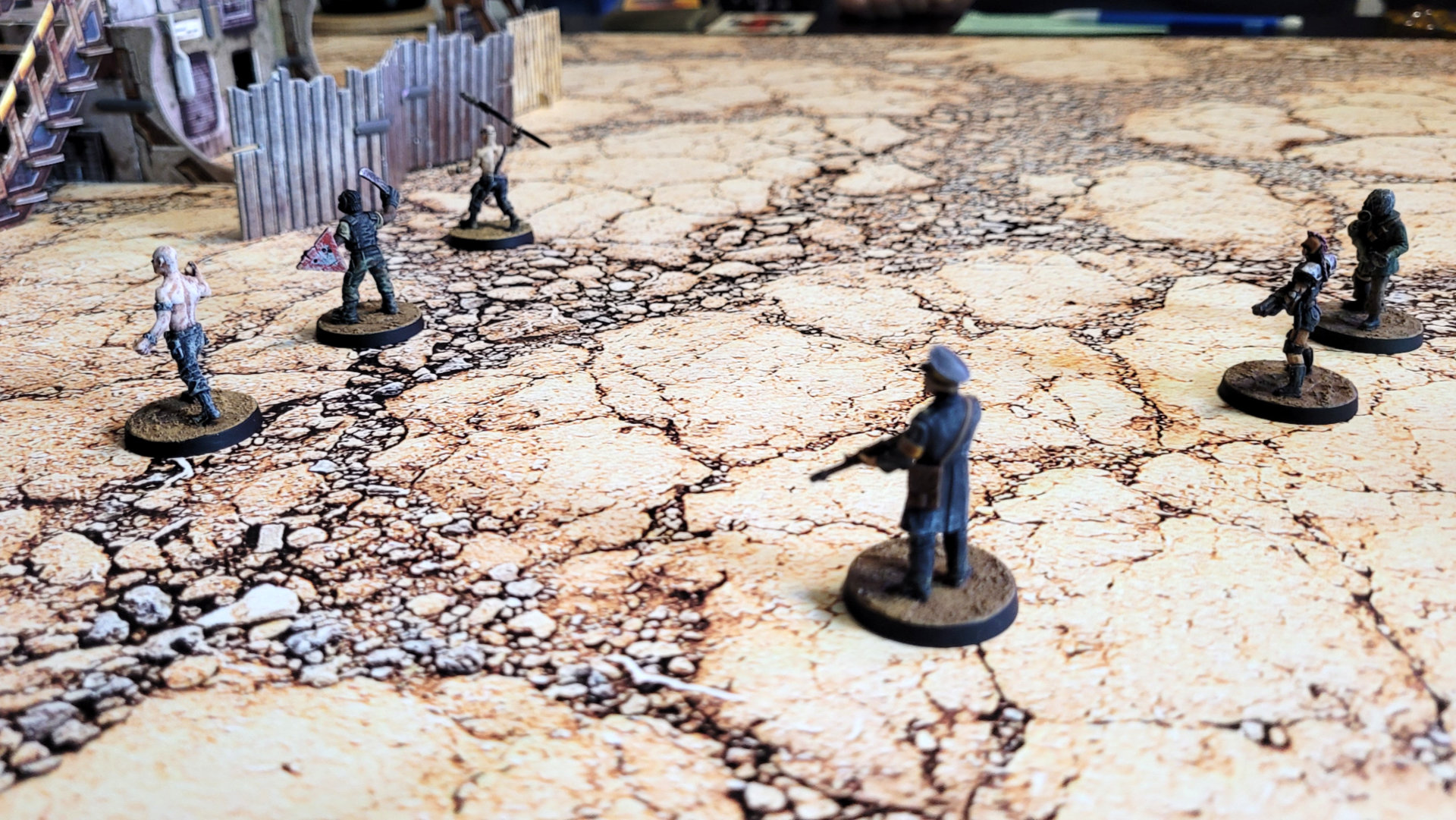 The hordes just keep on coming...
The only issue we had with the game was that the turns, and therefore the time limit, were very random and arbitrary, and the game ended in a somewhat abrupt and unsatisfying manner. After drawing a card each for initiative, the acting player draws another card, which tells them how many action points they have to use, with moving and shooting costing one point each, and additional moves costing 3 or 5 more points. Once all the points are spent the other player draws a card for their action points, and they go back and forth until someone draws a joker, which immediately ends the round.
At the end of each round, the defending player draws a card and sets it aside — when these set aside cards add up to 30, the game is over. This means that the game could end in at few as three rounds. Our game came to an abrupt halt after five, just as things were getting interesting. We decided to play on for a few more rounds, but the scenario doesn’t work without a set time limit. We could try increasing that total to 40 or even 50, but that could extend the game to 10 rounds or more, which would probably be too much. I get that you don’t want to know exactly when the game is going to end, but the timer needs to be a little less random to ensure that the game goes long enough to be interesting but not so long that it becomes a slog.
All in all, One-Hour Skirmish Wargames was an interesting, if light, rules set that I might consider using again if I have a specific scenario in mind. It’s generic enough to accommodate any genre or time period, which is both a strength and a weakness — without a specific setting to back it up, it really relies on games being designed around interesting scenarios. That said, I do want to try the pulp scenario, maybe with some of my recently painted Doctor Who models…