






PanzerKaput Goes To Barons’ War


Recommendations: 11332
About the Project
Set against a backdrop of a Civil War that lasted for two years, 1215-17, as a result of the issuing of Magna Carta. A civil war was the perfect opportunity for the leading nobles of the time to grab land and power while settling some old scores along the way. This vying for land and power hadn't stopped since the invasion of 1066 with only the strongest of kings being able to keep their nobles in check. Our narrative focuses on small groups of warriors brought together under a lord or baron to raid and steal or defend land and property. With the strong, wise, cunning and lucky aiming to rise out of this civil strife in a better position than when it started. The Barons' War skirmish game has been written to enable players to fight out tabletop battles against the backdrop of the First Barons’ War between rival Barons or rival factions who find themselves on either side of the conflict. The game is historically themed, the gameplay is fast-paced and tactical with plenty of narrative and where force building presents you with lots of options enabling two players to muster very different retinues. However, as intended, this is an alpha set of rules which does not include rules for siege warfare, although rules for fighting in buildings are included. Campaign rules are something that will be addressed at a later date and released online. Having grown out of the Barons’ War Kickstarter project, the intention is for this ruleset to develop into a system that could be used throughout the Medieval period. Starting with England from when the Western Roman Empire withdrew around 410 AD to 1485 AD when Richard III died at the Battle of Bosworth Field. This presents us with a huge span of history for gaming which can be broadly divided into Romano-British, Anglo-Saxon and Viking, Anglo-Norman, Angevin and Plantagenet. And that’s just when looking at it from Great Britain. With warriors of this period being pretty similar, it would be easy to use the profiles in this rulebook to play out tabletop battles in any setting. Over time we see these rules evolving with additional warriors, characters, abilities and scenarios being added starting with the Dark Ages, the Anarchy and the Crusades and shared to www.warhost.online, which has been set up to be the community website for the game.
Related Game: The Barons' War
Related Company: Footsore Miniatures and Games
Related Genre: Historical
This Project is Active
A Most Ignoble Feud - Character Set
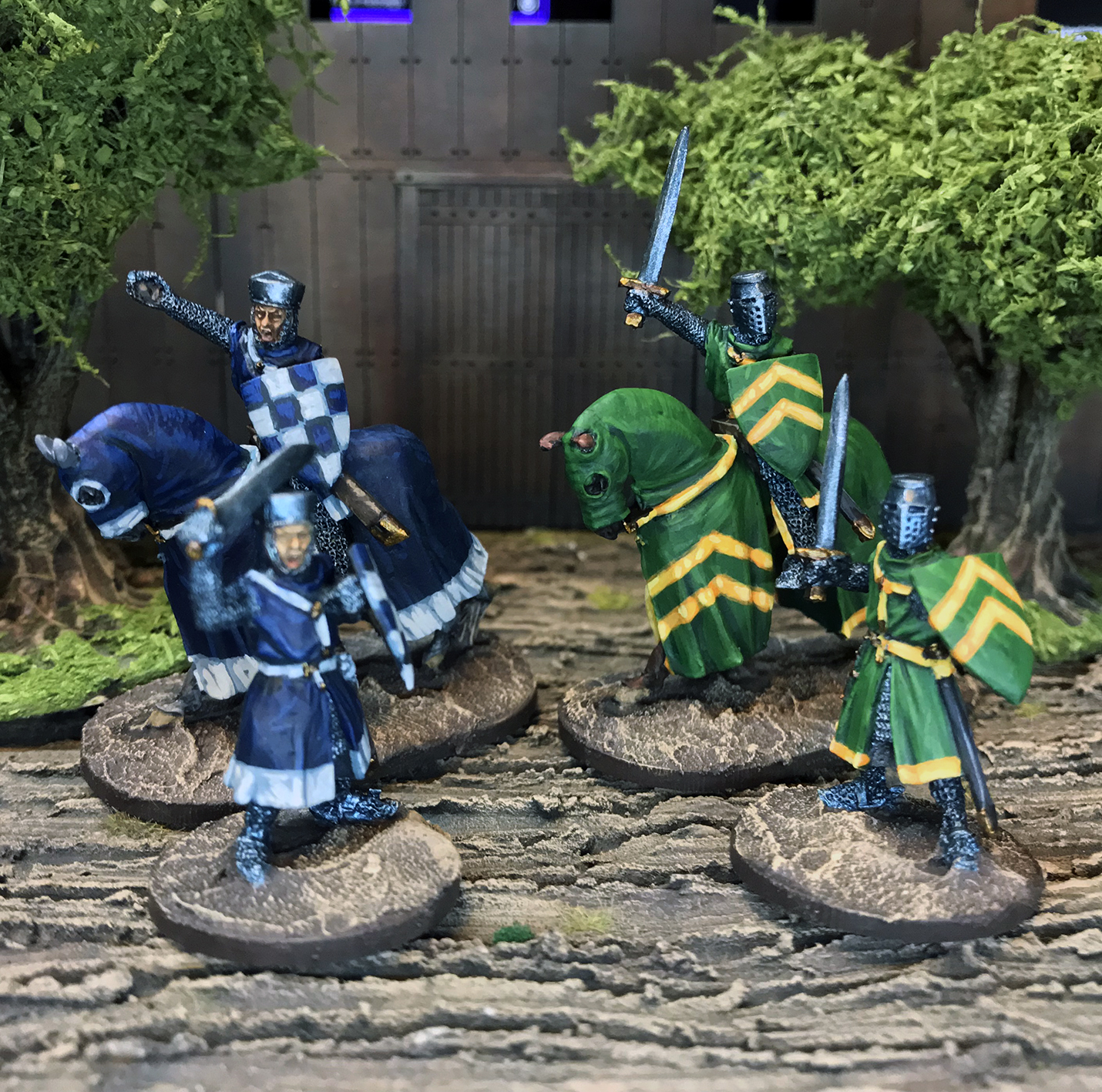 A Most Ignoble Feud - Character Set
“And so, on the fifth day after the Feast of Saint Barnabas, in the thirteenth year of King John’s reign, did the ignoble scoundrel Gerard de Furnival, Lord of Hallamshire launch a most grievous assault upon the person of his master William de Warenne, the Earl of Surrey. During the melee, several of the Earl’s servants were maimed, and his prize destrier injured. In response, the king decreed that the Lord of Hallamshire be stripped of his possessions, and brought to heel.”
A fictional excerpt from Roger of Wendover’s chronicle, describing the history of England under King John.
Gerard de Furnival, Lord of Hallamshire
A crusader’s blood ran in Gerard’s veins, his father having stood shoulder to
shoulder with Richard the Lionheart at the Siege of Acre. He acquired his lordship through marriage to Maud, great-granddaughter of the builder of Sheffield Castle, William de Lovetot.
Little is known of Gerard’s conduct during the Baron’s War, but in 1219 we find him outside the walls of Jerusalem with the Fifth Crusade, where he unfortunately perished.
William de Warenne, 5th Earl of Surrey
Cousin to King John, and one of his closest allies, William served the King faithfully in many capacities. He was present at the King’s coronation in 1199, and a couple of years later we find him as Lieutenant of Gascony. When the French seized Normandy in 1204, he lost his continental holdings, but was apparently generously recompensed by John.
His star continued to rise, seeing him appointed as Warden of the Cinque Ports, then later the Welsh Marches. During the unrest in 1212, he was given custodianship of the northern shires.
He was one of the few nobles that sided with the king during The Baron’s War fighting at his side to its conclusion. William is also remembered for encouraging the king to sign the Magna Carta. He remained a staunch supporter of the crown until his death in 1240 at the ripe age of 73.
I have painted both the characters, Gerard de Furnival, Lord of Hallamshire and William de Warenne, 5th Earl of Surrey, though I have not painted them the way they should be so they can be used for other knights too.
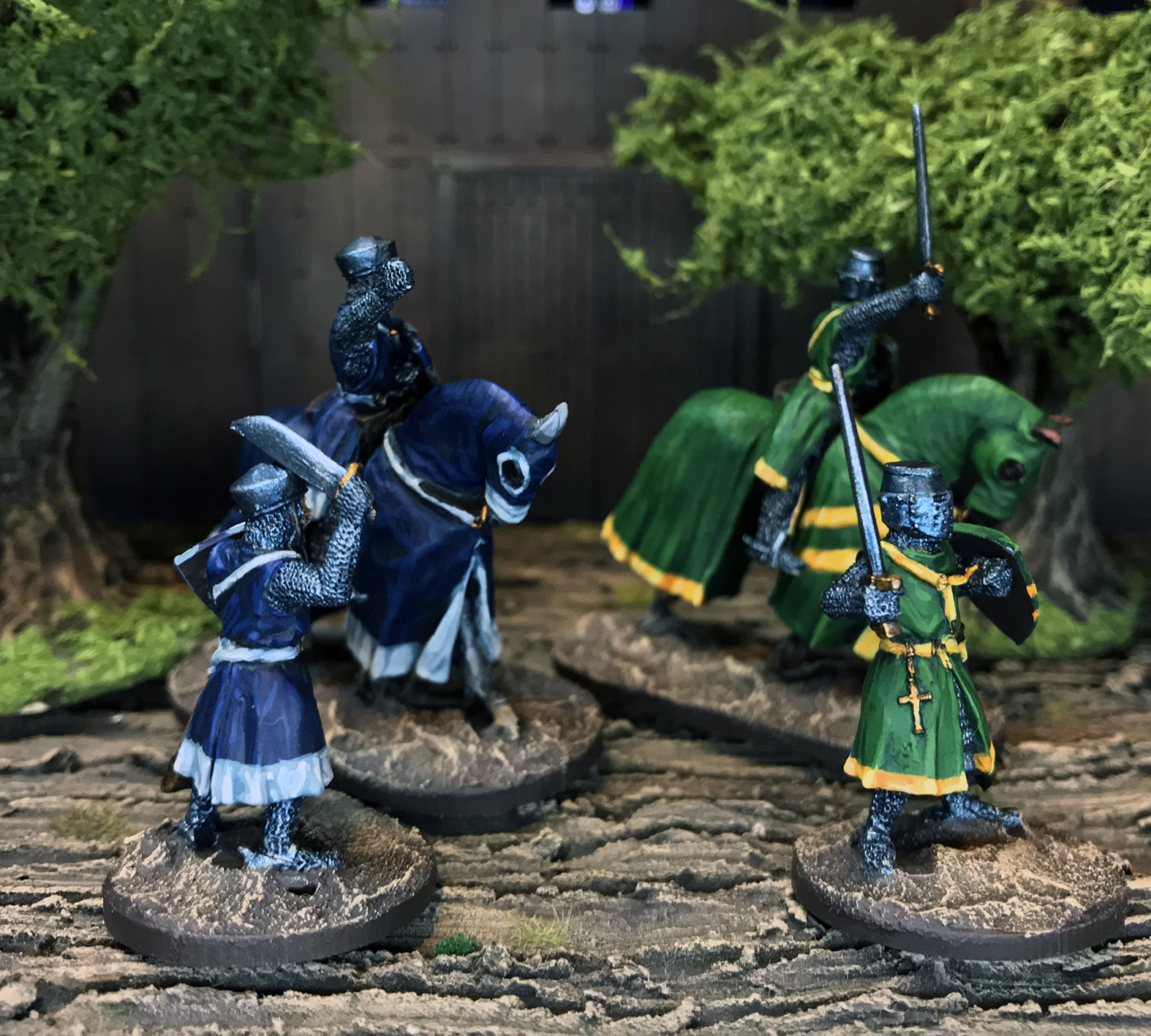 A Most Ignoble Feud - Character Set
Llywelyn ap Gruffudd, Prince of Wales
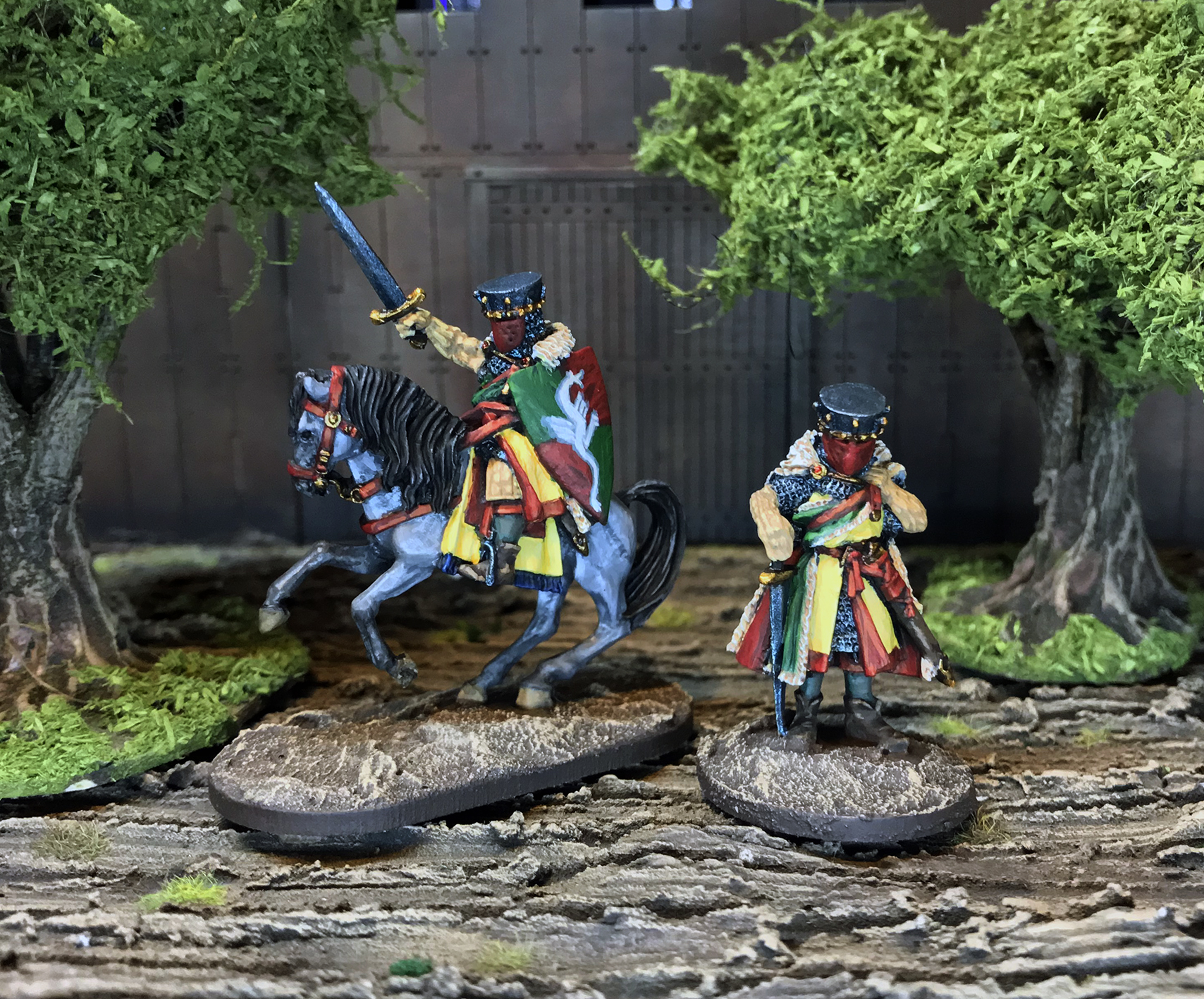 Llywelyn ap Gruffudd, Prince of Wales
Llywelyn was born in 1223 into the tumultuous Welsh leadership. Welsh royalty was as a quicksand of shifting loyalties (further complicated by the English king and the Marcher lords) that meant that one’s erstwhile friends could suddenly become deadly enemies and your grasp on land and power could be at best transient.
A shift in ‘fortune’ in 1245 meant that Llwelyn could support his uncle Dayfydd against King Henry and a successful campaign resulted in the Treaty of Woodstock in 1247. Dayfydd, unfortunately, did not live to see the signing of the treaty and Llwelyn took on his mantle. Llywelyn had to fight his own brothers but he was successful and was left solely in charge of Gwynedd.
In Nov 1256 Llywelyn crossed the borders into the ‘middle land’ at the request of the locals to alleviate the tyrannical rule of the English now led by Edward the First. His success was cemented at the Battle of Cadfan in June 1257.
Worsening relations between Llywelyn and Edward caused Edward to invade Wales in summer 1277 and Llywelyn was quickly defeated when Edward was able to cut of Llywelyn’s supply routes.
In 1282 Llyweln rose again but this time to support his brother who again had become fed up with the English ‘high handed’ rule. Edward prosecuted the war in the same fashion as the last time and was succeeding until the Battle of Moel-y-don which gave Llyweln time to head into South Wales to try and raise support. Unfortunately, he was brought to battle at Orewin Bridge and separated from his main army where he and eighteen of his closest retainers were cut down ending the Welsh royal dynasty.
They are going to be used possibly Veteran Sergeants commanders but also as a Welsh Leader too.
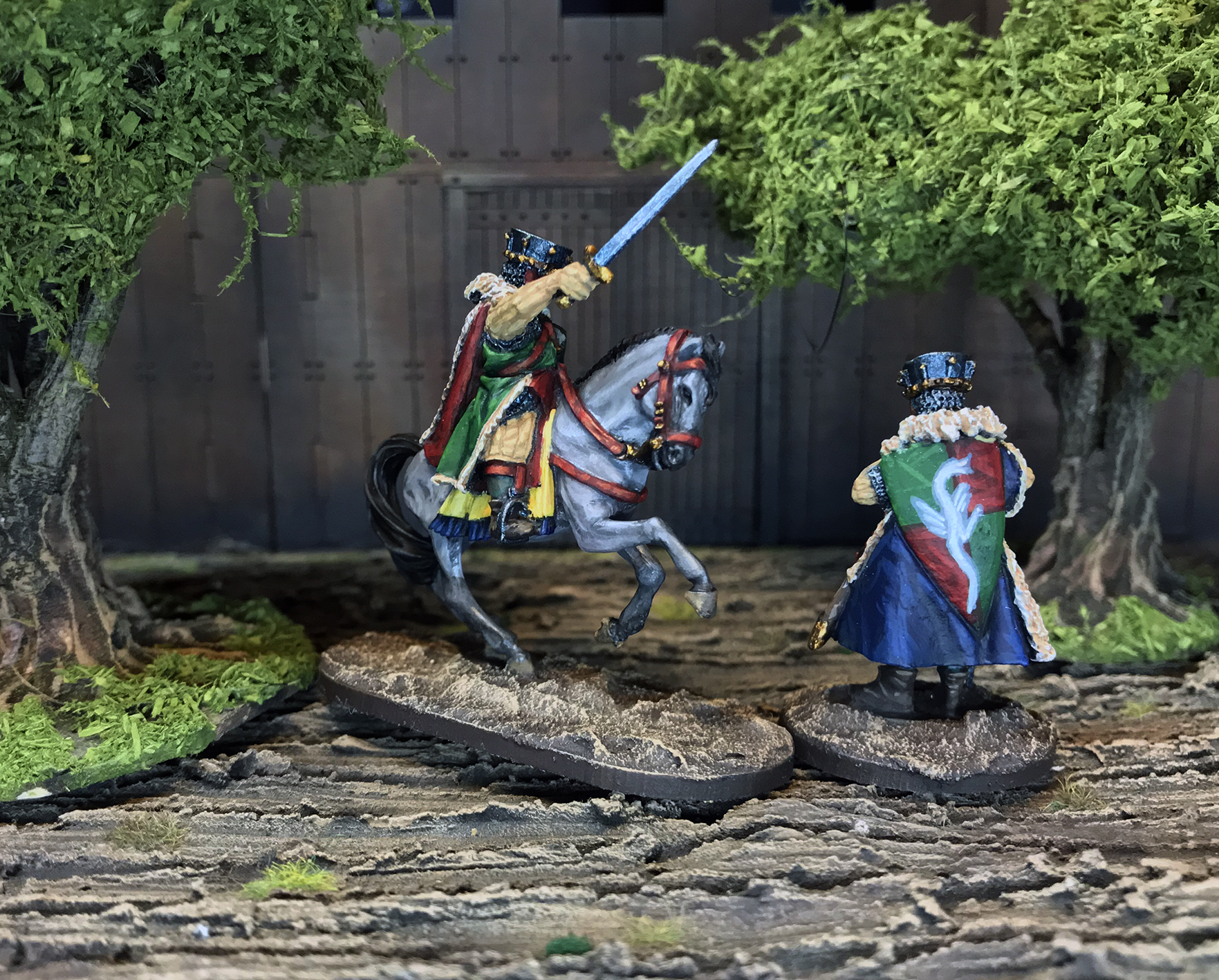 Llywelyn ap Gruffudd, Prince of Wales
Veteran Sergeants
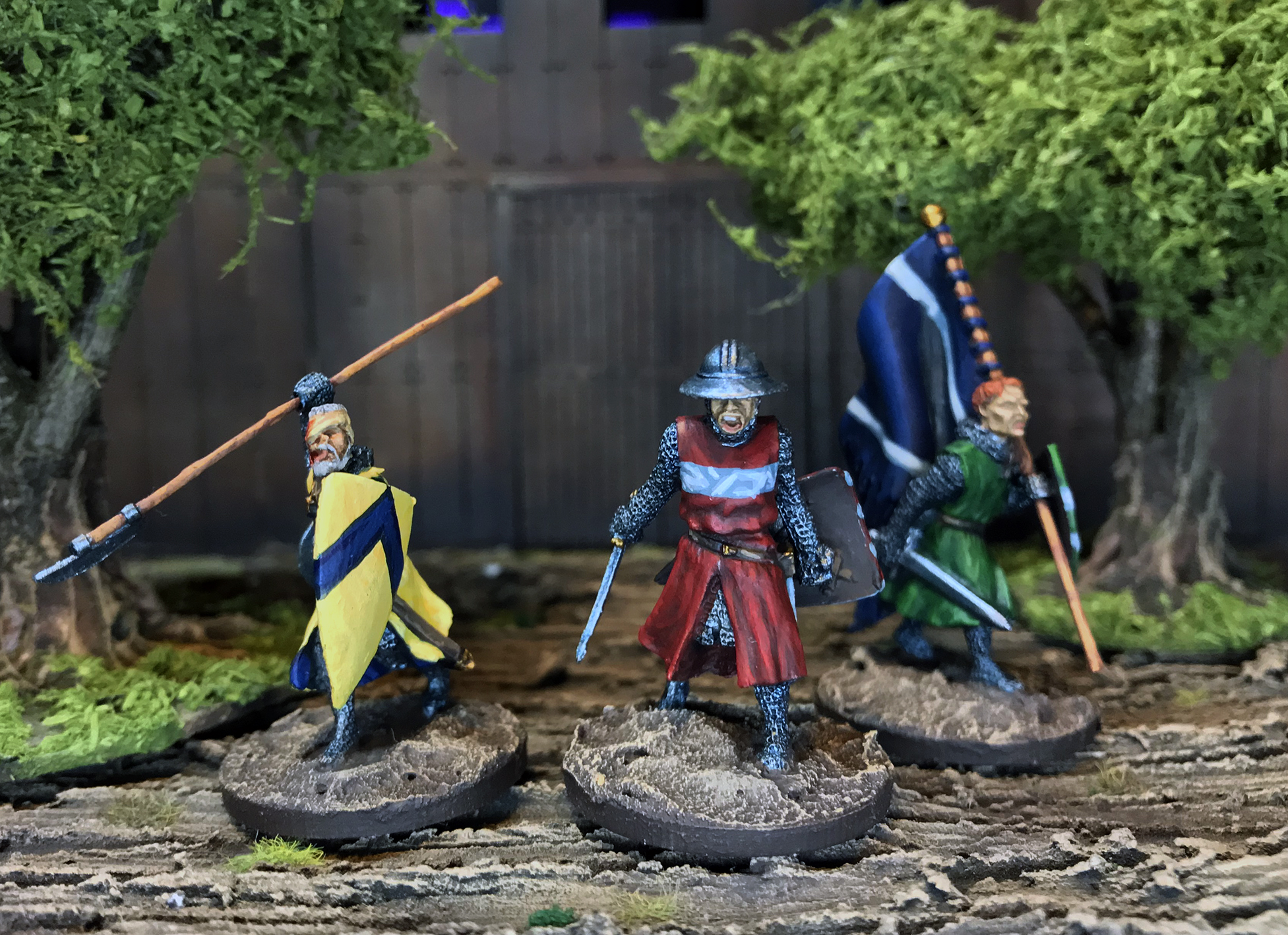 Veteran Sergeants
In medieval European usage, a sergeant was simply any attendant or officer with a protective duty. Over time this evolved into “soldier-sergeants” becoming landowners, fulfilling a more junior role to the knight in the medieval hierarchy. Sergeants would fight either as heavy cavalry riding alongside the knights, light cavalry as scouts harrying the flanks or as trained professional infantry. Over time these sergeants who were Veterans of many battles would be trusted to lead warriors, men whose respect they would have earned purely by their deeds and actions.
I love these and I have done a little bit of conversation on two of them by swapping the heads and changing the mace out for a bill.
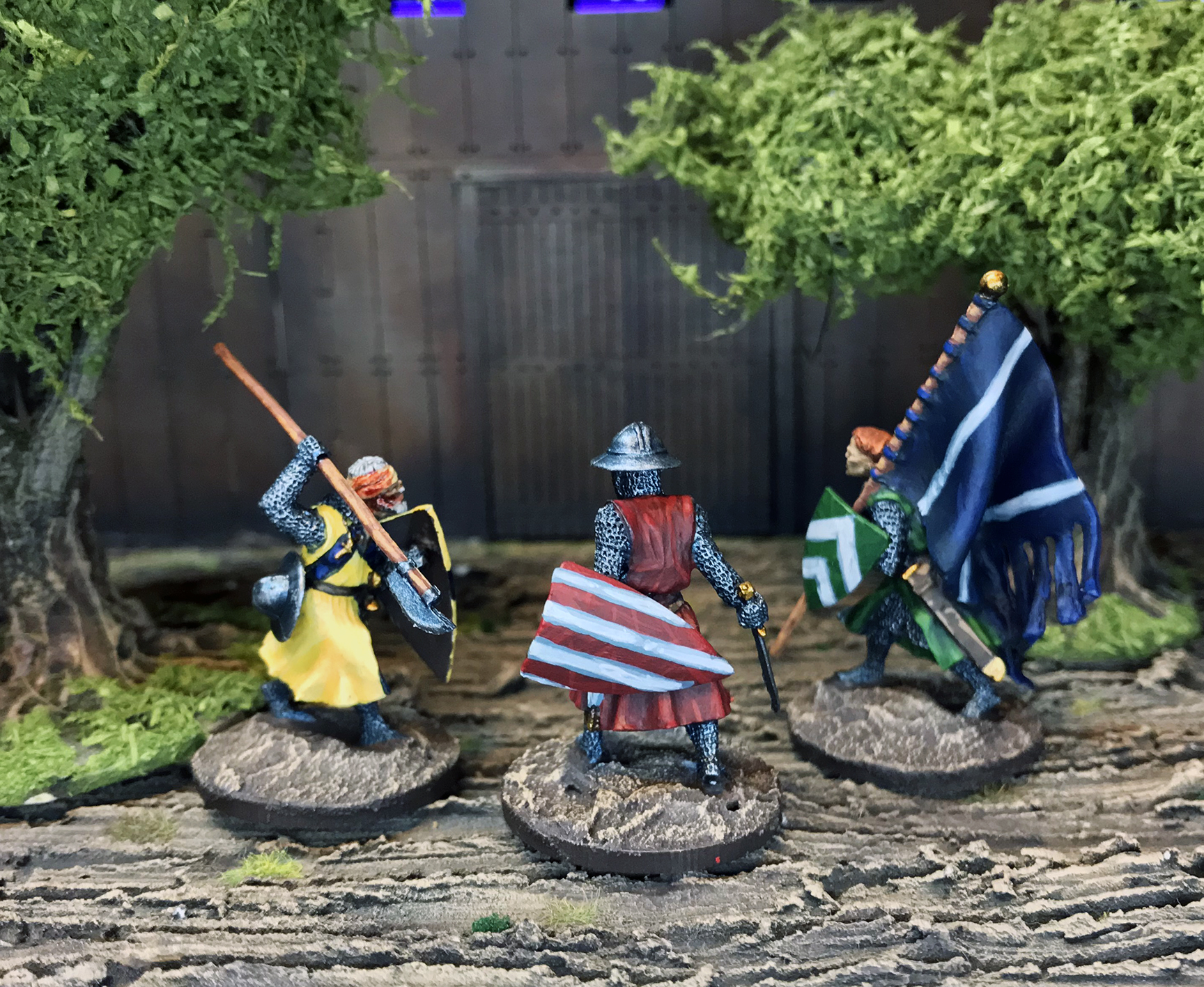 Veteran Sergeant
My Competed Barons' War Collection (So Far)
I have videoed my whole collection finished so far, thats all of BW1 and BW2 with a couple of special characters too. I am very pleased with the way they look.
More Mounted Knights including the Traitor Jacque de Grealis
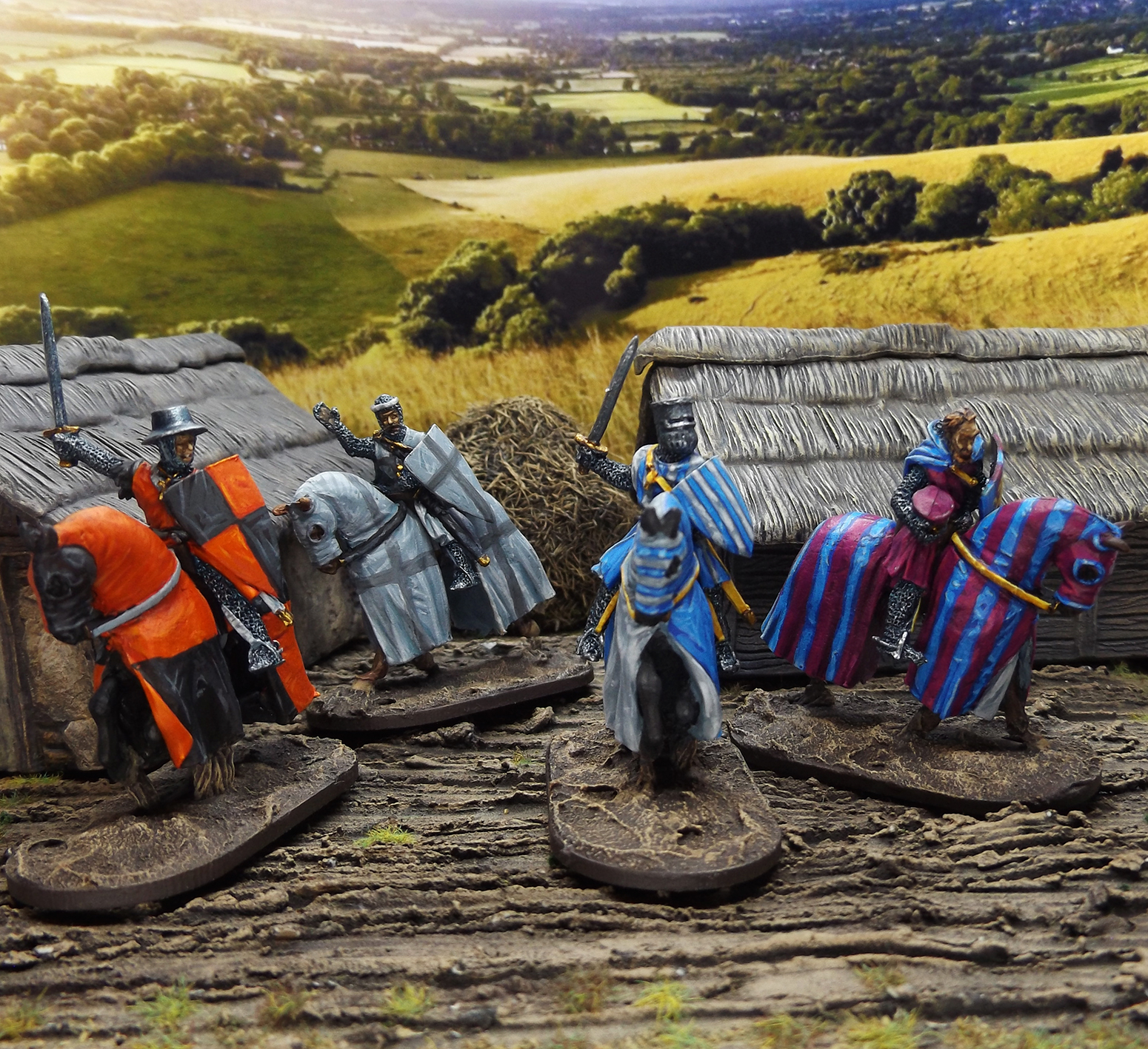 The Capture of the Traitor Jacque de Grealis
I have also painted another 8 mounted knights and have based four of them on the towns in which I’ve lived in, Colchester, Bedford, Leicester and Northampton. The others are based of Aston Villa and Colchester United football colours and the last two two on colours I wanted to paint them.
I have based them on places I have lived, Colchester and William de Lanvalei, Leicester and based on the city’s arms, Northampton and Simon de Senlis and Bedford and William de Beauchamp. I know some of these guys were dead but but I wanted them as they are connected to the places.
The other knights are Antoine d’ Adcoq, Blue and White stripes, the traitorous Jacque de Grealis, Claret and Blue, Etienne Taureau, in the orange and back and Alexander Blundus in the white.
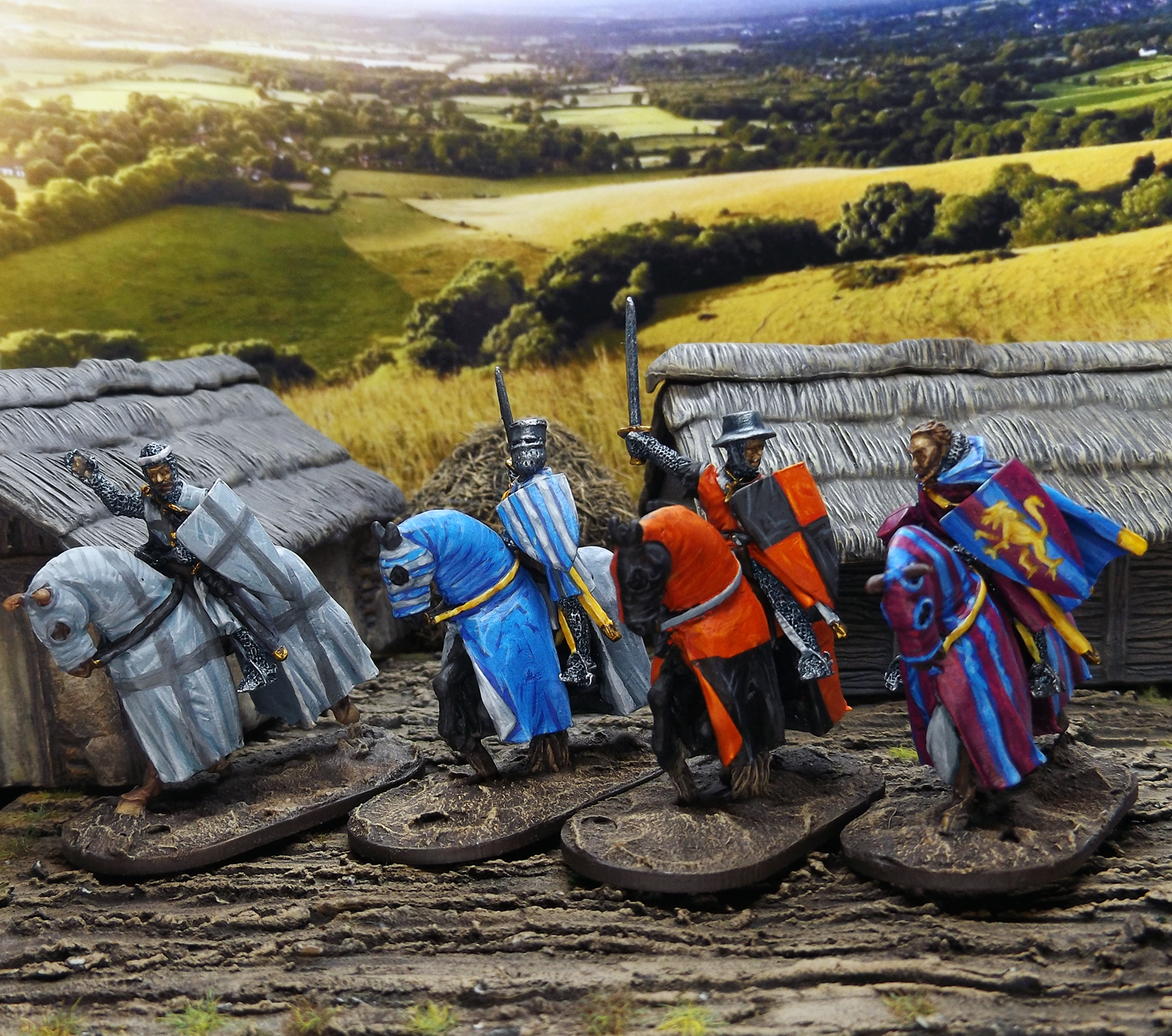 Alexander Blundus, Antoine d' Adcoq, Etienne Taureau and Jacque de Grealis
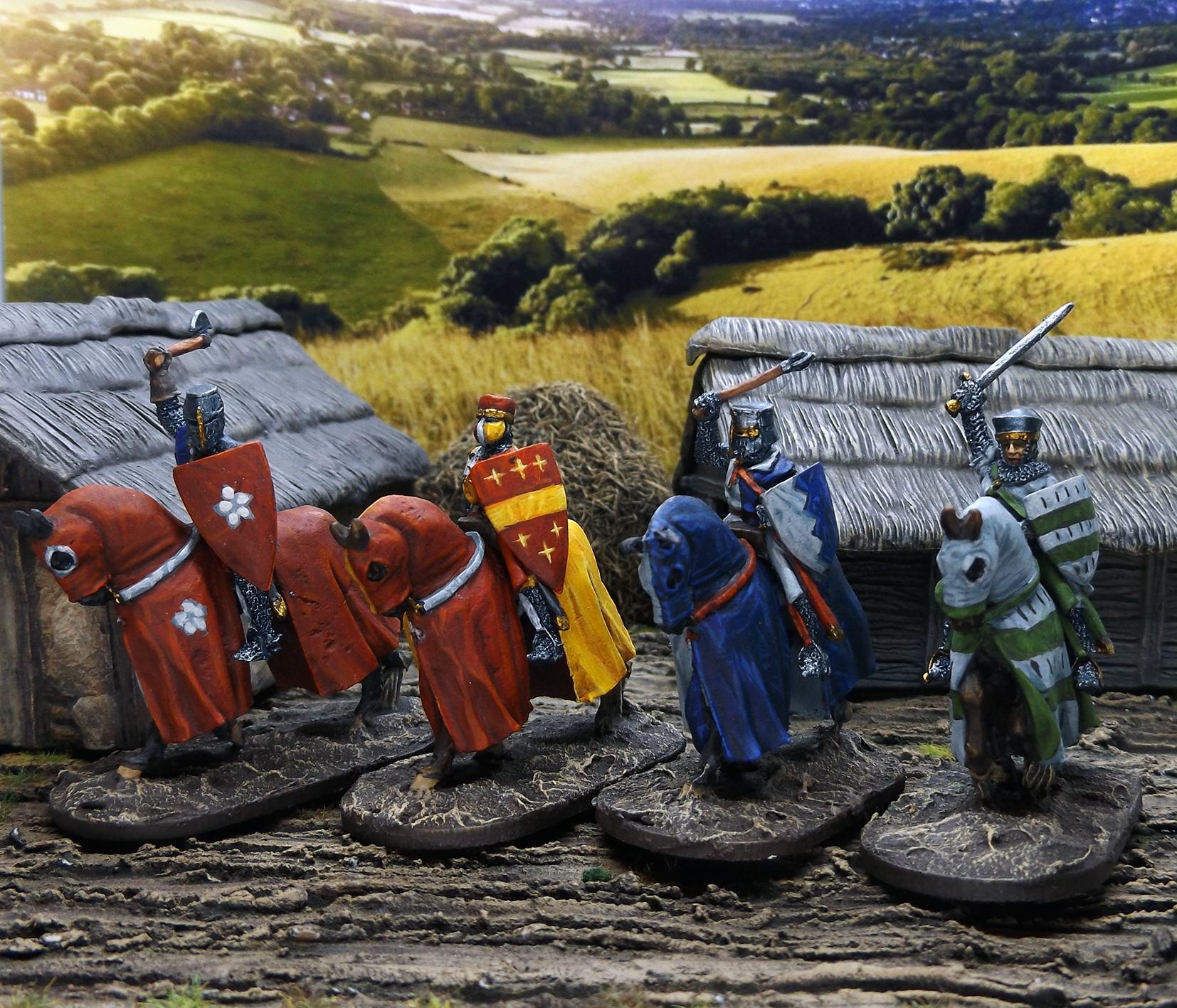 Lord Leicester, William de Beauchamp, Simon de Senlis and William de Lanvalei
More Mounted Sergeants with Added Spears
 Mounted Sergeants
More Sergeants, this time mounted and armed with spears, not lances like knights would be. These sculpts from the great man Paul Hicks are totally amazing and full of character and if anyone says that 3D sculpting will replace traditional sculpting I would say, not with the speed and quality that Paul produces these. But thats my opinion, what do you think?


Foot Sergeants
 Foot Sergeants fighting
They are the backbone of my Retinue, good all round troops with a good amount of options. The words to described them is good and versatile. Not of good as knight but can be as well armed and armoured of them, these professional soldiers are the mainstay of any retinue.
I have painted them is the colours of each of my main Lords as it seemed fitting.


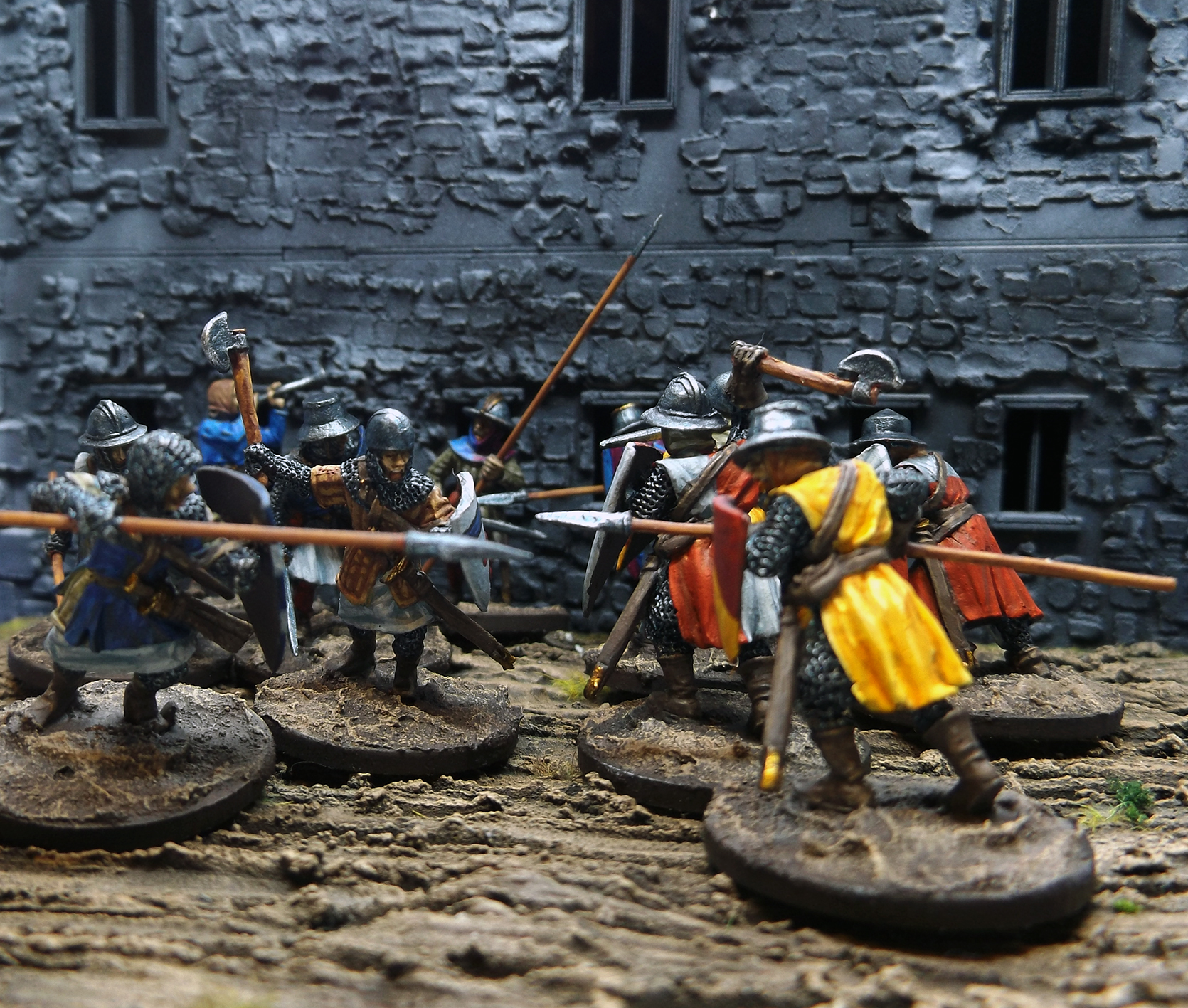
Mounted Sergeants
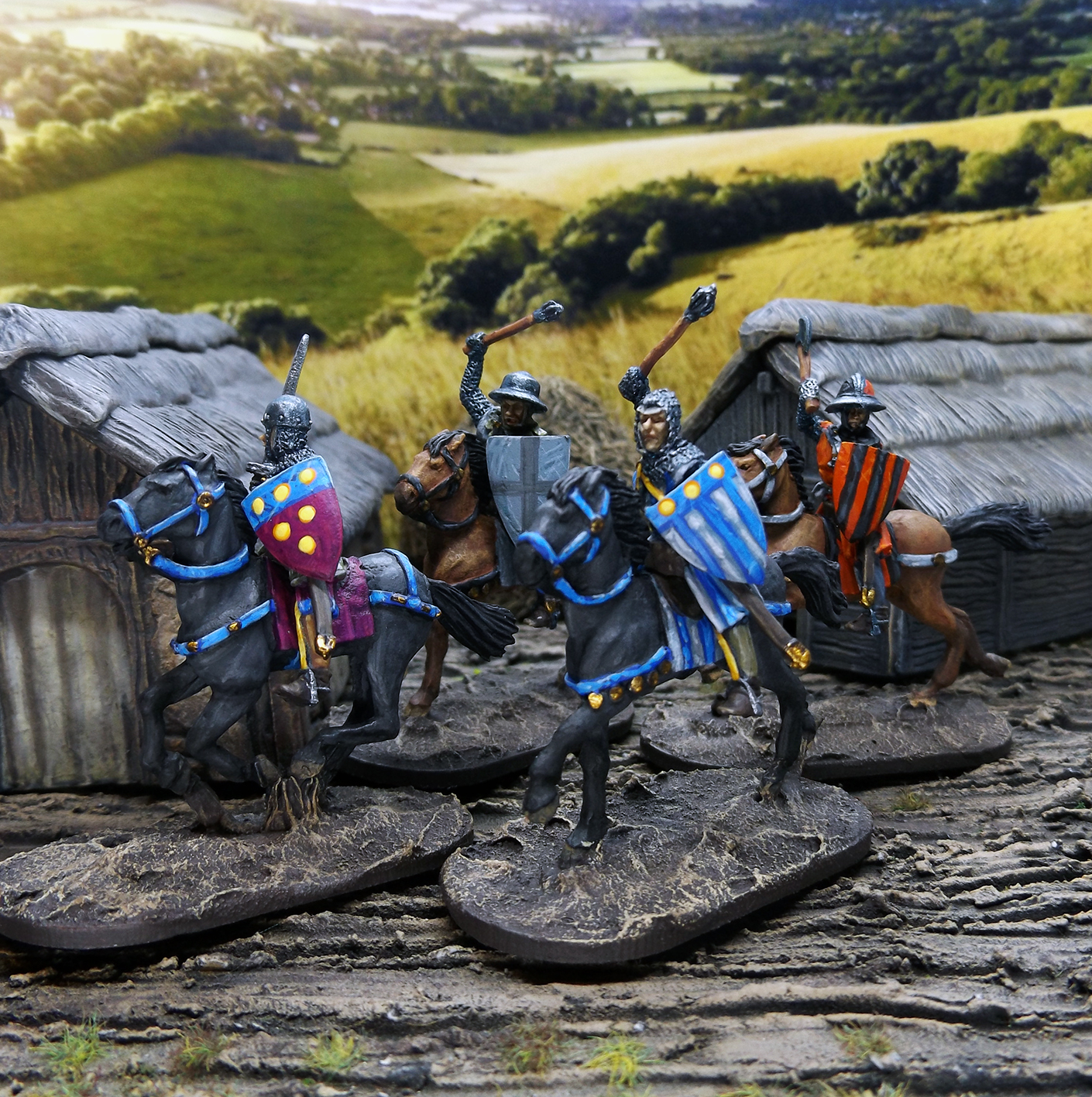 Mounted Sergeants with Hand Weapons
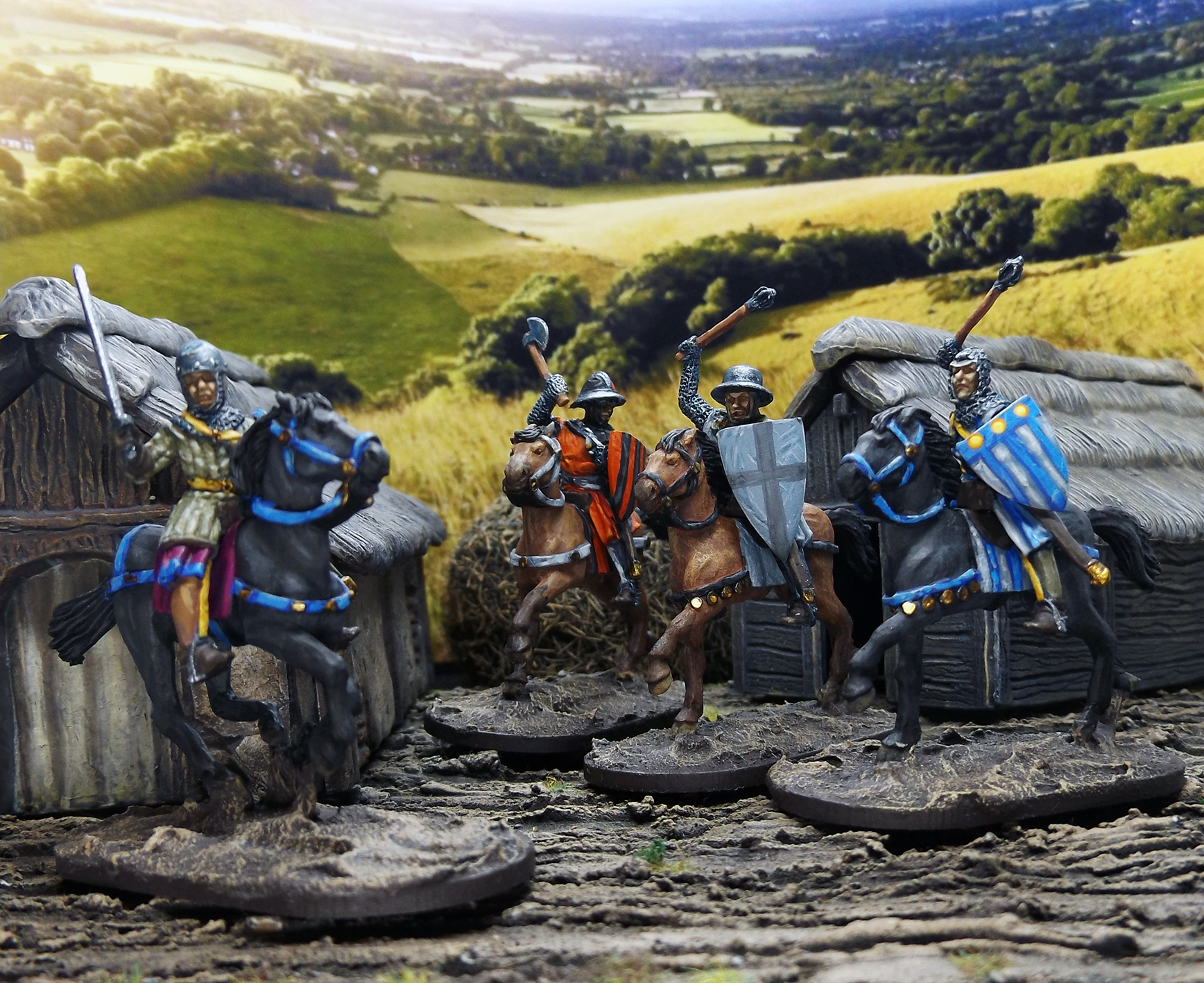
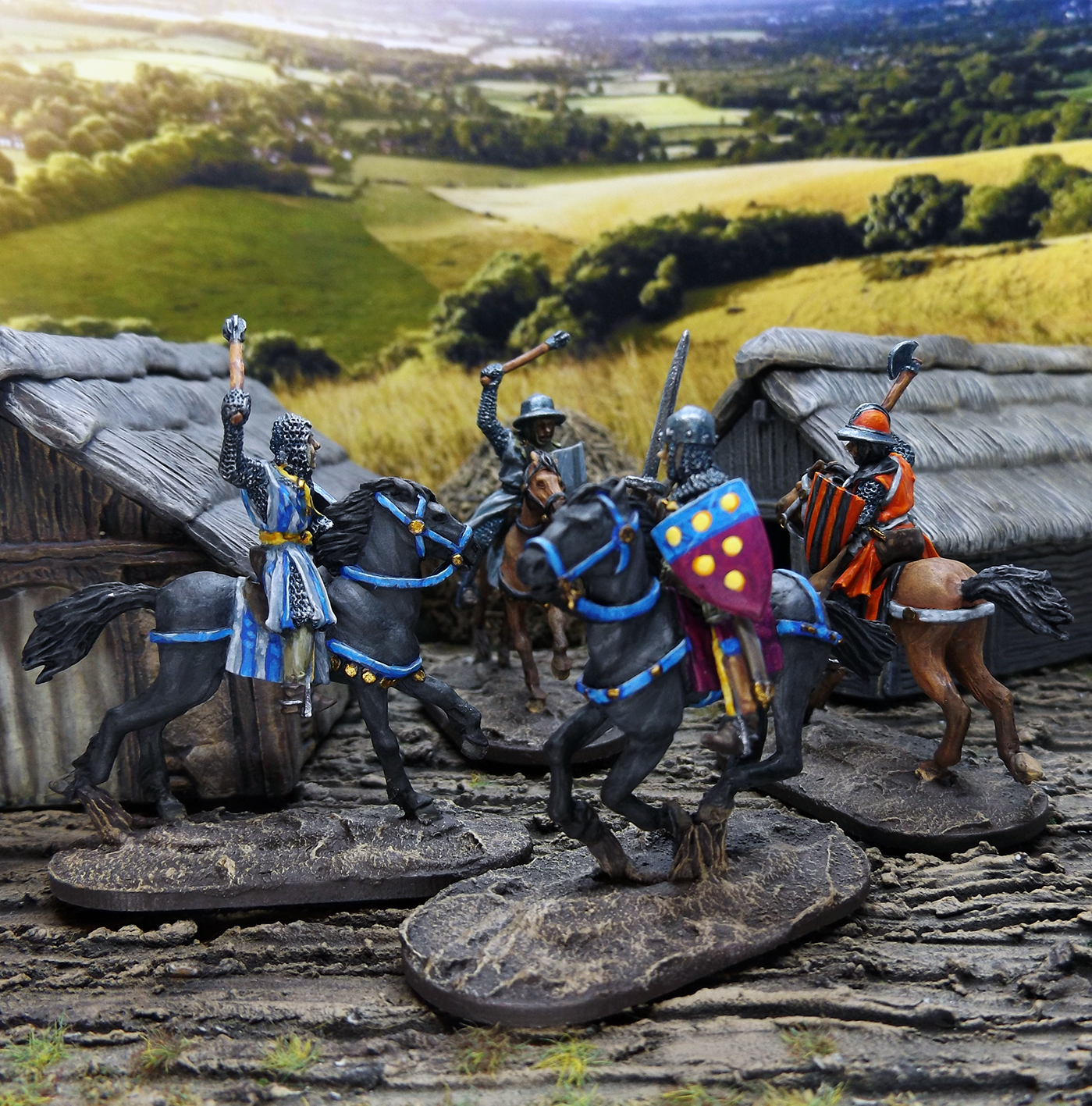
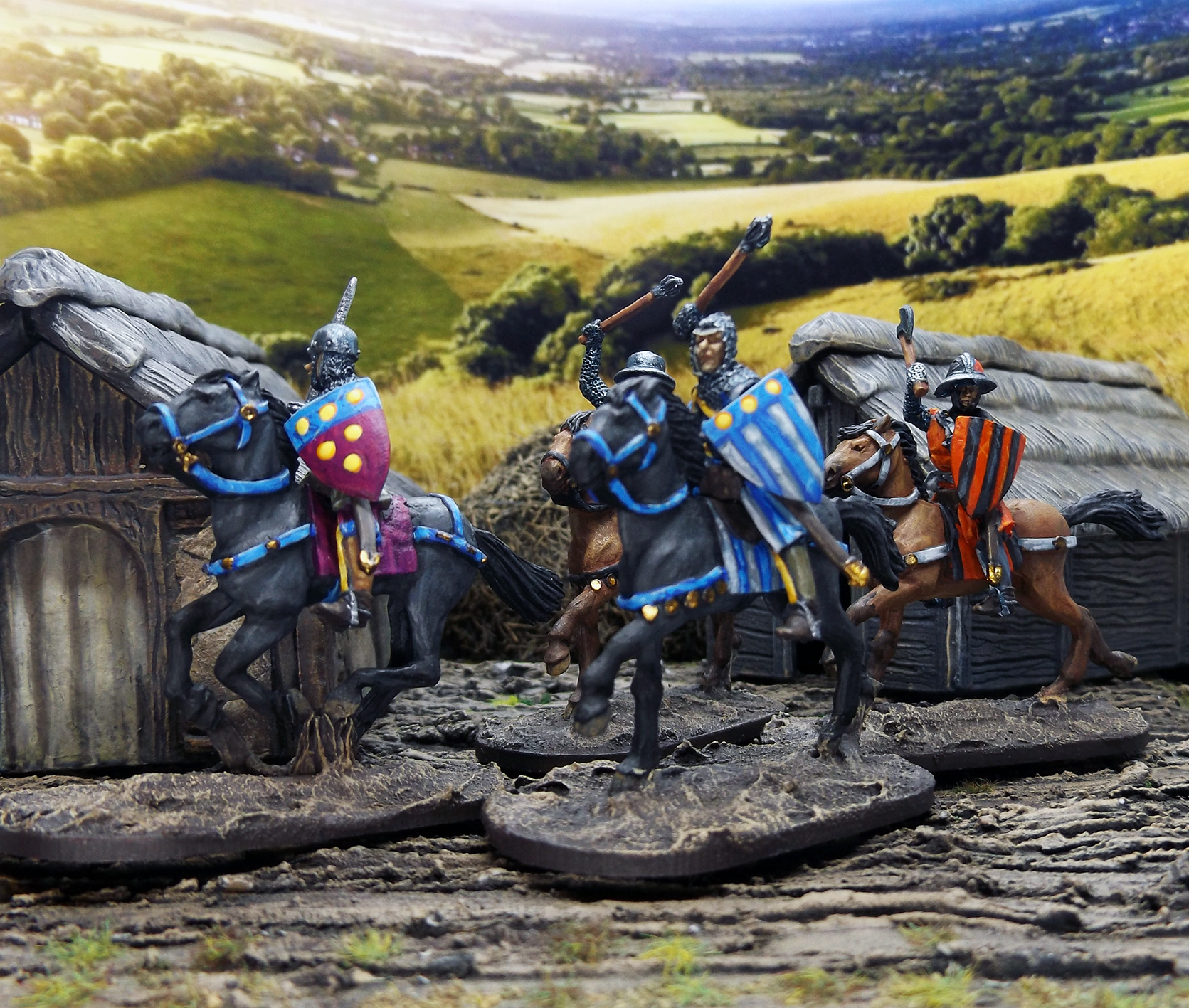
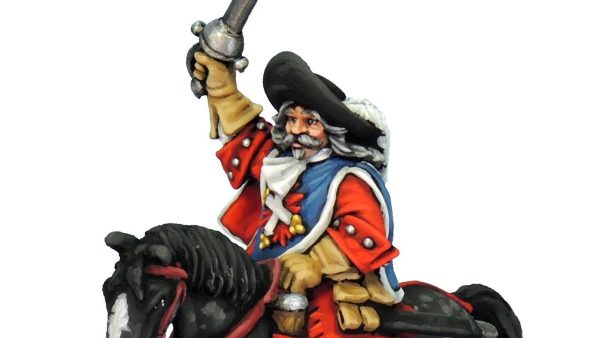
I have finished the Mounted Sergeants with Hand Weapons the backbone of my Retinue. If the knight was the nobleman, the sergeant would be thought of as belonging to a middle class. They fulfilled a role junior to the knight in the medieval hierarchy. Sergeants fought either as heavy to light cavalry, or as well-trained professional infantry, either spearmen or crossbowmen.
Medieval mercenaries were part of this sergeant class, most notably the high-quality Flemish spearmen and crossbowmen, who were universally regarded as extremely reliable troops.

![11th Edition Warhammer 40K Core Rules Now Available & More [Updated]](https://images.beastsofwar.com/2026/06/orks-new-cover-600-338.jpg)