






Redvers and Son Get Into Bushido




Recommendations: 1291
About the Project
My son and I were looking for a new game to get into. Something that was low on models, fun and reasonably quick to play. We decided on Bushido.
Related Game: Bushido
Related Genre: Fantasy
This Project is Active
Rat Pack
Within the various factions of Bushido, like many other games, there are sub factions. Within the Cult of Yurei, rats seems to be an emerging sub faction. I say emerging as there is no official ‘theme’ that can be played supporting this and the number of models that would fit into this sub faction is still quite small. However the latest teaser from the developers is for a new rat model and some hints at other rat-kin, so perhaps it will grow into a fully fledged sub faction given time.
I’ve previously painted up some plague rats and thought it time to also work on the small and large rat swarm options. For these, I’ve opted for the 3D printed route. I found some rat STLs free online, a couple of individual rats and one of a group of rats. Through using Microsoft’s 3D Builder tool (which is very easy to use) I was able to create a few variations of the STLs and then (virtually) attach these to the relevant base size. A couple of hours of work for the resin printer and we have some models.
Painting wise, as the detail was quite good, I thought I’d carry on trying out the speed paints. After a black primer and I painted the upper parts of the rats white, I slapped on some speed paint. In particular, I went for Gravelord Grey, Grim Black, Dark Wood and Hardened Leather. A quick splodge of Barbarian Flesh on the tails and feet followed by a strong tone wash and then a dot of black for the eyes, it was done and time for basing. All in all, I think I spent more time waiting for the paint to dry than actually painting. It’s not going to win any painting awards but for the speed, great stuff. These Speed Paints are quite good.
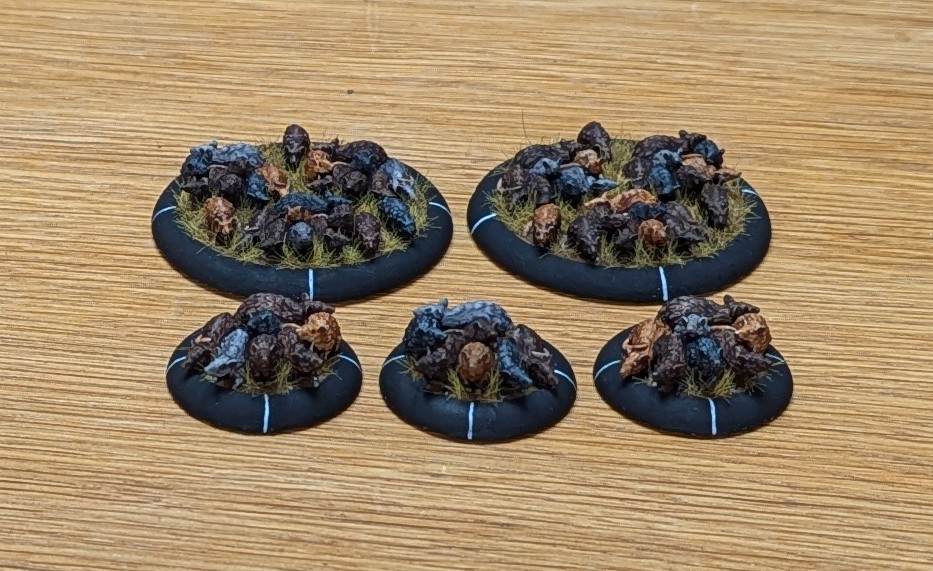 Rat Front
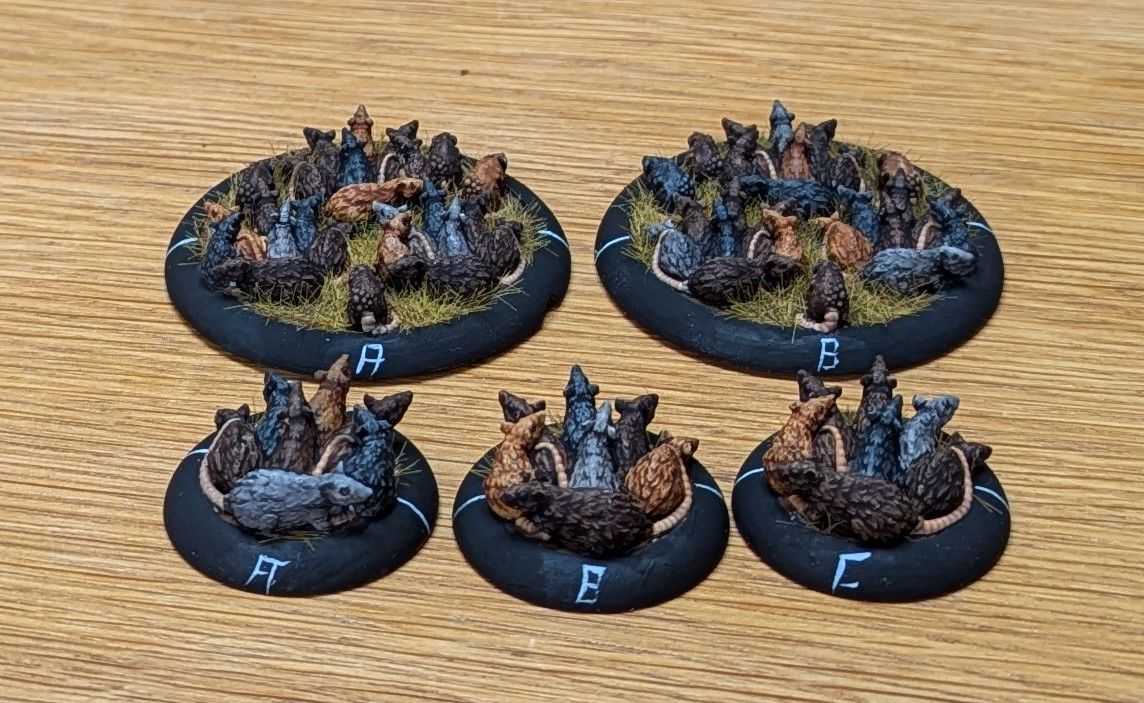 Rat Back
Battle Report No. 10
Game 10.
This game saw my son use his now fully painted Kinshi Temple as he claimed that he has figured out how to play them. As a change, I took his Temple of RoKan for a run out. I wasn’t really sure how to play this faction, but I thought it could be fun.
For my Temple of RoKan (TRK) I had Yim, Haru, Saruka, Riku, Ume and Kosuke. Kosuke is new (the others are described in previous posts in this project but they’re all monks) and an angry ape wielding a massive maul. I also took the Gorinto terrain piece to generate some extra Ki (as TRK monks are all about the Ki).
For the Kinshi temple, my son had Master Shi, Hishigata, a Kami of the Empty Mind, Kodai, Batsu, Ku and Shikaku. He also gets some Void Rifts that his models can pass through giving a lot of extra movement. I would describe what these models do, but I’m not entirely sure I fully understand the Kinshi Temple yet…..
We just went for a straight fight rather than a scenario.
Turn 1.
Kosuke is quick and I wasted no time moving him up the board and getting him in to melee with Hishigata, who had made his way forward. Using Kosuke’s ‘Flow Like Water’ Ki feat and Combo Attack, Kosuke gave Hishigata a significant slapping with that giant maul. The Combo Attack special ability allowed extra damage to be piled on and as Hishigata put no dice in defence, the damage was enough to kill him. First blood to TRK but the death of a Kinshi model does allow my son to add a counter to the Void Card. The more counters here, the more powerful the remaining Kinshi models get…..
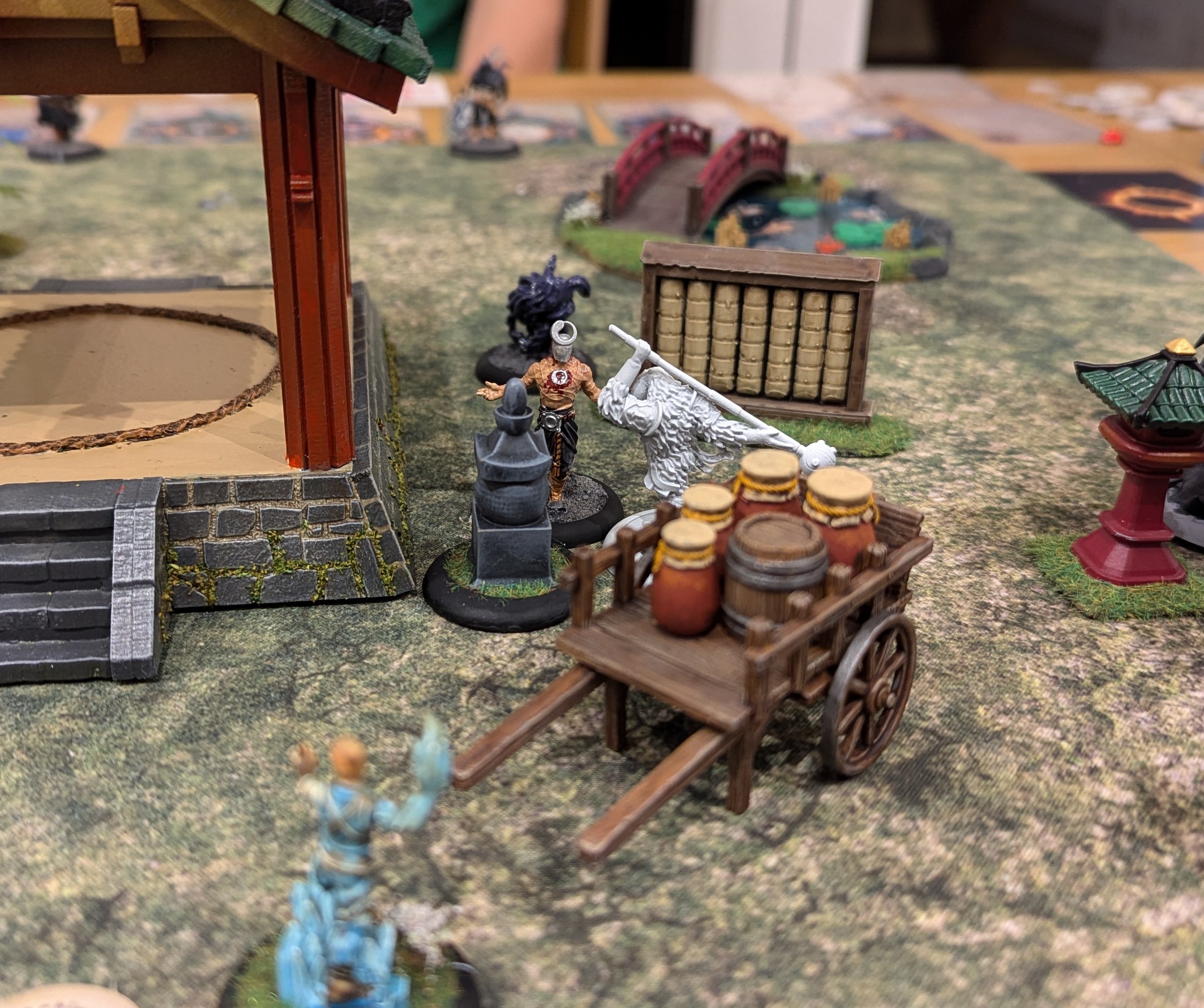 Some Turn 1 close up action as Kosuke takes on Hishigata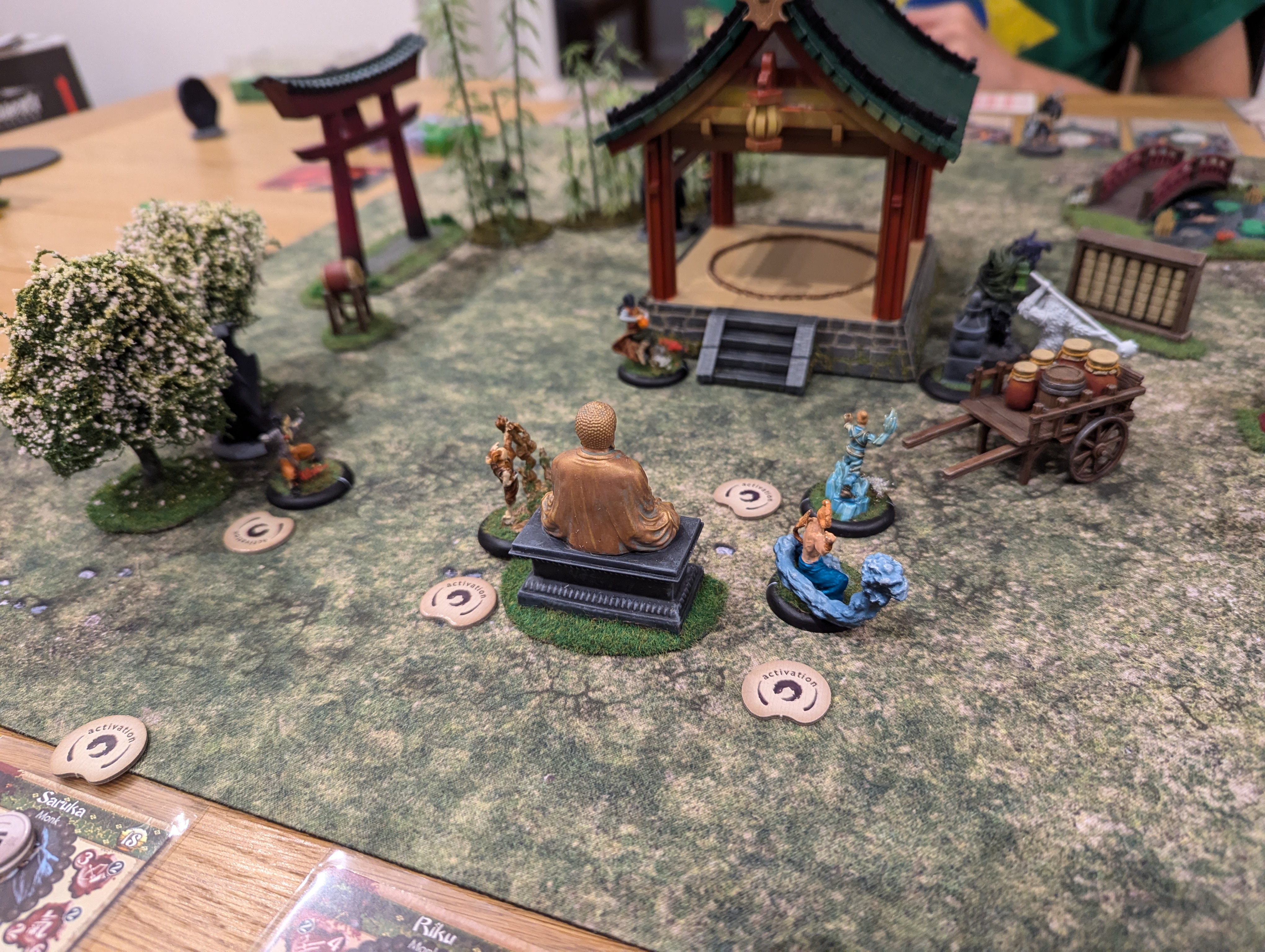
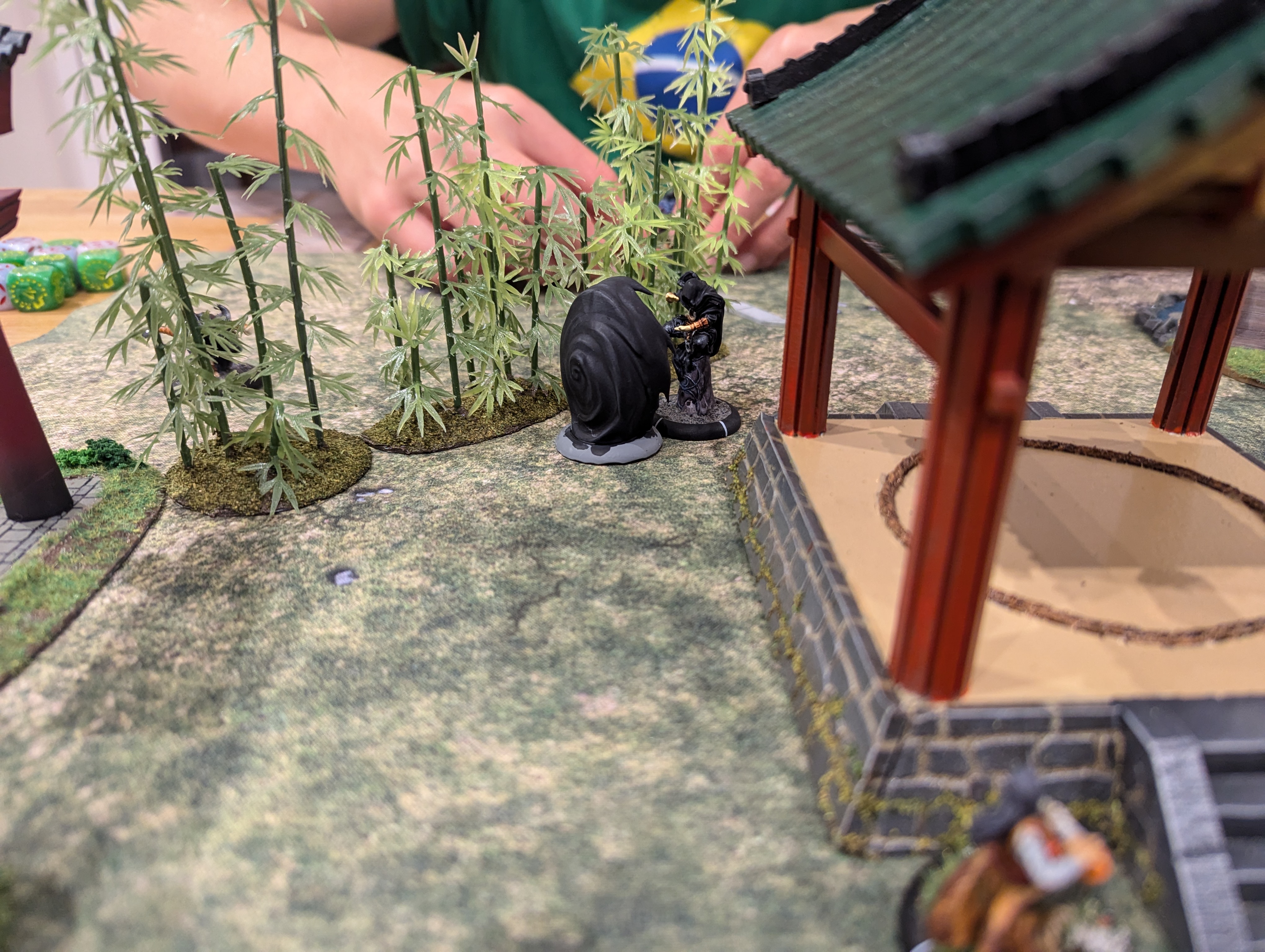
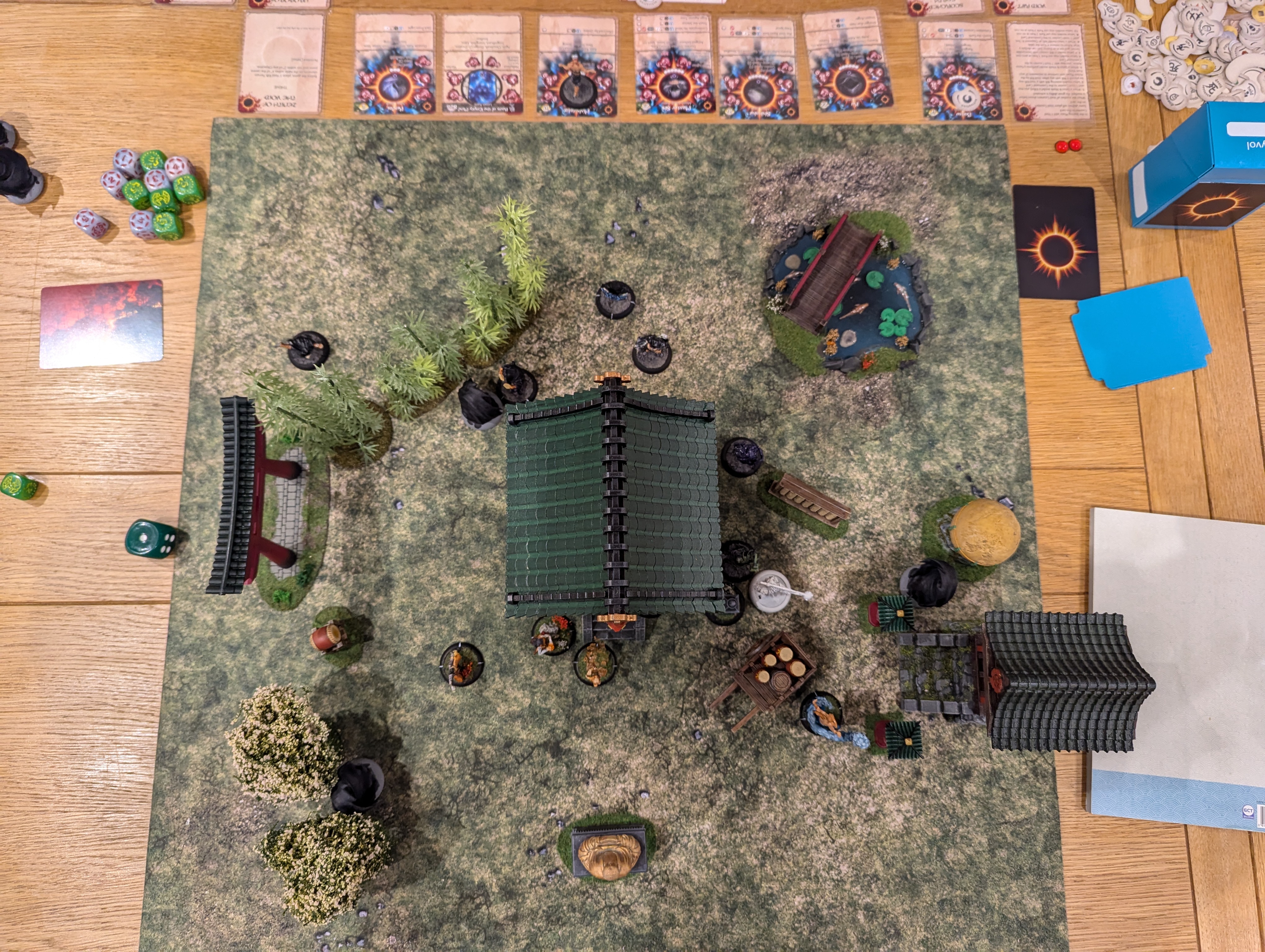
Turn 2
As I normally play the Cult of Yurei faction, melee isn’t something that we usually want to get into but having Kosuke is a novelty and I waste no time getting him to take on Kodai. I manage to get some damage down but find out that Kodai is Durable and so this damage is reduced to 1. Kodai on the other hand deals out 6 damage. Ouch.
I use Saruka’s Fireball Ki feat to blast Kodai for 1 damage and set him on fire, giving him a fire token.
My son then used Shikaku’s Ki feat, Look into the Void. I’m aware of this as one of my Cult models has this Ki feat but it’s not so funny when on the receiving end. It’s pretty powerful and Kosuke is killed.
Batsu then uses his Scorched Earth Ki feat to create a burning terrain feature over Ume, so Ume gets a fire token.
Master Shi uses his ranged attack on Saruka and rolls well. It’s a Combo Attack and the extra damage kills Saruka.
It’s not a good turn for me and to make matters worse, Ume takes damage from the fire token at the end of the turn.
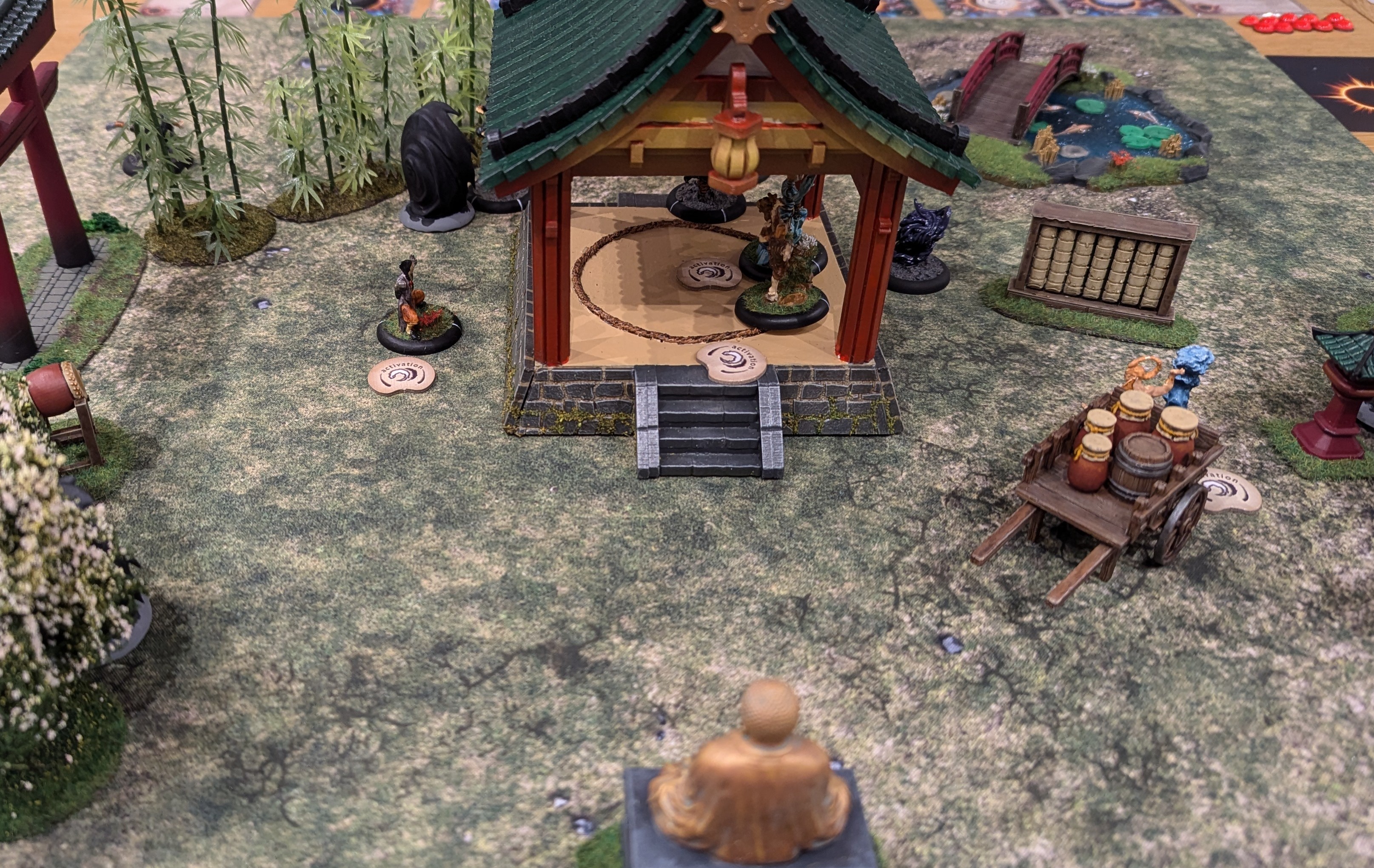 It all gets a bit messy in and around the sumo ring
Turn 3
Ume gets into combat with the Kami and kills it but this adds more tokens to the Void card and the Kinshi get more powerful. It unlocks new and better shared Ki feats for them.
Master Shi is able to range attack Yim for some damage (again with the pesky Combo Attack being the difference)
Haru then comes in for some attention, firstly from Ku who is able to do some damage and then from Batsu who fails. But Haru is up to the task and causes wounds against Ku and Batsu with some nifty bujutsu.
Batsu is now exhausted, having spent 2 Activation tokens, so I use this opportunity to have Riku attack. This gives me extra attack dice and Batsu gets a firm kicking.
Shikaku again uses Look into the Void, this time at Yim. Yim takes a lot of damage and promptly dies.
Ku now gets in on the Look into the Void act and attacks Riku. This also succeeds and Riku takes damage.
During the end phase, both Haru and Riku have picked up fire markers during the turn and the wounds now take effect. Sadly, they both burn to death.
This leaves me with just Ume. At this point, I’m well and truly beaten and so concede a very one side match.
Seems that my son has figured out how to play the Kinshi Temple…..
Yet more terrain
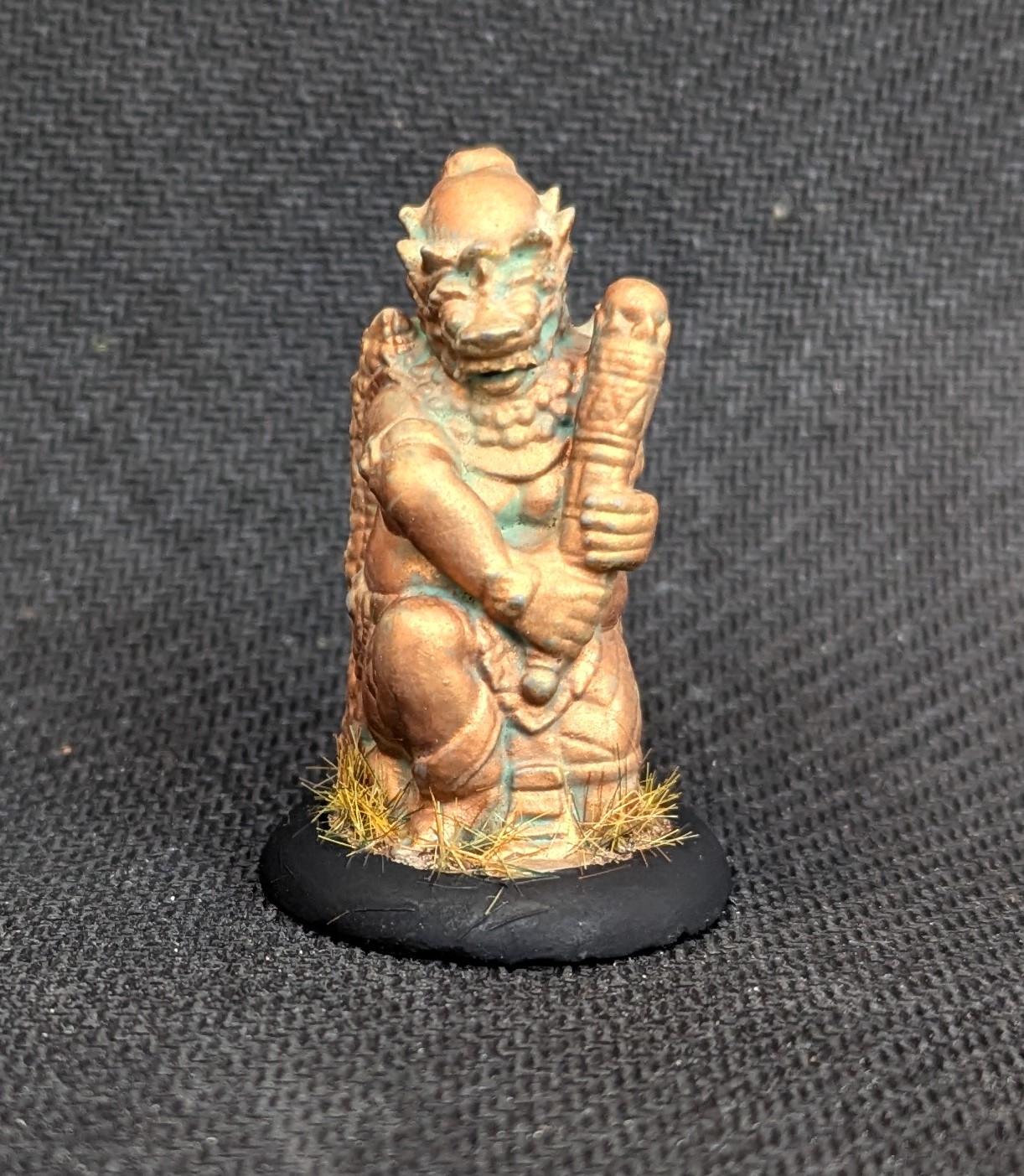
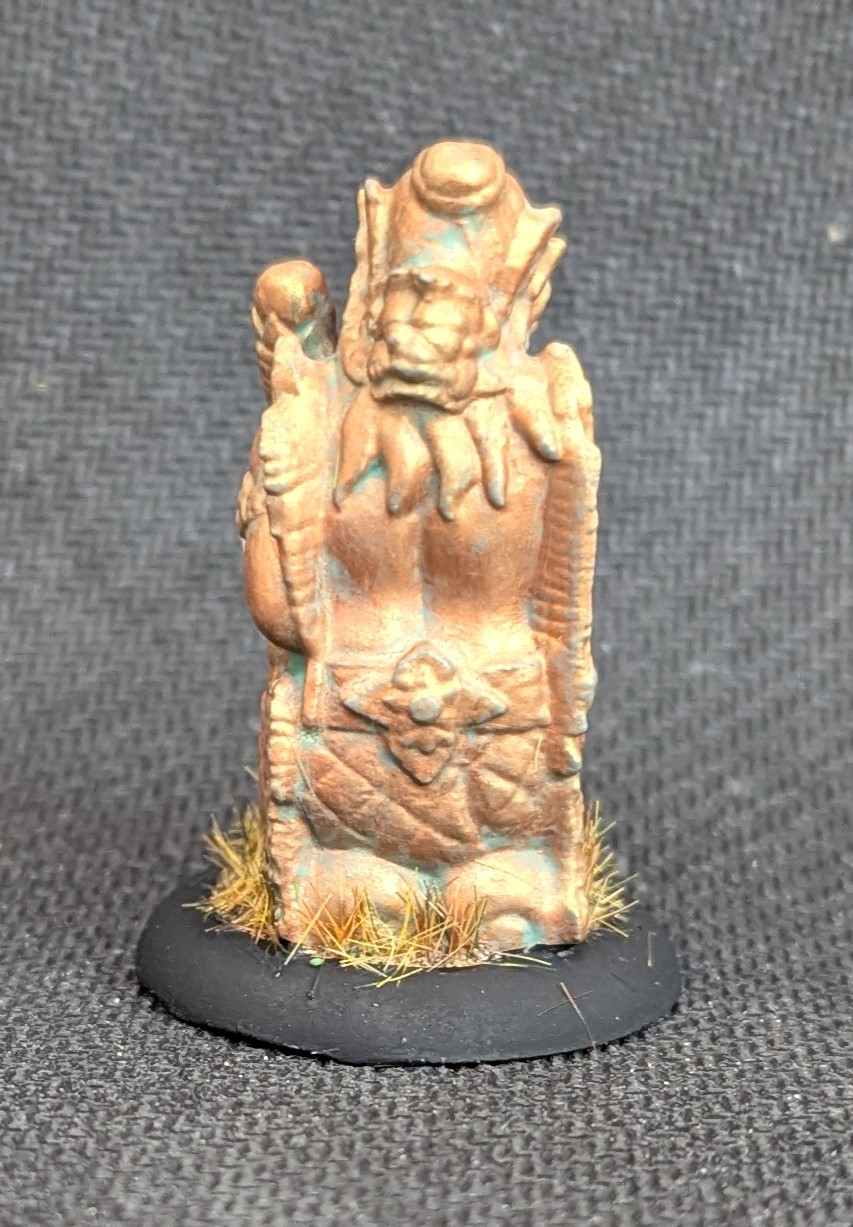
I put these two models together in 3D Builder based upon some free STL files that I downloaded. They’re both scans of real world statues, in the case of the lone figure, this was from a temple in Bali (and no, I’ve not been to Bali).
First up is just a generic temple statue. I’ve painted in exactly the same way as the previous statues, namely luftwaffe grey, nightshade wash and a light grey drybrush for the stone. The bronze was shiny bronze and then just a nihilakh oxide wash which then gets quickly wiped off.
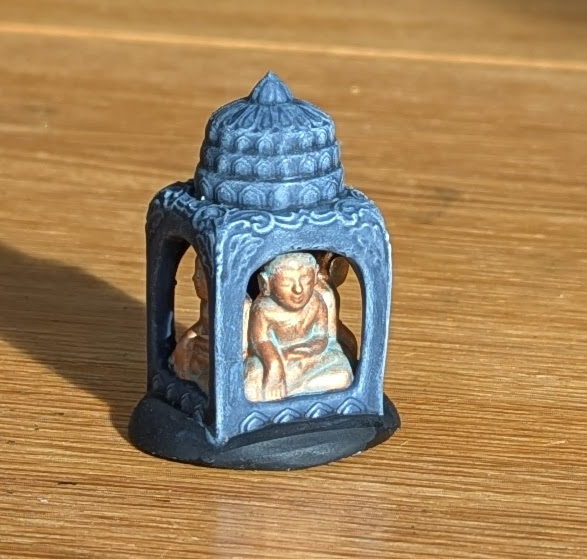
Next is a Cult of Yurei piece of terrain that can be purchased as part of your warband. In game, at the start of each turn, any enemy model with a couple of inches has to give up 1 Ki point and when you have collected 5, the statue is destroyed and you can give these 5 Ki to any friendly model. Handy.
Painting wise, this is just another bronze and painted in the same way as all the others. It’s quick and easy to knock several of these out in a night.
More terrain
As Terrainfest is running at the moment, I thought I would get some of the extra terrain that I have lying around finished and off of the painting desk. With that in mind, I’ve completed a few pieces that I picked up from Master Crafted https://mastercrafted.co.uk/
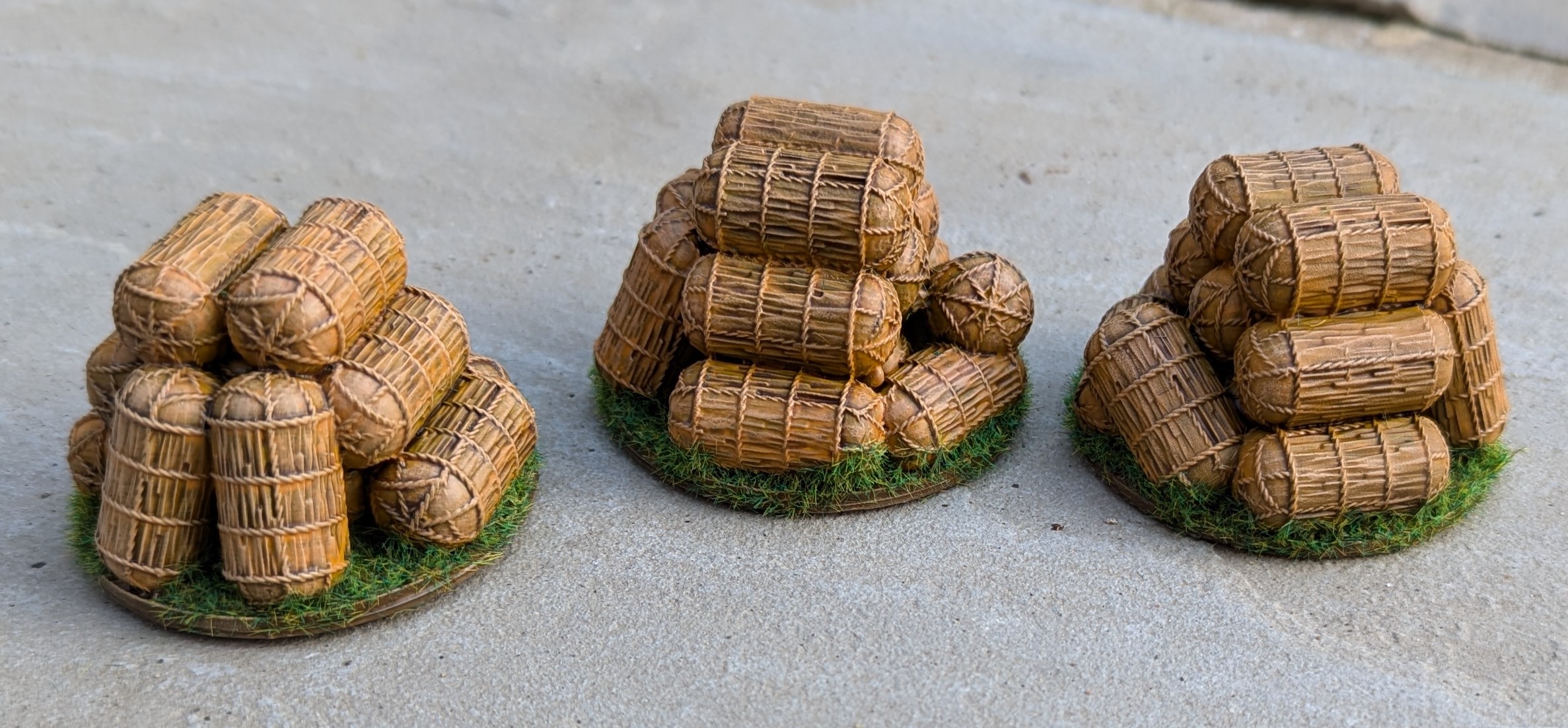
First up we have three rice bale stacks. These can be purchased as part of your war band and are very common in competitive games as they can provide cover as well as blocking off lines of movement.
Painting wise, I took the line of least resistance here and went with a khaki basecoat followed by a heavy brown wash. From there, I painted the ropes with a light brown and then just dry brushed everything, first with Khaki and then Iraqi Sand. A quick flock and job done.
 Rice bale barricades
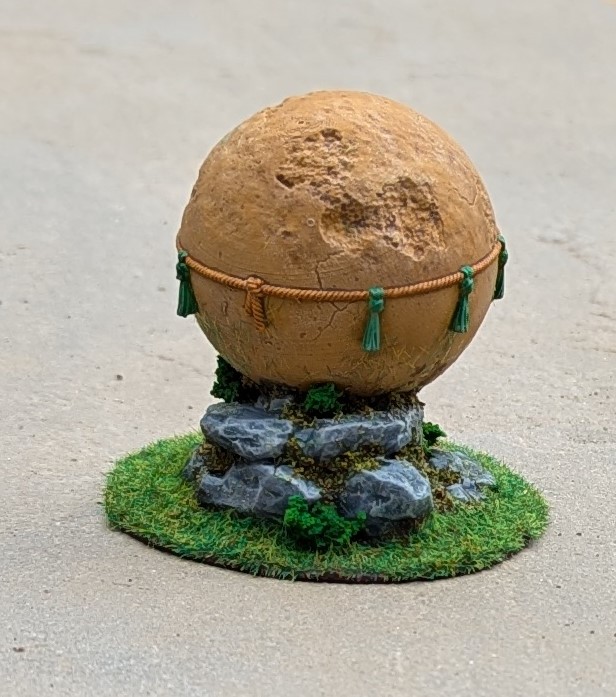
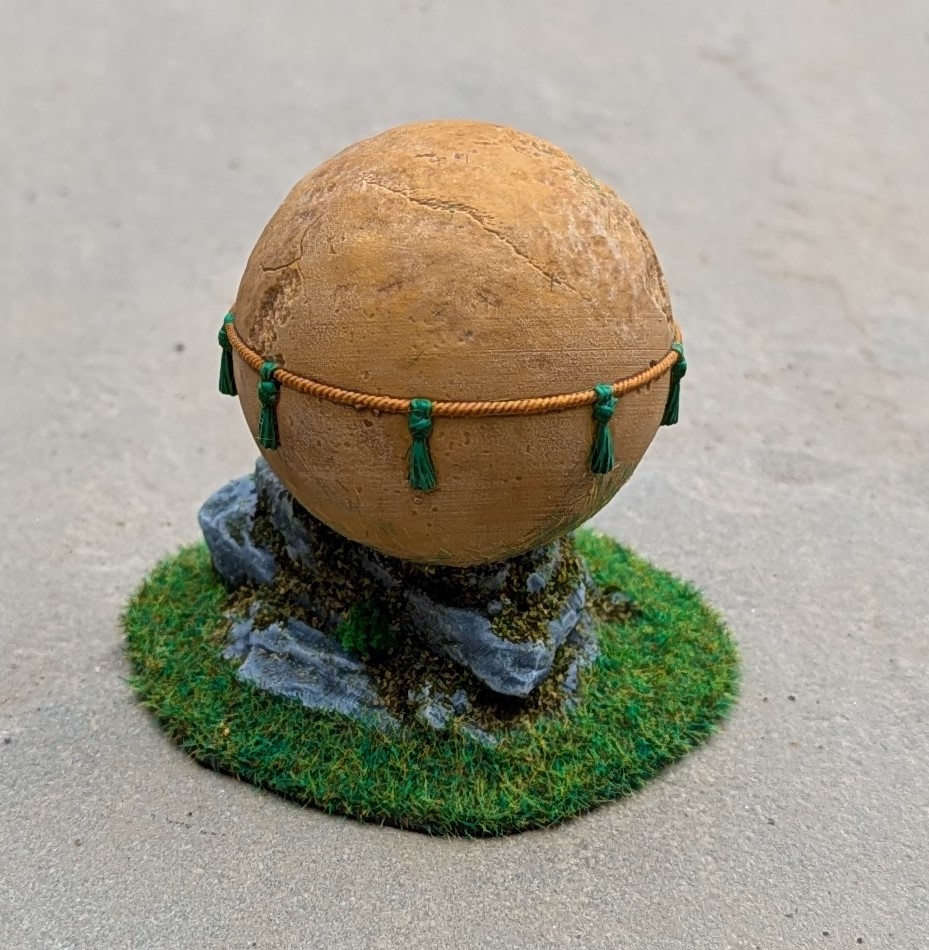
Next up we have a prayer rock. This comes in two pieces and required some careful pinning and then I shoved a lot of polyfilla inside it to give it some weight (the sphere is hollow). The base rock was painted luftwaffe grey and, with a break from tradition, rather than a black wash, I applied a nightshade blue wash, which I think I prefer to the black and this might be my new rock wash. A light grey dry brush followed.
The sphere was given a Halfords yellow primer spray followed by a light brown wash. I’ve then dry brushed it with middlestone and Iraqi sand to try to create a sandstone look. The rope was scruffulous brown, with a wash and then highlighted. A light green for the tassels, then a dark green ink and then a very light green dry brush. Flock and scatter added to cover the joins between the two pieces.
 A spherical rock
 Lloyd shot
Temple Terrain
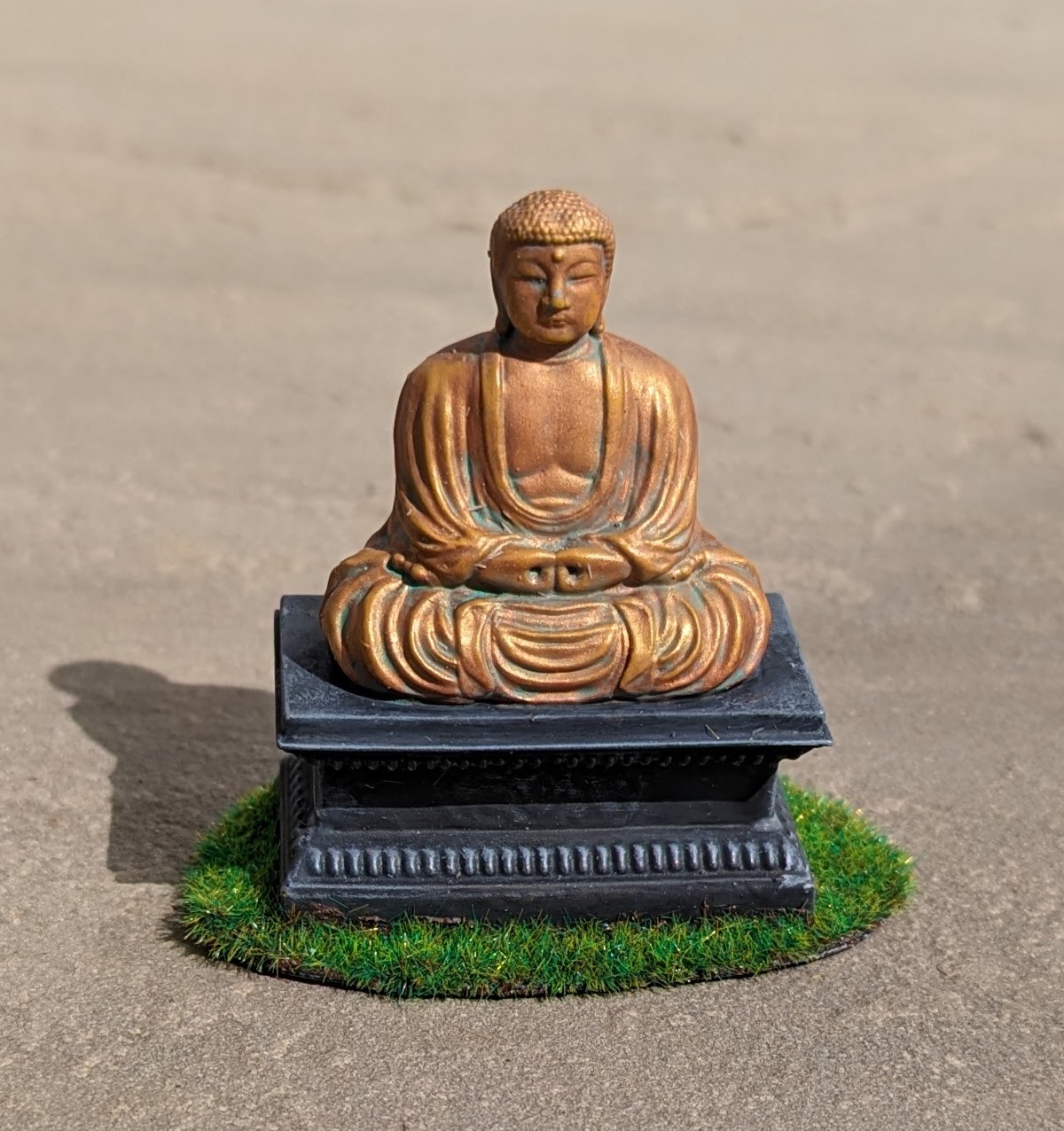
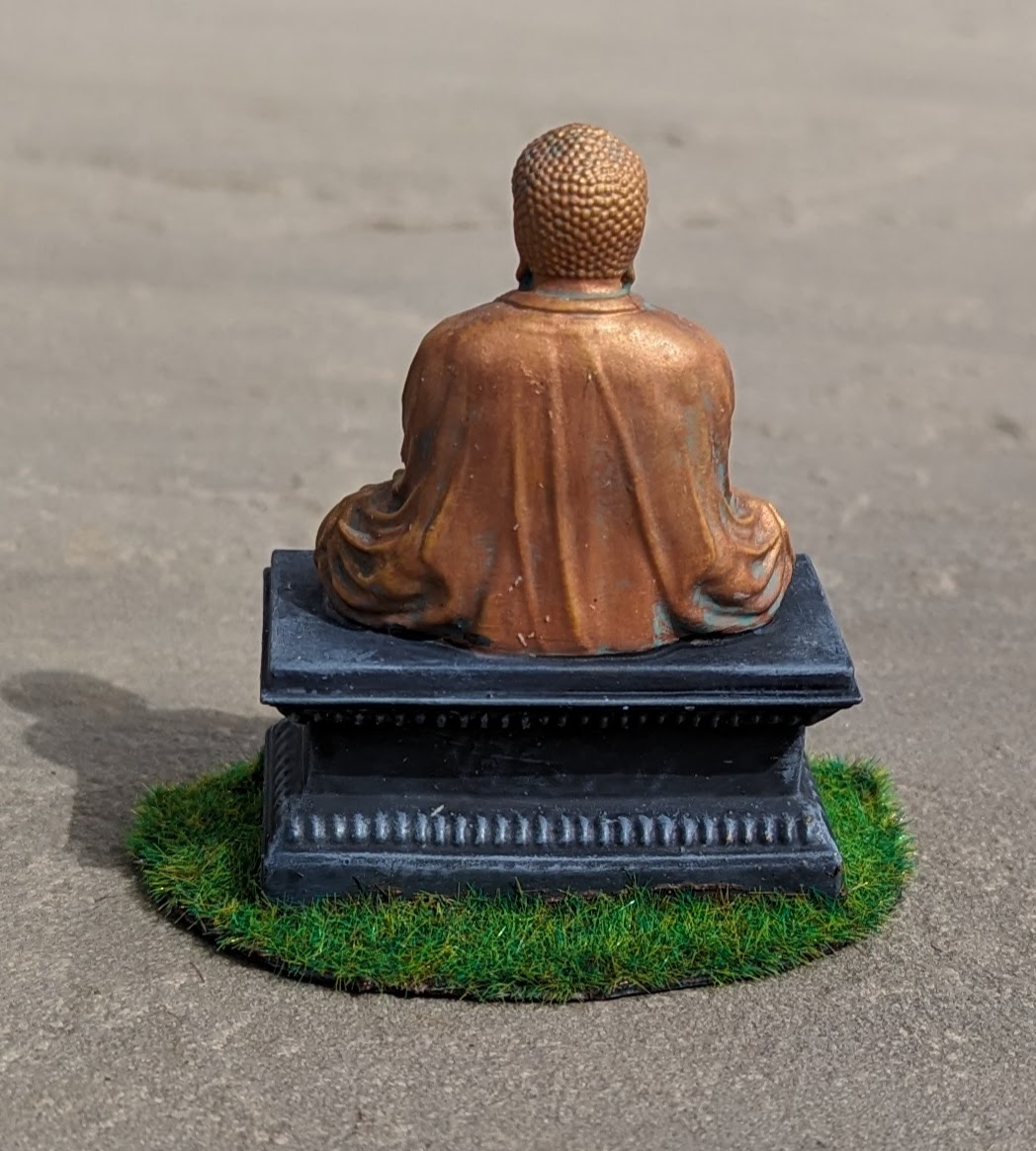
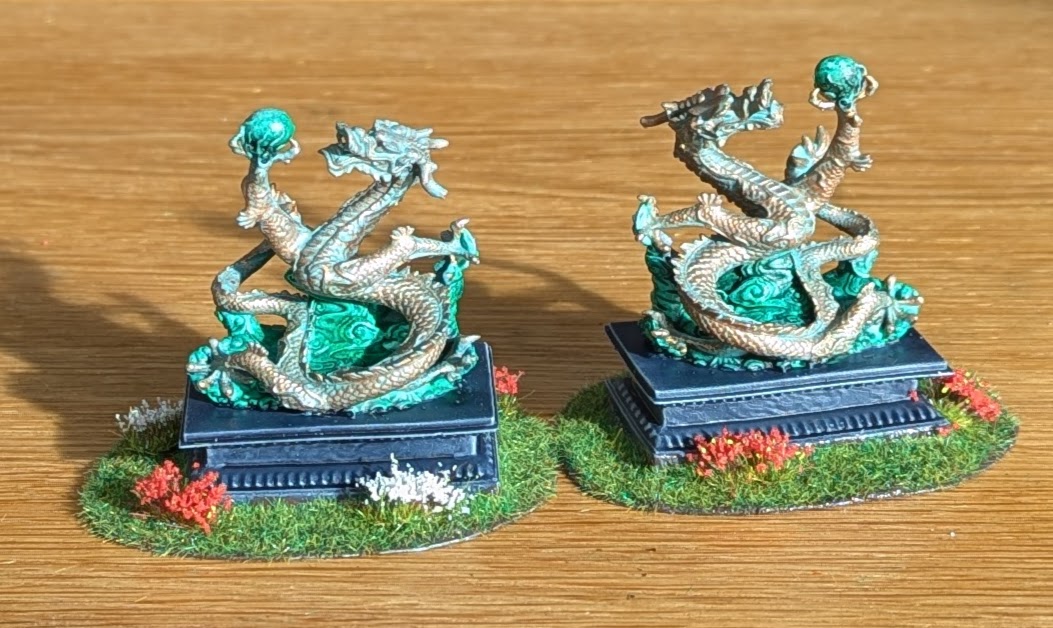
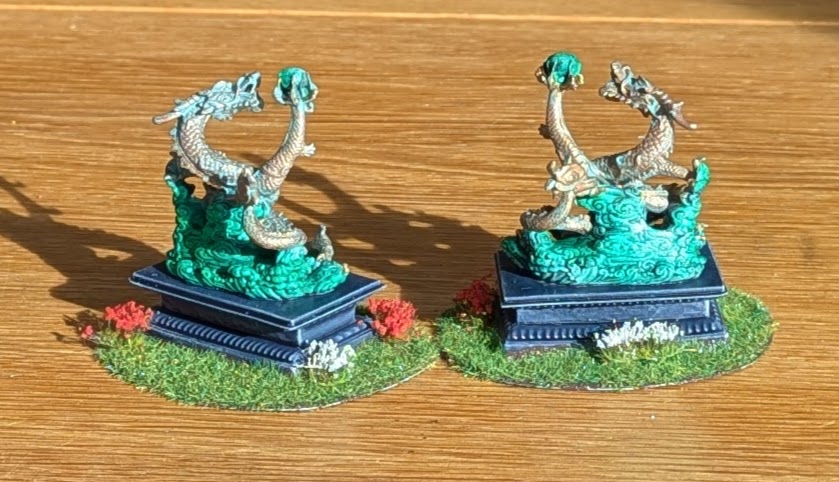
You can never have too much terrain, particularly ‘dressing’ terrain to help set the scene. To this end, I thought we needed some more temple themed statues. I’d also stumbled across some free scans of real statues that had been converted to STL files. These files needed some resizing and merging as neither the Buddha nor the dragon came on a plinth. Fortunately, this is very easy to do in Microsoft’s 3D Builder tool.
Both statues were painted in the same way. A Luftwaffe grey for the plinth which then gets a black wash followed by a light grey dry brush. The metal is a base of bronze followed by a grey dry brush. I’ve then added GW’s oxide paint which then gets quickly wiped off before it can dry. Finally, a shining gold dry brush.
The jade (which was painted first) was stippled with a sponge with black, grey and white (separately) and then a light green ink is applied over the top via an airbrush.
All of the statues get mounted on a plasticard base that then has some Vallejo acrylic mud smeared over. It’s then flocked and flowers added where appropriate.
Battle Report No. 9
Time for another battle report. We played this using tournament rules and we both had a couple of new models that we hadn’t used before and wanted to give a try.
Scenario. In this game, there are two offset 4” scoring zones that you control if you have more models inside the zone compared to your opponent. Scoring takes place at the end of turn 2, 4 and 6. In addition, we both secretly nominate one of our warband to be our Very Important Model (VIM). At the end of the game, whoever’s VIM is closest to the opponent’s board edge will win a further victory point.
Warbands.
My Cult of Yurei is made up of,
Mokoti, Fuwa Kaidan, Yama Uba, Ibara and the Kami of Blighted Earth (see previous battle reports for details). I’ve also included Rokuro (a tengu with a vicious axe, who’s reasonable in a fight) and the Wanyudo (a fiery wheel who dishes out fire tokens like confetti).
My son has taken Master Po, Kuma, Tsutsumi, Riku (see previous battle reports) and Ashinaga Tenaga (who has a lot of weapon options, including a ranged harpoon that can be used to pull targets around the board).
The initial deployment and table layout is below, including the scout moves that some models are allowed to take.
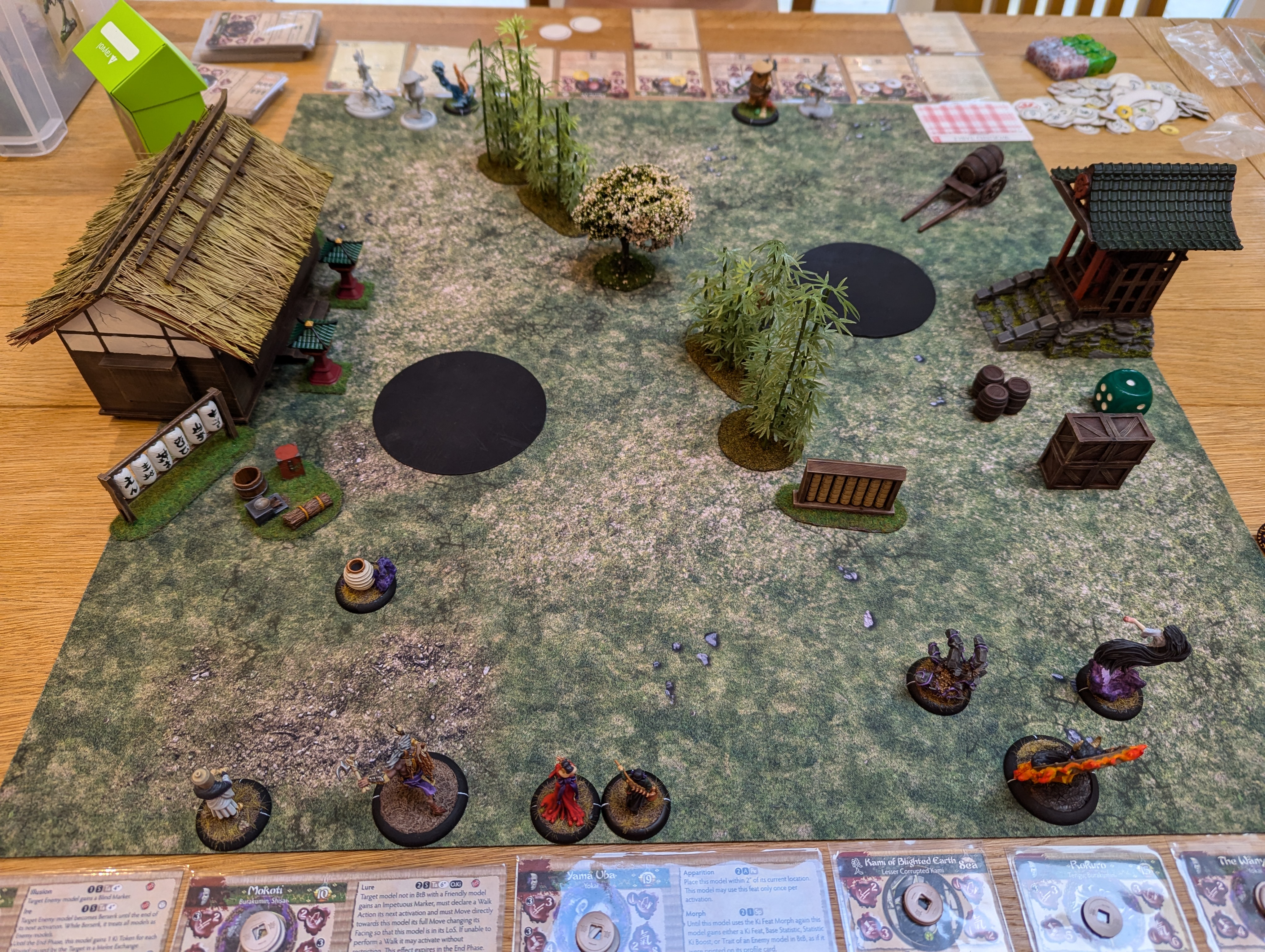
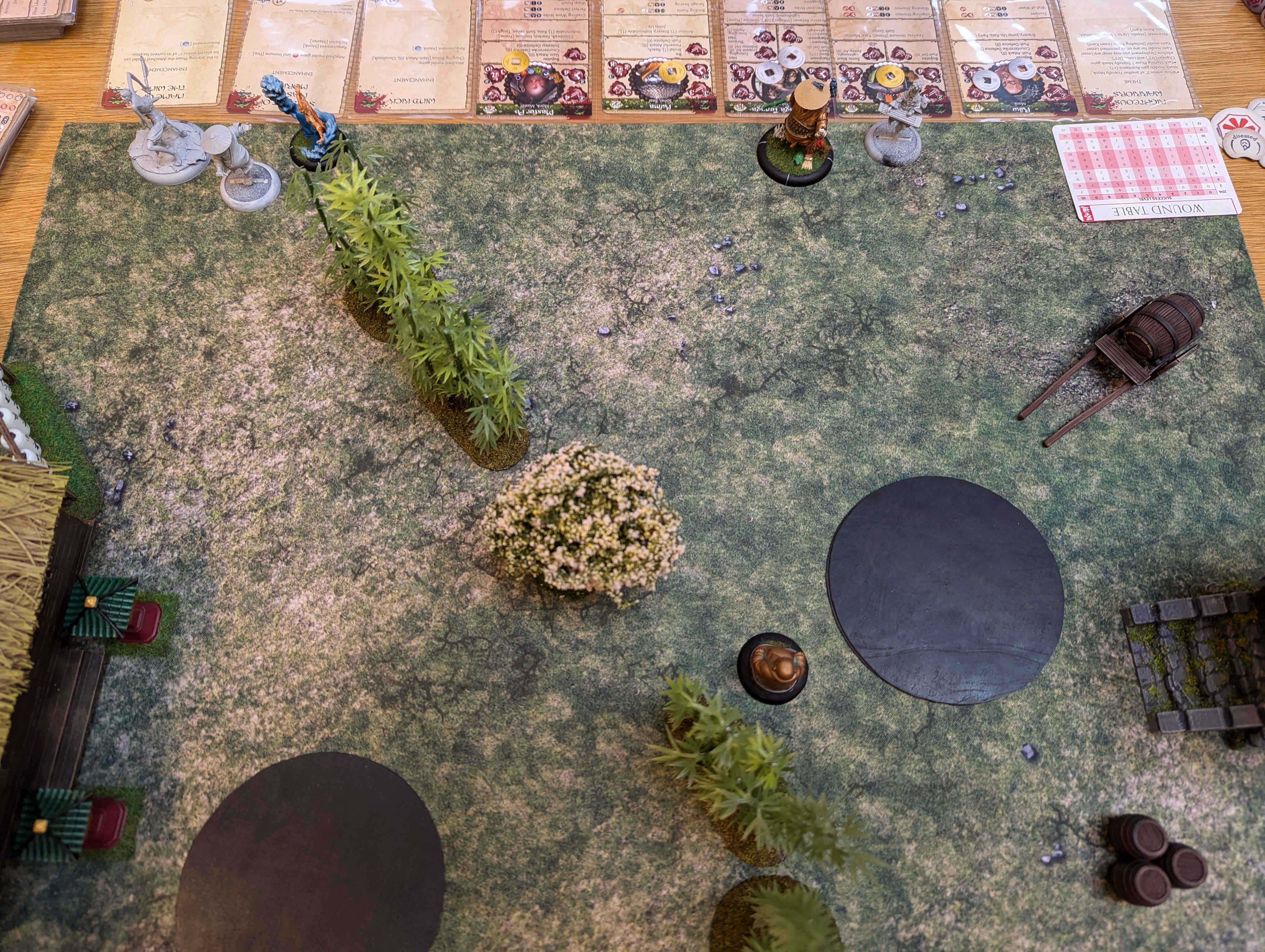
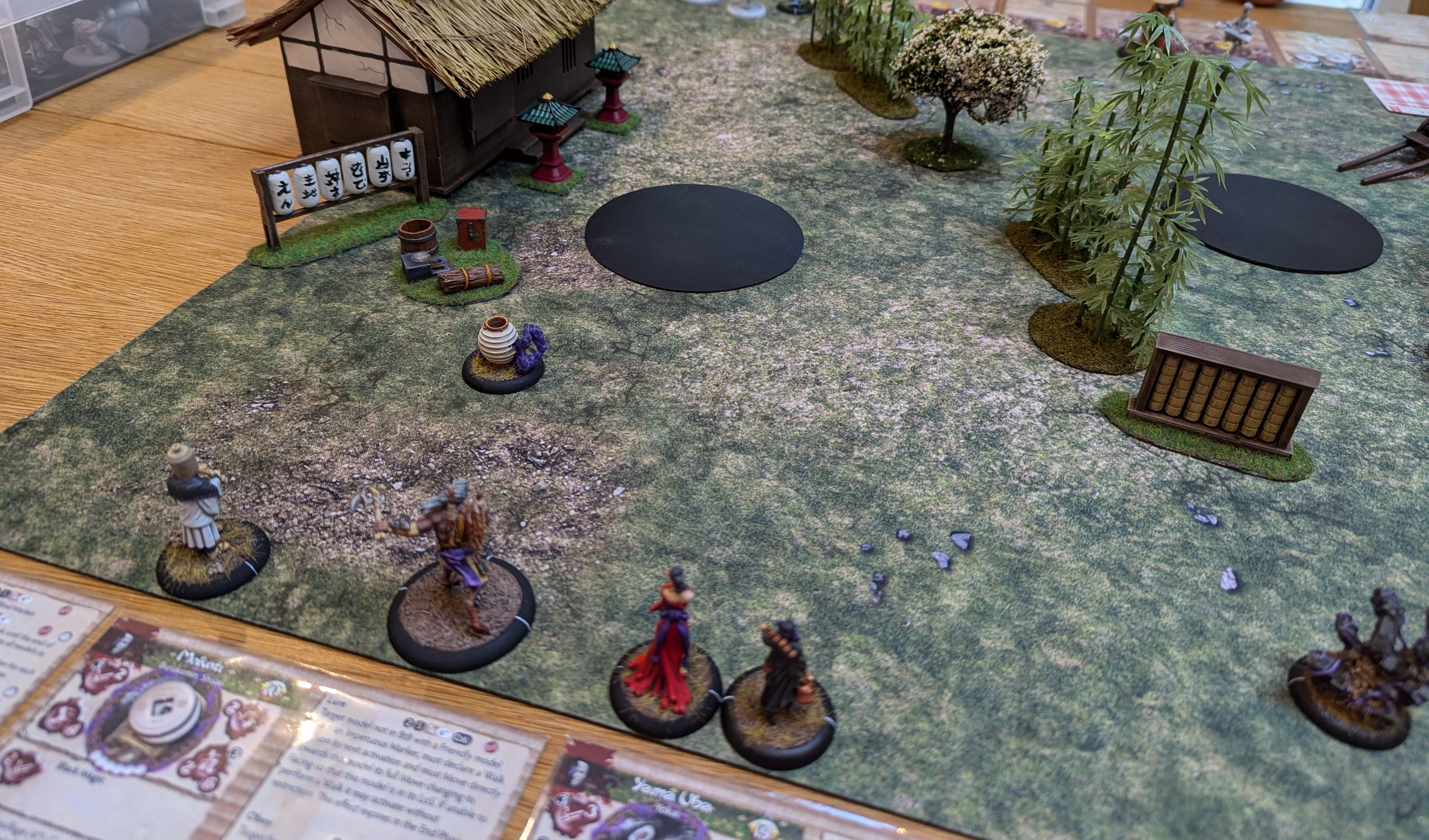
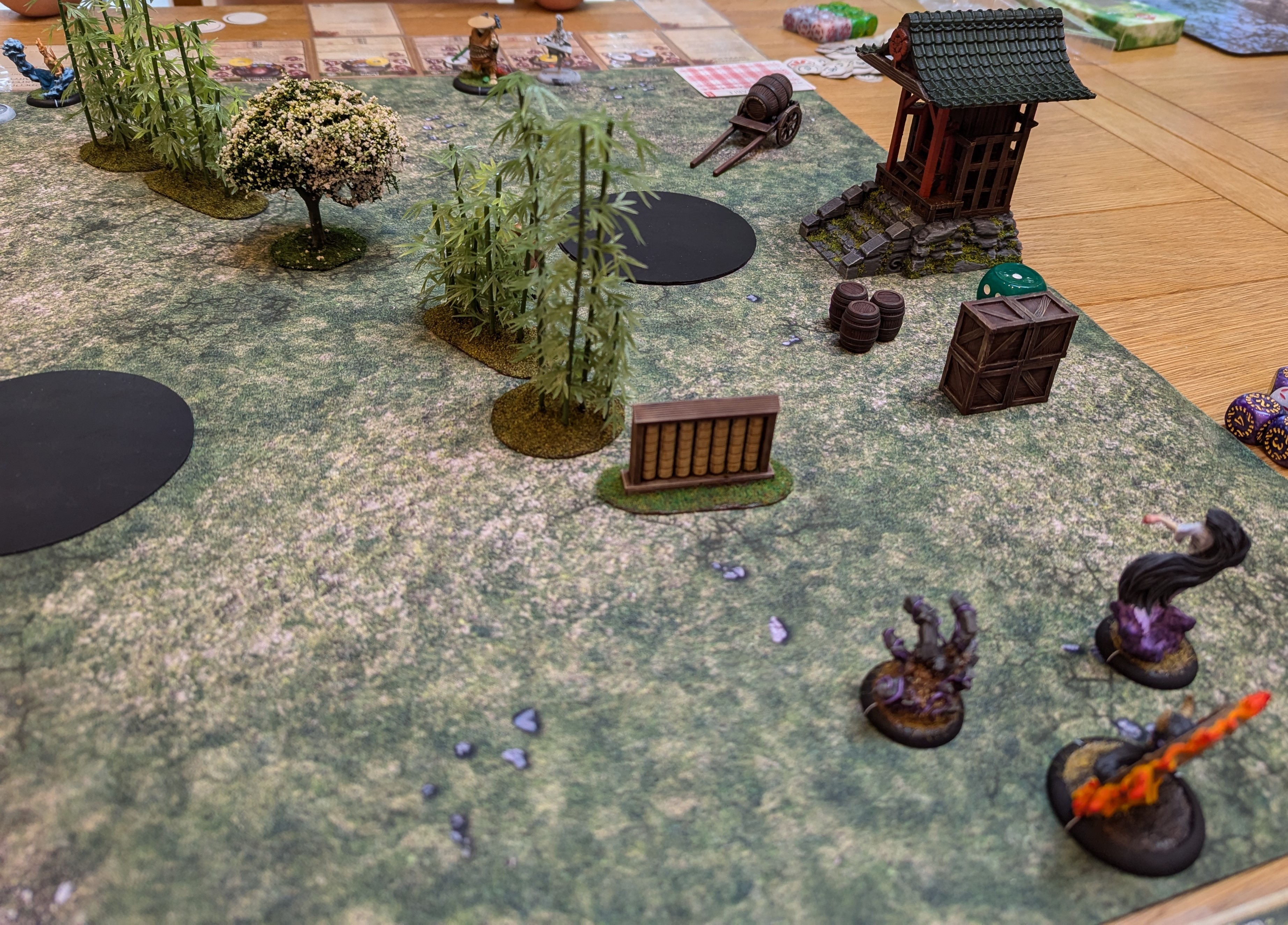
Turn 1 was quiet and just advancing but we both made sure that we advanced at least one of our models into the scoring zones nearest to our deployment.
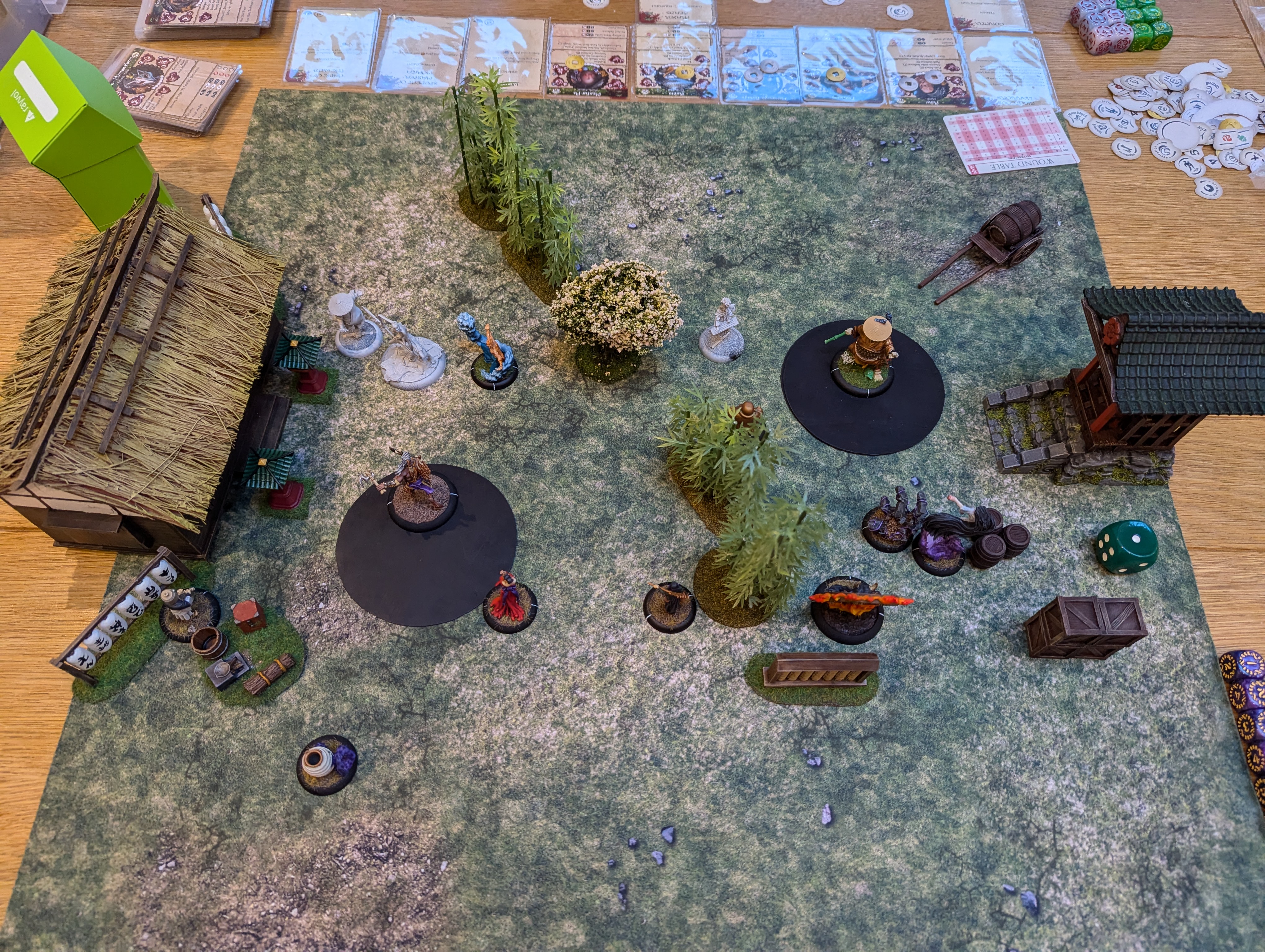 End of turn 1 and the battle lines are drawn
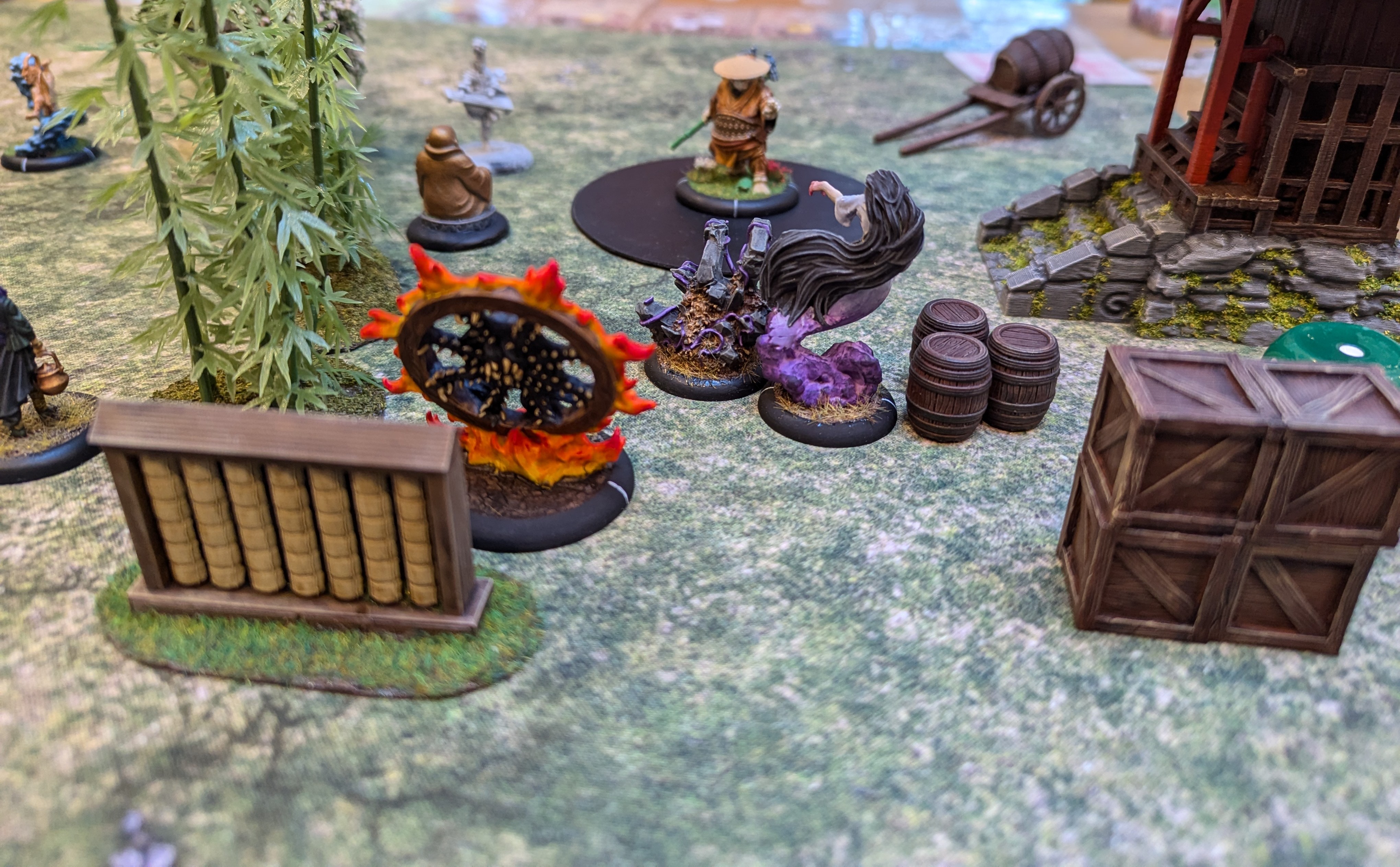
Turn 2
I won the strategy test and activated Fuwa Kaidan immediately. I used her Ire Ki feat which is unusual in that it is not an opposed dice roll but rather an automatic success. The Ire feat on an opposing model causes them to become Beserk, which means that they activate next (hence throwing your opponent’s plans out the window) and the have to attack an opposing model if they can. In this case, Ire also causes the targeted model to treat all models as opposing models! So good positiong from Fuwa Kaidan can make your opponents best model attack another of their models – amusing Cult schenanigans! The downside is that this costs FK 2 of her 4 life points, but she can regain these and if she loses all of them, she respawns anyway, so no big deal!
In this case, I managed to get into position to get Fuwa Kaidan to give Kuma Ire. That was the end of my turn but my son had to activate Kuma next and attack the nearest opposing model which just happened to be Tsutsumi. In this instance, kuma failed to cause any wounds but both Kuma and Tsutsumi both lost an activation counter, so very useful from my perspective!
My son then activated Kuma again and used him to attack my Blighted Earth Kami. He spent some of Kuma’s Ki to buy another attack dice and also activated Kuma’s Combo Attack special ablity. Most Kami’s have Durable, which means they can only ever take 1 wound in any attack but Combo Attack gives the possibility to cause multiple 1 wound damage against a Durable model. Smart thinking and it worked as Kuma used his ability to kill my Blighted Earth Kami.
With Kuma now exhausted (and therefore automatically losing 1 dice from his melee pool) I wasted no time in getting The Wanyudo to charge into Kuma. Kuma is so good in combat that my initial attack does no damage and Kuma is able to hand out 1 damage to The Wanyudo but Kuma does pick up a Fire marker, which if not dealt with by the end of the turn, will cause Kuma 2 points of damage.
My son passes and I’m then able to use Ibara’s Dark Fire ability to add a Fire marker to Tsutsumi.
Master Po leaps into action and attacks Rokuro. My son uses a lot of Ki to boost Po and use some special attacks. These are no match for Rokuro as Master Po is much better in combat, but time for schenanigans! Before any damage roll, Rokuro can use upto 3 Ki to negate the same amount of damage and pass that damage back to the attacker. This is exactly what I do, and Po deals out 4 damage in total but I’m able to deflect 2 back on Po, so effectively honours even! I laughed, my son made comments about this being over powered.
Po attacked again and used his Counter Strike Defence in conjunction with his attacks to overwhelm Rokuro and kill him. So I guess my son had the last laugh here!
In the final stages of the turn, Riku used his Tsunami Ki feat to push Yama Uba back 8” and well out of combat range. The Wanyudo used it’s Inferno Ki Feat to put down another Fire marker on Kuma and Ibara again used Dark Fire to add a Fire marker to Kiku (although Kiku was able to remove this by using an activation on a Wait action).
At the end of the turn, Kuma, Tsutsumi and Riku all took damage from their fire markers!
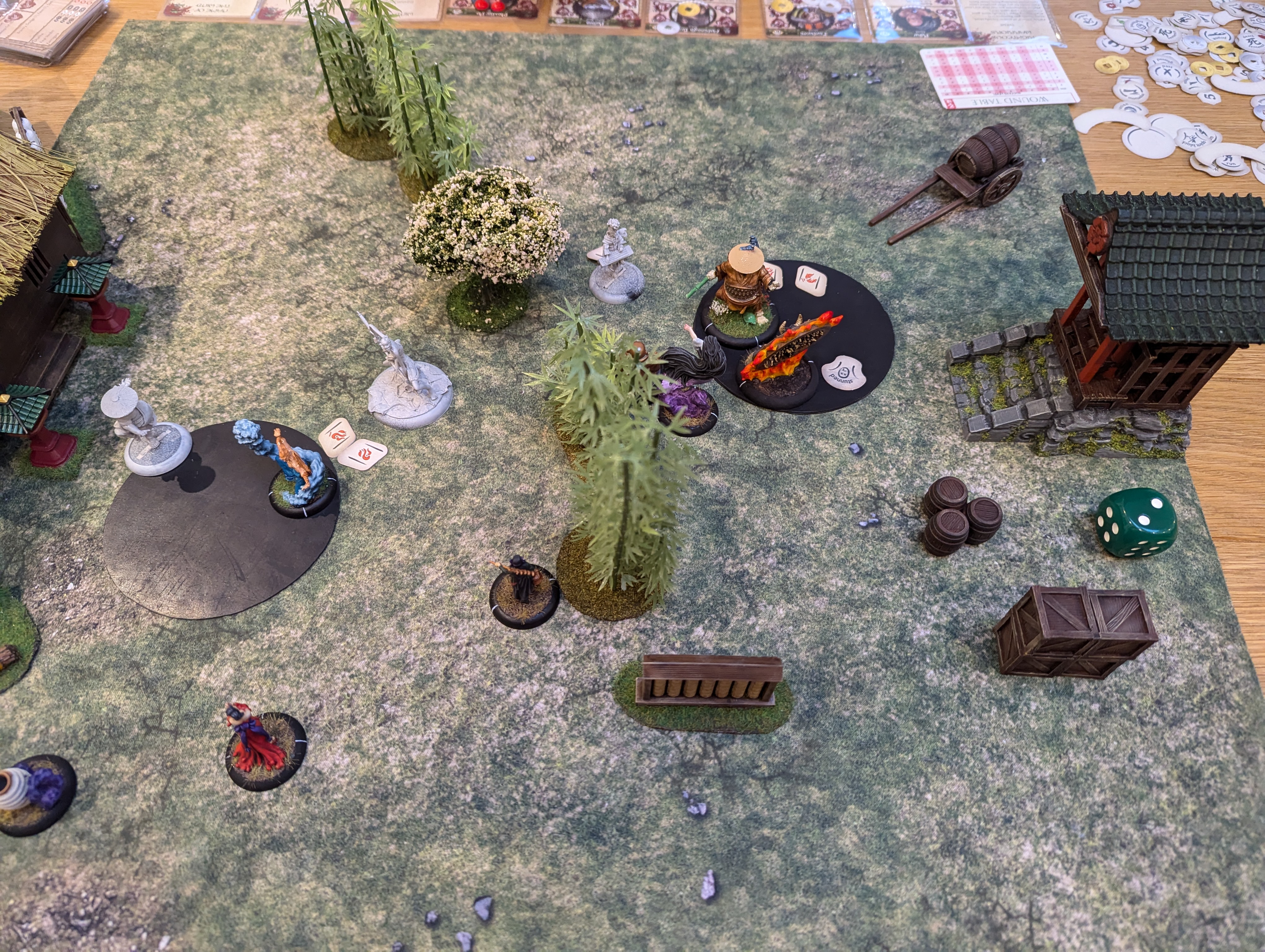 End of turn 2
Turn 3.
I again won the tactical roll off and went first and yet again used Fuma Kaidan’s Ire Ki feat but this time on Tsutsumi. This didn’t really have any effect as Tsutsumi didn’t cause any damage on their attack but at least it wasted an activation. FK though was out of Ki and effectively ‘dead’ but respawned back at her pot terrain marker, so no major issue for me.
The Wanyudo was still in BtB with Kuma and was able to use Push Defence in combat to push Kuma out of the scoring ring. This doesn’t cause any damage but does enable you to place the enemy model further away – useful for controlling zones in a game where this is important.
Master Po manages to get round to Mokoti, who I have left open on the flank. This is really not a fair fight and Mokoti gets heavily slapped, taking 4 wounds.
Ibara again uses their Dark Fire Ki feat to add a Fire marker to Riku.
Po again attacks Mokoti and it’s all over for the pipe playing monk as he is kicked to death by the chubby Master Po. I’m now down to three models, which is worrying.
I’m now getting a little desperate, so I use Ibara to attack Tsutsumi but this results in s stalemate.
Riku, still on fire with the fire marker, is able to then attack Ibara and with some phenomenal dice rolls, kills Ibara. I’m now down to four models. Ouch.
I’ve moved Yama Uba back after she was pushed away and she is now back in the fight. I move her into combat with Riku and use her morph ability to copy Riku’s four attack dice. She then uses her newly morphed 4 melee dice to attack Riku which goes abysmally and Riku slaps Yama Uba for 4 wounds.
But, despite losing 4 models, I currently control all of the scoring zones and collect 1 victory point, so I’m winning!
Oh, and Riku takes some fire damage.
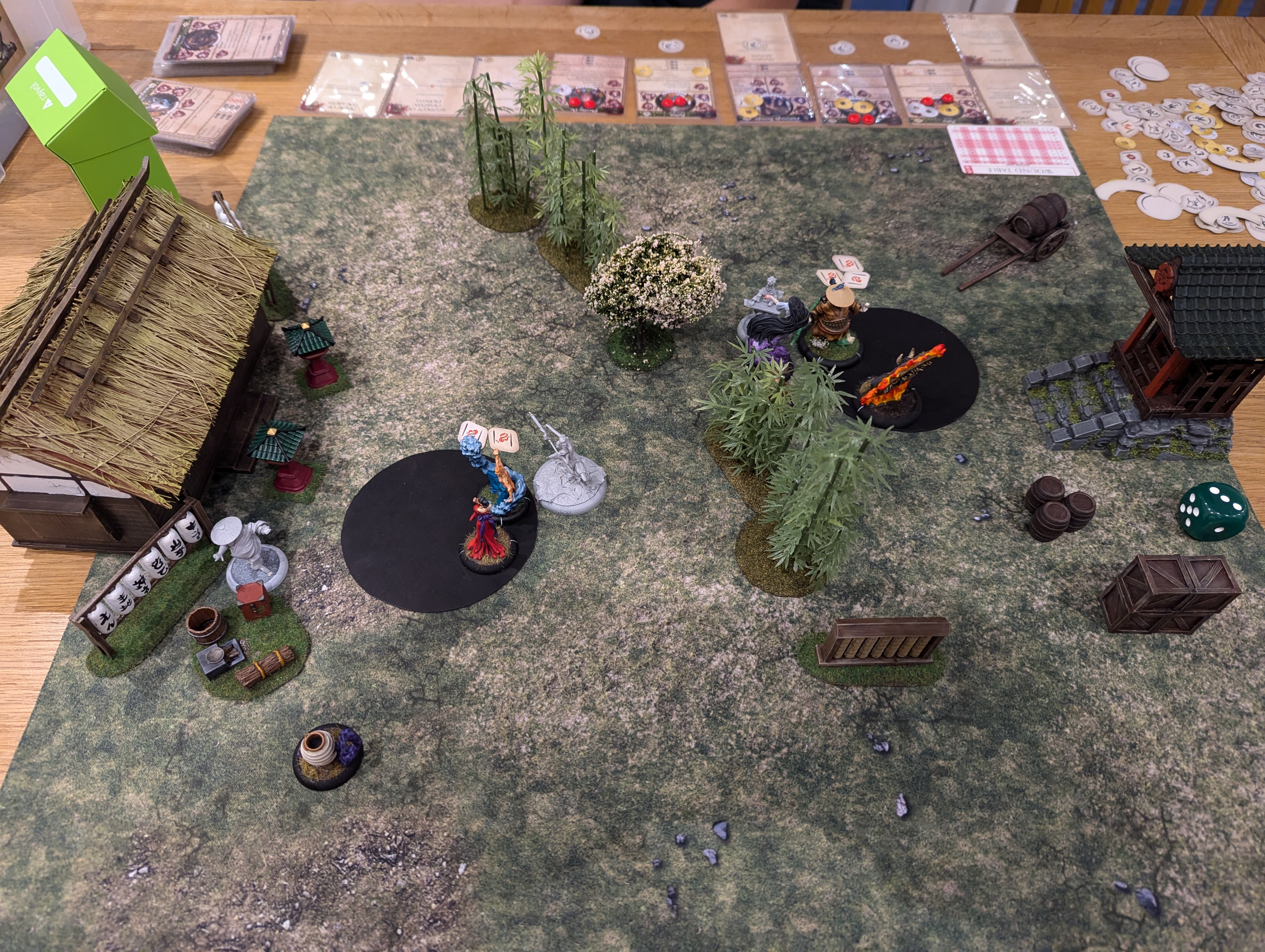
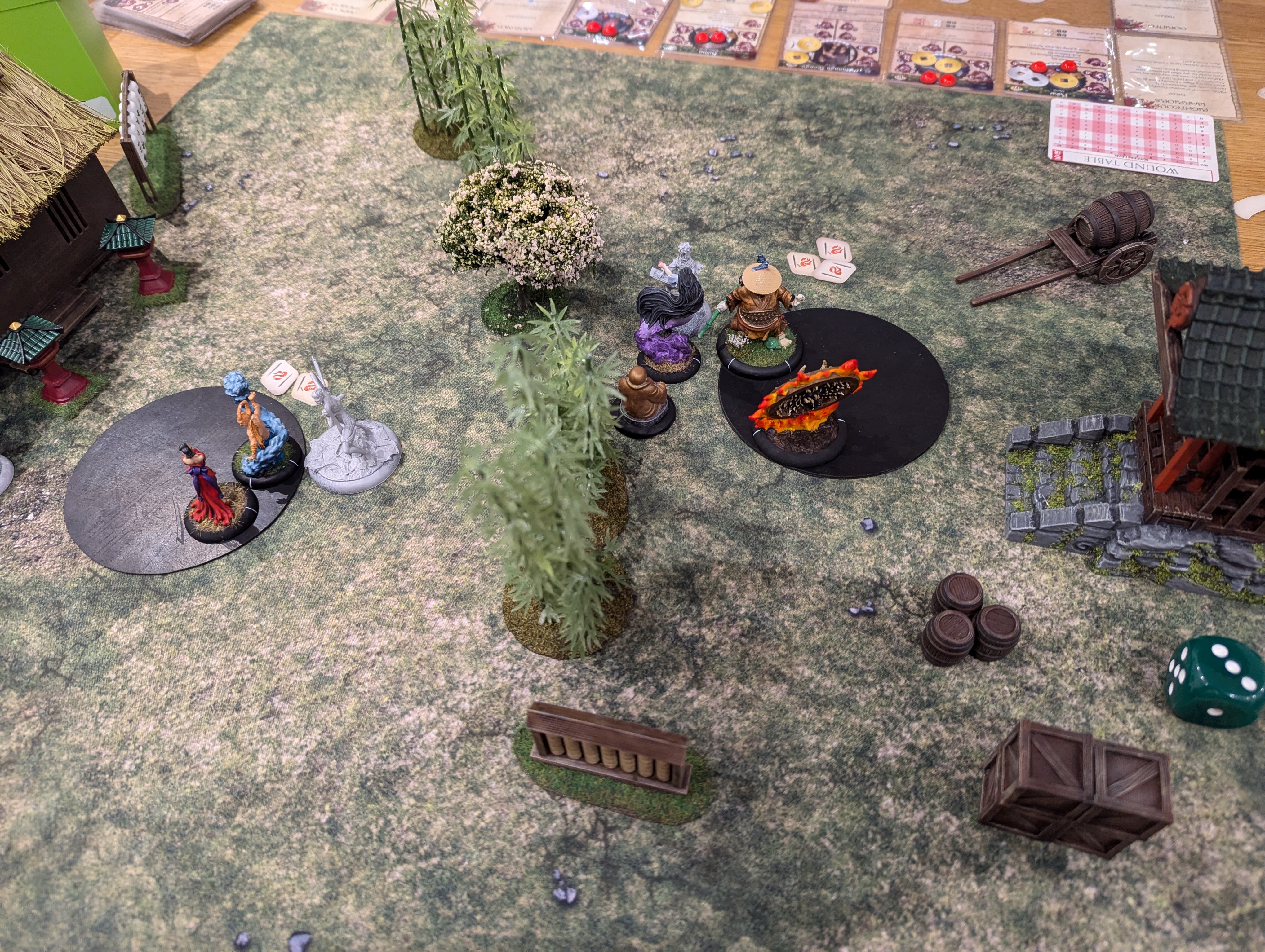
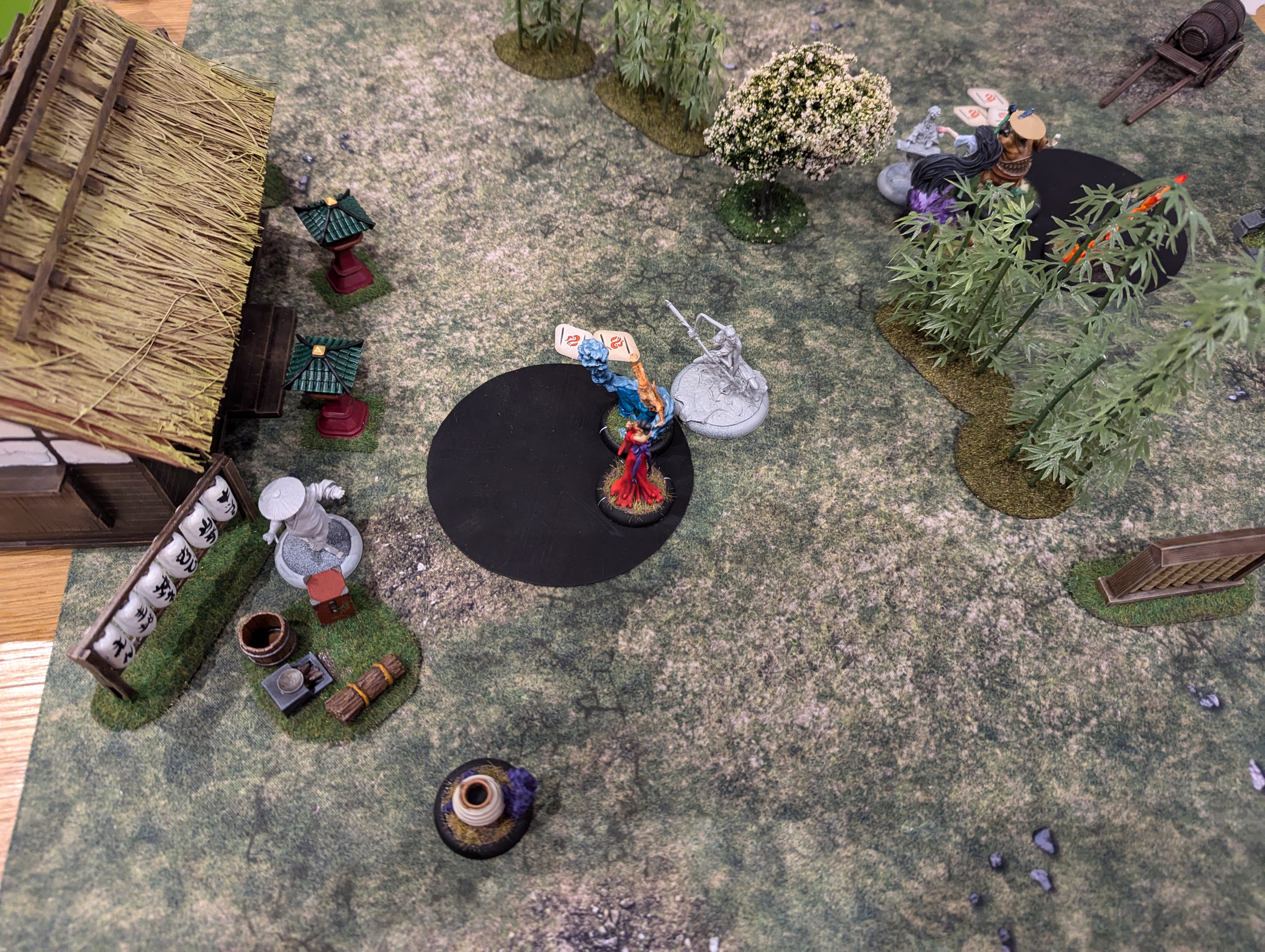
Turn 4
After winning the strategy roll again, I charge the Wanyudo into Kuma using his special slam attack. This is successful and while Kuma doesn’t take any damage, he is shoved further back and also picks up a fire marker.
Kuma is having none of this and attacks the Wanyudo back but fails to cause any damage.
Master Po attacks Yama Uba and, being the combat monster he is, is able to hand out two slaps. Ashinaga Tenaga, who’s been remarkably quiet so far, joins Po (and Riku, who is still in BtB with Yama Uba) to hand out yet more damage. Finally, Riku (still on fire!) deals the final blow to Yama Uba and kills her.
I use Fuwa Kaidan to use Ire on Kuma who then attacks Tsutsumi and deals out some useful damage. The cost of Ire causes Fuwa Kaidan to die again and she respawns back at her pot.
Annoyed with the constant respawning, my son uses Ashinaga Tenaga to destroy the pot, which will remove my ability to respawn Fuwa Kaidan should she die again.
Ashinaga Tenaga then attacks Fuwa Kaidan, doing a solitary damage to her (but as she only has 4 to start with, that’s not good!)
The Wanyudo, sensing an opportunity, uses its Inferno Ki feat, which sends out a fiery blast zone, giving everyone in the zone more fire markers! In this case, Kuma, Tsutsumi and Riku (again) all get a lovely fire marker (a level 2 fire marker in this case!)
Riku, the human bonfire, attacks Wanyudo. Sadly I manage to roll double ones and Riku is able to slap Wanyudo for a wound.
To really turn the pain on, Kuma attacks Wanyudo and is able to hand out some serious damage and destroys the fiery demon.
As my son’s final action, he uses Ashinaga Tenaga to attack Fuwa Kaidan to kill her and as her pot is now gone, she can’t respawn and permanently dies. This means I’m now out of models and wiped from the board.
But, we still have to close out the turn and first up is handling the fire markers. Kuma, Riku and Tsutsumi are all on fire and have plenty of fire markers each, enough to kill all three of them, which leaves my son with Master Po and Ashinaga Tenaga.
Next we see who is controlling the scoring zones. It’s not going to be me, as I have no models left and fortunately for my son, he has Po in one zone and so scores 1 victory point, so the scores are level.
Interestingly, in Bushido, you don’t automatically win if you table your opponent. When this happens, you finish the turn and then stop the game. Whoever is ahead on Victory Points, wins. In this case, we’re tied on 1 each, so we then looked at who’s VIM was closest to the opponent’s table edge. But, both our VIMs lay dead on the field and so, much to my son’s bitter complaints, the game was a draw. He didn’t like this, I did and I’m the adult, so the result stood – an honourable draw.
Rokuro
Rokuro is a tengu who has fallen in with the cult. He (I’m assuming Rokuro is he) comes with two axes which can be used as ranged weapons (just two shots obviously) or in melee where he gets the brutal and bleed special rules while he still has the axes. He’s not bad in combat and the brutal rule definitely adds to his ability. He’s also a bigger model and based on a 40mm base rather than the standard 30mm.
Painting wise, the skin was based upon the darker tones in my skin paint set, using the ‘Indian shade’ extensively to darken it down. This was applied as a glaze to try and smooth over the transition. I’ve used a khaki on the trousers, using an off white khaki mix for the highlights and a shade of khaki and dark brown mix applied as a glaze. The purple sash was imperial purple mixed with black/off white for the highlights and shades.
The armour and axe blades is gunmetal and I’ve then applied a couple of black washes over the shaded parts, building this up into the darker areas. I’ve then used gunmetal to highlight back up and finished off the edges with a polished metal.
The axe handles are bleached bone with a wash applied whereas the hair is Luftwaffe grey with a black wash and then a light grey dry brush.
The wings were a combination of browns, including cavalry brown as the base and a highlight of light brown. Similar for the feet.
For the basing, I’ve used the usual approach as I have for my other cult models. I’ve also stuck some brush bristles on for some height in the vegetation.
Job done, and ready for the gaming table.
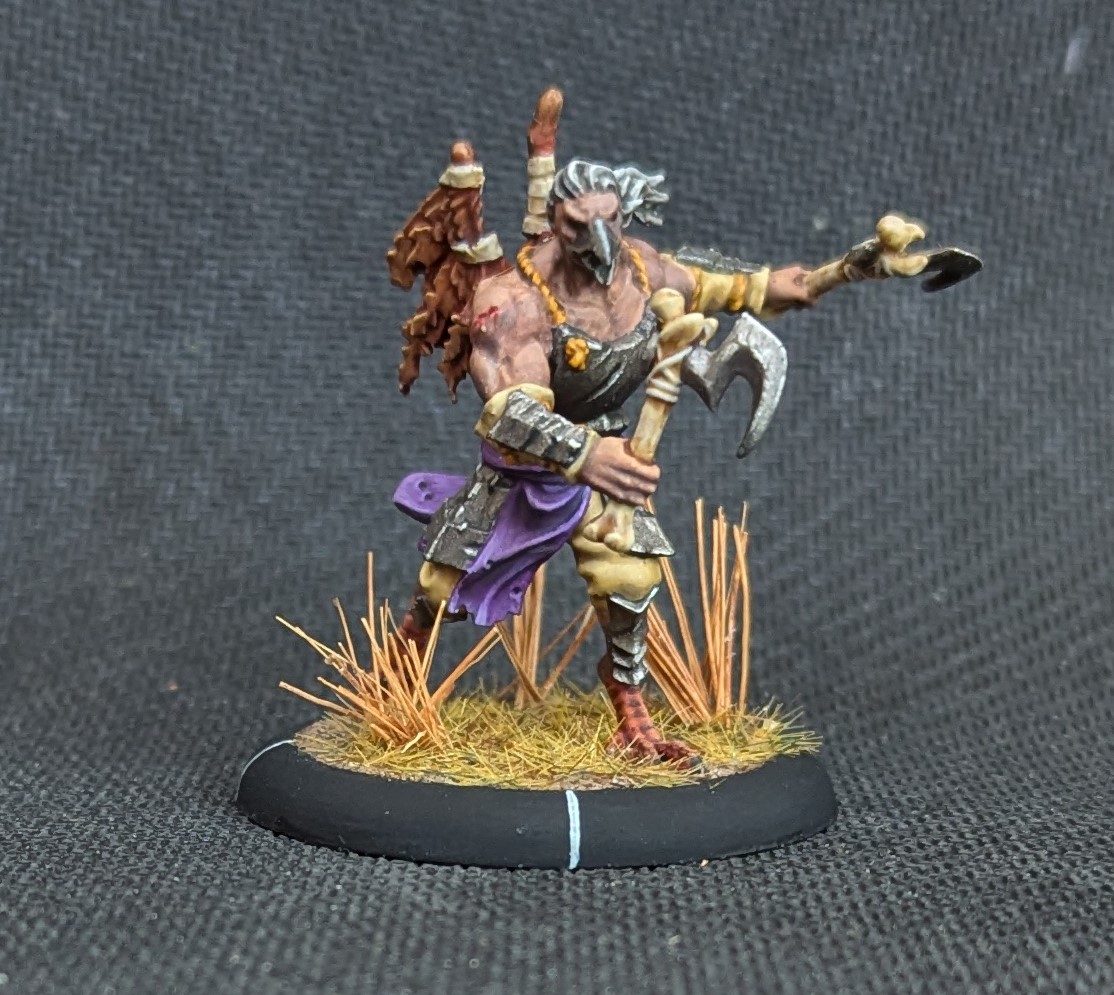 Rokuro and his axes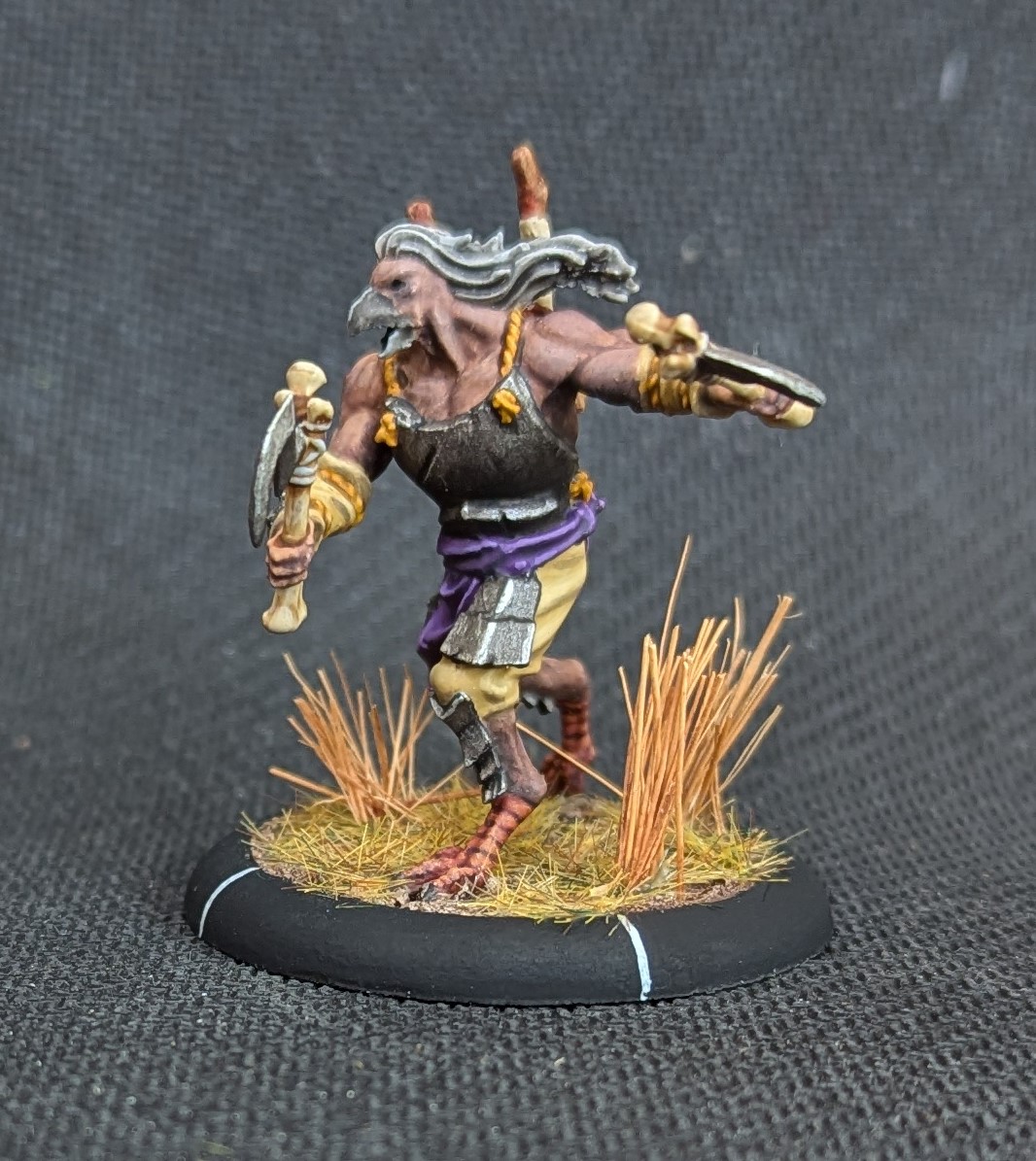
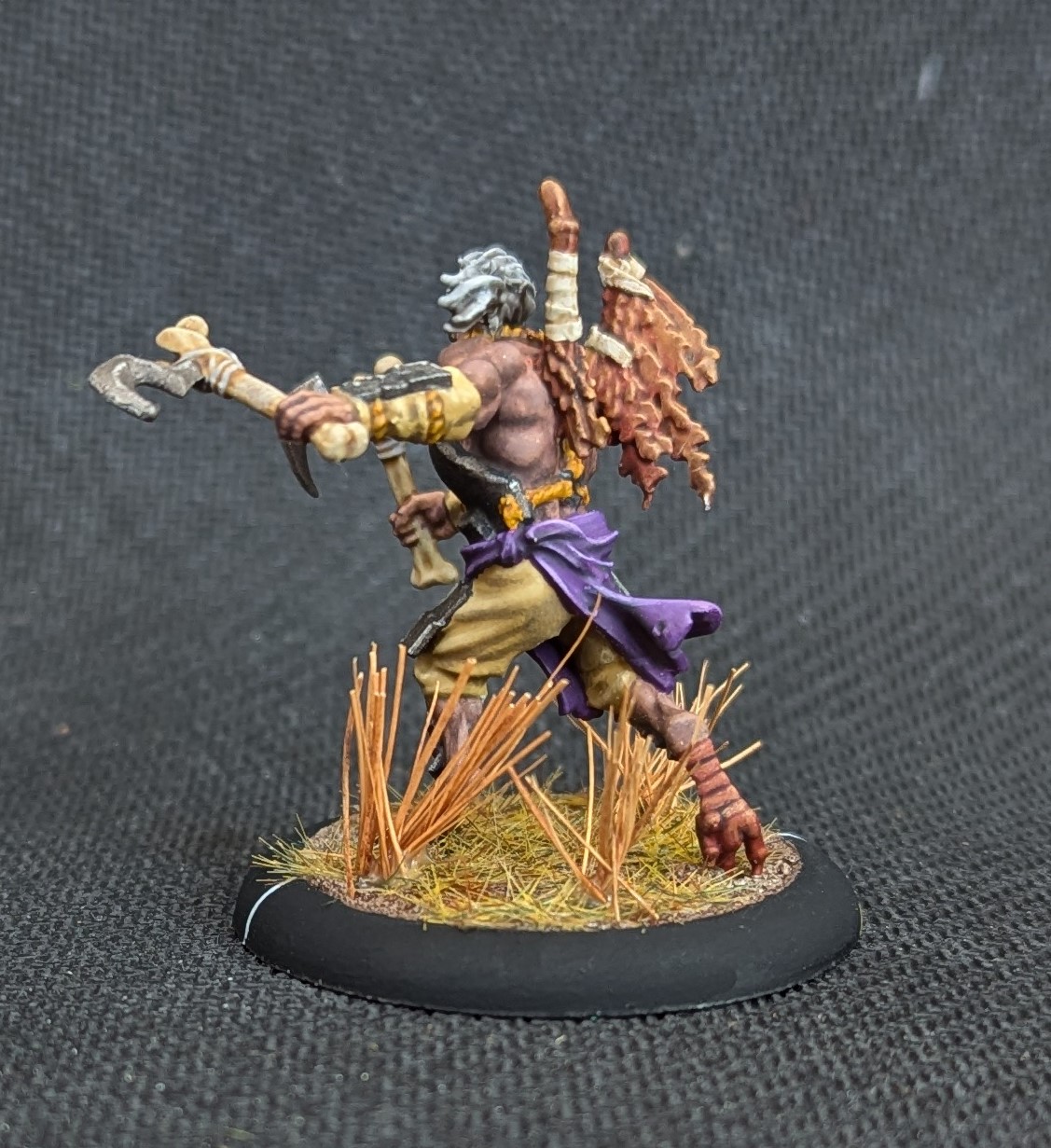
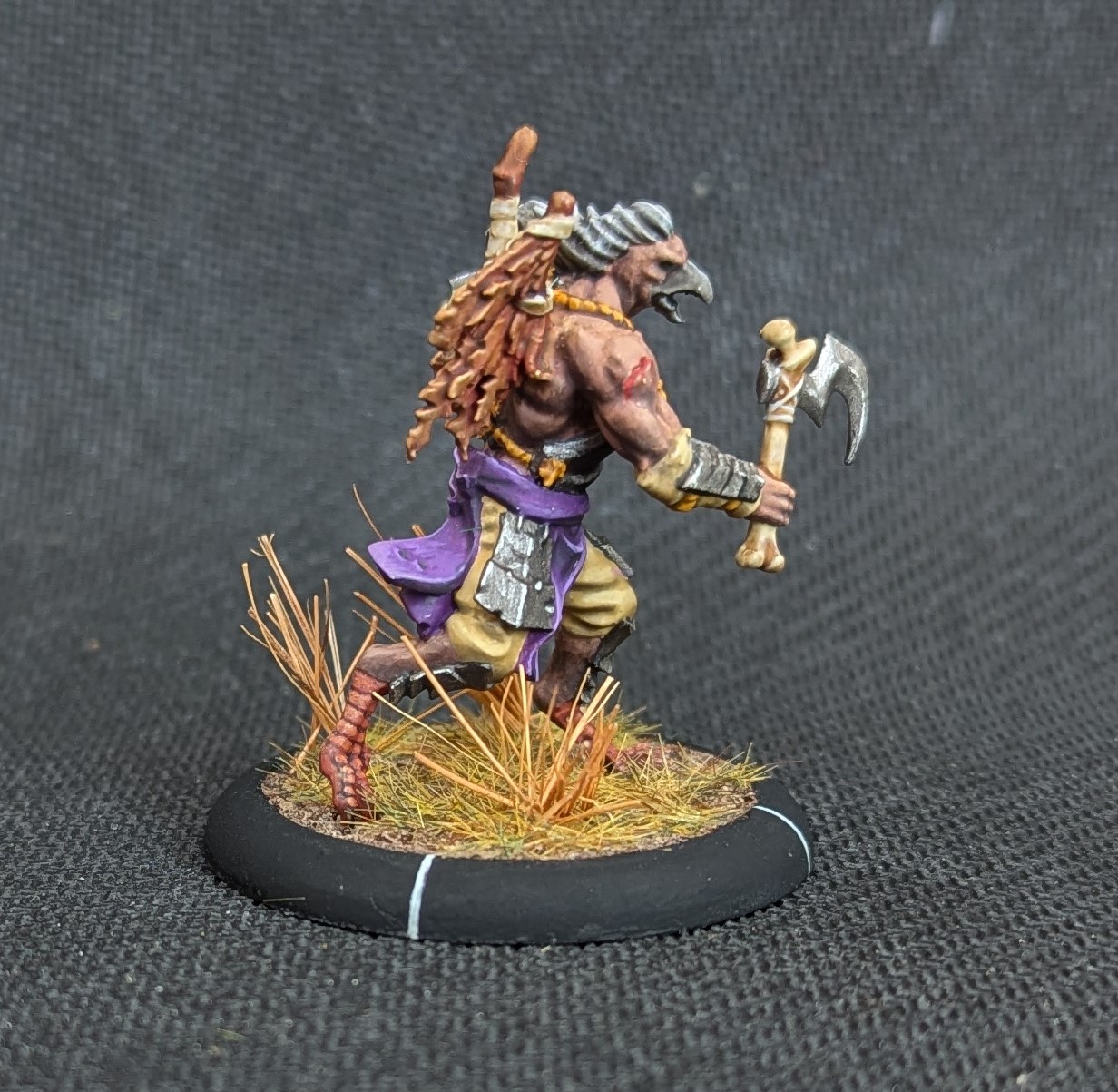
Update on my Son's Painting
My son and I made our inaugural visit to Salute earlier this year where we made a direct line to the GCT Studio stand. My son wanted the Kinshi Temple faction which is a fairly new addition to the game. It’s a small faction where all but two of the models are within the faction starter set, so my son picked up all of them. He also picked up two of the Kami of the Empty Mind which can also be added to a Kinshi Temple warband.
He’s now managed to paint them all, so below is the complete Kinshi Temple faction painted and ready for battle. Painting is not something he really enjoys and he has quite a shaky hand, so he finds the finer details quite challenging and frustrating. He used the Army Painter speed paints and because they are very easy to use, he was able to complete the models quickly and, as a consequence, gain some motivation in getting them completed. By the end, he was quite enjoying the painting process and pleased with his results.
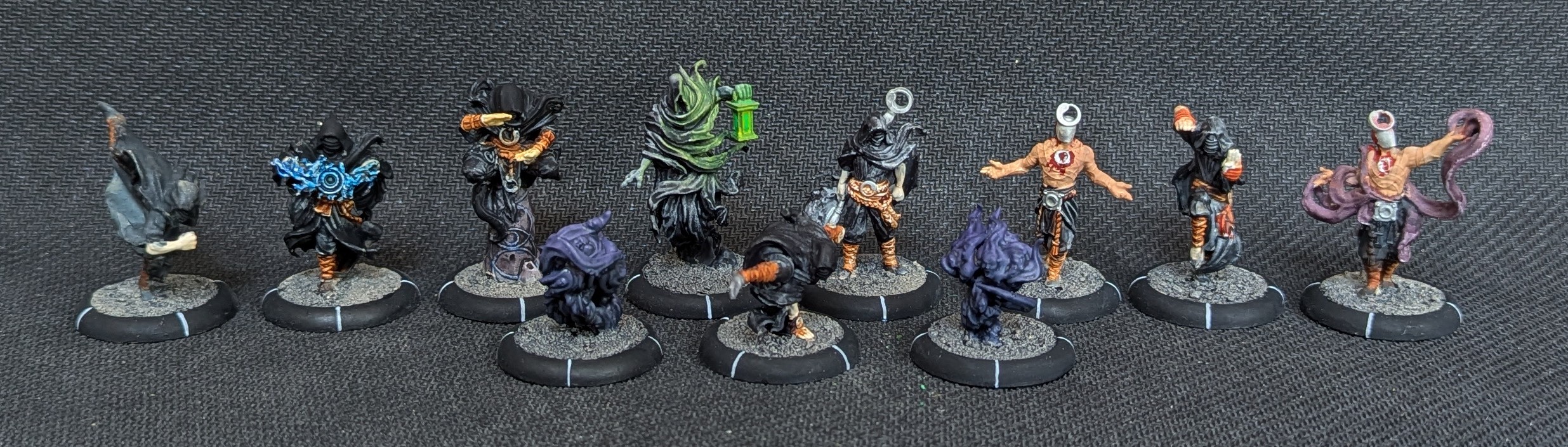 The Kinshi Temple faction including the two Kami
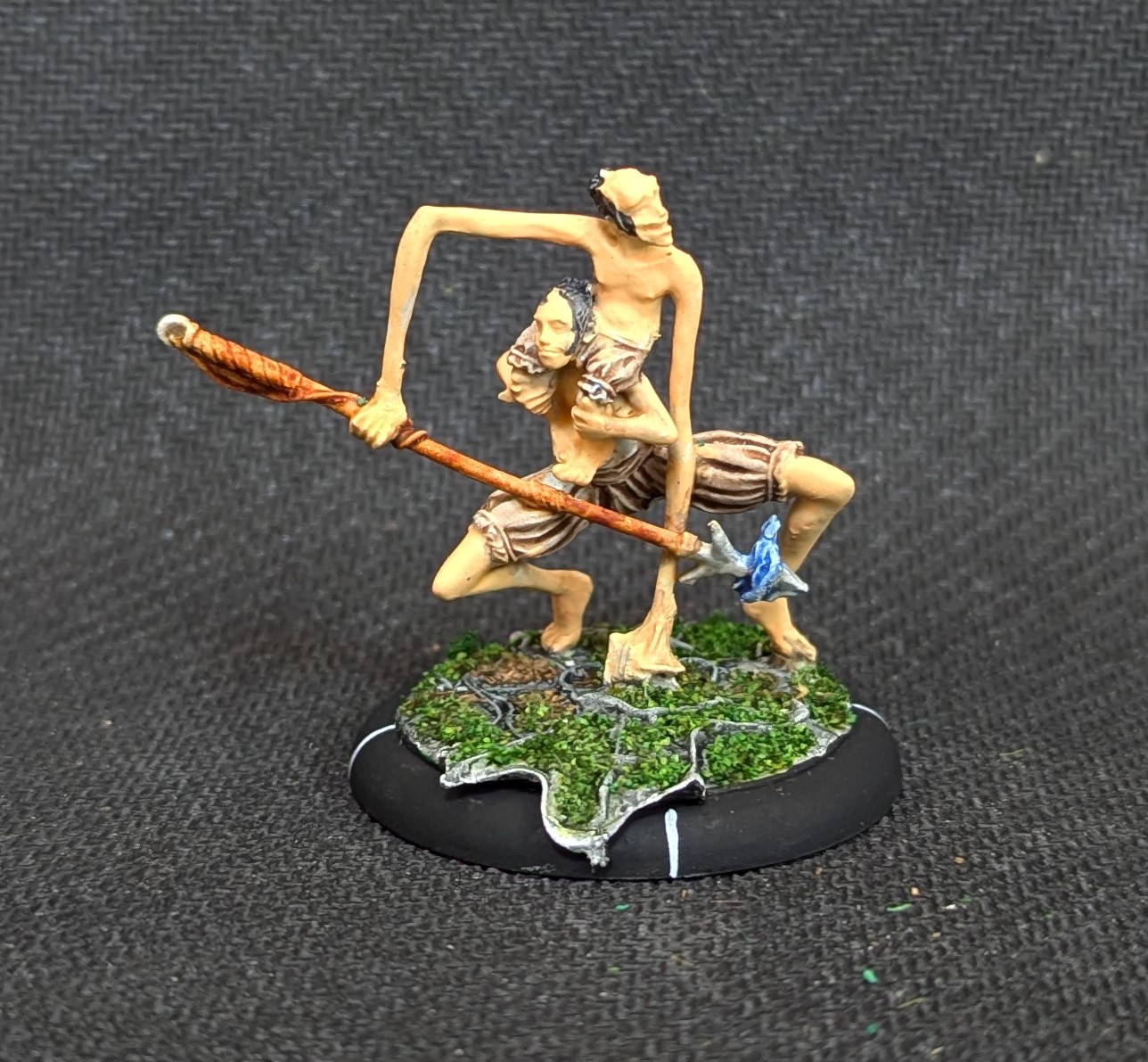
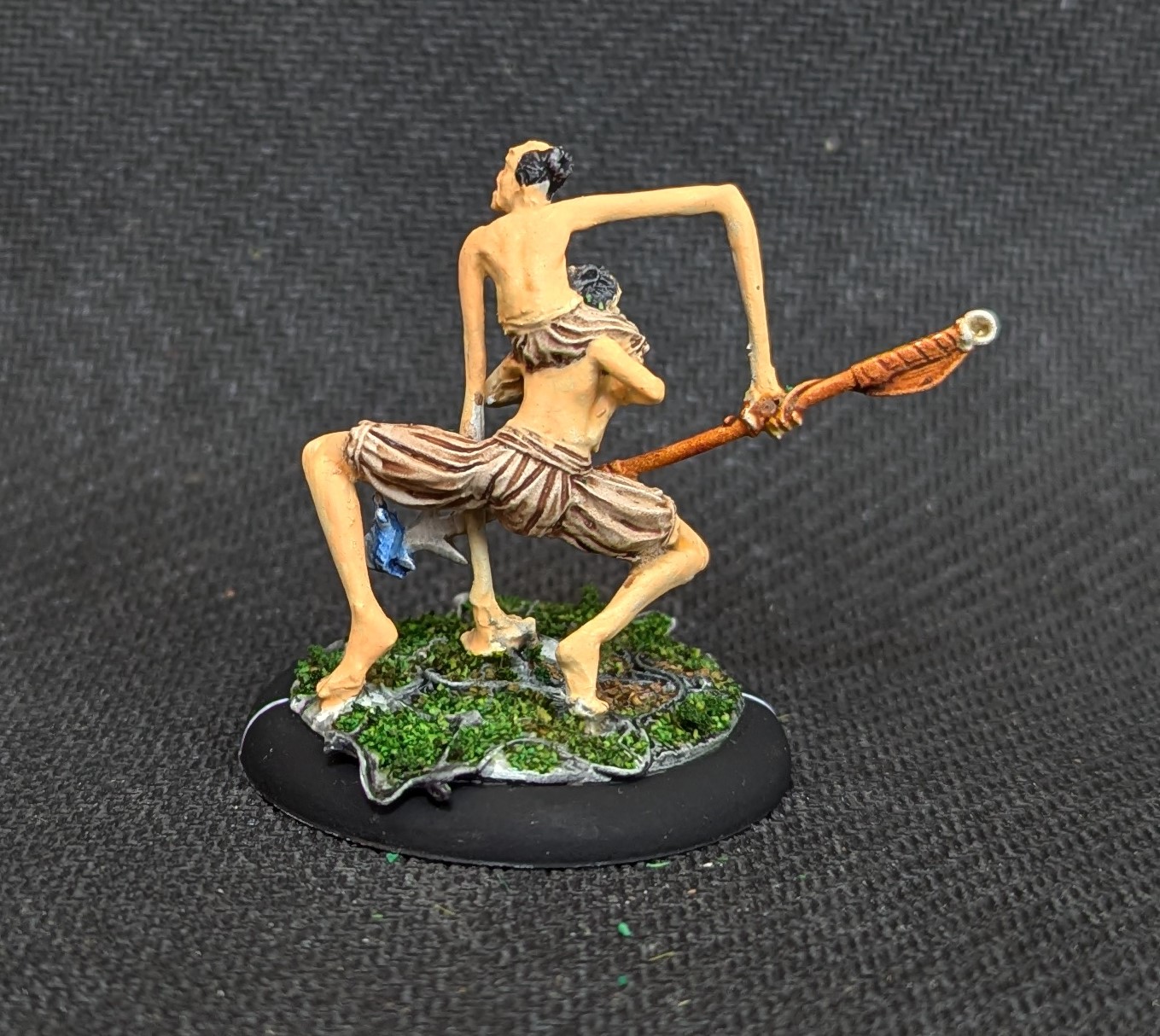
Having completed the above, he also tackled Ashinaga Tenaga. This model was a feature of a previous update here as it is a real pain in the backside to put together. It’s a metal model and the contact points are very small and therefore some very careful pinning was in order. It took several hours just to get it ready for painting.
My son again used mostly speed paints for this except for the skin, which was an acrylic from my skin paint set. I think he painted this in an hour or so and then left it to me to base it up. He’s a lot quicker at painting than I am.

![Gripping Beast Announce They Are Closing Their Doors [Updated]](https://images.beastsofwar.com/2026/09/gripping-beast-announcement-cover-600-338.jpg)