Google Analytics is a powerful tool that tracks and analyzes website traffic for informed marketing decisions.
Service URL: policies.google.com (opens in a new window)
_gat
Used to monitor number of Google Analytics server requests when using Google Tag Manager
1 minute
_gid
ID used to identify users for 24 hours after last activity
24 hours
_ga_
ID used to identify users
2 years
_gali
Used by Google Analytics to determine which links on a page are being clicked
30 seconds
_ga
ID used to identify users
2 years
__utmx
Used to determine whether a user is included in an A / B or Multivariate test.
18 months
__utmv
Contains custom information set by the web developer via the _setCustomVar method in Google Analytics. This cookie is updated every time new data is sent to the Google Analytics server.
2 years after last activity
__utmz
Contains information about the traffic source or campaign that directed user to the website. The cookie is set when the GA.js javascript is loaded and updated when data is sent to the Google Anaytics server
6 months after last activity
__utmc
Used only with old Urchin versions of Google Analytics and not with GA.js. Was used to distinguish between new sessions and visits at the end of a session.
End of session (browser)
__utmb
Used to distinguish new sessions and visits. This cookie is set when the GA.js javascript library is loaded and there is no existing __utmb cookie. The cookie is updated every time data is sent to the Google Analytics server.
30 minutes after last activity
__utmt
Used to monitor number of Google Analytics server requests
10 minutes
__utma
ID used to identify users and sessions
2 years after last activity
_gac_
Contains information related to marketing campaigns of the user. These are shared with Google AdWords / Google Ads when the Google Ads and Google Analytics accounts are linked together.
90 days









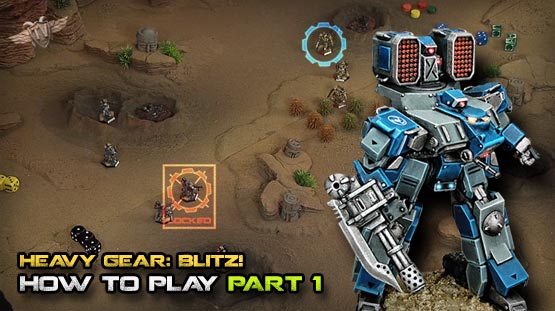







Yay! I’ve been waiting for this! Awesome job with the icons; makes it much easier to visualise what you’re talking about! Clarification…does active lock take an action?
Also, why didn’t you use the speed dice? They really help when you need to keep track of speed! Also, it would’ve been nice to show the card highlighting the various features as you describe them.
Are you aiming for something like the Infinity instructional videos? ‘Cause that would be great!
Great work fellas! Keep it up and bring on Part 2! 😀
To try for Active Lock you need to spend an action… it’s like the crew working on their sensor equipment to try to locate the target. If they succeed (i.e. you successfully get Active Lock) you can make a ranged attack as a free action.
The dice didn’t really show up on the camera. We used them later on, you’ll see them soon.
Part 2 should be up soon.
Gotta love those free actions! So does that mean you have to fogo your movement inorder to Active Detect? Also, does Active Detect only work for the model actually doing the detecting or can other Gears benifit from the Active Detect too?
No, you can still move at combat speed and use Active Lock
fantastic video guys. you have really just confirmed the fact that i really must buy this game. 😀
That was very informative.
Nice Vid, it seems a really nice system, and for what its worth, I think magnitude of difference sound better than margin.
Sort of in keeping with the epicness of the setting.
This was a great a tutorial I liked the graphics you added to show things and point them out this was a lot more professionally done. keep it up
I know this is subjective and players can generally tweak a list to make it large or small, but on the main, whats the average army size in terms of mini’s on the table for this game?
Usually it is three to four squads each with around four to five members. This works for both 750 and 1000 TV or Threat Value games. But can vary due to your priority level (esentially how much high command values your mission, high priority level like say four or five, unlocks elite units but means you have more to achieve objectives in your games. Meanwhile Low Priority Level, say one or two, means that you have access to mainly basic grunts with some support.) Squads can also be broken down into smaller subunits much like spacemarine combat squads. This only really comes into play with activations.
You can play larger games, but like any skirmish game that is scaled up, it can take alot longer to play.
Awesome, thanks! I tend to favor shooty over melee, and since I focus on painting a bit, usually I avoid hord armies. Whats a good faction that fits this preference?
The lowest model count armies you can field are CEF (Earth) and Black Talon (black ops, hugely anti-Earth forces). Or you can build an armor regiment from just about any other faction, as tanks eat threat value (points) incredibly fast. You can also use the Humanist Alliance sub-faction of the South and field an all strider army.
A tournament army can be 6 models (Black Talons, Big Tanks, or Striders based) up to almost a hundred models if you spam an infantry company (Infantry die in droves but it can be fun to see your opponent’s face when you deploy…). I find my armies tend in the 12-20 model range though an army with cheap and expendable troops might get up to 30-40 models. A good example is the starter armies. They are 800 point forces ready to go (a decent tournament size).
I thought active lock was an opposed roll. Also a skill of 0 means you roll 2d6 and take the lowest.
hope this gets as much if not more attention than overhyped 6th edition 🙂