





PanzerKaput Goes To Barons’ War


Recommendations: 11332
About the Project
Set against a backdrop of a Civil War that lasted for two years, 1215-17, as a result of the issuing of Magna Carta. A civil war was the perfect opportunity for the leading nobles of the time to grab land and power while settling some old scores along the way. This vying for land and power hadn't stopped since the invasion of 1066 with only the strongest of kings being able to keep their nobles in check. Our narrative focuses on small groups of warriors brought together under a lord or baron to raid and steal or defend land and property. With the strong, wise, cunning and lucky aiming to rise out of this civil strife in a better position than when it started. The Barons' War skirmish game has been written to enable players to fight out tabletop battles against the backdrop of the First Barons’ War between rival Barons or rival factions who find themselves on either side of the conflict. The game is historically themed, the gameplay is fast-paced and tactical with plenty of narrative and where force building presents you with lots of options enabling two players to muster very different retinues. However, as intended, this is an alpha set of rules which does not include rules for siege warfare, although rules for fighting in buildings are included. Campaign rules are something that will be addressed at a later date and released online. Having grown out of the Barons’ War Kickstarter project, the intention is for this ruleset to develop into a system that could be used throughout the Medieval period. Starting with England from when the Western Roman Empire withdrew around 410 AD to 1485 AD when Richard III died at the Battle of Bosworth Field. This presents us with a huge span of history for gaming which can be broadly divided into Romano-British, Anglo-Saxon and Viking, Anglo-Norman, Angevin and Plantagenet. And that’s just when looking at it from Great Britain. With warriors of this period being pretty similar, it would be easy to use the profiles in this rulebook to play out tabletop battles in any setting. Over time we see these rules evolving with additional warriors, characters, abilities and scenarios being added starting with the Dark Ages, the Anarchy and the Crusades and shared to www.warhost.online, which has been set up to be the community website for the game.
Related Game: The Barons' War
Related Company: Footsore Miniatures and Games
Related Genre: Historical
This Project is Active
The Chateau PK
 The Chateau PK
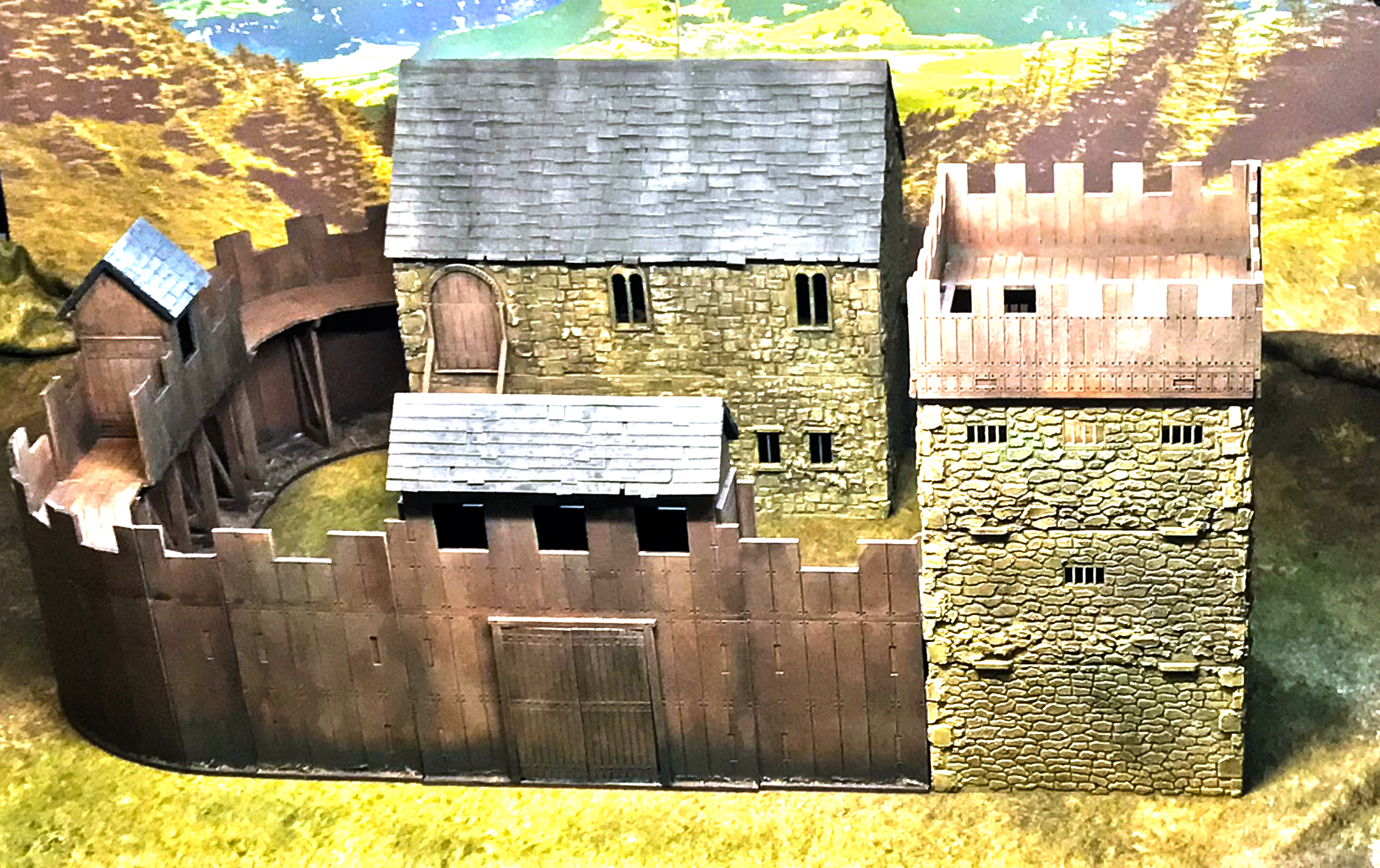
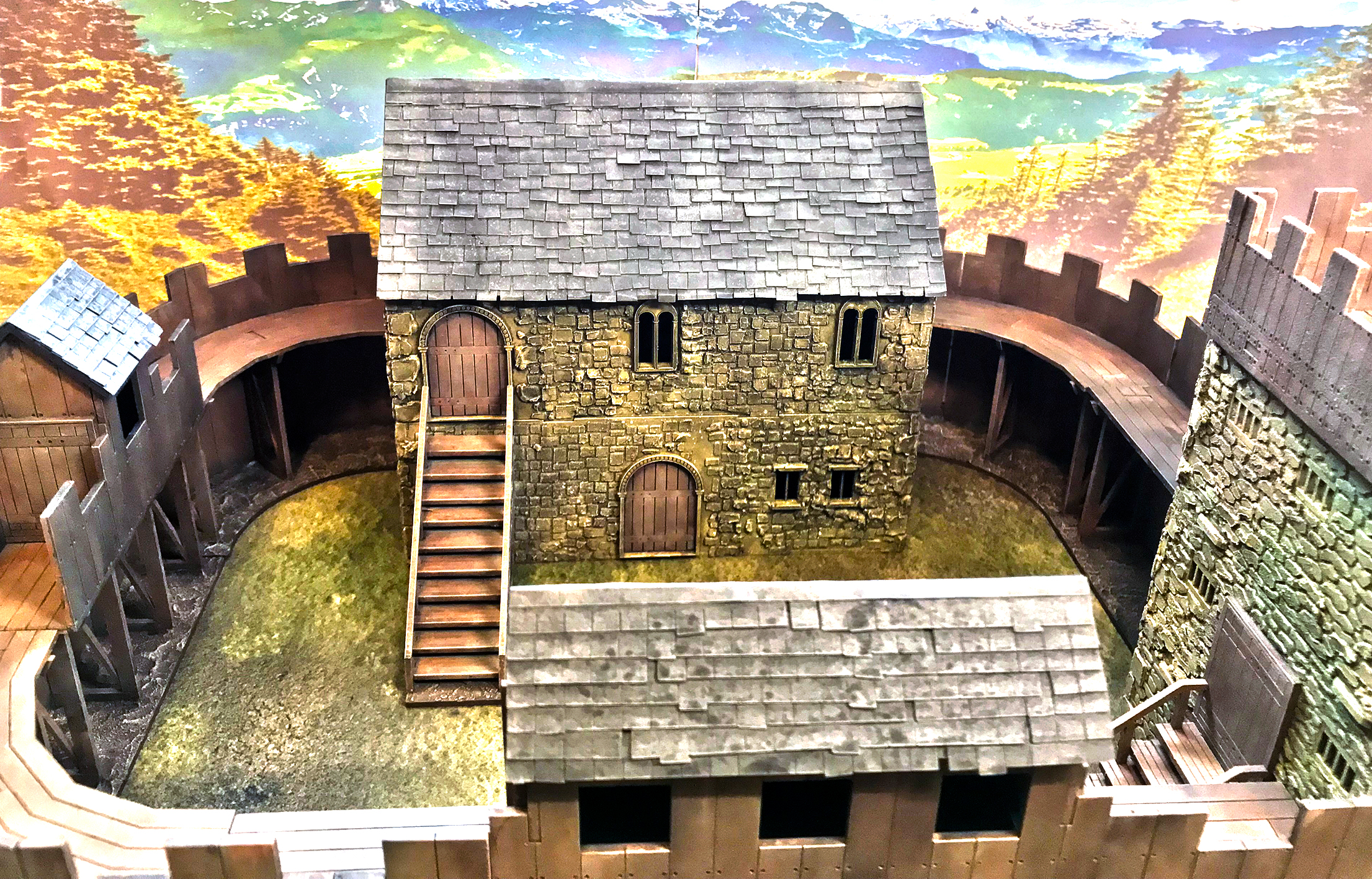
I have completed the Dark Age Fort bundle from Sarissa and I have to say it is a lovely bit of kit. It comes with a Manor House and a Keep/Tower and walls and a gate.
The palisade was one of the most important forms of defence and, as such, its history dates back to the Hillforts of the Iron and Bronze Ages and the Forts of the Roman Empire! Palisades were made of heavy timbers and later became a feature of the Norman Motte and Bailey Castles built by the Normans.
The purpose of the palisade was to protect the interior of a fortification. A fence of pales forming a defence barrier or fortification – a pale was a fence made with a stake or pointed stick which enclosed the area. The Norman Motte and Bailey Castle tower was surrounded by a rampart and palisade. The wooden Palisade was the early forerunner of the massive stone Curtain Walls which replaced them as they were subject to rot when built on an earth base and could be destroyed by fire.
An evolution of the Saxon hall, Norman manor houses were adapted by Norman lords settling in England, and being invaders there was sometimes a need for them to be heavily fortified.
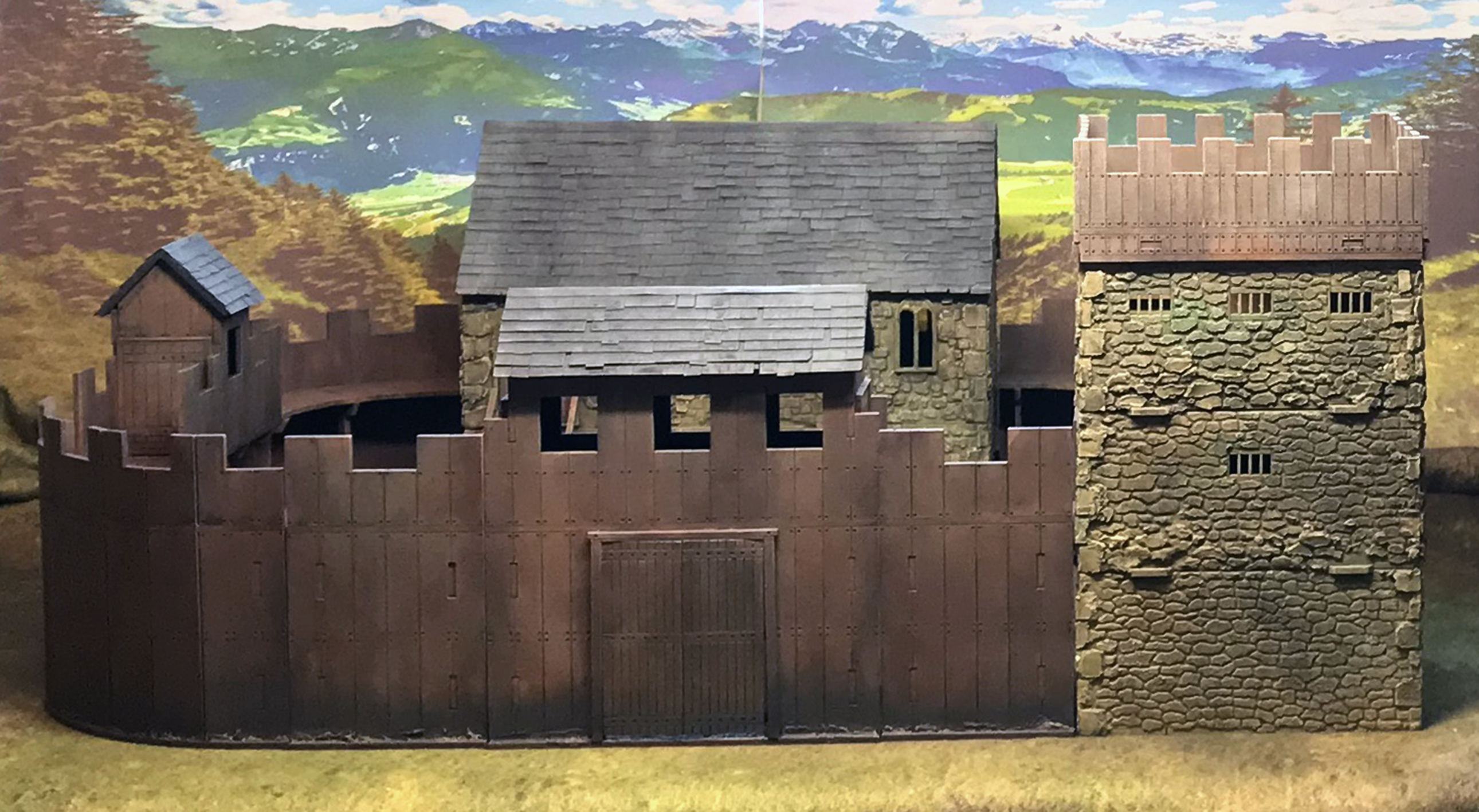
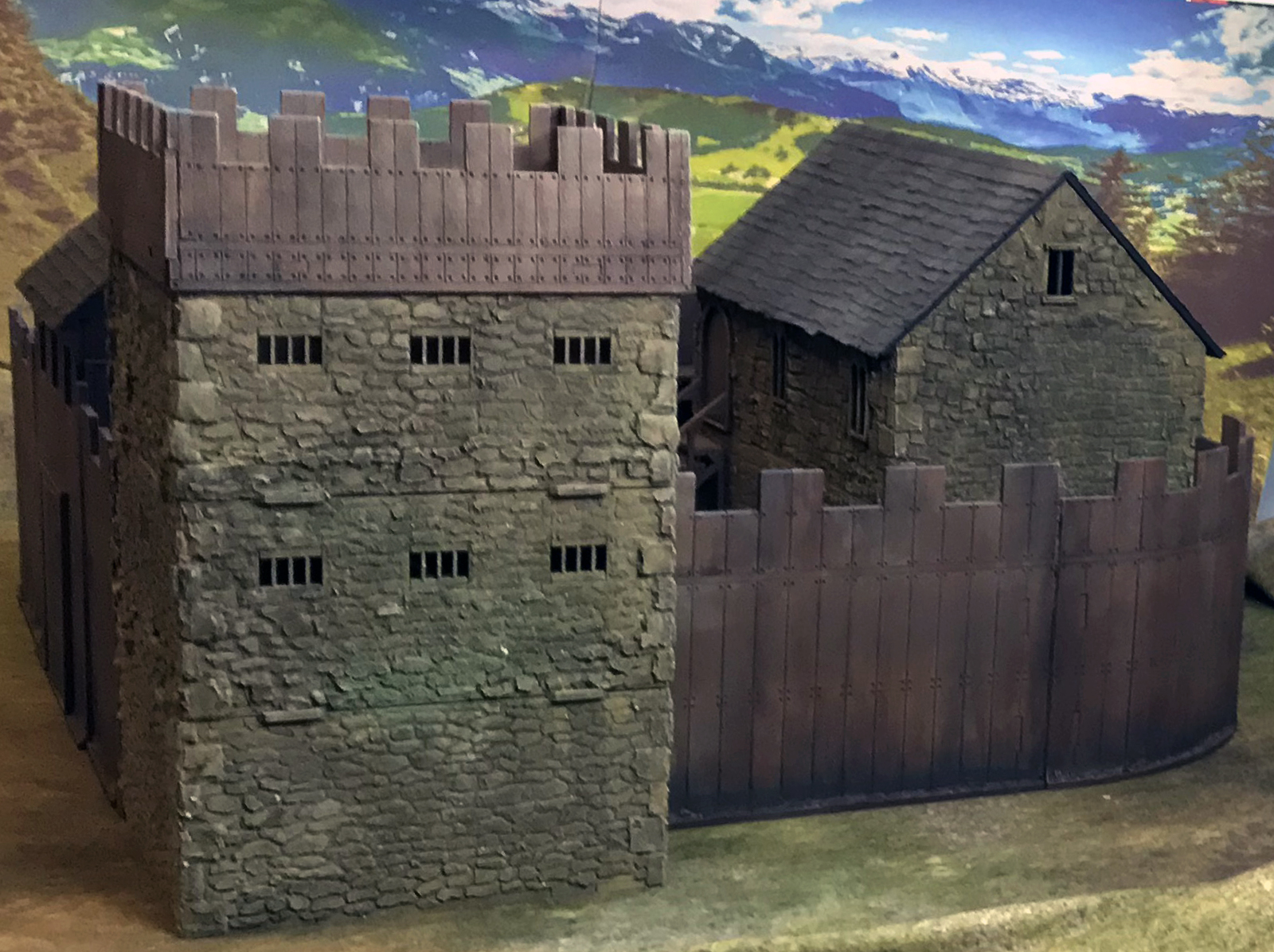
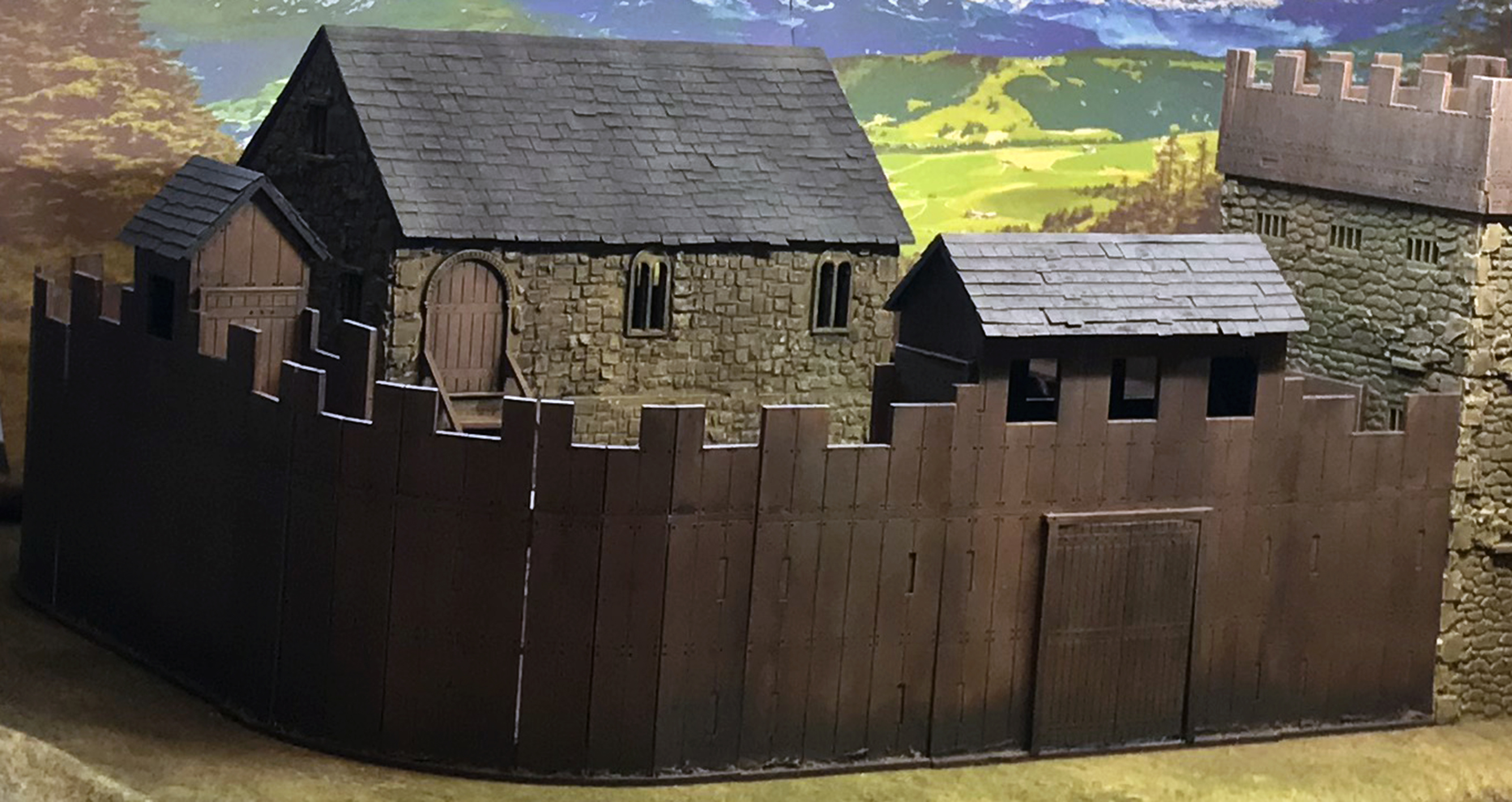
I have upgraded the walls of both the keep/tower and the manor by using Sarissa Stencil System and instead of using them with paint I have instead used a wood filler and PVA mix to use a stone texture effect to them. I have used a rough stone stencil on the keep/tower and the manor house I used a block stone stencil.
I painted them using the tried and tested Gerry Can method of painting stones and I think they have come out rather well. I will be posting a little later just how I have created the effect using the stencils and filler.
I think this is a rather filling centre piece as a Fortified Manor House for my Barons’ War games but what do you think?
 The Manor PK
That New Fangled Crossbow Thing
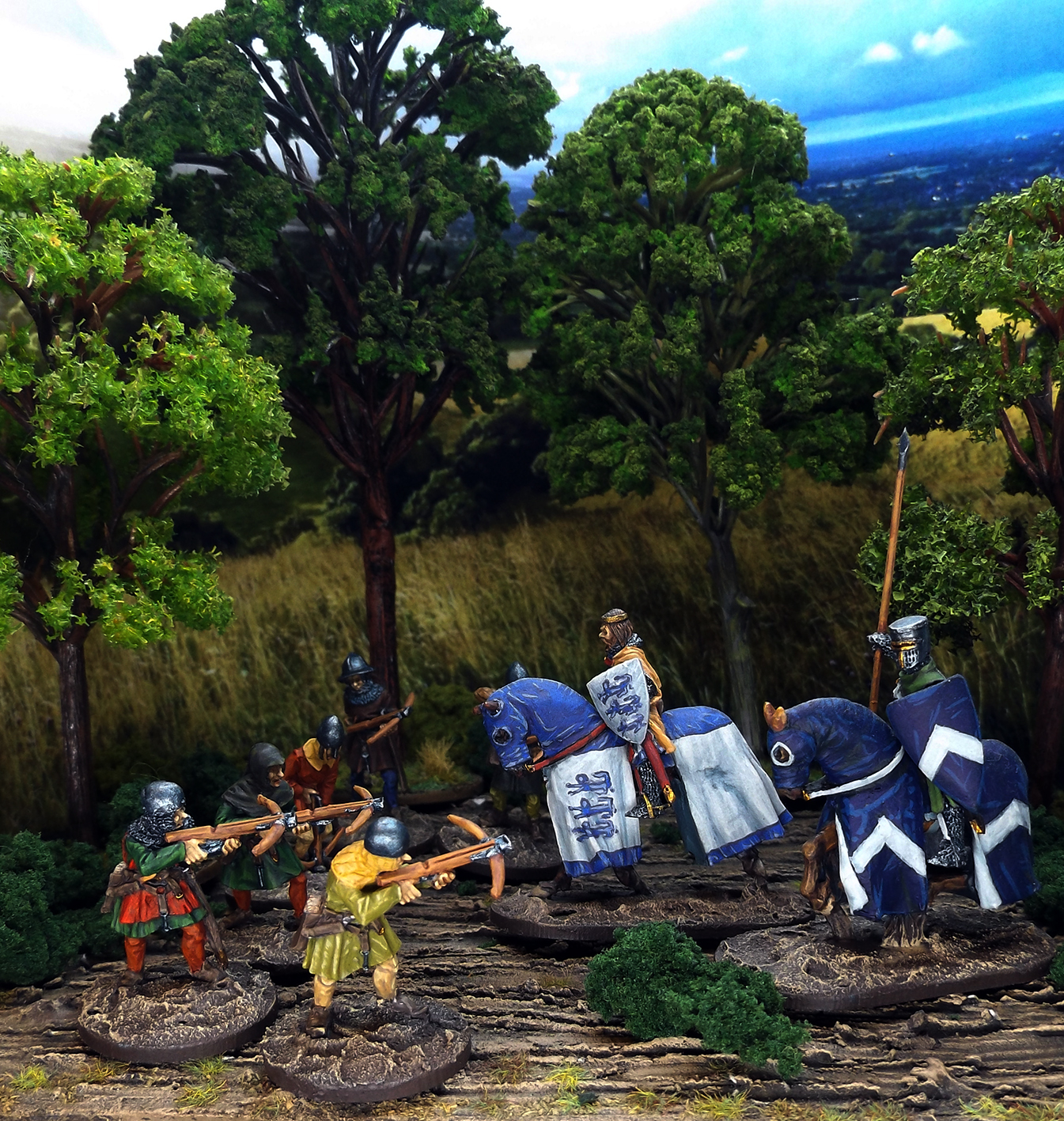 Crossbowmen Surprise the King!
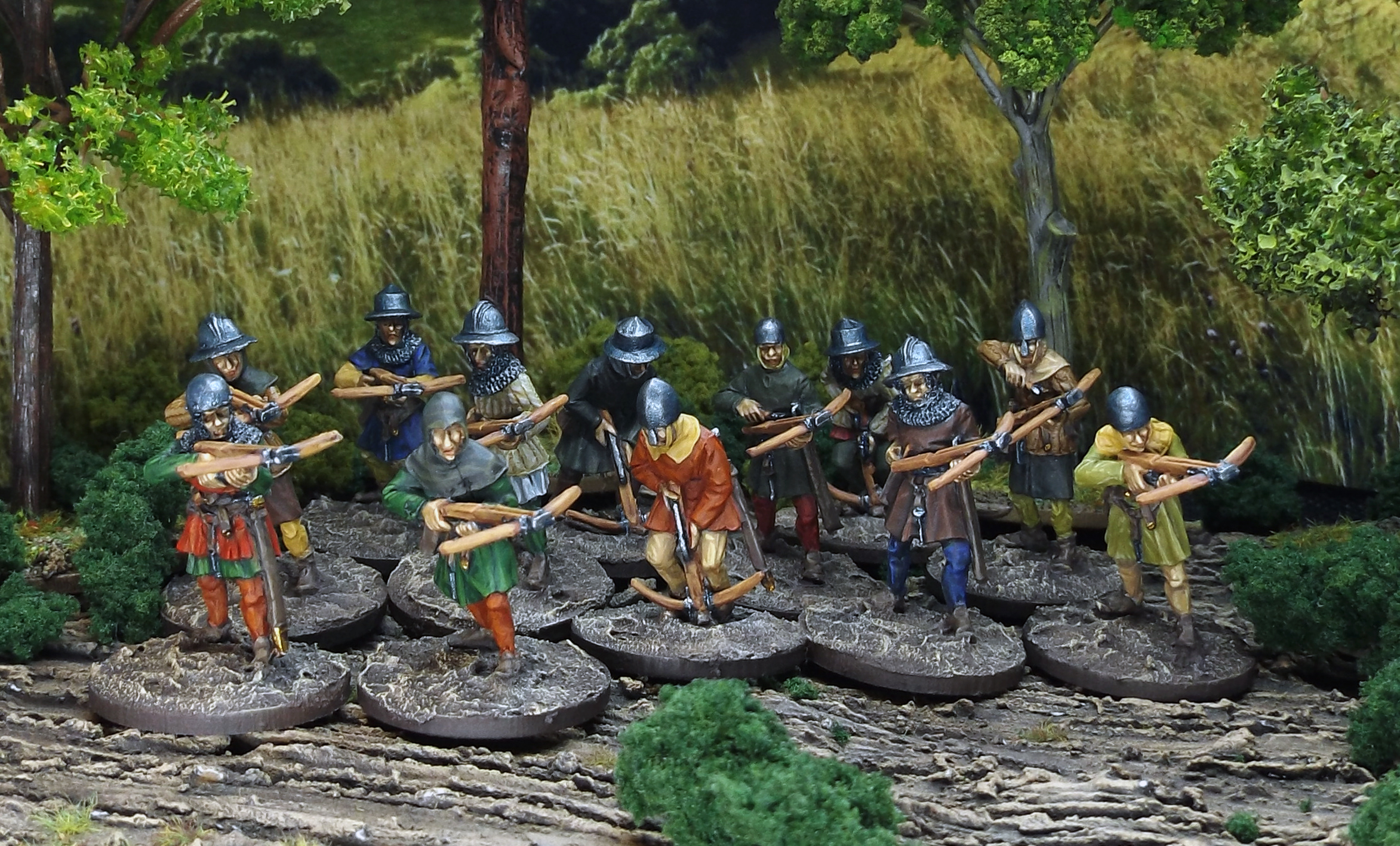
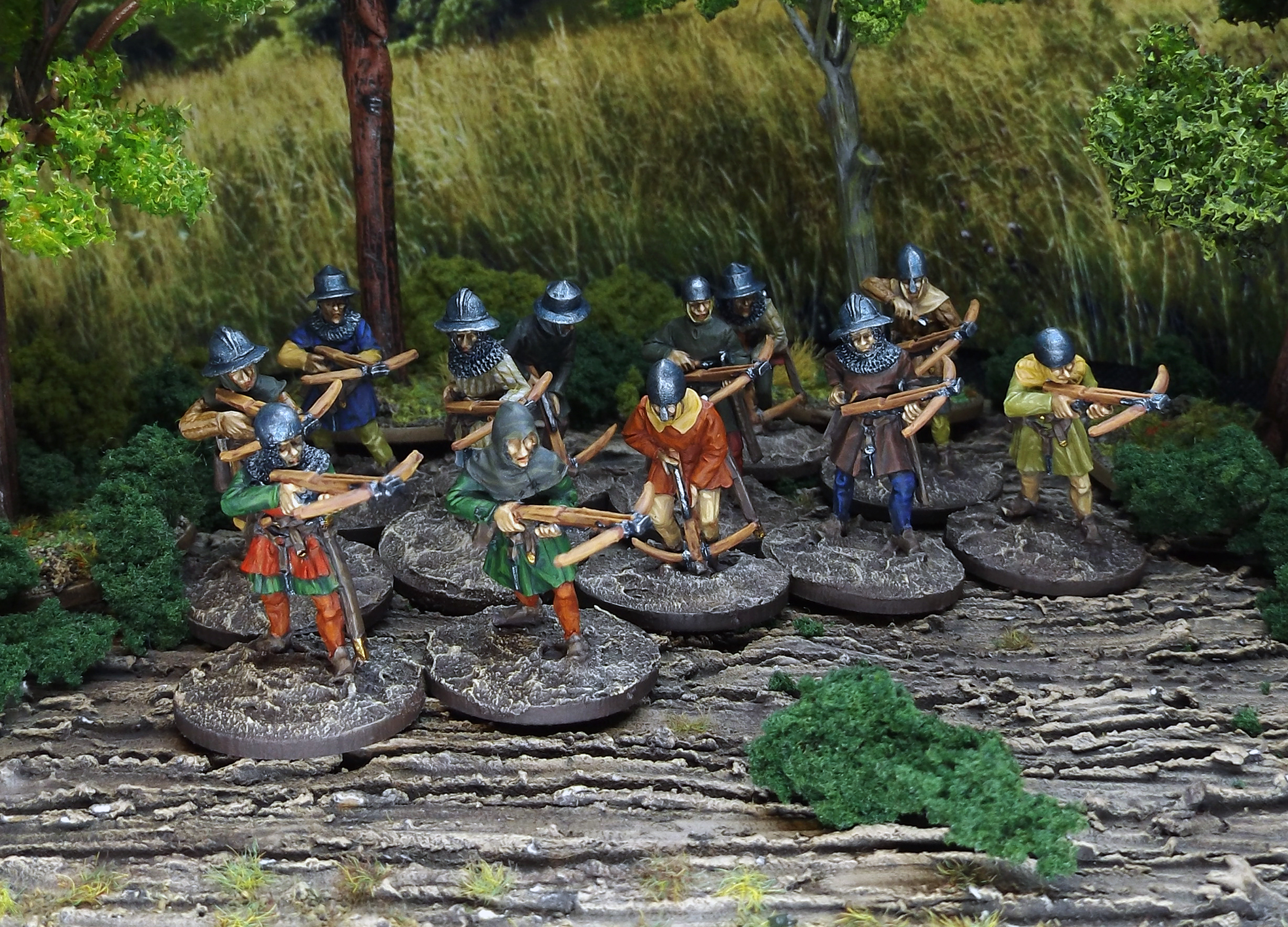
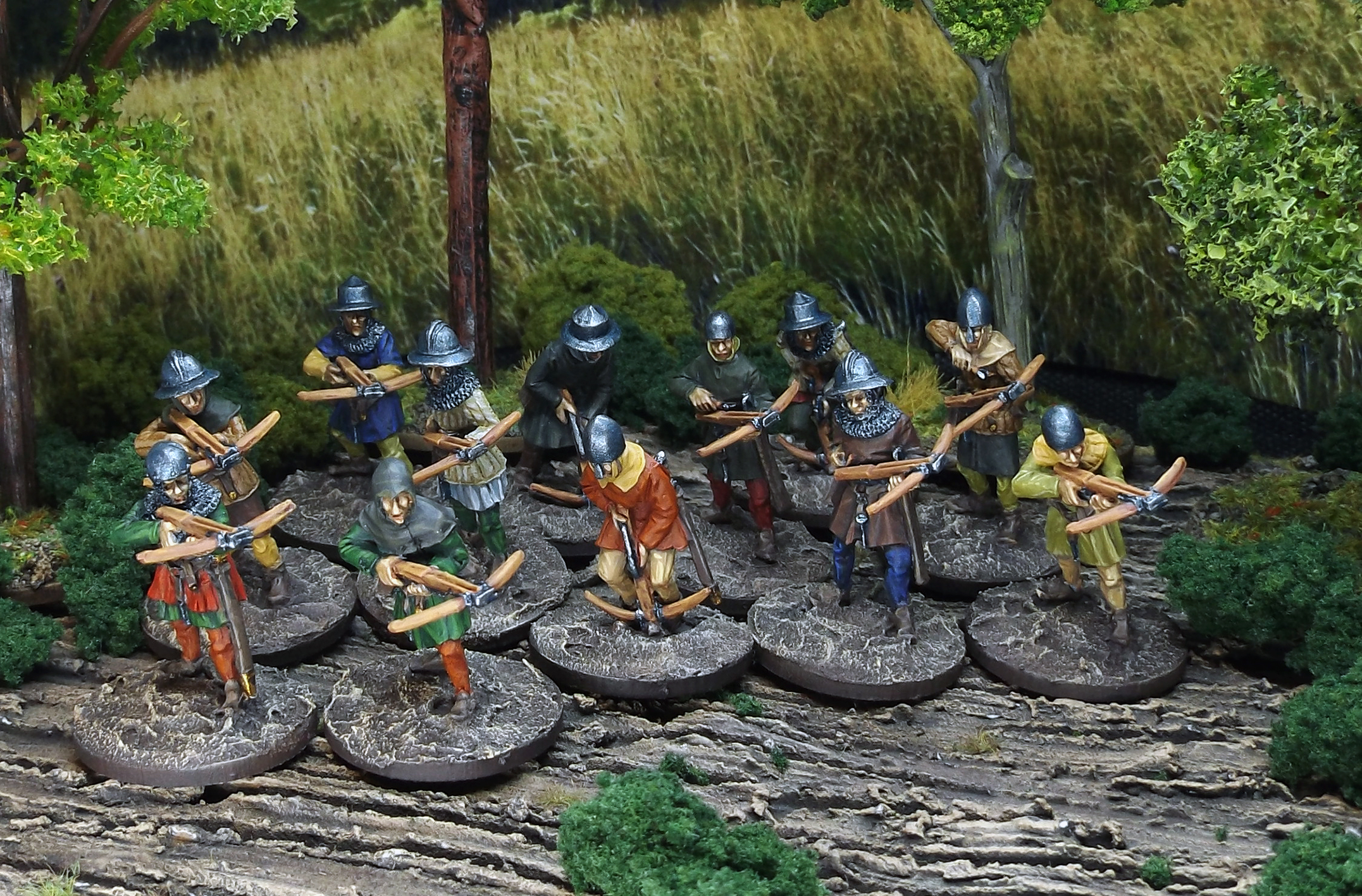
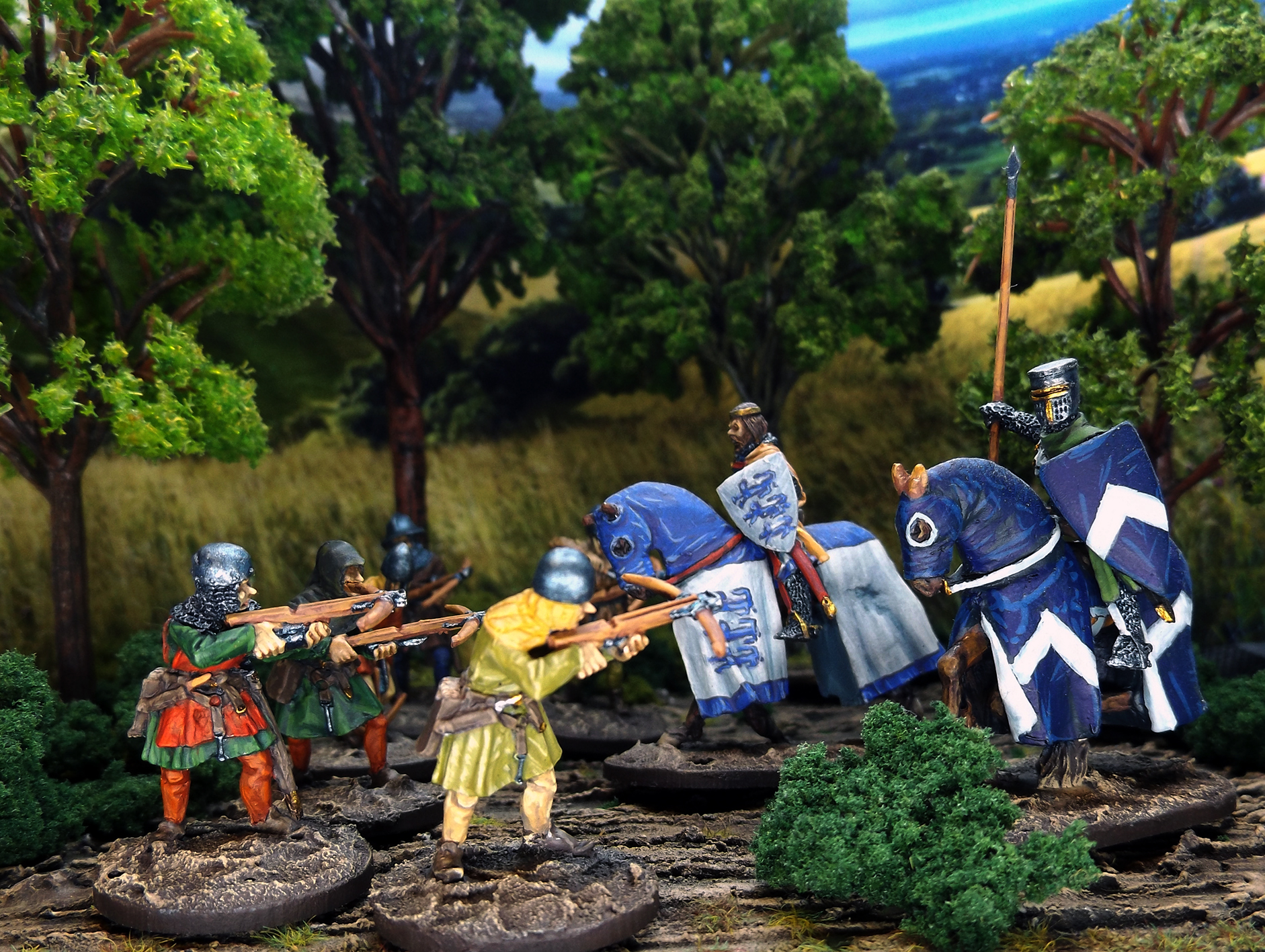
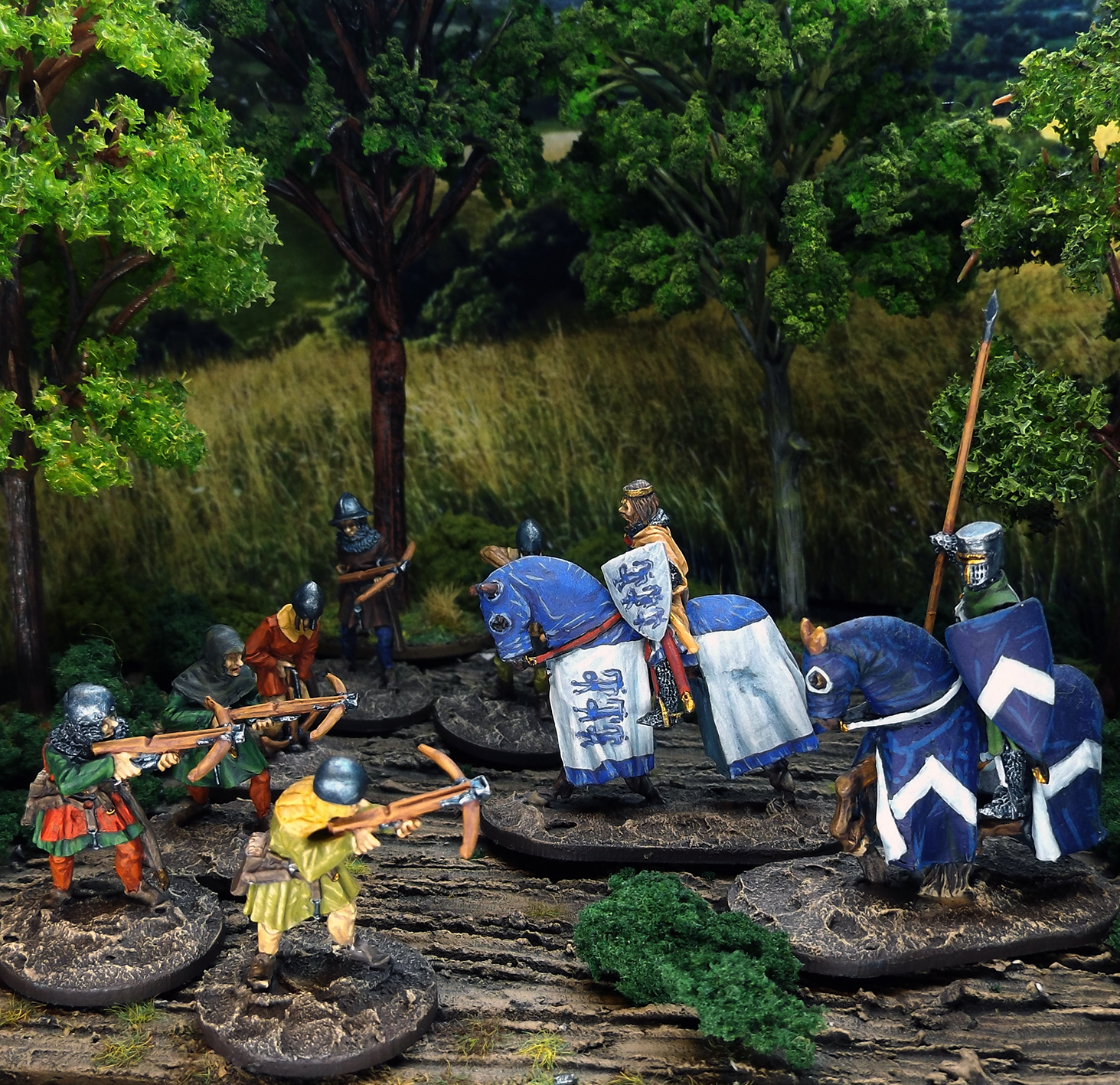
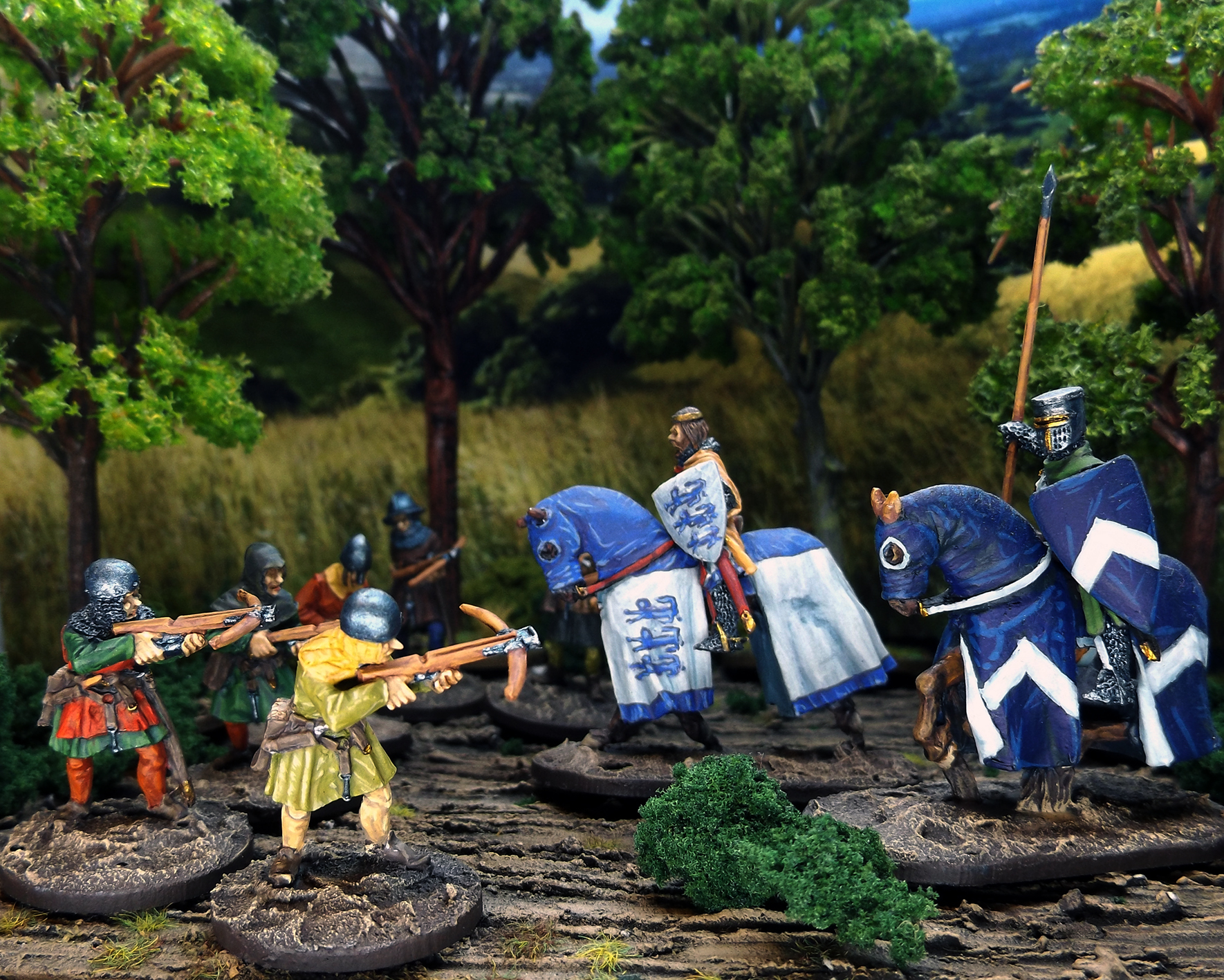
The next unit or rather units have been completed and these are the Crossbowmen from Footsore. I have really loved painting these guys and it now means I have finished all my foot for the time being, still have some mounted to paint. I went for a better than peasant but not of good as knights with the colouring and I think managed that. All in all I’m chuffed with them.
The Peasant Levy
 The Levy
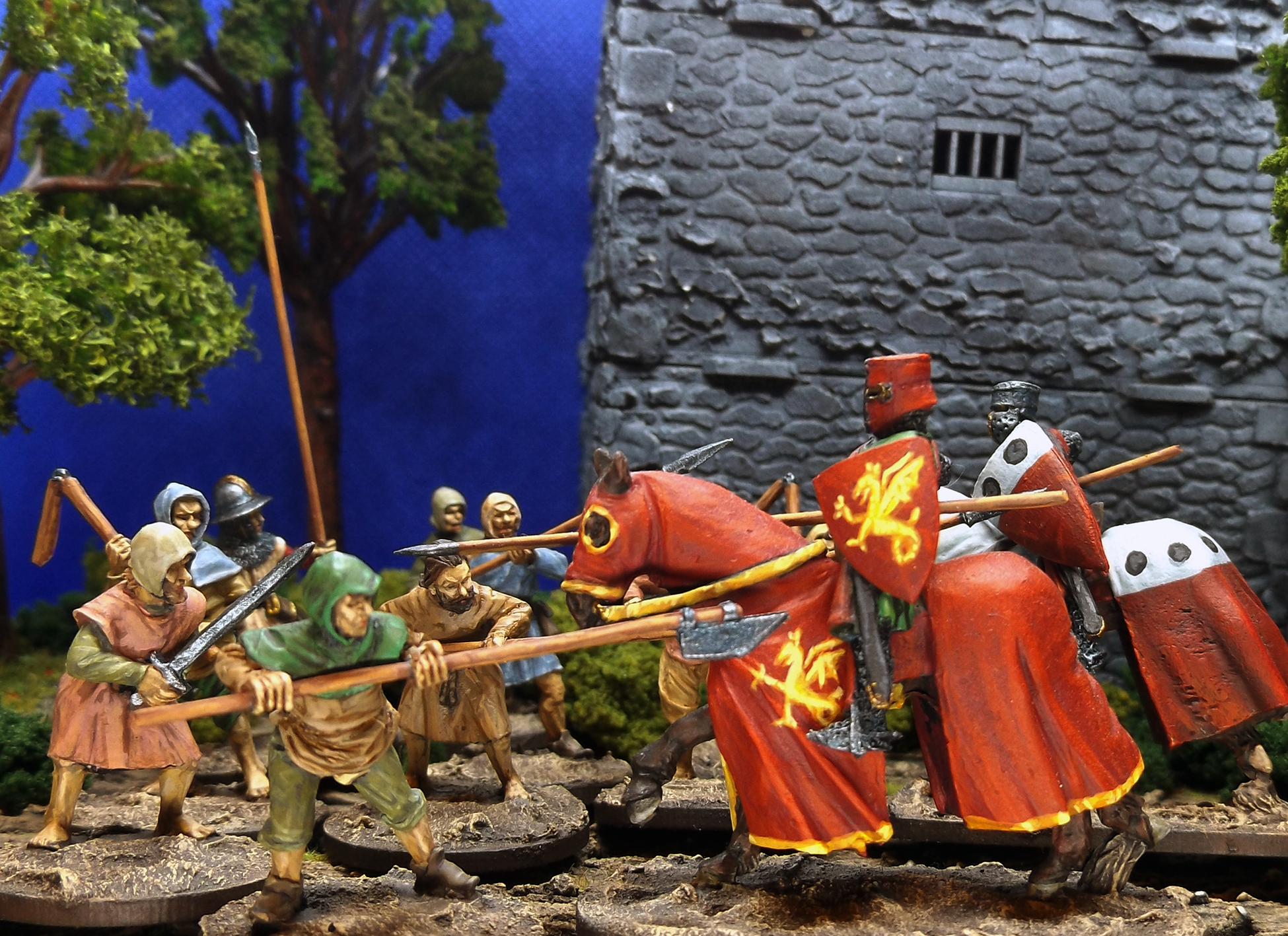
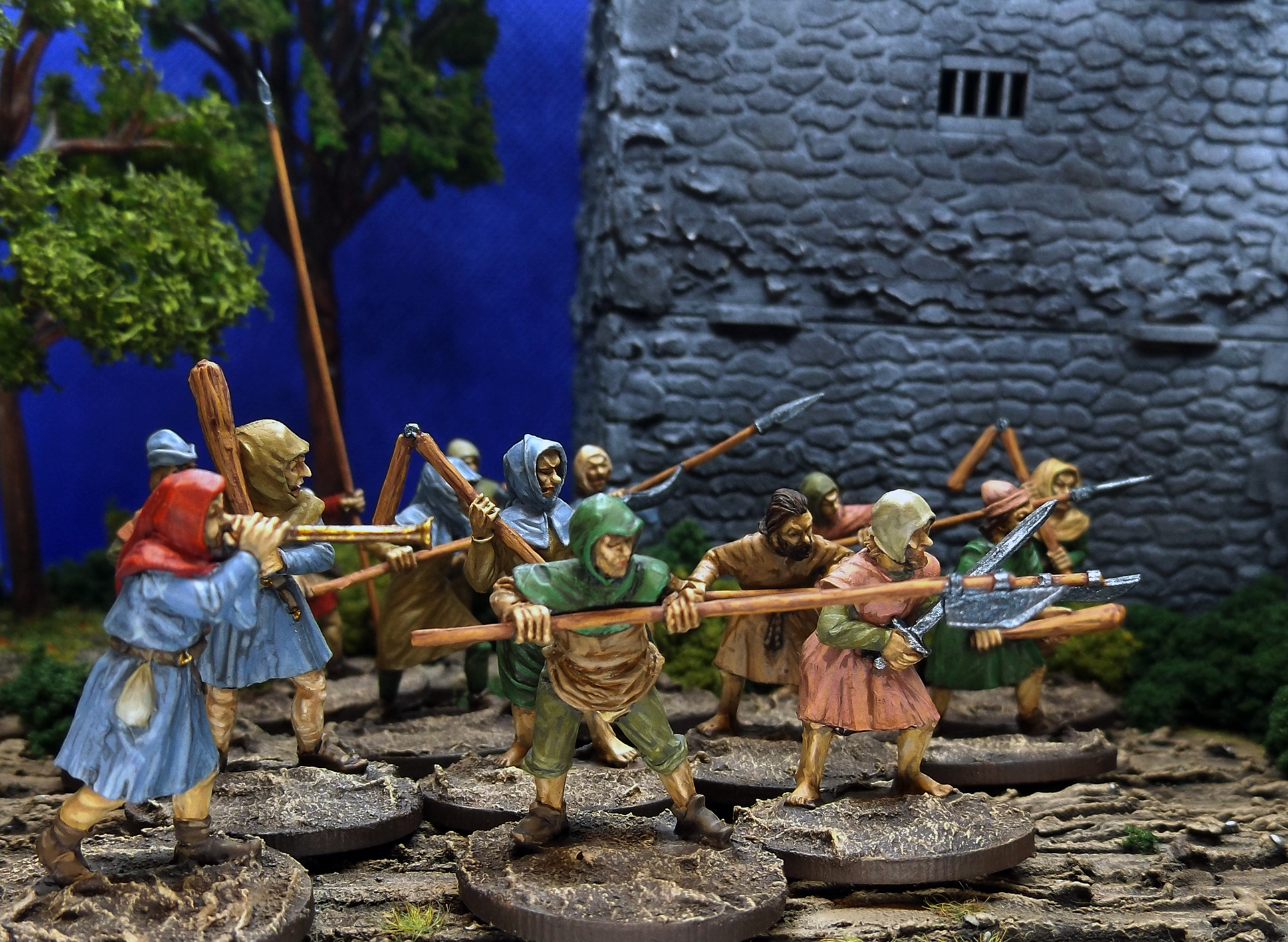
I have added some Levy, essentially, the infantry was raised in one of three ways, as members of a lord’s household, mercenaries or levied from a town or the countryside. Levies were not unarmed serfs expected to leave the fields; the harvest was too important to the landowner. The warriors we are levying were armed, had some training, and came from the upper peasantry; the tenant farmers who would have at one time had prior experience of a battle.
I have gone for the more muted and earth tones with these but have added a spot of colour to them as when looking at medieval pictures there seems to be a lot of colours on there and not just greens, browns and beiges.


New Narrative Campaign
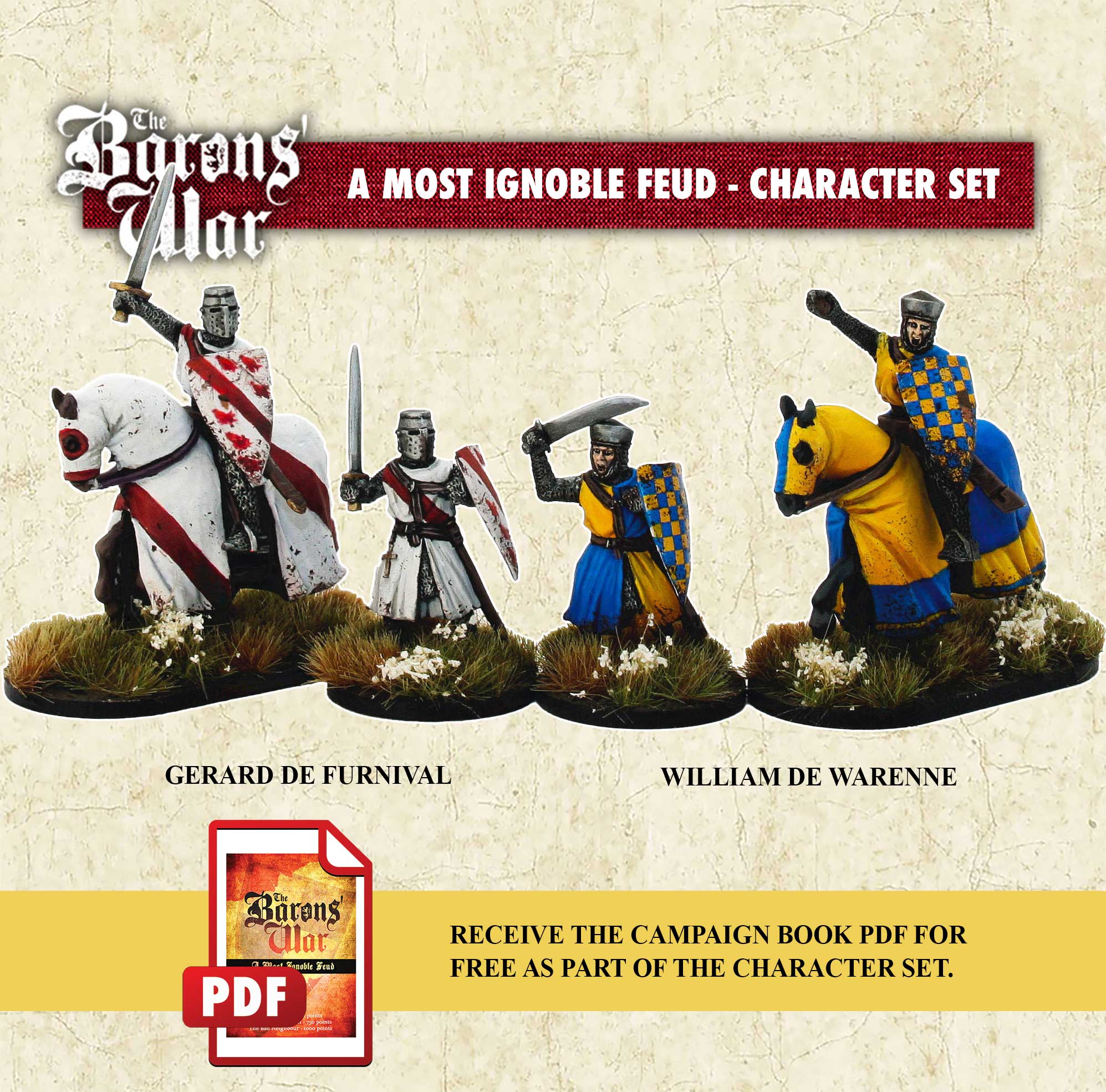
I have just read the new campaign book A Most Ignoble Feud for the Barons’ War written by Tom Mecredy and I have to it is a great start to what I hope will be many from Andy Hobday and Warhost. This is a narrative campaign between two Lords and is fought over three balanced scenarios starting at a small level game, building to a large game in the third scenario.
The book gives you the protagonists, the feuding Lords of William de Warenne, 5th Earl of Surrey on the one side and Gerard de Furnival, Lord of Hallamshire on the other a detail of why they are fighting each other and their forces for the games. I love the way that the forces build on in on and developed from battle to battle and they have both different and reflex the character of their Lords.
But if that wasn’t enough the page 15 book also have some addition ideas so you can replay these scenarios using your own Lords and Nobles and even add to your own ongoing campaigns of your own. There is a lovely little appendix on what happens to your Lord if he is taken out of action during a game, with a lovely permanent effect or injury for them. I really like that and the fact they build upon each other too adding to the character of your Lord or even the Lords in this book too.
The second Appendix is even better in my opinion that adds to the replayabilty of this book and also can be added to your own campaigns making a story and fun element and that is the Grievance Generator. What a stunning idea and what a clever way to create that narrative and context for the reason why the Nobles are fighting each other beside I am for the King and I am not. This can create so many different stories and campaign threads and I love it.
Finally, there is also a Terrain Description Table with types of cover, there type, what type of cover it is and the effects. All from the main rules but in a nice neat chart.
I love this book and Andy Hobday and Warhost I really hope this is the first of many different mini or narrative campaigns as I the idea of these especially when tied in with Paul Hicks’ stunning sculpted figures for these books, available through Footsore Miniatures & Games.
Winner, winner, chicken dinner.
Banners for my Lords
 Barons Flags
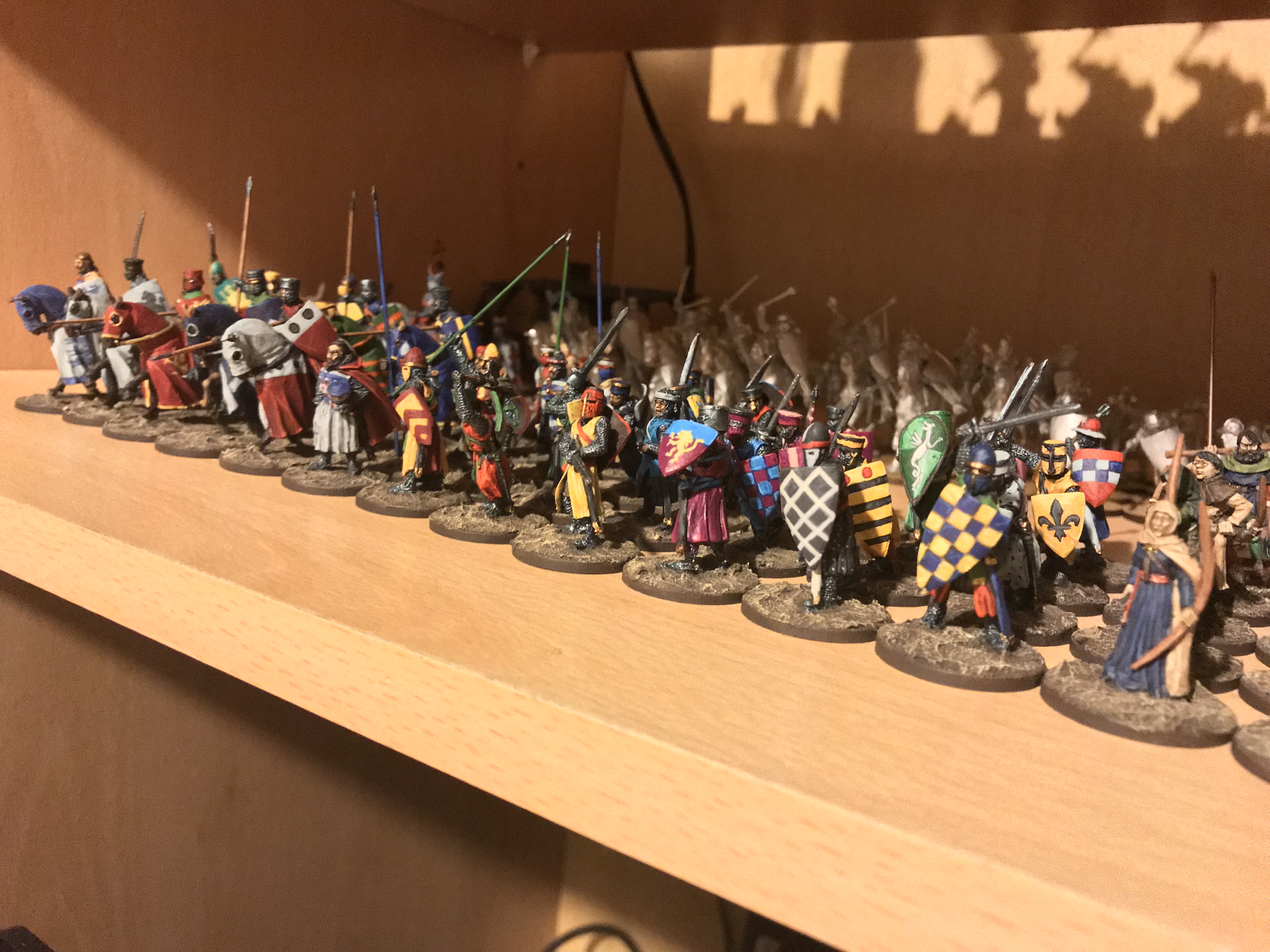
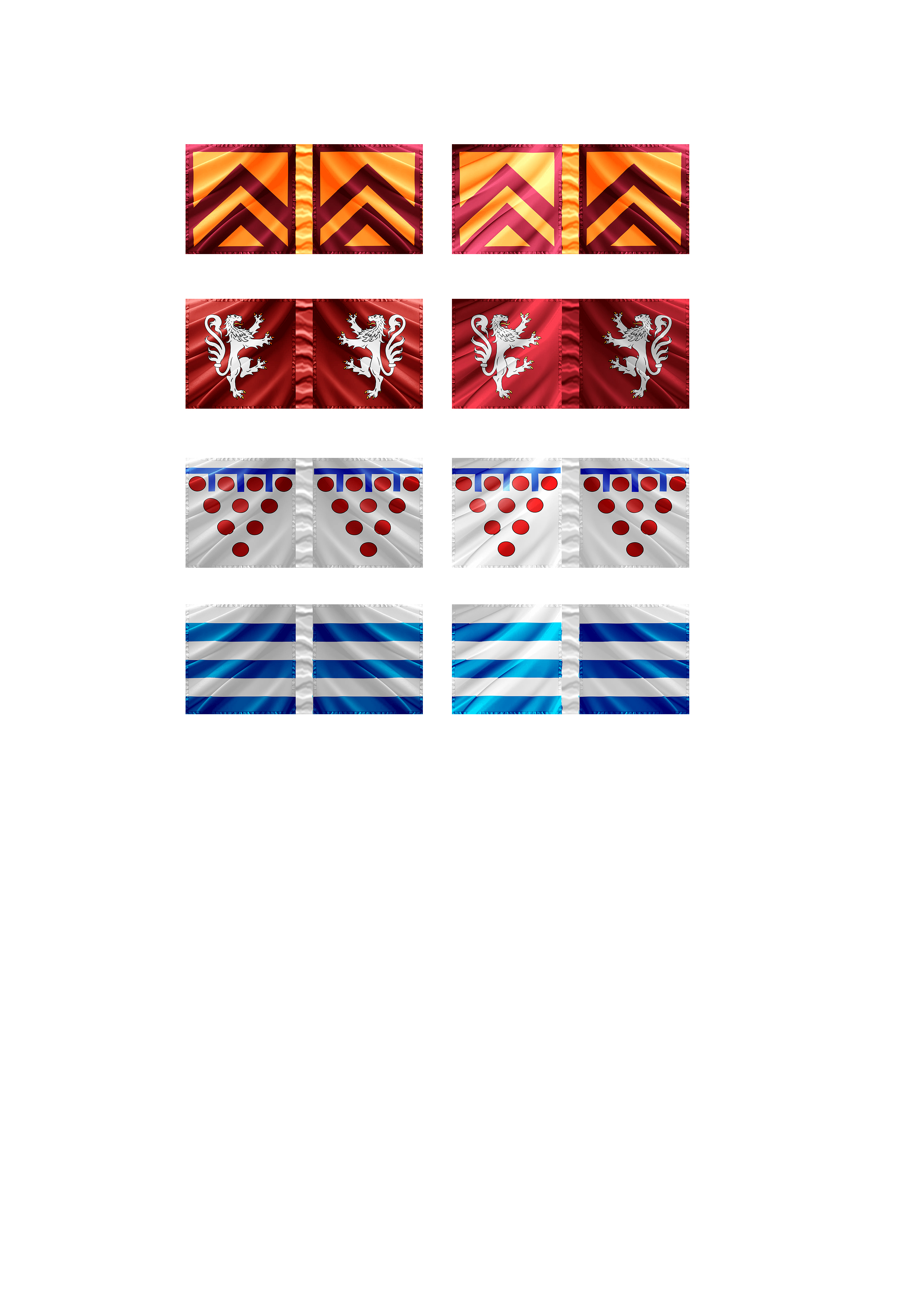
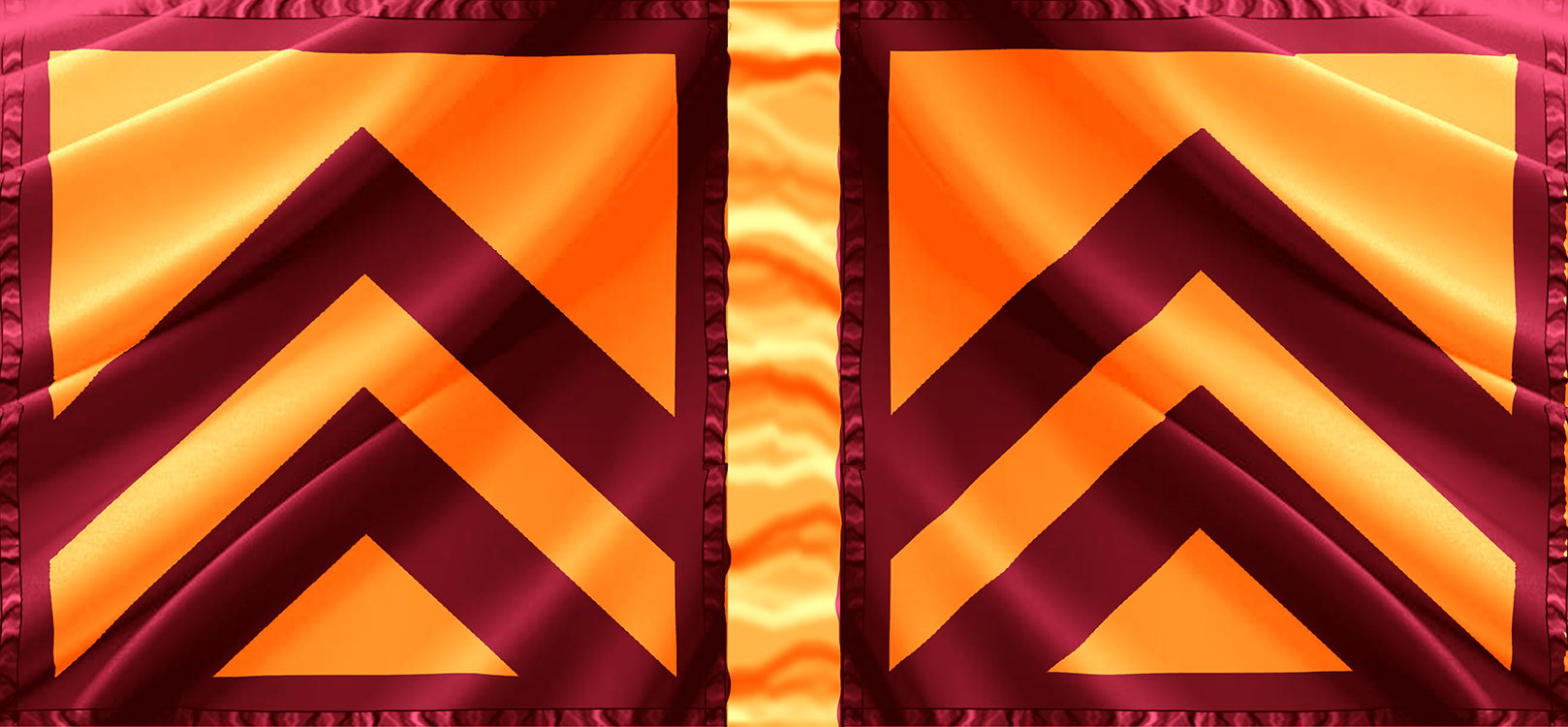
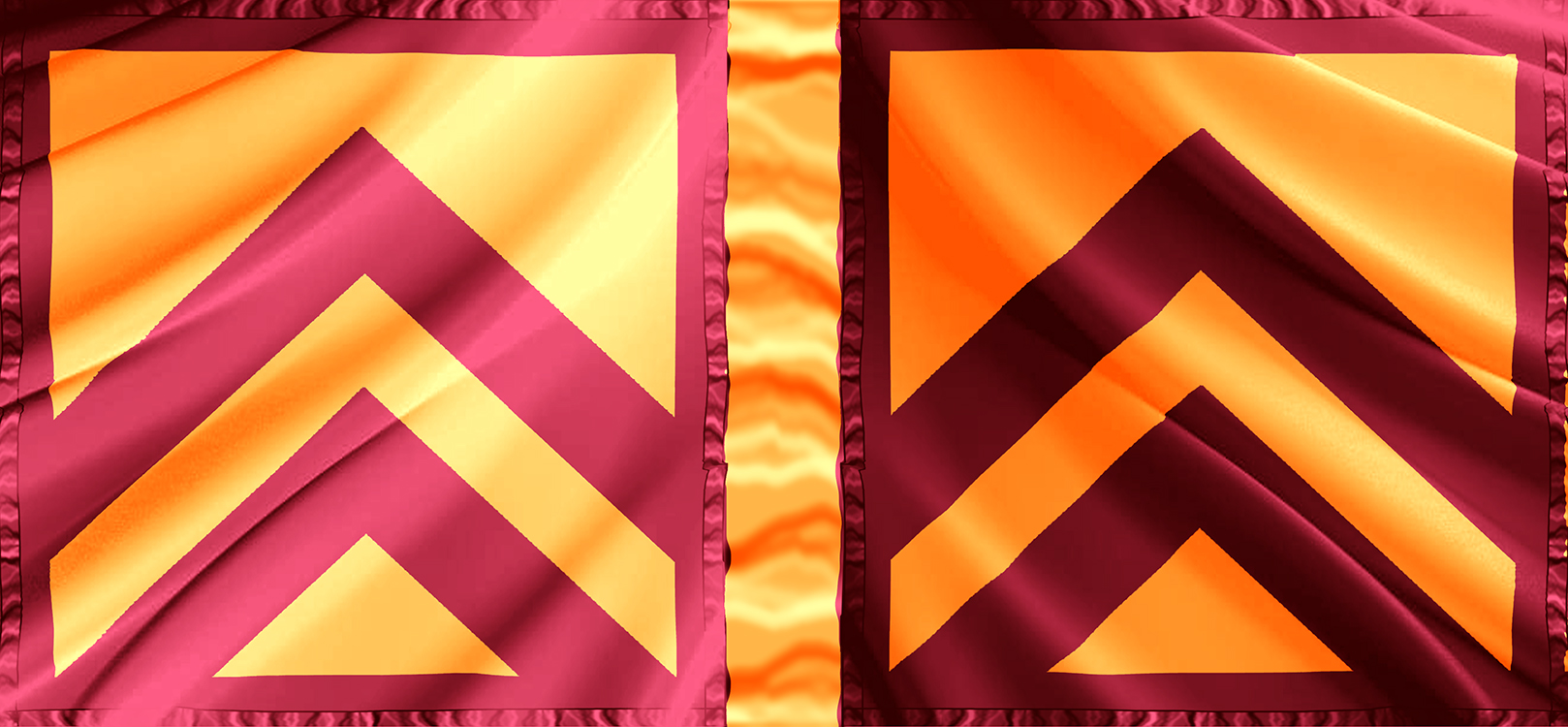
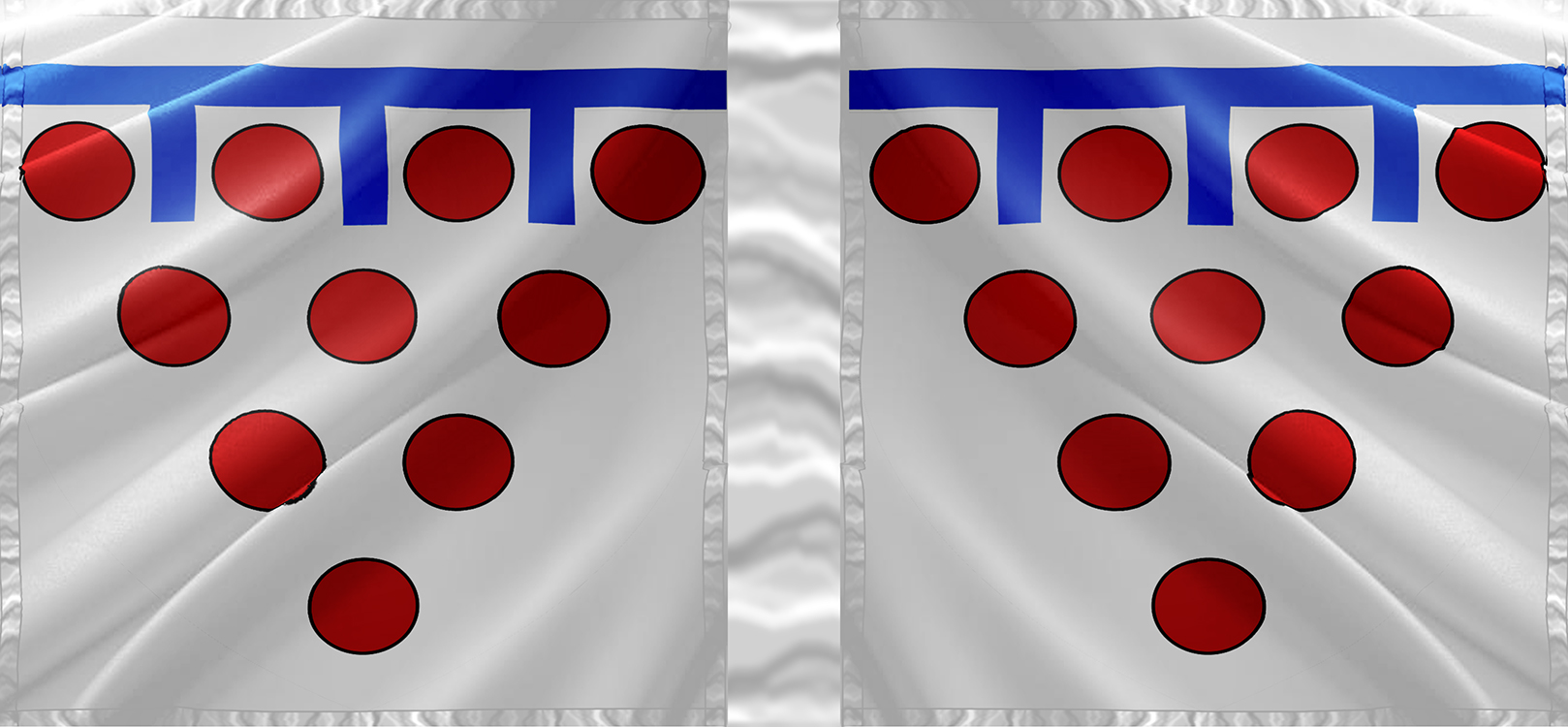
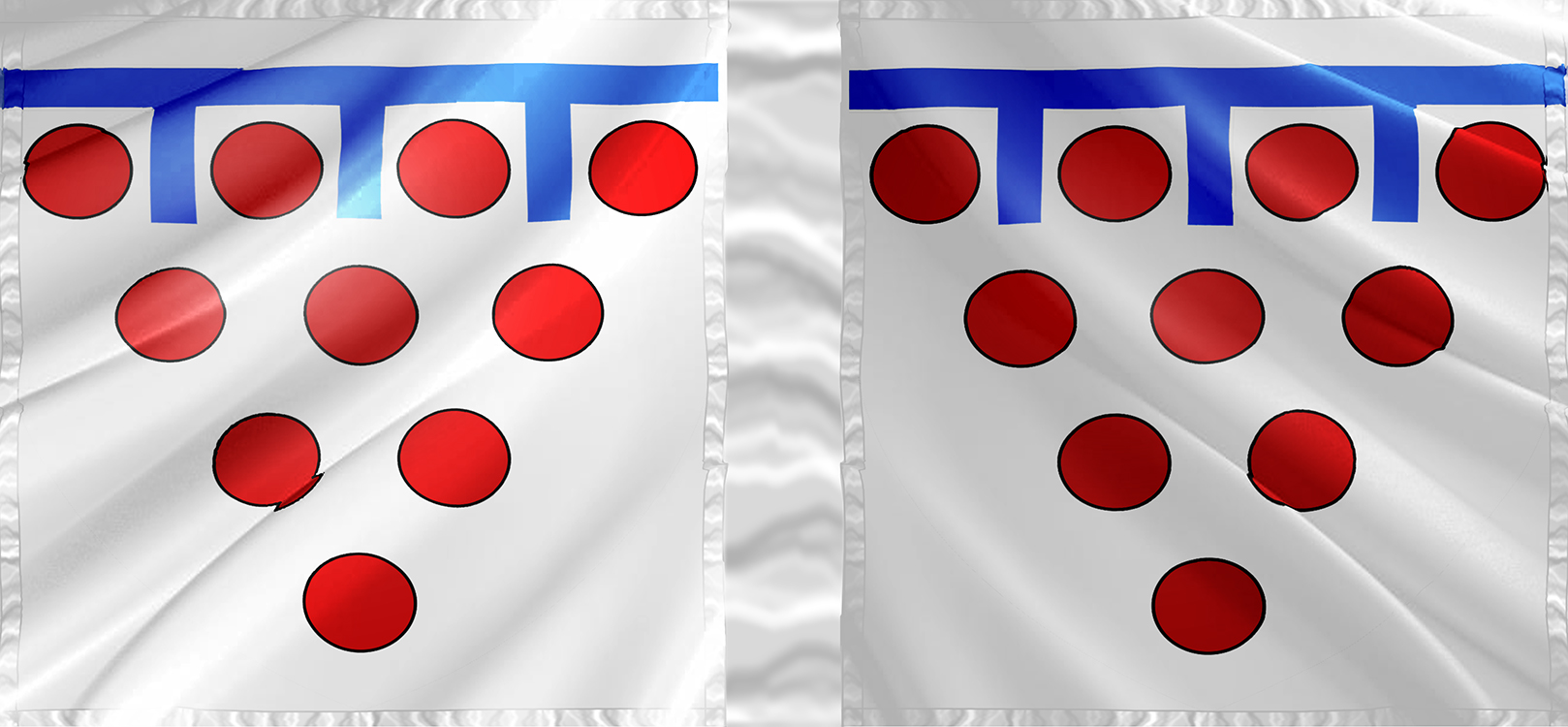
I have working on banners and flags for my Lords to fit on their bannermen. I have based the banners on the heraldry of each of the Lords I have. I created the banners and the background patterns using Photoshop and I worked on the background pattern so that the one side is the opposite to the other to see if it looks more realistic.
So what do think did it work?
William d’Albini, Lord of Belvoir Castle
William de Mowbray


John Babington
Henri de Grey


The Siege of Northampton Castle
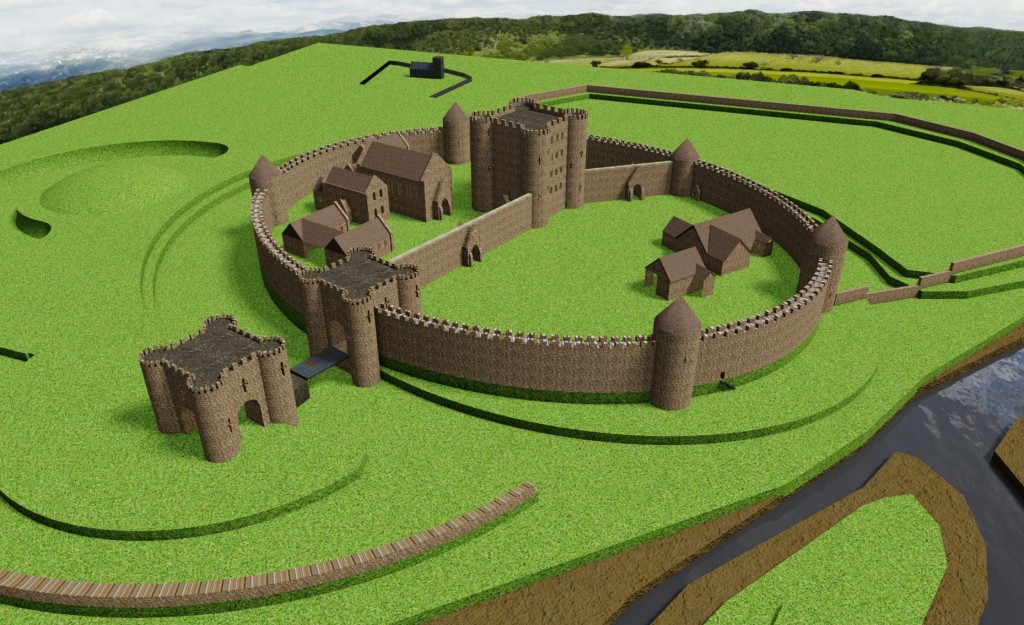
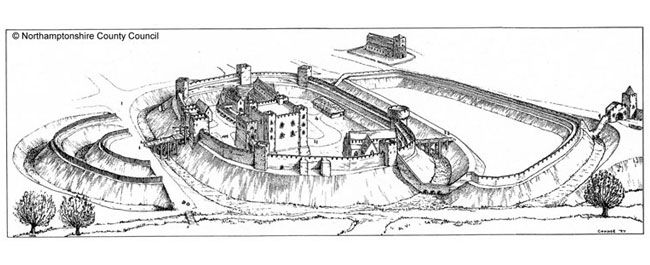 Northampton Castle
William the Conqueror made Simon de St. Liz the first Norman Earl of Northampton, and he is now well known in the town for building the Castle. It is more than likely there was some sort of Saxon or Danish fortification in place on the site prior to the building of the Castle. In addition to the Castle, St Liz built St. Andrew’s Priory, many parts of early Norman Northampton, and, after the first Crusade in 1099, the Church of the Holy Sepulchre in Sheep Street.
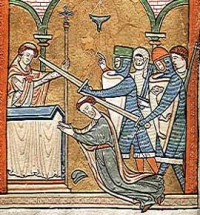
It is probably when St. Liz died that the Castle passed into the hands of King Henry I, who had previously held an important meeting at the Castle in 1106. The most famous event to occur at the Castle is surely the trial of Saint Thomas Becket, the Archbishop of Canterbury, which occurred in 1164 and was held by Henry I’s grandson Henry II and a Grand Council of Barons.
Becket himself probably lodged at nearby St. Andrew’s Priory and would certainly have visited St. Peter’s church too. His escape towards France under the cover of darkness is well known as is his subsequent murder at Canterbury Cathedral in 1170.
Another important historical figure associated with the Castle is King John (1199-1216) who spent all the feast days (Christmas, Easter and Whitsun) at Northampton and is known to have visited the Castle on no less than 30 occasions. Indeed he thought so much of Northampton that he moved the Royal Treasury to the Castle in 1205. The struggles against the Barons took place here in several Great Councils, leading to the Magna Carta in 1215.
In the civil wars between King John and his barons, the latter used it as a stronghold. When the King prevailed, the castle was entrusted to Falkes de Breauté, whom the King admired for his courage during the war. There was a second siege of Northampton Castle in 1215. It was broken by Flemish mercenaries sent by King John. When the king defeated the garrison, the castle reverted to the crown, but was later destined to be owned by the confederate barons.
 Death of Thomas Beckett
 Northampton Castle